
- Joined
- May 6, 2020
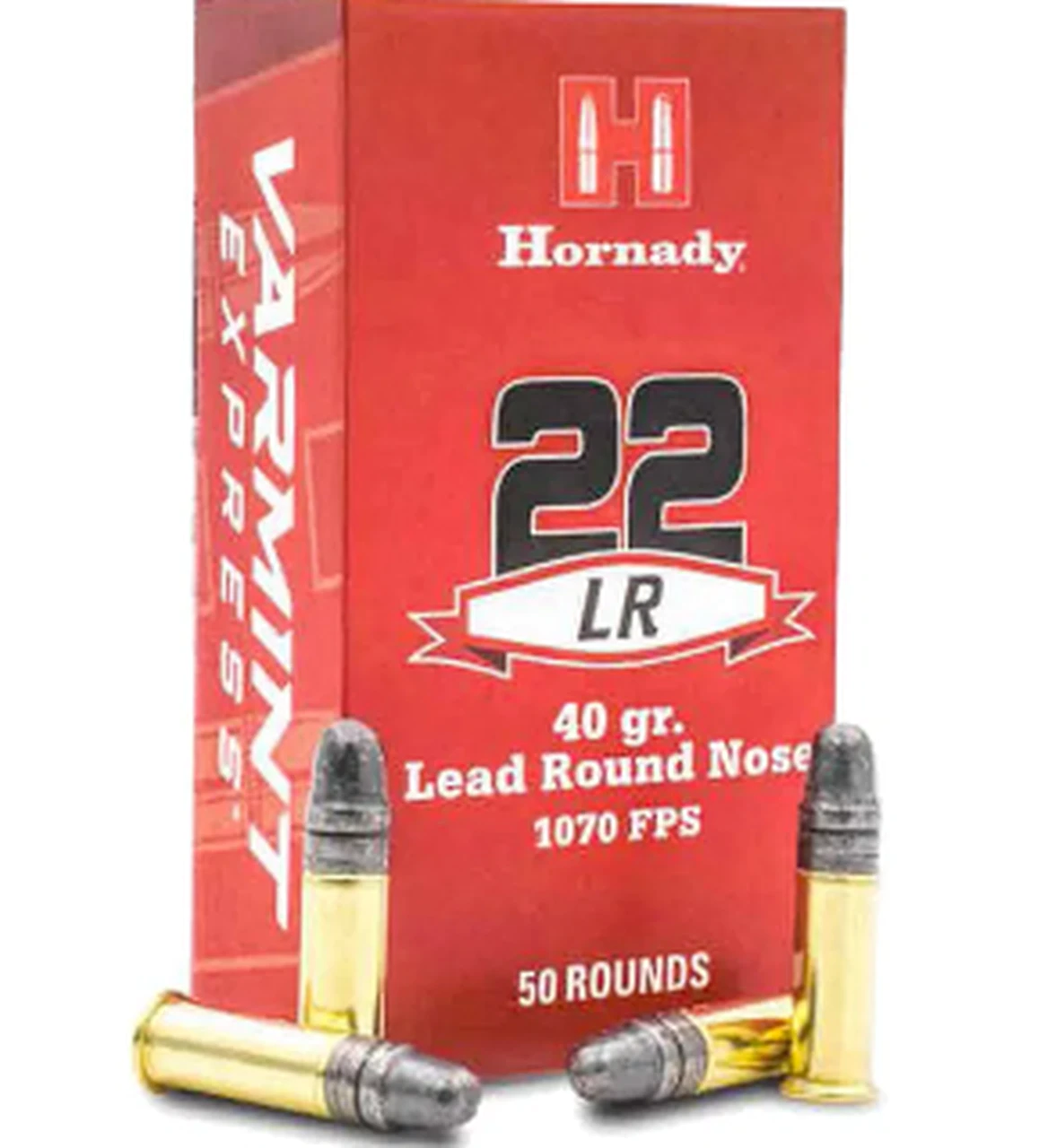
Anyone tried these? Worth getting over CCI Standard?
Follow along with the video below to see how to install our site as a web app on your home screen.
Note: This feature may not be available in some browsers.

It’s especially the Mk XIX 357s with issues. They went with a single size of slide and barrel for all three cartridges, and the 44 and 357 suffered for it. My Mk XIX 44 never ran right, but the ‘89 Mk I that replaced it ran flawlessly, as does the ‘84 MK I 357 I picked up later.It does. AFAIK the .357 memegles have the most issues and you need a lot of pressure for it to cycle.
Isn't Hornady ammo awfully expensive?Anyone tried these? Worth getting over CCI Standard?
Depends where you get it, but I found a couple of places that sell it for nearly the same cost as CCI Standard, if not even a little cheaper. Their centerfire stuff is solid, always performs as advertised. Just not sure about rimfire, there's some buzz of it being made by other vendors. May just get 500 rounds to play around.Isn't Hornady ammo awfully expensive?

For autistic reasons professional and wildcat refuse to developed rimless versions of revolver and lever-action rimmed cartridges like the .44 Magnum..50AE isn't a rimmed cartridge, though, and I've always wondered if that makes a difference. (in a positive way, I mean)

If you go for the Eagle, be sure to only use completely jacketed bullets, otherwise you'll gunk up the gas system within one or two boxes of ammo.The .44 Magnum would be nice I think, I hear the recoil is quite easy. For .50AE, it's got its appeal I think, as long as one understands that real life isn't Counter-Strike or Call Of Duty, a big Magnum cartridge is just fun on its own. Wouldn't mind a BFR in .50AE
TMJ, soft point, or hollow point. The critical part to avoid is exposed lead at the base of the bullet, a small amount of which will vaporize with each shot and deposit in the gas system. Bad, but can be used with VERY frequent cleaning with the correct solvent. Most pistol FMJ is a copper cup, with lead exposed at the base. Nearly all soft point and hollow point is the opposite, with lead exposed at the nose.If you go for the Eagle, be sure to only use completely jacketed bullets, otherwise you'll gunk up the gas system within one or two boxes of ammo.
Gunsmith buddy of mine had a customer who exclusively shot lead bullets he cast himself. needless to say his DE was royally impacted with shavings. how would you clear something like that?TMJ, soft point, or hollow point. The critical part to avoid is exposed lead at the base of the bullet, a small amount of which will vaporize with each shot and deposit in the gas system. Bad, but can be used with VERY frequent cleaning with the correct solvent. Most pistol FMJ is a copper cup, with lead exposed at the base. Nearly all soft point and hollow point is the opposite, with lead exposed at the nose.
The real killers of desert eagles is unjacketed lead bullets. Each shot will shave of a fragment of lead at the gas port and likely pack it down at the end of the inaccessible dogleg near the piston.

Interesting addition, I didn't know that was a problem they've had. The modularity I think is cool idea, though it seems like they didn't quite think it through based on what you said. Could lightening cuts be made to the .357 and .44 slides to improve reliability?It’s especially the Mk XIX 357s with issues. They went with a single size of slide and barrel for all three cartridges, and the 44 and 357 suffered for it. My Mk XIX 44 never ran right, but the ‘89 Mk I that replaced it ran flawlessly, as does the ‘84 MK I 357 I picked up later.
It's for logistical and economical reasons. Introducing a new rimless cartridge means that if you want to ever shoot it for not a high cost, you'll probably want to handload, and if you're already a handloader, you'll have to justify to yourself if it's worth investing in .44 Auto Mag Pistol, when you already load .44 Magnum and you do so for pretty cheap.For autistic reasons professional and wildcat refuse to developed rimless versions of revolver and lever-action rimmed cartridges like the .44 Magnum.
I'm well aware. I've been fascinated with the Desert Eagle, for quite some time. Magnum automatics and revolvers in general, actually.If you go for the Eagle, be sure to only use completely jacketed bullets, otherwise you'll gunk up the gas system within one or two boxes of ammo.
Get it hot enough to melt the lead but without harming anything else? Just a wild guess, I'd wonder what to do in that situation as well.Gunsmith buddy of mine had a customer who exclusively shot lead bullets he cast himself. needless to say his DE was royally impacted with shavings. how would you clear something like that?
They added a whole host of new problems by trying for the modularity. The DE slide should really be thought of as a bolt carrier. With Mk Is and VIIs, it was sized properly for the inertia and gas pressures of each cartridge. When they went to the modular XIX, the whole bolt carrier is oversized for 44 mag, and massively so for 357. It would be like converting an AR10 to .223. Lightening cuts would help, but bringing back three different sizes of slides and barrels would be the best. The frame is still interchangeable, and was a selling point with the VII.Interesting addition, I didn't know that was a problem they've had. The modularity I think is cool idea, though it seems like they didn't quite think it through based on what you said. Could lightening cuts be made to the .357 and .44 slides to improve reliability?
Solvent, an ultrasonic cleaner, and prayers to the machine god. My ‘89 44 had some lead fouling, and a few cleaning cycles and blasting high pressure air through the gas system managed to clear it. I was lucky it wasn’t completely clogged. You can (sort of) remove the barrel extension from Is, VIIs, and some XIXs to get to the gas system and try to ream it from the chamber end, but he may just be in the market for a new barrel.Gunsmith buddy of mine had a customer who exclusively shot lead bullets he cast himself. needless to say his DE was royally impacted with shavings. how would you clear something like that?

many automatic cartridges that have very similar ballistic profiles to rimmed cartridges exist. however rimmed cartridges are designed in a specific way for actions that were never meant to be automatic. headspacing on the rim instead of the shoulder, higher chamber pressures, no taper for obturation in a chamber under pressure, no thermal flow profiling or clearance for a short leade (no forcing cone) barrel, very long cartridge to accommodate lower pressure powder (cordite, old school stick smokeless, black powder, et c). as mentioned by others, you are fundamentally better off designing the gun around the cartridge or designing the cartridge for the gun.For autistic reasons professional and wildcat refuse to developed rimless versions of revolver and lever-action rimmed cartridges like the .44 Magnum.
yes and i've had to make these cuts for some customers that want to add a scope or brake to their Desert Eagle. total mass in the pistol must be balanced for the gas pressure load to have something to work against between your hand and the pistol's moment inertia to avoid short cycling. if this isn't kept in a fairly narrow window, even with good hand posture, the slide will develop enough pressure to cycle the action, but not enough to fully feed and lock the new cartridge because the too-heavy barrel assembly (and scope) will encourage rotation on a top heavy pistol. if the slide is too light, it will move rearward too much under recoil and will likely get a failure to feed or eject as well. the gas operation is very reliable, but it is mass sensitive.Could lightening cuts be made to the .357 and .44 slides to improve reliability?
Gunsmith buddy of mine had a customer who exclusively shot lead bullets he cast himself. needless to say his DE was royally impacted with shavings. how would you clear something like that?
what works for me is creating a mercury-lead amalgam (disassemble, degrease, carefully inject mercury "backwards" through the gas port at an angle so it exits at the barrel) at "warm" temperatures to encourage flow and capillary action to do the work. after some time, a lead solvent/detergent in an ultrasonic cleans the rest very well. the unfortunate reality is that this is not finish-friendly and anything but stainless will often need to be refinished.Solvent, an ultrasonic cleaner, and prayers to the machine god.
firstly, a loaded gun is a dangerous thing to try to do work on and should be treated with extreme care as a matter of course. this isn't a new idea, but i wanted to mention it off the bat. you mention being only able to work from the muzzle, so i will assume that you are unable to open the action or remove the barrels from the action.old European double fowling piece that I intend to use as a wallhanger, but it turns out one of the barrels is loaded.
The nipple is clogged and siezed so the only way to deal with it is down the bore.
Any insight or suggestions?
Wow, thanks for the writeup. I guess I was a little vague. It’s a percussion double with a solid breach and steel nipples, completely rusted in place. I kind of figured I would be forced to try to break up the load from the muzzle, but was dreading it. It’s a hundred and fifty year old Damascus pipe bomb with god knows how old of a load in it, and I completely understand why no one wants to attempt to disarm it. I’ll try the water flush and see if it’s enough to clear it out. Hell, I’ll keep doing flushes and soaks until it does if I can avoid poking anything down the bore. I’ve no concern for the condition of the piece. It’s far from being a museum specimen, and unsafe to shoot even if it was functional.firstly, a loaded gun is a dangerous thing to try to do work on and should be treated with extreme care as a matter of course. this isn't a new idea, but i wanted to mention it off the bat. you mention being only able to work from the muzzle, so i will assume that you are unable to open the action or remove the barrels from the action.
next, identify the type - since you mention a nipple, it sounds like an external hammer gun, if you know the lockwork maker, that can clue you to a safe disassembly procedure to open the action without damaging anything. a Greener for example came with external hammers from the 1830's up until the 1940's, but the auto ejecting models weren't common until after 1900. because of that, if it has the auto ejectors, you must be cautious when removing the barrels from the action as they are activated by relieving lever springs in the water table (flat area immediately below the chambers when the shotgun is assembled) interacting on a pair of pins in the fore-end assembly, which are extremely easy to break because they are hardened steel and somewhat brittle to forcing them.
once you identify the lock work maker you can determine if there are any pins or springs that might interfere with safely removing the barrels. the goal here is to remove the barrels from the action without injuring anything (or anyone). cocking the hammer and using wire to secure it rearward, you can then examine the nipple and see if you can unscrew it. if the threads are totally seized and penetrating oil is unable to assist, you can use a small soldering torch to heat the steel while using oiled foil to heatsink the heat from the rest of the metal safely. after applying heat to the steel, try and unscrew the nipple. nipples are typically brass so this should work to loosen differing metals.
if that still isn't working, your next bet is to bit the bullet and just shear off the nipple entirely, use a broken bolt extractor to remove the remains, and chase the threads or re-thread for a new nipple.
once you're able to free the barrels from the action safely, you can use a wooden dowel to tape out the load. if it's a paper cartridge, then pulling with a pick from the chamber at the base, then carefully removing the wadding and shot, then cleaning out the bore would also work.
if it's a muzzle-loading shotgun and there is no action to open, you have no choice but to force the load out by removing the breach plug (if it has one) or if that isn't possible, use a pointed rod to break up the load in the barrel and extract the remains a little at a time. very tedious and dangerous work since you do not know the condition of the powder charge. deactivating the powder by flushing with hot water can heat up the metal enough to relieve seized loads in black powder guns, so that might work here as well.
a tool like a CO2 canister or compressed air to try to force the nipple to unclog might work, but if it's truly completely clogged, you would need very high pressures to do this.
word of advice doing it the dangerous way: use a stiff steel wire with the end wrapped in tape and then a tennis ball on it. this greatly reduces its penetrative qualities and turns something lethal into something bruising or rib-cracking.Wow, thanks for the writeup. I guess I was a little vague. It’s a percussion double with a solid breach and steel nipples, completely rusted in place. I kind of figured I would be forced to try to break up the load from the muzzle, but was dreading it. It’s a hundred and fifty year old Damascus pipe bomb with god knows how old of a load in it, and I completely understand why no one wants to attempt to disarm it. I’ll try the water flush and see if it’s enough to clear it out. Hell, I’ll keep doing flushes and soaks until it does if I can avoid poking anything down the bore. I’ve no concern for the condition of the piece. It’s far from being a museum specimen, and unsafe to shoot even if it was functional.
Had a chance to ask my buddy today, that's what they ended up doing. Last ditch method would have been to mix up a white vinegar / hydrogen peroxide solution to eat away the lead, but that would also have attacked the finish of the gun as wellGet it hot enough to melt the lead but without harming anything else? Just a wild guess, I'd wonder what to do in that situation as well.

I’ve used something like this in the past to clear my muzzleloading shotgun - I’d think it would be all that was needed:Wow, thanks for the writeup. I guess I was a little vague. It’s a percussion double with a solid breach and steel nipples, completely rusted in place. I kind of figured I would be forced to try to break up the load from the muzzle, but was dreading it. It’s a hundred and fifty year old Damascus pipe bomb with god knows how old of a load in it, and I completely understand why no one wants to attempt to disarm it. I’ll try the water flush and see if it’s enough to clear it out. Hell, I’ll keep doing flushes and soaks until it does if I can avoid poking anything down the bore. I’ve no concern for the condition of the piece. It’s far from being a museum specimen, and unsafe to shoot even if it was functional.