The West Again Learns That War Needs Industry
The Wall Street Journal (archive.ph)
By Daniel Michaels
2023-07-07 07:39:00GMT

Ukraine’s conflict with Russia has exposed huge shortfalls in Western defense-industry capacity and organization. Manu Brabo for The Wall Street Journal
Behind the deadly front lines where Ukrainian and Russian soldiers are locked in combat, a less-noticed life-or-death battle is raging to keep troops supplied with arms and ammunition. The side that loses that fight is the one that will lose the war. It is a lesson Washington is relearning.
Russia’s invasion of Ukraine has exposed huge shortfalls in Western defense-industry capacity and organization. The U.S. and its allies aren’t prepared to fight a protracted war in the Pacific, and would struggle with a long European conflict.
As Adm. Rob Bauer, a top military officer at the North Atlantic Treaty Organization, puts it: “Every war, after about five or six days, becomes about logistics.”

NATO’s Adm. Rob Bauer, right, says the defense industry needs more private-sector support. Photo: olivier hoslet/Shutterstock
If the U.S. clashed head-on with Russia or China, stocks of precision weaponry could be used up in hours or days. Other vital supplies would run out soon after.
Many governments are starting to respond. The U.S. is increasing arms production after decades of focus on terrorism and homeland security. French President Emmanuel Macron has pledged a “war economy” to boost military supplies. German Chancellor Olaf Scholz has shed Berlin’s longstanding disdain for military spending.
It is a pivot with echoes of the last century, when the U.S. repeatedly swung its economy to fight wars and face down enemies. Woodrow Wilson nationalized America’s railroads in 1917, and in 1942 Detroit lurched from making cars to churning out tanks and bombers. The Cold War spawned the military-industrial complex.
Nobody’s ready to test those extremes today. To handle newly aggressive adversaries without commandeering industries or exploding national budgets, Washington and its allies will need to try fresh approaches to developing, buying and maintaining military supplies.
“The defense-industrial base that served us after World War II and helped us prevail in the Cold War isn’t the one that is going to help us prevail against China,” says Joseph Votel, a retired four-star Army general who led Special Operations Command and now heads Business Executives for National Security, a nonprofit started in 1982 to bring private-sector know-how to the Pentagon.
The first step will be spending more on defense across the West. In 2014, after Russia seized Crimea from Ukraine and fomented rebellion in the country’s east, NATO members pledged to spend at least 2% of their gross domestic product on defense by 2024.
Only the U.S. and a handful of other members do that so far, though war in Ukraine may finally have broken the logjam. Around half of NATO’s 31 members could hit 2% next year, alliance diplomats say.
Ambitions are increasing, too. When NATO leaders meet in Lithuania next week for their annual summit, they expect to cement 2% of GDP as the spending minimum, not an aspiration. Over the past year, NATO and the European Union have also assumed new roles coordinating and consolidating arms procurement to boost efficiency and accelerate rearmament.
But more is needed, say Votel and his colleagues, starting with a new postindustrial mind-set. Many see a model in how Ukraine is drawing expertise from across society to develop defensive systems that bridge advanced digital savvy and grease-covered Soviet hardware.
First, say advocates of a new approach, the Pentagon should acknowledge it no longer owns the cutting edge of technology—even though it once launched transformative innovations, such as the internet and GPS.

Washington and its allies need to try fresh approaches to developing, buying and maintaining military supplies. Photo: valda kalnina/Shutterstock

The military needs huge quantities of some items, such as artillery shells and rifles. Photo: Vadim Ghirda/Associated Press
“Our nation leads in many emerging technologies relevant to defense and security—from artificial intelligence and directed energy to quantum information technology and beyond,” a panel of former top Defense Department officials said in a recent report for the Atlantic Council, a Washington think tank. “But the DoD struggles to identify, adopt, integrate and field these technologies into military applications.”
The commission, led by former Defense Secretary Mark Esper, offered 10 recommendations that ranged from encouraging tech companies to do business with the Pentagon to modernizing its budgeting documents.
Others say that rather than conceiving multidecade moonshots, as in the Cold War, the Pentagon should learn to quickly draw on existing innovations, as smaller allies have done, and Ukraine is doing.
“The Defense Department set itself up to export technology,” says James “Hondo” Geurts, a former assistant secretary of the Navy and Air Force officer with extensive acquisitions experience. “Now it needs to become a smart importer of technology.”
On the Florida panhandle, a gaggle of military brainstorming centers are working to test what is possible outside a war zone. Defensewerx, a nonprofit organization closely tied to the Pentagon, links the defense establishment with small businesses and academia, working to bring innovation and a disrupter mentality to arms development and contracting.
A challenge, say skeptics, is that projects launched in a military “Monster Garage” often founder at industrial scale.
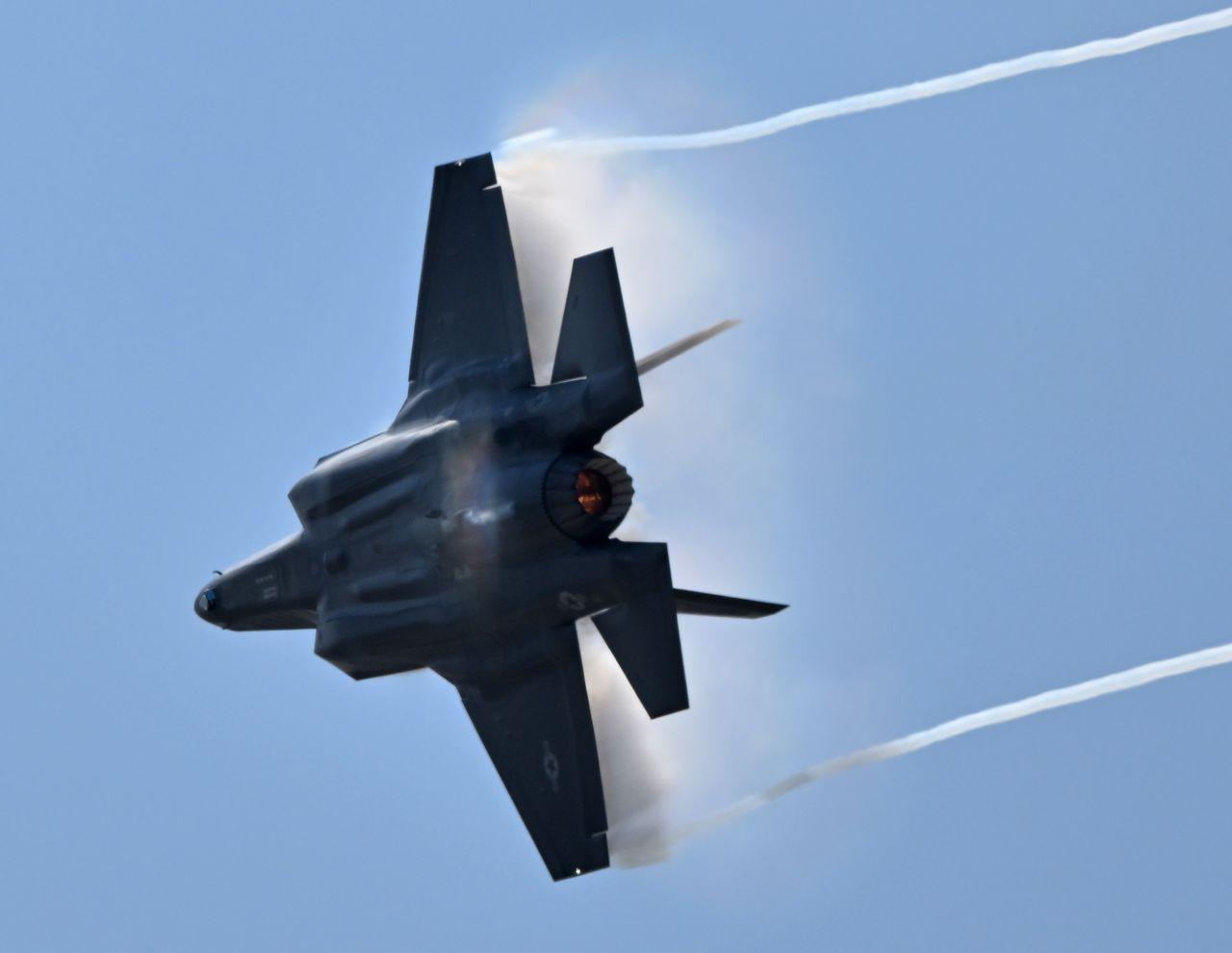
Defense is massively expensive, and not just for cutting-edge equipment. Photo: Mustafa Yalcin/Anadolu Agency/Getty Images
Defense planners must also get more entrepreneurial, say advocates of change—and some are already. NATO’s Bauer recently flew to the Pacific coast in Los Angeles, not for naval maneuvers but to address a finance-oriented conference.
“We need private investors to support the defense industry,” the Dutch officer told the Milken Institute’s global gathering in May.
Defense is massively expensive, and not just Top Gun equipment such as F-35 jet fighters costing around $100 million apiece. The Navy has estimated that a 20-year modernization of four major shipyards, which maintain aircraft carriers and nuclear submarines and average a century old, will cost $21 billion—and a senior Government Accountability Office official last year called those estimates “wildly off point.”
The protracted refurbishment limits repair capacity, leaving warships at pier awaiting work and reducing America’s active fleet available for threat response. Multibillion-dollar assets idly aging in saltwater cost taxpayers, warn critics.
Rather than drag out shipyard renovations over two decades, says Sam Cole, a finance-sector professional who serves on the BENS board under Votel, it would make more sense to get the work done quickly so the yards are fully functional sooner.
The Pentagon could struggle to fund all that, given government budgeting rules, Cole acknowledged. Instead, it could take a more private-sector approach to financing by turning to debt markets, raising around $50 billion and completing the work in about four years.
“Being able to tap capital markets would enable you to put the project on steroids,” says Cole.
Funding defense outside the Pentagon’s budget would break tradition, but advocates note that other parts of the government already do it. The Commerce and Agriculture departments are leveraging capital markets to finance investments in necessities from microchips to fertilizer.
Defense Secretary Lloyd Austin last December took a step in that direction, launching the Office of Strategic Capital, an in-house tech incubator empowered to partner with private financiers. The Pentagon’s Defense Advanced Research Projects Agency, or Darpa, has gained legendary status for its role in helping fund Silicon Valley’s rise, but its financial firepower is limited.
The OSC is unusual for the Pentagon because it can employ loans, guarantees and other financial tools not typically used by the U.S. military, which relies mainly on contracts and grants. It aims to help startups grow and work with the Pentagon, and to nurture new technologies that may support defense. At its launch, officials noted that while the Defense Department has rich programs to foster innovation, Pentagon contracting and legal rules pose daunting hurdles for startups.

The U.S. Navy has estimated that a 20-year modernization of four major shipyards will cost $21 billion. Photo: Spencer Platt/Getty Images
In rebuilding military industries, small business also needs attention. Defense giants once tapped supply chains that extended to thousands of workshops supplying basic components. Industry consolidation, globalization and shrinking demand after the Cold War eroded that base. Today, subcontractors are as likely to be independent software developers as metal-bashers, but they face similar headaches with business fundamentals such as financing research and development.
Defense giants handling massive arms projects generally work on a cost basis, meaning they can usually hand the Pentagon a bill for their R&D spending, says Frank Finelli, another finance professional on the BENS board. But almost all midsize companies in the defense industry are subcontractors, so are unable to pass along development costs.
“You’re asking me to invest my own money in R&D” for the Pentagon, Finelli says he hears from smaller companies. The U.S., the world’s financial-markets leader, should be able to find a solution, he says. “This is about having access to financial agility at scale.”
Agility is increasingly vital in manufacturing, too. The F-35, America’s newest jet fighter, is a marvel of networked computers that can hover and fly supersonic. But much of it is still built by hand in a Texas factory where each plane steps along an assembly line from one production station to the next, notes Stacie Pettyjohn, director of the defense program at the Center for a New American Security.
The Pentagon’s next generation of equipment will need to rely on commercial industries’ advances in production technologies, from 3-D printing to factory automation, says Pettyjohn. “New manufacturing systems for new defense systems will be critical.”
Equally ripe for an overhaul is how the Pentagon turns ideas into equipment. The military needs eye-popping quantities of some items, such as artillery shells and rifles, but a lot of equipment is needed in versions customized for specific tasks, which can vary widely across services and in elite units such as special forces.
How to combine mass production and variety has long plagued defense planners. The F-35 was envisioned 30 years ago as a single low-cost plane with different options for the Air Force, Navy and Marines. But in traditional fashion, costs and complexity ballooned as delays mounted.
“The Defense Department has a poor track record in rapid development and production,” says Pettyjohn. “They’ve shot for the moon on everything.”
The Wall Street Journal (archive.ph)
By Daniel Michaels
2023-07-07 07:39:00GMT
Ukraine’s conflict with Russia has exposed huge shortfalls in Western defense-industry capacity and organization. Manu Brabo for The Wall Street Journal
Behind the deadly front lines where Ukrainian and Russian soldiers are locked in combat, a less-noticed life-or-death battle is raging to keep troops supplied with arms and ammunition. The side that loses that fight is the one that will lose the war. It is a lesson Washington is relearning.
Russia’s invasion of Ukraine has exposed huge shortfalls in Western defense-industry capacity and organization. The U.S. and its allies aren’t prepared to fight a protracted war in the Pacific, and would struggle with a long European conflict.
As Adm. Rob Bauer, a top military officer at the North Atlantic Treaty Organization, puts it: “Every war, after about five or six days, becomes about logistics.”
NATO’s Adm. Rob Bauer, right, says the defense industry needs more private-sector support. Photo: olivier hoslet/Shutterstock
If the U.S. clashed head-on with Russia or China, stocks of precision weaponry could be used up in hours or days. Other vital supplies would run out soon after.
Many governments are starting to respond. The U.S. is increasing arms production after decades of focus on terrorism and homeland security. French President Emmanuel Macron has pledged a “war economy” to boost military supplies. German Chancellor Olaf Scholz has shed Berlin’s longstanding disdain for military spending.
It is a pivot with echoes of the last century, when the U.S. repeatedly swung its economy to fight wars and face down enemies. Woodrow Wilson nationalized America’s railroads in 1917, and in 1942 Detroit lurched from making cars to churning out tanks and bombers. The Cold War spawned the military-industrial complex.
Nobody’s ready to test those extremes today. To handle newly aggressive adversaries without commandeering industries or exploding national budgets, Washington and its allies will need to try fresh approaches to developing, buying and maintaining military supplies.
“The defense-industrial base that served us after World War II and helped us prevail in the Cold War isn’t the one that is going to help us prevail against China,” says Joseph Votel, a retired four-star Army general who led Special Operations Command and now heads Business Executives for National Security, a nonprofit started in 1982 to bring private-sector know-how to the Pentagon.
The first step will be spending more on defense across the West. In 2014, after Russia seized Crimea from Ukraine and fomented rebellion in the country’s east, NATO members pledged to spend at least 2% of their gross domestic product on defense by 2024.
Only the U.S. and a handful of other members do that so far, though war in Ukraine may finally have broken the logjam. Around half of NATO’s 31 members could hit 2% next year, alliance diplomats say.
Ambitions are increasing, too. When NATO leaders meet in Lithuania next week for their annual summit, they expect to cement 2% of GDP as the spending minimum, not an aspiration. Over the past year, NATO and the European Union have also assumed new roles coordinating and consolidating arms procurement to boost efficiency and accelerate rearmament.
But more is needed, say Votel and his colleagues, starting with a new postindustrial mind-set. Many see a model in how Ukraine is drawing expertise from across society to develop defensive systems that bridge advanced digital savvy and grease-covered Soviet hardware.
First, say advocates of a new approach, the Pentagon should acknowledge it no longer owns the cutting edge of technology—even though it once launched transformative innovations, such as the internet and GPS.
Washington and its allies need to try fresh approaches to developing, buying and maintaining military supplies. Photo: valda kalnina/Shutterstock
The military needs huge quantities of some items, such as artillery shells and rifles. Photo: Vadim Ghirda/Associated Press
“Our nation leads in many emerging technologies relevant to defense and security—from artificial intelligence and directed energy to quantum information technology and beyond,” a panel of former top Defense Department officials said in a recent report for the Atlantic Council, a Washington think tank. “But the DoD struggles to identify, adopt, integrate and field these technologies into military applications.”
The commission, led by former Defense Secretary Mark Esper, offered 10 recommendations that ranged from encouraging tech companies to do business with the Pentagon to modernizing its budgeting documents.
Others say that rather than conceiving multidecade moonshots, as in the Cold War, the Pentagon should learn to quickly draw on existing innovations, as smaller allies have done, and Ukraine is doing.
“The Defense Department set itself up to export technology,” says James “Hondo” Geurts, a former assistant secretary of the Navy and Air Force officer with extensive acquisitions experience. “Now it needs to become a smart importer of technology.”
On the Florida panhandle, a gaggle of military brainstorming centers are working to test what is possible outside a war zone. Defensewerx, a nonprofit organization closely tied to the Pentagon, links the defense establishment with small businesses and academia, working to bring innovation and a disrupter mentality to arms development and contracting.
A challenge, say skeptics, is that projects launched in a military “Monster Garage” often founder at industrial scale.
Defense is massively expensive, and not just for cutting-edge equipment. Photo: Mustafa Yalcin/Anadolu Agency/Getty Images
Defense planners must also get more entrepreneurial, say advocates of change—and some are already. NATO’s Bauer recently flew to the Pacific coast in Los Angeles, not for naval maneuvers but to address a finance-oriented conference.
“We need private investors to support the defense industry,” the Dutch officer told the Milken Institute’s global gathering in May.
Defense is massively expensive, and not just Top Gun equipment such as F-35 jet fighters costing around $100 million apiece. The Navy has estimated that a 20-year modernization of four major shipyards, which maintain aircraft carriers and nuclear submarines and average a century old, will cost $21 billion—and a senior Government Accountability Office official last year called those estimates “wildly off point.”
The protracted refurbishment limits repair capacity, leaving warships at pier awaiting work and reducing America’s active fleet available for threat response. Multibillion-dollar assets idly aging in saltwater cost taxpayers, warn critics.
Rather than drag out shipyard renovations over two decades, says Sam Cole, a finance-sector professional who serves on the BENS board under Votel, it would make more sense to get the work done quickly so the yards are fully functional sooner.
The Pentagon could struggle to fund all that, given government budgeting rules, Cole acknowledged. Instead, it could take a more private-sector approach to financing by turning to debt markets, raising around $50 billion and completing the work in about four years.
“Being able to tap capital markets would enable you to put the project on steroids,” says Cole.
Funding defense outside the Pentagon’s budget would break tradition, but advocates note that other parts of the government already do it. The Commerce and Agriculture departments are leveraging capital markets to finance investments in necessities from microchips to fertilizer.
Defense Secretary Lloyd Austin last December took a step in that direction, launching the Office of Strategic Capital, an in-house tech incubator empowered to partner with private financiers. The Pentagon’s Defense Advanced Research Projects Agency, or Darpa, has gained legendary status for its role in helping fund Silicon Valley’s rise, but its financial firepower is limited.
The OSC is unusual for the Pentagon because it can employ loans, guarantees and other financial tools not typically used by the U.S. military, which relies mainly on contracts and grants. It aims to help startups grow and work with the Pentagon, and to nurture new technologies that may support defense. At its launch, officials noted that while the Defense Department has rich programs to foster innovation, Pentagon contracting and legal rules pose daunting hurdles for startups.
The U.S. Navy has estimated that a 20-year modernization of four major shipyards will cost $21 billion. Photo: Spencer Platt/Getty Images
In rebuilding military industries, small business also needs attention. Defense giants once tapped supply chains that extended to thousands of workshops supplying basic components. Industry consolidation, globalization and shrinking demand after the Cold War eroded that base. Today, subcontractors are as likely to be independent software developers as metal-bashers, but they face similar headaches with business fundamentals such as financing research and development.
Defense giants handling massive arms projects generally work on a cost basis, meaning they can usually hand the Pentagon a bill for their R&D spending, says Frank Finelli, another finance professional on the BENS board. But almost all midsize companies in the defense industry are subcontractors, so are unable to pass along development costs.
“You’re asking me to invest my own money in R&D” for the Pentagon, Finelli says he hears from smaller companies. The U.S., the world’s financial-markets leader, should be able to find a solution, he says. “This is about having access to financial agility at scale.”
Agility is increasingly vital in manufacturing, too. The F-35, America’s newest jet fighter, is a marvel of networked computers that can hover and fly supersonic. But much of it is still built by hand in a Texas factory where each plane steps along an assembly line from one production station to the next, notes Stacie Pettyjohn, director of the defense program at the Center for a New American Security.
The Pentagon’s next generation of equipment will need to rely on commercial industries’ advances in production technologies, from 3-D printing to factory automation, says Pettyjohn. “New manufacturing systems for new defense systems will be critical.”
Equally ripe for an overhaul is how the Pentagon turns ideas into equipment. The military needs eye-popping quantities of some items, such as artillery shells and rifles, but a lot of equipment is needed in versions customized for specific tasks, which can vary widely across services and in elite units such as special forces.
How to combine mass production and variety has long plagued defense planners. The F-35 was envisioned 30 years ago as a single low-cost plane with different options for the Air Force, Navy and Marines. But in traditional fashion, costs and complexity ballooned as delays mounted.
“The Defense Department has a poor track record in rapid development and production,” says Pettyjohn. “They’ve shot for the moon on everything.”


