Source: https://getpocket.com/explore/item/we-need-to-stop-talking-about-tipping-fatigue
Archive: https://archive.is/cBsFD
When I was a fine dining server, I never understood why confronting a guest who left a bad tip was considered sacrilege. I was proud of my work, so I took it personally when someone stiffed me. Most restaurant managers refuse to approach bad tippers. Doing so would risk the unthinkable––embarrassing a paying customer––even though managers are acutely aware of how much their servers’ incomes depend on tips. If a manager does approach the table, it’s usually under the guise of a concerned question: “Was everything alright with your service?” In other words, it must’ve been the chef or waiter’s fault if someone leaves a bad tip.
Reading an article on “tipping fatigue” in the New York Times, I was reminded of the fatigue I felt regularly working in restaurants when customers took service for granted by undertipping. It’s a common feeling among hospitality professionals, many of whom are still struggling to regain their pre-pandemic incomes. The blurred lines between fast-casual service and full service restaurants present customers with more confusing tipping situations. But whether service is administered casually at the counter or formally at the table, the almighty tip still stands as the critical source of income for service workers.
While tipped workers earn the full minimum wage in states like California and Minnesota—which can be as low as $7.25—their hourly wages in a majority of states are well below the minimum. According to federal law, a provision known as the “tip credit” permits employers to pay tipped employees as low as $2.13 an hour. Because restaurant owners are only responsible for a fraction of their front of house pay, they’re able to keep menu prices artificially low. That means when you don’t tip servers properly, you haven’t paid the true price of your meal.
Framing tipping as a burden or an extra demand on customers makes fatigue an inevitable reaction. Instead, we should think of tipping as the price of service, and the decision not to leave one—or to leave less than standard—means underpaying for that service. Many patrons assume that faster service means less need for tipping, but even tipped workers that have higher hourly wages, like baristas and counter servers, rely on tips to supplement their income.
Attempts to reform the tipping system—by raising menu prices and paying kitchen and waitstaff more equitably—have seen mixed results. Restaurant managers are quick to impress upon their staff that good and bad tips even out in the end. Which is true. Except when it isn’t. I can’t think of any other business transaction where workers are expected to accept being underpaid by one client simply because another client paid them fairly. When you work in the service industry, you learn to roll with the punches. You also learn to accept that you never get to throw any.
Holding it together through the pandemic has made it harder for many restaurant workers to tolerate ungrateful guests. “What people don’t realize when service is bad right now, most of the time it’s because restaurants are understaffed,” says Alfonso Victoria, a restaurant worker in New York City. Victoria never missed a single shift during the pandemic. The café where he was waiting tables in Williamsburg stayed open despite the lockdowns and capacity restrictions. Most of the staff was let go, but when offered their jobs back as the pandemic raged on, many preferred to ride out the storm collecting unemployment from the safety of their own homes.
Fewer able bodies meant that the servers at Victoria’s restaurant were always stretched thin. “When the pandemic hit, my job duties multiplied,” Victoria says, “I was doing a little bit of everything—serving, making my own drinks and running them.” With a skeleton crew, there was no longer a dedicated food runner position. Victoria did it all.
With his section of the restaurant crowded with diners, Victoria was also expected to greet guests at the door and check their vaccination status while packaging takeout and delivery orders. Tips for delivery orders, if there were any, would go to the drivers. While Victoria’s job description expanded, his pay did not. In fact, it dropped precipitously. As the pandemic ground business to a halt, his income—based almost completely on tips—was cut in half overnight, from $1200 a week to under $600 a week. He was doing five times the work for less than half the pay.
As the new reality set in, Victoria began noticing that many patrons were tipping poorly or leaving no tip at all. At a staff meeting, he suggested the restaurant add an automatic gratuity to every check to protect the staff’s income. His request was denied. Victoria could only convince management to raise the default tip setting on the restaurant’s handheld payment terminals to 20 percent. Prompts that encourage adding more generous gratuity—like the one Victoria was advocating for—were cited in the New York Times article on tipping fatigue as being one of the main sources of customer backlash.
The change marginally helped, but Victoria’s income still stagnated. Since then, he’s moved on to different jobs, but his earnings are still well below pre-pandemic levels. Before the pandemic, he was making $35-40 an hour. Now, because sales and tips have declined, he’s making only $20-25 an hour. Trends show restaurant sales recovering gradually—according to NPD Group the industry is expected to recover 98% of its pre-pandemic visits by the end of 2022—but many workers like Victoria still feel like they’re having to do more work for less pay.
The pandemic has upended the careers of countless restaurant workers like Victoria across the country, leaving them struggling to find stability. Amber Peterson has worked almost every job in the restaurant world, from barista and bar chef to dishwasher and bartop burlesque entertainer. Months ago, she left New Orleans exhausted after years in the restaurant industry there. Now in her forties, she’s resettled to a smaller Midwestern city, still searching to find a restaurant job that meets both her income requirements and need for health coverage—a rarity in the restaurant world. “For the years that I did make a lot of money in the industry,” Peterson says, “It was never enough to get out.”
She’s encountered some of the same issues with shady owners and bad tippers in her adopted city. “The majority of American business owners are still greedy and have no idea how real people live,” Peterson says. She’s currently weighing whether to go back to a tipped job or to pursue a salaried position.
Jaime Wilson has never been a fan of tipping culture in general, which makes it hard for her to defend the practice. She works the counter at a popular bakery in Brooklyn and relies on tips for 30 percent of her total income. “To read all these articles about people being tired of tipping,” Wilson says, “I’m like—I’m tired of being tipped!” Wilson would much rather have her income be divorced from the see-saw of customer generosity, preferring a more egalitarian pay structure between front and back of house.
During the pandemic, her employers didn’t want customers touching the handheld payment terminal for safety reasons, so the staff was asked to prompt customers verbally for their tip choice. Tipping percentage went up dramatically, and management allowed staff to continue the practice. Reactions from customers were mixed—not everyone was on board to add a gratuity.
On one occasion, a customer asked Wilson if she could enter the tip amount herself rather than declare it. Wilson apologized and explained the policy. “Ok, then, never mind,” the woman said. She left no tip. Many customers still perceive counter service as less work, and therefore undeserving of tips.
“Customers have been living in a bubble of lacking information,” says Wilson, “where we, as restaurant workers, have kept our complaints to ourselves and restaurant owners have coddled the customers in order to keep making money.” The pandemic has put tipping under a microscope, which Wilson says makes some customers uncomfortable. “It’s only in the last couple of years that that bubble has started to burst,” she adds, “where we’ve said, ‘Here’s what we’re actually doing, here is what our jobs entail, and this is what we need in return.’”
At the bakery where Wilson works, the entire staff shares tips equally, including a few kitchen positions. She knows she could make more money elsewhere, but she prefers working in an environment where tips are distributed more equitably.
Although kitchen staff don’t usually benefit directly from tips, many restaurants are inviting back of house employees into the tip pool, in cities and states where this practice is legal. Caitlin Briggs, a cook in Milwaukee, moved from their hotel restaurant job to a line cook position in a James Beard-nominated restaurant because they heard that the kitchen staff received 2% of all tips.
“The tip sharing is what brought me in the door to apply,” Briggs says, “because any owner that cares enough about the quality of pay for its employees, is generally a place that’s going to respect me as a human.” Even though Briggs’ hourly wage dropped $1.50, with the added boost from tips, their income went up 50 percent from their previous job. Briggs believes sharing in the tip pool has also had a significant impact on the quality of the work among their fellow cooks.
According to a recent report on industry trends released by the Boston-based restaurant point-of-sale platform Toast, tipping has remained rather steady since the pandemic, although full-service restaurants routinely see higher tip percentages compared with quick-service restaurants. Toast’s report showed that the average tip percentage for full-service restaurants was 19.9% versus 17.0% for quick-service restaurants over approximately 62,000 locations that use its platform across the U.S.
Wilson says that many customers at her counter do understand tipping culture, and she estimates that almost 75 percent of her customers leave at least something in the way of a tip. One of her regulars routinely tips 25 percent every time he buys anything, even on the smallest order. “His 25 percent tip doesn’t do much for my income, but it says: ‘You recognize what I’m doing, and you recognize your role in it.’ That’s what tipping has in many ways become.”
Whenever the debate over who should be tipped and how much erupts again, the conversation almost always centers the paying guest. It’s ironic to use the word “fatigue” to frame the feeling of tipping (or non-tipping) diners, the only people involved in the interaction that aren’t doing any work.
It appears that customers reached a tipping point in the pandemic. They feel comfortable centering their own grievances once again, and expect the hospitality establishment to go back to blaming itself for everything that goes wrong. But with so many operational challenges still lingering––labor shortages, rising inflation––asking restaurant workers to shoulder blame for every unmet expectation is an undue burden. To the contrary, restaurants need more empathy from guests, a sentiment that should be reflected in their tipping practices.
Peterson advises that when customers find themselves in uncertain tipping situations, they learn to embrace the impact that being generous can have on the people serving them. “Even though you might not have tipped the counter server or coffee person before, they provided you with a service that made your day better,” says Peterson, “If you have it to give, give. I wish more people had that mentality.”
While Peterson doesn’t think servers should confront bad tippers, she also thinks customers shouldn’t go out if they aren’t going to respect restaurant workers by tipping them fairly. “I come from the old school where you never question a guest about a tip, and you never complain about whatever tip you get,” she says. “But this is our culture, and if you don’t want to be a part of it, stay at home and yell at your microwave.”
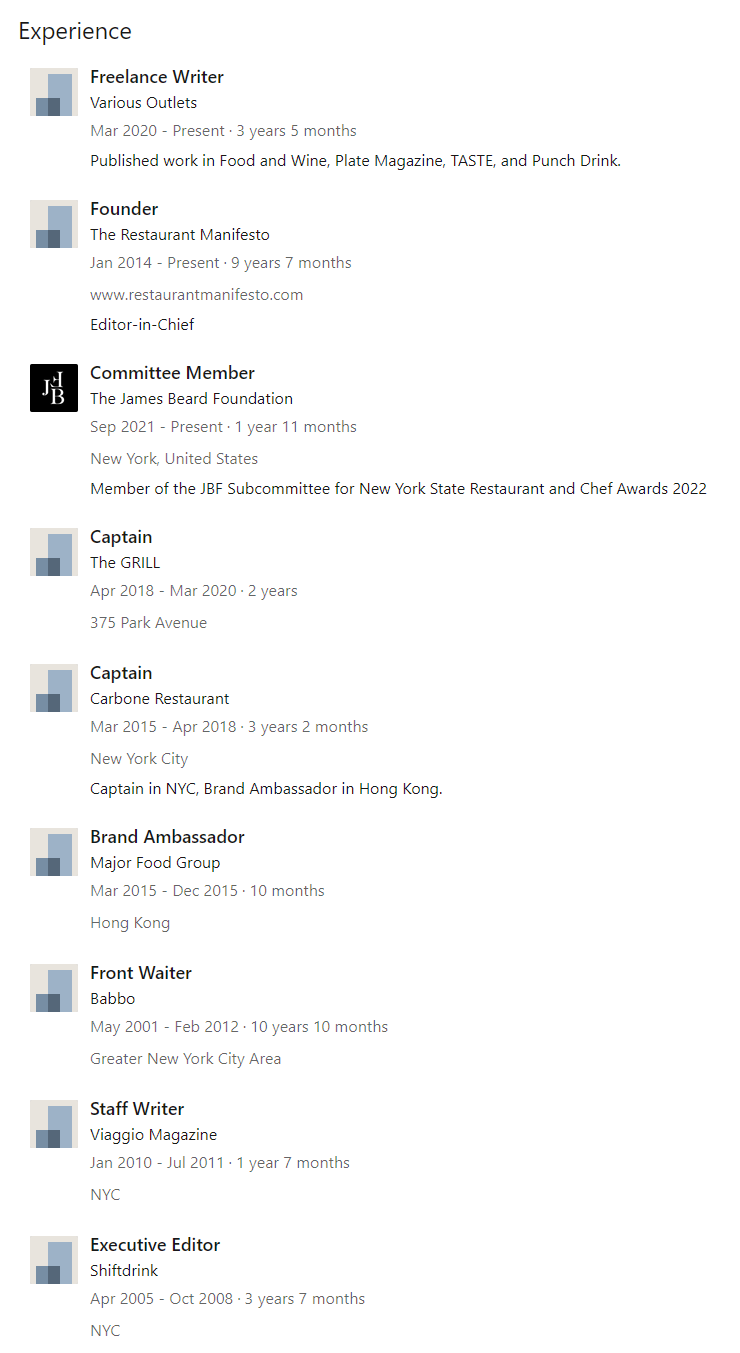
The author:


Archive: https://archive.is/cBsFD
We Need to Stop Talking About Tipping Fatigue
Some people say they're sick of tipping. But tipping is the only way to cover workers' income.
Bon Appétit - Adam ReinerWhen I was a fine dining server, I never understood why confronting a guest who left a bad tip was considered sacrilege. I was proud of my work, so I took it personally when someone stiffed me. Most restaurant managers refuse to approach bad tippers. Doing so would risk the unthinkable––embarrassing a paying customer––even though managers are acutely aware of how much their servers’ incomes depend on tips. If a manager does approach the table, it’s usually under the guise of a concerned question: “Was everything alright with your service?” In other words, it must’ve been the chef or waiter’s fault if someone leaves a bad tip.
Reading an article on “tipping fatigue” in the New York Times, I was reminded of the fatigue I felt regularly working in restaurants when customers took service for granted by undertipping. It’s a common feeling among hospitality professionals, many of whom are still struggling to regain their pre-pandemic incomes. The blurred lines between fast-casual service and full service restaurants present customers with more confusing tipping situations. But whether service is administered casually at the counter or formally at the table, the almighty tip still stands as the critical source of income for service workers.
While tipped workers earn the full minimum wage in states like California and Minnesota—which can be as low as $7.25—their hourly wages in a majority of states are well below the minimum. According to federal law, a provision known as the “tip credit” permits employers to pay tipped employees as low as $2.13 an hour. Because restaurant owners are only responsible for a fraction of their front of house pay, they’re able to keep menu prices artificially low. That means when you don’t tip servers properly, you haven’t paid the true price of your meal.
Framing tipping as a burden or an extra demand on customers makes fatigue an inevitable reaction. Instead, we should think of tipping as the price of service, and the decision not to leave one—or to leave less than standard—means underpaying for that service. Many patrons assume that faster service means less need for tipping, but even tipped workers that have higher hourly wages, like baristas and counter servers, rely on tips to supplement their income.
Attempts to reform the tipping system—by raising menu prices and paying kitchen and waitstaff more equitably—have seen mixed results. Restaurant managers are quick to impress upon their staff that good and bad tips even out in the end. Which is true. Except when it isn’t. I can’t think of any other business transaction where workers are expected to accept being underpaid by one client simply because another client paid them fairly. When you work in the service industry, you learn to roll with the punches. You also learn to accept that you never get to throw any.
Holding it together through the pandemic has made it harder for many restaurant workers to tolerate ungrateful guests. “What people don’t realize when service is bad right now, most of the time it’s because restaurants are understaffed,” says Alfonso Victoria, a restaurant worker in New York City. Victoria never missed a single shift during the pandemic. The café where he was waiting tables in Williamsburg stayed open despite the lockdowns and capacity restrictions. Most of the staff was let go, but when offered their jobs back as the pandemic raged on, many preferred to ride out the storm collecting unemployment from the safety of their own homes.
Fewer able bodies meant that the servers at Victoria’s restaurant were always stretched thin. “When the pandemic hit, my job duties multiplied,” Victoria says, “I was doing a little bit of everything—serving, making my own drinks and running them.” With a skeleton crew, there was no longer a dedicated food runner position. Victoria did it all.
With his section of the restaurant crowded with diners, Victoria was also expected to greet guests at the door and check their vaccination status while packaging takeout and delivery orders. Tips for delivery orders, if there were any, would go to the drivers. While Victoria’s job description expanded, his pay did not. In fact, it dropped precipitously. As the pandemic ground business to a halt, his income—based almost completely on tips—was cut in half overnight, from $1200 a week to under $600 a week. He was doing five times the work for less than half the pay.
As the new reality set in, Victoria began noticing that many patrons were tipping poorly or leaving no tip at all. At a staff meeting, he suggested the restaurant add an automatic gratuity to every check to protect the staff’s income. His request was denied. Victoria could only convince management to raise the default tip setting on the restaurant’s handheld payment terminals to 20 percent. Prompts that encourage adding more generous gratuity—like the one Victoria was advocating for—were cited in the New York Times article on tipping fatigue as being one of the main sources of customer backlash.
The change marginally helped, but Victoria’s income still stagnated. Since then, he’s moved on to different jobs, but his earnings are still well below pre-pandemic levels. Before the pandemic, he was making $35-40 an hour. Now, because sales and tips have declined, he’s making only $20-25 an hour. Trends show restaurant sales recovering gradually—according to NPD Group the industry is expected to recover 98% of its pre-pandemic visits by the end of 2022—but many workers like Victoria still feel like they’re having to do more work for less pay.
The pandemic has upended the careers of countless restaurant workers like Victoria across the country, leaving them struggling to find stability. Amber Peterson has worked almost every job in the restaurant world, from barista and bar chef to dishwasher and bartop burlesque entertainer. Months ago, she left New Orleans exhausted after years in the restaurant industry there. Now in her forties, she’s resettled to a smaller Midwestern city, still searching to find a restaurant job that meets both her income requirements and need for health coverage—a rarity in the restaurant world. “For the years that I did make a lot of money in the industry,” Peterson says, “It was never enough to get out.”
She’s encountered some of the same issues with shady owners and bad tippers in her adopted city. “The majority of American business owners are still greedy and have no idea how real people live,” Peterson says. She’s currently weighing whether to go back to a tipped job or to pursue a salaried position.
Jaime Wilson has never been a fan of tipping culture in general, which makes it hard for her to defend the practice. She works the counter at a popular bakery in Brooklyn and relies on tips for 30 percent of her total income. “To read all these articles about people being tired of tipping,” Wilson says, “I’m like—I’m tired of being tipped!” Wilson would much rather have her income be divorced from the see-saw of customer generosity, preferring a more egalitarian pay structure between front and back of house.
During the pandemic, her employers didn’t want customers touching the handheld payment terminal for safety reasons, so the staff was asked to prompt customers verbally for their tip choice. Tipping percentage went up dramatically, and management allowed staff to continue the practice. Reactions from customers were mixed—not everyone was on board to add a gratuity.
On one occasion, a customer asked Wilson if she could enter the tip amount herself rather than declare it. Wilson apologized and explained the policy. “Ok, then, never mind,” the woman said. She left no tip. Many customers still perceive counter service as less work, and therefore undeserving of tips.
“Customers have been living in a bubble of lacking information,” says Wilson, “where we, as restaurant workers, have kept our complaints to ourselves and restaurant owners have coddled the customers in order to keep making money.” The pandemic has put tipping under a microscope, which Wilson says makes some customers uncomfortable. “It’s only in the last couple of years that that bubble has started to burst,” she adds, “where we’ve said, ‘Here’s what we’re actually doing, here is what our jobs entail, and this is what we need in return.’”
At the bakery where Wilson works, the entire staff shares tips equally, including a few kitchen positions. She knows she could make more money elsewhere, but she prefers working in an environment where tips are distributed more equitably.
Although kitchen staff don’t usually benefit directly from tips, many restaurants are inviting back of house employees into the tip pool, in cities and states where this practice is legal. Caitlin Briggs, a cook in Milwaukee, moved from their hotel restaurant job to a line cook position in a James Beard-nominated restaurant because they heard that the kitchen staff received 2% of all tips.
“The tip sharing is what brought me in the door to apply,” Briggs says, “because any owner that cares enough about the quality of pay for its employees, is generally a place that’s going to respect me as a human.” Even though Briggs’ hourly wage dropped $1.50, with the added boost from tips, their income went up 50 percent from their previous job. Briggs believes sharing in the tip pool has also had a significant impact on the quality of the work among their fellow cooks.
According to a recent report on industry trends released by the Boston-based restaurant point-of-sale platform Toast, tipping has remained rather steady since the pandemic, although full-service restaurants routinely see higher tip percentages compared with quick-service restaurants. Toast’s report showed that the average tip percentage for full-service restaurants was 19.9% versus 17.0% for quick-service restaurants over approximately 62,000 locations that use its platform across the U.S.
Wilson says that many customers at her counter do understand tipping culture, and she estimates that almost 75 percent of her customers leave at least something in the way of a tip. One of her regulars routinely tips 25 percent every time he buys anything, even on the smallest order. “His 25 percent tip doesn’t do much for my income, but it says: ‘You recognize what I’m doing, and you recognize your role in it.’ That’s what tipping has in many ways become.”
Whenever the debate over who should be tipped and how much erupts again, the conversation almost always centers the paying guest. It’s ironic to use the word “fatigue” to frame the feeling of tipping (or non-tipping) diners, the only people involved in the interaction that aren’t doing any work.
It appears that customers reached a tipping point in the pandemic. They feel comfortable centering their own grievances once again, and expect the hospitality establishment to go back to blaming itself for everything that goes wrong. But with so many operational challenges still lingering––labor shortages, rising inflation––asking restaurant workers to shoulder blame for every unmet expectation is an undue burden. To the contrary, restaurants need more empathy from guests, a sentiment that should be reflected in their tipping practices.
Peterson advises that when customers find themselves in uncertain tipping situations, they learn to embrace the impact that being generous can have on the people serving them. “Even though you might not have tipped the counter server or coffee person before, they provided you with a service that made your day better,” says Peterson, “If you have it to give, give. I wish more people had that mentality.”
While Peterson doesn’t think servers should confront bad tippers, she also thinks customers shouldn’t go out if they aren’t going to respect restaurant workers by tipping them fairly. “I come from the old school where you never question a guest about a tip, and you never complain about whatever tip you get,” she says. “But this is our culture, and if you don’t want to be a part of it, stay at home and yell at your microwave.”
The author:


