Myanmar Civil War - (formerly Burma's)

  • Want to keep track of this thread?
    Accounts can bookmark posts, watch threads for updates, and jump back to where you stopped reading.
    Create account
I’ve read almost the whole thread and I still can’t tell you anything about all the different groups.
To keep a long story short, it's mostly a bunch of armed ethnic groups fighting for their own autonomy and some rebel forces that want to replace the current government.

1.webp
 
Last edited:
This reminds me, whatever happened to that based monk Ashin Wirathu, he of pearls of wisdom like “You can be full of kindness and love, but you cannot sleep next to a mad dog”? Last I heard he didn't much like Suu Kyi, got arrested & then released years ago. Be pretty funny if he's rooting for the gov't now that, as discussed the other day, they 've got a tactical alliance of convenience with the very same Rohingyas he was bashing back in the day vs. the Arakan Army rebels.
From what I knew, he had indeed been released and decorated shortly afterwards, but he is generally less in the media spotlight than before. I searched for more and posted below are some news about him since 2021 (from hostile sources, obviously).

To sum up: he remained in prison for several months after the army seized power, but he is now free and occasionally honoured publicly at formal ceremonies, although he is not really in the spotlight the rest of the time. He has his followers on his own media channels. Like others, he was critical of Min Aung Hlaing's alleged weakness last year when the Tatmadaw was losing badly. There were indeed strong rumours of an internal coup within the military last year, following a series of severe defeats, peaking with Lashio, but in the end nothing came of it.

Junta drops charges against hate-preaching monk Wirathu (September 6, 2021)

The coup regime has pardoned the infamous hate-preaching monk Wirathu, who was arrested last year under the National League for Democracy (NLD) government, after leaving him in jail for more than seven months since its February 1 coup.
Wirathu went into hiding after being charged with sedition under section 124A of the penal code in 2019 for speeches he made attacking Aung San Suu Kyi. He turned himself in just days before the November 2020 election.
(…) “The plaintiff against U Wirathu is the Yangon regional government,” he said. “It has dropped the charges now and he was released this afternoon. But he has been receiving treatment at a defence services hospital.”
A monk involved in seeking Wirathu’s release said: “He suffered from Covid-19 severely. Now he has recovered. But he now has cartilage damage in both his left and right arms. He’s not in good health.”
During a 2019 speech near Yangon City Hall, Wirathu told his followers to “worship the military as if they were the Buddha.”

Nationalist Monks Recruit Pro-Myanmar Regime Militias in Sagaing (June 29, 2022)

In March, U Wirathu and Ma Ba Tha monks traveled between villages that support the junta and military-backed Union Solidarity and Development Party and rallied them to fight the PDFs.

Ultranationalist Monk U Wirathu Among Pro-Regime Figures Honored by Myanmar Junta (November 21, 2022)

Ultranationalist monk U Wirathu and Russian defense minister Sergei Shoigu are among the recipients of the Myanmar regime’s honorary titles in recent days.
The junta statement praised the cooperation for Myanmar’s peace, development and prosperity of the recipients, which also included Shoigu’s deputy Alexander Fomin, Japan-Myanmar Association chairman Hideo Watanabe and various businessmen.

Wirathu, preacher of hate, receives top honour from Myanmar junta chief (January 3, 2023)

Min Aung Hlaing, the leader of Myanmar’s coup regime, bestowed one of the country’s highest honours on the controversial ultranationalist monk U Wirathu at a ceremony on Monday.
The monk, who in 2013 was dubbed “the Face of Buddhist Terror” by Time magazine for his hate campaigns against Muslims, was one of 168 people to receive the title of Thiri Pyanchi at the ceremony held in Naypyitaw, according to state media reports.
The title, which was created after Myanmar achieved independence from British rule in 1948, is granted to distinguished individuals every year ahead of Independence Day on January 4.
(…) He was pardoned by the regime in September of last year, and has since kept a relatively low profile, having been barred by the junta from speaking to the media.
Despite this, he has maintained a presence on social media, where a number of his live-stream videos have found a wide audience.

Firebrand Buddhist monk Wirathu criticizes Min Aung Hlaing (August 13, 2024)

Ashin Wirathu criticized regime leader Min Aung Hlaing over the loss of the Northeastern Regional Military Command (RMC) headquarters in Lashio, and other towns in northern Shan State. The firebrand Buddhist monk made the remarks in a video that was circulated by pro-military social media accounts on Aug. 8.
“It is right that the regional [military] commanders protect their towns from being taken. But does your boss [Min Aung Hlaing] really want to fight? Just ask him if he wants to donate other towns too. Instead of surrendering [the towns and RMC], question him bluntly,” said Wirathu, who is known for inciting violence against Muslims.

Buddhist monks and Muslims in prayer among earthquake victims in Mandalay (March 30, 2025)

The military junta sent soldiers and police to guard the area and provide assistance to the monks. Among the monks residing at this learning centre is Ashin Wirathu, a notorious anti-Muslim monk with close ties to the junta. Wirathu was seen by a Myanmar Now reporter on Friday evening, discreetly assessing the impact of the quake at the scene.

I hope that lady is doing good.
No news from her at all, but if she still resides in Naypyitaw, where she filmed the video, most likely. The city was spared from the fighting, and the violent protests of 2021 had less impact there (a handful of people died, but that's not comparable to Yangon).

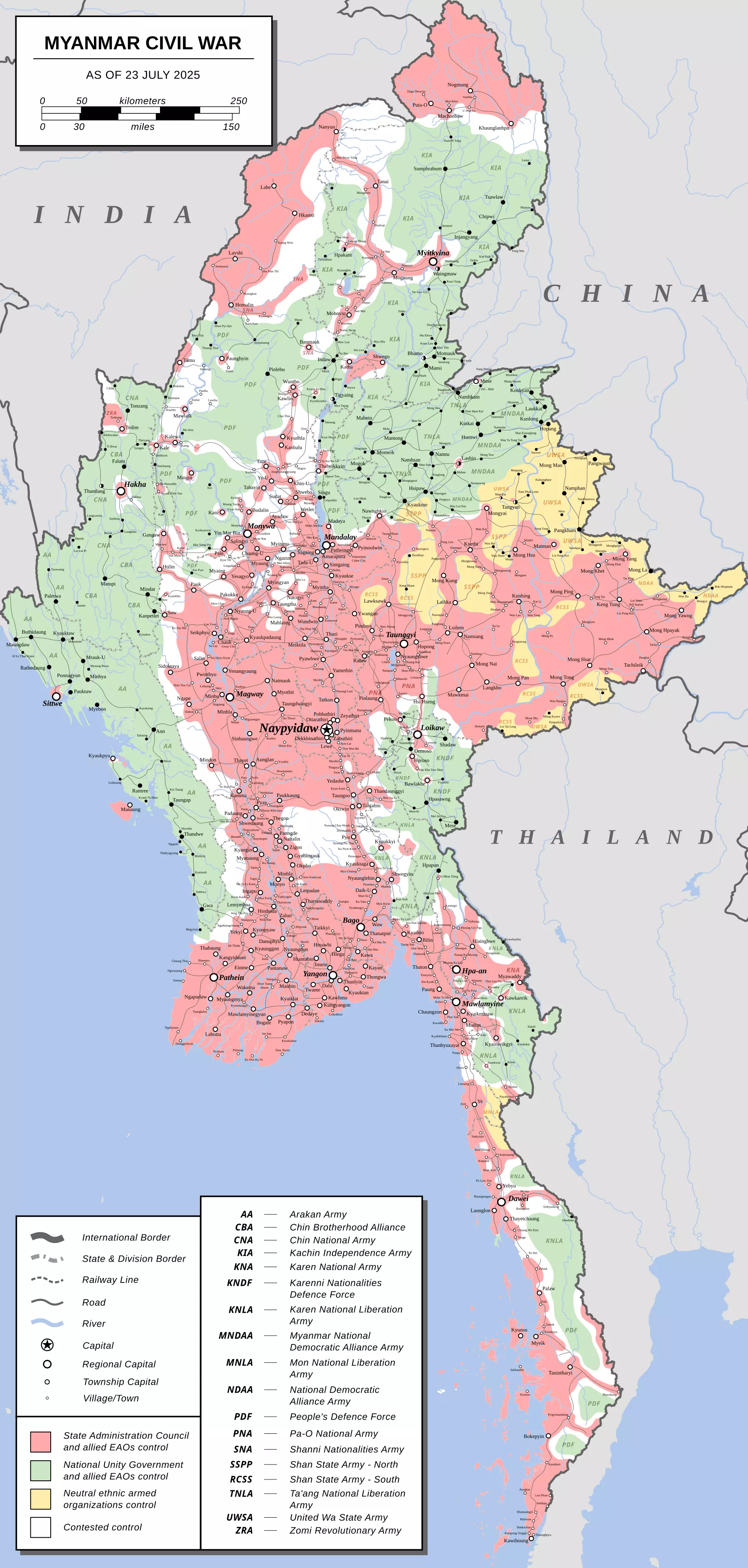
If you want to make things really, really simple. Here's a map that depicts the conflict in three colours;
Red: Regime and pro-regime ethnic armed groups.
Green: anti-regime forces and allied ethnic armed groups.
Yellow: neutral ethnic armed groups.
I know that the goal is to simplify things, and it's honestly a very good map, but I would still separate the groups of the 3B alliance under Chinese influence (to such an extent that China's intervention forces them to cede conquered territory back to the enemy in the MNDAA's case, and is trying hard for the TNLA and the AA) from those which categorically reject any Chinese control (without being outright hostile to their projects in the country, out of pragmatism. Which means leaving their pipelines intact.) The latter are also more "democracy-oriented". But I'm nitpicking, it is a great map.
 
Last edited:
To keep a long story short, it's mostly a bunch of armed ethnic groups fighting for their own autonomy and some rebel forces that want to replace the current government.

View attachment 7692270
If you want to make things really, really simple. Here's a map that depicts the conflict in three colours;
Red: Regime and pro-regime ethnic armed groups.
Green: anti-regime forces and allied ethnic armed groups.
Yellow: neutral ethnic armed groups.
View attachment 7692384
What an absolute clusterfuck.
 
Even if more Americans were inclined to care, who exactly is going to make them stop fighting anyway? The fighting will end when one side whens or when everyone agrees that they're tired of it.
 
There's a lot of Americans who travel to that country every year to work in one of the many international schools...I could think of better places to go and work...
 
There are only two kinds of people in this world.

The ones who call it “Burma” because it’s the original name. These people are based and you should take them seriously.

The ones who call it Myanmar because: “Bu.. But that’s what the BBC calls it!” These people are pathetic and should start every day of their miserable lives getting their head dunked in a jeets toilet.

Now make of that what you will.

So how’s the war in Burma going anyways?
 
All Burmese personal names are particular. Most people do not have surnames or forenames in the Western sense. Names may be one to four syllables long, and are usually chosen depending on the day of the week that a child is born (which is why many people in Myanmar share the same names). Sometimes, however, a child’s name may derive from those of their parents, as is the case with opposition leader Aung San Suu Kyi. Also, among the majority Bamar ethnic group names are usually preceded by an honorific, such as “U”, literally meaning “uncle”, or “Daw”, meaning “aunt”. “U” can also form a part of a man’s name, as in U Tin U. The titles “Maung”, “Ko” (“brother”) and “Ma” (“sister”), usually given to younger men and women, are also found in personal names, as in Maung Maung Aye, Ko Ko Gyi and Ma Ma Lay
This is so alien to Westerners it's literally like space alien naming shit.

In certain Asian languages you literally cannot say "I love you" you have to say some insanely weird shit like "Older brother loves little sister" or similar.

Yet another example of Greco-Roman-Germanic-Anglo cultural and linguistic superiority.
 
The conflict has been going on since they went independent. There are flareups like this civil war though. And many people in the west just don't give a shit about it or can't find Myanmar on a map. It's very confusing for some to follow with the amount of factions in this war.
Hm, im guessing China has decided to be hands off huh?
 
The combat firefight gets interrupted by a pig and her piglet.

Combat footage with a POV showing rebels ambushing regime soldiers that were outside a bar. 1:58 shows the cameramen executing a solider.
 
This is so alien to Westerners it's literally like space alien naming shit.
It certainly doesn't help when trying to figure out who's who and establish family ties. Between homonyms and name changes...
Speaking of confusion, I added some nice flags to my post about the Karens to break up the text, but since different groups can use similar flags, I think it only created more confusion. Nothing is ever simple in Burmanmar, apparently.
Now add to that the fact that astrologers appear to play a prominent role, even in certain ruling circles, and you end up with decisions that are sometimes completely incomprehensible.

The ones who call it Myanmar because: “Bu.. But that’s what the BBC calls it!” These people are pathetic and should start every day of their miserable lives getting their head dunked in a jeets toilet.
It's funny, because here, our equivalent of the BBC tells us not to call it Myanmar because it's a name change imposed by the military and therefore bad. (Although this name is accepted and used by all its opponents.)

Hm, im guessing China has decided to be hands off huh?
Not quite. I mentioned this earlier, but China has had sustained relations with various parties in Myanmar for years, whether it be the Tatmadaw or various ethnic rebel groups, particularly along its border, but also in Rakhine. There are neutral groups, such as the UWSA (United Wa State Army), the largest ethnic armed organisation, which technically heads its own (narco)-state (under close Chinese supervision). These groups are not fighting the Tatmadaw following ceasefire agreements that have not been broken in 2021. The other main groups linked to China form a rebel alliance operating alongside other anti-junta groups in Myanmar, namely the Three Brotherhood Alliance, commonly referred to as 3B or 3BHA.

This article from 3 June, 2025 explains this further and focuses on the role of these three warring or former warring groups.
The 3BHA is made up of Arakan Army (AA), Kokang or Myanmar National Democratic Alliance Army (MNDAA) and Ta’ang National Liberation Army (TNLA) and they are part of the 7-member Federal Political Negotiation and Consultative Committee (FPNCC) headed by United Wa State Army (UWSA).

Other FPNCC members are Mongla or National Democratic Alliance Army (NDAA), Shan State Progress Party (SSPP) and Kachin Independence Army (KIA).
The article then explains in more detail China's influence on these different groups. In a nutshell: the AA basically ignores China and the latter seems to have limited influence over it, the TNLA is being forced to sit down at the negotiating table but still wants to resist the junta politically and militarily, while the MNDAA has completely ceased fighting and ceded territory, as in Lashio.

Let me, in fact, repost the map posted above so you can see where these groups currently operate:
1753608003336.webp
The proximity, or even submission, of some of these groups to China, as well as their manner of administering the various territories they conquered and the resulting ethnic conflicts (EAOs often encroaching beyond their historical ‘fiefdoms’ during their conquests at the expense of other groups), may have led, if not to actual armed clashes, which were mostly avoided in order to prioritise the fight against the Tatmadaw, to skirmishes and serious tensions, as well as to a lack of a common front.

Another article from May, entitled How China Manipulates Myanmar’s Ethnic Resistance, analyses the murky but nonetheless very active role played by China. Excerpts:
(…) China is primarily focused on resumption of trade worth US$ 6 billion a year through the border between northern Shan State and Yunnan, which has been halted since the Brotherhood Alliance of three ethnic armed groups launched anti-regime Operation 1027 in October 2023. While there is also border trade with China through Kachin State, this is much lower than through northern Shan.

(…) For China, Myanmar’s political structure—whether democratic or authoritarian—is irrelevant. Regardless of who governs Myanmar, China’s priority is a stable environment where it can promote its economic interests. The ongoing armed conflict simply frustrates Beijing as it hampers trade, disrupts investments, and threatens long-term economic plans.

Of the seven ethnic armed organizations based near the Chinese border, three—the United Wa State Army (UWSA), Shan State Progress Party (SSPP), and National Democratic Alliance Army (NDAA)—have opted out of fighting the regime altogether.

China also has a degree of leverage over three other groups that are fighting the regime—the Kachin Independence Army (KIA), the Ta’ang National Liberation Army (TNLA), and Myanmar National Democratic Alliance Army (MNDAA)—because they rely on Beijing for vital supplies of food, fuel, and pharmaceuticals. With varying success, China has used both carrot and stick in brokering talks between the regime and ethnic armed groups since 2022.

Only the Arakan Army (AA) from Rakhine State in western Myanmar, which assists its allies in their operations in northern Shan State, is largely independent of China.

While China acknowledges the possibility of the junta collapsing, it also sees no viable alternative. It is apparently afraid that Myanmar could descend into chaos once the junta was removed, jeopardizing Chinese investments.

So rather than facilitating talks between the regime and EAOs to find a long-term solution, China only cares to divvy up territory between them. In doing so it sets the terms, and the EAOs are pressured to accept Beijing’s conditions or face punitive action.

That is why China’s approach to Myanmar’s EAOs has shifted from collective engagement to separate negotiations, aiming to fragment alliances and limit cooperation with the civilian National Unity Government (NUG)—in other words, divide and rule.

Reports indicate that China is pressuring ethnic groups to avoid aligning with NUG, and has met separately with the UWSA, SSPP, and NDAA, and pressured them to restrict supplies of weapons, food, and medicine to armed groups fighting the regime.

That intervention has to some extent stalled military cooperation and political alliances among the EAOs of northern Shan State.

The AA appears to face less direct pressure from China as its operations are limited to Rakhine bordering Bangladesh and India. Given India’s strategic presence, China is handling the AA with caution, and the AA has in turn skirted China’s strategic investments in the envisioned deep-sea port of Kyaukpyu on the Bay of Bengal.

In Kachin State, talks with the KIA were tense in late 2024, but China has toned down its approach since its rare earth mines in the state came under KIA control.

It continues regular meetings with KIA, urging it to engage in talks with the junta, but so far it has not forced direct negotiations.

The KIA in turn has reportedly suspended its formal involvement in K3C, a coalition of four groups fighting the regime that also includes the Karen National Union, Karenni National Progressive Party, and Chin National Front. This is testimony to the fact that China has some leverage over the KIA. (…)
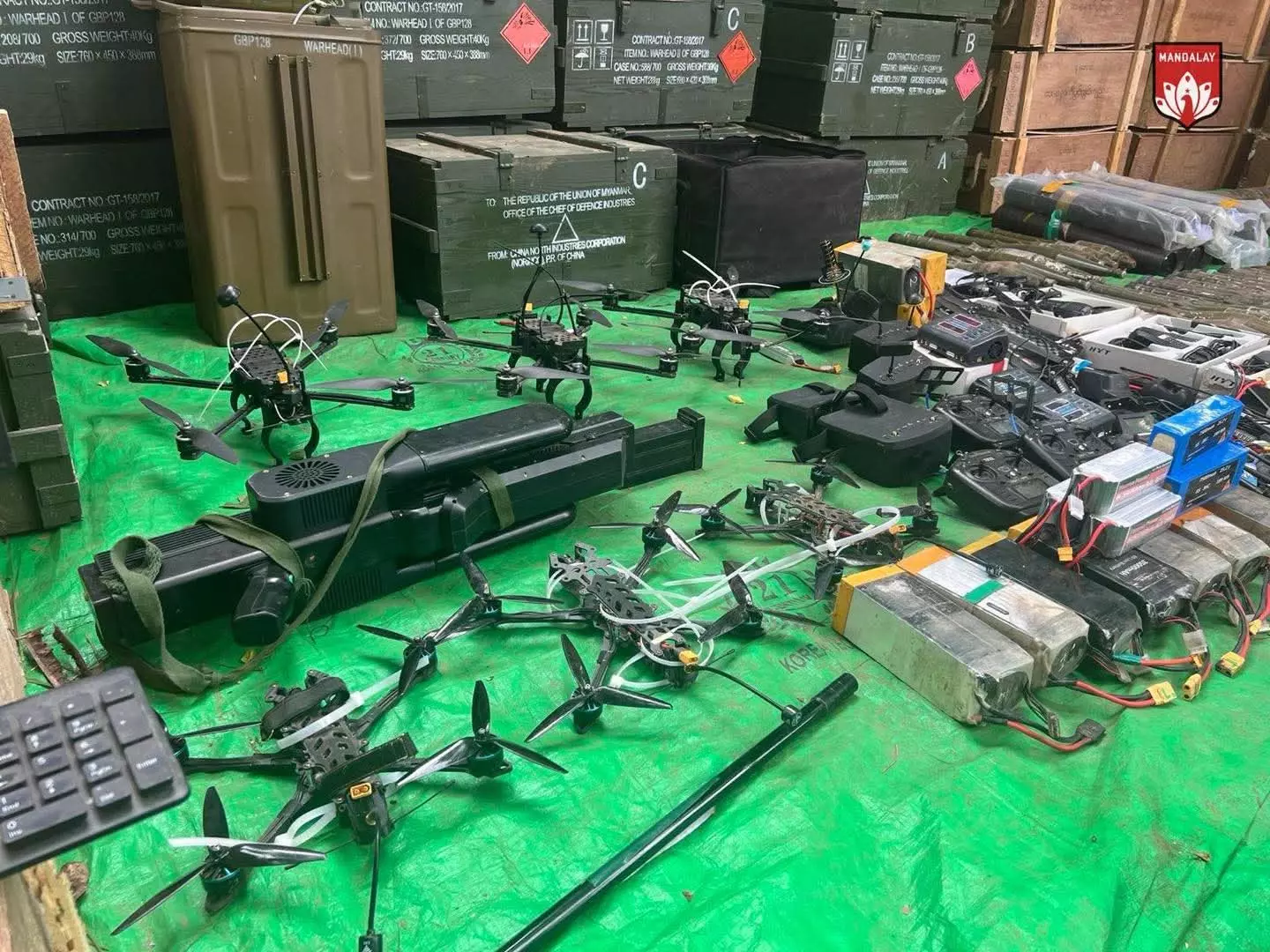
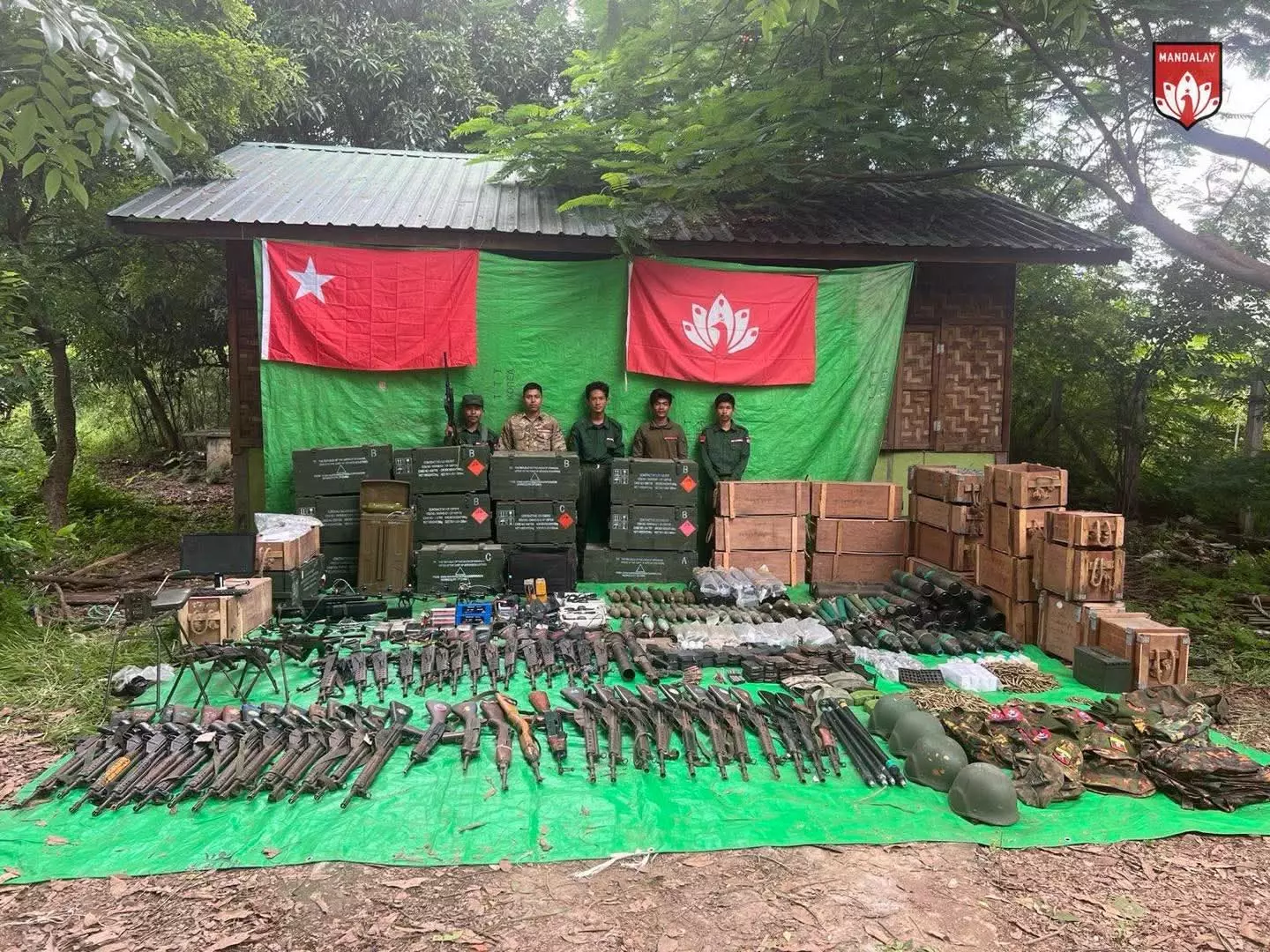
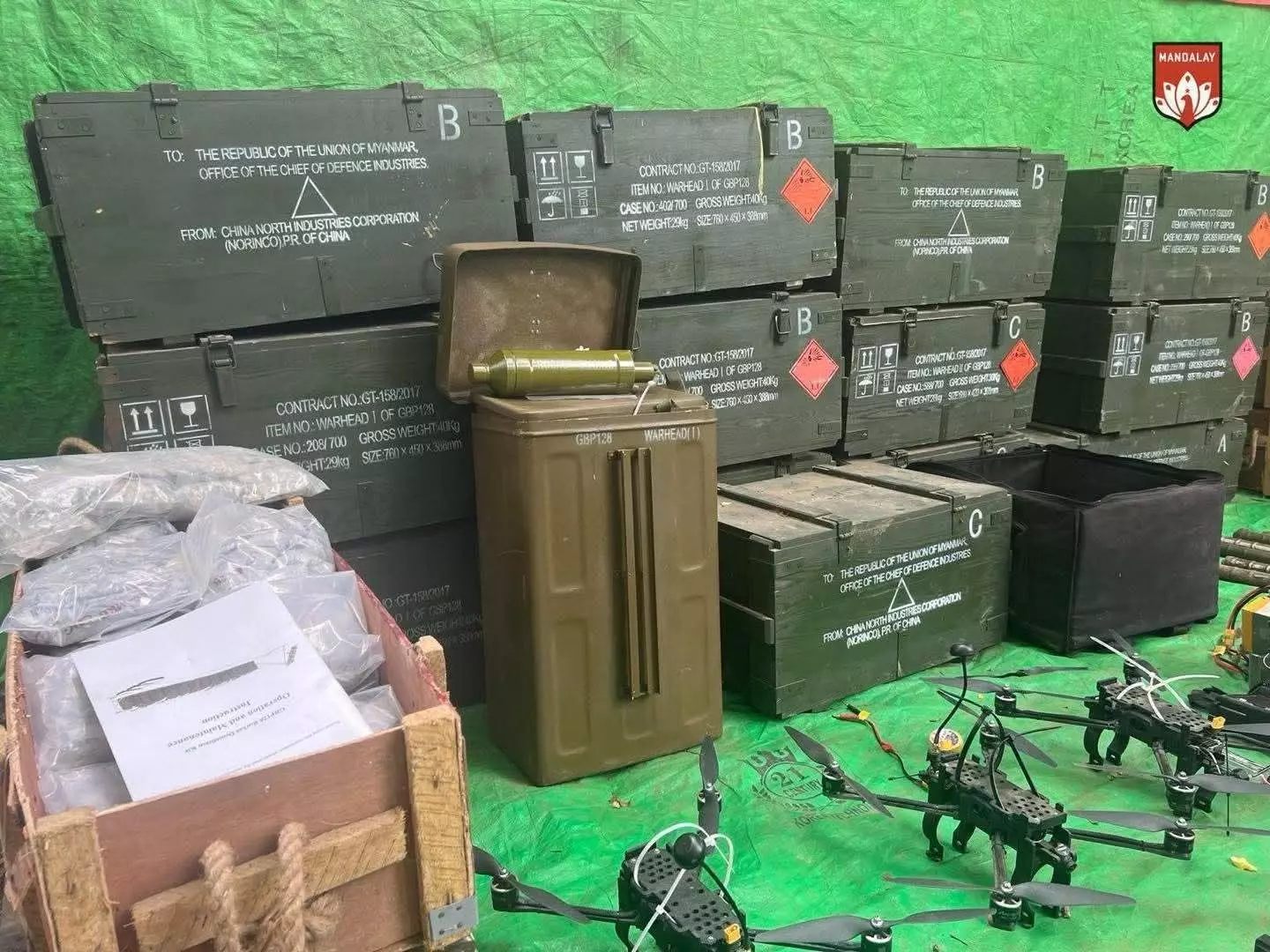
Alongside this pressure, which significantly reduced the number of fronts that the Tatmadaw had to fight on simultaneously, China, like a few other countries (notably Russia), continues to provide military and economic support to the junta, as demonstrated once again by these photos of military equipment captured by the PDF in the Mandalay region this week.
1753606861383.webp 1753606767133.webp 1753606818182.webp
The Chinese company Norinco which sent this stuff is also linked, through sister companies, to several mining operations in Myanmar, a country with abundant natural resources that are obviously highly coveted.

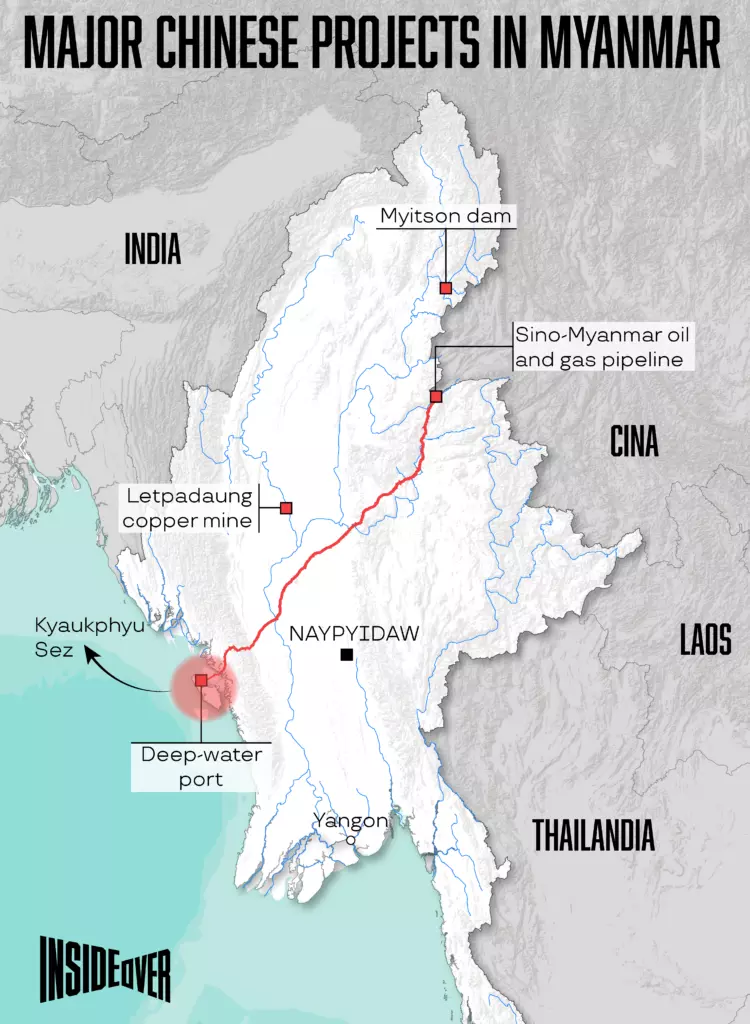
Amongst its many investments in the country, this is China's most important and best-known project. The gas pipelines to Kyaukphyu and its deep-water port. Add to that roads, railways...
1753607091113.webp

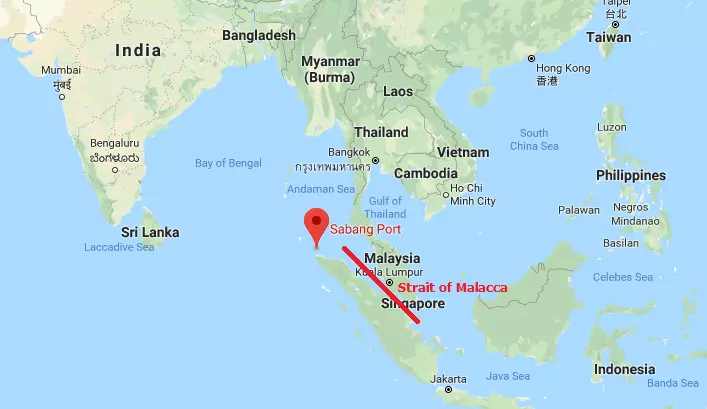
This would also allow China to bypass the highly busy Strait of Malacca.
1753607891561.webp

Looking at the map of the conflict, one will easily understand how these interests can be disrupted; although none of the actors, even those furthest from China, openly attack its projects in the country.

The ongoing fighting around Kyaukphyu will therefore be decisive. If the AA ends up occupying it, it will definitely be in a position of great strength.

The AA controls nearly all of Kyaukphyu Township. The junta only controls Kyaukphyu City, a 10-mile radius around the city including about 12 villages, Dhanyawadi Naval Base south of Kyaukphyu City, Maday Island where China is trying to set up a deep sea port and most of the Kyaukphyu Economic Zone south of Kyaukphyu City, where there are other Chinese backed infrastructure projects.

In summary, I think it is reasonable to say that without China, the junta would be in a much more precarious situation, even on the verge of total collapse.

Although still in serious difficulty, its victories this month must have boosted the morale of troops who can be sometimes unmotivated to fight, especially in the case of men who have recently been conscripted, willingly or by force. In fact, manpower is certainly their biggest issue.

Not Myanmar, but still very close
Thailand and Cambodia have escalated their border skirmishes now with airstrike and rocket strikes
With SCS being as hotter than ever, there's a possibility that the entire Indochina region will turn into a conflict zone things continue to escalate
Very close indeed.

Some Myanmar workers in Thailand beaten after being mistaken for Cambodians amid Thai-Cambodian tensions
 
Last edited:
"Myanmar/Burma Chin National Army and Chin Brotherhood forces attack junta reinforcements in the Mualpi area (near Sagaing Region; late May early June)"
 
Earlier today, I was planning to gather various pieces of information to provide a somewhat lengthy update on the different hotspots of the conflict, when I was delighted to see that the Myanmar War Map account, whose map I posted a few days ago, was back on Xitter. And he took care of it for me (although it is not exhaustive, so I'll still add a couple of things).

On the Nawnghkio/TNLA situation, he wrote the following:
The majority of Nawnghkio is now back under SAC control after a protracted counter-attack by government forces.
The first major advance, after several months of intermittent fighting, was regaining full control of the 902 Artillery Command in Taung Hkam, in March. TNLA had never been able to fully control these bases, leaving their positions vulnerable.
Fighting stopped due to the March 28 earthquake that devestated many areas of Myanmar. But in June, after fighting resumed, SAC forces were able to break through TNLA defences around Ohn Ma Thee, reaching close to the Battalion 114 & 115 bases west of Nawnghkio.
Then, in July government forces resumed their advance from Taung Hkam direction, entering the southern outskirts of Nawnghkio around by July 13. The situation is still complex and sources limited.
The latest reliable reports indicate that the town is largely under government control as of July 17 and administrative functions have begun. However, there has been no confirmation of the capture of the Battalion 114/115 bases, or the Artillery Battaion 606 base south of town.
It is expected that SAC will attempt to continue advancing towards Kyaukme and Mogok. However, for now TNLA are still holding positions in Hsum Hsai to the west, and Goke Hteik to the east.
1753718680673.webp

Alternative map found in this article published today, which considers the possibility of an upcoming SAC offensive towards Mogok. It also explains that the town of Thabeikkyin, recently recaptured as well, west of Mogok, is still surrounded by PDF rebels, which the Tatmadaw might also need to deal with.
1753718762568.webp
There were also air strikes in the neighbouring Kyaukme Township (and elsewhere, as usual).

The next two xeets talk about the situation in Rakhine State and the AA advancing in Ayeyarwady Region:
Since the capture of Gwa in December, the AA alongside local PDFs has gradually advanced into areas of neighbouring Ayeyarwady Region.
They now control a ~20km stretch of the Pthein-Monywa highway, between the Artillery Battalion 344 base in Yegyi Township, and the Military Training School 5 in Ingapu Township.
The 344 Artillery base has been the centre of heavy fighting. The majority of heavy weapons were withdrawn to Kyonpaw in June, as AA forces closed in. The AA has remained tight lipped about this theatre of operations.
And it is still unknown how far, or in which direction they intend to advance after securing this area.
1753719032237.webp

About the Kyaukphyu hotspot:
Heavy fighting has been reported in Kyaukpyu township in recent months. The fighting has been two way, with SAC attempting counterattacks after receiving significant reinforcements earlier in the year.
Government forces suffered heavy casualties in these failed attacks and the most recent reports indicate that fighting is occuring along a frontline running close to the villages of Ma La Kyun, Pyaing Sayt Kay and Kat Tha Pyay.
Reinforcements continue to arrive in significant numbers, as the SAC attempts to cling on to their final strongholds in Rakhine State, Kyaukpyu, Sittwe and Munaung island.
1753719157560.webp

The flotilla/fleet (idk) continues its little journey towards Bhamo and has reached Kachin State.
Sources in Sagaing Region told DVB that one civilian was killed and five others were injured by airstrikes carried out by six Myanmar Air Force jets escorting 17 Myanmar Navy vessels through Katha Township along the Irrawaddy River on Saturday. Katha is located 223 miles (358 km) north of the region’s capital Monywa.
A People’s Defence Force (PDF) member told DVB that the naval fleet reached Kyaukkyi village of Shwegu Township in Kachin State on July 26.
Sources told DVB that the fleet is headed toward Kachin’s Bhamo Township, where fighting between the Kachin Independence Army (KIA) and regime forces has been ongoing since Dec. 4. Shwegu is located along the Irrawaddy River 29 miles (46 km) east of Katha and 64 miles (103 km) west of Bhamo.

Close-up look:
Capture d’écran 2025-07-28 à 18.19.45.webp

But wait, there's another Kyaukkyi. In the aptly named Kyaukkyi Township, in the Bago region, further south, north-east of Yangon.
Capture d’écran 2025-07-28 à 18.24.05.webp
There, the PDFs reportedly captured two Tatmadaw outposts.

Finally, as announced in the Global New Light of Myanmar, the Tatmadaw reportedly managed to regain control and reopen the road between Kyondoe and Kawkareik in Karen State.

This takes place even further south, near Myawaddy:
Capture d’écran 2025-07-28 à 18.27.01.webp
Don't you love Myanmar's (formerly Burma's) geography yet?

GNLM article from 25 July:
Capture d’écran 2025-07-28 à 18.32.35.webp

Meanwhile, pictures from Bhamo:
1753720574471.webp 1753720623014.webp
Aerial views:
1753720673982.webp 1753720705354.webp

Heaven on Earth.
 
Last edited:
The rebels are going all out to attack the flotilla on the way to Bhamo.

 
What are the chances of rebels succeeding, as it was in Syria? I'm not a burmasperg, all I know it has been a failed state since at least WW2.
 
Back
Top Bottom