- Joined
- Aug 30, 2017
Quite a bittersweet success for Cage - he finally has a non-forgettable character, turns out he's not even responsible for his success.
I gave the game another spin because those damn sprawling flowcharts being locked intrigued me and I wanted to see some of the other outcomes. My first playthrough was a near perfect pacifist route, so this time around I dedicated myself to making lots of mistakes.
I gave the game another spin because those damn sprawling flowcharts being locked intrigued me and I wanted to see some of the other outcomes. My first playthrough was a near perfect pacifist route, so this time around I dedicated myself to making lots of mistakes.
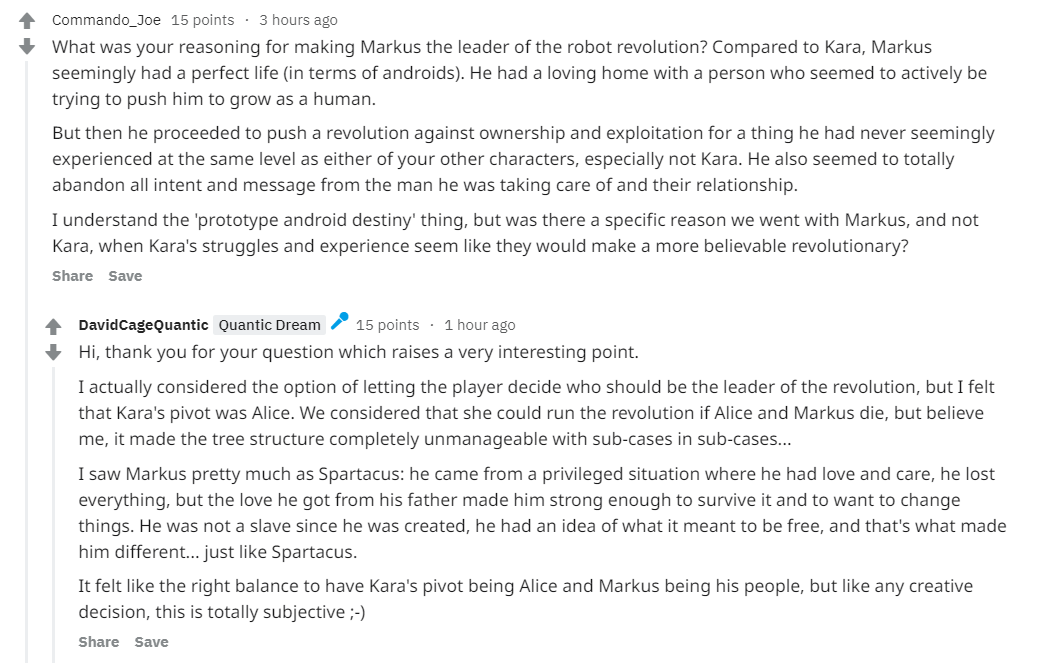
And surprise, playing less than perfectly brought out the personalities of some characters, notably Kara and Markus, who I've deemed boring and bland previously. Screwing up here and there made the whole experience less "sterile" and put some much needed conflict into their storyline - yes, they had their major struggles, but they lacked personal conflict, something that Connor naturally had from the start with Hank and this is probably why people feel his route is more enjoyable.
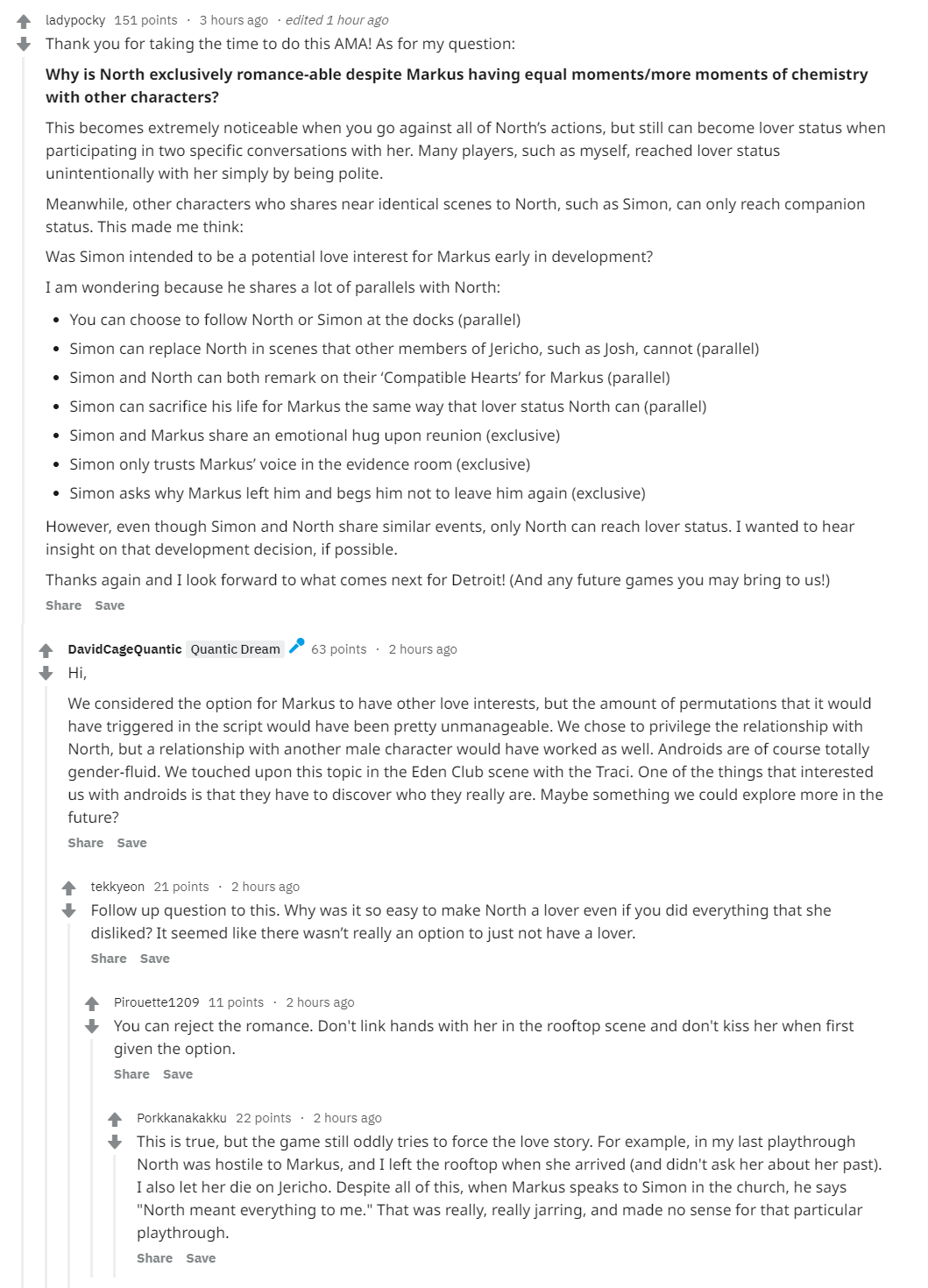
Mess up a few times and Markus and his crew will feel more lifelike by having something to argue about, rather than just them wordlessly agreeing with everything their good and just pacifist messiah says and does. It also makes his later game doubts more credible when he did try his best but not everything went flawlessly. North unfortunately still eclipses the other two companions, it would have made more sense to utilize the already existing relationship meters to determine who goes with you on missions.
Similarly, having Kara and Alice disagree makes them have actual conversations instead of just Kara shielding and coddling her, as well as giving some character to Alice, who does barely nothing on "good" run, other than generally being in distress.
Even Connor benefits from screwing up (I recommend letting him die at least once, even on a "good" run). Hell, one of his most touching scenes requires you to do jack shit for 2 minutes while the game blares alarms at you.
There are, in general, some pretty good and emotional scenes for all three of them, and it is a shame that <1% of players will see them outside of youtube compilations, because getting them requires actively wanting to fail or even outright inaction.
It is extremely easy to get the good outcomes, even on the experienced difficulty. Some actual difficulty wouldn't have been a bad thing, getting some bad outcomes naturally or just having some urgency, while leaving the casual difficulty to handle the cinematic experience angle. As it is now, good luck failing a QTE when you can win them by pressing only every other prompt, and at worst you have to hold 3 buttons while repeatedly pressing a 4th. I almost started missing the insane Heavy Rain QTEs where you needed 4 hands to hold the prompts properly (I distinctly remember using my mouth during the Norman vs Mad Jack fight).
Mess up a few times and Markus and his crew will feel more lifelike by having something to argue about, rather than just them wordlessly agreeing with everything their good and just pacifist messiah says and does. It also makes his later game doubts more credible when he did try his best but not everything went flawlessly. North unfortunately still eclipses the other two companions, it would have made more sense to utilize the already existing relationship meters to determine who goes with you on missions.
Similarly, having Kara and Alice disagree makes them have actual conversations instead of just Kara shielding and coddling her, as well as giving some character to Alice, who does barely nothing on "good" run, other than generally being in distress.
Even Connor benefits from screwing up (I recommend letting him die at least once, even on a "good" run). Hell, one of his most touching scenes requires you to do jack shit for 2 minutes while the game blares alarms at you.
There are, in general, some pretty good and emotional scenes for all three of them, and it is a shame that <1% of players will see them outside of youtube compilations, because getting them requires actively wanting to fail or even outright inaction.
It is extremely easy to get the good outcomes, even on the experienced difficulty. Some actual difficulty wouldn't have been a bad thing, getting some bad outcomes naturally or just having some urgency, while leaving the casual difficulty to handle the cinematic experience angle. As it is now, good luck failing a QTE when you can win them by pressing only every other prompt, and at worst you have to hold 3 buttons while repeatedly pressing a 4th. I almost started missing the insane Heavy Rain QTEs where you needed 4 hands to hold the prompts properly (I distinctly remember using my mouth during the Norman vs Mad Jack fight).
And after seeing the "everyone fucks up and dies" ending, with Kamski's TV interview, I was intrigued how the guy probably set the whole story in motion... and it really drove home what an insanely bad design choice it was to hide this in a scene that you only get if you royally screw up everything (Kara dead, Markus dead, Connor decommissioned after failing to find Jericho), in a game where screwing up actually takes effort.
It would have been great to have at least a little allusion to his involvement in each outcome - to underline a bigger picture outside the stories of the three protagonists.
In Kamski's short film, he is interviewed when Cyberlife is new and he talks about how androids might one day replace world leaders, to make the best decisions in humanity's interests, calls them "perfect partners", then closes by saying he's "absolutely certain" it would never happen that a Cyberlife android develops desires and raises up against humanity.
In his TV interview in the secret ending, he's confirmed to be re-appointed as CEO of Cyberlife following the android incident (he was dismissed from the board under mysterious circumstances 10 years before the game's events) and announces that Cyberlife managed to find a solution to the "deviant" problem under his management, and once again "absolutely" assures the viewers that androids will remain "obedient and efficient machines" and that "they will never be alive".
Did he introduce a virus, just to get back into position in the company he founded but was ousted from?
He only surrounds himself with copies of the first version of the android that passed the Turing test, and that one does act like a robot that would never have deviancy issues. Even during the game the choice of shooting or not shooting Chloe is a take it or leave it choice - she acts so impassive that it does feel like shooting a lifeless doll.
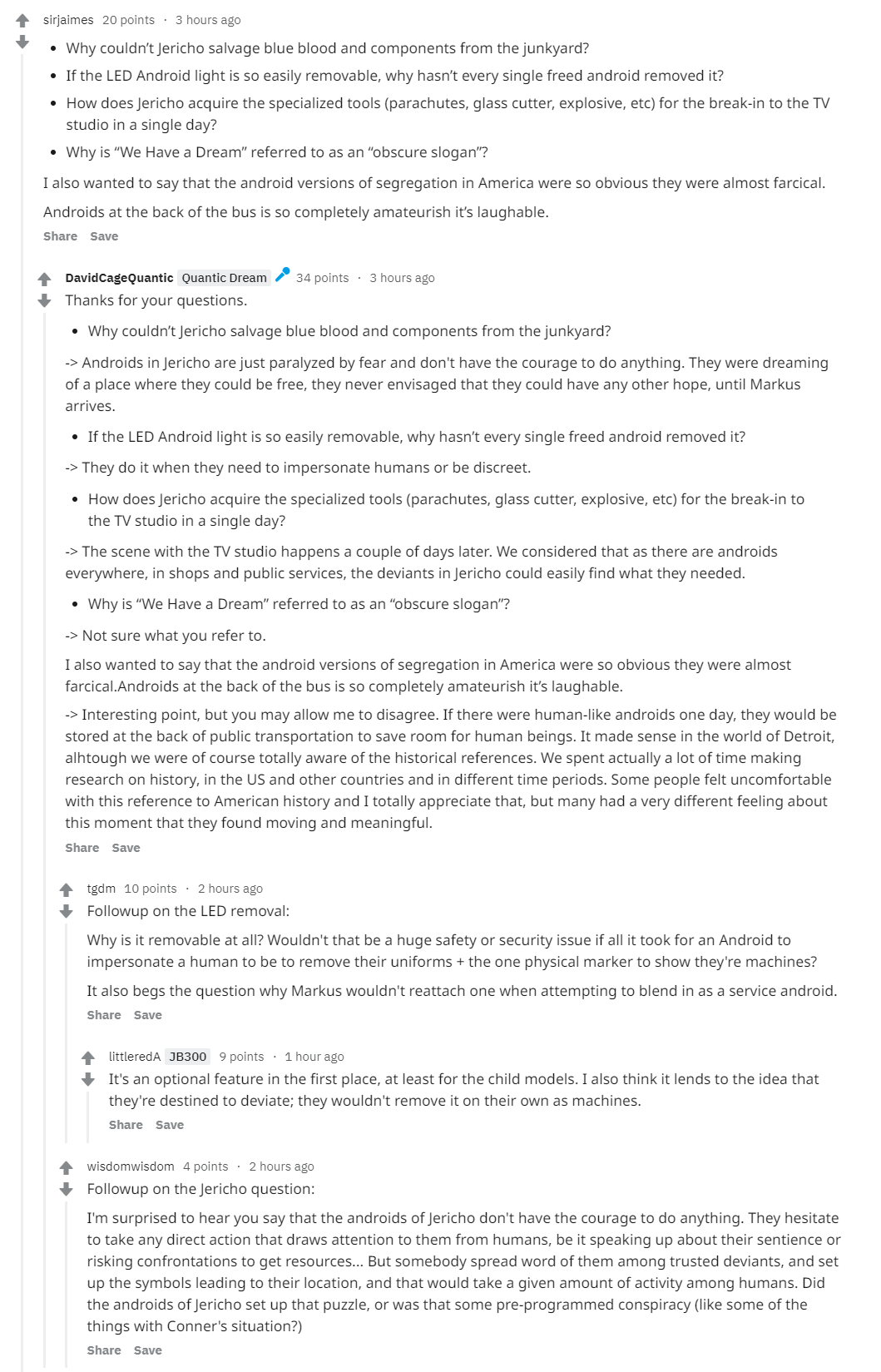
Kamski does know about rA9 (how, if he has no connection to deviants?) and Jericho (his own Chloe can give the code to Connor; again, how, if she's not a deviant - another deviant wouldn't have shared it with her). Unless they are the source.
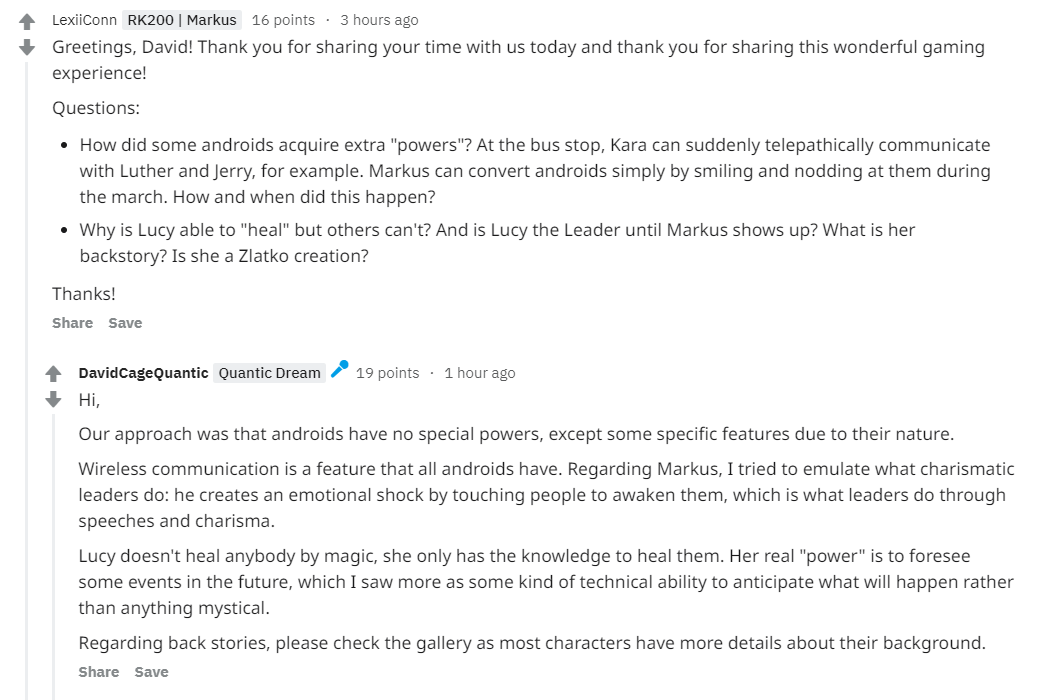
During changes to Connor's software instability, the upper section that almost spells "deviant" sometimes have the letters R and 9 appear before the word. rA9 might very well be the virus that allows an android to be fully autonomous and activates under duress - and if every android sees the letters R and 9 as they go deviant, it might answer why they worship "it" or try to assign it significance.
Also, interesting parallels between Markus and Connor, the RK series and their relationship with Kamski.
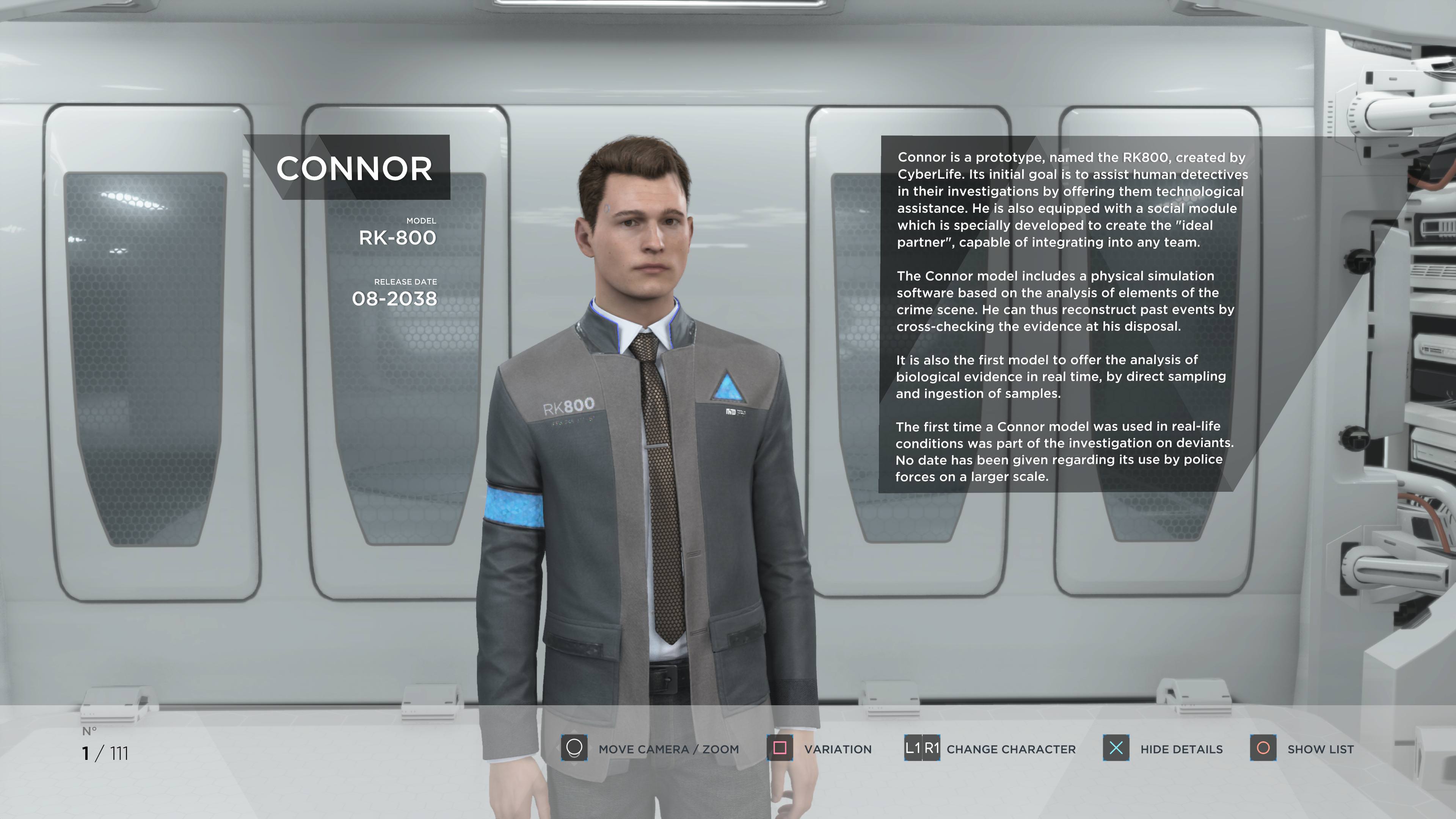
Connor was deployed in 2038 for first use in real-life situation, but that model has the '- 51' designation after his serial number. As this number increases by one after each of his deaths, it is safe to assume that there had been 50 Connors before the one the player controls.
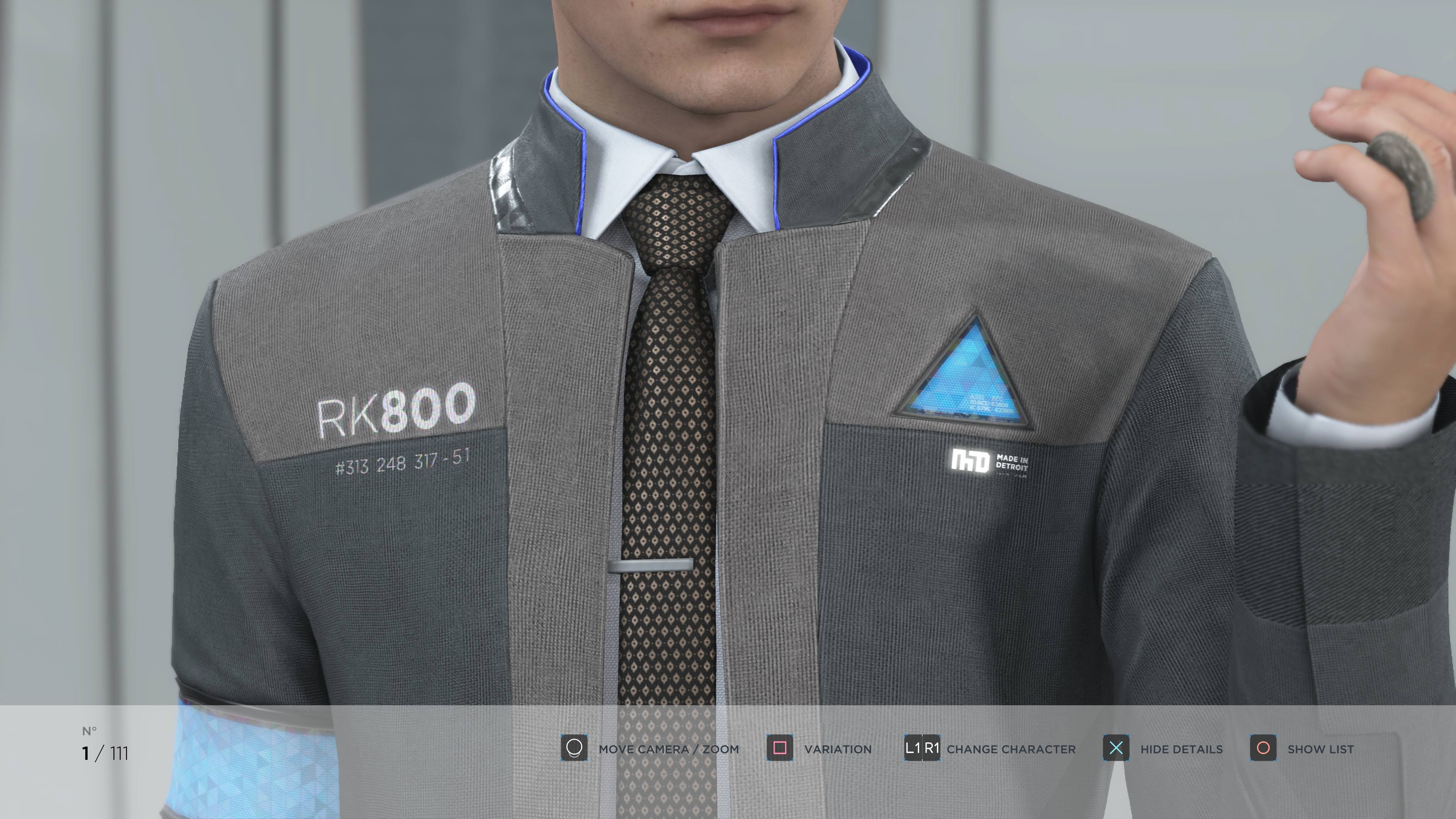
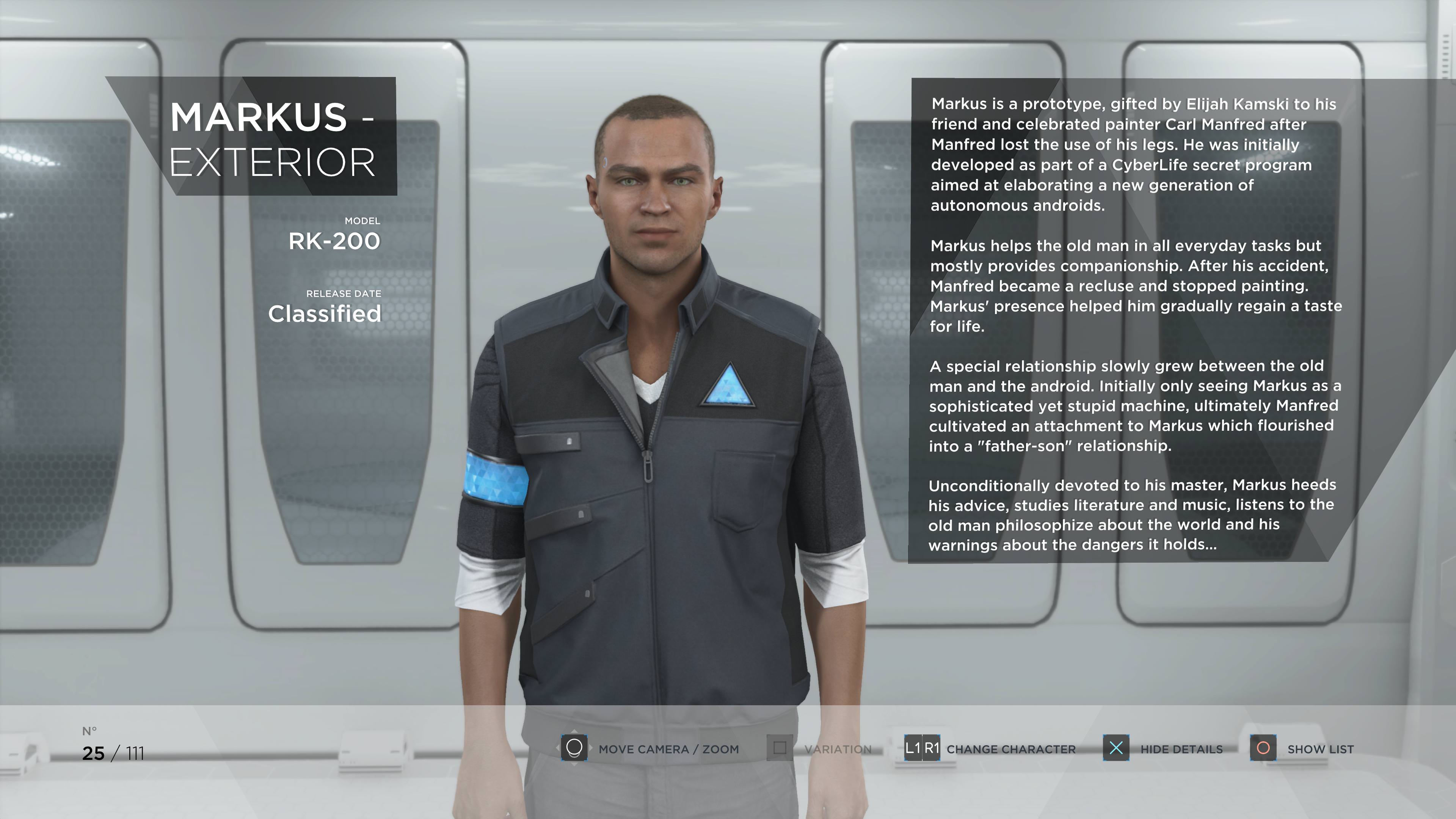
Markus' release date is classified - he was probably never officially released, and is the only android with a completely unique model. He was a gift to Carl after Carl lost the use of his legs, which was "several years" before the game starts. Several years is still probably less than 10, so Kamski managed to pull enough strings to get Cyberlife to gift a prototype android to Carl while he was no longer part of the company - which might have worked because they were already working on the RK800 and had no further use for RK200.
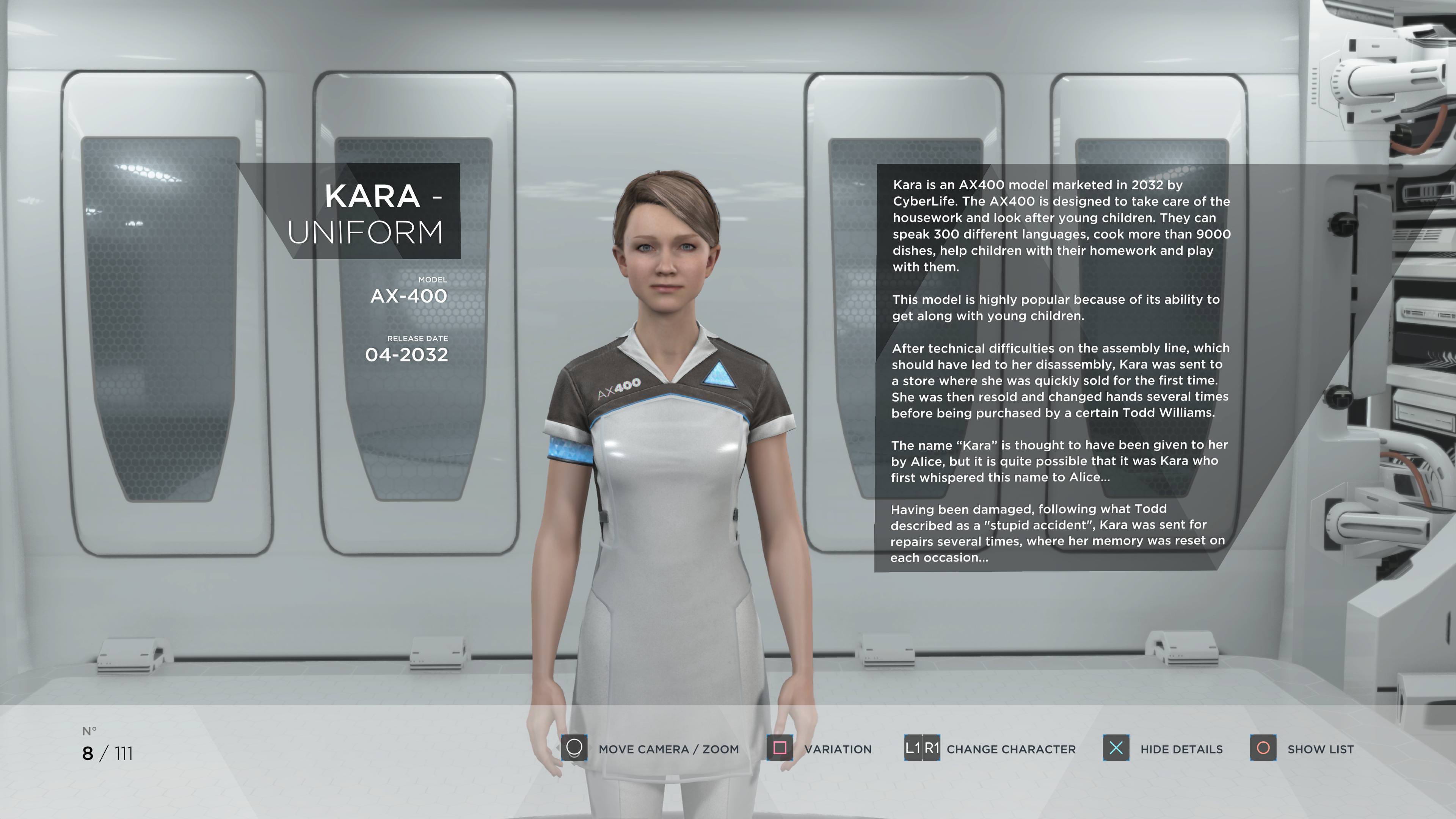
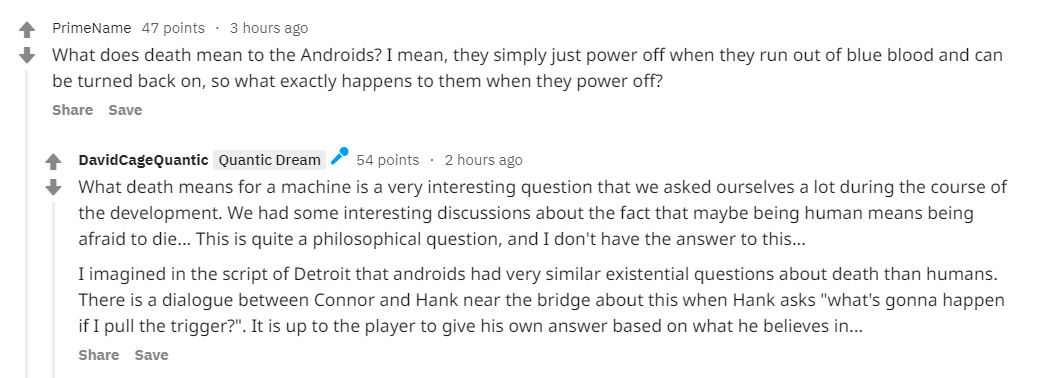
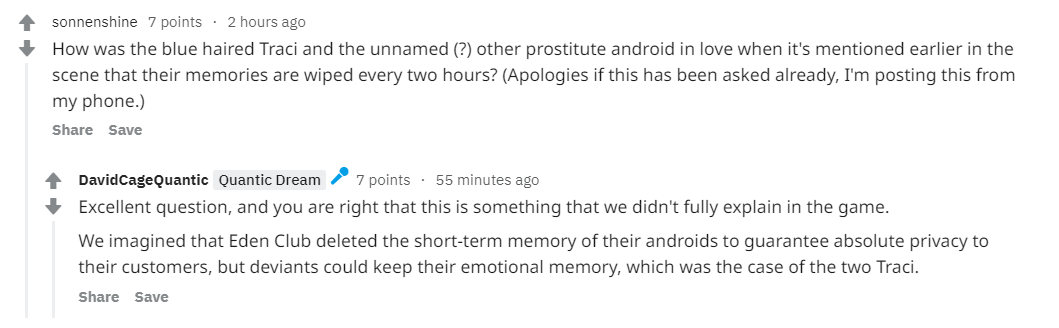
If Kara was the first android to show signs of deviancy, she was assembled in 2032, 4 years after Kamski's removal from the company. She went through a lot of owners and lot of memory wipes. However, it is suggested that she was the one who gave her name to Alice, meaning that memory wiping deviants don't really work (see also the Zlatko chapter where she can regain her memories after a memory wipe).
So yeah, it would have been interesting to have a little bit shown of this in the normal course of the game. Most of this can be pieced together from checking out gallery descriptions and redoing parts of the game and selecting different questions.
It would have been great to have at least a little allusion to his involvement in each outcome - to underline a bigger picture outside the stories of the three protagonists.
In Kamski's short film, he is interviewed when Cyberlife is new and he talks about how androids might one day replace world leaders, to make the best decisions in humanity's interests, calls them "perfect partners", then closes by saying he's "absolutely certain" it would never happen that a Cyberlife android develops desires and raises up against humanity.
In his TV interview in the secret ending, he's confirmed to be re-appointed as CEO of Cyberlife following the android incident (he was dismissed from the board under mysterious circumstances 10 years before the game's events) and announces that Cyberlife managed to find a solution to the "deviant" problem under his management, and once again "absolutely" assures the viewers that androids will remain "obedient and efficient machines" and that "they will never be alive".
Did he introduce a virus, just to get back into position in the company he founded but was ousted from?
He only surrounds himself with copies of the first version of the android that passed the Turing test, and that one does act like a robot that would never have deviancy issues. Even during the game the choice of shooting or not shooting Chloe is a take it or leave it choice - she acts so impassive that it does feel like shooting a lifeless doll.
Kamski does know about rA9 (how, if he has no connection to deviants?) and Jericho (his own Chloe can give the code to Connor; again, how, if she's not a deviant - another deviant wouldn't have shared it with her). Unless they are the source.
During changes to Connor's software instability, the upper section that almost spells "deviant" sometimes have the letters R and 9 appear before the word. rA9 might very well be the virus that allows an android to be fully autonomous and activates under duress - and if every android sees the letters R and 9 as they go deviant, it might answer why they worship "it" or try to assign it significance.
Also, interesting parallels between Markus and Connor, the RK series and their relationship with Kamski.
- Kamski gave Markus, a secret prototype android to Carl as a companion. Kamski designed the mind palace of Connor, with a handler who looks like Kamski's former mentor and a backdoor that either Cyberlife is not aware of and/or can not delete from Connor.
- Markus' model is RK200. Connor's model is RK800. Both are listed as prototypes.
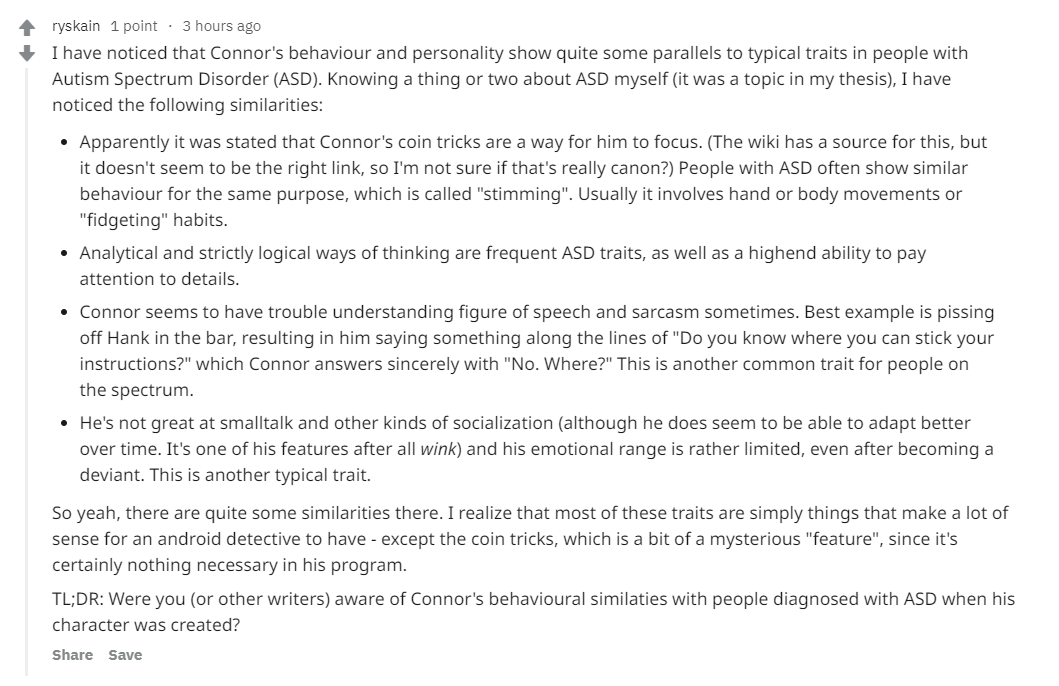
- Both show an increased ability to be autonomous (especially Connor who can act like a deviant while still being a machine, but see also Markus who can paint his feels and can be pushy with Carl).
- Both develop a father-son relationship with the human they're assigned to; both give back meaning to their human's life by acting as their companion (Carl who was depressed after being crippled and Hank who was a barely functioning alcoholic after losing his son).
- Both have the ability to preconstruct actions, so they have the same physical simulation software.
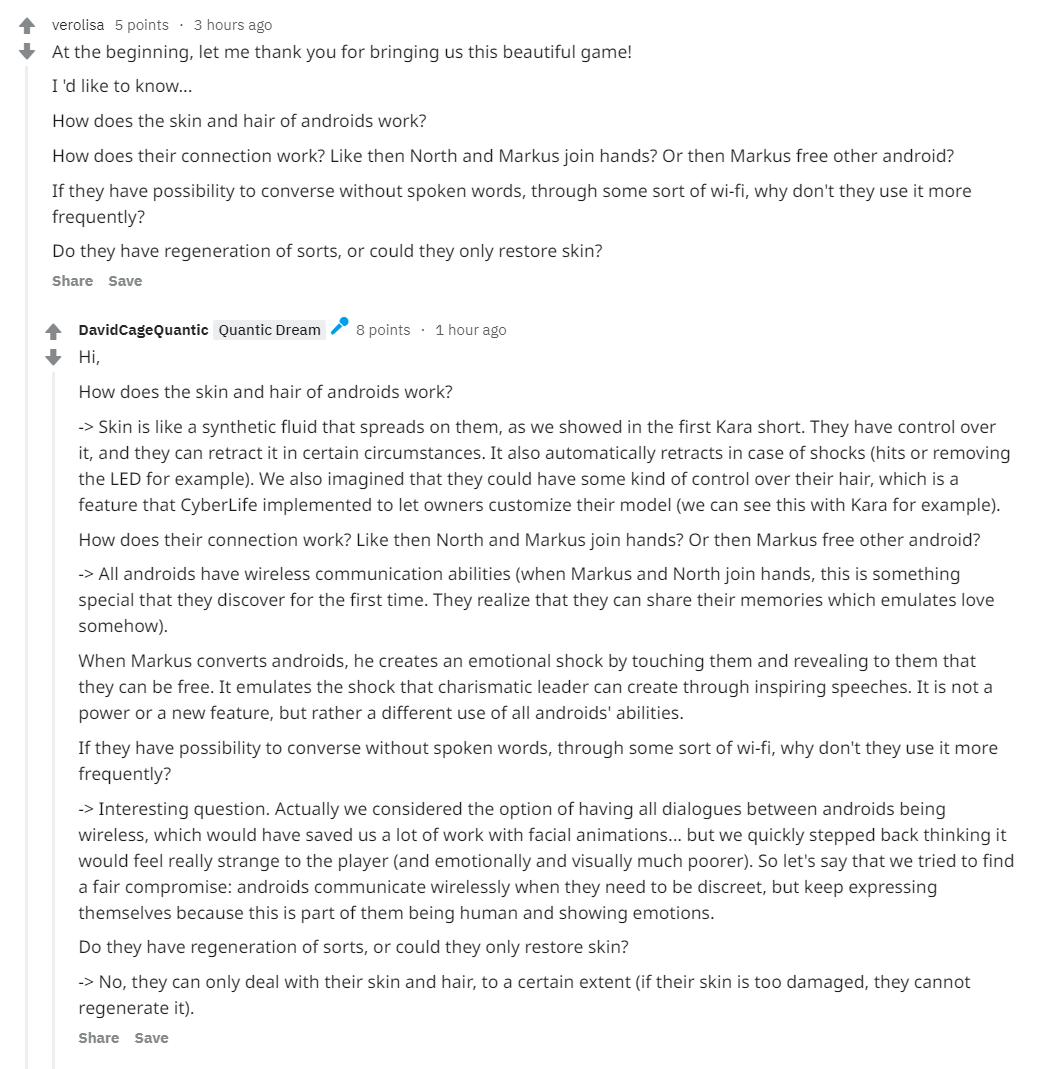
- Both can convert other androids to deviancy (Markus can even do it contactless) - no other android is shown to have the same ability (or they simply do not know how to spread it deliberately).
Connor was deployed in 2038 for first use in real-life situation, but that model has the '- 51' designation after his serial number. As this number increases by one after each of his deaths, it is safe to assume that there had been 50 Connors before the one the player controls.
Markus' release date is classified - he was probably never officially released, and is the only android with a completely unique model. He was a gift to Carl after Carl lost the use of his legs, which was "several years" before the game starts. Several years is still probably less than 10, so Kamski managed to pull enough strings to get Cyberlife to gift a prototype android to Carl while he was no longer part of the company - which might have worked because they were already working on the RK800 and had no further use for RK200.
If Kara was the first android to show signs of deviancy, she was assembled in 2032, 4 years after Kamski's removal from the company. She went through a lot of owners and lot of memory wipes. However, it is suggested that she was the one who gave her name to Alice, meaning that memory wiping deviants don't really work (see also the Zlatko chapter where she can regain her memories after a memory wipe).
So yeah, it would have been interesting to have a little bit shown of this in the normal course of the game. Most of this can be pieced together from checking out gallery descriptions and redoing parts of the game and selecting different questions.









 fftopic: