@Kramer on the phone (can't reply normally to your post)
so is this the time we remind ourselves the courts were supposed to be the saving grace on the issues of obamacare, abortion, de-segreation, and much much more!
Nope.
I went looking around a bit to see if the 6th Circuit has a track record of earlier responses to the mandate, trying to get a sense of whether they're hostile like the 5th seems to be, or in favor like the 1st and 2nd Circuits have been so far. The 6th hasn't had a ton of action so far, but the little I turned up has shown at least some willingness to challenge the mandate -- see
Dahl v. Board of Trustees of Western Mich. Univ. (
Ruling PDF) In that case, a number of student athletes had applied for religious exemptions to the mandate, and had been denied by the university.
They sued and won. (
Archive)
The court in that case made a point of cautioning readers that their ruling was narrow, and that they could conceive of situations where they would have upheld a mandate that was truly "generally applicable", even if it burdened religious expression.
[We do not dispute] that COVID-19 vaccines are "the most effective and reasonable way to guard against" the virus…. But the question before us "is not whether the [University] has a compelling interest in enforcing its [vaccine] policies generally, but whether it has such an interest in denying an exception" to plaintiffs, and whether its conduct is narrowly tailored to achieve that interest. Defendants present neither evidence nor argument on that score…. To sum up, defendants likely violated plaintiffs' First Amendment rights.
We do not doubt defendants' good faith, nor do we fail to appreciate the burdens COVID-19 has placed on this nation's universities. To that point, our holding is narrow. Other attempts by the University to combat COVID-19, even those targeted at intercollegiate athletics, may pass constitutional muster. But having announced a system under which student-athletes can seek individualized exemptions, the University must explain why it chose not to grant any to plaintiffs. And it did not fairly do so here.
The key point that tipped them into harsher scrutiny was the fact that, on paper anyway, exemptions were available, yet were categorically denied. This theoretical flexibility and individualization in application meant the law wasn't inherently neutral and general, which triggered what's called "
strict scrutiny" -- aka "you had better have a
damn good reason for this law ("compelling interest") and we are going to make sure you are targeting it as precisely as possible ("narrowly tailored"), with as little burden on a protected right as possible ("least restrictive means")". Basically, it's legal hardmode, and many laws that trigger it end up getting canned.
Back to
Dahl, the lack of neutrality/general application tripped strict scrutiny, and failed to pass, largely because the university shrugged and offered no explanation for its categorical denials of exemptions. The court conceded that stopping COVID was a compelling interest, but without showing that their solution was narrowly tailored and the least restrictive means of accomplishing this, it was impermissible in its current form. Start over, write a new rule if they want and try again, but right now, they can't force the athletes to vaccinate.
Eugene Volokh published
a good highlight reel of the opinion if you/others are interested. (
Archive)
Circling back around to the beginning, it's not much, but it does show that the 6th Circuit is willing to challenge the mandate, although I wouldn't say they're telegraphing slam-dunk hostility to it. If it stays in this circuit, the case could go either way, especially depending on exactly which three judges get selected for the panel that will hear the case, assuming it's not
en banc (all the judges of that court, very rare but I could see this case being deemed important enough to trigger an exception). And when I say "which three judges", I don't mean whether they were appointed by an R or a D -- the papers' sperging about that shit is tiresome and shows they don't know a damn thing about what they're talking about. So-called "conservative judges" rule "liberal" and vice-versa every day. Famous examples --
Sandra Day O'Connor and
Anthony Kennedy were appointed by Ronald Reagan.
However they end up ruling, this will almost certainly end up at the Supreme Court, and when that happens, it'll be interesting. I can see details that would encourage the USSC to defer to the other 2 branches and let the mandate survive, and I can see points that might tip them the other way. They're also going to be under a tremendous amount of political pressure in opposite directions -- whatever they decide will be controversial, and Chief Justice Roberts so far hasn't shown much of a stomach for that. Personally, I think this case has no choice at this point but to go to the USSC to finally get some sort of resolution for this shit show, since the other 2 branches of government refuse to extract their heads from their asses, but I'm not thrilled -- it's a risky, complex case, and those tend to make bad law.
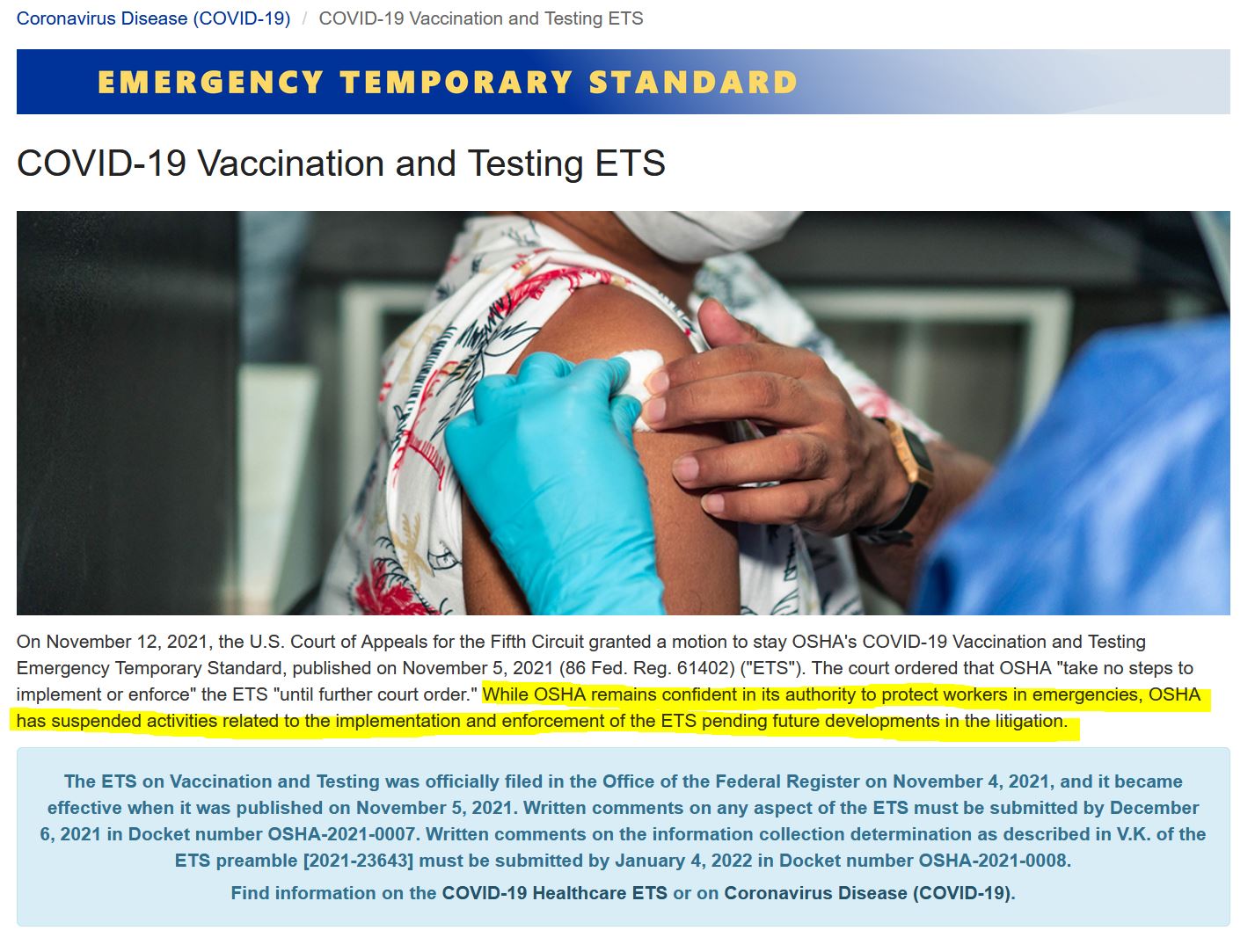
Interesting. This is not the action of a confident government agency. (
Direct /
Archive)