Source: https://digg.com/coronavirus/link/the-science-behind-long-covid-visualized-QkAN7
Archive: https://archive.ph/bXNwL
Sam McIntyre created an infographic to explain what we know so far about long COVID, from documented symptoms to factors that could contribute to it.
There's a lot we still don't know about long COVID — what causes it, why some people suffer from it and not others, and why affects the brain, nervous system, gut and more.
Sam McIntyre — @sammc413 on Twitter — created this infographic based on the research available so far after he himself struggled with long COVID. (Click the image to enlarge it.)
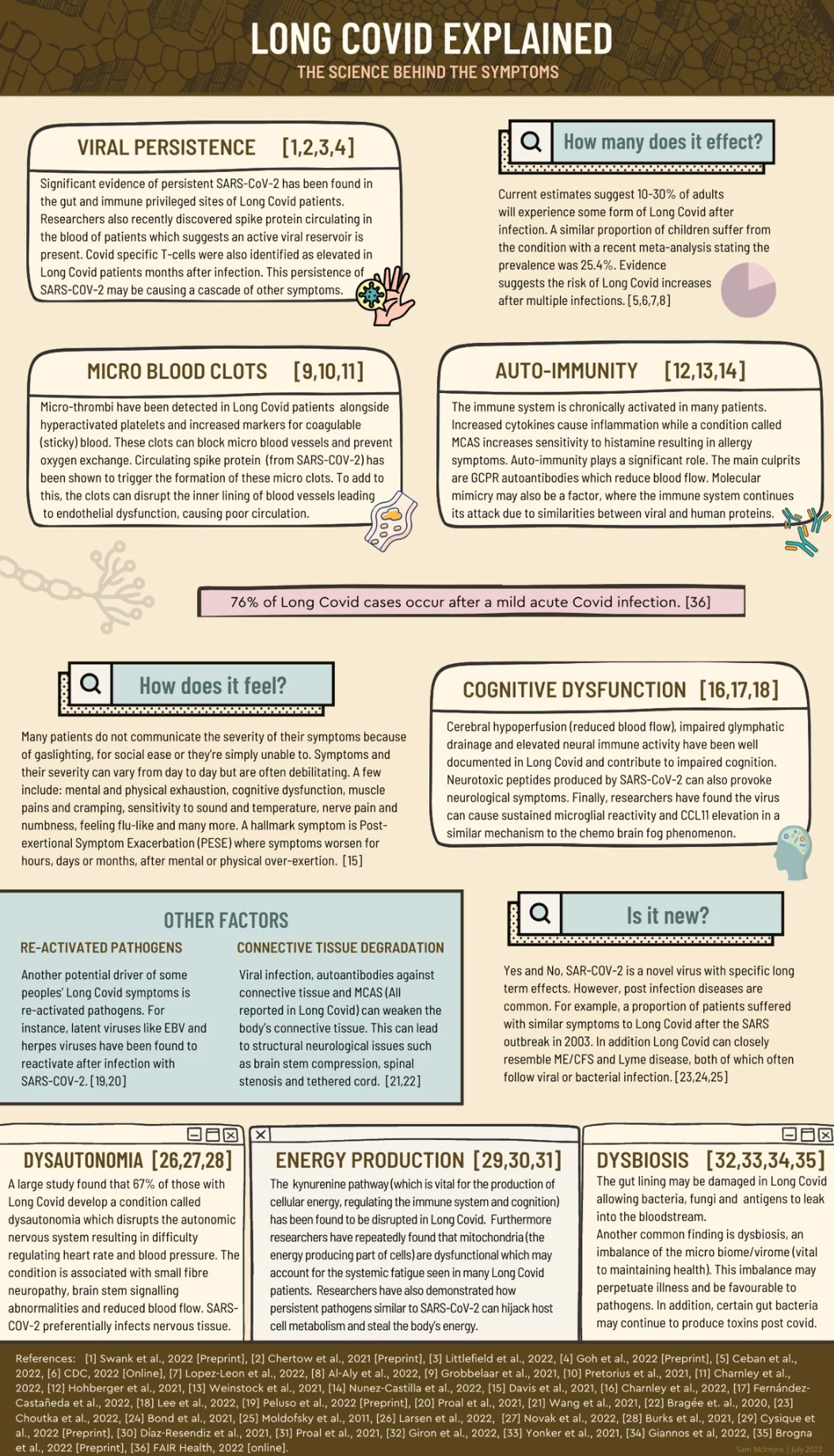
Key details:
Via Sam McIntyre/Twitter.
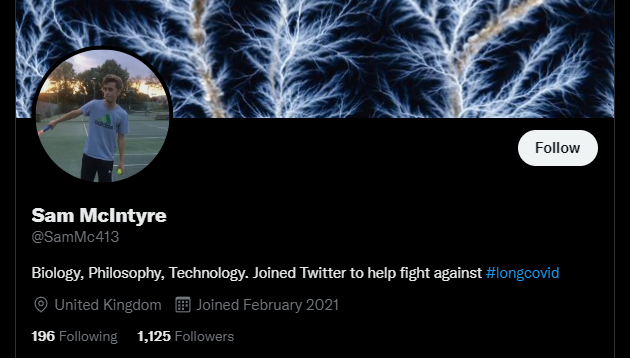
The creator:
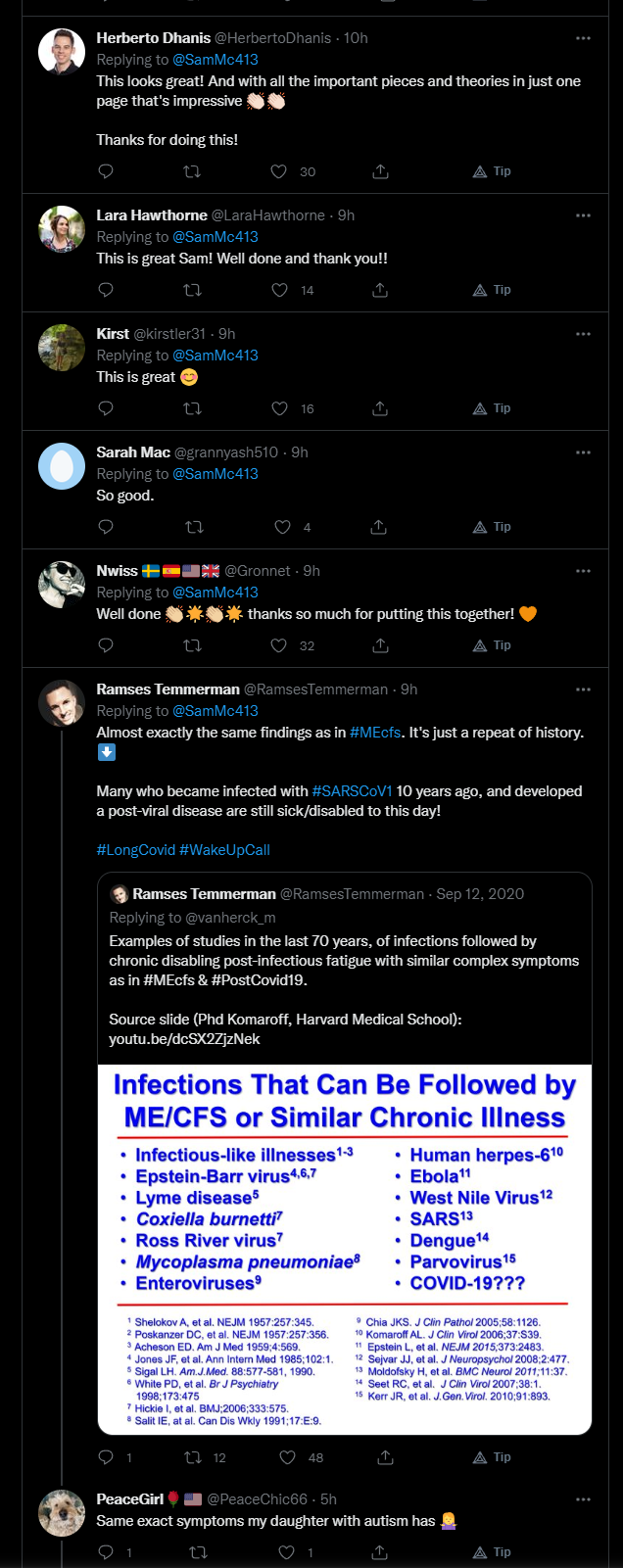
Tweet responses:
*Clicks speakerphone* @Drain Todger to the thread please, @Drain Todger to the thread. Thank you.
Archive: https://archive.ph/bXNwL
The Science Behind Long COVID, Visualized
Molly Bradley·1 hour ago·1.8k readsSam McIntyre created an infographic to explain what we know so far about long COVID, from documented symptoms to factors that could contribute to it.
There's a lot we still don't know about long COVID — what causes it, why some people suffer from it and not others, and why affects the brain, nervous system, gut and more.
Sam McIntyre — @sammc413 on Twitter — created this infographic based on the research available so far after he himself struggled with long COVID. (Click the image to enlarge it.)
Key details:
- 10–30 percent of adults will experience some form of long COVID after infection. For children, a recent meta-analysis suggested a prevalence of 25.4 percent.
- Evidence suggests multiple infections can increase an individual's risk of long COVID.
- Seventy-six percent of cases of long COVID happen after a mild COVID infection.
- A common and persistent sympton of long COVID is cognitive impairment. A few factors that contribute to this have been identified: reduced bloodflow and elevated neural immune activity can affect cognition, and there are a series of symptoms (sustained microglial reactivity and CCL11 elevation) that create an effect similar to what chemo patients experience that we call "brain fog."
Via Sam McIntyre/Twitter.
The creator:
Tweet responses:
*Clicks speakerphone* @Drain Todger to the thread please, @Drain Todger to the thread. Thank you.


