Tabletop Roleplaying Games (D&D, Pathfinder, CoC, ETC.)

  • Want to keep track of this thread?
    Accounts can bookmark posts, watch threads for updates, and jump back to where you stopped reading.
    Create account
If this was a setting that I was packaging up, this stuff should be spelled out in autistic detail
I don't like that because it opens the door for continuity lawyers.

I might look at the samauri and crusaders though.
There's a lot of historical ranges from companies like Perry, Victrix, Warlord, etc. Vikings, peasants, romans, arabs. Some are really esoteric, like Gangs of Rome which are, well, gangs fighting each other during the roman age. I'm not a big history buff, so I can't say what's good or bad there. eg. WGA foot knights are supposedly a fun kit, but rivet counters hate it because the armour, heads, and weapons are technically different eras.

I thought it was this thread, but maybe not? I heard some of the Zombicide games have good minis. The current game at the FLGS is dark winter (or something like that) set in a fantasy chinese winter setting. People hate it because the game has too many furries. On the other hand, the game has lots of furries. It's chinese themed fantasy undead vs heroes. No idea how it is, but thought I'd mention it if you're after asian themed fantasy minis.
 
How nice of them to give you the permission to set the game before Finland was occupied by Russia in 1809. I agree, it's lazy and I blame the aversion of historians in the last few decades to attempts at putting together a coherent history of anything.

Norway and Sweden being in a personal union for most of the 19th century is another one of those details you shouldn't get hung up on, after all. Only Norwegians would try to claim Norway is in any way distinct from Sweden. Though if I had any actual social justice clout, I'd try to get the devs cancelled for Swedish imperialism.
See that is exactly the sort of information that would help me make the world come alive. There's the odd reference in adventures or text to things like "it could be Norwegian militants seeking independence" but I've no context for it and with the timeline so vague I don't know where to fit it. Bolting on information later in a campaign tends to damage suspension of disbelief. "So Finland is occupied by Russians? Why didn't that come up during our adventure in Finland? Was it a problem that our characters are all Swedish?"

You can pull a lot of this stuff from Wikipedia but the point of a book is that you don't have to that it also curates and draws out the interesting parts and weaves them into a coherent theme.

Also, in classic Free League style, look how much whitespace the pages have? There is lots of space for more information. Just an extra week of writing could have made the product far better with more historical information.

1754463739889.webp

I'm kind of glad that I sperged out about this product now. Feels good to vent. The issue isn't so much that it is bad, but that it is disappointing. Bad products hurt less than "could have been good" products. A Folk Horror game has a lot of potential but this definitely needed more time in the oven and, for me, less of a "it doesn't matter, do what you want" approach. I know I can do what I want. But I could dispense with the entire book in that case - I'm buying it because I want to not make everything up.

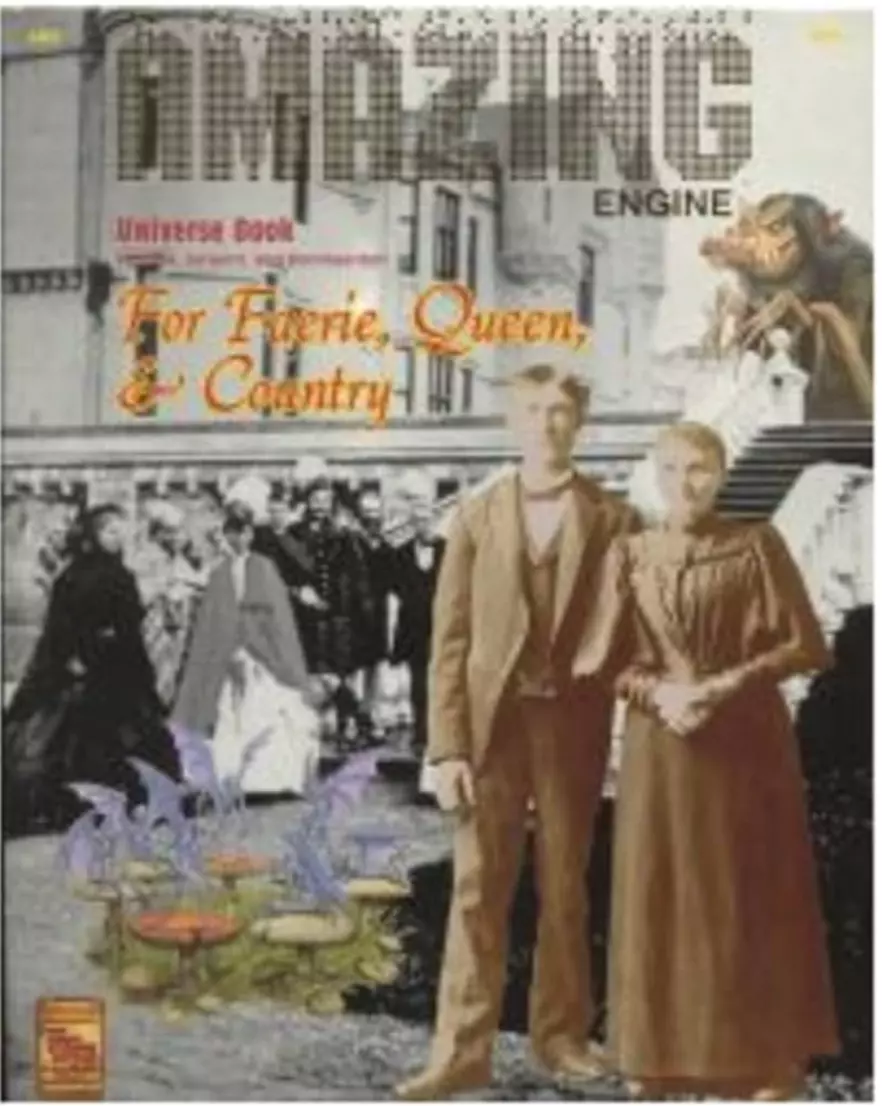
Reading through Vaesen I couldn't help but recall TSR's old "For Faerie, Queen and Country" book for their Amazing Engine.
1754464081879.webp

Amazing Engine was an early attempt at a multi-setting generic rules system. But it actually went beyond that in that your base character could be played in the different settings and XP gained in one would apply to others. Each setting had a small translation formula for implementing your character in each setting and they had a few others in the line though I don't think it really took off.

For Faerie, Queen and Country was a shockingly rich setting for a single supplement book with a surprisingly effective and flavourful magic system too. It was far ahead of its time.

I came across reviews of this when looking into free league stuff, and I have a dumb question none of them have answered.

Are the players meant to read the Monster Manual?
No. The Vaesen themselves are in the GM section of the book.
A YouTuber I like reviewed a bunch of a the adventures, and each of them seem to follow a similar format. As the players investigate, they learn the monster looks like A, has ability B, is targeting Cs. Therefore, it must be entity X, and we can defeat it by doing ritual Y.

Some even seemed designed to make you think it's entity X, but is actually entity Z behaving in an unusual manner due to plot.

The jump from ABC > X > Y seems to require knowledge of all the different Vaesen that players don't normally have. But I struggle to think how they get there without some heavy handed GMing.
Well the Vaesen are all creatures from myth so firstly the players and PCs will probably have some idea what a mermaid or a ghost is. Secondly, they're supposed to be investigating so they might learn things from books, from Old Olaf whose father once dealt with the troll in question. And GMs are encouraged to mix things up with each Vaesen listing variants and suggestions of different "secrets" (semi-game term in the book for the way a vaesen is disposed of).

And often you need to understand why the Vaesen is behaving the way it is. Maybe a new foresting operation has riled the Wood Wife who lives there or felled the sacred ash tree that some pixies made their home. Knowing what a pixie is wont solve the problem (though it will help).

There's good stuff in the game. Hence the curse of "what might have been".

I'm in the minority here, but I hate that. Homebrew or published setting, doesn't matter. I don't care about your 1000 years of kings and rebellion and whatever the fuck unless it has a direct baring on the game. If there has been 1000 years of elves and dwarves fighting back and forth across the land, then just say so. I doubt it makes much difference if the dwarves took the castle in 759 or 762.
For something like Vaesen in a modern and real history in a time of significant change, a timeline helps. In The One Ring, it also really helps. You really want to know if an adventure is taking place before, during or after Balin's attempt to recapture Moria or something. It makes the world that much more real when the dwarfs you meet on the road aren't just dwarfs on the road but are on it heading East because they're answering Balin's call for people to join his quest to reclaim the mines. Makes the whole world come alive.

And it's rare that I think a decent timeline doesn't help. Even for my fantasy game I spent a little time working out the history of the world and putting some dates on things. Then when the party went to investigate some ruins they weren't just "generic ruins" but were from 700 years ago and you could see the symbol of the Old Kings carved onto keystone of the arch. The dragon boasting of his hoard says "Now this piece... made by the elves of Faranath, slaughtered by Men, these three-hundred years past. Its like never to be made again."

You can improvise a bunch on the fly but having a framework of this stuff helps it be all so much more coherent and deep. And it informs plots. Why does the sorcerer bare the symbol of those Old Kings? The elven prince hates the king because it was his line that slaughtered the elves of Faranath... Etc.

Rarely if ever does a good timeline feel restrictive. In fact the only time I recall it doing so is ironically in another Free League product - Aliens. You've got this long timeline and then a tonne of key events all squashed together in this narrow space of a few years.

A timeline helps put ancient things in different places in the game world. So in my ACKs campaign I know the dwarven mine is X years old, the magic artifact Y, the aqueduct Z. Older factions are "institutionalized" and newer factions are marginalized. The problems come when you have a lore dump. Lore is mostly there for the GM to make the world feel real. The founding of a great house should only be something monks, scholars, and the current heads of those houses would know. It isn't as necessary as the broad strokes, but it makes the world feel more real.
Very much this!
 
Last edited by a moderator:
could i get some slurs for dwarves? thanks

View attachment 7745766
Ditch-digger
Filthbeard
Bilgedrinker
Cavemonkey
Pit-midget
Mudsmith
Orc-faced dirt-dweller
Turnip-nosed shovel-jockey
Chubini (a portmanteau of "chubby mini," something that the aristocracy of the Eastern Realm used to call their dwarven slaves, who were only liberated when the empire fell, not by their own effort)
Dwerp (especially useful when dropped during discussions of higher things dwarves don't understand, such as magic, planewalking, and soap)
 
Last edited:
"Power-levelling" - revealing too much about your personal life.
Oh I'm stupid, I've used that term before but for whatever reason seeing it shortened to PL threw me off.
Anyway, thank you for coming to my sped-talk. I hope you enjoyed. Please click on Like and Autism.
I request more posts like these from this thread.
could i get some slurs for dwarves? thanks

View attachment 7745766
>Hammerheads
>Anvil Fuckers
>Foot stools
>Halfling derivatives
>Hairier Gnomes
>Dirt Fairy
>Stone Teapots (short and stout)
>Mountain Dingleberries
>Moradin's sperm that slipped down the crack of Berronar's arse (replace Gods per setting)
>Fungus of Moradin's special socks (replace again)
>Misspelled jail baits (minor/miner)
>Vertically challenged
>Stoutlets
>Kneehighs
>Children/Kids (Imagine saying "come along children" to a group of dwarves)
>If Benjamin Button existed you can call them Benjamin's
Definitely need to make a list of slurs for all sorts of races.
 
Last edited:
Gloomhaven/Frosthaven are very popular and have so much content it will warp whatever shelf you let it gather dust on.
I know, I have the 20lb box on the shelf.
a constant heavy reminder to not get caught up in the hype, because on closer look I really don't like that game, mainly because it sucks as a co-op dungeon crawl, let alone rpg-replacement for casuals.

first is the whole theme, you're not a party, just a bunch of mercenaries doing a gig together (for whole stretches of the campaign for some reason), which then got baked into the gameplay. if you want to pick up any gold, which enemies conveniently drop like fucking diablo, you need to spend actions on it, and the moment the goal is achieved apparently you just leave. even if you don't trust anyone else you just let all the gold and other shit lying there because the rules say so...

don't get me wrong, I can understand why he did it this way, but I still don't like it because it feels like a cop-out.

the second, more important part is that gameplay itself works against co-op. the easiest way to describe it would be imagine playing magic as a team. worse, your deck acts as the timer, so you only got X turns to accomplish the run. you really want to nail what you do, the game is tuned that way, but if you play it with more than one player that inevitably leads to inefficiencies. of course limited information is a thing with more players, either on purpose or by effect two people not sharing a brain, but the way it's handled and supposed to work in gloomhaven really annoys me to the point I rather put everything else on the table. if you can run a whole months-long campaign with the same 2-3 people that are gamer enough to understand the intricacies of the system to not piss you of, you can play a proper rpg (or lighter dungeoncrawl) just as well. and even playing it solo doesn't work for me because of said theme, set-up time and a day only having so many hours so I have to pick and choose.

granted, my perception might be warped a bit due to the fucker pushing a second printing immediately and not backporting said changes and fixes, with the fucker and fanbois then turning around going "bro, first printing is perfectly playable, it's not that important" - still important enough to change it tho apparently. make up your fucking mind dipshit. of course it doesn't help getting rid of the first printing either, funny coincidence...

They could've just did what Call of Cthulhu did and have three different epochs based on periods; it's why you have 1890s, 1920s, and then a modern setting.
that's what they did tho, they picked the first one (plus some time earlier) and that's it.
dunno why people have such a hang-up about it, it's like getting asked "so, is your fantasy setting more like 14th century europe, 16th century or 18th century?" - get the fuck off my table nigga.

even if you make telegraph a thing, you still need an answer or the option in the first place depending where you are. it's not even like today where people are fucking lost when it internet is down, nor is it supposed to be some world-traveling mega-campaign, you're investigating a mystery in bumfuck northern europe with the tools and information (and what you figure out) at hand. the theme is sleepy hollow, not ask your helpful librarian on standby at arkham university.

as a euro almost everyone I know gives zero fucks, let alone about some history of another euro country. a rough outline is more than enough to run that kind of game, otherwise I'd simply play something else (or with other people if they want to be cheeky about the setting's minutiae)
 
Last edited:
Gentlemen, Campaign 2 of our regular group's Satuday pathfinder games has begun. And they've started it off well by rolling about 4 critical fails the entire three hour session. It appears my Bossmanjack-fueled luck does not extend to my players when I am running a game.

Speaking of which, anyone want to name an NPC? So far, I've only had to name one currently living one.
 
Gentlemen, Campaign 2 of our regular group's Satuday pathfinder games has begun. And they've started it off well by rolling about 4 critical fails the entire three hour session. It appears my Bossmanjack-fueled luck does not extend to my players when I am running a game.

Speaking of which, anyone want to name an NPC? So far, I've only had to name one currently living one.
I would like to propose the name Claudius Cassius for a character whose sole purpose is to show up randomly, troll the fuck out of whoever the antagonists are, and disappear again, leaving them frothing with impotent rage.

Alternatively, name a really chill guy with a dog after @J A N D E K, still my favorite kiwi even though he's long since left the site.
 
I know, I have the 20lb box on the shelf.
Interesting, I appreciate hearing your criticisms of it. I think I got through about 1/3 of GH with a semi-regular group before life took firm control and it became clear I wouldn't play it solo, wouldn't play it with my wife, and wouldn't have a steady group that would understand its intricacies as you said. I enjoy it for what it is but I think it would really shine with people who have no access to True and Honest TTRPGs/dungeon crawlers and need daddy Isaac to do it all for you.

It's funny because it's one of a lot of modern board games that is so jam packed with shit that it works better as a computer game to handle the ridiculous administration/set-up etc.
 
"so, is your fantasy setting more like 14th century europe, 16th century or 18th century?" - get the fuck off my table nigga.
Having firearms changes a setting. Having really cheap food, and higher population changes the setting. having a printing press can make learning spells easier. Having trains and engines can change a setting. Obviously if you're running a one-shot or a 6 or 7 session adventure or a mega-dungeon these things don't matter. If you're planning a 12-18 month+ sandbox, having a consistent setting is important. Having historic parallels make the game feel more alive, and it makes it easier for players to get their head around what is happening in the world.

If you just want to play in generic fantasy, that is also fine. But if you're making something kinda unique then you need to have a general idea of what it is.
 
Last edited:
Imagine saying a game is set in the 20th century and telling the GM, "Hey, whatever year it is, don't worry about whether the internet exists or if the Ottoman Empire is still around or if antibiotics have been discovered or if Nazi Germany is occupying France or if the Berlin Wall is still up. If it works for your story, just do it."
 
Imagine saying a game is set in the 20th century and telling the GM, "Hey, whatever year it is, don't worry about whether the internet exists or if the Ottoman Empire is still around or if antibiotics have been discovered or if Nazi Germany is occupying France or if the Berlin Wall is still up. If it works for your story, just do it."
Solid point.

And again, if you want to have literal germanic National Socialists shitposting on ARPANET about occupying France in your world, that's fine. But your anachronisms should be intentional and you should have at least a concept of how this might change things.

I don't think having a year-by-year breakdown of everything is needed; just assuming you've got epochs of a couple decades is going to be fine for most campaigns. But just "Lol 1800 and 1899 basically the same" is just criminally lazy.
I mean its going to matter for transit as you're still traveling exclusively by tall ship in 1800 and in 1899 you're going to be traveling by steamliner. If people can't appreciate this shit, let alone the political changes, it will make me question their intelligence.

Which isn't to say you can't fuck with the time line if you want.
If its the 1800s and you want to move Russia's invasion of Finland to 1850 there is nothing wrong with that, but you need to do that intentionally and understand what all that changes, because that will very likely change our players move around and what is going on around them. Are people in Sweden worried they'll be next? Are you needing to inflitrate into Finland? Is somehting you need to dispel the nordic yokai on the other side of the border? Do you need to solve this problem ahead of the arrival of Russian troops?
But those changes should be intentional and tools should be provided to a GM to at least ask the question "What else changed in an interesting manner that I can include?"

edit: Or if you want to just have that crazy inventor who makes a "horseless carriage" a few years ahead of the official invention of the automobile, that's fine but again - it should be called out this some new mode of transit and it should draw tons of attention.

"so, is your fantasy setting more like 14th century europe, 16th century or 18th century?" - get the fuck off my table nigga.
If this a game based in post-Roman/Pre-enlightment Europe, the GM can't answer a basic question about if the setting is more Dark Ages, Medieval, or Renaissance themed without chimping? That table sounds shitty and low effort so I'll gladly.
 
Last edited:
that's what they did tho, they picked the first one (plus some time earlier) and that's it.
dunno why people have such a hang-up about it, it's like getting asked "so, is your fantasy setting more like 14th century europe, 16th century or 18th century?" - get the fuck off my table nigga.

even if you make telegraph a thing, you still need an answer or the option in the first place depending where you are. it's not even like today where people are fucking lost when it internet is down, nor is it supposed to be some world-traveling mega-campaign, you're investigating a mystery in bumfuck northern europe with the tools and information (and what you figure out) at hand. the theme is sleepy hollow, not ask your helpful librarian on standby at arkham university.

as a euro almost everyone I know gives zero fucks, let alone about some history of another euro country. a rough outline is more than enough to run that kind of game, otherwise I'd simply play something else (or with other people if they want to be cheeky about the setting's minutiae)
Even if the telegraph exists, and you're doing some campaign exploring some mystery in bumfuck northern europe you're right you can't just call the librarian at arkham university. But that still doesn't change the fact that even transportation speed for a written letter can have an impact on things. Even if the technology doesn't allow for the players to quickly research something, it's still going to have an impact on what the mystery even is in the first place and how the surrounding NPCs would react to things. Fuck, how did the PCs even end up in this bumfuck nowhere village to even investigate the mystery in the first place? How did they hear about it? Was it random bullshit from books a couple of hundred years ago, or was it via travelers who may have sent a telegraph to someone about a recent incident prompting the investigation? Either one of those scenarios is going to impact how the NPCs would react to basically anything, because there's a huge difference between old legends and some shit that went down last winter or whatever within living memory.

Then you've got what level of technology may not be available in some small northern european village, is there a train line a few miles away, or is it a 200 mile trek with a horse and buggy to get anywhere? Does the town get shipments of supplies, does it conduct any kind of trade, and with who? That's all shit that could have an impact on a mystery campaign even if it set out in bumfuck nowhere. It's not really minutiae either when you're talking about how people in a village would/could interact with the outside world.

Even fleshed out fantasy settings quite often fuck this up because they don't bother to consider how magic will affect communication, travel, and trade within their world. But for a mundane setting, especially something set in our world (or some really close variation of it) anyone with a brain should be able to grasp how just various technological changes from one decade to another could change how shit works just with technology alone, nevermind geopolitical changes. Getting upset because someone asked which historical period a game is set in, is fucking ridiculous if you can't see the massive differences between the 14th and 18th century in Europe. This seems weirdly hilarious reading this as an American and having been written by someone claiming to be from or in Europe, as you've basically just written yourself into the lazy American stereotype of not giving a shit about anything outside of your vicinity.
 
Ars Magica 5e is basically the epitome of autistically researched historical setting in an RPG, but the base book just gives a basic 12 page overview (about 5% of the book) of how the Church, the feudal system, towns and peasants work and how to actually use them in the game (such as: yes, magi have a social condition that makes normal people hate and mistrust them, but monasteries have a duty of hospitality and will let you stay the night no matter how creepy the wizards seem). That's enough for the game's purposes and early 13th century is less familiar than 19th century for most people. If a game is supposed to take place in a a setting and the setting is supposed to be historical or non-generic, you don't need to write a dissertation on it, but you need to give at least a basic overview.

(Then if the game does well enough to get splatbooks, you can go crazy there like Ars Magica's extensive treatment of medieval aesthetics and four humours medicine or specifics of how feudalism worked in different parts of Europe)
 
Back
Top Bottom