Spirit Hunter is a great franchise, I forgot all about the third one coming.
The whole franchise is currently in my backlog, so I have to get into that one day.
Nigga, if people are dogpiling your ass, its because the past has shown you deserve to get dogpiled. You've spouted bullshit and derailed threads to much, nobody's going to give you the benefit of the doubt, and that's on you. If you didn't treat the name "Sony" like your personal fucking bat signal and rush to their defense at every juncture in every thread they are even mentioned, stopped shitting up Nintendo threads, spouting absolutely wrong bullshit then doubling down when caught doing it, etc., maybe people would actually fucking tolerate you.
You have no idea what you're talking about, you fucking uneducated dimtwit.
He does not play many video games after all, which would have been in itself if he didn't feel the absolute need to pretend he's an expert in everything, just for the sake of internet clout and his own autism. This gets really obvious when he aboard the topic of games I've played, like Atelier, so I can only imagine what it is for the rest.
Also, there is a reason why I mentioned
Hayarigami in relation with the topic of Spirit Hunter: the horror detective VN originally started with a small CERO C rating for the PS2/PSP titles, before the Shin reboot bumped the rating to Z for more graphic gruesome scenes, to further add the scare factor in. This is what I assume the third Spirit Hunter game to follow suit, more or less, with the new CERO rating.
Here's a summary, for anyone curious, since it's a rather niche serie available on Switch and the fact it's japanese-only doesn't help much its existence to be known here
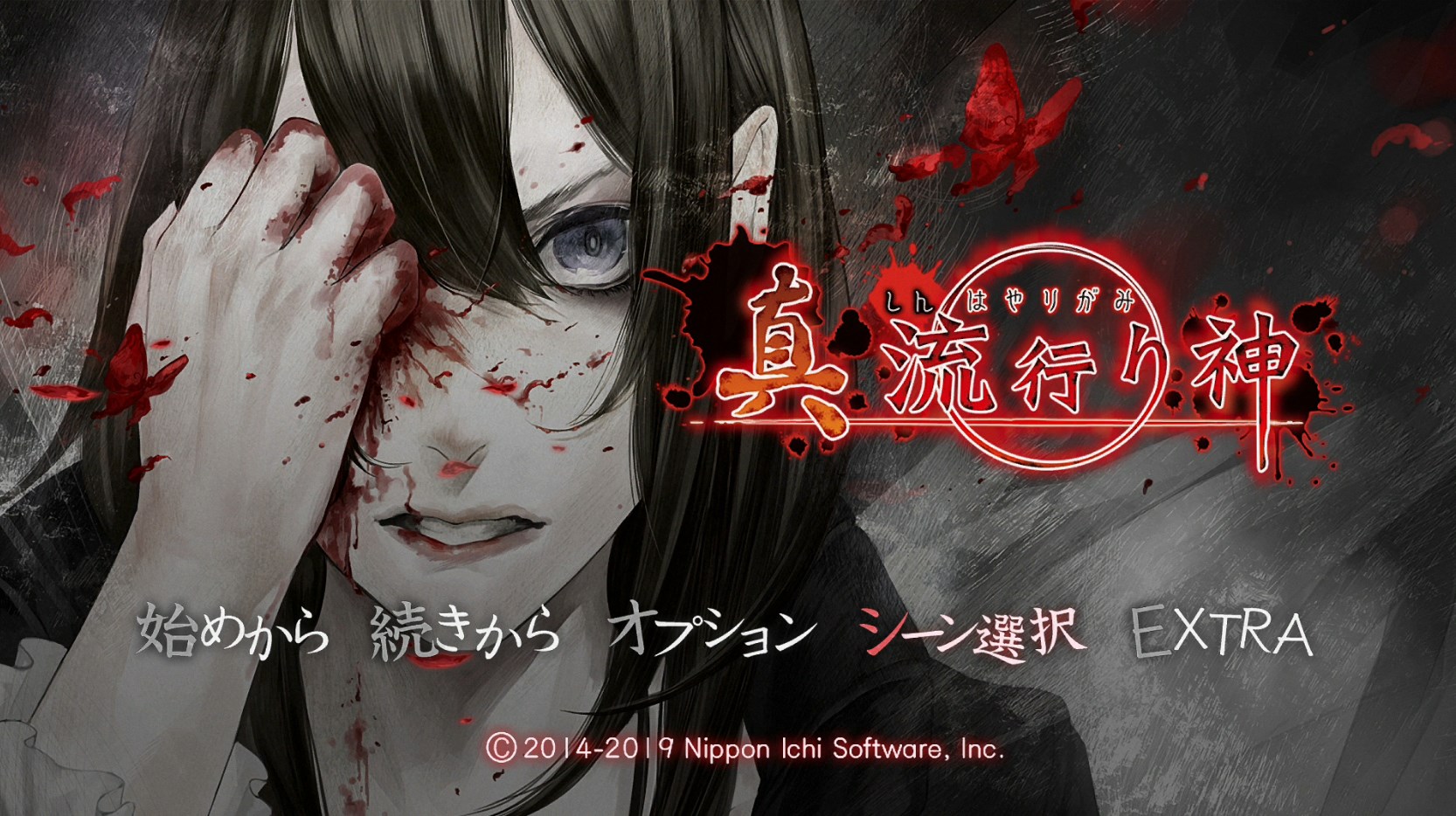
It's a japanese ADV game developed for console, by Nippon Ichi Software, in which there is a lot of prompt choices leading to various amount of (bad) endings. The main topic of the franchise is centered around murder cases linked to the weird and various japanese urban legends.
Hayarigami games have separate murder cases that act as main chapters but they will diverge at some point into two different paths, the "real" or "supernatural" one, depending of the player's choices. However, the first Shin Hayarigami differs from the other games by having a single main route which is The "Blindman" case, a serial killer who cuts people's tongues and gouge their eyes out. It also starts with an occult teacher who was framed for the murder of his student, both who brainstormed the idea of Blindman as an urban legend, and ended up being placed into custody by the local police prefecture to determine the identity of the killer.
Upon completion, previously hidden choice prompts will be unlocked throughout the main route, giving access to new routes that completely alter the plot (for examples,
a zombie outbreak, a
corrupt police force that won't back down in torture practices or
a rape dungeon below the local inn) and the roles of the characters in the cast as well.
There are three gameplay mechanics within the game:
-Liar's Art. You have to interrogate suspects with choice prompts given to you that are only available for a short amount of time. The goal is to make sure you choose the right answers and have the arrow in the balance leaning blue/right for the best results (the arrow will refuse to budge in certain choices too). I used my video capture card to show an example:
-Many prompt choices may require the use of a Courage Point (in the form of an orange circle), its meter can be replenished after successfully interrogating a suspect in Liar's Art. They aren't always a good thing to get you out of a hairy situation though, as some Courage choices make the MC act funny: firing her gun to break up a heated argument between work colleagues, laughing out loud to fight off fear, acting flirty, etc. It's possible to earn game overs from the wrong Courage prompts as such.

-Inference Logic in which you link the relationships and roles between the victim, suspects and other key characters of the case. While this screen can be viewed and edited anytime from the menu, it becomes obligatory to complete once you reach a certain plot point of the story. A few minor mistakes of judgement are allowed but anything beyond leads to a bad end.
You also get a final rank depending how well you managed to interrogate the suspects and your deduction on the blueboard. A good rank gives you goodies such as side stories available on the extra section of the main game menu.


