Historical images - Images that made history

  • 🏰 The Fediverse is up. If you know, you know.
  • Want to keep track of this thread?
    Accounts can bookmark posts, watch threads for updates, and jump back to where you stopped reading.
    Create account
The Trenches of World War I

trench1.jpg
Sentry Duty - Soldiers of 'A' Company, 11th Battalion, the Cheshire Regiment, occupy a captured German trench at Ovillers-la-Boisselle on the Somme.
trench2.jpg
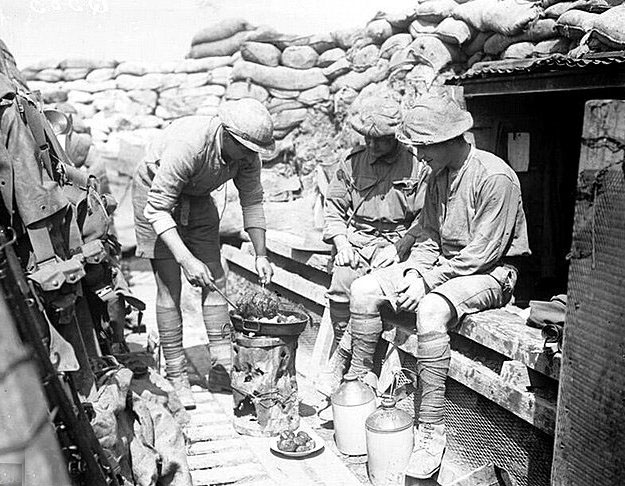
Men of the 2nd Australian Division in a front-line trench cooking a meal, Croix du Bac, near Armentieres. A variety of cooking methods were employed including primus stoves and braziers and soldiers produced a lunch of hot 'bully beef' hash from tins of corned beef.
trench3.jpg
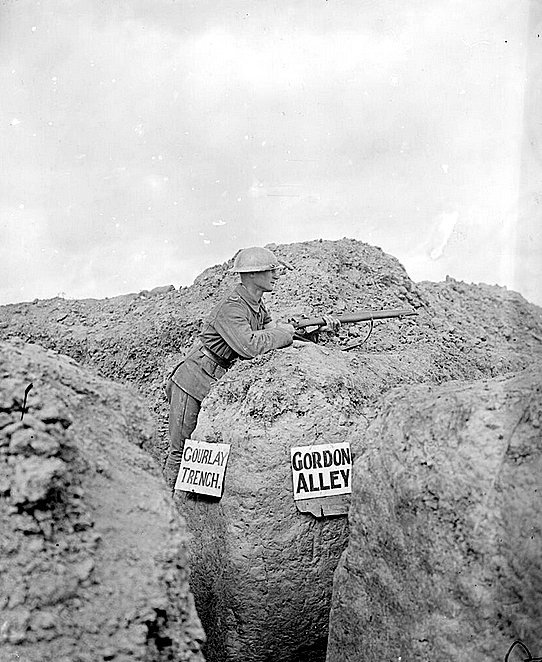
A sentry of the 10th Battalion, Gordon Highlanders at the junction of two trenches - Gourlay Trench and Gordon Alley. Martinpuich, 28 August 1916.

trench4.jpg
Four Canadian soldiers, sleeping and writing letters in the trenches near Willerval. Night time in the trenches was often a busy time; wiring parties, fatigue parties and raiding parties would all be sent out at night.

trench5-001.jpg
An officer of the 10th Battalion, Cameronians (Scottish Rifles) leads the way out of a sap (short, temporary trench) and is being followed by the party. Note shells bursting in the distance. Near Arras, 24 March 1917.
 
Last edited:
The old town center of Dresden, Germany in 1955 after the Allied firebombings and subsequent cleanup. There was so much rubble and ruins of buildings it took ten years to fully clear. People who volunteered at least 500 hours to reconstruction work were prioritized for new housing.

1734356892809.png

EDIT: Same view as of 1945.

1734378147485.png
 
Last edited:
addie1.jpg

Addie Card, spinner in North Pownal Vermont Cotton Mill, 1910

sidecar.jpg

A 1920's Harley Davidson with a covered sidecar.

boyanddog.jpg
Young boy walks his dog on a leash, as the pooch helps by carrying baskets filled with groceries on its back, 1920

alcoholspill.jpg

Prohibition in the US lasted from 1920-1933. The ban lead to a huge increase in liquor crime, as criminal gangs led illegal operations making and supplying beer and liquor. This photo dated 1921 shows NYC Deputy Police Commissioner John A.Leach (in uniform) supervising the disposal of alcohol in a sewer.
 
Dogs wearing military gas masks.

Trying to solve the problem of dogs needing protection from air pollution threats has been an important topic for military leaders throughout the 20th century and into the current 21st century. The main concern for military leaders has been chemical toxins being used on the battle field which affect human soldiers and canine service animals.

The use of gas masks for military dogs dates back to World War I. The use of chemical warfare was prevalent in the trenches and soldiers were not the only ones affected. Military dogs were used for various purposes, including sentry duty, messenger service, and reconnaissance, and were vulnerable to the same chemical agents as their human handlers.

To protect them, gas masks were developed specifically for dogs, and were introduced in the war effort. These masks covered the dog's nose and mouth, providing them with protection against toxic gas. The use of gas masks for military dogs continues to this day, as they remain an important part of military operations in various conflicts around the world.

dm1-002.jpg

Dogs have been used in warfare since ancient times, serving as lookouts, attackers, messengers and even mascots. c. 1940

dm3-001.jpg

Member of a Prussian Reichwehr regiment during a training exercise. The 1920s.

dm5.jpg

A dog of the French Army. 1918

dm2-001.jpg

Interwar German army in training exercises. 1920's

dm4-001.jpg

Airedale dogs being trained to wear special gas masks at a Surrey kennel. 1939.
 
Airedale dogs being trained to wear special gas masks at a Surrey kennel. 1939.
I love the grain of the film photojournalists used back then. I'd assume this was prior to Tri-X because that came out in 1940. These mostly look like the precursors Kodak put out before then.
 
A TV grab taken 13 February 2006 from the Dubai-based news channel al-Arabiya shows two German engineers hostage in Iraq. An Islamist group holding the two German engineers hostage in Iraq have set a final ultimatum to spare their lives, according to a video broadcast by Al-Arabiya 13 February 2006. "The group, Ansar al-Tawheed wal Sunnah (Followers of Unity and Prophetic Tradition), threatened to kill the two hostages held in Iraq if the government does not give in to the demands of the group," said the channel's presenter. AFP PHOTO/AL-ARABIYA (Photo by AL-ARABIYA / AFP) (Photo by -/AL-ARABIYA/AFP via Getty Images)


gettyimages-1252126499-2048x2048.jpg
 
A colourised 1854 photo taken in Tipperary, Ireland. The photo features two boys begging for food 2 years after the Great Famine.

440112839_976904011108010_903359668408961920_n.jpg
 
Last edited:
Back
Top Bottom