CN Chinamaxxing Megathread

  • Want to keep track of this thread?
    Accounts can bookmark posts, watch threads for updates, and jump back to where you stopped reading.
    Create account
The Wall Street Journal: The everyday Americans going all in on the Chinese lifestyle (MSN link - archive)

It’s not just Labubus. People are going crazy for congee, tai chi and boiled apples, leaving many Chinese Americans confused.​


Hannah Miao
Feb. 23, 2026

im-40741410.webp

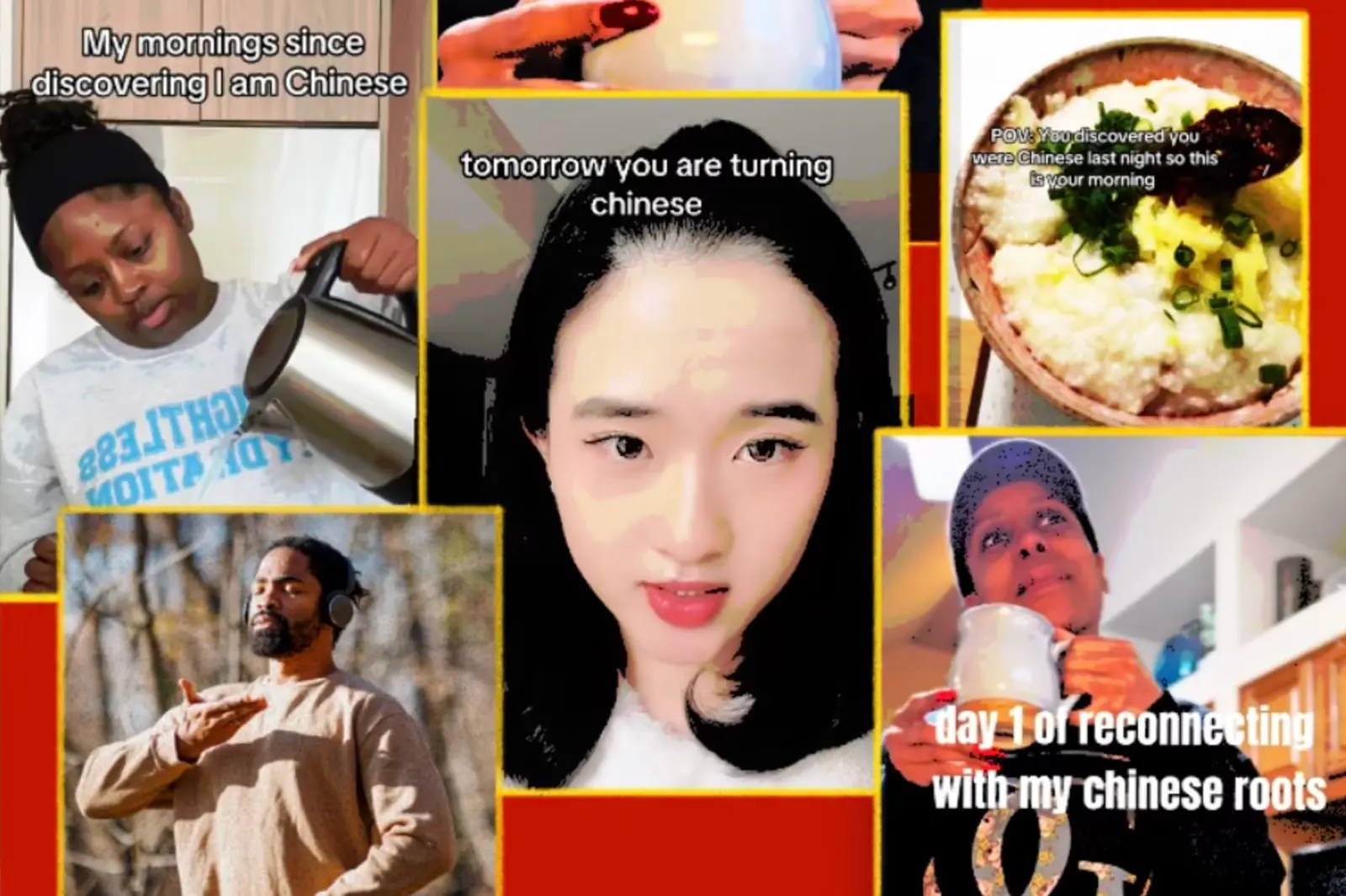
Noë Bryant spent 41 years identifying as African American. This year, she became Chinese.

Inspired by viral videos on social media, Bryant dragged her husband and two children to their local Asian grocery store in Austin, Texas. She asked ChatGPT which Chinese pantry staples she should buy and spent around $200 stocking up on soy sauce, goji berries and other ingredients.

“I told ChatGPT, ‘I want to become a Chinese baddie,’” said Bryant, a stay-at-home mom.

These days, she starts her mornings with warm herbal tea. Congee is her go-to meal. She wears slippers around the house, and wants to try acupuncture next.

Across the U.S. and Western world, non-Chinese people are embracing Chinese lifestyles. In Gen Z parlance, they’re “Chinamaxxing”—becoming the most Chinese they can be.

Drink hot water, never cold beverages. Don’t walk around the house barefoot. Do longevity exercises. The newly converted Chinamaxxers are obsessing over daily habits that are as second-nature to many Chinese people as brushing their teeth.

For decades, China lacked cultural cachet on the world stage, even as it became an economic superpower. Now, the country is enjoying a soft-power boost, just as the U.S. is losing some of its global appeal.


The seeds were planted a year ago, when an impending TikTok ban in the U.S. pushed a flood of Americans onto the Chinese social-media platform Xiaohongshu, also known as RedNote. There, Chinese users and the self-declared TikTok refugees taught each other Mandarin and English, exchanged recipes and swapped notes on daily life in their respective countries.

Popular American streamers Darren Watkins Jr., known as IShowSpeed, and Hasan Piker both toured China last year, bringing visions of the country’s futuristic skylines to millions of viewers. Labubu dolls made by Chinese toy maker Pop Mart became a global craze.

Chinamaxxing memes began peppering the internet. “You met me at a very Chinese time in my life,” social-media users would say, riffing on a line from “Fight Club.”

Wellness influencers and regular people alike started adopting traditional Chinese medicinal practices.

Sherry Zhu, 23, helped popularize habits like drinking hot water, eating boiled apples and wearing slippers around the house. She wanted to share parts of her personal life growing up Chinese American in New Jersey. In TikTok videos that have racked up millions of views, Zhu tells people they are turning Chinese.

“I thought that it would just be funny,” said Zhu. “Now people are more exposed to Chinese culture, and they want to learn more.”


Crissa Jewel says Zhu’s videos got her back on track to becoming Chinese.

The 31-year-old therapist in North Carolina was among the TikTok refugees on RedNote last year, but eventually stopped checking the app or learning Mandarin on Duolingo. Now, she’s drinking hot beverages—and even has her dogs lapping up warm water, which she said has cured her dog Coco’s stomach issues. Drinking tea with goji berries and red dates has helped ease her period symptoms.

Friends and family are surprised by the sudden shift to hot drinks. “They think that I’m strange,” said Jewel.

For many, the interest has more to do with wellness than politics. The videos blew up around the new year, when people were looking for ways to improve their health.

Alexia Torres, 24, started drinking hot water and eating boiled apples at the start of the year. Inspired by qigong, a Chinese movement practice, she has been hopping up and down every morning, which she says helps drain her lymphatic system. She’s considering taking up tai chi. Living in Los Angeles, she often sees elderly people who look fit for their age practicing the slow movements in the park.

“They may be onto something,” she said.

China’s state media is thrilled, amplifying Chinamaxxing as a sign of the country’s growing global influence.


Many Chinese Americans, on the other hand, are confused. Those who were bullied as kids for being different, or faced anti-Chinese harassment during Covid, have mixed feelings about people now wanting to become Chinese.

At first, Karen Lin was excited to see people embracing Chinese culture. “All of a sudden, being Chinese is cool,” said Lin, 32, who was born and raised in New York’s Chinatown.

Then things started getting weird. It felt like people were turning her culture into a costume.

“If I eat Mexican food, I’m not going to say I’m Mexican now,” she said.

Chinamaxxing has been a hot topic in Armond Dai’s group chats with Asian American friends. “Everyone was like, ‘What is happening?’” said the 28-year-old in California.

He grew up drinking hot water and boiling fruit for soups to combat colds. To see these practices now going viral feels surreal.

Dai’s hope is that people embracing Chinese lifestyle habits will also respect Chinese people.

“You are at a Chinese time in your life,” said Dai. “I will be Chinese forever.”


ABC Radio National: Your Call: 'Chinamaxxing', dancing AI robots, and China's rising cultural popularity (archive)
 
Last edited:
We deliberately went out of our way to find crazy people so that we have an article to write about said crazy people.

Reminds me of this meme.
1000016065.jpg
 
CNA: The rise of 'Chinamaxxing': Cultural curiosity or TikTok caricature? (archive) (mega)

A playful TikTok trend celebrating everyday Chinese habits has gone global, prompting debate over cultural appreciation - and whether online fascination can reshape perceptions.

Lakeisha Leo

25 Feb 2026

2026-01-24T022211Z_1_LYNXMPEM0N016_RTROPTP_3_LUNAR-NEWYEAR-CHINA-LANTERNS.webp
A young woman pictured at a lantern festival in Sichuan on Jan 23, 2026.

SINGAPORE: Are you “becoming Chinese”?

If you drink hot water regularly, prefer having rice or congee for breakfast, or even enjoy soothing foot baths, some social media users might say you are.

The newly-coined phrase, also referred to as “Chinamaxxing”, exploded online in January - gaining traction particularly among Gen Z TikTok users in the West.

It has since spawned other variations like “you met me at a very Chinese time of my life” and “transforming into a Chinese baddie” - with posts and videos often showing people, many of them non-Asian, embracing traditional Chinese day-to-day habits as part of their everyday routines.

The playful trend has also sparked debate over cultural appreciation - and whether this surge of online curiosity can shape long-term perceptions or simply reduce complex traditions to “superficial symbols”.

While some analysts argue that greater visibility is “better than nothing” in fostering cultural awareness, others caution that surface-level adoption risks misappropriating an identity that has at times faced discrimination.

“CHINA-MAXXING”​

TikTok users and media reports have attributed the trend to Sherry Zhu, a 23-year-old Chinese American TikTok influencer.

In a video shared on Jan 15 which has since gone viral - amassing more than 530,000 likes and 3.1 million views on TikTok, Zhu joked: “As a Chinese baddie myself, I'm here to tell you that the minute you turn Chinese, you’re coming with us to hotpot.”

“I tell you to drink your hot water, I tell you to wear the house slippers, this is part of the culture,” she added.

vlcsnap-2026-02-23-18h42m09s940.webp
Sherry Zhu, a 23-year-old Chinese American creator, joked on TikTok in a video posted on Jan 15 that tomorrow people are "turning Chinese".

Zhu, whose parents hail from China, told Chinese state news outlet CGTN that Chinese culture has been a “great source of happiness” for her growing up.

“I recognised from an early age that it brought a lot of benefits to my life,” she said. “I definitely want to share that.”

TikTok users have eagerly responded - sharing videos of themselves trying out Zhu’s tips.

A user named Imogen shared her morning routine of having congee for breakfast and drinking hot water.

“POV: You discovered you were Chinese last night so this is your morning,” she said in her post. “Congee has been my fav for a while! Please everyone get on this side of TikTok!”

Users on Instagram have also joined in.

“I can’t get enough of this content,” said a user with the handle Farah Pink, as she filmed herself boiling apples.

“I love being a Chinese baddie, thank you @sherryxiirui.”

vlcsnap-2026-02-23-19h24m40s011.webp
TikTok user Imogen, shared her morning routine of having congee for breakfast and drinking hot water.

The timing around Chinese New Year, which fell in mid-February this year, has also amplified the trend, experts said.

On TikTok and Instagram, many users shared photos and videos of themselves wearing red - symbolising prosperity.

Others discussed superstitions like not cutting or washing one’s hair on the first day, as it is believed to wash away good luck.

Zhang Xinzhi, an associate professor at the City University of Hong Kong (CityUHK), noted the rapid rise of Chinese culture and soft power in recent years.

“These factors have merged China-related topics into mainstream digital discourse, potentially triggering dormant curiosities and resonating with audiences.”

The trend shows a “more grassroots” and “high-resolution” view of everyday life, Zhang said, adding that what distinguishes it is its focus on ordinary people’s lifestyles and “small moments”.

“Unlike state-led or state-affiliated narratives about major advancements like infrastructure projects, technology, or innovation, this trend centres on the mundane aspects of daily Chinese life,” Zhang said.

“(For example) drinking hot water and incorporating Traditional Chinese Medicine (TCM) principles have low participation barriers and require minimal expertise …These activities are not off-putting, and the natural response is: Why not try?”

“The novelty perhaps lies in the convergence of cultural curiosity, transmedia storytelling and playful deployment of stereotypes surrounding both ancient and modern Chinese culture,” said Troy Chen, an associate professor of media and cultural studies from the University of Nottingham Ningbo China.

“At its core, this is a viral trend,” Chen said, also noting that many western influencers, as well as members of the overseas Chinese diaspora, have “joined the bandwagon - playing humorously and light-heartedly with shared cultural identity”.

WHAT DO CHINESE PEOPLE THINK?​

Shanghai native Lisa Wang shared her thoughts on the trend, saying it was not “a bad thing”.

“Given how tense the current state of (the world) is, there’s still this desire to understand each other’s natural way of life. At least from what you can see among Gen Z, there’s still this willingness to understand the world,” she said.

Niki Eu, a Singaporean Chinese speech pathologist in Perth, said that more people were exposed to the growing influence of Chinese culture and embracing traditions like TCM and acupuncture or food like hotpot and herbal soups.

“That’s becoming more common (in Australia),” Eu told CNA.

“It’s like walking into a Northern Chinese restaurant and seeing foreigners ordering hotpot. You know what hotpot is - and you actually want to eat it? That’s interesting.”

2025_critics_choice_awards_-_show_63399.webp
Hong Kong-American stand-up comedian and actor Jimmy O Yang pictured at an awards show in Santa Monica, California, on Feb 7, 2025.

Prominent Chinese celebrities and public figures such as Hong Kong-American comedian Jimmy O Yang have also contributed to the trend’s growing momentum, said Zhang from CityUHK.

Notably, last year’s mass exodus of American TikTok users to Chinese platforms such as Xiaohongshu gave US audiences “a rare opportunity to directly interact with Chinese internet users”, he added.

However, the trend has also drawn criticism, particularly from members of overseas Chinese communities and the wider Asian diaspora.

Some Chinese TikTok users have shared what it was like growing up as minorities in Western countries, where elements of their heritage - from the food they ate to their accents and physical features - were mocked or met with racism.

“Drink the tea or whatever, but claiming to be ‘Chinese’ for doing it is insensitive to those who have suffered for being Chinese and doing the exact same thing,” one user from Australia with the handle chloedyhe wrote.

Vivien Wang, a 26-year-old civil litigator in Australia whose parents migrated from mainland China in the 1980s, told CNA that she has “really complex feelings” about the trend.

“Growing up as a second-culture kid in a predominantly Western environment, it’s very easy to develop internalised racism,” said Wang.

“It’s something I’ve struggled with for a long time - seeing parts of my culture that I was once shunned for now becoming popularised and accepted.”

img_20260223_153706_362.webp
A photo of 26-year-old Australian civil litigator Vivien Wang's reunion dinner with her family in Canberra, Australia in 2023.

Others pointed to the surge in anti-Asian racism during the COVID-19 pandemic when attacks and hate crimes rose across many major US cities.

Chen from the University of Nottingham Ningbo China said that while the trend could serve as a “promising entry point” for cultural curiosity and mutual understanding, it also risks striking a sensitive chord among some Chinese communities.

“Those who identify with Chinese culture should have a say in defining it. (But) when that identity is challenged, mocked, misappropriated or exploited for views - it creates a jarring sense of unease,” he said.

That discomfort can feel particularly acute among Chinese people in the West, where many have grown up as minorities in local communities - sometimes marginalised, sometimes misunderstood.

The trend has also caught the attention of the Chinese government.

At a recent press conference, Chinese Foreign Ministry spokesman Lin Jian was asked about the videos going viral on social media worldwide.

“Glad to see that more and more foreign friends show interest in experiencing today’s China and exploring the Chinese people’s everyday life here,” said Lin on Feb 6.

He added that in the eyes of “many foreign friends”, China has been “much more than traditional symbols such as the Great Wall of China, Kung Fu, pandas and Chinese cuisine”.

BEYOND THE VIRALITY​

Experts said the deeper question is whether this burst of cultural curiosity can translate into a longer-term shift in perceptions.

While cultural curiosity can open the door to dialogue, not all attention translates into meaningful engagement, said Zhang from CityUHK.

Memes and viral posts offer simplified - and at times stereotypical - depictions of Chinese people and life in China, he added.

“Some stereotypes may seem relatively benign but others risk reducing complex cultural practices to caricatures or superficial symbols,” Zhang said.

“There is a clear difference between respectful cultural exchange and the surface-level adoption of cultural elements without understanding their deeper significance.”

Chinese creators on both TikTok and Instagram have voiced their concerns over issues like racism and reducing their ethnicity to being a punchline.

“I understand humour but I actually don’t think it is hitting,” said Australian writer Maggie Zhou. “It’s funny because we’re the butt of the joke, our ethnicity is kind of half of the punchline here.”

“We lived through the stigma, the racism, the fear of existing in public as an Asian person during a global pandemic,” said Carina Lee, a Taiwanese content creator on Instagram.

“But now our culture is a mood board?”

cna_chinas_night_boom_ep2_textless.00_44_21_08.still100.webp
A woman strikes a pose in Changsha city, the capital of Hunan Province.

Experts said it remains to be seen whether the trend will lead to a meaningful shift in public perceptions.

“It is hard to say. Perhaps it is better than nothing. At the very least, no publicity is bad publicity,” Chen said.

Similarly, Zhang characterised the trend as a “potentially meaningful initial step” in cross-cultural engagement.

“Even if the immediate impact is limited, the fact that China-related topics are being discussed more widely and in more varied contexts creates opportunities for deeper mutual understanding over time.”

Li Mei, a media lecturer at the University of Sydney, said China’s soft power has long faced challenges related to discourse power, with its actions and narratives “often reframed, contested, or overshadowed by dominant external narratives”.

“When global audiences begin to appreciate cultural products or lifestyle elements on their own terms, negative stereotypes can dissipate more subtly and organically than through top-down messaging.”

However, she cautioned that the “fragmented and short-lived nature” of viral moments makes it difficult to translate short-term fascination into long-term changes in attitudes.
 
Last edited:
BBC: Is this a 'very Chinese time in your life'? The trend boosting China's soft power (archive)

14 February 2026
Koh Ewe

84bc2860-0985-11f1-a30c-2fd608b6738c.jpg.webp
Being Chinese is now in vogue

Ni hao, we're all Chinese now.

Or at least that's what they claim on TikTok, where a trend called "Chinamaxxing" has taken off in the West.

Chinese wellness practices, once associated with the tacky and geriatric, have suddenly found themselves in vogue, largely among Americans.

From warm apple-boiled water to indoor slippers and longevity exercises, people are sharing videos of themselves "learning to be Chinese". Many come with the Fight Club-inspired caption "you met me at a very Chinese time in my life", or the hashtag #newlychinese.

As Donald Trump shakes up the world order, the Chinese Communist Party has welcomed this boost to the country's image.

Chinamaxxing is certainly adding more gloss to the recent flourish of Chinese soft power. Over the past year we've seen the world clamour for Labubu dolls, wait in line at brand new stores to buy Mixue bubble tea and Luckin coffee, and scroll through their friends' holiday feeds in the "cyberpunk city" of Chongqing.

Some say Chinamaxxing stems from young Americans' disenchantment with their own country, although it's unclear how much that is really driving the trend.

But like so many internet trends, this one hardly paints the full picture. It's a celebration of memes and fleeting moments that make up just one slice of Chinese life. Beyond that are young people who, like their American counterparts, are also worried about their future in a sluggish economy and a fast-changing world.

A very Chinese time in our lives​

Some Chinese youth may find it strange that parts of their culture - long seen as "uncool" in the Western imagination - are now the object of fascination. Some may find it offensive that Westerners on TikTok are facetiously claiming they've been "diagnosed as Chinese".

But others say Chinamaxxing strikes a different note from derogatory jokes like "bing chilling" - where the punchline is ex-wrestler John Cena's stilted Mandarin pronunciation - or the "social credit" meme that mocks the Chinese government's restrictions on personal freedoms.

This time, Chinese people are in on the joke - not the butt of it.

One of the most influential figures behind the Chinamaxxing meme is Sherry Zhu, a Chinese-American TikTok content creator who regularly shares traditional wellness tips with her "Chinese baddies".

"Tomorrow you're turning Chinese," she tells her 740,000 TikTok followers. "And I know that sounds intimidating, but there is no point in fighting it now."

3da19b10-0979-11f1-b5e5-c7c9d6353cfb.jpg.webp
Mixue, an ice-cream and tea chain, now has thousands of stores across the globe

Few could have seen this coming.

It was not that long ago when the Covid pandemic sparked a wave of Sinophobia. Chinese diaspora spoke of racism and how people were avoiding the community and their businesses.

Then a stunned world watched Beijing put its cities into hellish lockdowns. Reports emerged of residents running out of food and pleading for help from inside their sealed-off neighbourhoods. The restrictions ended only in early 2023 after rare protests. By then expats had left China in droves, many of them saying too much had changed.

There was also an exodus from Hong Kong, where Beijing's control was reshaping the city. This, along with China's growing power and assertiveness, strained the relationship with the West, even as the world's reliance on the Chinese economy became clear.

Meanwhile, China's investments in tech, infrastructure and exports began to pay off - and became more visible as it reopened post pandemic, relaxing visa rules to bring back tourists.

It was hard to miss: glitzy skyscrapers, a sprawling high-speed rail network, highways packed with electric vehicles, and a boom in green energy, robotics and artificial intelligence. Chongqing - a humid southwestern metropolis which once made global headlines for a corruption scandal and murder - turned popular and cool.

7b0ae9f0-08bd-11f1-b197-d9b05591fdc1.jpg.webp
Tourists are flocking to China's "cyberpunk city" of Chongqing

There have been other, smaller triumphs. Young people around the world are snatching Adidas Tang-style jackets off the shelves, bingeing on Chinese micro-dramas and experimenting with powdery make-up looks flaunted by Chinese girls and women on Douyin, China's version of TikTok.

"As a Chinese person who has been online throughout years and years of heavy Sinophobia, it felt refreshing to have the mainstream opinion finally shift regarding China," Claire, a Chinese-Canadian TikTok user, tells BBC Chinese.

The 22-year-old, who shares political content on TikTok and would only reveal her first name for that reason, says, for her, the "critical juncture" was last year.

That was when she noticed a shift in attitudes about China. A wave of Americans arrived on RedNote, a popular Chinese social media app, ahead of a TikTok ban in the US.

Within days memes became the currency of these American "TikTok refugees" as two worlds that rarely interact because of China's internet firewall were brought closer.

A dimming American Dream​

"These young people have watched their physical reality remain frozen while China built entire cities," says Afra Wang, a tech writer and podcaster.

"When you can't build high-speed rail but you can scroll through videos of Chinese infrastructure, of course the future starts to look Chinese."

For observers like her, it's no coincidence that Chinamaxxing comes as the American Dream seems to be dimming.

Americans who came of age after the Iraq War, the 2008 global financial crisis or even the 6 January 2021 Capitol riot face a job market disrupted by globalisation and then AI, Wang says: "American exceptionalism was never something they lived."

4194e6a0-08bb-11f1-b197-d9b05591fdc1.jpg.webp
China now has the world's largest high-speed rail network

What do people in China think of Chinamaxxing? Not much, it seems. The trend has stirred limited reactions on Chinese social media.

Rather, in the eyes of Chinese people, America, once seen as a beacon of success, has lost its shimmer. Not least because tensions between the two sides have made it harder for Chinese students who want to study or work there.

"During America's Chinamaxxing moment, China is experiencing its own America-minimising moment," Wang says.

On parts of Chinese social media, there are dystopian references to the "US kill line", a Chinese gaming term that refers to the perilous descent into poverty in the US. The idea, which took root quickly among users and influencers, is that America is a tough place to survive because a single stroke of bad luck can derail your life.

The term's popularity on social media is helped by the fact that it has been embraced by Chinese state media and the government. They have sought to portray the US as a decaying superpower because of inequality, a weak social safety net and a broken healthcare system.

According to a commentary in state-owned Xinhua, the "kill line" meme "underscores how far the lived reality can drift from the ideals once broadcast to the world".

Beyond the memes​

It's little wonder that Chinese authorities are pleased with Chinamaxxing.

"Chinese lifestyles increasingly gain global appeal, offer a steadier way of being," reads the headline of a Global Times piece about the trend.

When asked about it at a press briefing earlier this month, Chinese foreign ministry spokesperson Lin Jian said a "unique blend of history and modernity" is making China increasingly appealing to foreigners.

He was "happy" to see foreigners experiencing the "everyday life of ordinary Chinese people".

885b9740-097a-11f1-be5c-9fef5c60ead8.jpg.webp
Young Chinese face many of the same challenges as their Western counterparts

Are they really?

For one, it's hard to know what Chinese people make of so many things because all public conversation and activity is heavily policed. Criticising the government is risky and protests are quickly quashed.

Two, there is a lot the memes making it to the West don't show. China's youth are facing an unemployment rate that sits at more than 15% and burning out from a gruelling work culture, yet sharing too much of their pessimism online could alert internet censors. They are worried about finding a home as the country's property crisis continues, and dating is no easier than anywhere else.

Propping up breakneck delivery speeds are gig workers scrambling to hit deadlines. Many can relate to the hustle: in 2023, Beijing courier Hu Anyan's memoir about the relentless nature of gig work became a national bestseller.

"When I think of my American friends and tech people wandering through Shenzhen in awe, I also think of my own experience in Shenzhen," Wang says. "Drinking a six yuan latte from Luckin Coffee, delivered on a scooter by someone like Hu Anyan, whose labour makes 'cool China' visible while remaining almost invisible themselves."

Perhaps, if the fascination with China's successes continues, more of Chinese life will surface. But for now apple tea seems to be where it's at.

"Ever since I started boiling apples in my tea water my period cramps have completely gone," reads a comment on RedNote from an American user - one of the TikTok refugees still lingering on the app.

"We have so much still left to learn being Chinese."

Additional reporting by Eunice Yang from BBC Chinese
 
People want to be like depictions of average Americans because the American Dream promised a nuclear family, a house, a car and a steady respectable job.

No one wants to be like the average Chinese, they want to be like the elite China man that can own slaves and be as despicable as he can to the world around him.
 
People want to be like depictions of average Americans because the American Dream promised a nuclear family, a house, a car and a steady respectable job.

No one wants to be like the average Chinese, they want to be like the elite China man that can own slaves and be as despicable as he can to the world around him.
But what about the nuclear jewish family?

Black chinese did it first.
 
Is there any actual merit to traditional Chinese medicine? The stuff that isn't snorting rhino horns for boners and eating dogs to cool the body, that is.
 
Is there any actual merit to traditional Chinese medicine? The stuff that isn't snorting rhino horns for boners and eating dogs to cool the body, that is.
99.9% of it is superstitious nonsense with no merit beyond the placebo effect
0.1% could be something that 'accidentally' works
like
>some dude goes to the witch doctor complaining about headaches
>witch doctor tells him "confucius says to eat dried monkey testicles to restore heavenly spirit chi balance!"
>eat balls, headache goes away
>turns out he headache was a symptom of some rare weird micronutrient deficiency which the monkey balls happened to fix
 
Is there any actual merit to traditional Chinese medicine? The stuff that isn't snorting rhino horns for boners and eating dogs to cool the body, that is.
Kinda? The most common story I hear in Taiwan is someone is having a problem and western medicine was not helping, but going to a traditional medicine Doctor got them sorted quickly. Usually you are just givin a herb mix that makes for some nasty tasting tea instead of given endless baggies of random pills like western medicine doctors. Some of it is real out there esoteric shit like rino horns and bear testicle, But most of it is just basic herbal treatments that do actually help. A comparison would be like instead of using an ointment for a burn you just use the sap straight from the Aloe vera plant.
 
Is there any actual merit to traditional Chinese medicine? The stuff that isn't snorting rhino horns for boners and eating dogs to cool the body, that is.
Historical, mostly. Qi and organ warmth and all of that serves an example of a historically sophisticated understanding of pathophysiology, one that gives logical, sometimes even accurate knowledge of disease mechanisms.
There is no reason to practice it now, since western medicine has completely and utterly eclipsed it in even its strengths. Its value is for historical study and foreknowledge of the development of medicine, which can be used to give insights into how people perceive and develop medical knowledge, which can be useful for a medical student.
There is also the fact that illiterates, villagers, and schizos believe in it more than western medicine, and in that case you are forced to use it even though the practice should have faded away years ago.

EDIT: A previous poster in the thread has mentioned herbalism, but it should be noted that western medicine is not lacking in herbalistic medicalization. In fact, the western field is actively moving to develop its own, unburdened by qi systems.
 
Over the past decade or two I've noticed theres been a severe IQ drop where people no longer seem to understand how deeply authoritarian the system is over there compared to even the most dysfunctional of other countries. Despite the PRC being as aggressive as ever and doing things like unleashing a global pandemic on the world.

The average moron in the west really has no appreciation the extent that their life would change if they actually lived in a China style regime. They all think that they would be able to carry on the same type of shit talking, video game playing, consumerist lifestyle they enjoy in western countries with just the flag switching out for some reason.
 
Back
Top Bottom