Ye Wants Your Forgiveness. So What?
The Atlantic (archive.ph)
By Spencer Kornhaber
2026-04-10 11:42:27GMT
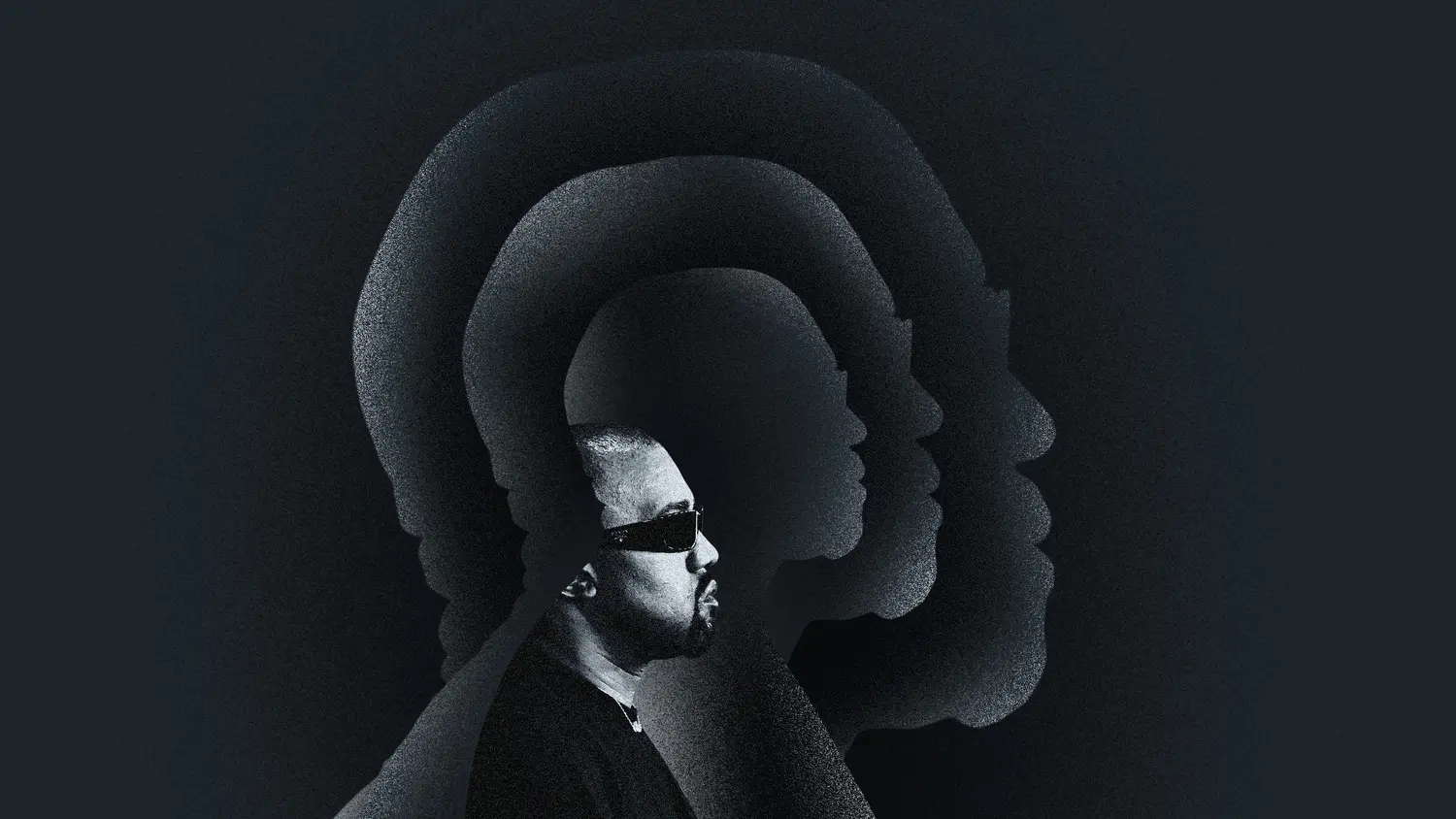
Illustration by The Atlantic. Source: Robyn Beck / AFP / Getty
When canceled became a common label applied to basically anyone who’d done anything to offend anyone, it had many unfortunate effects. One was rolling transgressions as serious as sexual assault and as trivial as accidentally not being nice to a fan (maybe) into one bucket of misbehavior. Another was implying that society was run, more than ever, by mob rule. The truth is that the age of consensus has ended, and even the canceled can continue their careers by pitching themselves directly to the public—which is how, for example, the allegedly disgraced Morgan Wallen became the most popular man in country music.
Another consequence was making collective judgment seem cruelly irreversible. Cancel culture, as many a podcaster has ranted over the past decade, offers no obvious path to redemption. Examples of people expressing sincere apologies, changing their behavior, and winning forgiveness have been rare. Transgressors who’ve returned to public life, such as President Trump, have mostly offered denials of wrongdoing and worn their cancellation as a badge of honor.
So when Ye (formerly Kanye West) placed an ad in The Wall Street Journal in January apologizing to “those I’ve hurt,” it was genuinely surprising. A decade ago, after spending years defining the sound of 21st-century hip-hop, Ye began to alienate portions of his listenership by going MAGA. But he remained a bankable celebrity—in a lucrative partnership with Adidas—until 2022, when he went all in on anti-Semitism. He took to shouting out Hitler, selling swastika T-shirts, and otherwise preaching about how Jews control everything and must be stopped. Record labels, brands, and many fans distanced themselves from him.
In the Journal, though, he wrote that this behavior had been the result of an undiagnosed brain injury he’d suffered 25 years earlier. He had “lost touch with reality” but now, armed with a new health routine and outlook on life, had amends to make. “I aspire to earn your forgiveness,” he wrote.
The letter was well written. It conveyed that he’d wrestled with great shame and was humbly offering himself to the world’s mercy. A reader might ask: What if what happened to Ye—mental-health problems giving way to a Third Reich fetish—had happened to me? Wouldn’t I want a chance to make good?
But Ye is not like most people. He’s a celebrity whose words reverberate throughout the culture, and whose reputation is worth a lot of money. In recent weeks, he seemed to be inching his way back into normalcy by releasing an album (Bully) and playing gigs. Then, on Tuesday, the United Kingdom banned him from entry, citing the “public good.” Forgiveness had been the wrong concept to apply to his situation all along. The language of individual morality obscures what so-called cancellations—and ever-elusive uncancellations—really should be about: doing what’s best not for the celebrity but for the rest of us.
The timing of Ye’s apology always seemed a bit convenient. In the same week that the Journal published Ye’s letter, the rapper signed a seven-figure record deal with the media company Gamma. Co-founded by Ye’s former manager Larry Jackson, Gamma is a new music-industry player that’s trying to compete with the major labels. A separate article in the Journal reported that Jackson had discussed Ye’s signing during an all-hands meeting with his staff, some of whom had reservations. The company’s leadership reportedly believed that Ye “was committed to creating music with positive messaging.”
The run-ups to Ye’s albums have traditionally been littered with explosive statements, publicity stunts, and repeated delays. Before his 2024 album Vultures 1, he offered a public apology to Jewish people—then soon doubled down on hating them. By contrast, Bully’s rollout has been serene and slick. Its official release date was pushed back only once, by a week. Ye has given no interviews and posted nothing of note since his January mea culpa.
Until just a few days ago, the low-drama PR strategy seemed to be working. Fans were praising Bully as a heartening return to Ye’s early, soulful sound. Its lyrics contained no inflammatory content. He’d played two sold-out shows at Los Angeles’s SoFi Stadium. Lauryn Hill joined him on stage, and other celebrities were cheering in the audience. Little attention was being paid to the other scandals in his life—such as a lawsuit from his former assistant alleging multiple instances of abuse (he has denied the allegations), which came after previous reports that he’d bullied and harassed employees at Adidas (about which he has not commented).
He was then announced as the headliner for all three days of the Wireless Festival, a long-running and prominent hip-hop event in London. This was the kind of gig that, if it went off without a hitch, would smooth his return to the status of globe-trotting, big-tent pop star.
But not everyone was going along with the rehab plan. After all, less than a year ago Ye was working on openly anti-Semitic music with song titles including “Gas Chambers” and “Heil Hitler.” Creative Communities for Peace and other Jewish groups excoriated the Wireless booking, and PepsiCo dropped its sponsorship of the festival.
The managing director of Festival Republic (which, along with Live Nation, runs Wireless), Melvin Benn, released an impassioned defense of the booking. He identified himself as an anti-fascist and a supporter of Jews. He expressed the view that “forgiveness and giving people a second chance are becoming a lost virtue in this ever-increasing divisive world,” and urged people to “offer some forgiveness and hope to him as I have decided to do.” Ye put out a statement saying that his “only goal is to come to London and present a show of change, bringing unity, peace, and love through my music.” He added that he wanted to meet with members of the Jewish community to listen and learn.
That same day, the U.K. government denied Ye’s visa, banning him from coming to the country. Prime Minister Keir Starmer wrote online that he “will not stop in our fight to confront and defeat the poison of antisemitism. We will always take the action necessary to protect the public and uphold our values.” Wireless subsequently announced that it was canceling the entire festival.
The government intervention quickly redefined the conversation around Ye, bringing up questions of free speech and legal precedent (the U.K. generally has less permissive expression laws than the United States, though both countries have lately wielded immigration policy against artists and activists for things they’ve said). It also, predictably, fed the sense of persecution that Ye’s followers have long clung to. On Reddit and X, some fans are griping that their idol is being subjected to harsher punishments than associates of Jeffrey Epstein have been. They are alluding darkly to a conspiracy … by a certain group of people … who seem to control the world …
In a way, though, the decision by Starmer’s government is clarifying. The question of whether Ye should be “allowed” into public life again—meaning given mainstream platforms and institutional support—was never about whether Ye deserved a comeback. He was shunned not because he’d morally transgressed (though he had) but because he’d used his platform to spread dangerous myths about a group of people already experiencing a rising tide of bigotry. His single “Heil Hitler” (which, again, is recent—released in May 2025) became a rallying song for people such as Nick Fuentes, the ascendent influencer who pushes open racism, sexism, homophobia, and anti-Semitism. In 2022, a hate group hung a banner over a Los Angeles freeway that read Kanye Is Right About the Jews.
Speech laws, of course, vary from country to country. And record companies, corporations, and concert organizers can’t stop anyone from saying whatever they want. But institutions can and probably should try to not give money, megaphones, and credibility to someone who might use those things to spread messages that can get people killed.
Making judgment calls about public harm can be tricky, and the process is muddied by the forgiveness-focused language that rules so much of the conversation about celebrity conduct. Ye’s redemption campaign has foregrounded a theme that fits our parasocial zeitgeist: empathy for the individual. Yet while many of us may want Ye to get better, or believe he’s entitled to personal redemption, none of us has any real idea what’s in his heart. All we have is the record of how he’s acted before, and all we can do is make inferences about how he’s acting now.
My inferences say not to trust him, not yet. After spending decades expressing himself in freewheeling interviews, lately he’s mostly shared his thoughts in highly curated statements. On Bully, he raps in bland and mechanical fashion about conquering darkness and achieving a comeback. His lyrics, once outlandishly specific, are now flagrantly generic: “Know the Lord’s intervention was divine / Political and social tensions on the climb.” Listening, I wondered when the real Ye would crash back in and say what he really thinks, for better or ill. Only time and evidence can make that suspicion wane. And the only reason to rush that process is profit.
---
If you're wondering about the author, of course he is.
The Atlantic (archive.ph)
By Spencer Kornhaber
2026-04-10 11:42:27GMT
Illustration by The Atlantic. Source: Robyn Beck / AFP / Getty
When canceled became a common label applied to basically anyone who’d done anything to offend anyone, it had many unfortunate effects. One was rolling transgressions as serious as sexual assault and as trivial as accidentally not being nice to a fan (maybe) into one bucket of misbehavior. Another was implying that society was run, more than ever, by mob rule. The truth is that the age of consensus has ended, and even the canceled can continue their careers by pitching themselves directly to the public—which is how, for example, the allegedly disgraced Morgan Wallen became the most popular man in country music.
Another consequence was making collective judgment seem cruelly irreversible. Cancel culture, as many a podcaster has ranted over the past decade, offers no obvious path to redemption. Examples of people expressing sincere apologies, changing their behavior, and winning forgiveness have been rare. Transgressors who’ve returned to public life, such as President Trump, have mostly offered denials of wrongdoing and worn their cancellation as a badge of honor.
So when Ye (formerly Kanye West) placed an ad in The Wall Street Journal in January apologizing to “those I’ve hurt,” it was genuinely surprising. A decade ago, after spending years defining the sound of 21st-century hip-hop, Ye began to alienate portions of his listenership by going MAGA. But he remained a bankable celebrity—in a lucrative partnership with Adidas—until 2022, when he went all in on anti-Semitism. He took to shouting out Hitler, selling swastika T-shirts, and otherwise preaching about how Jews control everything and must be stopped. Record labels, brands, and many fans distanced themselves from him.
In the Journal, though, he wrote that this behavior had been the result of an undiagnosed brain injury he’d suffered 25 years earlier. He had “lost touch with reality” but now, armed with a new health routine and outlook on life, had amends to make. “I aspire to earn your forgiveness,” he wrote.
The letter was well written. It conveyed that he’d wrestled with great shame and was humbly offering himself to the world’s mercy. A reader might ask: What if what happened to Ye—mental-health problems giving way to a Third Reich fetish—had happened to me? Wouldn’t I want a chance to make good?
But Ye is not like most people. He’s a celebrity whose words reverberate throughout the culture, and whose reputation is worth a lot of money. In recent weeks, he seemed to be inching his way back into normalcy by releasing an album (Bully) and playing gigs. Then, on Tuesday, the United Kingdom banned him from entry, citing the “public good.” Forgiveness had been the wrong concept to apply to his situation all along. The language of individual morality obscures what so-called cancellations—and ever-elusive uncancellations—really should be about: doing what’s best not for the celebrity but for the rest of us.
The timing of Ye’s apology always seemed a bit convenient. In the same week that the Journal published Ye’s letter, the rapper signed a seven-figure record deal with the media company Gamma. Co-founded by Ye’s former manager Larry Jackson, Gamma is a new music-industry player that’s trying to compete with the major labels. A separate article in the Journal reported that Jackson had discussed Ye’s signing during an all-hands meeting with his staff, some of whom had reservations. The company’s leadership reportedly believed that Ye “was committed to creating music with positive messaging.”
The run-ups to Ye’s albums have traditionally been littered with explosive statements, publicity stunts, and repeated delays. Before his 2024 album Vultures 1, he offered a public apology to Jewish people—then soon doubled down on hating them. By contrast, Bully’s rollout has been serene and slick. Its official release date was pushed back only once, by a week. Ye has given no interviews and posted nothing of note since his January mea culpa.
Until just a few days ago, the low-drama PR strategy seemed to be working. Fans were praising Bully as a heartening return to Ye’s early, soulful sound. Its lyrics contained no inflammatory content. He’d played two sold-out shows at Los Angeles’s SoFi Stadium. Lauryn Hill joined him on stage, and other celebrities were cheering in the audience. Little attention was being paid to the other scandals in his life—such as a lawsuit from his former assistant alleging multiple instances of abuse (he has denied the allegations), which came after previous reports that he’d bullied and harassed employees at Adidas (about which he has not commented).
He was then announced as the headliner for all three days of the Wireless Festival, a long-running and prominent hip-hop event in London. This was the kind of gig that, if it went off without a hitch, would smooth his return to the status of globe-trotting, big-tent pop star.
But not everyone was going along with the rehab plan. After all, less than a year ago Ye was working on openly anti-Semitic music with song titles including “Gas Chambers” and “Heil Hitler.” Creative Communities for Peace and other Jewish groups excoriated the Wireless booking, and PepsiCo dropped its sponsorship of the festival.
The managing director of Festival Republic (which, along with Live Nation, runs Wireless), Melvin Benn, released an impassioned defense of the booking. He identified himself as an anti-fascist and a supporter of Jews. He expressed the view that “forgiveness and giving people a second chance are becoming a lost virtue in this ever-increasing divisive world,” and urged people to “offer some forgiveness and hope to him as I have decided to do.” Ye put out a statement saying that his “only goal is to come to London and present a show of change, bringing unity, peace, and love through my music.” He added that he wanted to meet with members of the Jewish community to listen and learn.
That same day, the U.K. government denied Ye’s visa, banning him from coming to the country. Prime Minister Keir Starmer wrote online that he “will not stop in our fight to confront and defeat the poison of antisemitism. We will always take the action necessary to protect the public and uphold our values.” Wireless subsequently announced that it was canceling the entire festival.
The government intervention quickly redefined the conversation around Ye, bringing up questions of free speech and legal precedent (the U.K. generally has less permissive expression laws than the United States, though both countries have lately wielded immigration policy against artists and activists for things they’ve said). It also, predictably, fed the sense of persecution that Ye’s followers have long clung to. On Reddit and X, some fans are griping that their idol is being subjected to harsher punishments than associates of Jeffrey Epstein have been. They are alluding darkly to a conspiracy … by a certain group of people … who seem to control the world …
In a way, though, the decision by Starmer’s government is clarifying. The question of whether Ye should be “allowed” into public life again—meaning given mainstream platforms and institutional support—was never about whether Ye deserved a comeback. He was shunned not because he’d morally transgressed (though he had) but because he’d used his platform to spread dangerous myths about a group of people already experiencing a rising tide of bigotry. His single “Heil Hitler” (which, again, is recent—released in May 2025) became a rallying song for people such as Nick Fuentes, the ascendent influencer who pushes open racism, sexism, homophobia, and anti-Semitism. In 2022, a hate group hung a banner over a Los Angeles freeway that read Kanye Is Right About the Jews.
Speech laws, of course, vary from country to country. And record companies, corporations, and concert organizers can’t stop anyone from saying whatever they want. But institutions can and probably should try to not give money, megaphones, and credibility to someone who might use those things to spread messages that can get people killed.
Making judgment calls about public harm can be tricky, and the process is muddied by the forgiveness-focused language that rules so much of the conversation about celebrity conduct. Ye’s redemption campaign has foregrounded a theme that fits our parasocial zeitgeist: empathy for the individual. Yet while many of us may want Ye to get better, or believe he’s entitled to personal redemption, none of us has any real idea what’s in his heart. All we have is the record of how he’s acted before, and all we can do is make inferences about how he’s acting now.
My inferences say not to trust him, not yet. After spending decades expressing himself in freewheeling interviews, lately he’s mostly shared his thoughts in highly curated statements. On Bully, he raps in bland and mechanical fashion about conquering darkness and achieving a comeback. His lyrics, once outlandishly specific, are now flagrantly generic: “Know the Lord’s intervention was divine / Political and social tensions on the climb.” Listening, I wondered when the real Ye would crash back in and say what he really thinks, for better or ill. Only time and evidence can make that suspicion wane. And the only reason to rush that process is profit.
---
If you're wondering about the author, of course he is.
Within hours of landing in Tel Aviv this past January, some new friends and I were wandering in a jet-lagged daze through a street market when we ran into an alumnus of the Taglit-Birthright program that had brought us, roughly 40 queer Jews, to Israel for a free 10-day vacation. “So,” he asked, “how are you guys enjoying faglit?”


