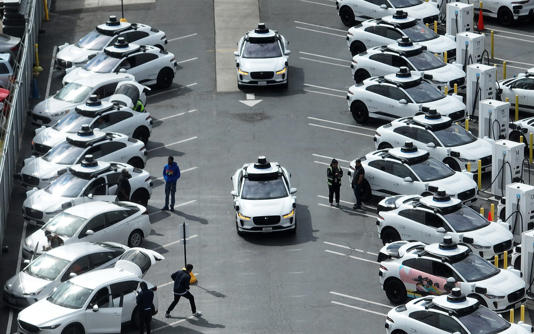
(Credit: James Titcomb, The Telegraph)
(Archive:
Long at the bleeding edge of culture and technology, San Francisco this month became the testbed for one of the world’s most radical trials of driverless taxis.
Regulators voted to let autonomous cars from two companies – Cruise and Waymo – circle the city’s streets, picking up passengers and charging them for trips at any time of day and night.
Unlike many previous similar experiments, the vehicles would not require safety drivers, with only software and sensors preventing passengers from getting into accidents. These were driverless cars in the truest sense.
Robot cars would share San Francisco’s hilly roads with its 150-year-old cable car system, picking up those who had snagged a spot on Cruise and Waymo’s waitlists. It felt like a taste of the future, especially in a city that is notoriously averse to bold policymaking.
But less than two weeks later, that experiment seems to be unravelling. In the days since driverless cars were given the keys to the city, a string of embarrassing incidents – from traffic jams to crashes – have threatened to set the driverless revolution back years.
Over the weekend, San Francisco’s Department of Motor Vehicles demanded that Cruise, a subsidiary of General Motors, reduce its fleet by 50pc after a crash with a fire engine. The decision took around 150 cars off the road. However, some want to go further: now, local politicians are seeking the reversal of the experiment before it had truly got going.
Driverless car companies and the technology’s supporters claim that autonomous vehicles will be safer than having people behind the wheel. They say the cars do not speed, do not drive drunk or get tired, and statistically will get into fewer scrapes than their human counterparts.
Cruise has been testing driverless cars on San Francisco’s streets since 2015, a year before GM paid a reported $600m (£471m) for the company. It was granted permission to conduct limited tests without a safety driver in 2020 and started charging passengers last year.
The cars, modified white Chevrolet Bolt electric vehicles with cutesy names such as Poppy, Crepe and Scampi, were at first a curiosity and then became just a part of the city’s fabric, only noticed by the odd motorist frustrated at their cautious approach to junctions. Waymo, a subsidiary of Google’s parent Alphabet, started ferrying passengers in 2021.
Yet what was a minor quirk observed only occasionally on the roads has been significantly expanded. On August 10, Californian regulators gave Waymo and Cruise permission to operate paid rides throughout the city, at any time of day.
The vote was controversial. San Francisco officials said they had logged around 600 incidents such as illegal manoeuvres or unexpected stops in the last year. In dozens of cases, passengers had been stuck inside vehicles when a car malfunctioned and stopped without an explanation, having to be physically rescued.
Jeanine Nicholson, the chief of the city’s fire department, said firefighters had had to repeatedly waste time dealing with the cars, including one case in which a car with no driver had inched towards a blaze, unable to be stopped until one firefighter smashed its window. “It is not our job to babysit their vehicles,” she said.
A group of anti-driverless car activists also took to placing cones on the cars’ bonnets to disable them in an extended protest dubbed the “week of cone”. The shapes confused the vehicle’s sensors, shutting them down as a result.
Nonetheless, Waymo and Cruise secured victory. After billions of dollars in investment in driverless technology over the last decade, the decision seemed to offer the companies a path to commercial success.
Yet it took just hours for things to start going wrong. California’s Public Utilities Commission approved the 24/7 service late on a Thursday. The following evening, around 10 Cruise cars caused traffic chaos when they appeared to stall around junctions in a busy part of the city.
The company initially suggested that overburdened mobile networks related to a nearby music festival had interfered with the cars. Later, Cruise blamed the incident on a single pedestrian interfering with one vehicle.
The next week, one of the company’s cars became stuck after driving into wet cement, apparently ignoring the cones marking the area off. It was forced to pay for the road to be repaved after the vehicle was recovered.
And just the following day, a Cruise vehicle collided with a fire engine responding to an emergency, after failing to recognise its sirens and stop in time. The passenger was taken to hospital by paramedics with injuries that were described as non-serious, but it meant the company had disrupted two emergency services with one incident.
Greg Dietrerich, Cruise’s general manager for San Francisco, said the crash was a unique case with “several factors that added complexity”. But the string of incidents so soon after driverless cars had been given such freedom was unfortunate at best.
Over the weekend, California’s Department of Motor Vehicles demanded that the company halve its fleet of up to 300 driverless cars in San Francisco and said that it is investigating the situation.
Phil Koopman, an autonomous vehicle safety expert at Carnegie Mellon, says Cruise should have voluntarily paused operations before regulators forced action.
“Cruise could have been seen to do the right thing if they really care about safety. They didn’t, and the DMV had to come down on them.
“Driving into concrete is not the end of the world. And people do it all the time. But if your narrative is that we’ll be perfect and humans are terrible, you just eviscerated your narrative.”
Waymo, which has fewer cars on the road, has not faced the same intense scrutiny as Cruise, although its cars have also been recorded interfering with emergency services. In June, one of its driverless cars hit and killed a dog that had run into the road, with the vehicle unable to avoid contact.
One driverless car executive says the spate of incidents shows that the cars are simply not ready to function on their own.
“They’re doing many of the right things with good-quality science. And they are driving a lot of simulation and testing and simulation, all of which is necessary. The thing is, it’s just not enough.
“The design of the systems and the amount of testing that goes on, and the degree to which they’re being supervised is all falling short of where it should be. And as a result, we are unnecessarily putting the public at risk, really, in these trials they are effectively human guinea pigs.”
A Cruise spokesman said the company still compared favourably to human drivers.
The company said: “Over 100 people lose their lives every day on American roadways, and countless others are badly injured. We believe it’s clear that Cruise positively impacts overall road safety, and look forward to working with the CA DMV to make any improvements and provide any data they need to reinforce the safety and efficiency of our fleet.”
However, it faces growing opposition. Last week, San Francisco’s city attorney David Chiu launched a legal battle seeking to block Waymo and Cruise’s permits, while local politician Aaron Peskin said he planned to appeal them.
Driverless car advocates may insist the technology is safe. But they might lose their best chance to prove it.
(Link: https://www.msn.com/en-gb/cars/news...&cvid=dc876001c7bc4ff08528475a465a6f36&ei=101)
(Archive:
Long at the bleeding edge of culture and technology, San Francisco this month became the testbed for one of the world’s most radical trials of driverless taxis.
Regulators voted to let autonomous cars from two companies – Cruise and Waymo – circle the city’s streets, picking up passengers and charging them for trips at any time of day and night.
Unlike many previous similar experiments, the vehicles would not require safety drivers, with only software and sensors preventing passengers from getting into accidents. These were driverless cars in the truest sense.
Robot cars would share San Francisco’s hilly roads with its 150-year-old cable car system, picking up those who had snagged a spot on Cruise and Waymo’s waitlists. It felt like a taste of the future, especially in a city that is notoriously averse to bold policymaking.
But less than two weeks later, that experiment seems to be unravelling. In the days since driverless cars were given the keys to the city, a string of embarrassing incidents – from traffic jams to crashes – have threatened to set the driverless revolution back years.
Over the weekend, San Francisco’s Department of Motor Vehicles demanded that Cruise, a subsidiary of General Motors, reduce its fleet by 50pc after a crash with a fire engine. The decision took around 150 cars off the road. However, some want to go further: now, local politicians are seeking the reversal of the experiment before it had truly got going.
Driverless car companies and the technology’s supporters claim that autonomous vehicles will be safer than having people behind the wheel. They say the cars do not speed, do not drive drunk or get tired, and statistically will get into fewer scrapes than their human counterparts.
Cruise has been testing driverless cars on San Francisco’s streets since 2015, a year before GM paid a reported $600m (£471m) for the company. It was granted permission to conduct limited tests without a safety driver in 2020 and started charging passengers last year.
The cars, modified white Chevrolet Bolt electric vehicles with cutesy names such as Poppy, Crepe and Scampi, were at first a curiosity and then became just a part of the city’s fabric, only noticed by the odd motorist frustrated at their cautious approach to junctions. Waymo, a subsidiary of Google’s parent Alphabet, started ferrying passengers in 2021.
Yet what was a minor quirk observed only occasionally on the roads has been significantly expanded. On August 10, Californian regulators gave Waymo and Cruise permission to operate paid rides throughout the city, at any time of day.
The vote was controversial. San Francisco officials said they had logged around 600 incidents such as illegal manoeuvres or unexpected stops in the last year. In dozens of cases, passengers had been stuck inside vehicles when a car malfunctioned and stopped without an explanation, having to be physically rescued.
Jeanine Nicholson, the chief of the city’s fire department, said firefighters had had to repeatedly waste time dealing with the cars, including one case in which a car with no driver had inched towards a blaze, unable to be stopped until one firefighter smashed its window. “It is not our job to babysit their vehicles,” she said.
A group of anti-driverless car activists also took to placing cones on the cars’ bonnets to disable them in an extended protest dubbed the “week of cone”. The shapes confused the vehicle’s sensors, shutting them down as a result.
Nonetheless, Waymo and Cruise secured victory. After billions of dollars in investment in driverless technology over the last decade, the decision seemed to offer the companies a path to commercial success.
Yet it took just hours for things to start going wrong. California’s Public Utilities Commission approved the 24/7 service late on a Thursday. The following evening, around 10 Cruise cars caused traffic chaos when they appeared to stall around junctions in a busy part of the city.
The company initially suggested that overburdened mobile networks related to a nearby music festival had interfered with the cars. Later, Cruise blamed the incident on a single pedestrian interfering with one vehicle.
The next week, one of the company’s cars became stuck after driving into wet cement, apparently ignoring the cones marking the area off. It was forced to pay for the road to be repaved after the vehicle was recovered.
And just the following day, a Cruise vehicle collided with a fire engine responding to an emergency, after failing to recognise its sirens and stop in time. The passenger was taken to hospital by paramedics with injuries that were described as non-serious, but it meant the company had disrupted two emergency services with one incident.
Greg Dietrerich, Cruise’s general manager for San Francisco, said the crash was a unique case with “several factors that added complexity”. But the string of incidents so soon after driverless cars had been given such freedom was unfortunate at best.
Over the weekend, California’s Department of Motor Vehicles demanded that the company halve its fleet of up to 300 driverless cars in San Francisco and said that it is investigating the situation.
Phil Koopman, an autonomous vehicle safety expert at Carnegie Mellon, says Cruise should have voluntarily paused operations before regulators forced action.
“Cruise could have been seen to do the right thing if they really care about safety. They didn’t, and the DMV had to come down on them.
“Driving into concrete is not the end of the world. And people do it all the time. But if your narrative is that we’ll be perfect and humans are terrible, you just eviscerated your narrative.”
Waymo, which has fewer cars on the road, has not faced the same intense scrutiny as Cruise, although its cars have also been recorded interfering with emergency services. In June, one of its driverless cars hit and killed a dog that had run into the road, with the vehicle unable to avoid contact.
One driverless car executive says the spate of incidents shows that the cars are simply not ready to function on their own.
“They’re doing many of the right things with good-quality science. And they are driving a lot of simulation and testing and simulation, all of which is necessary. The thing is, it’s just not enough.
“The design of the systems and the amount of testing that goes on, and the degree to which they’re being supervised is all falling short of where it should be. And as a result, we are unnecessarily putting the public at risk, really, in these trials they are effectively human guinea pigs.”
A Cruise spokesman said the company still compared favourably to human drivers.
The company said: “Over 100 people lose their lives every day on American roadways, and countless others are badly injured. We believe it’s clear that Cruise positively impacts overall road safety, and look forward to working with the CA DMV to make any improvements and provide any data they need to reinforce the safety and efficiency of our fleet.”
However, it faces growing opposition. Last week, San Francisco’s city attorney David Chiu launched a legal battle seeking to block Waymo and Cruise’s permits, while local politician Aaron Peskin said he planned to appeal them.
Driverless car advocates may insist the technology is safe. But they might lose their best chance to prove it.
(Link: https://www.msn.com/en-gb/cars/news...&cvid=dc876001c7bc4ff08528475a465a6f36&ei=101)
Last edited:


