Why We Should Politicize the Weather
The New York Times (archive.ph)
By Paul Krugman
2023-07-17 23:00:09GMT
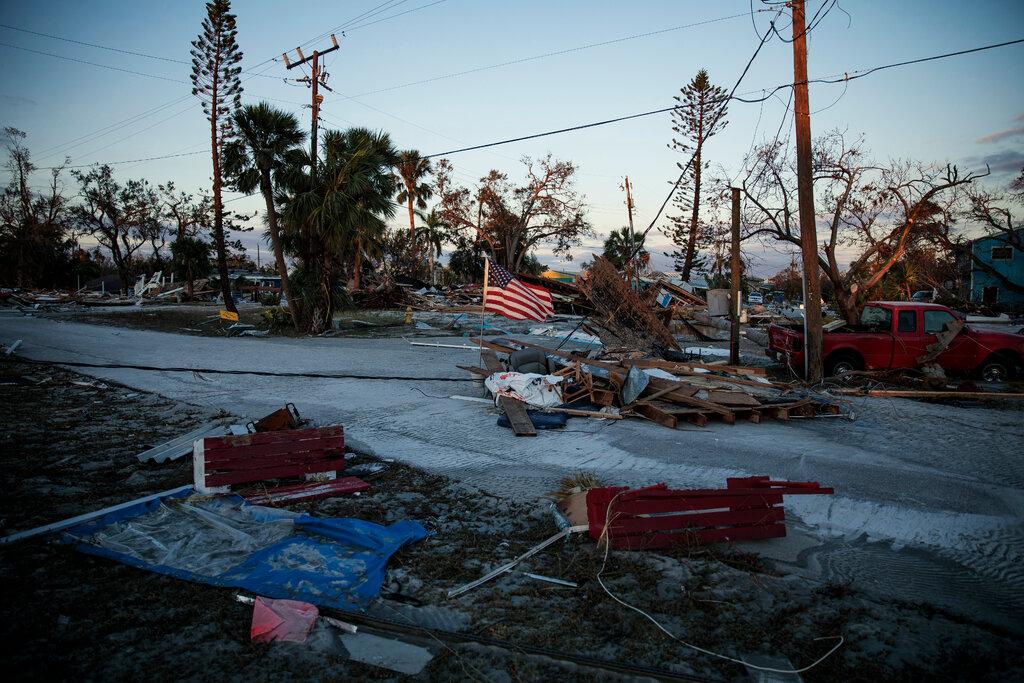
Credit...Damon Winter/The New York Times
After officially beginning his presidential campaign, Ron DeSantis was asked about climate change. He brushed the issue aside: “I’ve always rejected the politicization of the weather.”
But we absolutely should politicize the weather. In practice, environmental policy probably won’t be a central issue in the 2024 campaign, which will mainly turn on the economy and social issues. Still, we’re living in a time of accelerating climate-related disasters, and the environmental extremism of the Republican Party — it is more hostile to climate action than any other major political party in the advanced world — would, in a more rational political debate, be the biggest election issue of them all.
First, the environmental background: We’re only halfway through 2023, yet we’ve already seen multiple weather events that would have been shocking not long ago. Globally, last month was the hottest June on record. Unprecedented heat waves have been striking one region of the world after another: South Asia and the Middle East experienced a life-threatening heat wave in May; Europe is now going through its second catastrophic heat wave in a short period of time; China is experiencing its highest temperatures on record; and much of the southern United States has been suffering from dangerous levels of heat for weeks, with no end in sight.
Residents of Florida might be tempted to take a cooling dip in the ocean — but ocean temperatures off South Florida have come close to 100 degrees, not much below the temperature in a hot tub.
And while the rest of America hasn’t gotten that hot, everyone in the Northeast remembers the way smoke from Canadian wildfires led to days of dangerously bad air quality and orange skies.
But extreme weather events have always been with us. Can we prove that climate change caused any particular disaster? Not exactly. But the burgeoning field of “extreme event attribution” comes close. Climate models say that certain kinds of extreme weather events become more likely on a warming planet — for example, what used to be a heat wave we’d experience on average only once every few decades becomes an almost annual occurrence. Event attribution compares the odds of experiencing an extreme event given global warming with the odds that the same event would have happened without climate change.
Incidentally, I’d argue that extreme event attribution gains credibility from the fact that it doesn’t always tell the same story, that sometimes it says that climate change wasn’t the culprit. For example, preliminary analyses suggest that climate change played a limited role in the extreme flooding that recently struck northeastern Italy.
That was, however, the exception that proves the rule. In general, attribution analysis shows that global warming made the disasters of recent years much more likely. We don’t yet have estimates for the latest, still ongoing series of disasters, but it seems safe to say that this global concatenation of extreme weather events would have been virtually impossible without climate change. And this is almost surely just the leading edge of the crisis, a small foretaste of the many disasters to come.
Which brings me back to the “politicization of the weather.” Worrying about the climate crisis shouldn’t be a partisan issue. But it is, at least in this country. As of last year, only 22 percent of Americans who considered themselves to be on the political right considered climate change a major threat; the left-right gap here was far larger than it was in other countries. And only in America do you see things like Texas Republicans actively trying to undermine their own state’s booming renewable energy sector.
The remarkable thing about climate denial is that the arguments haven’t changed at all over the years: Climate change isn’t happening; OK, it’s happening, but it’s not such a bad thing; besides, doing anything about it would be an economic disaster.
And none of these arguments are ever abandoned in the face of evidence. The next time there’s a cold spell somewhere in America, the usual suspects will once again assert that climate change is a hoax. Spectacular technological progress in renewable energy, which now makes the path to greatly reduced emissions look easier than even optimists imagined, hasn’t stopped claims that the costs of the Biden administration’s climate policy will be unsupportable.
So we shouldn’t expect record heat waves around the globe to end assertions that climate change, even if it’s happening, is no big deal. Nor should we expect Republicans to soften their opposition to climate action, no matter what is happening in the world.
What this means is that if the G.O.P. wins control of the White House and Congress next year, it will almost surely try to dismantle the array of green energy subsidies enacted by the Biden administration that experts believe will lead to a major reduction in emissions.
Like it or not, then, the weather is a political issue. And Americans should be aware that it’s one of the most important issues they’ll be voting on next November.
The New York Times (archive.ph)
By Paul Krugman
2023-07-17 23:00:09GMT
Credit...Damon Winter/The New York Times
After officially beginning his presidential campaign, Ron DeSantis was asked about climate change. He brushed the issue aside: “I’ve always rejected the politicization of the weather.”
But we absolutely should politicize the weather. In practice, environmental policy probably won’t be a central issue in the 2024 campaign, which will mainly turn on the economy and social issues. Still, we’re living in a time of accelerating climate-related disasters, and the environmental extremism of the Republican Party — it is more hostile to climate action than any other major political party in the advanced world — would, in a more rational political debate, be the biggest election issue of them all.
First, the environmental background: We’re only halfway through 2023, yet we’ve already seen multiple weather events that would have been shocking not long ago. Globally, last month was the hottest June on record. Unprecedented heat waves have been striking one region of the world after another: South Asia and the Middle East experienced a life-threatening heat wave in May; Europe is now going through its second catastrophic heat wave in a short period of time; China is experiencing its highest temperatures on record; and much of the southern United States has been suffering from dangerous levels of heat for weeks, with no end in sight.
Residents of Florida might be tempted to take a cooling dip in the ocean — but ocean temperatures off South Florida have come close to 100 degrees, not much below the temperature in a hot tub.
And while the rest of America hasn’t gotten that hot, everyone in the Northeast remembers the way smoke from Canadian wildfires led to days of dangerously bad air quality and orange skies.
But extreme weather events have always been with us. Can we prove that climate change caused any particular disaster? Not exactly. But the burgeoning field of “extreme event attribution” comes close. Climate models say that certain kinds of extreme weather events become more likely on a warming planet — for example, what used to be a heat wave we’d experience on average only once every few decades becomes an almost annual occurrence. Event attribution compares the odds of experiencing an extreme event given global warming with the odds that the same event would have happened without climate change.
Incidentally, I’d argue that extreme event attribution gains credibility from the fact that it doesn’t always tell the same story, that sometimes it says that climate change wasn’t the culprit. For example, preliminary analyses suggest that climate change played a limited role in the extreme flooding that recently struck northeastern Italy.
That was, however, the exception that proves the rule. In general, attribution analysis shows that global warming made the disasters of recent years much more likely. We don’t yet have estimates for the latest, still ongoing series of disasters, but it seems safe to say that this global concatenation of extreme weather events would have been virtually impossible without climate change. And this is almost surely just the leading edge of the crisis, a small foretaste of the many disasters to come.
Which brings me back to the “politicization of the weather.” Worrying about the climate crisis shouldn’t be a partisan issue. But it is, at least in this country. As of last year, only 22 percent of Americans who considered themselves to be on the political right considered climate change a major threat; the left-right gap here was far larger than it was in other countries. And only in America do you see things like Texas Republicans actively trying to undermine their own state’s booming renewable energy sector.
The remarkable thing about climate denial is that the arguments haven’t changed at all over the years: Climate change isn’t happening; OK, it’s happening, but it’s not such a bad thing; besides, doing anything about it would be an economic disaster.
And none of these arguments are ever abandoned in the face of evidence. The next time there’s a cold spell somewhere in America, the usual suspects will once again assert that climate change is a hoax. Spectacular technological progress in renewable energy, which now makes the path to greatly reduced emissions look easier than even optimists imagined, hasn’t stopped claims that the costs of the Biden administration’s climate policy will be unsupportable.
So we shouldn’t expect record heat waves around the globe to end assertions that climate change, even if it’s happening, is no big deal. Nor should we expect Republicans to soften their opposition to climate action, no matter what is happening in the world.
What this means is that if the G.O.P. wins control of the White House and Congress next year, it will almost surely try to dismantle the array of green energy subsidies enacted by the Biden administration that experts believe will lead to a major reduction in emissions.
Like it or not, then, the weather is a political issue. And Americans should be aware that it’s one of the most important issues they’ll be voting on next November.


