Culture Why drag queens should lead children's singalongs - When two drag performers led “Old MacDonald” the kids imagined a world full of wonder and possibility. Why can’t we?

  • Want to keep track of this thread?
    Accounts can bookmark posts, watch threads for updates, and jump back to where you stopped reading.
    Create account
Why drag queens should lead children's singalongs
Chicago Sun-Times (archive.ph)
By Angela Massino
2024-06-01 18:26:18GMT
m01.jpg
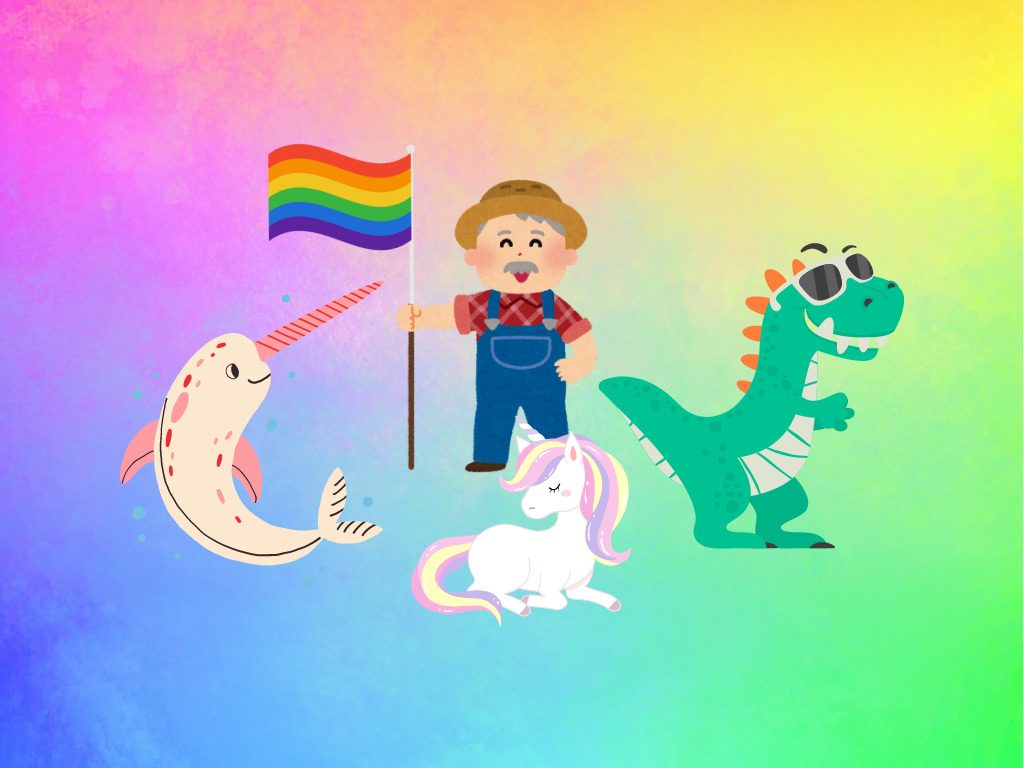
Image created in Canva.

One early afternoon, my partner and I were exploring a street festival in Lincoln Square when we stopped to watch a performance meant for kiddos. Two drag queens dressed in animal costumes were preparing to read a children’s story. To get the kids’ attention, they did a singalong (as a former camp counselor, I know this trick well). It was “Old MacDonald,” the most boring participatory children’s song you could choose. They started to sing and I was ready to keep walking.

When they got to the signature “and on this farm there was a …,” I was prepared for a cow, a chicken, a sheep, your standard barn animal, but these weren’t your “standard” song leaders.

“A unicorn!” one kid shouted out, and the drag queens neighed. “Dinosaur!” another shouted, and the leaders roared. “A narwhal!” said another kid.

This stopped the queens in their tracks. What does a narwhal sound like?

Adults with and without kids began to gather and chuckle at the most creative “Old MacDonald” we’ve ever heard.

The drag queens did nothing to prompt these fantastic suggestions except to exist as they were. I like to think that their creative outfits and energy opened up a realm of possibilities for these youngsters to imagine a farm beyond the bounds of the traditional song.

At least, that’s the type of world I want to live in — one where our authenticity can spark creativity and joy. Especially in a world that is trying to snuff it out by deeming drag and other expressions of queer joy as evil, dangerous and even illegal.

Perhaps it’s time for Old Mac to hang up their overalls, put on some heels and raise a herd of unicorns. Maybe that’s the type of world we should all strive for. The kids are ready for it.
m02.jpg
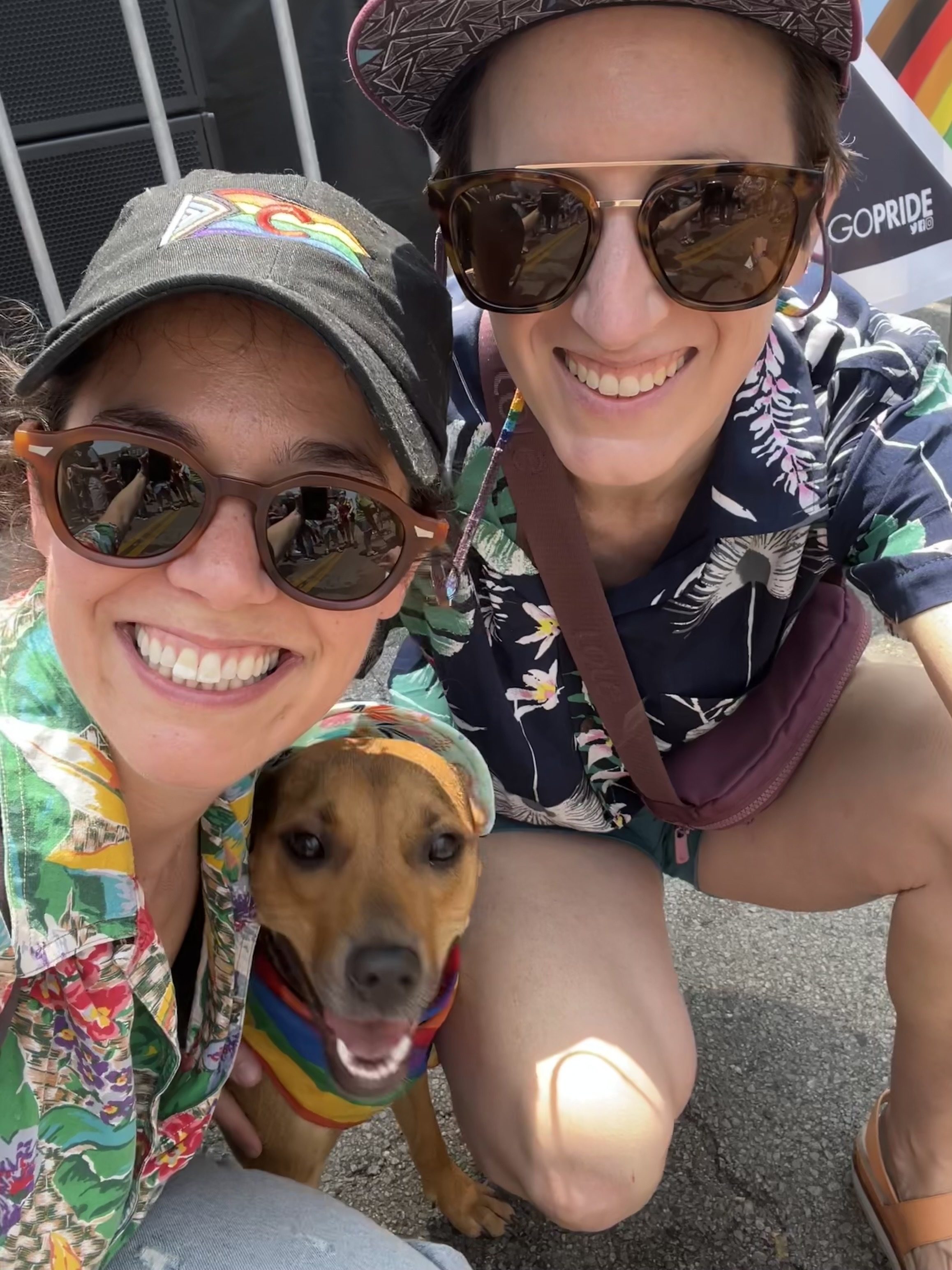
Angela Massino (left) and her partner (right) with their dog Debbie at the Chicago Pride Fest - Proud Pet Parade.

Angela Massino is the senior director of audience engagement at the Chicago Sun-Times. While she does not have kids, she likes to think of herself as the fun gay aunt. She lives with her partner and three fur babies — Debbie the Dog, Dolly the Destroyer and JJ Freda.
 
Violence and slurs are always a threat, but it's the trans community that keeps me safe
Chicago Sun-Times (archive.ph)
By Ellery Jones
2024-06-05 21:37:26GMT
When I moved to Chicago in 2021, I started to come out of my shell more — before an anti-gay slur shattered the feeling of safety I’d slowly built up.

m01.jpg
The next morning, I walked to Promontory Point to watch the sun rise and kicked myself for reacting so strongly to a word I’d been called plenty of times before. Ellery Jones/Sun-Times

I wish I could only tell you good stories about being a trans woman in Chicago.

One evening in March 2023, I was riding the bus with another trans woman on our way to catch a movie at the University of Chicago. Near the front of the nearly empty bus, a man with a nearly empty bottle of liquor kept staring at us.

When we got up from our seats to get off, he started shouting at us to stay at the back.

“You f---- are going to hell,” he said before following us off the bus.

Fortunately, we were immediately catching another bus anyway, and we left him behind in Woodlawn.

I barely slept that night. At 5 a.m. the next morning, I walked to Promontory Point to watch the sun rise and kicked myself for reacting so strongly to a word I’d been called plenty of times before.

There probably hadn’t been any real danger. Random attacks happen, but most trans people who are murdered are killed by people they know, often intimate partners. Too often, the victims are people of color, particularly Black women.

I put off transitioning for years because I thought I wasn’t brave enough. I’d been called a f-- and bullied since I was little. And since coming out, I’ve experienced everything from workplace misgendering to having an egg thrown at my face from a speeding car.

When I moved to Chicago in 2021, I found myself around lots of trans people for the first time in my life. I started to come out of my shell more — before that slur shattered the feeling of safety I’d slowly built up.

I still feel safe most of the time. But I also know safety is just a feeling. Good and bad things happen whether you think a city, neighborhood or bus is safe or not.

What makes me feel safe in Chicago isn’t an illusion that drunken men can be stopped from saying rude things. It’s the trans community I’ve found around me.

After the movie, my friend walked me home and made sure I was OK. When we talked again, she validated my feelings. It’s actually OK to be upset over being called a slur. My roommate, therapist and friends helped build me back up in the following days.

During June, people seem to pay more attention to the queer community — or at the very least try to sell us stuff. But my community isn’t rainbow flag merch and glitter.

It’s people taking care of each other.

m02.jpg
Ellery Jones is an audience engagement specialist at the Chicago Sun-Times. Originally from North Carolina, she moved to Hyde Park in 2021 after a stint working as a reporter in Virginia. She likes reading, cooking and the way light reflects off Lake Michigan early in the morning.
 
I like to think that their creative outfits and energy opened up a realm of possibilities for these youngsters to imagine a farm beyond the bounds of the traditional song.

At least, that’s the type of world I want to live in — one where our authenticity can spark creativity and joy. Especially in a world that is trying to snuff it out by deeming drag and other expressions of queer joy as evil, dangerous and even illegal.
Creativity and joy are fine, but this isn't that, and drag/"queer" things shouldn't be anywhere near kids.
Angela Massino (left) and her partner (right) with their dog Debbie at the Chicago Pride Fest - Proud Pet Parade.

Angela Massino is the senior director of audience engagement at the Chicago Sun-Times. While she does not have kids, she likes to think of herself as the fun gay aunt. She lives with her partner and three fur babies — Debbie the Dog, Dolly the Destroyer and JJ Freda.
Definitely a groomer.
 
How Chicago became a 'safe haven' for the drag queens who call it home
Chicago Sun-Times (archive.ph)
By Kaitlin Washburn
2024-06-29 18:59:42GMT
Over the decades, Chicago has become a premier place to practice the art of drag. Recently, the city has also become a safe haven for drag queens.

m01.jpg
Kylie Lefever, who performs in drag as Kylee Hunter, does her makeup and prepares for a performance at Roscoe’s Tavern in Northalsted, Thursday, June 13, 2024. Ashlee Rezin/Sun-Times

For the first time in her life, Kylie Lefever feels like she belongs.

She and her drag persona, Kylee Hunter, moved to Chicago in 2022. She’d been living in Florida at the time, and performing had gotten too hard. The vitriol and legislation targeting the state’s drag performers and the larger LGBTQ+ community had become too much for her, she said.

So she came here, looking to grow her career and put down roots after living like a nomad for much of her adult life.


“It’s the first time I’ve really had a safe space or had a place where I could be myself and people weren’t judgmental or people didn’t try to conform me into what they wanted me to be,” the 32-year-old said, tearing up. “Whatever I was bringing to the table was good enough. And I’ve never felt that in my life before. Like in anything I’ve ever done.”

Lefever is just one of many drag performers who’ve found a home in Chicago’s booming drag scene. The city is not only a premier place to practice the art; it’s become a haven for drag queens, several performers told the Sun-Times.

“Chicago is a safe haven and it’s the land of opportunity,” said Anthony Taylor, who performs as The Vixen. “There’s enough room for a new queen to come in and make space.”

Watching Chicago drag history unfold
Drag in Chicago dates back to at least the late 19th century. After the 1893 World’s Fair, people from around the city would gather in spaces like The Dill Pickle Club on the Near North Side to see performers put on their shows. From political fundraisers to cabarets, the scene only grew in the decades that followed.

Matthew Harvat, 59, has watched the scene evolve and grow for more than two decades. He first started performing in 1995 while working at Roscoe’s Tavern in Northalsted. The bar, a longtime performance space for drag queens, was doing an all-staff drag show for charity.

The show was called “Boyz II Women,” and everyone from the bouncers to the barbacks performed.

Up to that point, Harvat had resisted drag. He had been encouraged by other drag queens many times to give it a try — he was a theater kid with high cheekbones. Though his upbringing told him it was “too gay” and “emasculating.”

But, taking inspiration from actors like Tony Curtis and Jack Lemmon who did drag in “Some Like It Hot,” he decided to give it a try. He borrowed a dress and a fur. His future drag mother did his hair and make-up. And then she got on stage and performed Natalie Cole’s “I Got Love On My Mind.”

“I thought, if I’m gonna do this, I’m gonna do it right,” he said. “When I turned around, there was a collective gasp from the crowd, because she looked pretty!”

Harvat’s career blossomed from there. He started performing regularly as Circuit Mom at clubs and bars to bigger and bigger crowds.

“It was very meteoric,” he recalled. “I was bringing a little production to my performances, like costume changes and back-up dancers. Not a lot of people were doing that in Chicago at the time.”

m02.jpg
Matthew Harvat, who performs in drag as as Circuit Mom, performs during Pride Fest in Northalsted, Saturday, June 22, 2024. Ashlee Rezin/Sun-Times

When it comes to drag entering the mainstream, “RuPaul’s Drag Race” made it all possible, becoming a household name over 16 seasons.

“Drag itself started getting more social acceptance through RuPaul. RuPaul really is a pioneer in this whole thing,” Harvat said. RuPaul’s influence was everywhere, down to the types of wigs queens wore. No more shake-and-go wigs, it had to be a lace front.

The series blew open doors to greater acceptance in popular culture. Lefever said she first saw a drag queen while watching “Drag Race” with her college roommates. After growing up in a conservative household in rural Lancaster, Pennsylvania, that was an awakening for her.

“I already knew I was gay. Little did I know that was just the beginning,” she said.

With more acceptance came more ways to practice the art. There are seemingly limitless options for drag styles: pageant queens; comedy queens; camp queens; punk queens; avante-garde queens; bearded queens.

And Chicago helped lead the way.

“Chicago was at the forefront of different types and styles of drag that really came forward with flames and arrows and cannonballs and glitter and unicorns,” Harvat said, pointing to the late legendary drag queen JoJo Baby as a leader of the city’s scene.

These days, there are ample ways to watch a drag performance in Chicago, Harvat said. Venues like Roscoe’s, Hydrate and Sidetrack have regular shows. Even the Walnut Room, the posh restaurant on the top floor of Macy’s on State Street, recently hosted a drag brunch.

“It’s everywhere,” Harvat said. “You can’t swing a lace front wig in this town and not hit a drag queen.”

Finding community in the ‘epicenter of the drag scene’
Leaders in the scene have worked to make Chicago drag more inclusive. The Vixen, 33, who starred in Drag Race’s 10th season, has worked to make the city a place for local Black queens to thrive, particularly with her popular drag show Black Girl Magic, which she started in 2016.

At one point, she, DiDa Ritz, Lucy Stool and Shea Couleé — now all well-known performers — were among the few Black queens performing on Chicago stages.

“There were very few times that we were in the same room. We were still being tokenized on the lineups and separated,” said Taylor, who currently lives in New Orleans. “Once we had those opportunities to be in the same room, above everything, we realized how good it felt to just be seen and have that camaraderie with someone who understands the struggles that you’re facing in the community as well.”

These days, it’s easier to find more than one Black queen at a show’s line-up, a point of pride for The Vixen.

“When I started producing shows, the thing I wanted to hear at any show and the thing that has always touched me is ... is, ‘I came because I knew you would be here and I knew it would be okay,’” she said.

“I think a lot of drag queens in Chicago have become that beacon,” The Vixen said. “And because there’s so much variety in the types of drag in Chicago and depending on the queen, you know your freak flag is safe.”

m03.jpg
Chicago drag performer The Vixen, who competed on season 10 of “RuPaul’s Drag Race,” marches in the second annual Drag March for Change on North Halsted Street near Belmont Avenue on the North Side, Sunday afternoon, June 13, 2021. Ashlee Rezin/Sun-Times

Rock Evans, who performs as Miss Toto, moved to Chicago from Miami in 2019. They saw Chicago as a place to advance their career, and to be around “like-minded people” who’d push them to learn more about themselves and the art form.

As Miss Toto, she started out as a “bodybuilder gender-bending monster.” Now, her persona is more complex, blurring more aspects of femininity into her performance.

“Chicago was in its Renaissance at the time and it really felt like — and I still think this is true — like the epicenter of the drag scene,” Evans said.

They now feel a sense of belonging among Black queens working in the city.

m04.jpg
Rock Evans, who performs in drag as Miss Toto, DJs with her friend Mary K. during Pride Fest in Northalsted, Saturday, June 22, 2024. Ashlee Rezin/Sun-Times

“I wanted to be surrounded by specifically Black drag artists because they do exist in Miami, but I was finding much more community and friendships with the Black queens that existed here,” Evans said.

Chicago became a place to grow for Evans. For Lefever, too. The scene welcomed them and built them up like so many queens before them.

“Chicago really has their scene down,” Lefever said. “I had my opportunity to lay a foundation and get some contacts built, but the opportunity that I have now is really to take full advantage, on an income and artistic level, of everything this city has to offer.”
 
Relevant meme:
1719722745005.png

1719723001454.png
Angela Massino (left) and her partner (right) with their dog Debbie at the Chicago Pride Fest - Proud Pet Parade.

Angela Massino is the senior director of audience engagement at the Chicago Sun-Times. While she does not have kids, she likes to think of herself as the fun gay aunt. She lives with her partner and three fur babies — Debbie the Dog, Dolly the Destroyer and JJ Freda.
She can't possible be a "fun gay aunt" because she has a boyfriend.
 
The drag queens did nothing to prompt these fantastic suggestions except to exist as they were. I like to think that their creative outfits and energy opened up a realm of possibilities for these youngsters to imagine a farm beyond the bounds of the traditional song.

At least, that’s the type of world I want to live in — one where our authenticity can spark creativity and joy. Especially in a world that is trying to snuff it out by deeming drag and other expressions of queer joy as evil, dangerous and even illegal.
The drag queens did nothing to prompt this. Kids don't need sex clowns to be creative. Forcing kids to see drag queens is homophobic because you're showing them that gay men are all crossdressing sex clowns -- you are fulfilling the whole "gay men are child abusers" stereotype by centring gay degenerates and eagerly giving them an audience of children to mass abuse.
There probably hadn’t been any real danger.
Then why are we talking about this?
 
Friendship, theater and drag in Chicago’s Mexican-American community
Chicago Sun-Times (archive.ph)
By Gisela Orozco
2024-06-29 11:00:09GMT
How a reporter’s interview turned into a friendship with Esteban Pantoja, actor and creator of one of the most beloved drag characters in the Mexican American community in the South Side of Chicago.

m01.jpg
Esteban Pantoja as his drag queen character, “La Más Mejor.” Esteban Pantoja

I met Esteban Pantoja at a Teatro Tariákuri performance in a school auditorium in the South Side more than 10 years ago.

We ran into each other again at several plays until I finally had an opportunity to do interviews as entertainment editor of the now-defunct Hoy Newspaper.

When we started talking, we realized we had things in common: We were born on the same year, we are originally from the same state of Mexico, Guanajuato, and we are from neighboring cities — he is from Moroleón, I’m from Yuriria. We have similar musical and film interests, and we are both immigrants.

That was enough for us to be friends. As a heterosexual woman, I respect the LGBTQ+ community, and regarding Esteban, I admire his courage, talent and people skills.

I’ve found in Esteban — aka Xebas, La Más Mejor or “la marida” as I call him — a friend, a confidant, a unique kind of “sisterhood” and a friendship like no other, with mutual respect for our differences and points of view.

We talked a little more about what it was like for him to give way to his identity.

“All my life, I have been aware of who I am,” he told me, and acknowledged that coming from a small town, “You don’t know what’s going on, but you know who you are. That’s when the fears settle in, the insecurities, the traumas.”

When he was 14, he immigrated to Chicago with his family. Arriving in this country and this city was a cultural and language shock; he was a teenager who suffered bullying in his last year of elementary school.

“‘What you see, you don’t ask,’” Esteban said, quoting a famous late Mexican queer artist, the “Divo de Mexico,” Juan Gabriel. “I’m very feminine. I knew it, but I was in denial.”

It wasn’t until attending Kelly High School, in the Brighton Park neighborhood, that he began to see more people like him. But he was still grappling with his identity in the eyes of others.

He had more female friends and got along well with rockers. One time, someone told him he was gay. He denied it. The guy, who was already fully living his identity, was the one who helped him to “come out” in school, something that was pretty revolutionary 30 years ago.

With his family, the process was different. There was no need for a formal announcement or a heart-to-heart conversation. It was a natural progression, a part of him that was accepted without question.

“It’s all been very organic,” he reflected. “Mom and Dad haven’t asked me, and I haven’t told them; there was no need. I’m still me.”

When he finished high school, Esteban’s friendships had become like family.

Always interested in the arts, he was among the young people from the South Side of Chicago who attended youth classes at Radio Arte, an initiative of the National Museum of Mexican Art (NMMA) active from 1998 to 2013.

He studied audio while working a job and began “pretending to be an actor” at Tariákuri Theater Company. His stage name was Xebastián Pantoja.

And then came “La Más Mejor,” his drag queen character. He heard the name in the telenovela, “Prisionera” (Telemundo), starring Venezuelan actress Gabriela Spanic in 2004.

“It was the name of a female boxer character that first appeared in the episode. It was a name that made me laugh, a name that was a pleonasm and was boldly used on national television. It stuck with me,” he said .

In 2005, he began hosting exclusive events for the gay community, playing with his comedic style a bit, until one day he decided to create a character.

“It occurred to me that I should start dressing more gothic and rocker. I gradually put on dark lipstick and eyeliner — but left my beard — and suddenly ‘La Más Mejor’ was born.”

At first, the fact that he was in drag but wearing a beard was shocking and was not understood by the girls who were doing full drag or by the public. But little by little, he won them over with his look.

“It was a turning point when Univision reporter Tony Dandrades interviewed me. This interview catapulted me to local fame, making me a household name on the South Side of Chicago.”

Esteban is dedicating himself more to theater, and from time to time, he goes back to being “La Más Mejor,” which he has even taken to the theater stage as an actor and director.

“Today, I feel more Esteban,” he proclaimed.

Gisela Orozco is a Mexican journalist and translator who has lived in Chicago since 2002. Since then, she has written stories in Spanish about the Mexican and Latino communities.
 
And here's why drag queen's shouldn't lead children's singalongs, by a drag queen and not from

Screenshot 2024-06-30 134541.jpg
whatever the fuck that is:

The art of drag relies on exaggerated sexuality and female stereotypes. Drag queens, through dazzling performances, over-the-top humor, and a cultural dedication to irreverent commentary, have long acted as a release valve for the LGBTQ community. They could say and do things that others would never dare to express, and their unpredictable and provocative personas have long kept audiences on the edge of their seats. With careful inflection, a hand on an over-padded hip and a wink, a drag queen can speak truth to power and make them laugh.
This, however, has always remained within the private walls of adult entertainment and for good reason. Drag queens take on the most absurd sexualized elements of female stereotypes and gay culture, and add a few cans of hair spray to make it even bigger and bolder. They strut out on stage and without a moment of hesitation or shame, unleash epic poems of intentionally offensive obscenity, all with a smile and a sense of style no audience can resist.

Although many have argued this charisma can be redirected into child-appropriate entertainment, education and advocacy, the reality demonstrates otherwise. Drag queens can't turn it off. Whether in front of a cheering crowd in a gay bar or a room full of kids at a library, the performance doesn't change. They cannot translate the magic so many of us enjoy on stage to something children can understand.

Worse, far too many have chosen to disregard the concept of appropriateness altogether, performing dance routines, wearing costumes and portraying the same bombastic, and overtly sexual characters in front of kids as they would in front of adults.

Rather than appreciate this distinction, activists have doubled down and declared their adult entertainment world not only suitable for kids, but necessary and educational. LGBTQ activism has distorted whatever playful and innocent fun a sultry and perfectly poised RuPaul could bring to the room into another act of social rebellion designed to mock and provoke parents and conservative America.

By its very nature, drag is already unsuitable for children, based on the culture it flourished in and the way the artform communicates to its audience. It barely translates outside of the LGBTQ cultural bubble. The more you remove these elements, the less it resembles drag and the more it looks like advocacy for something kids just shouldn't be exposed to. You take away the cursing, the sexual inuendo, the revealing clothes, the provocative dress and the sharp political commentary, and you are left with an adult man in a dress mocking women and trying to convince children he is an ambassador for an entire community.

It just doesn't work. It cannot work.
 
Angela Massino (left) and her partner (right) with their dog Debbie at the Chicago Pride Fest - Proud Pet Parade.

Angela Massino is the senior director of audience engagement at the Chicago Sun-Times. While she does not have kids, she likes to think of herself as the fun gay aunt. She lives with her partner and three fur babies — Debbie the Dog, Dolly the Destroyer and JJ Freda.
>I, a childless woman who lives with a troon and dresses her dogs in little outfits for Instagram, know everything there is about raising children!
When they got to the signature “and on this farm there was a …,” I was prepared for a cow, a chicken, a sheep, your standard barn animal, but these weren’t your “standard” song leaders.

“A unicorn!” one kid shouted out, and the drag queens neighed. “Dinosaur!” another shouted, and the leaders roared. “A narwhal!” said another kid.

This stopped the queens in their tracks. What does a narwhal sound like?

Adults with and without kids began to gather and chuckle at the most creative “Old MacDonald” we’ve ever heard.

The drag queens did nothing to prompt these fantastic suggestions except to exist as they were. I like to think that their creative outfits and energy opened up a realm of possibilities for these youngsters to imagine a farm beyond the bounds of the traditional song.
Kids do that joke all the time. Literally everytime you do that song, there's always that one kid that yells "T-Rex!" "A goldfish!". You don't need a freak in dress to stimulate a kid's creativity.
 
Back
Top Bottom