Link (Archive)
Fans have fought against Dead Lesbian Syndrome. After one such death on a show targeted toward teenagers and young adults in 2016, fans pushed back. The series creator lost 12% of his followers on social media and an annual convention was organized by and for fans to support good representation for female LGBTQ+ characters. The character’s death even influenced academic articles on the topic.
Another version of the trope is Gay Guy Dies First, which is self-explanatory, although it is by no means limited to one part of the LGBTQ+ community. Fictional works with the trope feature approximately one queer character, who dies first and sometimes almost immediately. Having a queer character creates more diversity in the movie, but killing them off allows the (probably straight, white, male) writers to not have to establish a personality for them.
Gayngst-Induced Suicide comments on homophobia but lacks sympathy for the queer audience. LGBTQ+ people often see themselves reflected in queer characters, and when they die by suicide, it hurts the queer audience more than writers imagine. Queer suicide should not be depicted or even implied because it is harmful and makes suicide seem like a viable option. It is also frequently romanticized by the media, which is atrocious.
Tragic AIDS Story depicts a long and painful death from AIDS, typically featuring gay men. The AIDS and suicide tropes are too real for too many people and should not be highlighted or romanticized. These tropes end up going into a Too Good for This Sinful Earth narrative, which hopes for a better afterlife for the characters rather than an existence on Earth, and in the show.
A Homophobic Hate Crime death deemphasizes the queer character who dies. If a writer wants all attention from the queer character to die with their death, they should launch the storyline into a police investigation or a long, chaotic narrative with one moral: Homophobia is bad. Yes, the queer audience knows homophobia is bad; seeing a death caused by homophobes isn’t going to change that.
Vasquez Always Dies covers an interesting Bury Your Gays trope centered on women in action roles or movies. Two queer, fighting women appear in a movie, one butch and one femme, and the butch one dies. The trope may also be seen with a third, straight woman, who survives while both queer women die. The surviving woman always must be the most feminine and attractive of the women because she has to have the greatest sex appeal to men.
The Bury Your Gays trope is a disgrace to queer characters and to the queer audience. Queer viewers or readers exposed to the trope see themselves in the queer characters and then watch them die. Audiences feel defeated when a character that they love dies, and with a dearth of queer characters, it is even more crushing when queer audiences have to watch the characters they adore die a dramatic death, which the show or movie or book quickly moves on from.
Writers can avoid the trope easily. Writers can even subvert the trope dramatically or use it to surprise the audience with a twist. End an episode or a chapter with a queer character bleeding out, then start the next scene with the character in a hospital or being patched up elsewhere. Don’t make the first person who dies the one gay character in the movie, and certainly don’t give the queer character a tragic and dramatic death, which makes light of dark situations. Don’t write a queer character, write a character who happens to be queer.
As seen in the death of the queer woman from the young adult show in 2016, fans can be ruthless. If writers continue to Bury Their Gays, their queer audience will find itself a new story from a writer who respects their queer characters. The queer audiences will ensure they see themselves reflected somewhere, and it won’t be on a show that kills their queer characters.
Why Do Queer Characters Always Die?
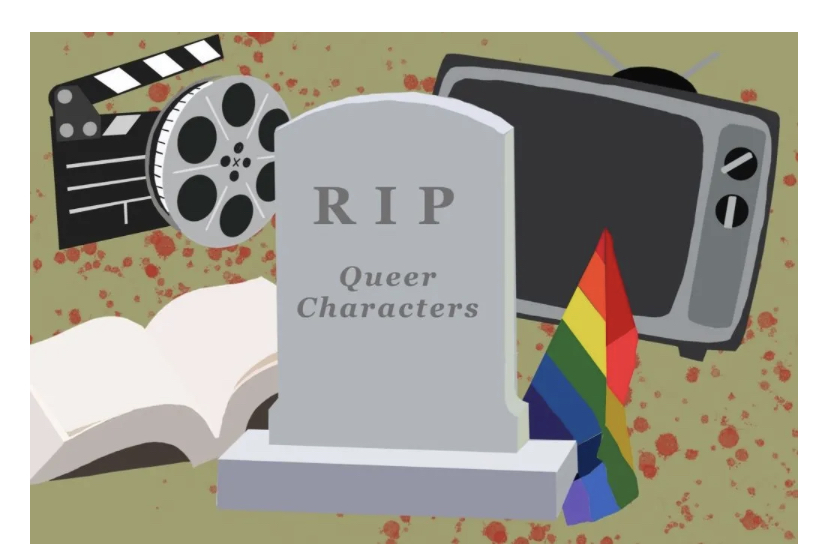
What are the chances that your favorite character survives the season finale or the end of the movie or the last chapter? If your favorite character is queer, the odds are not in their favor.
Bury Your Gays is an easy enough trope to comprehend. The trope names the pattern in fictional works of killing off queer characters because they are seen as more expendable than cis, heterosexual characters.
The history of the trope is heartbreaking. In the 19th century, homosexuality was illegal, so if an author wrote queer characters into their works, they would risk their career, unless the character was subtextually queer and they died in the end. After Hollywood adopted the 1930 Hays Code, queer characters essentially vanished from the screen, and any remaining implicitly queer characters were portrayed as villains. Even after the Hays Code was abandoned, fiction linked queerness and villainy together. Queer characters may be killed for being villains or martyred for being queer. Often, queer characters take their own life because of their sexuality. Tragedy befalls queer people in fiction, typically to add a motivating plot point for cis, heterosexual characters.
Different versions of the trope persist. Dead Lesbian Syndrome refers to a version of the trope targeting queer women in fiction. The tragic death faced by female queer characters occurs moments after the character comes out as queer, reaffirms her sexual orientation, starts a relationship with another woman, or seems to be heading for a happy ending with her partner. During 2016 and 2017, 62 queer women died on U.S. TV — four died in just one month! In fiction, death is punishment for being a queer woman.Fans have fought against Dead Lesbian Syndrome. After one such death on a show targeted toward teenagers and young adults in 2016, fans pushed back. The series creator lost 12% of his followers on social media and an annual convention was organized by and for fans to support good representation for female LGBTQ+ characters. The character’s death even influenced academic articles on the topic.
Another version of the trope is Gay Guy Dies First, which is self-explanatory, although it is by no means limited to one part of the LGBTQ+ community. Fictional works with the trope feature approximately one queer character, who dies first and sometimes almost immediately. Having a queer character creates more diversity in the movie, but killing them off allows the (probably straight, white, male) writers to not have to establish a personality for them.
Gayngst-Induced Suicide comments on homophobia but lacks sympathy for the queer audience. LGBTQ+ people often see themselves reflected in queer characters, and when they die by suicide, it hurts the queer audience more than writers imagine. Queer suicide should not be depicted or even implied because it is harmful and makes suicide seem like a viable option. It is also frequently romanticized by the media, which is atrocious.
Tragic AIDS Story depicts a long and painful death from AIDS, typically featuring gay men. The AIDS and suicide tropes are too real for too many people and should not be highlighted or romanticized. These tropes end up going into a Too Good for This Sinful Earth narrative, which hopes for a better afterlife for the characters rather than an existence on Earth, and in the show.
A Homophobic Hate Crime death deemphasizes the queer character who dies. If a writer wants all attention from the queer character to die with their death, they should launch the storyline into a police investigation or a long, chaotic narrative with one moral: Homophobia is bad. Yes, the queer audience knows homophobia is bad; seeing a death caused by homophobes isn’t going to change that.
Vasquez Always Dies covers an interesting Bury Your Gays trope centered on women in action roles or movies. Two queer, fighting women appear in a movie, one butch and one femme, and the butch one dies. The trope may also be seen with a third, straight woman, who survives while both queer women die. The surviving woman always must be the most feminine and attractive of the women because she has to have the greatest sex appeal to men.
The Bury Your Gays trope is a disgrace to queer characters and to the queer audience. Queer viewers or readers exposed to the trope see themselves in the queer characters and then watch them die. Audiences feel defeated when a character that they love dies, and with a dearth of queer characters, it is even more crushing when queer audiences have to watch the characters they adore die a dramatic death, which the show or movie or book quickly moves on from.
Writers can avoid the trope easily. Writers can even subvert the trope dramatically or use it to surprise the audience with a twist. End an episode or a chapter with a queer character bleeding out, then start the next scene with the character in a hospital or being patched up elsewhere. Don’t make the first person who dies the one gay character in the movie, and certainly don’t give the queer character a tragic and dramatic death, which makes light of dark situations. Don’t write a queer character, write a character who happens to be queer.
Representation matters: Queer people deserve to see themselves on the screen in the same fashion that cis, heterosexual people see themselves every day. Writers have made progress on writing queer characters — more exist today than in the past — but further progress is necessary. Queer audiences can hope that, in the future, writers will grant LGBTQ+ characters the same respect or level of thought as heterosexual characters.As seen in the death of the queer woman from the young adult show in 2016, fans can be ruthless. If writers continue to Bury Their Gays, their queer audience will find itself a new story from a writer who respects their queer characters. The queer audiences will ensure they see themselves reflected somewhere, and it won’t be on a show that kills their queer characters.


