https://rewirenewsgroup.com/2025/10/08/white-peoples-performative-ignorance-is-exhausting-opinion/
https://archive.is/oqSIZ
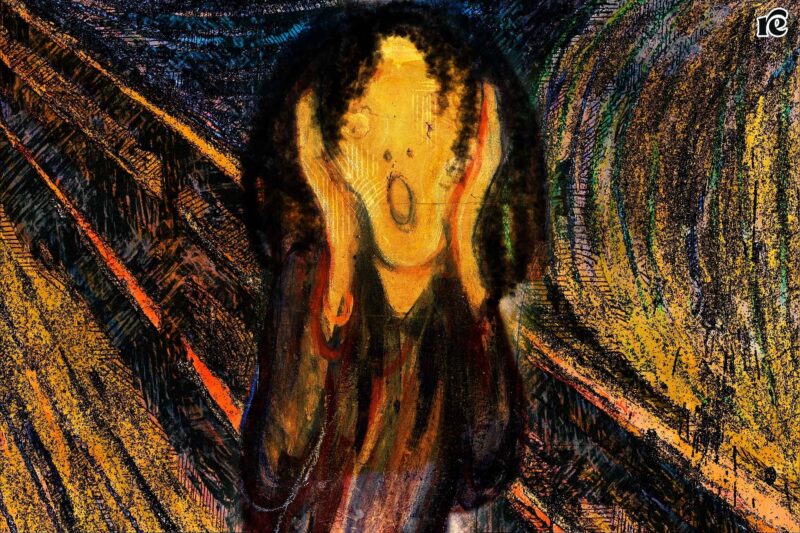
Black and Indigenous people have long known government oppression. Is white America awake? Cage Rivera/Rewire News Group
‘This isn’t who we are.’
‘I didn’t have this on my bingo card.’
‘I never imagined this could happen here.’
To be fair, the horrors have been an onslaught. Mass deportations, abortion bans, family separations, ICE goons kidnapping American citizens—often with extreme violence—purges of civil servants, and open threats of violence against anyone who won’t fall in line. If you’ve lived comfortably in this country so far without ever having to confront that the systems unleashing these horrors were built for you, it’s somewhat understandable that you’d be baffled.
Still, the constant expressions of “shock” seem performative to me—a kind of political Groundhog Day where white America wakes up over and over again surprised that the system the government created to protect them is now being used by someone who doesn’t care about protecting anyone, including them.
But here’s the thing: for Black people, for Indigenous people, for anyone who has lived outside the warm glow of American exceptionalism, that shock doesn’t land. Because the truth is, this is who America has always been.
The exhaustion comes not just from surviving in a country built on racial violence and systemic oppression, but from having to watch white America weaponize its own ignorance. These people act like the ground is suddenly shifting under their feet when really, the ground has always been unsteady for everyone else. The exhaustion comes from waiting and wondering if white folks will ever catch up.
When white people say, ‘This isn’t who we are,’ what they really mean is: ‘This isn’t the America I thought I lived in.’
But that version of America—the one where everyone has the right to life, liberty, and the pursuit of happiness—has always been fiction.
This country would not exist if Black women had not birthed it from their wombs on the blood-soaked earth of Native people. Enslavement, lynching, Jim Crow, genocide, the prison industrial complex aren’t footnotes in American history. They’re the main text. Trump isn’t some un-American aberration. He’s the logical next chapter.
And those insisting on treating his rise as shocking and unknowable erase the generations of people who’ve already lived through white authoritarianism in one form or another.
Then there’s the “not on my bingo card” crowd. That one really grates on my nerves. It’s basically just white privilege dressed up as quippy self-awareness. The reason it wasn’t on your bingo card is because you never had to think about it. The guardrails of democracy always seemed solid because those guardrails were constructed for you. You never had to worry if your vote would count, or if calling the police would make things worse, or if the law would treat you like a threat before it treated you like a person.
The disbelief that Trump could rise in America isn’t a cutesy personality trait; it’s a confession. A confession that you weren’t listening when Black and Indigenous people tried to tell you what this country is.
Maybe it seems unfair to criticize the white people who are becoming woke (in the classic, “conscious” sense of the term, not in MAGA’s derogatory usage). Maybe I should just hope “this isn’t who we are” might lead to the sort of outrage that will get white people to resist in earnest.
Take the murder of George Floyd in 2020. It was treated as a “wake-up call” for much of white America, as if the alarm hadn’t been blaring for years. Since the killings of Eric Garner and Michael Brown in the summer of 2014 sparked the #BlackLivesMatter movement, Black activists and allies have flooded the streets, filled social media timelines, and forced conversations about police brutality into every corner of public life, on- and offline.
White ignorance doesn’t persist because there’s a lack of information—it persists because there’s a refusal to engage with it. The videos, the protests, and the hashtags have all been there since before 2012, when 17-year-old Trayvon Martin was shot dead in the street by a neighbor. They were impossible to miss unless you wanted to miss them. Because once you admit you knew and did nothing about it, you’d have to admit you were fine with it. You have to admit complicity.
It’s easier to feign shock than to grapple with what it means to benefit from systems that oppress and kill with impunity. That’s how white ignorance gets wielded like a shield. It protects white comfort and avoids white guilt.
The legacy media plays right along—devoting endless hours to the “anxieties” of Trump voters while sidelining the voices of the people who predicted this exact moment years ago. Or writing op-eds mourning a white nationalist as doing politics the right way, and then acting brand new when the Black man you respect suggests maybe you should have kept quiet. White astonishment gets top billing, while Black warnings get relegated to the fine print.
And it’s exhausting. Black people are tired. Not metaphorically tired—actually tired.
The kind of tired that shows up as dark circles under our eyes from doomscrolling another news alert that says “unprecedented” when it’s anything but. The kind of tired that makes you throw your phone across the room mid-segment because you can’t listen to one more white pundit ask, in earnest, how we got here. The kind of tired that turns every group chat into a mix of gallows humor and emotional triage.
The question of ‘how did we get here’ is an earnest one. The exhaustion comes when white questioners refuse to listen to the people who have already lived under the boot of authoritarianism. Listening means treating Black and Indigenous analysis as expertise—not as perspective that should give way to white people’s flagging analysis. Listening means recognizing that the authoritarian threat isn’t somehow “un-American.” Honesty demands more than these tired, patriotic mantras.
Authoritarianism is as American as slavery, as internment camps, as police brutality, as voter suppression. To fight it, white people have to stop pretending government oppression arrived overnight and start dismantling the systems that have been incubating it all along.
Black people can’t do it alone. There aren’t enough of us. We need white people to catch up and step up, and to do that they must center the voices of the people who’ve survived those systems the longest. That means moving from disbelief to solidarity, from surprise to action.
Black and Indigenous people have always known the stakes. The question is whether white America is finally ready to stop feigning ignorance, face what it already knows, and do the uncomfortable work of fixing it.

Imani is Co-Chief Content Officer for Rewire News Group, where she covers law and courts and co-hosts the RNG podcast Boom! Lawyered. Imani also began and continues to write the Angry Black Lady Chronicles.
Imani is a recovering attorney turned award-winning journalist and political blogger. Previously, Imani founded Angry Black Lady Chronicles, winner of the 2010 Black Weblog Award for Blog to Watch and the 2012 Black Weblog Award for Best Political Blog. She received her JD from University of Virginia School of Law in 2001, where she was a Hardy Cross Dillard scholar and an Editorial Board member of the University of Virginia Law Review. She has presented at several conferences and panels, including the 2013 Abortion Care Network as the Keynote Speaker; the 2014 Baffler Conference; the 2016 YBCA 100 Summit; the 2016 PPFA 100th Anniversary at the Brooklyn Historical Society; the 2018 SXSW Panel “If Roe Were to Go”; the 2018 plenary for National Abortion Federation’s annual meeting; and the 2018 Affect Conference as the Keynote Speaker. Boom! Lawyered won Podcast of the Year in 2017 from the Population Institute.
For press appearances or further information, please contact press@rewirenewsgroup.com.
https://archive.is/oqSIZ
Black and Indigenous people have long known government oppression. Is white America awake? Cage Rivera/Rewire News Group
Ever since Donald Trump swaggered back into the White House and made it clear—again—that the rule of law doesn’t apply to him, I’ve heard the same chorus on repeat. White friends, colleagues, commentators, and even lawmakers clutching their pearls like it’s a new national pastime:To get AngryBlackLady Chronicles straight to your inbox, sign up for Imani’s bimonthly newsletter. You can catch Imani’s monthly podcast, B*tch, Listen here, in the Boom! Lawyered feed.
‘This isn’t who we are.’
‘I didn’t have this on my bingo card.’
‘I never imagined this could happen here.’
To be fair, the horrors have been an onslaught. Mass deportations, abortion bans, family separations, ICE goons kidnapping American citizens—often with extreme violence—purges of civil servants, and open threats of violence against anyone who won’t fall in line. If you’ve lived comfortably in this country so far without ever having to confront that the systems unleashing these horrors were built for you, it’s somewhat understandable that you’d be baffled.
Still, the constant expressions of “shock” seem performative to me—a kind of political Groundhog Day where white America wakes up over and over again surprised that the system the government created to protect them is now being used by someone who doesn’t care about protecting anyone, including them.
But here’s the thing: for Black people, for Indigenous people, for anyone who has lived outside the warm glow of American exceptionalism, that shock doesn’t land. Because the truth is, this is who America has always been.
The exhaustion comes not just from surviving in a country built on racial violence and systemic oppression, but from having to watch white America weaponize its own ignorance. These people act like the ground is suddenly shifting under their feet when really, the ground has always been unsteady for everyone else. The exhaustion comes from waiting and wondering if white folks will ever catch up.
When white people say, ‘This isn’t who we are,’ what they really mean is: ‘This isn’t the America I thought I lived in.’
But that version of America—the one where everyone has the right to life, liberty, and the pursuit of happiness—has always been fiction.
This is who ‘we’ are
The founding of this country cannot be disentangled from the violence towards Black and indigenous people that colonizers meted out all the while drafting lofty documents about all men being created equal.This country would not exist if Black women had not birthed it from their wombs on the blood-soaked earth of Native people. Enslavement, lynching, Jim Crow, genocide, the prison industrial complex aren’t footnotes in American history. They’re the main text. Trump isn’t some un-American aberration. He’s the logical next chapter.
And those insisting on treating his rise as shocking and unknowable erase the generations of people who’ve already lived through white authoritarianism in one form or another.
Then there’s the “not on my bingo card” crowd. That one really grates on my nerves. It’s basically just white privilege dressed up as quippy self-awareness. The reason it wasn’t on your bingo card is because you never had to think about it. The guardrails of democracy always seemed solid because those guardrails were constructed for you. You never had to worry if your vote would count, or if calling the police would make things worse, or if the law would treat you like a threat before it treated you like a person.
The disbelief that Trump could rise in America isn’t a cutesy personality trait; it’s a confession. A confession that you weren’t listening when Black and Indigenous people tried to tell you what this country is.
Maybe it seems unfair to criticize the white people who are becoming woke (in the classic, “conscious” sense of the term, not in MAGA’s derogatory usage). Maybe I should just hope “this isn’t who we are” might lead to the sort of outrage that will get white people to resist in earnest.
Strategic ignorance
But the thing is: Ignorance isn’t always innocent. A lot of the time, it’s strategic.Take the murder of George Floyd in 2020. It was treated as a “wake-up call” for much of white America, as if the alarm hadn’t been blaring for years. Since the killings of Eric Garner and Michael Brown in the summer of 2014 sparked the #BlackLivesMatter movement, Black activists and allies have flooded the streets, filled social media timelines, and forced conversations about police brutality into every corner of public life, on- and offline.
White ignorance doesn’t persist because there’s a lack of information—it persists because there’s a refusal to engage with it. The videos, the protests, and the hashtags have all been there since before 2012, when 17-year-old Trayvon Martin was shot dead in the street by a neighbor. They were impossible to miss unless you wanted to miss them. Because once you admit you knew and did nothing about it, you’d have to admit you were fine with it. You have to admit complicity.
It’s easier to feign shock than to grapple with what it means to benefit from systems that oppress and kill with impunity. That’s how white ignorance gets wielded like a shield. It protects white comfort and avoids white guilt.
The legacy media plays right along—devoting endless hours to the “anxieties” of Trump voters while sidelining the voices of the people who predicted this exact moment years ago. Or writing op-eds mourning a white nationalist as doing politics the right way, and then acting brand new when the Black man you respect suggests maybe you should have kept quiet. White astonishment gets top billing, while Black warnings get relegated to the fine print.
And it’s exhausting. Black people are tired. Not metaphorically tired—actually tired.
The kind of tired that shows up as dark circles under our eyes from doomscrolling another news alert that says “unprecedented” when it’s anything but. The kind of tired that makes you throw your phone across the room mid-segment because you can’t listen to one more white pundit ask, in earnest, how we got here. The kind of tired that turns every group chat into a mix of gallows humor and emotional triage.
The question of ‘how did we get here’ is an earnest one. The exhaustion comes when white questioners refuse to listen to the people who have already lived under the boot of authoritarianism. Listening means treating Black and Indigenous analysis as expertise—not as perspective that should give way to white people’s flagging analysis. Listening means recognizing that the authoritarian threat isn’t somehow “un-American.” Honesty demands more than these tired, patriotic mantras.
Authoritarianism is as American as slavery, as internment camps, as police brutality, as voter suppression. To fight it, white people have to stop pretending government oppression arrived overnight and start dismantling the systems that have been incubating it all along.
Black people can’t do it alone. There aren’t enough of us. We need white people to catch up and step up, and to do that they must center the voices of the people who’ve survived those systems the longest. That means moving from disbelief to solidarity, from surprise to action.
Black and Indigenous people have always known the stakes. The question is whether white America is finally ready to stop feigning ignorance, face what it already knows, and do the uncomfortable work of fixing it.

Imani is Co-Chief Content Officer for Rewire News Group, where she covers law and courts and co-hosts the RNG podcast Boom! Lawyered. Imani also began and continues to write the Angry Black Lady Chronicles.
Imani is a recovering attorney turned award-winning journalist and political blogger. Previously, Imani founded Angry Black Lady Chronicles, winner of the 2010 Black Weblog Award for Blog to Watch and the 2012 Black Weblog Award for Best Political Blog. She received her JD from University of Virginia School of Law in 2001, where she was a Hardy Cross Dillard scholar and an Editorial Board member of the University of Virginia Law Review. She has presented at several conferences and panels, including the 2013 Abortion Care Network as the Keynote Speaker; the 2014 Baffler Conference; the 2016 YBCA 100 Summit; the 2016 PPFA 100th Anniversary at the Brooklyn Historical Society; the 2018 SXSW Panel “If Roe Were to Go”; the 2018 plenary for National Abortion Federation’s annual meeting; and the 2018 Affect Conference as the Keynote Speaker. Boom! Lawyered won Podcast of the Year in 2017 from the Population Institute.
For press appearances or further information, please contact press@rewirenewsgroup.com.


