When Fandom Is The Problem
"Fandom" - the participatory community that grows out of a piece of media - has come to dominate pop culture. Fandom is not simply being a fan of something. Fandom is performing being a fan by creating transformative works, collecting knowledge, cosplaying, attending conventions, and...
 io9.gizmodo.com
“Fandom”—the participatory community that grows out of a piece of media—has come to dominate pop culture. Fandom is not simply being a fan of something. Fandom is performing being a fan by creating transformative works, collecting knowledge, cosplaying, attending conventions, and, ever-increasingly, being vocal online. Some of this has been really great for people seeking communities they can’t find in real life, empowering them to be part of something that means a lot to them. And some of it has empowered only the worst elements of fan culture.
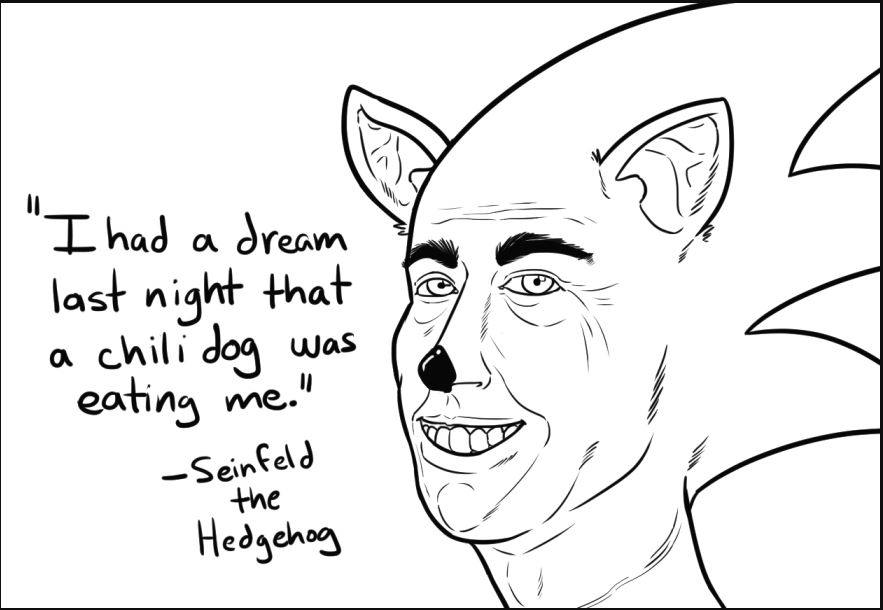
The interplay between fandom and creators of media can cause a dangerous downward spiral. The bad behavior of one enables the bad behavior of the other, until everyone else just leaves them both for dead. All of it is given a super charge by the ability to use the internet to amplify opinions and target them very specifically. So while this can allow fans to point out flaws that should be fixed, it can also lead to a dangerous amount of vitriol being directed at people who make and act in media. (The Sonic trailer debacle is...kind of both of these things at work.)
Two events of just this year show the dichotomy really well: the Hugo nomination of Archive of Our Own and Rotten Tomatoes changing its review policy.
Archive of Our Own is a staggering achievement, born from fandom. It was built as a nonprofit so that fanfic writers would never again have to worry about losing their platform because of business concerns. A series of deletions on Livejournal, previous experiences with the advertiser-funded Fanfiction.net’s rules against certain kinds of fanfiction, and other similar incidents went into the creation of the archive. With it, fan creators have a site that does not have to worry about advertiser pressure or caving to copyright claims.
As of 2019, Archive of Our Own—or AO3 as you may see it called—houses 4.8 million works in over 32,500 fandoms. That is to say, that almost five million stories, audio recordings, pieces of art, and so on based on existing books, comics, video games, television shows, movies, and basically anything else you can think of. AO3 is a project from the nonprofit Organization for Transformative Works, which does things like file comments and appear on panels advocating for legal protections for fan-created content, especially in the area of copyright. Fandom is where you get essays about representation, cosplay, and, of course, memes. AO3’s nomination is a recognition of the sizable contribution fans make. It’s the good side of fandom being recognized.
This year, in response to trolls preemptively leaving negative feedback for Captain Marvel—trying to tank the movie’s audience rating before it came out—Rotten Tomatoes decided to disable comments for movies until they are released. As a further bulwark against this kind of abuse, the site later also decided to restrict the scores from non-professional reviews—the ones from regular people that comment on Rotten Tomatoes—that make up the average audience score to only those who could prove they had actually purchased a ticket to the movie. These new hoops that Rotten Tomatoes has put in place are an important check on the tactics of trolls and is a spotlight on how gross and entitled their behavior is.
“Toxic”... is truly the right term to describe fans so invested in a particular property that they act out to “save” or “defend” it, tainting the whole thing for everyone else.
The kind of trolling and harassment that follows movies like Captain Marvel, along with bitter infighting among vocal or “big name fans,” is what turns a fandom toxic. At this point, “toxic” is almost a term of art, but it is truly the right word to describe fans so invested in a particular property that they act out to “save” or “defend” it, tainting the whole thing for everyone else.
This isn’t a new problem of course. Drama is inherent to any community, especially one where passions run high. In the olden days of fandom—by which I mean 15 years ago—a community developed just to track these kinds of meltdowns. It was called Fandom Wank, and it catalogued some truly complicated fandom fights.
These days, though, fandom is inextricable from the people who make the primary work. What used to be confined to places like Fandom Wank and LiveJournal affects what everyone sees onscreen. Twitter, Instagram, and other social media platforms give toxic fandom an avenue for attacking people who work on the things they are ostensibly fans of.
Fandom drama takes over social media after a new trailer or episode. It starts as GIFs of particularly great moments, then becomes a dissection of screenshots, and then criticisms—some legitimate and some not—start to show up. People start yelling at each other, generating post after post, tweet after tweet. All of which helps marketing, as it keeps the movie trending. In turn, trailers are becoming designed for this kind of dissection, which is why they often include Easter eggs for fans or shots that will never be in the movie. This is why you see “official” hashtags on Twitter with custom emojis. All the better to make fandom part of the official brand.
And fandom is now covered by the press. By major, mainstream press. It’s even in the trades, which still wield outsized influence among Hollywood executives.
For certain properties, studios and networks have decided to cater to fandom. In some cases, they don’t just cater, they rely on this fandom. A pre-existing fandom is a guaranteed audience and one that will buy multiple tickets, Blu-rays, and toys. Plus, a lot of the people making movies and TV show adaptations of old properties are fans themselves, and they’re more likely to be sensitive to fandom critics. Writers and showrunners are on social media, too, which makes them feel “reachable” to fans. A feeling amplified when they do things like livetweet their shows, answer questions, or defend controversial decisions on social media. None of this is bad on its own, what is bad is the way certain fans have abused this newfound feeling of accessibility and ownership.
Giving fans ownership over a thing means some of them literally believe they own it, that they are due only work that conforms to their opinions. There’s the problem Rotten Tomatoes ran into. There’s Kelly Marie Tran being bullied off Instagram because some supposed Star Wars fans didn’t like her character, the reaction that saying anything positive about The Last Jedi or saying anything negative about Zack Snyder-era DC movies gets, and there’s whatever the hell happened in the Steven Universe fandom.
There’s a point at which a toxic fandom—or at least one where a very vocal minority is toxic—ruins the thing that created it. Toxic is the exact right term because it pollutes the very ground from which it grows. More than one person has mentioned Rick and Morty to me as a show they can’t enjoy or admit they enjoy, and not because of the problems with the creators, but because of the problems with the fans; Star Wars is both a cultural juggernaut and an inexhaustible source of “the Discourse”; and a certain segment of DC fans has made it truly miserable to like, much less dislike, one of those movies.
People leave fandom all the time. Writing about leaving fandom is practically a genre unto itself. But being disengaged from fandom alone doesn’t mean fandom stops affecting how you experience the work. Fandom, for all its extremes, still is not the majority of people who consider themselves fans.
Consider the box office for Star Wars. The number of people contributing to Wookieepedia, writing fanfiction, making fanart, going to Star WarsCelebration, or even harassing Kelly Marie Tran makes up a tiny portion of the number of people going to the movies. It is more than possible to like something without being in fandom, or even being aware of it, since fandom these days requires you to be extremely online. But studios and creators see and cater to these fans all the time, in benign ways and in not so benign ones. Studios and creators use fans as shields against reviewers and even other fans, doing things like using random positive tweets in their marketing. And they use concerns about what “fans” want as the basis for being reactionary, cover for bad decisions, or to fuel defensiveness.
And yet, and so, there is still a cultural idea of what a Star Wars fan is, a hangover from an era where Star Wars was still massively popular but the fans were characterized as basement-dwellers with no lives. And yet, and so, if Rise of Skywalker walks back the most controversial parts of The Last Jedi, there is a group of fans who will declare “victory,” who will declare some ownership of that decision. It will embolden them to keep acting this way. And yet, and so, it becomes, once again, something of an embarrassment to actively declare yourself a Star Wars fan.
There has been a lot of debate about what to do with art when the artist behaves badly. The link between an artist and their art is clear, especially when they’re still alive. They benefit both directly and indirectly from you paying for their work—either they get part of the money or, if the project is a success, they get new opportunities generated from that success. There’s even a clear connection between a toxic creator to a toxic fandom. Artists who behave unacceptably—even criminally badly—can still find success as long as a rabid fandom protects them. A rabid fandom that will attack anyone trying to report or investigate this behavior. See: Chris Brown, Logan Paul, and PewDiePie. But when the connection goes the other way—when the fandom’s toxic, but the creation is not—it’s a little harder to react.
We have a framework for how to interpret art, vis-à-vis the artist. You can choose to emphasize authorial intent, that is, try to divine what the artist meant or apply the artist’s own words about what they meant to the work. You can also choose the “death of the author,” where the work stands on its own with no reference to who created it. Or some reasonable mixture of the two. When it comes to the interpretation of a work, fandom can have an outsized influence there, too.
Freud didn’t exist when Hamlet was written, but thanks to Kenneth Branagh’s movie being the version most often shown in schools, you can bet many a high schooler has come away thinking that “Hamlet wants to bang his mom” is the text and not merely one interpretation of it. James Bond fandom had largely all settled on the idea that “James Bond” was an alias like Q or M, to explain all the different Bond actors and the contradictions in the movies, right until Skyfall came along and scuttled that. (Be prepared for another fandom meltdown whenever the money truck finally stops backing up to house of the terminally-miserable-as-Bond Daniel Craig and a new actor is chosen, by the way.)
So what do you do? Like with authors, we know what to do with extremes. No one seriously blames Catcher in the Rye for the number of murderers who seem to like it. But then, toxic fandom demands, incessantly, for the “Snyder cut” of Justice League, and director Zack Snyder is leaning into that adulation, intertwining artist and fandom.
It gets blurred more when the defense the creator makes is that liking their interpretation of a beloved property is what makes you a “real fan.” It creates a fandom purity test, where the test somehow is “liking my shit,” giving a sense of superiority over the “regular” people who have real problems with something. The fans on the studio’s side are the “real” fans, suddenly. Even in the positive situation where fandom rallies to save a show or fund the movie, the fans suddenly have some claim to ownership of the art.
The answer isn’t quite “death of the fandom.” It’s not a bad thing that a devoted fanbase can keep a show alive; it’s not even a bad thing that fandom can interact with creators to display displeasure. The 100 killed off the character Lexa after the show had spent a lot of time hyping her relationship with Clarke, which struck many as an example of the “Bury Your Gays” trope. That is, where queer characters exist simply to die in order to further the story or for emotional impact at a level disproportionate to straight characters. And the writer of that episode responded to the tidal wave of criticism less defensively than thoughtfully.
Studios and networks have to learn the difference between real criticism and disingenuous complaints. They have to actually learn how fandom operates instead of just feeding it and letting toxic elements dictate their actions.
Fandom—which is much more diverse than Hollywood in general—does often have some expertise to offer. They pick up on things that seem obviously bad, like whitewashing, that mostly white Hollywood executives don’t. But it is time to recognize that a toxic fandom doesn’t just ruin something for the people in fandom, it can ruin the whole thing. It’s time to stop catering to this particularly loud minority and it’s especially time not to let “what fans want” be the sword and shield for bad decisions.
Ultimately, studios and networks are the ones with the most power in this relationship, and that’s where the responsibility has to rest. They’re cashing in on fandom, relying on it to decide what to make and to sell to investors that there’s a “built-in” audience for a project. They’re using it in marketing to hide when the majority of people have rejected the work. They’re the ones using social media and fanservice to send fans into a frenzy, so they’re also the ones who have to stand up to bad behavior. If the fandom is going to become the brand, they have a responsibility not to concede to the worst demands of a toxic minority.
Studios and networks have to learn the difference between real criticism and disingenuous complaints. They have to actually learn how fandom operates instead of just feeding it and letting toxic elements dictate their actions. The only good thing to come from the James Gunn debacle is the hope that some lesson along those lines has been learned at the highest levels.