Navigation
Install the app
How to install the app on iOS
Follow along with the video below to see how to install our site as a web app on your home screen.
Note: This feature may not be available in some browsers.
More options
Style variation
You are using an out of date browser. It may not display this or other websites correctly.
You should upgrade or use an alternative browser.
You should upgrade or use an alternative browser.
What's your favorite math equation?
- Thread starter Gorgar
- Start date
-
Want to keep track of this thread?
Accounts can bookmark posts, watch threads for updates, and jump back to where you stopped reading.
Create account

Solution

Evaluate the line integral where C is the given curve. We're integrating over the curve C, y to the third ds, and C is the curve with parametric equations x = t cubed, y = t. We're going from t = 0 to t = 2. So we're going to integrate over that curve C of y to the third ds. We're going to convert everything into our parameter t in terms of our parameter t. So I'm going to be integrating from t = 0 to t = 2. Those will be my limits of integration. Now y is equal to t, so I'm going to replace y with what it's equal to in terms of t. So I'm going to be integrating the function t to the third. Now ds we're going to write as a square root of dx dt squared + dy dt squared, squared of all that as we said dt. So we're integrating now...


okwhyamidoingthis
kiwifarms.net
- Joined
- Jan 27, 2021
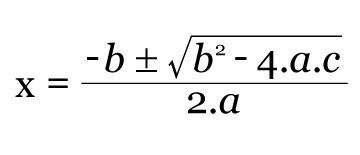
I hold a special place in my heart and mind for Bhaskhara's formula.
So simple, so generalistic, so many problems solved, so many a, b and c terms discovered
Opened the door to solving huge polynomials. Algebra is my favorite part of math.
So simple, so generalistic, so many problems solved, so many a, b and c terms discovered
Opened the door to solving huge polynomials. Algebra is my favorite part of math.

- Joined
- Aug 11, 2019
2 + 2
I spent my entire adult years trying to figure out this powerful mystery from my childhood. The closest of an answer I got was 56...but I still have a long way to go until I uncover the truth
I spent my entire adult years trying to figure out this powerful mystery from my childhood. The closest of an answer I got was 56...but I still have a long way to go until I uncover the truth

- Joined
- May 29, 2021
einrg^2


- Joined
- Feb 27, 2019
the one to find out how much your mom weighs

- Joined
- Aug 8, 2021
Evaluate the line integral where C is the given curve. We're integrating over the curve C, y to the third ds, and C is the curve with parametric equations x = t cubed, y = t. We're going from t = 0 to t = 2. So we're going to integrate over that curve C of y to the third ds. We're going to convert everything into our parameter t in terms of our parameter t. So I'm going to be integrating from t = 0 to t = 2. Those will be my limits of integration. Now y is equal to t, so I'm going to replace y with what it's equal to in terms of t. So I'm going to be integrating the function t to the third. Now ds we're going to write as a square root of dx dt squared + dy dt squared, squared of all that as we said dt. So we're integrating now everything with respect to t. So this is going to be equal to the integral from 0 to 2 of t to the third times the square root of -- see the derivative of x with respect to t is 3 t squared. So we have 3 t squared squared + dy dt; well, that's just 1 squared dt. So we have the integral from 0 to 2 of t to the third times the square root of 9 t to the fourth + 1 dt. So this is a pretty straightforward integration here. We're going to let u be equal to 9 t to the fourth + 1 then du is equal to 36 t to the third dt and so that tells me I can replace a t to the third dt with a du over 36. And so we're going to have the integral then from -- well, new limits of integration. I'm just going to put some squiggly marks there to remind myself that we switched variables. So I'm not going from t = 0 to t = 2. I'm doing things in terms of you right now. But I have a 1 over 36. I'll put that out front, and we're going to have the square root of u. So u to the 1/2, t to the third dt was replaced by du over 36. We got the 36 out front. And so now this is a pretty easy antiderivative in terms of u. It's u to the 3/2 times 2/3. And again, different limits of integration. We could figure out what they are in terms of u, but I'm going to convert back into t. So we're going to have 1 over 36 times 2/3 times u to the 3/2. Now, u is 9 t to the fourth + 1, that to the 3/2 power. And now we can go ahead and go from original limits of integration 0 to 2. So let's see, when I put a 2 in here, we're going to have -- 1 over 36 times 2/3. That's going to be 1 over 54, isn't it? So we'll have 1 over 54 times -- putting a 2 in, we have 9 times 2 to the fourth. That's 9 times 16, which is 144 + 1, is 145. So we put the 2 in there, we get 145 to the 3/2 minus, putting the 0 in, we get 9 x 0 to the fourth. That's 0. 0 + 1 is 1. So we just get 1 to the 3/2 or 1. So let's see, what's the best way to write this. How about 1 over 54 -- I guess we could leave it like that. We could also write 145 to the 3/2 as 145 times the square root of 145 and then minus 1. And that is that line integral of y to the third ds over the given curve C.


- Joined
- Mar 29, 2014
d = (1/2)*a*(t^2)
(calculates distance traveled over a given amount of time at a given amount of acceleration)
(calculates distance traveled over a given amount of time at a given amount of acceleration)
Last edited:

- Joined
- Aug 25, 2019
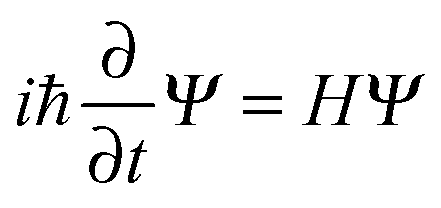
Time-dependent Schrödinger Equation. Wicked hard/impossible to solve unless your quantum system is very basic/standardized. It has complex/imaginary numbers, partial derivatives, and the always ethereal quantum wavefunction. Basically, it’s a great flex equation:

- Joined
- Oct 13, 2020
e^pi.i = -1

- Joined
- Aug 25, 2019
Ah yes, Euler’s Identity. I need to verify this, but I had a mathematics professor say that the great mathematician Euler believed this equation proved God existed (only a perfect divine being would create a universe where this equation is true or something like that).e^pi.i = -1

- Joined
- Jun 29, 2021
1=1