L|A
[Kiwi's Note: this substack article is a companion to the included video; it serves essentially as a bibliography for that video, allowing one to delve more into the sources from which Layne drew. As such, reading the article without watching the video is probably not very useful! I have highlighted some sections which are salient to key points of the video (all color changes in the text are my own highlights), and I have done table of contents-style spoilering to help navigate, according to Layne's own headings.
To briefly summarize the video (so as not to demand an hour of your time on faith) Layne is a writer, and she discusses issues with education (she herself was homeschooled after 2nd grade) from the perspective of diagnosing a decline in writing. This decline is evidenced in uptake of AI interventions like Grammarly (even used in published, award-winning books), and in examples she quotes. She points to a decline in use of phonics to teach reading in favor of "whole word" approaches, as well as emphasis on "critical literacy" (cf. "critical theory", she glosses this as being about interpreting passages "correctly", rather than being an abstract set of skills), and points out how a new generation of easily triggered students who read emotionally and shut down when confronted with uncomfortable readings are simply doing exactly as this curriculum has taught them. I plan to transcribe and/or summarize some key points of the video in subsequent posts to facilitate discussion.]

Hilary Layne
Oct 03, 2025
This is meant to be a companion to my video on Youtube.
In the 1959 Paul Newman movie The Young Philadelphians, Newman’s Anthony Lawrence spends one memorable scene trying to make small talk with the beautiful, intimidating Joan Dickinson (played to perfection by Barbara Rush). As a law school student, this talk naturally centered on education. He talked a bit about his goal to become a lawyer and the difficulties he was encountering. And then, being both polite and curious, he asked about her education. What were her goals? Her aspirations? She laughed lightly and said: “Oh, no, you see. I’ve been very carefully educated to be an idiot.”
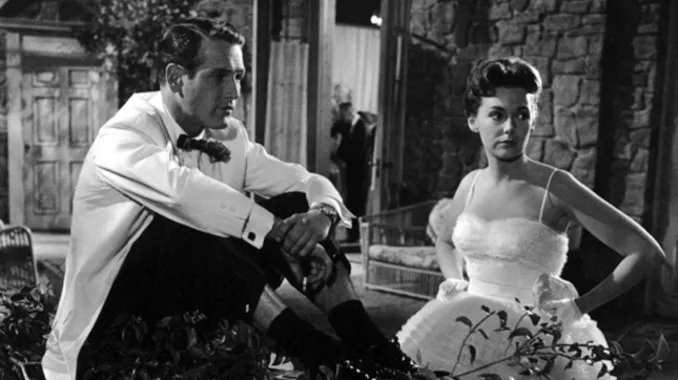
I saw this movie as a child with my parents. Both of whom laughed heartily at this scene. From time to time they would quote Joan, especially when they encountered some high level grad student who couldn’t, it seemed, endure abstract thought.
“Well, you see,” my father would quip, “he’s been very carefully educated to be an idiot.”
As it turns out, that was entirely true. Americans (I can’t speak to the education systems in other countries, but one can certainly make deductions…) have been the subject of a decades-long experiment in deliberate social adjustment.
I touched on all these topics in my recent video on the declining ability to write, but this article is intended to collect as many resources as possible on this topic so you can go forth and educate yourself. Do your own reading and draw your own conclusions.


[Kiwi's Note: this substack article is a companion to the included video; it serves essentially as a bibliography for that video, allowing one to delve more into the sources from which Layne drew. As such, reading the article without watching the video is probably not very useful! I have highlighted some sections which are salient to key points of the video (all color changes in the text are my own highlights), and I have done table of contents-style spoilering to help navigate, according to Layne's own headings.
To briefly summarize the video (so as not to demand an hour of your time on faith) Layne is a writer, and she discusses issues with education (she herself was homeschooled after 2nd grade) from the perspective of diagnosing a decline in writing. This decline is evidenced in uptake of AI interventions like Grammarly (even used in published, award-winning books), and in examples she quotes. She points to a decline in use of phonics to teach reading in favor of "whole word" approaches, as well as emphasis on "critical literacy" (cf. "critical theory", she glosses this as being about interpreting passages "correctly", rather than being an abstract set of skills), and points out how a new generation of easily triggered students who read emotionally and shut down when confronted with uncomfortable readings are simply doing exactly as this curriculum has taught them. I plan to transcribe and/or summarize some key points of the video in subsequent posts to facilitate discussion.]
Hilary Layne
Oct 03, 2025
This is meant to be a companion to my video on Youtube.
I saw this movie as a child with my parents. Both of whom laughed heartily at this scene. From time to time they would quote Joan, especially when they encountered some high level grad student who couldn’t, it seemed, endure abstract thought.
“Well, you see,” my father would quip, “he’s been very carefully educated to be an idiot.”
As it turns out, that was entirely true. Americans (I can’t speak to the education systems in other countries, but one can certainly make deductions…) have been the subject of a decades-long experiment in deliberate social adjustment.
I touched on all these topics in my recent video on the declining ability to write, but this article is intended to collect as many resources as possible on this topic so you can go forth and educate yourself. Do your own reading and draw your own conclusions.
As it has become increasingly apparent to anyone who has even a passing interest in the education of American children that something is amiss, many current and former professional educators have taken it upon themselves to do their own research. Some then wrote books collecting their findings. These books tend to be insta-dismissed as the ravings of crackpot loonies given their alarmist titles and appearances. But they are typically very well written, well researched, and full of primary sources for their claims. So many sources, in fact, that they make for good jumping-off points for more in-depth research. Here are the most popular, and the ones I personally found to be the most interesting:
- The Deliberate Dumbing Down of America by Charlotte Thomson Iserbyt (1999)
The author has provided this book for free, the above link takes you to the official pdf found on her estate’s website (Iserbyte passed in 2022). It was a first resource for many parents in the early aughts who wondered why their children were struggling so much in school. It details a number of ills that plague American schools and the way these are the direct result of a deliberate alteration to the entire purpose of education. The book is called “a paper trail” and includes hundreds of sources. Very little of the book is actually written by Iserbyt. She instead built it as a kind of timeline. Events are listed, with their significance given in a brief paragraph, and then long quotes from primary sources are provided to illustrate the point.
Iserbyt was a senior policy advisor in the Office of Educational Research and Improvement, in the U.S. Department of Education, under Ronald Reagan. - The Leipzeig Connection by Paolo Lionni (1993)
A fascinating, brief, well-researched introduction to an oft-overlooked aspect of modern American education’s evolution: its experimental psychological skeleton. This book details the men, ideas, and methods used to psychologically create an “education” system that was optimized to socially mold human beings into whatever shape the educator chose.
The fourth chapter, “Mice and Monkeys”, is particularly fascinating and details the ways animal conditioning was implemented in the classroom and used to modify and control education expectations while dismissing outliers as inherently “deficient”. These “deficient” pupils were then deemed lacking in intelligence and siphoned off to vocational training so they could begin working as soon as they were legally allowed to leave school. Later, these deficient pupils were controlled and modulated with medication. - The New Illiterates by Samuel L. Blumenfeld
A book that details not only the ways in which these horrendous teaching methods have failed children, but also the arrogance and indifference of the instigators.
and“When one begins to think of the incalculable damage done to the young minds of America through defective teaching techniques, one can scarcely contain one’s anger. Flesch was accused of writing in anger by his critics, as if anger were an inappropriate reaction to gross pedagogical malpractice which has had a ruinous effect on the literacy of millions of children. […] If it bothers you to see children suffering and failing needlessly because of defective teaching methods obstinately adhered to against all criticism, you will become angry.”
Aside from that, this book also features a lengthy section on practical methods to use to teach your children how to read (as young as preschool!)“We have the most inarticulate generation of college students in our history, and this may well account for their mass outbreaks of violence. They have no more intelligent way to express themselves.” (Blumenfeld is quoting Karl Shapiro)
(p.s. the above link for this book is an affiliate link for bookshop.com. If you have children and want to teach them yourself, I do highly recommend this book.) - Reading in the Brain by French neurolinguist Stanislas Dehaene (2009)
Dehaene gets into the neurology of language learning, showing how the means by which we learn to read creates a specific type of neural pathway. Phonics creates one type and whole language creates another. He shows how the phonics path is much faster and more neurologically efficient. Nevertheless, we still don’t entirely understand how the brain snaps sound to meaning. Nor how the brain chooses the optimal path to meaning. It’s a fascinating book with just as many questions as answers.
The following books were written by proponents of the education reforms, including Dewey himself and Frederick Taylor Gates, who had begun as Rockefeller’s money man and gradually came to guide and direct his boss’s financial control over various social revolutions in industrial America. There are many books out there — many, many, many are referenced in the above books — but these are the ones that I, personally, am familiar with.
- The Country School of Tomorrow, by Frederick Taylor Gates (1853)
This book features the quote which is, in all likelihood, the one often paraphrased and attributed to Rockefeller, in which he calls for a nation of workers not a nation of thinkers:
“In our dreams, we have limitless resources and the people yield themselves with perfect docility to our molding hands. […] We shall not try to make these people or any of their children into philosophers or men of learning, or men of science. We have not to raise up from among them authors, editors, poets or men of letters. We shall not search for embryo great artists, painters, musicians nor lawyers, doctors, preachers, politicians, statesmen, of whom we have an ample supply. […] So we will organize our children and teach them to do in a perfect way the things their fathers and mothers are doing in an imperfect way, in the homes, in the shops and on the farm.” (emphasis added by me) - Dewey on Education by John Dewey (1959)
This wild book includes Dewey’s “Pedagogic Creed” which reads like a religious manifesto, with paragraph after paragraph beginning with “I believe…” As an example:
“I believe that all questions of grading the child and his promotion should be determined by reference to the same standard. Examinations are of use only so far as they test the child’s fitness for social life and reveal the place in which he can be of the most service and where he can receive the most help.” - Critical Teaching and Everyday Life by Ira Shor (1980)
This book is possibly one of the first times the term “critical literacy” was used in the way in which it is currently defined. Shor follows in the footsteps of Paulo Freire, another Socialist and the guy who wrote Pedagogy of the Oppressed, and who is considered among the institutors of critical theory. He — and Shor — believed that education was to be used as means of social restructuring. Ira Shor wanted to use the act of teaching a child to read, as well as many other elements of teaching, to inculcate certain important social ideas in the plastic and malleable minds of children. This book is at least as disturbing as the above. Forty-five years old and it contains the same verbiage, talking points, phrasing, and trigger words as you see now on reddit, college campuses, and twitter feeds.
Purporting to present a means of education that allows students to transcend their oppressed circumstances, it actually presents a key methodology for maintaining malleable, empty brains (NPC brains, if you will) which lack the ability to think critically, truly think critically. That is, it ostensibly presents to children a means by which they may free themselves from oppression, but very clearly is providing a teaching manual for transforming a child into an adult who is entirely imprisoned by his, or her, academic and social overlords. The book condemns, among other things, any system that fails to promote “collective work or group deliberation”. (pg. 70)
“Prior to scheduling classes, Freirian educators study the life and language of their prospective students. These sociological inquiries permit them to discover a small number of key words from daily life—called ‘generative
words’—which will be used for both problematizing experience and for literacy teaching. The generative words, like ‘brick,’ ‘rice,’ ‘slum’ or ‘wealth,’ suggest social themes around which consciousness can be raised.” - This Action Learning manual for “literacy practitioners” for the teaching of whole language (1996) is the one I referred to in the video for its section on generative themes, which begins on page 19 (page 26 of the PDF).
This is another publication I would classify as disturbing. Filled with jargon and circuitous, non-specific, Orwellian (or Huxley-esque) academia-speak it informs teachers to throw out “narrow” definitions of literacy and focus the vast, vast amount of their energies on the social aspect. This book, almost more than any other I found, highlighted the explicit ways in which education has now become psychological formation.
Among other things, teachers are referred to as “facilitators”, which is the language often used to describe the people who are overseeing and carrying out psychological (and other academic) studies on test subjects, implicitly suggesting that pupils should no longer be viewed by teachers as students but as test subjects (the manual refers to them as “learners”).
Please bear in mind, the following quote is taken from a section of the book that is telling teachers how to teach people how to read:
“Making a Code: When you have identified some of the generative themes, the next step is to find a way to present them to the literacy class in a way that will encourage them to explore and discuss the meaning and importance of the theme. [Paulo] Freire calls this step making a code. The code is a way to present the theme back to the people so that they can objectively discuss it. The code may be a picture, a role play, a story, or an activity. For example, one facilitator who observed that alcoholism and gambling were causing problems in a rural village, simply brought an empty beer bottle and a deck of cards to class and set them on a table. She asked the learners how they felt about these items and they carried the discussion from there. Role play is another effective way to encode a generative theme. The Action Learning Manual in this series entitled Role Play is a helpful resource on how to use role play in a literacy class if you would like to learn more.”
This is a tricky topic to approach. At first glance, there seem to be just as many studies that seem to suggest that literacy has been unaffected by moving away from phonics as there are studies that showcase the deficits of non-phonics teaching. Two points are worth remembering:
First, I think it’s helpful to remember that the more the so-called Reading Wars wage on, the less time people have to wonder why these alterations were even put in place to start with. (We call that High Level Tin Hat™.) All these studies treat whole language or look-say or whatever as if they are legitimate efforts to teach children how to read. When they simply were not. If you read the language of the systems’ authors (in one of the books above, for example), you get the impression that teaching reading was not the goal, but rather social conditioning.
Second, the studies that support a lack of phonics treat literacy in hazy, inexact terms and then announce that, as you can clearly see! literacy is unaffected by the means of teaching reading. First they change the definition of literacy, then they tell you literacy has been unaffected. It’s more or less acceptable that, yes, whole language &c, &c can result in a child who can read. But it’s the nature of that literacy that is so fundamentally different from the literacy of a child taught using phonics.
With that in mind, I am only providing studies that speak to these more specific areas, that is, things like prosody and reading comprehension, as well as few meta-analyses of the other studies done by professionals far more experienced in these areas than I am.
First, I think it’s helpful to remember that the more the so-called Reading Wars wage on, the less time people have to wonder why these alterations were even put in place to start with. (We call that High Level Tin Hat™.) All these studies treat whole language or look-say or whatever as if they are legitimate efforts to teach children how to read. When they simply were not. If you read the language of the systems’ authors (in one of the books above, for example), you get the impression that teaching reading was not the goal, but rather social conditioning.
Second, the studies that support a lack of phonics treat literacy in hazy, inexact terms and then announce that, as you can clearly see! literacy is unaffected by the means of teaching reading. First they change the definition of literacy, then they tell you literacy has been unaffected. It’s more or less acceptable that, yes, whole language &c, &c can result in a child who can read. But it’s the nature of that literacy that is so fundamentally different from the literacy of a child taught using phonics.
With that in mind, I am only providing studies that speak to these more specific areas, that is, things like prosody and reading comprehension, as well as few meta-analyses of the other studies done by professionals far more experienced in these areas than I am.
A) On the Links Between the Method Used to Teach Reading and a Form of Dyslexia
- The "Sight Reading" Method of Teaching Literacy as a Source of Reading Disability by Samuel T. Orton, A.M. M.D. (1929, Journal of Educational Psychology)
- Can Dyslexia Be Artificially Induced in School? Yes, Says Researcher Edward Miller by Samuel L. Blumenfeld (1992)
Another interesting (but brief) article looking at the possible links between look-say and whole language teaching methods and the rise in cases of dyslexia. This brief introduction to the look-say method (&c.) and its pitfalls was written by the same author of The New Illiterates. - Dyslexia: A language learning impairment by Margaret J. Snowling, a Fellow at the British Academy (2013)
This paper is on dyslexia more broadly, however in the language intervention section she points out that phonics caused significant improvements in children with dyslexia.
B) Studies on the Efficacy of Different Literacy Learning Methods
- This article is an interesting, very brief introduction to the major arguments against phonics.
- An Evidence Based Assessment of the Scientific Research Literature On Reading and Its Implications for Reading Instruction
An enormous meta-analysis that looks at the results of a huge number of studies on phonics vs. other teaching methods. Even I couldn’t read this whole study (it’s so long) but I read several chapters, especially those having to do with alphabet teaching and certain findings regarding teaching method. For instance, phonics-based teaching produced the best results in classes with fewer children. - A Meta-Analysis and Literature Review of Language Programs
Nathaniel Hansford performed another in-depth meta-analysis of sixty-three language learning studies. This link leads to a detailed summary of his findings with extensive sourcing. He has also written a book on science-based teaching methods which might be of interest to parents and educators out there. Links are on his website. - Whole Language Method or Phonics Method…
The 2023 study that talks about the impact phonics learning has on readers’ prosody, among other things. - A commentary on Bowers (2020) and the role of phonics instruction in reading
In 2020 Jeffrey Bowers published this article in which he critiqued at length the prevailing opinion that teaching phonics, especially at the beginning of literacy learning, made any positive difference. Jack M. Fletcher, Robert Savage, and Sharon Vaughn published the above commentary in response in 2022 - Disputing recent attempts to reject the evidence in favour of systematic phonics instruction
Another dispute of Bowers and another similar critique of phonics
C) Studies on the Neurological Differences Between Phonics Learning and Other Methods
- Development of Neural Systems for Reading
Professor Bruce McCandliss’s study - Stanford study on brain waves shows how different teaching methods affect reading development by May Wong, Stanford Report (2015)
This article details the above study done by Stanford Professor Bruce McCandliss, which I spoke of in the video. The article is an excellent summary, if you don’t have time to read the whole study. - Comparing and Validating Methods of Reading Instruction Using Behavioural and Neural Findings in an Artificial Orthography
Another study on the neurologically different ways in which the brain learns language based on the method used to teach it. This one also found an overwhelmingly superior result in the phonics-based group. - Neural deficits in children with dyslexia ameliorated by behavioral remediation: Evidence from functional MRI
Another study on using phonics to correct dyslexia, except this one took an additional neurological approach. Not only did the subjects’ reading improve in several areas, there was also an improvement in brain activity
D) On the Decline of SAT and PSAT Scores, and On the Changes to Scoring and Tests to Make Them Easier
- Problems With New PSAT by Art Sawyer, Bruce Reed, and Adam Ingersoll, the founders of Compass Education Group (2016)
A heavily researched, concise examination of the major problems that appeared in 2015 with PSAT scoring. - GPT takes the SAT: Tracing changes in Test Difficulty and Students' Math Performance by Saannidhya Rawat and Vikram K. Suresh from the University of Cincinnati (2024)
These researchers used AI to assess the difficulty level of the SATs while also analyzing the decline in score, and found that the difficulty level has decreased, but scores have also, nevertheless, continued to decrease. That is: they made the test easier and easier, and yet scores are still steadily declining. - A brief article from 1996 that shines some light on the “recentering” controversy that artificially raised reported SAT scores.
- A comprehensive history and breakdown of the history of SAT scores and what precisely changed with the recentering.
- The Rise and Fall of the Factory System: Technology, firms, and households since the Industrial Revolution by Joel Mokyr
This paper details the rising need of factory owners for a large quantity of a specific kind of “human capital”. Presenting, among other things, the shifting attitude towards “common people” that was emerging among the extremely wealthy industrial elite. - Soviets In the Classroom
Another thoroughly sourced paper from Charlotte Iserbyt (author of The Deliberate Dumbing Down of America) about the American government allowing Soviet influence in American education starting in the 1930s, detailing, among other things, American school’s implementation of curriculum that was developed with the aid of the Soviet government. - This Financial Times article caused a bit of a stir when it reported on what appeared to be a near-global decline in human intelligence. The article is brief but includes a lot of sourced data. Here’s one of the many charts in the article, to give you an idea:

- Here are the links to the PIAAC website and the data regarding current trends in literacy, which I spoke about at length in the video
- They Don't Read Very Well, A Study of the Reading Comprehension Skills of English Majors at Two Midwestern Universities
Here’s a link to the study done on literacy among English lit majors, which I spoke about in the video [I recommend reading this one, it's funny] - The Elite College Students Who Can't Read Books by Rose Horowitch
This 2024 article in The Atlantic relates how college professors have found themselves increasingly unable to expect literary and humanities students to actually read whole books. - How to Build Students’ Reading Stamina by Stephen Sawchuk
This 2024 article in Education Week details the decline in children’s reading stamina since 2019. - Why Kids Aren’t Falling in Love With Reading Hint: It’s not just the screens. by Katherine Marsh
This unexpectedly fascinating 2023 article in The Atlantic posits that an overemphasis on critical analysis, especially at a young age — a core tenet of modern literacy training — has contributed to the decline in children’s interest in reading - This 2023 study reports that reading on screens actually decreases reading comprehension among children.
- This article in Education Week from 2024 talks about the above study as well as other interesting studies on the effects of primarily screen reading in children, including impacts on brain development
- The Nation's Report Card, where you can look at data for academic performance dating back to 1992. The data can be broken down by demographic, jurisdiction (public school or private school), year, and subject. That’s where I got this chart:

I didn’t spend as much time researching education in Europe, England, or elsewhere. However, as I used a Booker Prize (a United Kingdom / Ireland prize) winning novel by Paul Lynch, Prophet Song, as an example in the video of bad writing, I think it’s worth mentioning that he was born and raised in Ireland, where an integrated phonics+whole language system is used for teaching reading. This official state teaching manual details extensively the strategies implemented in Irish schools’ curriculum, which reads the same as those for American schools (except that Irish schools emphasize the learning of the Irish language as a secondary language as well).
In addition, this article from The Irish Times (2022) reveals that the Reading Wars are also being waged there, and that Irish parents are noticing a sharp decline in their children’s ability to read.
This official teaching manual, which outlines the Irish schools’ “framework” for curriculum, features prime examples of something else I’ve been noticing throughout all my research: the language with which children’s education is discussed and presented has become fundamentally corporate. Look at this chart which I screencapped from the above manual:

However, the following example is even more indicative of this corporate-ification of education:

They even refer to all parties involved in education as “stakeholders”.
In addition, this article from The Irish Times (2022) reveals that the Reading Wars are also being waged there, and that Irish parents are noticing a sharp decline in their children’s ability to read.
This official teaching manual, which outlines the Irish schools’ “framework” for curriculum, features prime examples of something else I’ve been noticing throughout all my research: the language with which children’s education is discussed and presented has become fundamentally corporate. Look at this chart which I screencapped from the above manual:

However, the following example is even more indicative of this corporate-ification of education:

They even refer to all parties involved in education as “stakeholders”.
This is a lot of information, but I hope you can find something in here that helps you educate yourself about the current state of modern schools.
The inability to write well is only one of countless negative results of our education system. There is no part of modern education that helps children. Any help that a child might receive (often only by accident or due to the crusading power of a particularly energetic teacher, or due to the child’s own innate, above average intelligence) is far outweighed by the harm.
The inability to write well is only one of countless negative results of our education system. There is no part of modern education that helps children. Any help that a child might receive (often only by accident or due to the crusading power of a particularly energetic teacher, or due to the child’s own innate, above average intelligence) is far outweighed by the harm.

 Also, Kiwis in or newly out of college: is it really this bad? Are you one of the 49 (over 50%!) out of 85 students who are "problematic readers"? Major strategies for problematic readers: guessing, avoidance, Sparknotes. Anyway, here is part of the exercise:


