By Lulu Garcia-Navarro
July 28, 2024
In May, Melinda French Gates said that she was leaving the Bill and Melinda Gates Foundation, which she helped found in 2000. Despite her divorce from Bill Gates a few years ago, the couple continued working together, and it was understood that Melinda was a crucial part of what made the foundation so effective. It’s hard to overstate what an earthquake her departure was in the world of big-donor charitable giving.
The Bill and Melinda Gates Foundation — soon to be called just the Gates Foundation — is the largest philanthropic organization in the United States by far, and it has given away nearly $80 billion since its inception. The Gateses have wielded enormous influence through their charitable donations, to causes as varied as their much-praised global childhood-vaccination initiative and their more controversial push to change standards for public education through the Common Core here in the United States.
The act of walking away from all that would have been surprising enough. But French Gates also did something she never did while at the Gates Foundation: entered the political fray, saying she would focus her resources on supporting women’s rights in the United States, including abortion rights. And in June she endorsed President Biden.
When we spoke this month, she told me why she feels so much urgency to get involved in these issues now. (We talked before Biden dropped out of the presidential race; she has since endorsed Vice President Kamala Harris.) We also talked about life after divorce, raising rich children, her new YouTube series, called “Moments That Make Us,” and her evolving views on how to use her own money.
You are in this big moment of transition. You’ve been through a divorce. You’re about to turn 60. You’ve left the Gates Foundation after over two decades. Has it felt like a big identity shift? Not really, because I am still the same person that I was when I was at the foundation. I’m still doing the work on behalf of women and girls. And you know, it was a decision that I gave a lot of careful thought and reflection when I was making it. So while you’re doing that, I think I had to get a bit used to the idea the last few months.
You’ve got your own organization, Pivotal Ventures, which you started in 2015, and you’re doing this new interview series on YouTube, in which you talk with famous and important women in different decades of their lives. All these things coming together in this moment — how are you trying to define yourself and your work now? Well, I just over the years came to really learn that we have to invest in women and girls, because we send people, young people, out into society that wasn’t built for them. And in my interviews, I wanted to bring these women into the conversation, because they’ve been seminal to me in my thinking about these issues over years, and I thought there were things they could teach. Billie Jean King: I watched her when I was 9 years old. I remember where I was when we watched her match, and to stop and think how far the world has come because of her courage. I also interviewed Megan Rapinoe. The two experiences of those two women coming out couldn’t be more different, and it just shows you how far society has come.
I’m wondering when you realized that you could bring something as a woman into the world that might be different from the male perspective. I would say I didn’t come to that realization until about 2010. I had been traveling by that time internationally for over a decade, and it was around 2010 that I just realized the things that women were willing to tell me when I would go out on these field visits and I would be out in a village or, you know, in a township — when the men had left the conversation to go back to the fields. Boy, what I heard from women was just unbelievable. About their lives and how they were struggling to make ends meet, put food on the table, the difference a contraceptive made if they could space the births of their children, how it was actually a crisis for them at times if they had another child that they couldn’t feed. It animated me, and I realized, if they’re willing to have these courageous conversations with me, I need to bring that deeply into the work.
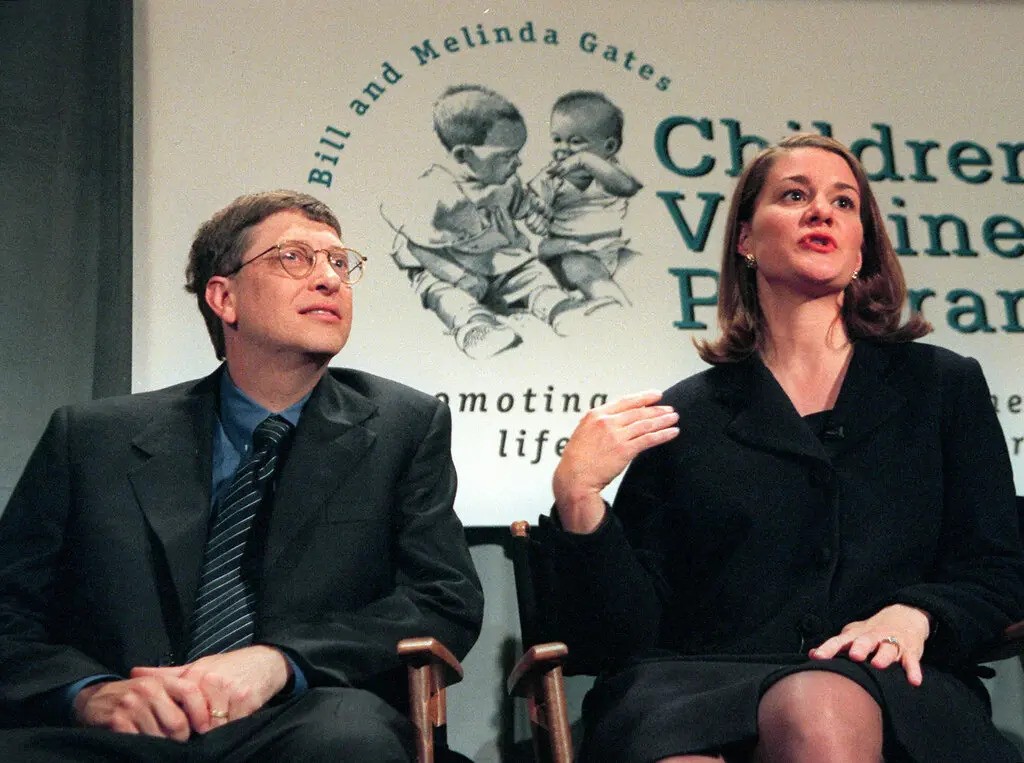
Bill and Melinda Gates at a news conference in 1998 announcing a $100 million gift to establish the Children’s Vaccine Program. Timothy A. Clary/AFP, via Getty Images
Whom did you have to convince? Was it Bill or was it also the board? Well, there was no board. The board of trustees was me, Bill and Warren [Buffett]. And yes, it took some convincing of Bill, and that didn’t happen all at once. That was over time. That was with good data, with good backing from other people. I remember one male scientist, who I respected greatly and he respected me — he was in the agricultural division, and when he retired, he said to me, “Melinda, the first time you said out loud onstage that we needed to think about women in our agricultural work and what beans they would want to cook and grow, I thought it was a joke.” And he said, “But over my career, I came to see that they will only cook certain beans because it takes a certain amount of time to cook them; they’re the ones who do the unpaid labor, but I didn’t really see it until I sent my two daughters out into the work force." I’ve seen that a lot with men over and over again — that until they have daughters or someone in their family that really hits these barriers, they often are not convincible.
There is this debate in philanthropy right now about how money should be disbursed. The Gates Foundation is known for one way of doing it, which is data-driven. It’s known as strategic philanthropy. I’m wondering about the second model. That’s called trust-based philanthropy, and basically you give money to organizations closest to the issues that you care about, no strings attached. Are you moving in that direction? I’m probably somewhere a little bit more in the middle of that, still leaning toward data-driven but certainly a little bit more in trust-based model, because I don’t intend to build up a large organization and I do believe that there are many, many partners on the ground who do incredible work but often don’t get funded. And I feel like this work when done closer to the ground, sometimes can have an even larger lasting impact.
MacKenzie Scott, who is the ex-wife of Amazon founder Jeff Bezos, has been taking the trust-based approach for quite some time. You were working with her for a while. Why did that stop? MacKenzie and I are definitely friends, so I’m not going to say a lot about her or her philanthropy. I have great respect, huge respect for what she’s doing. I think you make a false assumption to think that we may not work together more in the future, so let’s just wait and see. We talk about our philanthropy. She’s very proud of what she’s doing, and I think she should be. I’m proud of what I’m doing, and I think there may be more intersections in the future, but we’ll see. She certainly has had an effect on me in philanthropy, and I hope I’ve had an effect on her.
Do you think women give differently? I think we haven’t run the experiment fully yet.
What do you mean? It’s only been in the last decade that you’re seeing women really come into their own in philanthropy. I mean, we have a hundred years of history in philanthropy before that, but it was really the men who controlled the resources. And I even see it still with couples who are married, quite honestly. Some of the women talk about, they still have to go to their husband to get permission to do certain things they want to do in philanthropy. So give us another 25 years, and then ask me the question again.
You and MacKenzie Scott are giving in ways that aren’t necessarily contingent on your names being emblazoned on the side of a building, which is, you know, what we think of with perhaps more masculine giving. I can see the argument both ways, because putting a face on philanthropy, which happened with you and Bill, helps bring awareness to causes, helps increase trust because you know who the person is behind the organization. But then there’s also this other argument that anonymity or more low-profile giving keeps the focus on the work. How do you think about that balance? For me personally, I don’t need my name on the side of a building in perpetuity. That’s not what I’m about. I’m about: How do I move society forward for the betterment of everybody and so that my grandchildren and my grandchildren’s grandchildren get to live in an even better world than I do now? But it doesn’t take my name on a building to change society, nor do I actually think it’s helpful.
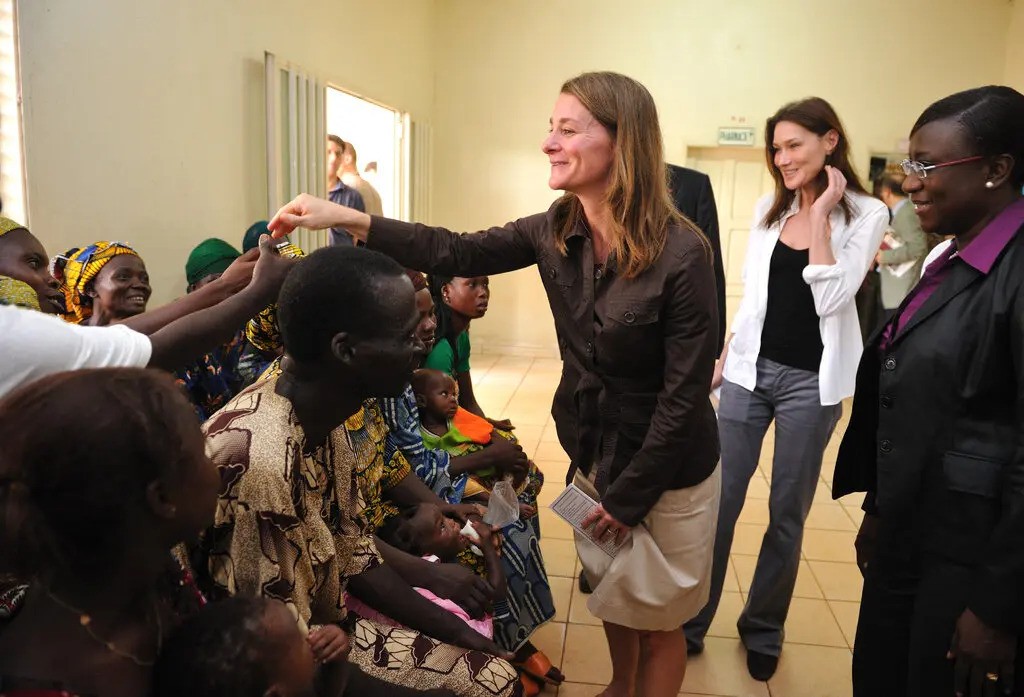
Melinda French Gates and Carla Bruni-Sarkozy, then the first lady of France, visiting a hospital in Dangbo, Benin, in 2010. Eric Feferberg/AFP, via Getty Images
Not helpful why? I’ll give you a specific example. When our kids were very young, I finally went to Bill, and we had this conversation that he readily agreed to, and I said: “Universities come to us, and if we do a large gift because we want to and it seems to make sense in the area that we’re working in, they want us to put our name on a building. I don’t think that’s a good idea because for our children, going to those institutions — they don’t want to go sit in a building that has their parents’ name on it.” Thank goodness we did that, because literally, one of my kids wouldn’t look at any university that had any name on a building from us, because they want to cut their own path in life.
I think some kids would be like, “Yeah, Mom and Dad have their name on the side of a building, and that’s going to make me the big person on campus." And you know what? I went to school with some of those kids at Duke University, and I vowed to myself that if I ever had resources at my disposal, those were not the kind of children I wanted to raise.
How do you ground kids not to become those people? Well, first of all, they had an allowance, so we absolutely did not just buy them things. And they either had to buy with their allowance or put it on their wish list, that maybe they’d get it from their grandparents or us on their birthday or Christmas. We said to them from a very early age, “You know, you really are not allowed to tell other people how we flew on this trip back and forth, otherwise it will separate you from other children.” And so I think it was much more of an upbringing like I grew up in: a very middle-class household where money did dictate whether I got an extra pair of shoes that year or not, right? And I thought that was a good principle to have. And I have to say, again, MacKenzie was helpful to me in this. I could see a bit how she was parenting, and I knew we had quite similar philosophies, actually. We were close-ish, not as close then, but I knew she was trying to raise her kids, literally just down the street from me, in essentially the same way.
I want to ask you about this other new part of your life, which is post-divorce. You said recently in an interview that you’re enjoying this moment. Say more about that. I get to be around the people I want to be around and do the things that I want to do, and it’s lovely. I just had no idea that it would be such an opening, right? An opening to be closer to my kids in the way I want to be. I am stripped of some — or free, I shouldn’t say stripped — freed of some obligations, right? I’m not balancing two large extended families anymore. It just gives me more time, and I’m really enjoying it.
And you’ve become more political. You endorsed — that’s a first for you. Did you have to think about the trade-offs in making your position clear, saying that you’re going to actively support candidates? At the Gates Foundation, that was never the way you all did business, because you were often in partnership with government entities like U.S.A.I.D., and I imagine that wouldn’t have been well viewed. Can you just talk me through how you thought, OK, I have to do this now? After the Dobbs decision, I knew I had to speak out in favor of women’s rights, and if there was a candidate who is against women’s rights and says terrible things about women, there is no way I could vote for that person. And I felt that that decision, because of all the downstream repercussions it has for maternal health, for Black women, for deserts where women can’t even go now to get good maternal care in the United States — all the downstream effects that are coming and will continue to come from that decision are so severe, I thought, you know, if I really believe in women in our country and women’s rights, I need to speak up. Because women are the ones that are going to make or break this election. And women in battleground states speaking up for what they want, for their rights and for our democracy. That’s why I felt it was so important. But yes, it was not a decision I came to easily.
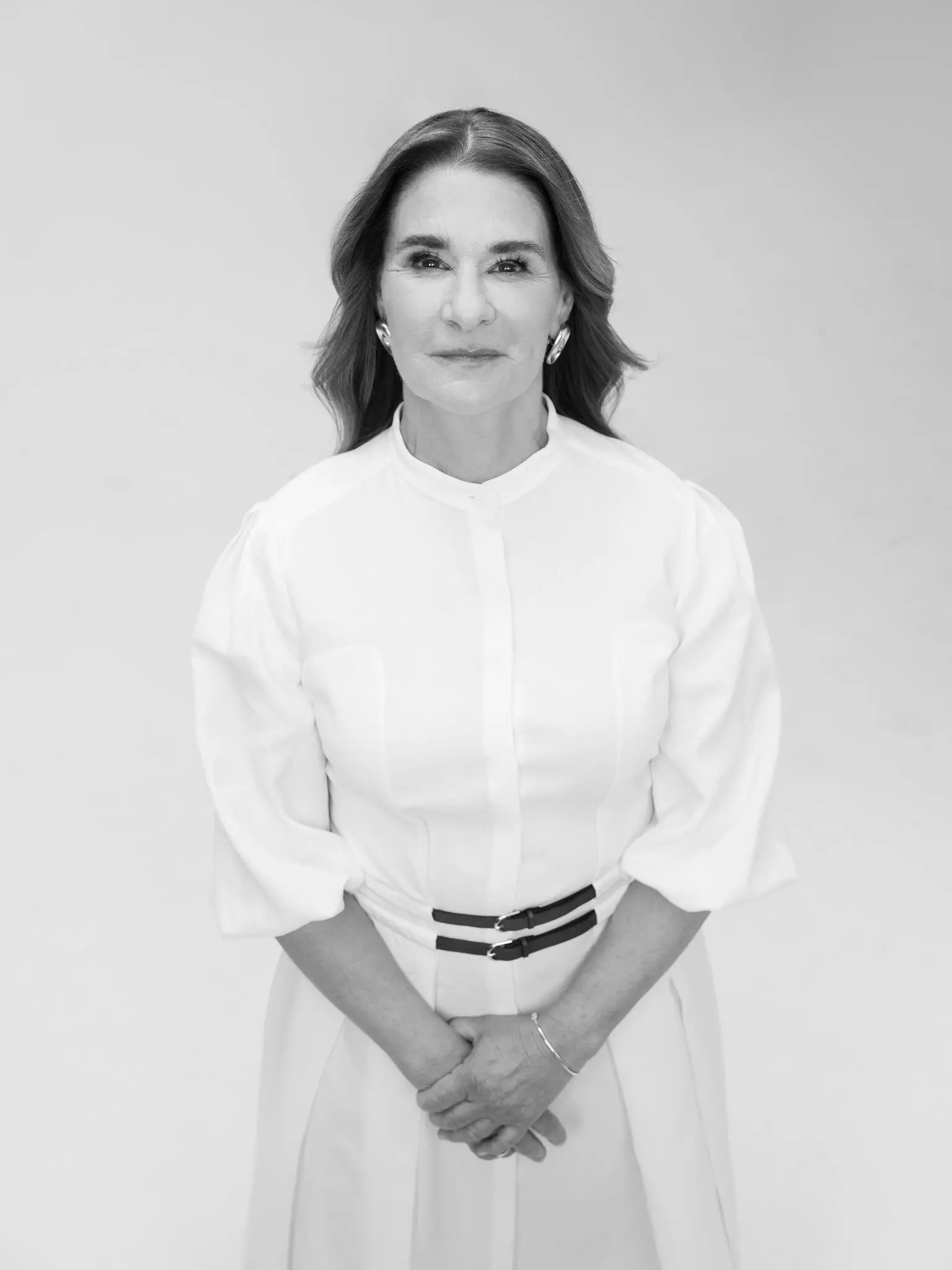
Devin Oktar Yalkin for The New York Times
What did you worry about? I knew there would be people who were against it or would say, “She’s always in one camp,” and that’s not true. The one thing I have always been is a centrist. I have voted Republican in some elections, I’ve voted Democratic in others, and I think that will be true going forward.
One of those people who did come out and attack you is Elon Musk. I’m sure you saw a couple of weeks ago, Elon posted on X about you endorsing Biden and said that your political activism might be “the downfall of Western civilization.” Any comment on that? I thought it was silly.
Did it upset you? No. I mean, here’s one thing that always has confounded me about society: I’ve just watched over the years tech leaders interviewed about their parenting style, a male who has spent, you know, 60 hours at his company that week, and I’m sure he’s a fantastic C.E.O. and has done a great job — maybe or maybe not — in their company. But then they get asked about parenting, and they spew all this stuff, and you think, Something doesn’t add up here. So I just — some of these comments to me are just kind of silly.
Warren Buffett just made public his new will. Before, he said he was going to give a huge amount of money to the Gates Foundation. And now he’s saying he’s going to start his own trust, headed by his children. Were you surprised by that? No, this decision did not surprise me. It’s been a decision that I think he’s been coming to over time, and I was aware that he was making this decision. The other thing that’s really important to say is he has given an enormous sum through the Bill and Melinda Gates Foundation. So I think this has just been a good evolution to his thinking on how he wants to do his giving.
An evolution in what way? So that he has his own priorities, and his family has his own priorities? I think that’s a question you should ask Warren, right?
Sure, but I’ve got you. [Laughs.] But I don’t want to put words in his mouth. I think it’s just been coming to over time.
Even though Warren is 30-some years older than you, I think of you and Bill and him as this one generation of billionaire activists with a particular and sort of quite traditional approach to philanthropy. And now there’s like this other group of activists — I’m thinking of Elon Musk and Jack Dorsey and Bill Ackman and Peter Thiel. And maybe it’s just personalities, but it does feel like a different era. Do you see this generational shift among the superwealthy and how they see and use their place in the culture? Well, the people you just named have not been very philanthropic yet. They use their voice and they use their megaphones, but I would not call those men philanthropists.
They haven’t signed onto the Giving Pledge — is that the distinction you’re making? Some have, and I’m not saying that’s the way they have to do it. But go look at their record of actually giving money to society. It’s not big. [Laughs.] So you put Bill and me and Warren in a class of philanthropists doing things in a certain way, but I don’t think you can then say, “OK, well, let’s compare to this group over here who are nonphilanthropists.” Those are nonphilanthropists, in my opinion.
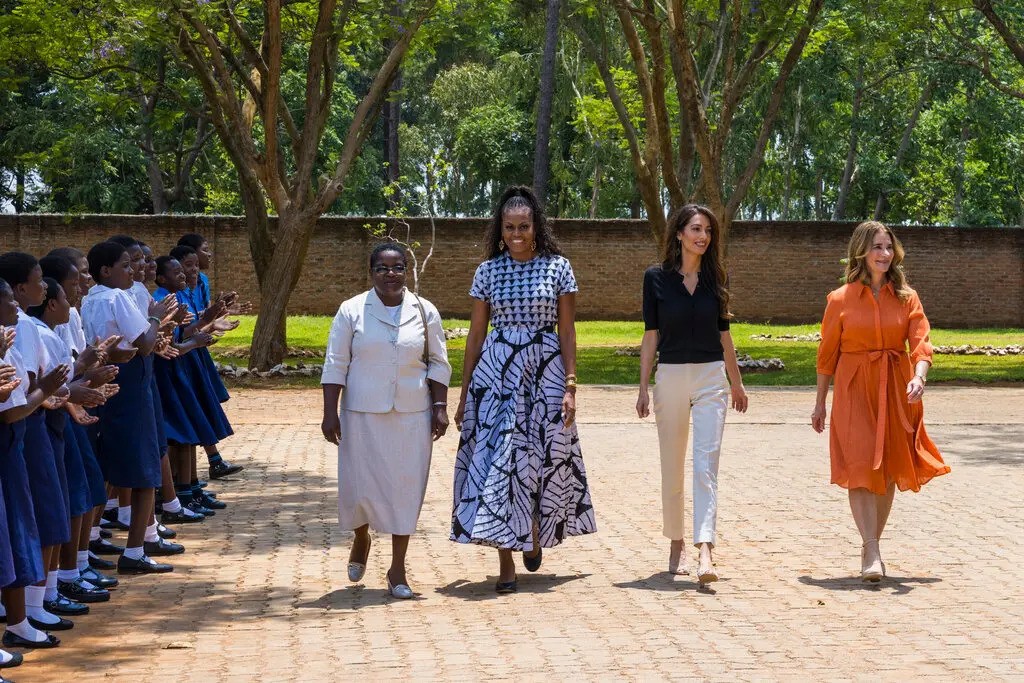
French Gates (right) visiting a girls’ school in Malawi in 2023 with Michelle Obama and Amal Clooney. The Obama Foundation
What do you think is at the root of people like you choosing to go one way and people like them choosing to do something else? Or choosing not to do anything at all? I think we’ve had that in society for a long time, that you have some wealthy people who choose to give their money back and some who don’t. What we’ve tried to do with the Giving Pledge is to get people to sign on to commit to giving away half their wealth during their lifetime or afterward. What I will say is: This was the first year we actually had the original signatories of the Giving Pledge and the next generation, the generation who will inherit the wealth, together in a room, and boy, when we put those two together, it was such an interesting conversation, because, yes, the younger people in the room are seeing society in a different way and are seeing issues that they want to further and to forward, and some of them are even saying to their parents, “Hey, give us the purse strings earlier.”
Who’s challenged your thinking most on women’s issues? Probably my children. My youngest, Phoebe, had been pushing on me for quite some time to not just do reproductive rights globally but also in the United States. She had toured a number of clinics down South about a year and a half ago. And she saw the maternal-mortality crisis up close and personal. And she said, “Mom, there is so much need in our own country."
This is after Roe v. Wade fell. What was it that moved you from that conversation? I started to learn more. So one of the things I do whenever I feel like, OK, something’s staring me in the face, but do I know enough? I always go out and talk to a set of experts. I’ll talk to other philanthropists. I also have a small council of other friends. They will often say to me, “Oh, my son or daughter who’s in their 30s thinks differently about that, Melinda,” and so I’ll ask a whole lot more questions. And then often they’ll have their son or daughter send me a bunch of articles on something, like, “This is why we think about it this way.” But the other thing I’ll say is Phoebe led with another female, a gathering of people in New York, of philanthropists of her generation. And put in front of them a number of reproductive rights organizations, and they raised about $30 million specifically for some of these organizations and organizations that said, We’ve never actually had direct contact with philanthropists, right? There’s so much need right now.
Are you interested in directly funding, for example, paying for women to go across state lines to get abortions? Or is it more about increasing access in rural communities to reproductive health? For me, it will be more about access and more about policy. How do we get the right policies in place? I mean, that’s some of the work we have been able to do in the child-care and the unpaid-leave space. We’ve done this also in the adolescent-mental-health space. How do you make sure that adolescents actually can get mental-health services, and will insurance cover that? I’m always looking at how we can affect the most number of women’s lives or even baby’s lives, so you don’t end up with these downstream effects.
I’m wondering if you wished you’d gotten involved sooner. Was there a missed window of opportunity, do you think? No, I think there was really a shift with the Dobbs decision, a major shift. And so when that happened, I really was like: “Oh, my gosh, there is work to do in the United States.” I cannot believe we’re at this place in this country. To have a law on the books for 50 years — I cannot believe we would roll something like this back. What are we saying about women and women’s decisions about their bodies? Why would we put government back in the middle of that? Are you kidding? That decision had been made. You have a law in the books, and you don’t really consider it because a country that’s moving forward, we would then roll back something?
This was such a pivotal moment for the country. And it’s clearly been a catalyst to move you in your own direction. You’ve spoken in the past about how you sometimes felt unheard when you were with Bill. And I’m curious about that sensation and how that’s changed. Because being part of a couple can feel strengthening, but it can also take away from your own accomplishments. We were equal partners at the foundation. So it wasn’t so much that. But there is a process by which you make decisions when you stand next to someone who’s equal, right? And that isn’t as easy when you’re not still married. But it also sometimes wasn’t easy even when we were married! And now I’m role-modeling for society. I believe women should have their full decision-making authority, their full authority over their resources, and they ought to make good policy. And so for me, it came down to, I’m just ready to do this. I have 25 years of experience. I know what I want to do, and I don’t want to have to negotiate with somebody else. Like: Will we go over here? Will we change over there? I was just ready to be on my own. And I’m turning 60. So it’s also kind of like, OK, if not now, when? I always learned from my mom: Set your own agenda. I’m just ready to set my own agenda as my own person.
This interview has been edited and condensed from two conversations. Listen to and follow “The Interview” on Apple Podcasts, Spotify, YouTube, Amazon Music or the New York Times Audio app.
Director of photography (video): Aaron Katter
Source (Archive)
July 28, 2024
In May, Melinda French Gates said that she was leaving the Bill and Melinda Gates Foundation, which she helped found in 2000. Despite her divorce from Bill Gates a few years ago, the couple continued working together, and it was understood that Melinda was a crucial part of what made the foundation so effective. It’s hard to overstate what an earthquake her departure was in the world of big-donor charitable giving.
The Bill and Melinda Gates Foundation — soon to be called just the Gates Foundation — is the largest philanthropic organization in the United States by far, and it has given away nearly $80 billion since its inception. The Gateses have wielded enormous influence through their charitable donations, to causes as varied as their much-praised global childhood-vaccination initiative and their more controversial push to change standards for public education through the Common Core here in the United States.
The act of walking away from all that would have been surprising enough. But French Gates also did something she never did while at the Gates Foundation: entered the political fray, saying she would focus her resources on supporting women’s rights in the United States, including abortion rights. And in June she endorsed President Biden.
When we spoke this month, she told me why she feels so much urgency to get involved in these issues now. (We talked before Biden dropped out of the presidential race; she has since endorsed Vice President Kamala Harris.) We also talked about life after divorce, raising rich children, her new YouTube series, called “Moments That Make Us,” and her evolving views on how to use her own money.
You are in this big moment of transition. You’ve been through a divorce. You’re about to turn 60. You’ve left the Gates Foundation after over two decades. Has it felt like a big identity shift? Not really, because I am still the same person that I was when I was at the foundation. I’m still doing the work on behalf of women and girls. And you know, it was a decision that I gave a lot of careful thought and reflection when I was making it. So while you’re doing that, I think I had to get a bit used to the idea the last few months.
You’ve got your own organization, Pivotal Ventures, which you started in 2015, and you’re doing this new interview series on YouTube, in which you talk with famous and important women in different decades of their lives. All these things coming together in this moment — how are you trying to define yourself and your work now? Well, I just over the years came to really learn that we have to invest in women and girls, because we send people, young people, out into society that wasn’t built for them. And in my interviews, I wanted to bring these women into the conversation, because they’ve been seminal to me in my thinking about these issues over years, and I thought there were things they could teach. Billie Jean King: I watched her when I was 9 years old. I remember where I was when we watched her match, and to stop and think how far the world has come because of her courage. I also interviewed Megan Rapinoe. The two experiences of those two women coming out couldn’t be more different, and it just shows you how far society has come.
I’m wondering when you realized that you could bring something as a woman into the world that might be different from the male perspective. I would say I didn’t come to that realization until about 2010. I had been traveling by that time internationally for over a decade, and it was around 2010 that I just realized the things that women were willing to tell me when I would go out on these field visits and I would be out in a village or, you know, in a township — when the men had left the conversation to go back to the fields. Boy, what I heard from women was just unbelievable. About their lives and how they were struggling to make ends meet, put food on the table, the difference a contraceptive made if they could space the births of their children, how it was actually a crisis for them at times if they had another child that they couldn’t feed. It animated me, and I realized, if they’re willing to have these courageous conversations with me, I need to bring that deeply into the work.
Bill and Melinda Gates at a news conference in 1998 announcing a $100 million gift to establish the Children’s Vaccine Program. Timothy A. Clary/AFP, via Getty Images
Whom did you have to convince? Was it Bill or was it also the board? Well, there was no board. The board of trustees was me, Bill and Warren [Buffett]. And yes, it took some convincing of Bill, and that didn’t happen all at once. That was over time. That was with good data, with good backing from other people. I remember one male scientist, who I respected greatly and he respected me — he was in the agricultural division, and when he retired, he said to me, “Melinda, the first time you said out loud onstage that we needed to think about women in our agricultural work and what beans they would want to cook and grow, I thought it was a joke.” And he said, “But over my career, I came to see that they will only cook certain beans because it takes a certain amount of time to cook them; they’re the ones who do the unpaid labor, but I didn’t really see it until I sent my two daughters out into the work force." I’ve seen that a lot with men over and over again — that until they have daughters or someone in their family that really hits these barriers, they often are not convincible.
There is this debate in philanthropy right now about how money should be disbursed. The Gates Foundation is known for one way of doing it, which is data-driven. It’s known as strategic philanthropy. I’m wondering about the second model. That’s called trust-based philanthropy, and basically you give money to organizations closest to the issues that you care about, no strings attached. Are you moving in that direction? I’m probably somewhere a little bit more in the middle of that, still leaning toward data-driven but certainly a little bit more in trust-based model, because I don’t intend to build up a large organization and I do believe that there are many, many partners on the ground who do incredible work but often don’t get funded. And I feel like this work when done closer to the ground, sometimes can have an even larger lasting impact.
MacKenzie Scott, who is the ex-wife of Amazon founder Jeff Bezos, has been taking the trust-based approach for quite some time. You were working with her for a while. Why did that stop? MacKenzie and I are definitely friends, so I’m not going to say a lot about her or her philanthropy. I have great respect, huge respect for what she’s doing. I think you make a false assumption to think that we may not work together more in the future, so let’s just wait and see. We talk about our philanthropy. She’s very proud of what she’s doing, and I think she should be. I’m proud of what I’m doing, and I think there may be more intersections in the future, but we’ll see. She certainly has had an effect on me in philanthropy, and I hope I’ve had an effect on her.
Do you think women give differently? I think we haven’t run the experiment fully yet.
What do you mean? It’s only been in the last decade that you’re seeing women really come into their own in philanthropy. I mean, we have a hundred years of history in philanthropy before that, but it was really the men who controlled the resources. And I even see it still with couples who are married, quite honestly. Some of the women talk about, they still have to go to their husband to get permission to do certain things they want to do in philanthropy. So give us another 25 years, and then ask me the question again.
You and MacKenzie Scott are giving in ways that aren’t necessarily contingent on your names being emblazoned on the side of a building, which is, you know, what we think of with perhaps more masculine giving. I can see the argument both ways, because putting a face on philanthropy, which happened with you and Bill, helps bring awareness to causes, helps increase trust because you know who the person is behind the organization. But then there’s also this other argument that anonymity or more low-profile giving keeps the focus on the work. How do you think about that balance? For me personally, I don’t need my name on the side of a building in perpetuity. That’s not what I’m about. I’m about: How do I move society forward for the betterment of everybody and so that my grandchildren and my grandchildren’s grandchildren get to live in an even better world than I do now? But it doesn’t take my name on a building to change society, nor do I actually think it’s helpful.
Melinda French Gates and Carla Bruni-Sarkozy, then the first lady of France, visiting a hospital in Dangbo, Benin, in 2010. Eric Feferberg/AFP, via Getty Images
Not helpful why? I’ll give you a specific example. When our kids were very young, I finally went to Bill, and we had this conversation that he readily agreed to, and I said: “Universities come to us, and if we do a large gift because we want to and it seems to make sense in the area that we’re working in, they want us to put our name on a building. I don’t think that’s a good idea because for our children, going to those institutions — they don’t want to go sit in a building that has their parents’ name on it.” Thank goodness we did that, because literally, one of my kids wouldn’t look at any university that had any name on a building from us, because they want to cut their own path in life.
I think some kids would be like, “Yeah, Mom and Dad have their name on the side of a building, and that’s going to make me the big person on campus." And you know what? I went to school with some of those kids at Duke University, and I vowed to myself that if I ever had resources at my disposal, those were not the kind of children I wanted to raise.
How do you ground kids not to become those people? Well, first of all, they had an allowance, so we absolutely did not just buy them things. And they either had to buy with their allowance or put it on their wish list, that maybe they’d get it from their grandparents or us on their birthday or Christmas. We said to them from a very early age, “You know, you really are not allowed to tell other people how we flew on this trip back and forth, otherwise it will separate you from other children.” And so I think it was much more of an upbringing like I grew up in: a very middle-class household where money did dictate whether I got an extra pair of shoes that year or not, right? And I thought that was a good principle to have. And I have to say, again, MacKenzie was helpful to me in this. I could see a bit how she was parenting, and I knew we had quite similar philosophies, actually. We were close-ish, not as close then, but I knew she was trying to raise her kids, literally just down the street from me, in essentially the same way.
I want to ask you about this other new part of your life, which is post-divorce. You said recently in an interview that you’re enjoying this moment. Say more about that. I get to be around the people I want to be around and do the things that I want to do, and it’s lovely. I just had no idea that it would be such an opening, right? An opening to be closer to my kids in the way I want to be. I am stripped of some — or free, I shouldn’t say stripped — freed of some obligations, right? I’m not balancing two large extended families anymore. It just gives me more time, and I’m really enjoying it.
And you’ve become more political. You endorsed — that’s a first for you. Did you have to think about the trade-offs in making your position clear, saying that you’re going to actively support candidates? At the Gates Foundation, that was never the way you all did business, because you were often in partnership with government entities like U.S.A.I.D., and I imagine that wouldn’t have been well viewed. Can you just talk me through how you thought, OK, I have to do this now? After the Dobbs decision, I knew I had to speak out in favor of women’s rights, and if there was a candidate who is against women’s rights and says terrible things about women, there is no way I could vote for that person. And I felt that that decision, because of all the downstream repercussions it has for maternal health, for Black women, for deserts where women can’t even go now to get good maternal care in the United States — all the downstream effects that are coming and will continue to come from that decision are so severe, I thought, you know, if I really believe in women in our country and women’s rights, I need to speak up. Because women are the ones that are going to make or break this election. And women in battleground states speaking up for what they want, for their rights and for our democracy. That’s why I felt it was so important. But yes, it was not a decision I came to easily.
Devin Oktar Yalkin for The New York Times
What did you worry about? I knew there would be people who were against it or would say, “She’s always in one camp,” and that’s not true. The one thing I have always been is a centrist. I have voted Republican in some elections, I’ve voted Democratic in others, and I think that will be true going forward.
One of those people who did come out and attack you is Elon Musk. I’m sure you saw a couple of weeks ago, Elon posted on X about you endorsing Biden and said that your political activism might be “the downfall of Western civilization.” Any comment on that? I thought it was silly.
Did it upset you? No. I mean, here’s one thing that always has confounded me about society: I’ve just watched over the years tech leaders interviewed about their parenting style, a male who has spent, you know, 60 hours at his company that week, and I’m sure he’s a fantastic C.E.O. and has done a great job — maybe or maybe not — in their company. But then they get asked about parenting, and they spew all this stuff, and you think, Something doesn’t add up here. So I just — some of these comments to me are just kind of silly.
Warren Buffett just made public his new will. Before, he said he was going to give a huge amount of money to the Gates Foundation. And now he’s saying he’s going to start his own trust, headed by his children. Were you surprised by that? No, this decision did not surprise me. It’s been a decision that I think he’s been coming to over time, and I was aware that he was making this decision. The other thing that’s really important to say is he has given an enormous sum through the Bill and Melinda Gates Foundation. So I think this has just been a good evolution to his thinking on how he wants to do his giving.
An evolution in what way? So that he has his own priorities, and his family has his own priorities? I think that’s a question you should ask Warren, right?
Sure, but I’ve got you. [Laughs.] But I don’t want to put words in his mouth. I think it’s just been coming to over time.
Even though Warren is 30-some years older than you, I think of you and Bill and him as this one generation of billionaire activists with a particular and sort of quite traditional approach to philanthropy. And now there’s like this other group of activists — I’m thinking of Elon Musk and Jack Dorsey and Bill Ackman and Peter Thiel. And maybe it’s just personalities, but it does feel like a different era. Do you see this generational shift among the superwealthy and how they see and use their place in the culture? Well, the people you just named have not been very philanthropic yet. They use their voice and they use their megaphones, but I would not call those men philanthropists.
They haven’t signed onto the Giving Pledge — is that the distinction you’re making? Some have, and I’m not saying that’s the way they have to do it. But go look at their record of actually giving money to society. It’s not big. [Laughs.] So you put Bill and me and Warren in a class of philanthropists doing things in a certain way, but I don’t think you can then say, “OK, well, let’s compare to this group over here who are nonphilanthropists.” Those are nonphilanthropists, in my opinion.
French Gates (right) visiting a girls’ school in Malawi in 2023 with Michelle Obama and Amal Clooney. The Obama Foundation
What do you think is at the root of people like you choosing to go one way and people like them choosing to do something else? Or choosing not to do anything at all? I think we’ve had that in society for a long time, that you have some wealthy people who choose to give their money back and some who don’t. What we’ve tried to do with the Giving Pledge is to get people to sign on to commit to giving away half their wealth during their lifetime or afterward. What I will say is: This was the first year we actually had the original signatories of the Giving Pledge and the next generation, the generation who will inherit the wealth, together in a room, and boy, when we put those two together, it was such an interesting conversation, because, yes, the younger people in the room are seeing society in a different way and are seeing issues that they want to further and to forward, and some of them are even saying to their parents, “Hey, give us the purse strings earlier.”
Who’s challenged your thinking most on women’s issues? Probably my children. My youngest, Phoebe, had been pushing on me for quite some time to not just do reproductive rights globally but also in the United States. She had toured a number of clinics down South about a year and a half ago. And she saw the maternal-mortality crisis up close and personal. And she said, “Mom, there is so much need in our own country."
This is after Roe v. Wade fell. What was it that moved you from that conversation? I started to learn more. So one of the things I do whenever I feel like, OK, something’s staring me in the face, but do I know enough? I always go out and talk to a set of experts. I’ll talk to other philanthropists. I also have a small council of other friends. They will often say to me, “Oh, my son or daughter who’s in their 30s thinks differently about that, Melinda,” and so I’ll ask a whole lot more questions. And then often they’ll have their son or daughter send me a bunch of articles on something, like, “This is why we think about it this way.” But the other thing I’ll say is Phoebe led with another female, a gathering of people in New York, of philanthropists of her generation. And put in front of them a number of reproductive rights organizations, and they raised about $30 million specifically for some of these organizations and organizations that said, We’ve never actually had direct contact with philanthropists, right? There’s so much need right now.
Are you interested in directly funding, for example, paying for women to go across state lines to get abortions? Or is it more about increasing access in rural communities to reproductive health? For me, it will be more about access and more about policy. How do we get the right policies in place? I mean, that’s some of the work we have been able to do in the child-care and the unpaid-leave space. We’ve done this also in the adolescent-mental-health space. How do you make sure that adolescents actually can get mental-health services, and will insurance cover that? I’m always looking at how we can affect the most number of women’s lives or even baby’s lives, so you don’t end up with these downstream effects.
I’m wondering if you wished you’d gotten involved sooner. Was there a missed window of opportunity, do you think? No, I think there was really a shift with the Dobbs decision, a major shift. And so when that happened, I really was like: “Oh, my gosh, there is work to do in the United States.” I cannot believe we’re at this place in this country. To have a law on the books for 50 years — I cannot believe we would roll something like this back. What are we saying about women and women’s decisions about their bodies? Why would we put government back in the middle of that? Are you kidding? That decision had been made. You have a law in the books, and you don’t really consider it because a country that’s moving forward, we would then roll back something?
This was such a pivotal moment for the country. And it’s clearly been a catalyst to move you in your own direction. You’ve spoken in the past about how you sometimes felt unheard when you were with Bill. And I’m curious about that sensation and how that’s changed. Because being part of a couple can feel strengthening, but it can also take away from your own accomplishments. We were equal partners at the foundation. So it wasn’t so much that. But there is a process by which you make decisions when you stand next to someone who’s equal, right? And that isn’t as easy when you’re not still married. But it also sometimes wasn’t easy even when we were married! And now I’m role-modeling for society. I believe women should have their full decision-making authority, their full authority over their resources, and they ought to make good policy. And so for me, it came down to, I’m just ready to do this. I have 25 years of experience. I know what I want to do, and I don’t want to have to negotiate with somebody else. Like: Will we go over here? Will we change over there? I was just ready to be on my own. And I’m turning 60. So it’s also kind of like, OK, if not now, when? I always learned from my mom: Set your own agenda. I’m just ready to set my own agenda as my own person.
This interview has been edited and condensed from two conversations. Listen to and follow “The Interview” on Apple Podcasts, Spotify, YouTube, Amazon Music or the New York Times Audio app.
Director of photography (video): Aaron Katter
Source (Archive)


