My Indian neighbor (highly educated and mostly acts white) had his elephant worshiping festival the other week. I have to give some credit here as he is very modern. All of this is out of public sight. He told me that yeah, people dump their idols into whatever water is available and they make them out of again whatever is available. Littering is not a concept to Indians so they just dump the idol and do their prayers then go about their day. Which is why Canadians and others complain about this because they find the nearest body of water and just do it there. Usually polluting it with unnatural substances that are often toxic.
There's a cottage industry in my area of TX where you can buy these idols made intelligently. They make out of molded fertilizer and soil. Kept firm by some natural additive. For the festival the community had a 1000 liter fish tank in his backyard and the local Indians just came to the house and put their idol in the fishtank. After a few hours it dissolves into fertilizer and as part of their festival you bring some of this back home and put it in your garden.
This made me think of the old pagan tradition from Rome - thing is it works only if you have a small population. Dumping broken swords and brooches into wells or rivers is fine if you have a iron/bronze age civilization and population size... but once a billion and a half jeets try to keep doing it it just fucks up the environment.
Same with chucking bodies in the river. Small population, the animals in the river and environment will clean it up, but not when infinijeet does it.
Traditional idols were made out of river clay and decorated with things like tumeric paste.

It wouldn't be
ideal for a lot of these to be dumped in a waterway, but especially where these are made out of local river clay it's not a significant issue by itself. It basically disintegrates back into what it was made out of, symbolising the cycle of life, death and rebirth. The problem is that the idols themselves are worshipped and venerated as an avatar of the god, so the more devout someone is, the more they want to offer Ganesh - flowers, fruit, incense, vermillion,
his favourite snack etc (that all typically gets dumped with the idol). It's an orthopraxic religion so it's genuinely as straightforward as "the more you give, the more Ganesh will reward you" - there's no lesson of the widow's mite.
Some aristocratic families in Calcutta
did semi-public displays for the goddess Durga - but with Ganesh, this wasn't really a thing; households traditionally would craft their own clay idol and hold a private religious observance. That began to change in the 1890s thanks to
Bal Gangadhar Tilak. Basically, the Raj banned political gatherings, but they did permit community worship, so Tilak decided Ganesh should be worshipped as part of a public festival as a way of spreading Hindu nationalist thought. Aspects of that are reflected in various quotes you'll find about the festivals.
The Cultural Affairs Minister of Maharashtra, Ashish Shelar, announced in the State Legislative Assembly yesterday that Sarvajanik Ganeshotsav will be officially recognised as a state festival. He stated that the state government will cover the expenses for organising and promoting grand celebrations across Maharashtra. Mr. Shelar highlighted that the festival symbolises social unity, nationalism, the spirit of freedom, self-respect, and pride in the Marathi language. This year, the ten-day Ganeshotsav will begin on August 27.
Bal Gangadhar Tilak is a very significant figure in the Indian independence movement, the Wikipedia article gives an overview. Just to distill him down, he argued that an 11 year old girl who was refusing to go live with her husband should be imprisoned, and the girl ended up having to write to Queen Victoria for help (who allegedly intervened and dissolved the marriage herself). Then when another 11 year old girl died from getting raped to death by her husband, Tilak insisted it was because she was defective and the husband shouldn't be punished.
Anyway this particularly took off after independence. Local neighbourhoods would organise committees called
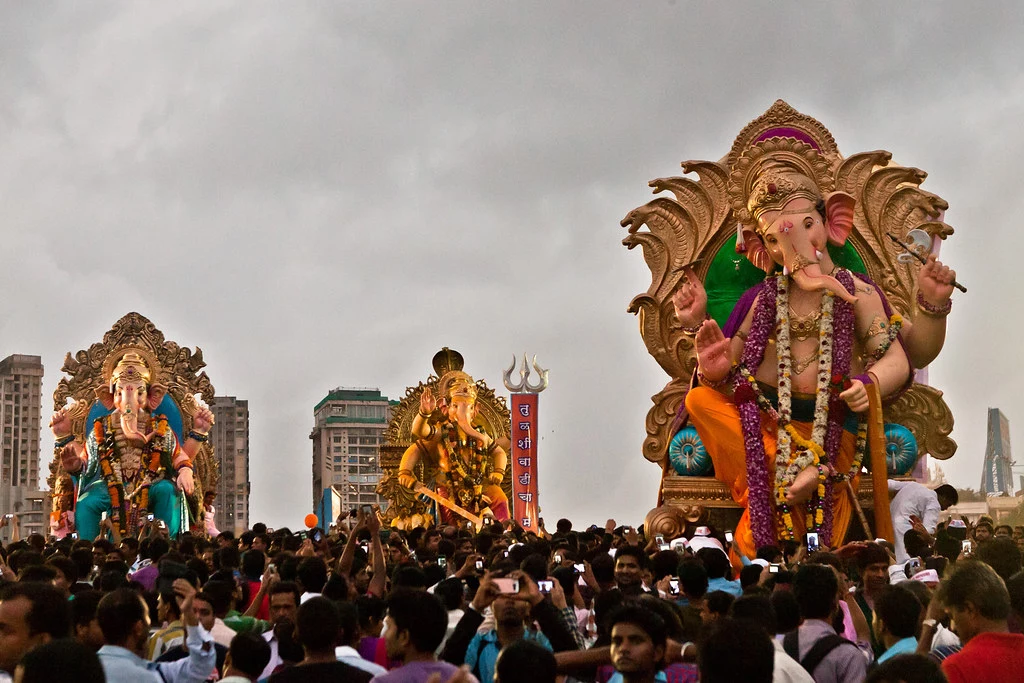
Sarvajanik Ganeshotsav mandals to pool their money together to get a Ganesh idol and build a temporary mandal (temple). The bigger and showier the Ganesh idol and mandal, the more Ganesh would look favourably upon the congregants. Also this naturally turned into a pissing contest about whose neighbourhood could put on the showiest display, kind of like groups of children competing over who could build the best Guy for the bonfire -
Each of the 12 lanes in Khetwadi, Girgaon, has its own Ganesh pandal, and every year, there’s a sense of friendly competition among them. In Ganesh Galli, very close to Lalbaugcha Raja, is Mumbaicha Raja. The pandal is known to replicate one Hindu temple from around the country each year to give devotees who cannot make the long pilgrimages a glimpse into the fascinating destinations.
This put a lot of demand on traditional artisans - and the giant-elephant-god arms race meant using clay wouldn't let them get the idols big enough. So they started innovating with things like cloth garments, plaster of Paris, polystyrene, plastic and very brightly coloured chemical paint, all of which obviously are very bad things to put in water.
Fights escalating to riots would often break out over who got to put their Ganesh in the water first and there'd be attempts at sabotage (including trying to copyright specific Ganesh designs to screw over other mandals). This has calmed down a bit thanks to more policing, but there's still
riots and
stabbings seemingly every year. Many Indian states have also banned the use of Plaster of Paris idols to try and reduce the ecological impact, although they're still sold. I'm also not convinced their so called "eco friendly" models are all eco friendly - for example these are for sale on Amazon UK (mostly imported from India) as eco friendly Ganesh dissolving idols


They're all made of clay, which is likely their rationale for calling them eco friendly, but the paints that have been used certainly don't look non-toxic and safe to dump in a river.
There's multiple Hindu temples in London that have "eco-friendly visarjan" (so doing it in a big fish tank) but also two mandals that do the big Ganesh procession. Maharashtra Mandal in Brent Cross started doing it in the 1990 and Hounslow Ganeshotsav Mandal started doing it in 2008. They seem to have somehow got licenses for immersing their idols in the Thames, which are also brightly coloured.
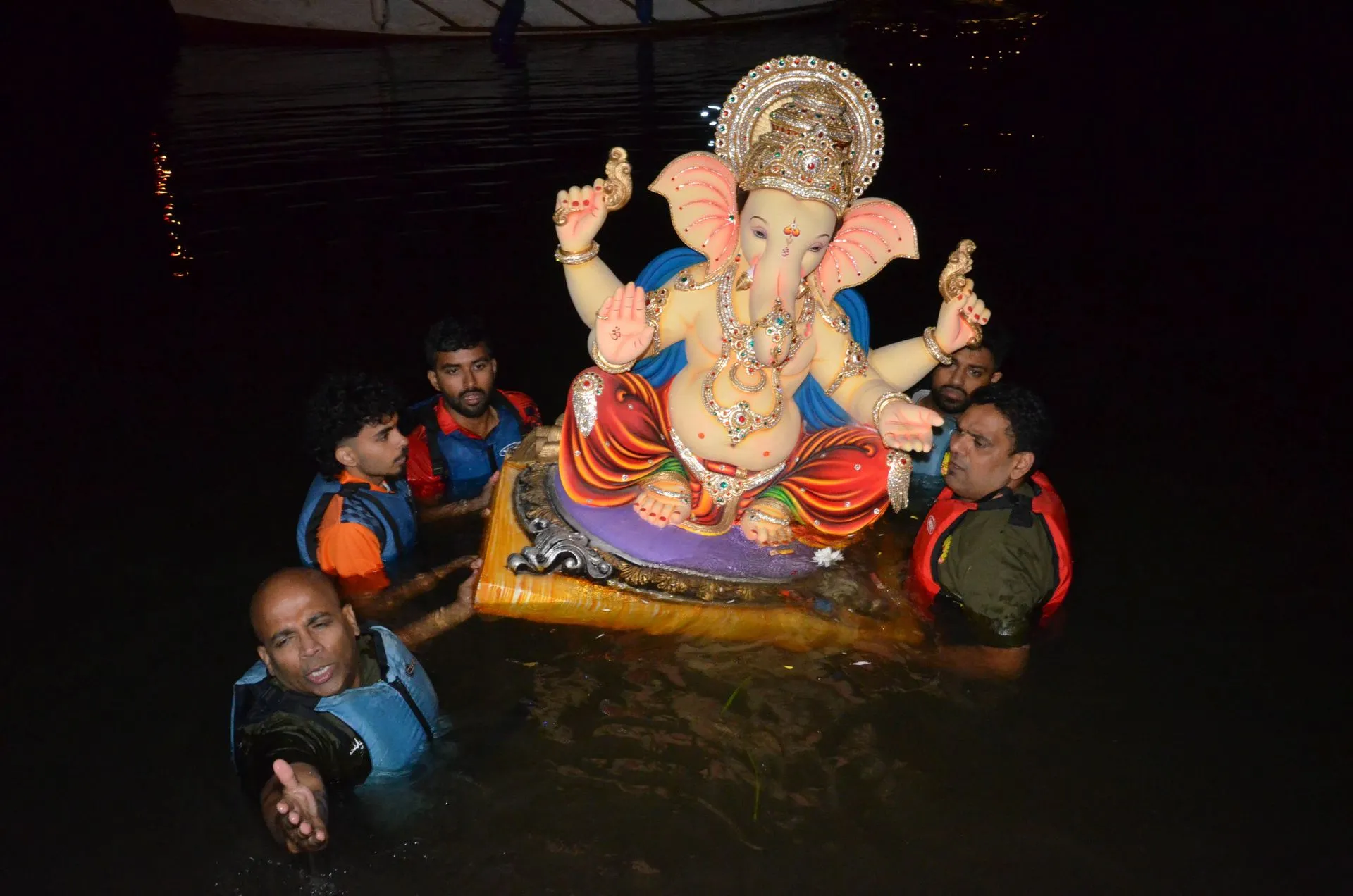
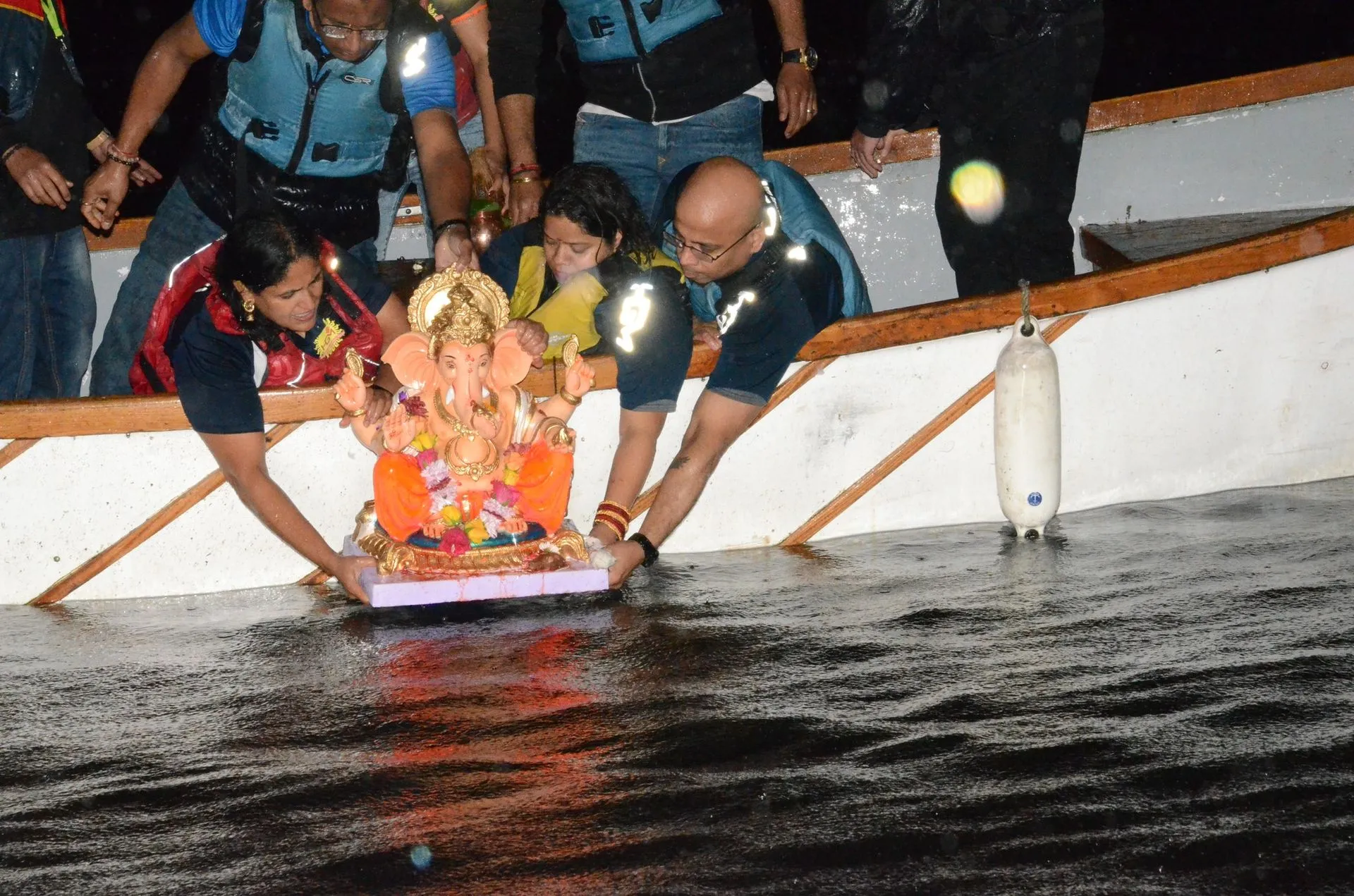
I don't know why there's two, but I imagine there's that aspect of community pissing contest at play here.
This reel recently went viral - it's tagged as London but from what I can tell it's actually the Hindu Samaj Sheffield dumping it in the River Don
The comments do have some Indians complaining that they didn't remove any of the ornaments so it doesn't matter that the idol's made of clay (which was the cope), and then a bunch of other Indians making fun of them because only the Ganapatya sect of Hinduism does this in specific parts of India, so they're trying to distance themselves from it.
Oh yes, and if you were curious, they do indeed make "Vedic" clay Ganesh idols, which are compromised of clay mixed with cow dung.


