The Great Compression
The New York Times (archive.ph)
By Conor Dougherty
2024-02-17 10:05:25GMT
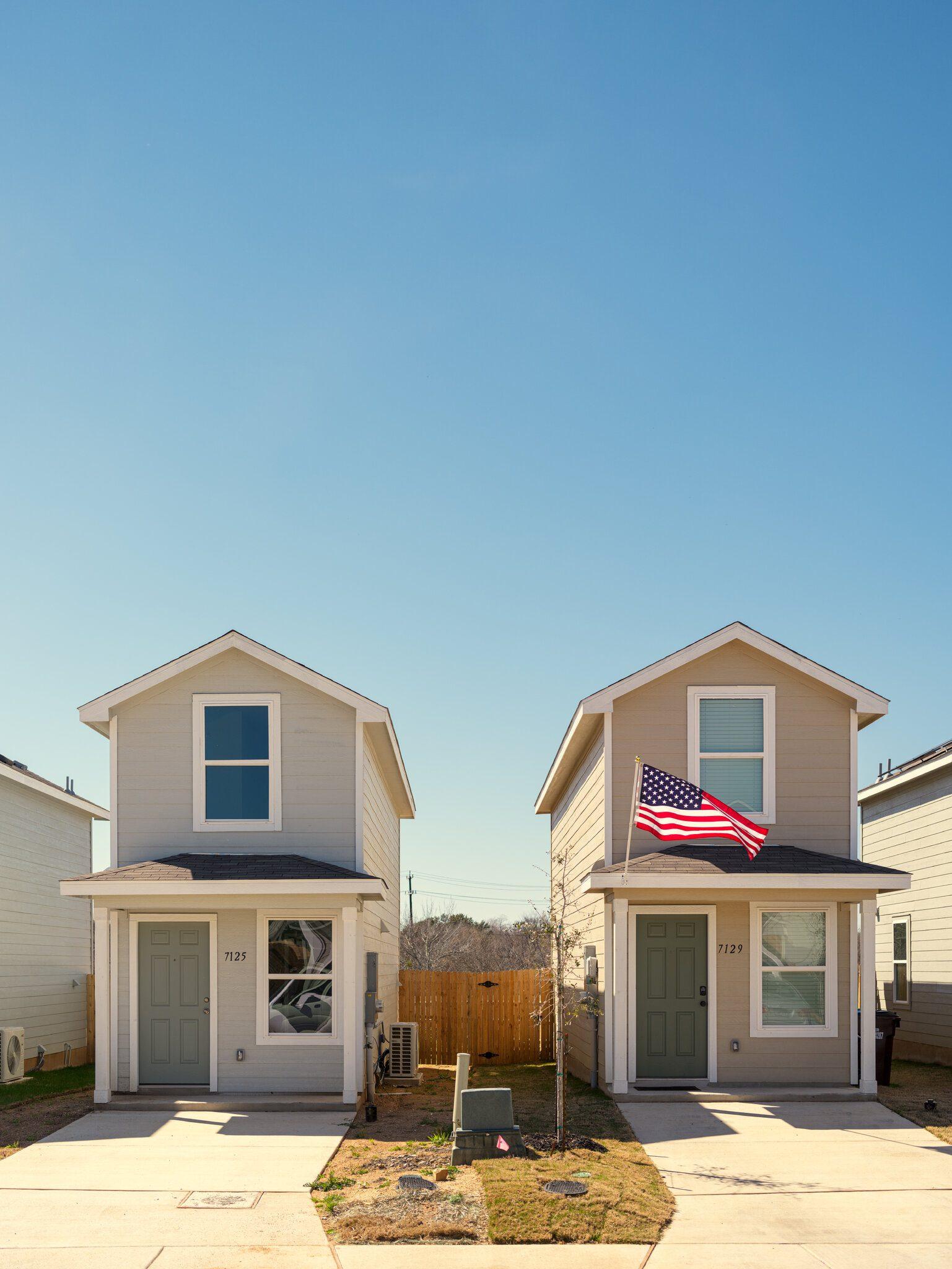
Many small houses sit side by side in the Elm Trails subdivision from Lennar Homes in San Antonio.Credit...Josh Huskin for The New York Times
Robert Lanter lives in a 600-square-foot house that can be traversed in five seconds and vacuumed from a single outlet. He doesn’t have a coffee table in the living room because it would obstruct the front door. When relatives come to visit, Mr. Lanter says jokingly, but only partly, they have to tour one at time.
Each of these details amounts to something bigger, for Mr. Lanter’s life and the U.S. housing market: a house under $300,000, something increasingly hard to find. That price allowed Mr. Lanter, a 63-year-old retired nurse, to buy a new single-family home in a subdivision in Redmond, Ore., about 30 minutes outside Bend, where he is from and which is, along with its surrounding area, one of Oregon’s most expensive housing markets.
Mr. Lanter’s house could easily fit on a flatbed truck, and is dwarfed by the two-story suburban homes that prevail on the blocks around him. But, in fact, there are even smaller homes in his subdivision, Cinder Butte, which was developed by a local builder called Hayden Homes. Some of his neighbors live in houses that total just 400 square feet — a 20-by-20-foot house attached to a 20-by-20-foot garage.
This is not a colony of “tiny houses,” popular among minimalists and aesthetes looking to simplify their lives. For Mr. Lanter and his neighbors, it’s a chance to hold on to ownership.
Mr. Lanter, who is recently divorced, came back to central Oregon from a condominium in Portland only to discover that home prices had surged beyond his reach. He has owned several larger homes over the years and said he began his recent search looking for a three-bedroom house.
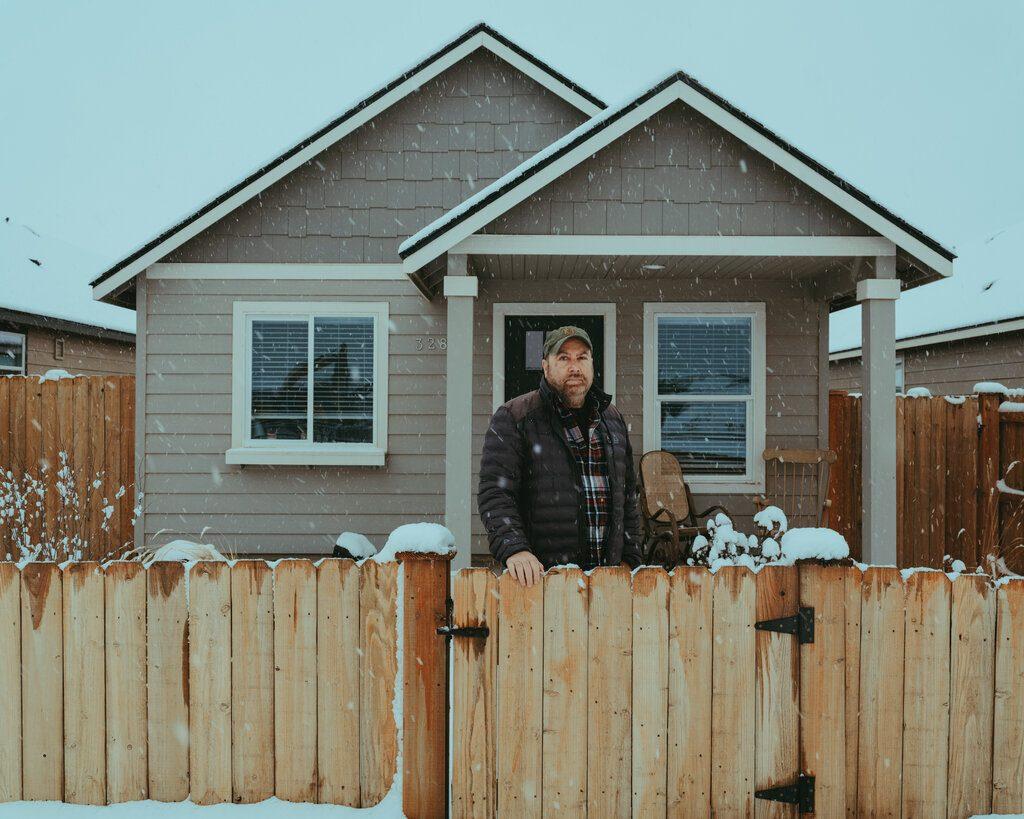
Robert Lanter outside his 600-square-foot home in Redmond, Ore.Credit...Ivan McClellan for The New York Times
“I did not want to rent,” he said after a five-minute tour of his “media room” (a small desk with a laptop) and bedroom (barely fits a queen). After being an owner for 40 years, the idea of being a tenant felt like a backslide.
And after living on the 17th floor of a Portland condominium, he had ruled out attached and high-rise buildings, which he described as a series of rules and awkward interactions that made him feel as though he never really owned the place.
There was the time he sold a sofa and the front desk attendant scolded him for moving it down the elevator without alerting management a day in advance. Or the times he came home to find someone parked in the spot he owned and paid property taxes on. Try to imagine a random driver parking in a house’s driveway, he said — there’s no way.
A single-family home means “less people’s hands in your life,” Mr. Lanter said.
He wanted the four unshared walls of the American idyll, even if those walls had minimal space between them and were a couch length from his neighbor.
A Chance at Ownership
Several colliding trends — economic, demographic and regulatory — have made smaller units like Mr. Lanter’s the future of American housing, or at least a more significant part of it. Over the past decade, as the cost of housing exploded, home builders have methodically nipped their dwellings to keep prices in reach of buyers. The downsizing accelerated last year, when the interest rate on a 30-year fixed rate mortgage reached a two-decade high, just shy of 8 percent.
Mortgage rates have fallen since, and sales, especially of new homes, are beginning to thaw from the anemic pace of last year. Even so, a move toward smaller, affordable homes — in some cases smaller than a studio apartment — seems poised to outlast the mortgage spike, reshaping the housing market for years to come and changing notions of what a middle-class life looks like.
“This is the front end of what we are going to see,” said Ken Perlman, a managing principal at John Burns Research and Consulting.
Extremely small homes have long been an object of curiosity and fodder for internet content; their tight proportions seem to say large things about their occupants. On social media and blogs, influencers swipe at American gluttony and extol the virtues of a life with less carbon and clutter than the standard two-car suburb.
Now, in the same way décor trends make their way from design magazines to Ikea, mini homes are showing up in the kinds of subdivisions and exurbs where buyers used to travel for maximum space.
The shift is a response to conditions that are found in cities across America: Neighborhoods that used to be affordable are being gentrified, while new condominiums and subdivisions mostly target the upper end of the market, endangering the supply of “starter homes” in reach of first-time buyers. That developers are addressing this conundrum with very small homes could be viewed as yet another example of middle-class diminishment. But buyers say it has helped them get on the first rung of the housing market.
“They should help out more people that are young like us to buy houses,” said Caleb Rodriguez, a 22-year-old in San Antonio.
Mr. Rodriguez recently moved into a new community outside San Antonio called Elm Trails, which was developed by Lennar Corporation, one of the country’s largest homebuilders. His house sits in a line of mini dwellings, the smallest of which is just 350 square feet.
On a recent evening after work, neighbors were walking dogs and chatting along a row of beige, gray and olive-green two-story homes of the same shape. The development has a pond where residents picnic and catch bass and catfish. The houses do not have garages, and their driveways are wide enough for one vehicle or two motorcycles — proportions that pushed the sale prices to well under $200,000.
“I wanted to own, and this was the cheapest I could get,” said Mr. Rodriguez, who moved in this month and works at a poultry processing plant in nearby Seguin, Texas. He paid $145,000 and hopes the house can be a step toward wealth building. Maybe in a few years he will move and rent it out, Mr. Rodriguez said.
Homes under 500 square feet are not taking over anytime soon: They are less than 1 percent of the new homes built in America, according to Zonda, a housing data and consulting firm. Even Mr. Lanter, who evangelizes about his newly low heating bill and the freedom of shedding stuff, said he would have preferred something bigger, around 800 square feet, if he could find it.
While these floor plans might be an edge-case offering reserved for certain kinds of buyers — “Divorced … divorced … really divorced,” Mr. Lanter said as he pointed to the small homes around him — they are part of a clear trend. Various surveys from private consultants and organizations like the National Association of Home Builders, along with interviews with architects and developers, all show a push toward much smaller designs.
“Their existence is telling,” said Ali Wolf, chief economist of Zonda. “All the uncertainty over the past few years has just reinforced the desire for homeownership, but land and material prices have gone up too much. So something has to give, and what builders are doing now is testing the market and asking what is going to work.”
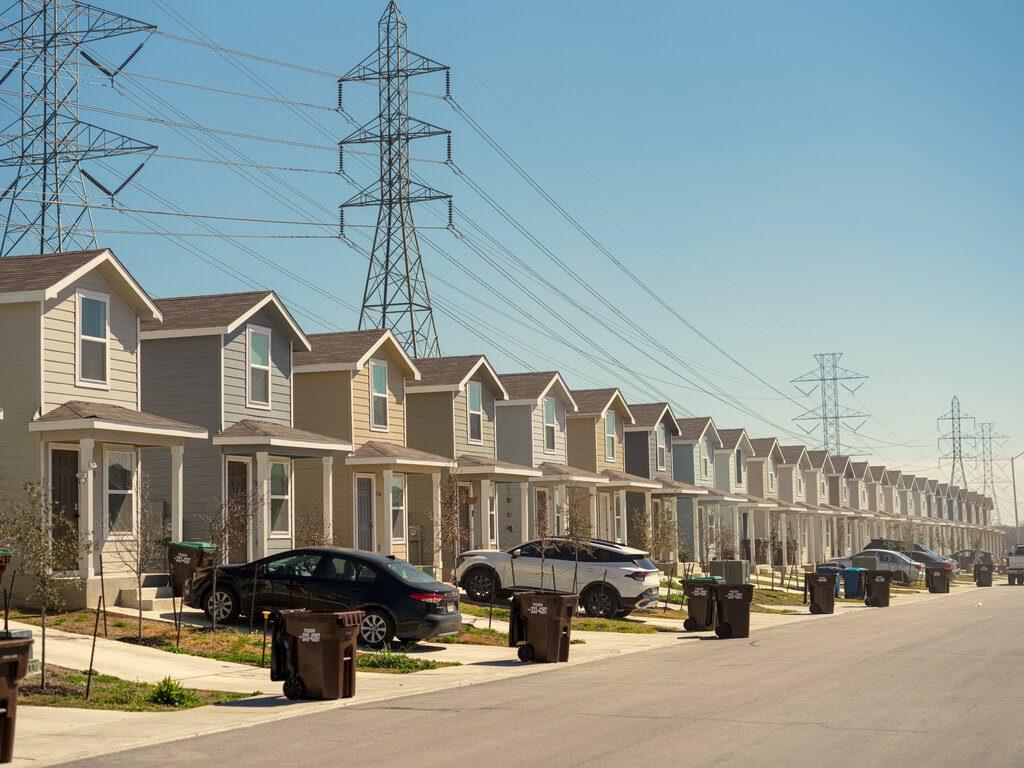
Elm Trails subdivision from Lennar Homes in San Antonio.Credit...Josh Huskin for The New York Times
Builders are substituting side yards for backyards, kitchen bars for dining rooms. Suburban neighborhoods have seen a boom in adjoined townhouses, along with small-lot single family homes that often have shared yards and no more than a few feet between them — a kind of mash-up of the suburb and the urban rowhouse.
The great compression is being encouraged by state and local governments. To reduce housing costs, or at least keep them from rising so fast, governments around the country have passed hundreds of new bills that make it easier for builders to erect smaller units at greater densities. Some cities and states — like Oregon — have essentially banned single-family zoning rules that for generations defined the suburban form.
These new rules have been rolled out gradually over years and with varying degrees of effectiveness. What has changed recently is that builders are much more willing to push smaller dwellings because they have no other way to reach a large swath of buyers.
“There is a market opportunity and people are using it,” said Michael Andersen, a senior researcher at Sightline Institute, a Seattle think tank focused on housing and sustainability.
A Big House on a Little Lot
American homes have long been larger on average than those in other developed countries. For most of the past century, the country’s appetite for size has only grown.
The iconic Cape Cods in Levittown, N.Y. — often considered the model post-World War II suburb — were typically about 750 square feet, roomy for a one-bedroom apartment but small for a free-standing house with two bedrooms. Today, though, the median American home size is about 2,200 square feet, up from around 1,500 in the 1960s. Lot sizes have remained more or less the same, which means the typical home is built to maximize the size of the kitchen and bedrooms even as its yard contracts and its proximity to neighbors increases.
The expansion came despite a profound shift in household composition. Over the past half-century, America has gone from a country in which the predominant home buyer was a nuclear family with about three children to one in which singles, empty nesters and couples without children have become a much larger share of the population. Meanwhile, housing costs shot up in recent years as cities around the nation grappled with a persistent housing shortage and a surge in demand from millennial and Gen Z buyers.
This has created a mismatched market in which members of the Baby Boom generation are disproportionately living in larger homes without children, while many millennial couples with children are cramped into smaller houses or in rental apartments, struggling to buy their first home.
Even buyers who are willing to move across state lines are finding that affordable housing markets are increasingly hard to find. In the Bend area where Mr. Lanter lives, housing costs have been pushed up by out-of-state buyers, many from California, who have flocked to the area to buy second homes or work there remotely.
The influx of money has helped raise the median home price to almost $700,000 from a little over $400,000 in 2020, according to Redfin. Driving through the downtown on a snowy afternoon recently, Deborah Flagan, a vice president at Hayden Homes, pointed left and right at storefronts that used to be boarded and are now part of a vibrant ecosystem of retailers that includes numerous high-end coffee shops, a “foot spa” and a bar where people drink craft beer and throw axes at wall-mounted targets.
The upscaling extends well beyond downtown to adjacent neighborhoods, where the small-footprint “mill houses” that once served a blue-collar work force now sit on land that is so valuable they are being slowly erased by two-story moderns with seven-figure sales prices. Toward the end of the snowy driving tour, Ms. Flagan pointed toward one of those old mill houses — a compact, ranch-style home with fading yellow paint and a white picket fence pocked with broken boards. She estimated it was no more than 800 square feet, and framed it as an example of the small and affordably priced housing whose stock needs to be rebuilt.
“What we are doing now is what they were doing then,” she said.
Four Walls, Close Together
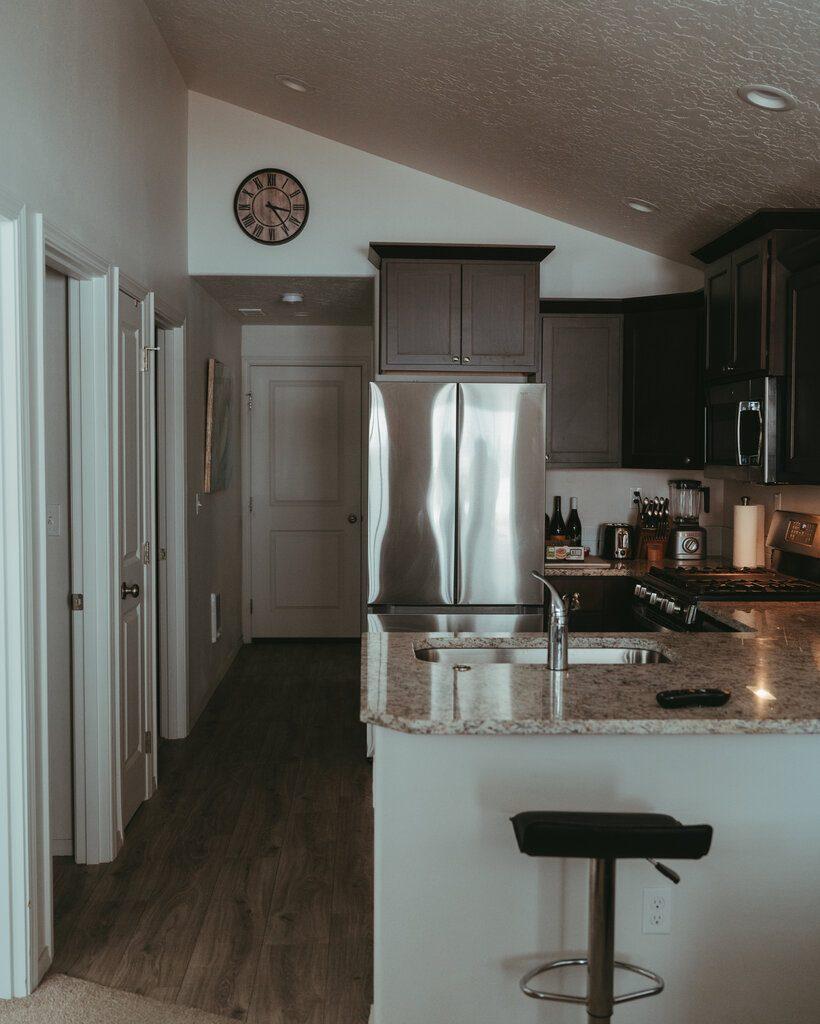
The view from the front entrance of Mr. Lanter’s small home.Credit...Ivan McClellan for The New York Times
Hayden builds about 2,000 homes a year throughout the Pacific Northwest. Its business model is to deliver middle-income housing that local workers can afford, Ms. Flagan said, and it does this by skipping larger cities like Portland and Seattle in favor of lower-cost exurbs like Redmond (where the company is based).
Like a lot of builders, Hayden has spent the past few years whittling back sizes on its bread-and-butter offering of one- and two-story homes between 1,400 and 2,500 square feet. But because its buyers are so price-sensitive, it decided to go further. After rates began rising, Hayden redesigned a portion of Cinder Butte — the Redmond subdivision where Mr. Lanter lives — for homes between 400 and 880 square feet.
Most of Cinder Butte looks like any subdivision anywhere: A mix of one- and two-story homes that have faux exterior shutters and fill out their lots. The corner where Mr. Lanter lives is strikingly different, however, with a line of cinched homes that front the main road into the development and have driveways in a back alley.
The alley is where neighbors say hi and bye, Mr. Lanter said. And because nobody has much space, people often throw parties in their garages.
The smaller houses sold well, so Hayden has now expanded on the idea. It recently began a new development in Albany, Ore., in which a third of the 176 homes are planned to be under 1,000 square feet. “Our buyers would rather live in a small home than rent,” Ms. Flagan said.
A decade ago, Jesse Russell was a former reality TV producer looking to get started in real estate. He had just moved back to Bend (his hometown) from Los Angeles, and began with a plot of two dozen 500-square-foot cottages sprinkled around a pond and common gardens. When he pitched it at community meetings, “the overwhelming sentiment was ‘nobody is going to live in a house that small,’” he said.
Then the units sold out, and his investors nearly doubled their money in two years.
Mr. Russell’s company, Hiatus Homes, has since built about three dozen more homes that range from 400 square feet to 900 square feet, and he has 100 more in development — a thriving business. How does he feel about subdivision builders getting into a product that used to belong to smaller companies like his?
“I love it!” he said. “I hope that at some point a tiny house just becomes another thing. It’s like, ‘Oh, that’s a duplex, that’s a townhouse, that’s a single-family house, and that over there is a cottage.’ It just becomes another type of housing you get to select.”
The New York Times (archive.ph)
By Conor Dougherty
2024-02-17 10:05:25GMT
Many small houses sit side by side in the Elm Trails subdivision from Lennar Homes in San Antonio.Credit...Josh Huskin for The New York Times
Robert Lanter lives in a 600-square-foot house that can be traversed in five seconds and vacuumed from a single outlet. He doesn’t have a coffee table in the living room because it would obstruct the front door. When relatives come to visit, Mr. Lanter says jokingly, but only partly, they have to tour one at time.
Each of these details amounts to something bigger, for Mr. Lanter’s life and the U.S. housing market: a house under $300,000, something increasingly hard to find. That price allowed Mr. Lanter, a 63-year-old retired nurse, to buy a new single-family home in a subdivision in Redmond, Ore., about 30 minutes outside Bend, where he is from and which is, along with its surrounding area, one of Oregon’s most expensive housing markets.
Mr. Lanter’s house could easily fit on a flatbed truck, and is dwarfed by the two-story suburban homes that prevail on the blocks around him. But, in fact, there are even smaller homes in his subdivision, Cinder Butte, which was developed by a local builder called Hayden Homes. Some of his neighbors live in houses that total just 400 square feet — a 20-by-20-foot house attached to a 20-by-20-foot garage.
This is not a colony of “tiny houses,” popular among minimalists and aesthetes looking to simplify their lives. For Mr. Lanter and his neighbors, it’s a chance to hold on to ownership.
Mr. Lanter, who is recently divorced, came back to central Oregon from a condominium in Portland only to discover that home prices had surged beyond his reach. He has owned several larger homes over the years and said he began his recent search looking for a three-bedroom house.
Robert Lanter outside his 600-square-foot home in Redmond, Ore.Credit...Ivan McClellan for The New York Times
“I did not want to rent,” he said after a five-minute tour of his “media room” (a small desk with a laptop) and bedroom (barely fits a queen). After being an owner for 40 years, the idea of being a tenant felt like a backslide.
And after living on the 17th floor of a Portland condominium, he had ruled out attached and high-rise buildings, which he described as a series of rules and awkward interactions that made him feel as though he never really owned the place.
There was the time he sold a sofa and the front desk attendant scolded him for moving it down the elevator without alerting management a day in advance. Or the times he came home to find someone parked in the spot he owned and paid property taxes on. Try to imagine a random driver parking in a house’s driveway, he said — there’s no way.
A single-family home means “less people’s hands in your life,” Mr. Lanter said.
He wanted the four unshared walls of the American idyll, even if those walls had minimal space between them and were a couch length from his neighbor.
A Chance at Ownership
Several colliding trends — economic, demographic and regulatory — have made smaller units like Mr. Lanter’s the future of American housing, or at least a more significant part of it. Over the past decade, as the cost of housing exploded, home builders have methodically nipped their dwellings to keep prices in reach of buyers. The downsizing accelerated last year, when the interest rate on a 30-year fixed rate mortgage reached a two-decade high, just shy of 8 percent.
Mortgage rates have fallen since, and sales, especially of new homes, are beginning to thaw from the anemic pace of last year. Even so, a move toward smaller, affordable homes — in some cases smaller than a studio apartment — seems poised to outlast the mortgage spike, reshaping the housing market for years to come and changing notions of what a middle-class life looks like.
“This is the front end of what we are going to see,” said Ken Perlman, a managing principal at John Burns Research and Consulting.
Extremely small homes have long been an object of curiosity and fodder for internet content; their tight proportions seem to say large things about their occupants. On social media and blogs, influencers swipe at American gluttony and extol the virtues of a life with less carbon and clutter than the standard two-car suburb.
Now, in the same way décor trends make their way from design magazines to Ikea, mini homes are showing up in the kinds of subdivisions and exurbs where buyers used to travel for maximum space.
The shift is a response to conditions that are found in cities across America: Neighborhoods that used to be affordable are being gentrified, while new condominiums and subdivisions mostly target the upper end of the market, endangering the supply of “starter homes” in reach of first-time buyers. That developers are addressing this conundrum with very small homes could be viewed as yet another example of middle-class diminishment. But buyers say it has helped them get on the first rung of the housing market.
“They should help out more people that are young like us to buy houses,” said Caleb Rodriguez, a 22-year-old in San Antonio.
Mr. Rodriguez recently moved into a new community outside San Antonio called Elm Trails, which was developed by Lennar Corporation, one of the country’s largest homebuilders. His house sits in a line of mini dwellings, the smallest of which is just 350 square feet.
On a recent evening after work, neighbors were walking dogs and chatting along a row of beige, gray and olive-green two-story homes of the same shape. The development has a pond where residents picnic and catch bass and catfish. The houses do not have garages, and their driveways are wide enough for one vehicle or two motorcycles — proportions that pushed the sale prices to well under $200,000.
“I wanted to own, and this was the cheapest I could get,” said Mr. Rodriguez, who moved in this month and works at a poultry processing plant in nearby Seguin, Texas. He paid $145,000 and hopes the house can be a step toward wealth building. Maybe in a few years he will move and rent it out, Mr. Rodriguez said.
Homes under 500 square feet are not taking over anytime soon: They are less than 1 percent of the new homes built in America, according to Zonda, a housing data and consulting firm. Even Mr. Lanter, who evangelizes about his newly low heating bill and the freedom of shedding stuff, said he would have preferred something bigger, around 800 square feet, if he could find it.
While these floor plans might be an edge-case offering reserved for certain kinds of buyers — “Divorced … divorced … really divorced,” Mr. Lanter said as he pointed to the small homes around him — they are part of a clear trend. Various surveys from private consultants and organizations like the National Association of Home Builders, along with interviews with architects and developers, all show a push toward much smaller designs.
“Their existence is telling,” said Ali Wolf, chief economist of Zonda. “All the uncertainty over the past few years has just reinforced the desire for homeownership, but land and material prices have gone up too much. So something has to give, and what builders are doing now is testing the market and asking what is going to work.”
Elm Trails subdivision from Lennar Homes in San Antonio.Credit...Josh Huskin for The New York Times
Builders are substituting side yards for backyards, kitchen bars for dining rooms. Suburban neighborhoods have seen a boom in adjoined townhouses, along with small-lot single family homes that often have shared yards and no more than a few feet between them — a kind of mash-up of the suburb and the urban rowhouse.
The great compression is being encouraged by state and local governments. To reduce housing costs, or at least keep them from rising so fast, governments around the country have passed hundreds of new bills that make it easier for builders to erect smaller units at greater densities. Some cities and states — like Oregon — have essentially banned single-family zoning rules that for generations defined the suburban form.
These new rules have been rolled out gradually over years and with varying degrees of effectiveness. What has changed recently is that builders are much more willing to push smaller dwellings because they have no other way to reach a large swath of buyers.
“There is a market opportunity and people are using it,” said Michael Andersen, a senior researcher at Sightline Institute, a Seattle think tank focused on housing and sustainability.
A Big House on a Little Lot
American homes have long been larger on average than those in other developed countries. For most of the past century, the country’s appetite for size has only grown.
The iconic Cape Cods in Levittown, N.Y. — often considered the model post-World War II suburb — were typically about 750 square feet, roomy for a one-bedroom apartment but small for a free-standing house with two bedrooms. Today, though, the median American home size is about 2,200 square feet, up from around 1,500 in the 1960s. Lot sizes have remained more or less the same, which means the typical home is built to maximize the size of the kitchen and bedrooms even as its yard contracts and its proximity to neighbors increases.
The expansion came despite a profound shift in household composition. Over the past half-century, America has gone from a country in which the predominant home buyer was a nuclear family with about three children to one in which singles, empty nesters and couples without children have become a much larger share of the population. Meanwhile, housing costs shot up in recent years as cities around the nation grappled with a persistent housing shortage and a surge in demand from millennial and Gen Z buyers.
This has created a mismatched market in which members of the Baby Boom generation are disproportionately living in larger homes without children, while many millennial couples with children are cramped into smaller houses or in rental apartments, struggling to buy their first home.
Even buyers who are willing to move across state lines are finding that affordable housing markets are increasingly hard to find. In the Bend area where Mr. Lanter lives, housing costs have been pushed up by out-of-state buyers, many from California, who have flocked to the area to buy second homes or work there remotely.
The influx of money has helped raise the median home price to almost $700,000 from a little over $400,000 in 2020, according to Redfin. Driving through the downtown on a snowy afternoon recently, Deborah Flagan, a vice president at Hayden Homes, pointed left and right at storefronts that used to be boarded and are now part of a vibrant ecosystem of retailers that includes numerous high-end coffee shops, a “foot spa” and a bar where people drink craft beer and throw axes at wall-mounted targets.
The upscaling extends well beyond downtown to adjacent neighborhoods, where the small-footprint “mill houses” that once served a blue-collar work force now sit on land that is so valuable they are being slowly erased by two-story moderns with seven-figure sales prices. Toward the end of the snowy driving tour, Ms. Flagan pointed toward one of those old mill houses — a compact, ranch-style home with fading yellow paint and a white picket fence pocked with broken boards. She estimated it was no more than 800 square feet, and framed it as an example of the small and affordably priced housing whose stock needs to be rebuilt.
“What we are doing now is what they were doing then,” she said.
Four Walls, Close Together
The view from the front entrance of Mr. Lanter’s small home.Credit...Ivan McClellan for The New York Times
Hayden builds about 2,000 homes a year throughout the Pacific Northwest. Its business model is to deliver middle-income housing that local workers can afford, Ms. Flagan said, and it does this by skipping larger cities like Portland and Seattle in favor of lower-cost exurbs like Redmond (where the company is based).
Like a lot of builders, Hayden has spent the past few years whittling back sizes on its bread-and-butter offering of one- and two-story homes between 1,400 and 2,500 square feet. But because its buyers are so price-sensitive, it decided to go further. After rates began rising, Hayden redesigned a portion of Cinder Butte — the Redmond subdivision where Mr. Lanter lives — for homes between 400 and 880 square feet.
Most of Cinder Butte looks like any subdivision anywhere: A mix of one- and two-story homes that have faux exterior shutters and fill out their lots. The corner where Mr. Lanter lives is strikingly different, however, with a line of cinched homes that front the main road into the development and have driveways in a back alley.
The alley is where neighbors say hi and bye, Mr. Lanter said. And because nobody has much space, people often throw parties in their garages.
The smaller houses sold well, so Hayden has now expanded on the idea. It recently began a new development in Albany, Ore., in which a third of the 176 homes are planned to be under 1,000 square feet. “Our buyers would rather live in a small home than rent,” Ms. Flagan said.
A decade ago, Jesse Russell was a former reality TV producer looking to get started in real estate. He had just moved back to Bend (his hometown) from Los Angeles, and began with a plot of two dozen 500-square-foot cottages sprinkled around a pond and common gardens. When he pitched it at community meetings, “the overwhelming sentiment was ‘nobody is going to live in a house that small,’” he said.
Then the units sold out, and his investors nearly doubled their money in two years.
Mr. Russell’s company, Hiatus Homes, has since built about three dozen more homes that range from 400 square feet to 900 square feet, and he has 100 more in development — a thriving business. How does he feel about subdivision builders getting into a product that used to belong to smaller companies like his?
“I love it!” he said. “I hope that at some point a tiny house just becomes another thing. It’s like, ‘Oh, that’s a duplex, that’s a townhouse, that’s a single-family house, and that over there is a cottage.’ It just becomes another type of housing you get to select.”


