Honeybees are an Old World species and likely originated in Africa. In order to succeed in places with cold winters, like Europe, they had to develop new adaptations. Mainly behavioral adaptations: they retreat to their hives and form a winter cluster. The workers and the queen crowd together tightly, with the queen at the center, and the workers shaking and shivering. The cluster moves around to reach reserves of honey.
The winter generation is different from summer bees: a bit plumper, and they have a several-fold longer lifespan to make it through the winter. (queens have an even longer lifespan – several years)
Their strategy means that they have to store enough honey to feed the hive over the winter.
Honeybees were introduced to the New World by European settlers and did well, often swarming many times a summer.
They don’t seem to have done as well in tropical areas of the New World.
In the 1950s, a mad scientist decided to cross some African bees with European strains in the hope of making Brazilian bees busier. However, a number of African-strain queens escaped.
The resulting hybrids – Africanized bees – were successful, mainly because they invested in more bees, rather than saving honey for the nonexistent Brazilian winter.
This had consequences. Africanized-bees are probably more economically useful in those warm climates: they produce less honey, but honey production is not nearly as important as crop pollination. More bees, more pollination.
Eventually they spread all over the tropical and subtropical parts of the New World, limited only by cold winters.
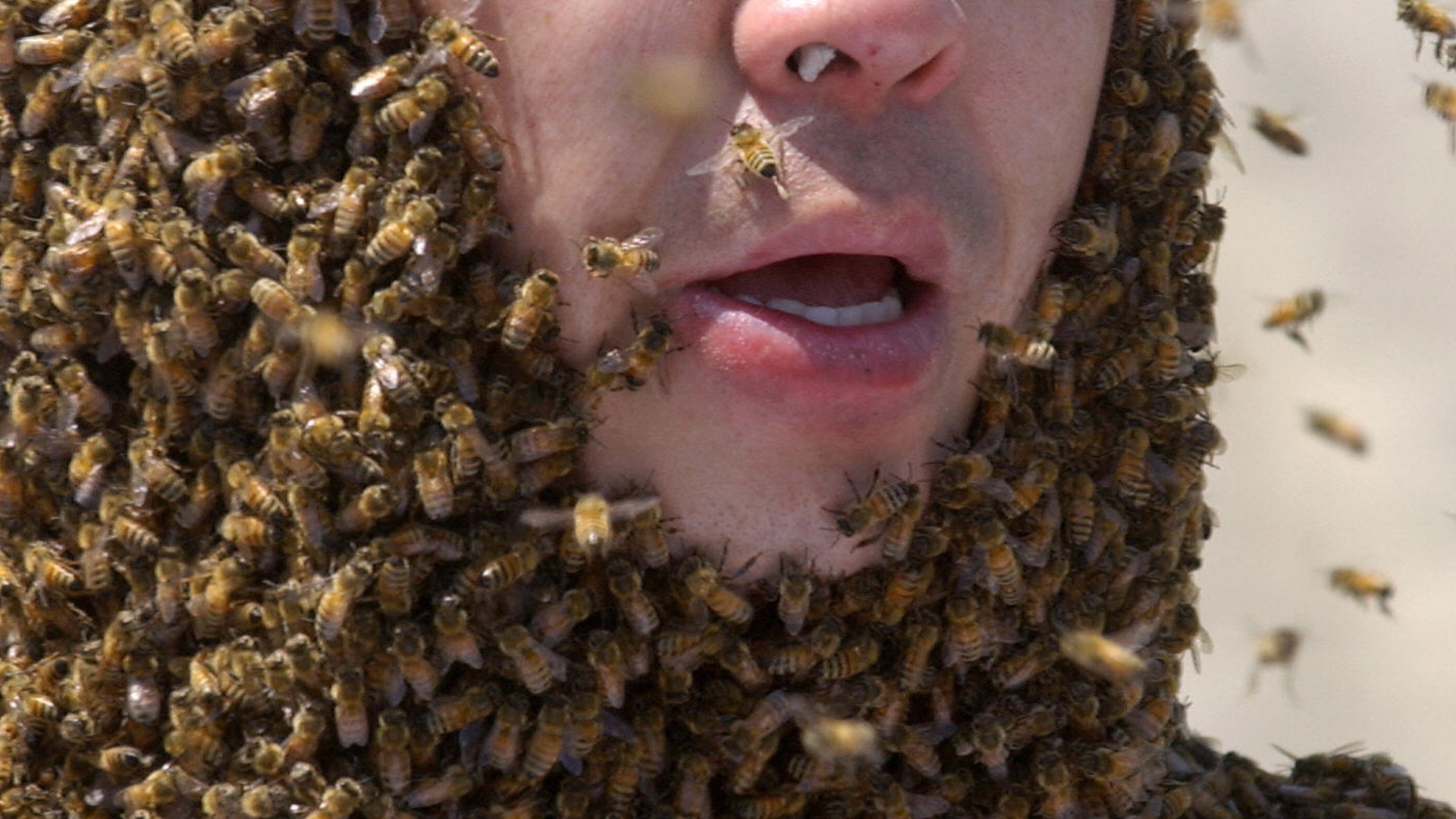
The disadvantage is that Africanized bees are very aggressive, to the point of being dangerous. They can sting people to death: they are responsible for something like 1000 deaths since their introduction. Thus, ‘killer bees’.
I’ve known this story for a long time, but recently ran into one more interesting wrinkle. Bees can learn. They can associate the location of a favorable site with various characteristics and can remember profitable sites from day to day. They can learn to associate an originally neutral scent with a sugar reward. Within a honeybee population, there is genetic variation in learning abilities.
Which raises the natural questions: are bee subspecies equal in their ability to learn?
In this study, the authors hypothesized that Africanized bees might be spreading because they had greater cognitive capabilities than the European honeybees: brains rule OK!
There are certainly examples of this: humans displace chimps because we’re smarter, and it seems likely that placental mammals ( like cats ) have a cognitive advantage over native Australian marsupials.
But, as it turns out, European honeybees perform significantly better in a learning assay that Africanized honeybees do. I think that simply skipping an expensive behavior that has no payoff in a warm climate ( saving up lots of honey) is enough to explain most of the observed killer bee fitness advantage.
I would guess that the selective pressure for better learning in European bees is due to the payoff for remembering prime nectar and honey locations over the several months of winter. Africanized bees don’t have that kind of long pause in foraging, have less need to remember such patterns for long periods. Perhaps.
The winter generation is different from summer bees: a bit plumper, and they have a several-fold longer lifespan to make it through the winter. (queens have an even longer lifespan – several years)
Their strategy means that they have to store enough honey to feed the hive over the winter.
Honeybees were introduced to the New World by European settlers and did well, often swarming many times a summer.
They don’t seem to have done as well in tropical areas of the New World.
In the 1950s, a mad scientist decided to cross some African bees with European strains in the hope of making Brazilian bees busier. However, a number of African-strain queens escaped.
The resulting hybrids – Africanized bees – were successful, mainly because they invested in more bees, rather than saving honey for the nonexistent Brazilian winter.
This had consequences. Africanized-bees are probably more economically useful in those warm climates: they produce less honey, but honey production is not nearly as important as crop pollination. More bees, more pollination.
Eventually they spread all over the tropical and subtropical parts of the New World, limited only by cold winters.
The disadvantage is that Africanized bees are very aggressive, to the point of being dangerous. They can sting people to death: they are responsible for something like 1000 deaths since their introduction. Thus, ‘killer bees’.
I’ve known this story for a long time, but recently ran into one more interesting wrinkle. Bees can learn. They can associate the location of a favorable site with various characteristics and can remember profitable sites from day to day. They can learn to associate an originally neutral scent with a sugar reward. Within a honeybee population, there is genetic variation in learning abilities.
Which raises the natural questions: are bee subspecies equal in their ability to learn?
In this study, the authors hypothesized that Africanized bees might be spreading because they had greater cognitive capabilities than the European honeybees: brains rule OK!
There are certainly examples of this: humans displace chimps because we’re smarter, and it seems likely that placental mammals ( like cats ) have a cognitive advantage over native Australian marsupials.
But, as it turns out, European honeybees perform significantly better in a learning assay that Africanized honeybees do. I think that simply skipping an expensive behavior that has no payoff in a warm climate ( saving up lots of honey) is enough to explain most of the observed killer bee fitness advantage.
I would guess that the selective pressure for better learning in European bees is due to the payoff for remembering prime nectar and honey locations over the several months of winter. Africanized bees don’t have that kind of long pause in foraging, have less need to remember such patterns for long periods. Perhaps.
