UN Robert Mugabe Has Died

  • Want to keep track of this thread?
    Accounts can bookmark posts, watch threads for updates, and jump back to where you stopped reading.
    Create account
Robert Mugabe, longtime Zimbabwe leader, dies at 95

HARARE, Zimbabwe (AP) — Robert Mugabe, the former leader of Zimbabwe forced to resign in 2017 after a 37-year rule whose early promise was eroded by economic turmoil, disputed elections and human rights violations, has died. He was 95.

His successor President Emmerson Mnangagwa confirmed Mugabe’s death in a tweet Friday, mourning him as an “icon of liberation.” He did not provide details.

Mugabe, who took power after white minority rule ended in 1980, blamed Zimbabwe’s economic problems on international sanctions and once said he wanted to rule for life. But growing discontent about the southern African country’s fractured leadership and other problems prompted a military intervention, impeachment proceedings by the parliament and large street demonstrations for his removal.

The announcement of Mugabe’s Nov. 21, 2017 resignation after he initially ignored escalating calls to quit triggered wild celebrations in the streets of the capital, Harare. Well into the night, cars honked and people danced and sang in a spectacle of free expression that would have been impossible during his years in power and reflected hopes for a better future.

On Feb. 21, 2018, Mugabe marked his first birthday since his resignation in near solitude, far from the lavish affair of past years. While the government that removed him with military assistance had declared his birthday as a national holiday, his successor and former deputy Mnangagwa did not mention him in a televised speech on the day.

Mugabe’s decline in his last years as president was partly linked to the political ambitions of his wife, Grace, a brash, divisive figure whose ruling party faction eventually lost out in a power struggle with supporters of Mnangagwa, who was close to the military.

Despite Zimbabwe’s decline during his rule, Mugabe remained defiant, railing against the West for what he called its neo-colonialist attitude and urging Africans to take control of their resources, a populist message that was often a hit even as many nations on the continent shed the strongman model and moved toward democracy.

Mugabe enjoyed acceptance among peers in Africa who chose not to judge him in the same way as Britain, the United States and other Western detractors. Toward the end of his rule, he served as rotating chairman of the 54-nation African Union and the 15-nation Southern African Development Community; his criticism of the International Criminal Court was welcomed by regional leaders who also thought it was being unfairly used to target Africans.

“They are the ones who say they gave Christianity to Africa,” Mugabe said of the West during a visit to South Africa. “We say: ‘We came, we saw and we were conquered.'”

Spry in his impeccably tailored suits, Mugabe as leader maintained a schedule of events and international travel that defied his advancing age, though signs of weariness mounted toward the end. He fell after stepping off a plane in Zimbabwe, read the wrong speech at the opening of parliament and appeared to be dozing during a news conference in Japan. However, his longevity and frequently dashed rumors of ill health delighted supporters and infuriated opponents who had sardonically predicted he would live forever.

“Do you want me to punch you to the floor to realize I am still there?” Mugabe told an interviewer from state television who asked him in early 2016 about retirement plans.

After independence, Mugabe reached out to whites after a long war between black guerrillas and the white rulers of Rhodesia, as Zimbabwe was known. He stressed education and built new schools. Tourism and mining flourished and Zimbabwe was a regional breadbasket.

However, a brutal military campaign waged against an uprising in western Matabeleland province that ended in 1987 augured a bitter turn in Zimbabwe’s fortunes. As the years went by, Mugabe was widely accused of hanging onto power through violence and vote fraud, notably in a 2008 election that led to a troubled coalition government after regional mediators intervened.

“I have many degrees in violence,” Mugabe once boasted on a campaign trail, raising his fist. “You see this fist, it can smash your face.”

Mugabe was re-elected in 2013 in another election marred by alleged irregularities, though he dismissed his critics as sore losers.

Amid the political turmoil, the economy of Zimbabwe, traditionally rich in agriculture and minerals, was deteriorating. Factories were closing, unemployment was rising and the country abandoned its currency for the US dollar in 2009 because of hyperinflation.

The economic problems are often traced to the violent seizures of thousands of white-owned farms that began around 2000. Land reform was supposed to take much of the country’s most fertile land — owned by about 4,500 white descendants of mainly British and South African colonial-era settlers — and redistribute it to poor blacks. Instead, Mugabe gave prime farms to ruling party leaders, party loyalists, security chiefs, relatives and cronies.

Mugabe was born in Zvimba, 60 kilometers (40 miles) west of the capital of Harare. As a child, he tended his grandfather’s cattle and goats, fished for bream in muddy water holes, played football and “boxed a lot,” as he recalled later.

Mugabe lacked the easy charisma of Nelson Mandela, the anti-apartheid leader and contemporary who became South Africa’s first black president in 1994 after reconciling with its former white rulers. But he drew admirers in some quarters for taking a hard line with the West, and he could be disarming despite his sometimes harsh demeanor.

“The gift of politicians is never to stop speaking until the people say, ‘Ah, we are tired,'” he said at a 2015 news conference. “You are now tired. I say thank you.”
 
Remember when this guys kids couldn't stay off of Instagram?
Robert-Mugabe-Diamond-watch.jpg
 
Chris needs to make a Mugabe 2019 remix update of this song for these changing, but still sad, times
 
anyone wanna give a Quick version of Rhodesia history and why it fell? was never taught in my school. i (((wonder))) why?

Real quick...Rhodesia didn't agree with the UK re majority rule. So they unilaterally declared independence on 11 November 1965. Ian Smith was Prime Minister throughout. Brits could do nothing since Rhodesia had their own army and air force. Economic sanctions immediately came about. Made it tougher, but not impossible, for Rhodesia to import/export. South Africa and Portugal supported Rhodesia, so Rhodesia had access to ports. Rhodesia was doing pretty well against their insurgency for some time. 1974 revolution in Portugal curtailed Rhodesian access to Mozambique ports. That left SA as Rhodesian main supporter.

Rhodesia and UK had negotiations at times but UK always wanted majority rule. Smith said no. But as time went by SA's increasing pressure on Rhodesia forced Smith to agree. Elections were held in 1980. Rhodesia then became Zimbabwe, and a lot of the whites got the hell out.

Mugabe came to power due to the 1980 election. At first things were going pretty well, then he started running the place into the ground. Just a motherfucking shame. Rhodesia easily fed ALL their people and had a good amount for export. Zimbabwe has had at least one famine.

I bet most people there would welcome Ian Smith and the old Rhodesia back in a heartbeat. Place ran well. A small economic powerhouse, and for its size, a top-notch military - oh. most troops were black.


Let me throw out this question for your consideration. If there had been no economic sanctions, or at most limited sanctions, put on Rhodesia, how long could the country have survived? My guess - 10 to 15 years more, seeing a slow transition to a majority-ruled country.
 
Last edited:
Reading about Rhodesia is what made me despise the UN. It's an absolute tragedy and just like a commenter said earlier, his death means nothing now.

It looked so promising, the old Pathé videos show you a glimpse of what it used to be.


Then there's this:

1567807789576.png


1567807825421.png
 
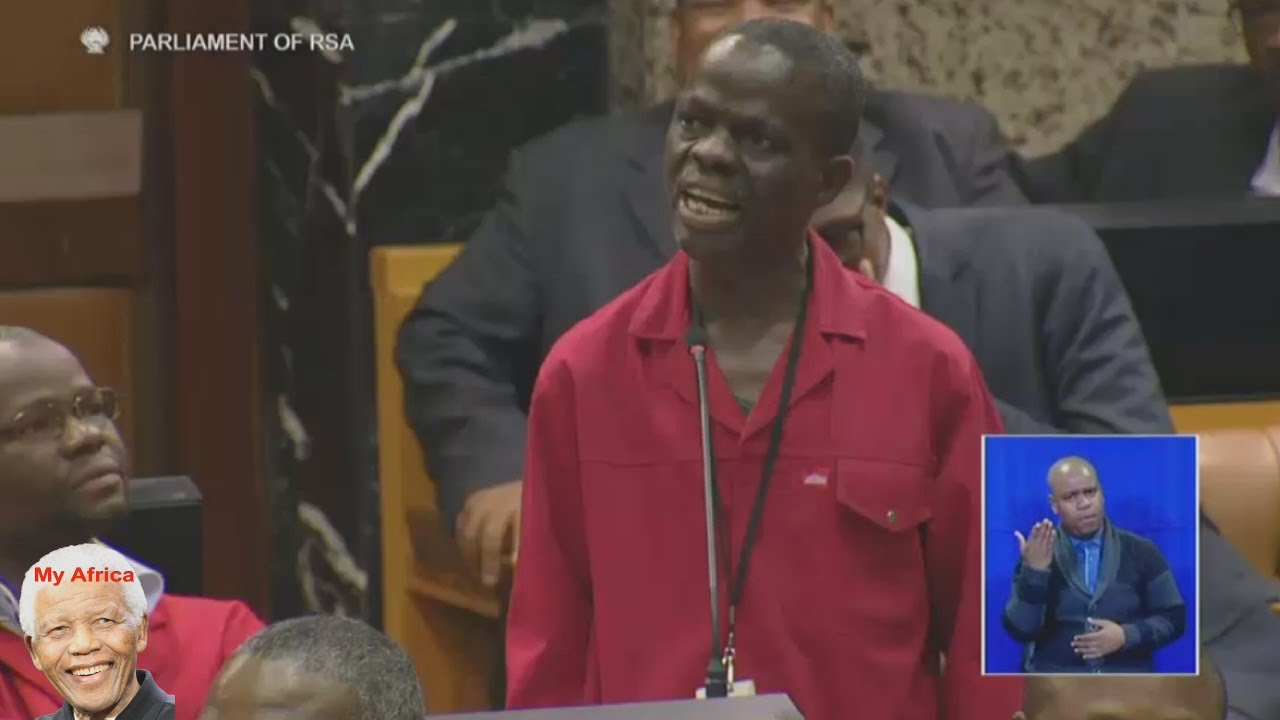
Julius Malema is a total clown. Just watch SA parliament footage of the EFF, their party's entire political strategy in parliament is to chimp out and turn the proceedings into a complete circus at every opportunity in order to protest their exclusion from the ANC's ruling coalition

 
View attachment 925961

View attachment 925962
Hey I remember that guy. He was the one in Laura Southern's documentary that talked about how wonderful white farmers getting murdered and having all their shit stolen is with a big grin on his face and sung songs about killing whitey with his fellow party members. My favorite part is "we must not allow our enemies to tell us how to remember him". In other words "LALALALALALA DON'T LISTEN TO FACTS!"

Did anyone besides him actually like Mugabe? Did the people of Zimbabwe, even the most ardent whitey haters, like him at all after his first few years in office? Even they have to be able to clearly see he made all their lives worse.

Cj-Bhm-UFUg-AAZin-B-1.jpg
 
My mom had a partner on her accounting class who gave her fake checks 1 million Zimbabwe's dollar. She has one of his checks on a book right now.
Good riddance Mugabe, you destroyed the bread basket of Africa and you died with a shithole.
 
Holy shit, good.
The more African despots dead, the better. Hopefully this can open some doors for new, younger blood, instead of the old fucks whose minds are still stuck in the colonial era.
Please, please let it be Nigeria's Buhari who dies next. Please
 
Too bad he didn't die in it. He died in some other successful country aka Asia.
He should have died as their people did. With a machete cutting their limbs and watching his family dying. Rate me A-log, but, he was a stain on humanity, he started with a rich Rodhesia and ended up with a destroyed country.
Although, his successors won't be better, they are in Africa after all. However, there won't be native whitey to blame, only Chinese investors that will likely ignore their whinging and just put factories and mines.
 
Reading about Rhodesia is what made me despise the UN.

The UN, like every single SJW, can't survive without a problem to point out. Not solve, just point out and pretend it's been solved. If African countries start to develop and become self-sufficient, then who's gonna to donate to their generic Children of Africa Benefit Ball Charities™?

maxresdefault.jpg
 
Real quick...Rhodesia didn't agree with the UK re majority rule. So they unilaterally declared independence on 11 November 1965. Ian Smith was Prime Minister throughout. Brits could do nothing since Rhodesia had their own army and air force. Economic sanctions immediately came about. Made it tougher, but not impossible, for Rhodesia to import/export. South Africa and Portugal supported Rhodesia, so Rhodesia had access to ports. Rhodesia was doing pretty well against their insurgency for some time. 1974 revolution in Portugal curtailed Rhodesian access to Mozambique ports. That left SA as Rhodesian main supporter.

Rhodesia and UK had negotiations at times but UK always wanted majority rule. Smith said no. But as time went by SA's increasing pressure on Rhodesia forced Smith to agree. Elections were held in 1980. Rhodesia then became Zimbabwe, and a lot of the whites got the hell out.

Mugabe came to power due to the 1980 election. At first things were going pretty well, then he started running the place into the ground. Just a motherfucking shame. Rhodesia easily fed ALL their people and had a good amount for export. Zimbabwe has had at least one famine.

I bet most people there would welcome Ian Smith and the old Rhodesia back in a heartbeat. Place ran well. A small economic powerhouse, and for its size, a top-notch military - oh. most troops were black.


Let me throw out this question for your consideration. If there had been no economic sanctions, or at most limited sanctions, put on Rhodesia, how long could the country have survived? My guess - 10 to 15 years more, seeing a slow transition to a majority-ruled country.

Rhodesia also had an ally in Israel as there was a sizable Jewish community there. It also was a country that had a first world economy despite being 80%+ black.

Mugabe’s first few years were pretty decent only because Smith continued to play a role as opposition leader until Mugabe thought he was entrenched enough to where he could do without Smith. Coincidentally that’s when everything started turning to shit.
 
Last edited:
Back
Top Bottom