Protesters are finding ways around Charleston’s First Amendment permit ordinance
The Post and Courier (archive.ph)
By Ali Rockett
2025-10-17 05:00:00GMT
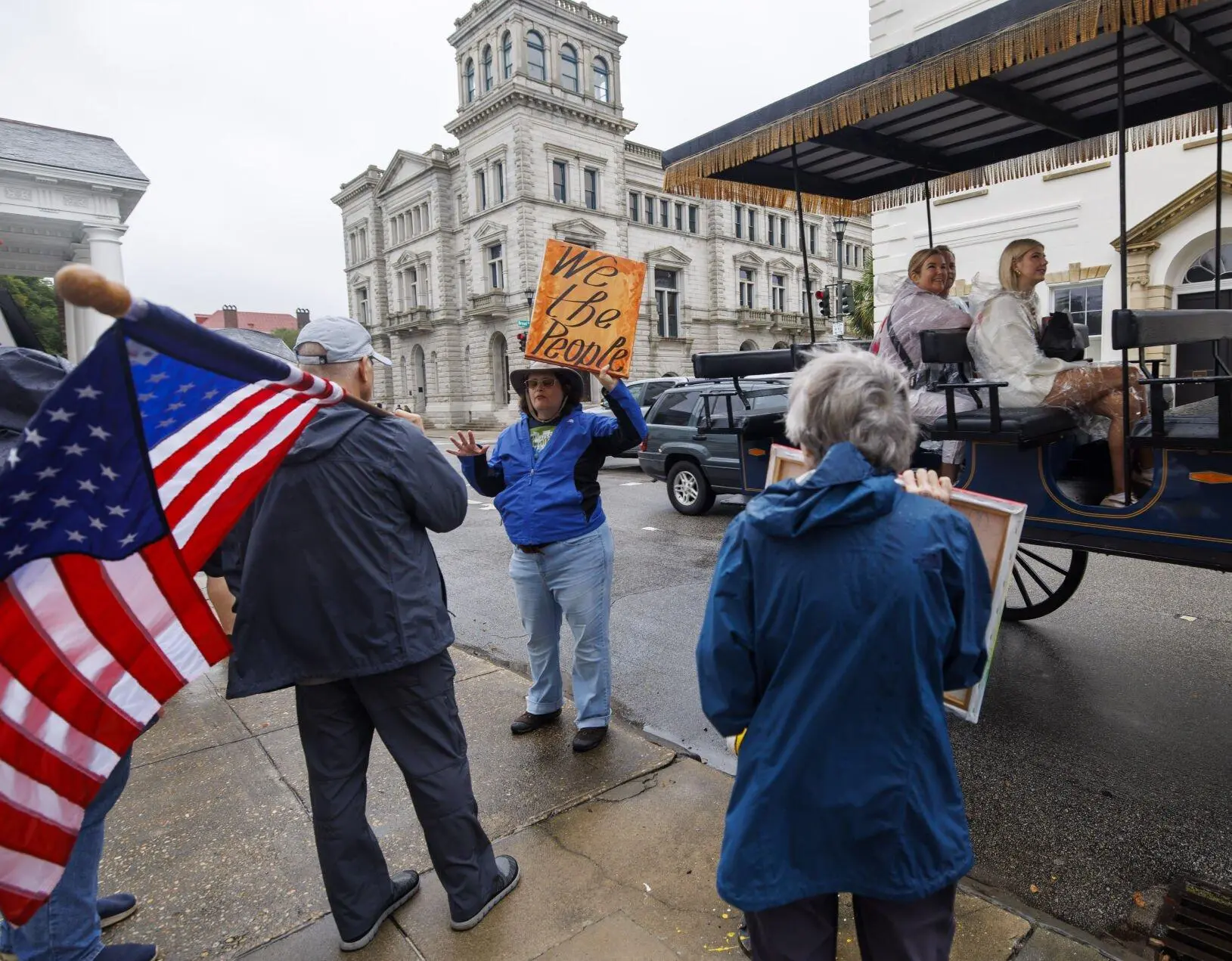
Tim Shaw, Bonnie Cleaveland and Sharon Fratepietro gather with other protestors at City Hall on Meeting Street at the Four Corners of Law Sunday, Oct. 12, 2025, in Charleston. Grace Beahm Alford/Staff
CHARLESTON — Silence is not an option for Tim Shaw.
“We’re afraid we’re losing our democracy,” Shaw said Oct. 12 standing at the corner of Meeting and Broad streets, a star-spangled banner unfurling over his shoulder.
He was one of nine people who stood in front of City Hall on a soggy Sunday making their voices heard. Two others stood vigil along King Street in Marion Square holding signs opposing the U.S. Immigration and Customs Enforcement agency and federal policies they say are increasingly authoritarian.
The crowds were small, by design — though, organizers said, a steady rainfall likely kept some folks away on Oct. 12.
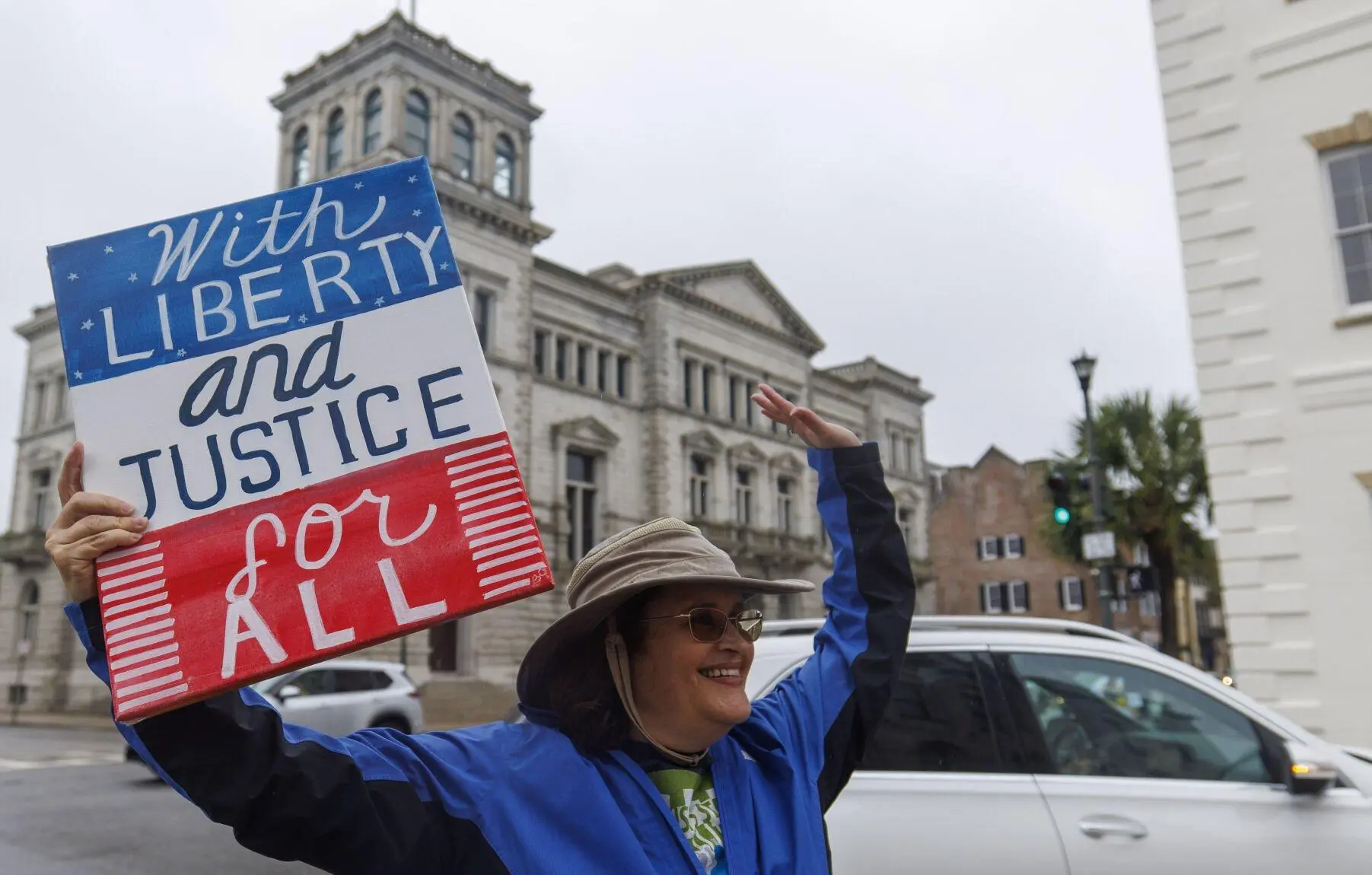
Bonnie Cleaveland cheers on honks from supporters as protestors gather at City Hall at the Four Corners of Law Sunday, Oct. 12, 2025, in Charleston. Grace Beahm Alford/Staff
Demonstrations of more than 25 people require a permit from Charleston police, which activists have called unconstitutional. Rather than seek permission, organizers are skirting the ordinance by spreading their numbers across several downtown locations at monthly “pop up” protests.
“We don't have a First Amendment if the government is telling us where we can protest and where we can’t,” said Bonnie Cleaveland, a community activist with Secular Humanists of the Lowcountry.
The nonprofit advocates for the First Amendment, specifically, the freedom of and from religion, Cleaveland said, but with that comes the freedom of speech and the freedom to assemble and petition the government.
Organizers say they feel pushed aside as larger demonstrations have been moved to Hampton and Brittlebank parks rather than more visible locations like Marion Square — a tactic protesters believe is intended to minimize their impact.
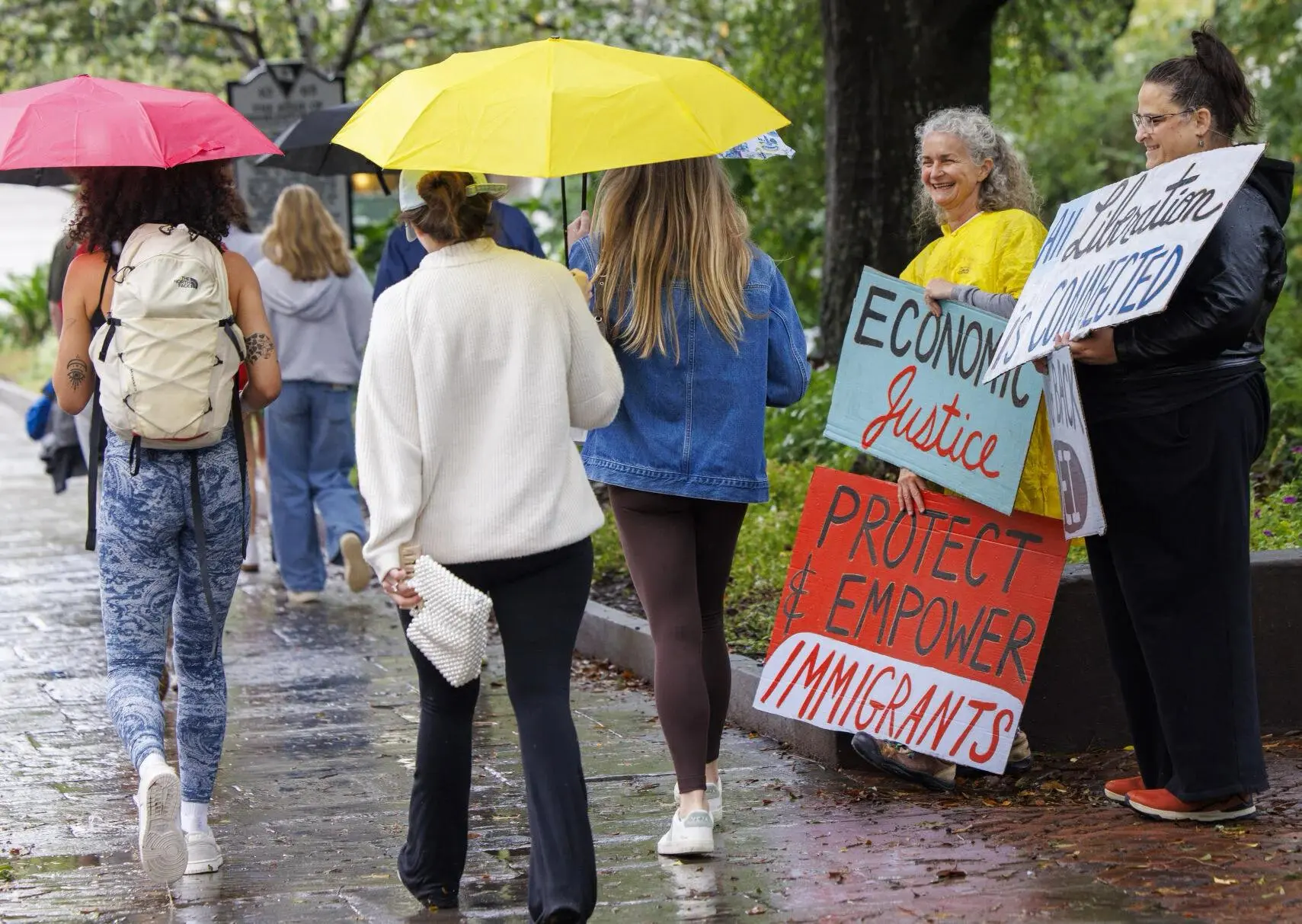
Lin Jay and Treva Williams protest in Marion Square Sunday, Oct. 12, 2025, in Charleston. Grace Beahm Alford/Staff
“There's no point in protesting if you can't be seen,” Shaw said.
In July 2021, City Council passed new rules for protests in the wake of national uprisings that followed George Floyd’s murder at the hands of Minneapolis police, as well as local protests after the death of a mentally ill Black man at the Charleston County jail. The changes that officials said were meant to clarify guidelines specifically for organized protests, went into effect immediately.
More than four years later, activists are asking City Council to revisit the ordinance, saying it has had a chilling effect and is often used by police to crack down on protests even when permits aren’t issued. Following the arrest of seven demonstrators earlier this year, several grassroots organizations have launched a petition calling for its repeal that has over 1,000 signatures.
According to the Charleston Police Department, the permit process is intended to ensure safety, rather than tamp down on free speech.
City officials have also reiterated that they don’t own Marion Square, and any events there must be approved by its owners, the Board of Field Officers of the Fourth Brigade. The historic militia recently settled a lawsuit with the city over its removal of a statue of John C. Calhoun, a former U.S. vice president and ardent defender of slavery, from its pedestal overlooking the square.
Other groups are moving away from the city to hold demonstrations elsewhere.
A recent vigil for slain conservative figure Charlie Kirk began its trek up the Arthur Ravenel Jr. Bridge from Mount Pleasant, where police said they did not require a permit for the droves who showed up to mourn.
Anne Ostapiej, South Carolina coordinator for a grassroots advocacy group called 50501, said it is planning a large protest in North Charleston on Oct. 18 (1-3 p.m. near the corner of Ashley Phosphate and Dorchester roads) as part of a nationwide “No Kings” movement.
North Charleston has no permit requirement, but Ostapiej said that’s not why she wants the demonstrate there. That city’s higher concentration of middle-class, working families, as well as its large Hispanic population, better reflects the communities most impacted by current federal policies, she said.
While the group has successfully held past protests in the city of Charleston, Ostapiej said she’ll “never say yes to Hampton Park again.”
She said demonstrating in such a closed-off area insulates them from reaching individuals and communities who really need their voices elevated.
“We’re playing to a vacuum there, just talking to each other,” she said. “Our job now is to get information out the other people, especially those who are scared to speak up.”
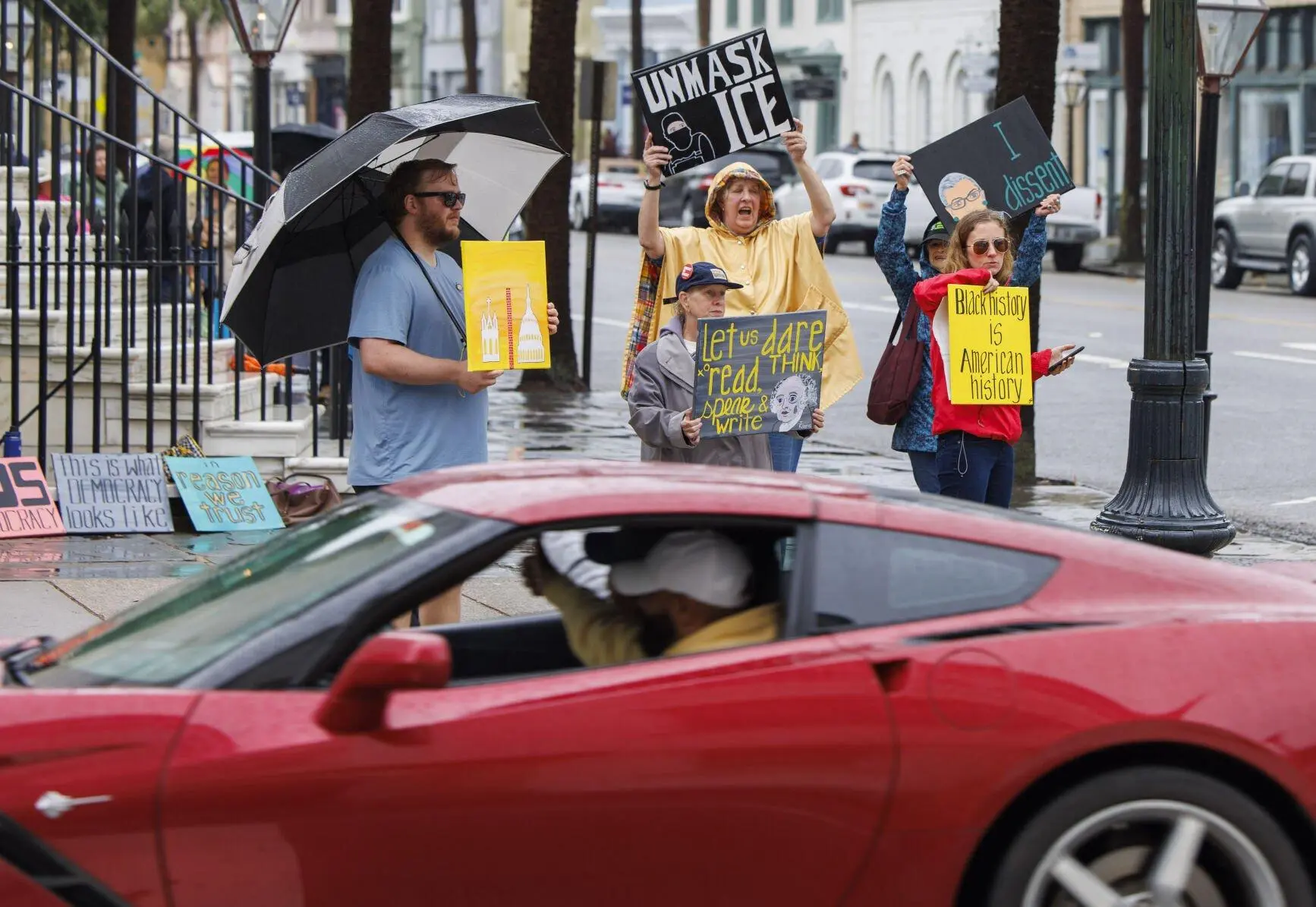
Supporters honk to show their support of protestors gathered at City Hall Sunday, Oct. 12, 2025, in Charleston. Grace Beahm Alford/Staff
Visibility is a crucial part of protest, said Lin Jay, who protested along King Street in Marion Square on Oct. 12. The monthly pop up protests take place from 2 to 3 p.m. on Second Sunday, when the city usually closes off part of King Street for shoppers.
“I think coming out on Second Sunday, when generally under a nice weather day, it's very, very busy out here, and it kind of interrupts people's mindless consumption,” she said.
Despite calls for change, City Council has not discussed any changes to the ordinance.
“It’s important to be out here in the rain,” said Martha Sue Hope holding a sign the read: unmask ICE. “People need representation. Even when it's not convenient. Even when it’s not pleasant.”
The Post and Courier (archive.ph)
By Ali Rockett
2025-10-17 05:00:00GMT
Tim Shaw, Bonnie Cleaveland and Sharon Fratepietro gather with other protestors at City Hall on Meeting Street at the Four Corners of Law Sunday, Oct. 12, 2025, in Charleston. Grace Beahm Alford/Staff
CHARLESTON — Silence is not an option for Tim Shaw.
“We’re afraid we’re losing our democracy,” Shaw said Oct. 12 standing at the corner of Meeting and Broad streets, a star-spangled banner unfurling over his shoulder.
He was one of nine people who stood in front of City Hall on a soggy Sunday making their voices heard. Two others stood vigil along King Street in Marion Square holding signs opposing the U.S. Immigration and Customs Enforcement agency and federal policies they say are increasingly authoritarian.
The crowds were small, by design — though, organizers said, a steady rainfall likely kept some folks away on Oct. 12.
Bonnie Cleaveland cheers on honks from supporters as protestors gather at City Hall at the Four Corners of Law Sunday, Oct. 12, 2025, in Charleston. Grace Beahm Alford/Staff
Demonstrations of more than 25 people require a permit from Charleston police, which activists have called unconstitutional. Rather than seek permission, organizers are skirting the ordinance by spreading their numbers across several downtown locations at monthly “pop up” protests.
“We don't have a First Amendment if the government is telling us where we can protest and where we can’t,” said Bonnie Cleaveland, a community activist with Secular Humanists of the Lowcountry.
The nonprofit advocates for the First Amendment, specifically, the freedom of and from religion, Cleaveland said, but with that comes the freedom of speech and the freedom to assemble and petition the government.
Organizers say they feel pushed aside as larger demonstrations have been moved to Hampton and Brittlebank parks rather than more visible locations like Marion Square — a tactic protesters believe is intended to minimize their impact.
Lin Jay and Treva Williams protest in Marion Square Sunday, Oct. 12, 2025, in Charleston. Grace Beahm Alford/Staff
“There's no point in protesting if you can't be seen,” Shaw said.
In July 2021, City Council passed new rules for protests in the wake of national uprisings that followed George Floyd’s murder at the hands of Minneapolis police, as well as local protests after the death of a mentally ill Black man at the Charleston County jail. The changes that officials said were meant to clarify guidelines specifically for organized protests, went into effect immediately.
More than four years later, activists are asking City Council to revisit the ordinance, saying it has had a chilling effect and is often used by police to crack down on protests even when permits aren’t issued. Following the arrest of seven demonstrators earlier this year, several grassroots organizations have launched a petition calling for its repeal that has over 1,000 signatures.
According to the Charleston Police Department, the permit process is intended to ensure safety, rather than tamp down on free speech.
City officials have also reiterated that they don’t own Marion Square, and any events there must be approved by its owners, the Board of Field Officers of the Fourth Brigade. The historic militia recently settled a lawsuit with the city over its removal of a statue of John C. Calhoun, a former U.S. vice president and ardent defender of slavery, from its pedestal overlooking the square.
Other groups are moving away from the city to hold demonstrations elsewhere.
A recent vigil for slain conservative figure Charlie Kirk began its trek up the Arthur Ravenel Jr. Bridge from Mount Pleasant, where police said they did not require a permit for the droves who showed up to mourn.
Anne Ostapiej, South Carolina coordinator for a grassroots advocacy group called 50501, said it is planning a large protest in North Charleston on Oct. 18 (1-3 p.m. near the corner of Ashley Phosphate and Dorchester roads) as part of a nationwide “No Kings” movement.
North Charleston has no permit requirement, but Ostapiej said that’s not why she wants the demonstrate there. That city’s higher concentration of middle-class, working families, as well as its large Hispanic population, better reflects the communities most impacted by current federal policies, she said.
While the group has successfully held past protests in the city of Charleston, Ostapiej said she’ll “never say yes to Hampton Park again.”
She said demonstrating in such a closed-off area insulates them from reaching individuals and communities who really need their voices elevated.
“We’re playing to a vacuum there, just talking to each other,” she said. “Our job now is to get information out the other people, especially those who are scared to speak up.”
Supporters honk to show their support of protestors gathered at City Hall Sunday, Oct. 12, 2025, in Charleston. Grace Beahm Alford/Staff
Visibility is a crucial part of protest, said Lin Jay, who protested along King Street in Marion Square on Oct. 12. The monthly pop up protests take place from 2 to 3 p.m. on Second Sunday, when the city usually closes off part of King Street for shoppers.
“I think coming out on Second Sunday, when generally under a nice weather day, it's very, very busy out here, and it kind of interrupts people's mindless consumption,” she said.
Despite calls for change, City Council has not discussed any changes to the ordinance.
“It’s important to be out here in the rain,” said Martha Sue Hope holding a sign the read: unmask ICE. “People need representation. Even when it's not convenient. Even when it’s not pleasant.”


