Photography General - Sperging about taking pictures and shit

  • 🏰 The Fediverse is up. If you know, you know.
  • Want to keep track of this thread?
    Accounts can bookmark posts, watch threads for updates, and jump back to where you stopped reading.
    Create account
RAW images don't compress or filter the image in any way but they are still at the mercy of the mechanical settings of your camera.

Excessively dark images are usually due to underexposure. Are you adjusting the ISO, aperature, or shutter speed? If you change any of these settings you usually have to adjust the others so you don't end up under/over exposed.
None of those are options on the pixel
 
None of those are options on the pixel
Which one? apparently the newer ones do. To be honest phones are just utter shit for doing your own edits. So trying to do any spicey editing is pissing in the wind for the most part. I'm near certain there will be a generic "neutral" or "natural look" setting somewhere though. Might be worth a look.

The reason phones are terrible is sensor size. without the inbuilt harsh processing they look disgusting because they get way less light than a larger sensor. So they need to be as sensitive as possible which lowers dynamic range (Colours, bright bits and dark bits of a photo) and increases noise. The phone then tries to put these back in but it usually ends up looking fake. Because it is.

DarkII.jpg

Dark.jpg

These were taken same day, same light, same settings. I just edited them slightly differently so the bottom looks brighter. No clue which one is more correct to how it was at the time. A lot of it is personal preference.
 
Why does HDR seem to make pictures so fucking ugly? Why is everything I shoot on my phone so fucking desaturated? It's like cameras have built-in dramatic effect filters you can't turn off, physically baked into the cameras.
When I import the RAW into Krita it is like I shot it at night during a lunar eclipse without man-made lighting in 10,000 miles from me. Nothing I change makes it better.

edit: bro I'm so bitter, I'm playing with the raw file and changing every slider and it's just like, "this is not what I saw".

Human eye is actually one of the best HDR cameras man has access to even today because the sensor mesh in your eye communicates with adjacent cells and fairly intelligently dynamically re-ranges on a pixel by pixel basis and as a result is capable of presenting colors accurately across a huge range of intensities.

A RAW image is the polar opposite of that and is the raw intensities of each pixel without any processing whatsoever so that would normally look dim unless you happened to be in the brightest scenario possible for that camera.
also honestly this is a lot more what the world actually looks like outdoors with the sun in frame
1729225226496.png

I don't know what specifically to suggest since the default settings on my iphone work fine but you actually do want HDR or something akin to it so you should try different algorithms instead of just giving up entirely on the 'exaggeration filter'.

Could you just provide some files for people to mess with and then use that to provide specific advice to you? Supposedly usually raw files use exif metadata (I dont know what your particular phone is doing) in which case I recommend exiftool which you can apt-install (or whatever package manager is) if you are on linux as I think I recently heard you were. IE exiftool -all= nigger_stealing_package.whatever
 
Last edited:
I really can't give anyone any photos I take. There's basically nothing I can think of I could photograph to show the problem but not create problems.

It just sucks having the photos look great in the camera and then literally drain of color as soon as I save it and go to upload it somewhere. I've tried everything, every setting, and the only thing I find on Reddit is people saying "buy a Samsung".

If I look at cameras I'm in trouble because the options are either $40 compact cameras that have literally no brand and engrave "camera" on top to pantomime a brand, things specially advertised as YOUTUBE CONTENT CAMERA for under $1000, then real options that actually touch my phone's MP count starting at around $2000 for the base + lens, which I can't justify spending and quite honestly they're just too big to buy because I probably won't keep something that size on me like I do my phone.

Idk why but my day long camera deep dive has really bummed me out
 
It just sucks having the photos look great in the camera and then literally drain of color as soon as I save it and go to upload it somewhere.
Some phones store the raw image and then post process it on the fly, you may just be getting set back by how you are going about exporting it, should be a way to just export the processed jpg.

Last time I had an android I don't remember it being a problem but that was years ago because androids are currently on 2 unforgivable disasters vs 1 so I am currently an apple person
 
Idk why but my day long camera deep dive has really bummed me out

Don't be discouraged. I don't know if this is an option where you live but have you tried checking second hand markets for a used camera? A lot of people buy nice entry level cameras and then later sell them when they want to upgrade or if they move on to another hobby.

then real options that actually touch my phone's MP count starting at around $2000 for the base + lens, which I can't justify spending and quite honestly they're just too big to buy because I probably won't keep something that size on me like I do my phone

Not much you can do about size but there are smaller body camera options out there that are still very capable. My camera is a dinosaur and quite large, but even with a few lenses it will fit into a small messenger style camera bag that makes it very easy to bring along whenever I feel like doing some shooting.

As for MP count, try not to get too hung up on that figure alone. Unless you need absolutely massive high fidelity images, plan to crop your images a significant amount, or blow them up to huge sizes you probably won't need the latest and greatest 10000 MP camera.

I know you can't share images for privacy reasons, but if you are comfortable sharing more about what type of photography you are interested in or what kind of subjects you're interested in shooting it might help people give you more specific advice.
 
HDR has 2 parts to it. 1: Recording more bits than a normal image. 2. Mapping those bits into a human viewable format, aka Tone Mapping.
1 is pretty easy
2 is hard
If the camera isn't doing the right thing then raw into a 3rd party app is probably the solution. Obviously Photoshop, Adobe Camera Raw and/or Lightroom are the kings. Darktable might do a pretty decent job for free.

As was mentioned, don't get hung up on MEGAPIXELS. A larger sensor is going to have less noise and higher quality so even with fewer pixels they're going to do a better job. Personally, I'm a Nikon fan, so the Z50 or Zfc(for that retro look) are the models I'd check out for a 'real' camera. Sony also still makes some seriously good mirrorless interchangable lens cameras. A starter kit for most brands in a 20-24MP sensor and a simple zoom lens would come in just under $1k. Although the Sony ZV-E10 doesn't have a viewfinder, just a rear display.
 
Darktable might do a pretty decent job for free.

As was mentioned, don't get hung up on MEGAPIXELS. A larger sensor is going to have less noise and higher quality so even with fewer pixels they're going to do a better job. Personally, I'm a Nikon fan, so the Z50 or Zfc(for that retro look) are the models I'd check out for a 'real' camera. Sony also still makes some seriously good mirrorless interchangable lens cameras. .
Darktable is what I use. Very large learning curve. RAWtherapee is the clean simple one that you could try if you don't want to rip out hair for the first couple of hours.

Nikon is a good call. But I'd probably start with a dslr. Lenses are cheaper and it's all F-mount.
 
I would like to take some nice photos this October before all leaves turn to shit but I have a bit of a dilemma. I don't have a decent camera. My phone, despite being a Sony, has a shit camera, with a shit stock app, with no Camera2 API, where I try to save myself with a GCam mod that's buggy and also shit. I also don't want to splurge out for a fancier newer camera right away since I don't know the first thing when it comes to photography.

However, I do have this.
Canon PowerShot A580
A Canon PowerShot A580 from 2008.

Sure it's dated, lacks optical stabilization and is generally a PITA to use, but it still has a better sensor than my smartphone, and better optics as well. And since it's a PowerShot, you can install CHDK on it to unlock more functionality, with the A580 being old enough for CHDK's version for it to be fairly mature. The menu through which you adjust the parameters is very fiddly, but it lets you do more than you could otherwise do with the camera, like fine tuning the focus, ISO and shutter speed.

One thing people love to do with CHDK is to adjust those parameters, set up the camera on a tripod, point it at the night sky during a thunderstorm, and run a script that'll take a photo the moment one shows up on the sky. From what I've read once it's done correctly it's pretty reliable and gets some great results for an old compact camera like that.

It also lets you export DNG RAW's, and right now it's the only device that I own that can do so. I've taken a test photo with it enabled to see what I could do with them.
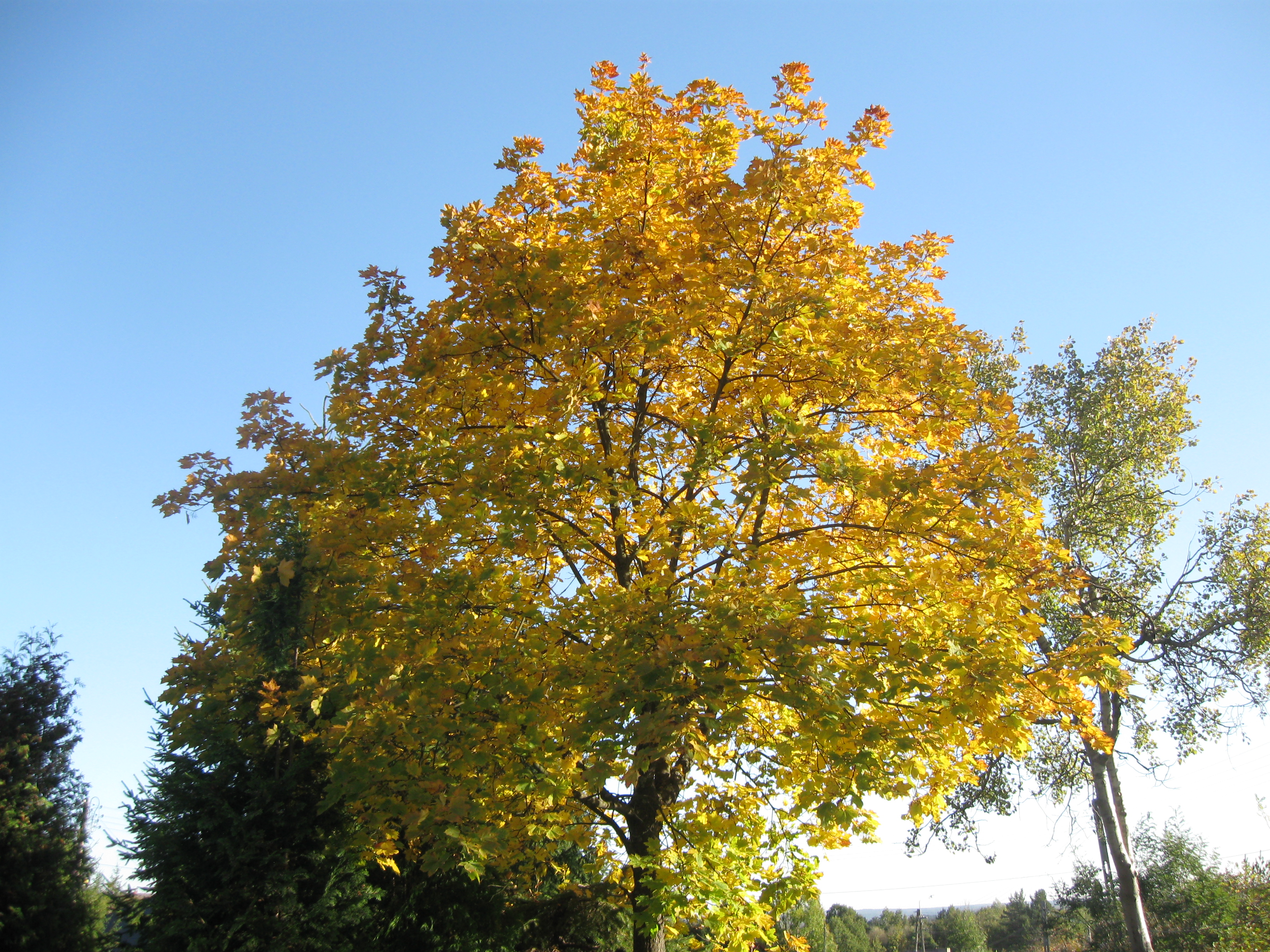
Canon
This is the photo as the camera has processed with it's built-in software.

Then, I tried loading the RAW into RawTherapee, however it really does not like these RAW's, at all. This is how it got imported:
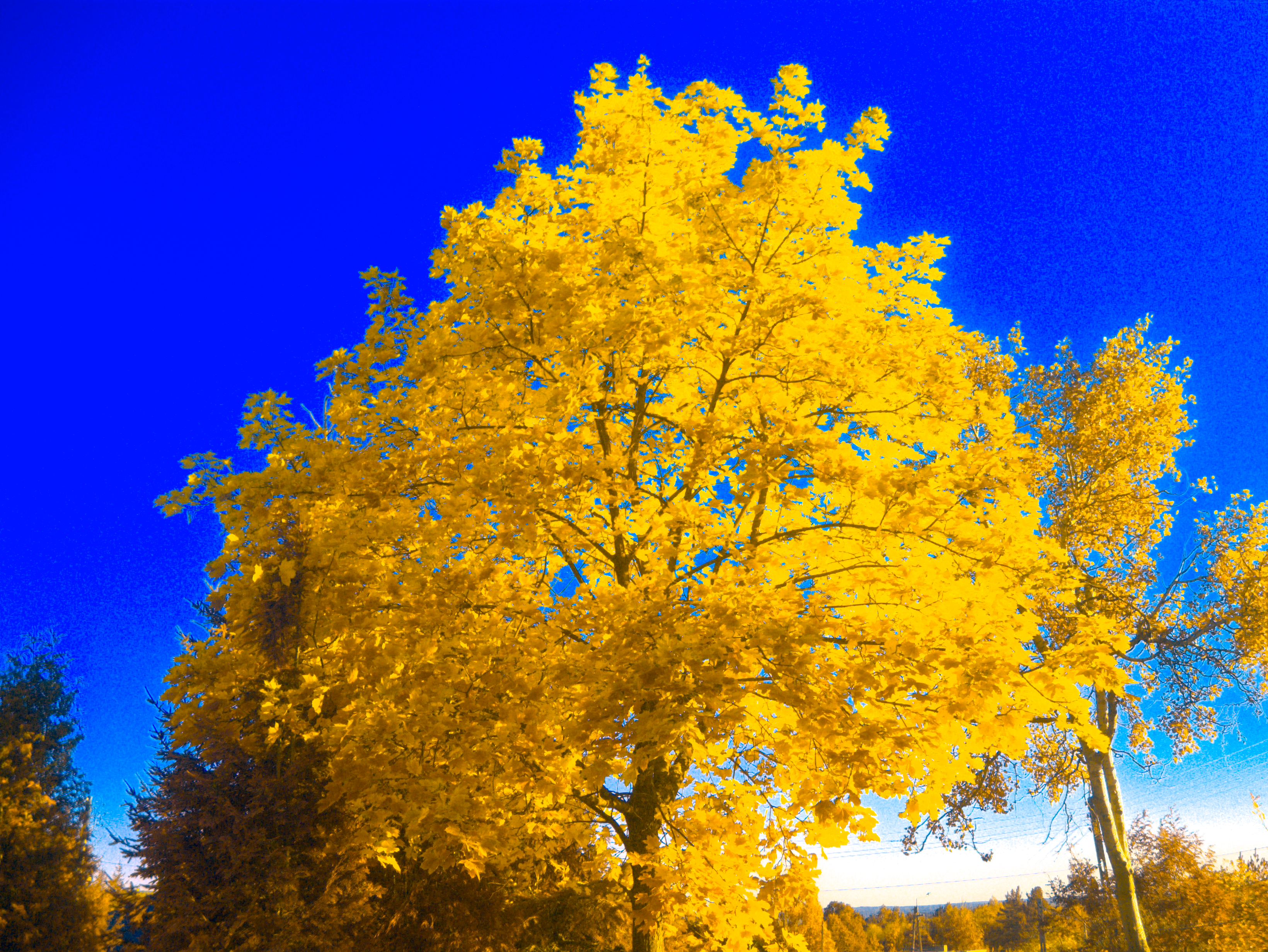
RawTherapee.png
All the colors completely out of place and I have no idea where I'd have to go in the UI to correct them. So I'm definitely not gonna use that.

Next, I tried Darktable, and despite it being apparently harder than RawTherapee, I found it's UI to be slightly more intuitive, and most importantly, it imported the RAW correctly.

After a bit of fiddling this was the end result:
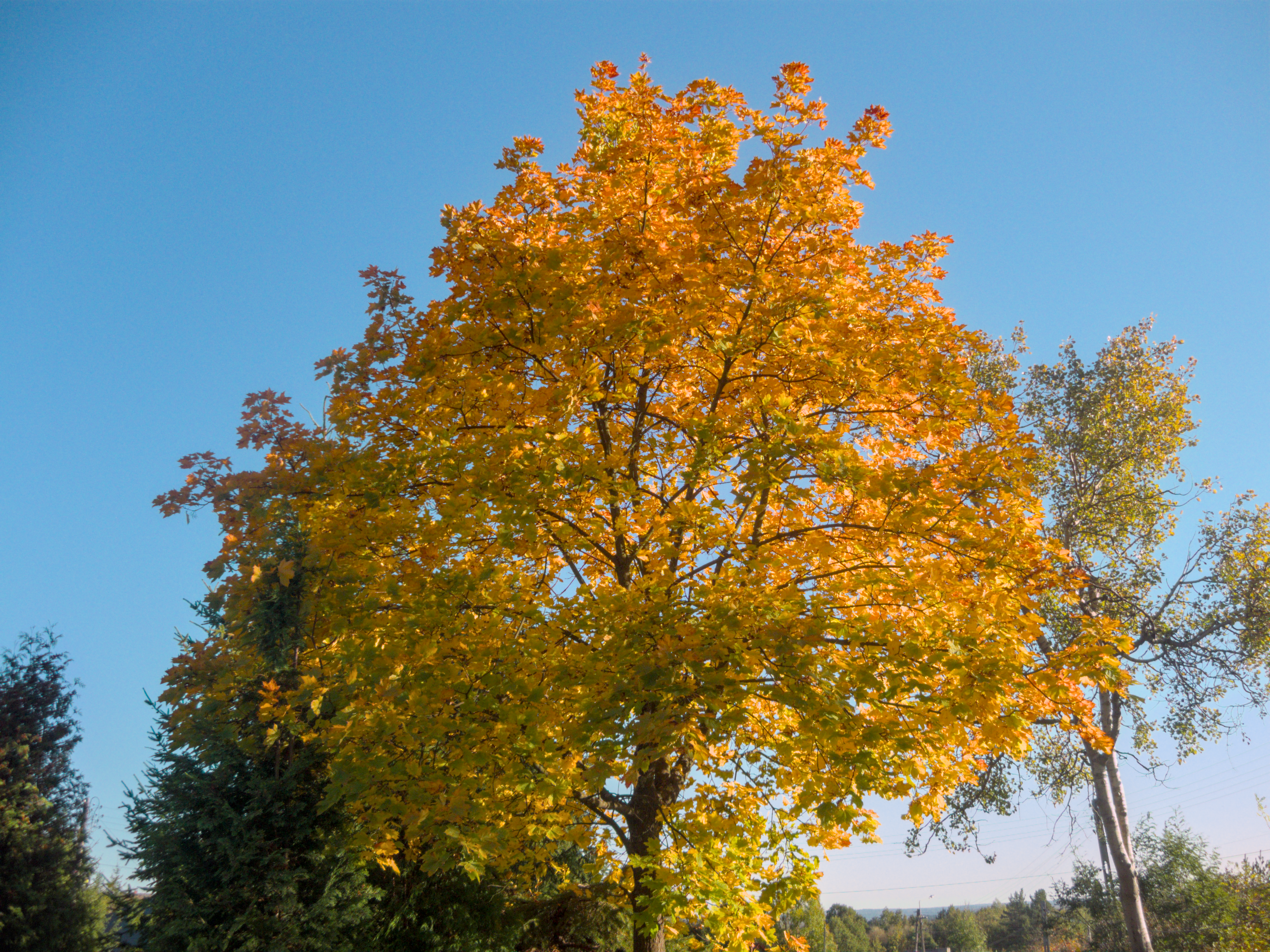
Darktable.png
All of this of course was eyeballed with blind slider fiddling on an uncalibrated IPS monitor, but it's not like the source material was high grade in the first place. I think I did a pretty neat job with it either way.

I'll try taking some more pictures while I still can to get the hang of it, and maybe by the next October I'll figure it out enough to be able to take something much nicer. I don't have much hopes for this year.
 
Nikon is a good call. But I'd probably start with a dslr. Lenses are cheaper and it's all F-mount.
Nikon is pretty much ending the DSLR line they're down to 4 models. I'd go with the mirrorless and and adapter if you want to go with 'legacy' lenses.

The Zfc is pretty small, relative to other stuff.

2024-10-18_11-10.png

I think the Z30 is smaller. Other vendors are similar.

Also Josh's rant, Hasselblad is also not-Japanese. Not sure if Sweden is better. They're certainly not cheaper, nor smaller. But 100MP should be enough for anyone. Only $33,000.
 
Last edited:
This is mostly a response to Null's segment on MATI:

Note: The Megapixels on Smartphones is complete nonsense, disregard it entirely (and don't talk to me about pixel binning). There are certain physical constraints in place that determine how much detail can be captured on a given sensor size with a particular lens diameter / aperture that renders all those megapixels largely meaningless because even if they were real, the lens could not resolve the detail that could theoretically be captured (diffraction limits). It's a marketing gag, for all intents and purposes. They are not a marketing gag on proper cameras, because lenses exist that can actually resolve those megapixels.

There are so called "Bridge" Cameras, which bridge the gap between a phone and a proper DSLR. They are decreasingly getting manufactured, but the best of its kind imo is the panasonic fz1000 which provides very usable images with competent autofocus at an affordable price. It can be had for about 500 bucks, usually refurbished (if one buys 2nd hand, one is usually given a shutter count. The camera shutter has an expected life of 100.000-200.000 on these cameras, so it is generally recommended to buy at 20.000 actuations or less). If you learn about light, composition, exposure and basic editing in Lightroom, a bridge camera can take pictures that, when viewed online, are indistinguishable to 99% of the population from photos taken with glass that costs thousands - the only downside is low light capability, which nothing but bigger glass + sensor can replace for subjects in motion (for static subjects, you just need to plop it down on a tripod or something stable and give the camera time to gather light). The other thing that smaller sensors/lenses cannot do is create a lot of bokeh (background blur) at shorter focal lengths (wider angles). The size of bridge cams is largely due to the fact that they incorporate a large zoom lens which lets you take the photos that your phone can't - proper telephoto ones.

The alternative would be to invest into APS-C (MfT has been mentioned but I feel the bodies are imperceptibly smaller), which is good enough for 99% of all tasks that normal people throw at it and aren't particularly large - not significantly bigger than most compact cameras when one selects a smaller sized lens. Sony's system (the 6000 series) is open to third party manufacturers and thus has a large, affordable lens selection. The ZV-E10 you mentioned is one of those as well, but caters to content creators who don't want to learn wtf anything photography means, but the functions it has are perfectly usable. The newer ones allow you to insert LUTs which adjust color and saturation to one's liking, but the neutral look and/or processing in raw is usually best. I am not as familiar with Nikon Z's system but it appears very competent and as far as adapting to it with legacy lenses it is probably the best one atm. Avoid Canon RF.

If size is the main issue, keep in mind that even on larger bodies, it is largely the lens that really makes it unwieldy vs easy to carry. A prime lens (only has one focal length / field of view - think wide angle vs telephoto) can be very small while still letting in way more light than a zoom lens that covers the same focal length amongst others. If you know that a particular perspective is the one you usually want (for example, a ton of people like 40-50mm because everything appears very natural, as our depth perception is similar to the pics taken out of camera with a 43mm lens assuming 35mm film / full frame) then the lens can be super compact and still let in more light and create sharper images than a zoom lens covering that field of view.

If you like the pictures out of fx a particular film of the past, you can replicate the look for the most part because it is largely down to how contrast and colors are processed, which is very easy to do in post with presets these days or aforementioned LUTs in the camera. S709 is the gold standard for a good neutral start which one then saturates to taste.

In general, if you want to see a cameras / lenses capabilities, type the name into google and add Flickr. Flickr has a group with photo pools for nearly every camera and lens from the last 100 years.
 
Last edited by a moderator:
Nikon is pretty much ending the DSLR line they're down to 4 models. I'd go with the mirrorless and and adapter if you want to go with 'legacy' lenses.

Also Josh's rant, Hasselblad is also not-Japanese. Not sure if Sweden is better. They're certainly not cheaper, nor smaller. But 100MP should be enough for anyone. Only $33,000.
Fair enough. I'm pretty biased towards being poor so I like picking up the older lenses for cheap including the old screw drive ones. Especially when starting out. That and a real viewfinder. Got a m4/3 recently and it still feels weird to have an EVF.

Didn't see the rant. But 10mp is enough for nearly anyone if you've got enough reach and tracking skills. There are Pro's still using my camera (D700) and D3's so I stopped looking at megapixels ages ago.
4k is 8mp mind you. It's only a hindrance if you need to crop.
 
I can't justify spending and quite honestly they're just too big to buy because I probably won't keep something that size on me like I do my phone.
For you personally, just stick to a new phone. If you really want to try a "real" camera, find a used point and shoot on ebay. Buying anything else would just be a waste because you will quickly outgrow an entry level ILC. Gen Z and TikTokkers have drastically impacted used camera prices and no manufacturers are making new p&s cameras. Ricoh Gr I/II/III are the smallest fixed lens aps-c cameras, but lack any weather sealing and are prone to getting dust on the sensor. To play Devil's advocate, having a camera is just another device to carry around, to lose, to forget to charge, to leave the sd card plugged in at home, to transfer files to your desktop. Think about your current photo workflow and how many more steps you'd have to go through to share a picture from a camera to a friend on signal.

Used photo gear sites to browse through:
mpb.com
keh.com
lensrentals.com (rent/buy used gear)
usedphotopro.com
adorama.com (new/used)
panasonic fz1000
The other issues with bridge cameras are the bulk and weight. This weighs 1.83lbs (830g) which is very far from easily pocketable. The pixel 7 and pro weigh 197g and 212g respectively. There are a few different third party lens brands that make lenses, Viltrox is one of the more popular and recent brands.
 
Ricoh Gr I/II/III are the smallest fixed lens aps-c cameras, but lack any weather sealing and are prone to getting dust on the sensor.

But man, they are pretty swell cameras (and by the same company that makes Pentax). The Ricoh IIIx especially with its 40mm equivalent focal length is nice when you want to capture a moment from a POV perspective. A colleague of mine has been using his 2nd generation since 2015 and has not faced dust issues yet - but this might differ greatly depending on which conditions you usually use it in, I can't speak on that with authority.
Think about your current photo workflow and how many more steps you'd have to go through to share a picture from a camera to a friend on signal.
The II / III also lets you send photos to your phone quickly straight from the camera, as do most cameras that I'm aware of post 2013 or so - I do this regularly with my jpegs from my sony cameras when I'm happy with the look without the need of further post processing. I don't disagree entirely, but to me a camera is an extra reason to go out, rather than an extra thing to carry.
 
Last edited:
The Ricoh GR III and Samsung S24 Ultra have a similar price point, with considerations that the S24 is a phone and you will never forget to bring it. Genuinely, how different exactly are the two are producing images? That's my main thing about buying a camera that's not a super fancy camera.
 
Putting aside the difference in image sensor size, quality, along with the optics of the camera lenses. The GR will deliver you mostly untouched and unaltered raw files you can edit yourself. Any phone today has all kinds of computational tech, filters and magic that smooths skin or decides to over sharpen a subject. Phones have to compensate for their tiny sensors with technology. The Samsung also lacks a physical shutter meaning there's an electronic delay when snapping a picture. The GR is meant to be gripped and feels comfortable to hold vs the Samsung which is a rectangular slab of glass and plastic. A camera is a tool, it's only as good as the person that is using it. A phones camera is making a lot of the decisions in the background.
You can bang a nail into a board of wood with a rock, but a hammer would get it done better. A lot of it comes down to feelings and your subconscious. I know that sounds really gay. I feel much much different using a camera over a phone to take a picture. There are many more tactile buttons to use and they feel more meaningful than swiping and pinching on a phone. A physical camera like the GR also isn't tracking your location or your browsing history or cataloging your pictures to curate and sell you interests to ad agencies. I'd like to hear more of your thoughts.
 
The Ricoh GR III and Samsung S24 Ultra have a similar price point, with considerations that the S24 is a phone and you will never forget to bring it. Genuinely, how different exactly are the two are producing images? That's my main thing about buying a camera that's not a super fancy camera.
It's very hard to answer this type of question without going too deep into subjects that require a basic knowledge of cameras and exposure (focal lengths, aperture, sensor size, ISO).

The Ricoh III has one lens. End of story. It captures one perspective and it does so well. With the III it is a mild wide angle (28mm), similar to the default wide lens (slightly tighter) on your pixel phone. The IIIx features a 40mm equiv lens which is a normal focal length, everything looks natural.
At these focal length, it is about as good at taking photos as a fancy camera unless it gets very dark and motion is involved - then if I take a 3000$ sony with an equivalent lens against it, my image will look SLIGHTLY cleaner. Slightly. The Ricoh is used by some professionals that favor these focal lengths/fields of view and their results wouldn't be appreciably better if they had 10k worth of cameras instead.

The Ricoh has 24 megapixels which is plenty if you aren't a super heavy cropper (1920x1080 is 2 megapixels, 4k is 8 megapixels) - and it actually can make use of those so the images will look sharp without various heavy sharpening algos that to me make everything look weirdly edgy.
The samsung, looking past the fantasy specs, seems to effectively have 12 mp on that much smaller area.

The main difference is that the sensor on the ricoh is physically bigger. I estimate 5 times more surface area based on the quick and dirty specs I googled on the samsung phone. This means physically more light can hit it per second. More shades, more color information and also more light per second means images are less noisy at higher ISO (the sensitivity which must be increased when it gets dark). You can also stop motion that you could not on the phone without having a noisy mess. You are capturing more information in your image which means you can capture a wider range of light which gives more latitude in post processing (think lighter lights, darker darks, more shades so to speak. This is also why it takes that whole camera body full of processing power - it needs to be able to process that sensor area. This is also the difference between those 50.000$ hasselblad/phase one cameras and a standard professional camera for 2500$. It's just a bigger sensor, with all the advantages that come with that.)

Whether these benefits are actually used by you, the individual user, is completely dependent on your specific photography, there's unfortunately no simple answer to that because it is dependent on the individual behind the camera.

If you shoot nothing but static subjects in great lighting conditions and you only show those to people on a phone without cropping, the difference will be negligible, that's pretty certain. If your focus is on landscapes or static scenes, you are better off investing in and carrying something that lets you stabilize your phone to let you shoot longer exposures (give the tiny surface area more time to gather light without camera shake).

I recommend looking at flickr (GRIII) albums (GRIIIx) and judging from that for your own use case

You could always just buy a ricoh or a sony zv-1 or a fz1000 from a 2nd hand retailer like mpb and if it doesn't do shit for you, return it within the return time period.
 
Last edited:
The Ricoh GR III and Samsung S24 Ultra have a similar price point, with considerations that the S24 is a phone and you will never forget to bring it. Genuinely, how different exactly are the two are producing images? That's my main thing about buying a camera that's not a super fancy camera.
My concern with those Ricoh models is they only have digital zoom. And without eleventy billion megapixels the amount you can drag out with digital zoom is limited.

Sure, a fixed lens makes it feel like a Leica, but for a knockabout camera I find it less useful than at least a minimal zoom range. Others in the range with ZOOM would be the Sony ZV-1 or the Canon PowerShot G7 X Mark III

With as small as mirrorless are I think if you graduate from Phone to 'Camera' it makes sense to go up a little more in size for more flexibility considering phones have mostly eaten the low end camera market.
 
I'm in the phone camera camp. I have an old-ish DSLR Sony camera, and I stopped using it after I got Google Pixel 4a - the photos you get with it are great enough for non-professional use without any additional work that RAW photos require. This is mostly due to Google's image processing. Null's Pixel should be exactly what he needs - a portable device to take pictures with as you travel. So I'd try to figure out why Null isn't satisfied with the photos - maybe he uses the stock Android camera that sucks ass?

p1.jpgp2.jpg
 
Here's a neat picture I got of the solar eclipse that went across America earlier this year. I was way too far from totality to get anything much better than this, but still pretty cool test of a ND filter for solar photography. Apologies for the bad quality.
copeandsneethe.png
Thanks for the inspiration bros, going to take my little handheld to get some pretty cool autumn pics.
 
Back
Top Bottom