
- Joined
- Aug 4, 2024
Hello, fellow sneeders!
Certain events convinced me to stop living in a society and transition to living like a lunatic in the woods. I sold my house, moved far away, and bought a lot of raw land for cheap (less than $2,000 per acre.) Due to the fact that I am stupid, I did things I wasn't properly prepared to do and had to figure things out after the fact. Nevertheless, I had fun throughout the start of my troubles and will continue to incur more troubles as I stubbornly develop a homestead for myself. I want to share what I do in hopes others who want "leave society" find the confidence to just do it.
This is what my land looks like. It's beautiful and serene. If not for a considerable mosquito presence, I'd call it paradise.

The land doesn't only come with ample supply of wood (which literally grows on trees), there's an ample supply of free berries!

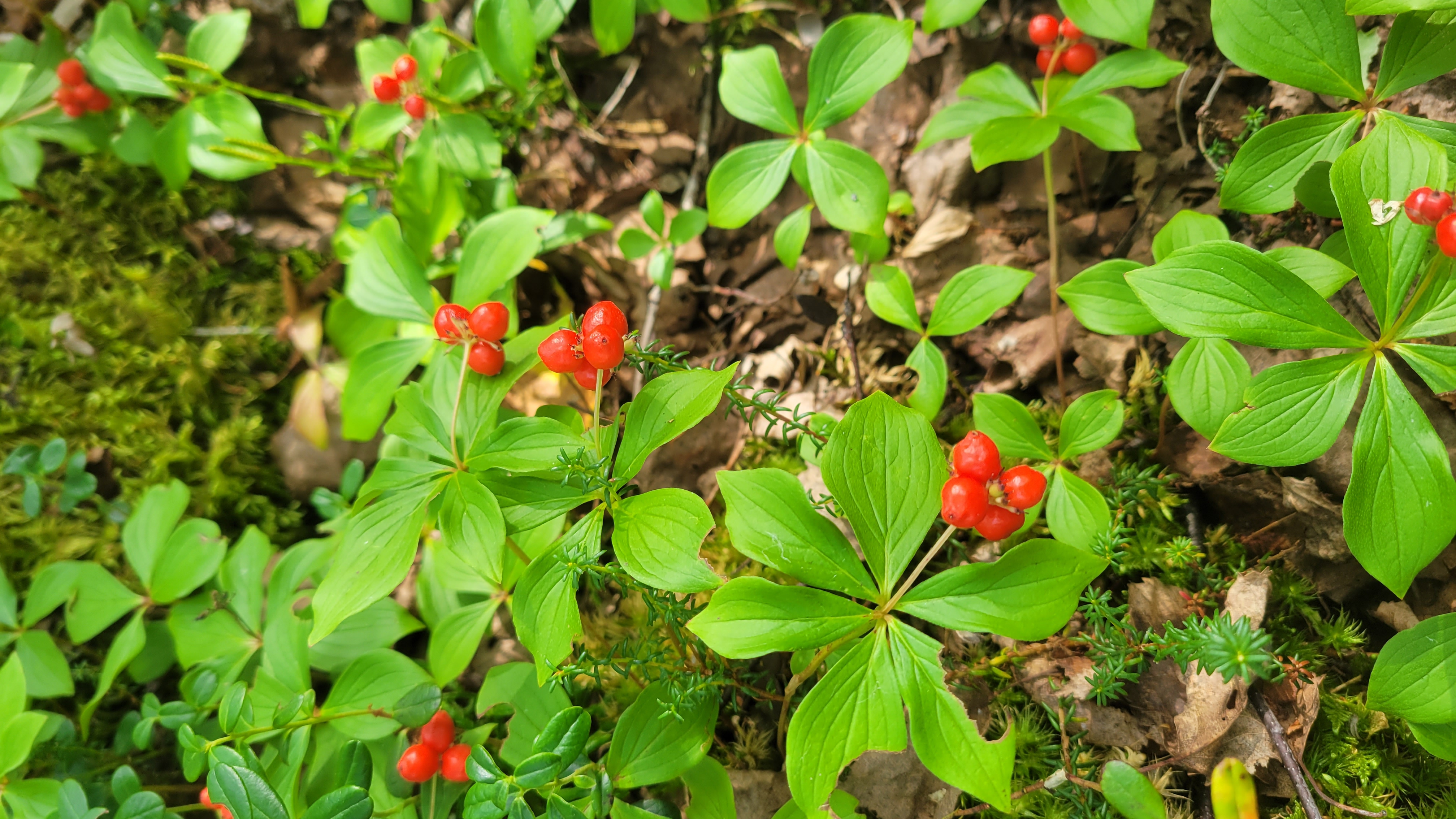
Using a handy plant identifying website, I'm confident these are bunchberries. They're edible, albeit not very appetizing, according to cursory Internet searches for cornus canadensis. These grow in acidic soils, bogs, and mountain regions. An Internet search for crops that like acidic soil says that currants, blueberries, rhubarb, parsley, potatoes, beans, broccoli, carrots, sweet corn, cucumbers, turnips, parsnips, elderberries, and cranberries grow well, which helps enable me to grow my own food when the time comes. I might not need raised beds or planters, just the dirt under my feet.
The bog and mountain region part seems to be true in my case. My land is at the bottom of a mountain range and there's a wetland not far. One of my blunders was venturing onto an area with little tree growth. There was a well traveled trail, so I know people have gone through there regularly, but I underestimated the mud. This UTV has a 14 inch ground clearance and aggressive tires, but it can't drive through milkshake. Thankfully, there's a way around the bog. It takes longer to reach my land, but it's safer that way.

If $2,000 per acre seems really cheap, there's a reason: the land I bought is deep in the woods. Accessing it requires towing an off-road vehicle (they're not road-legal) to a trail, driving miles on the trail, fording enormous puddles, then venturing off the trail where no one goes. If not for the fact that I still get a trickle of cellular data out there to help me navigate with map app, I don't think I could make it to the place I took the first picture.
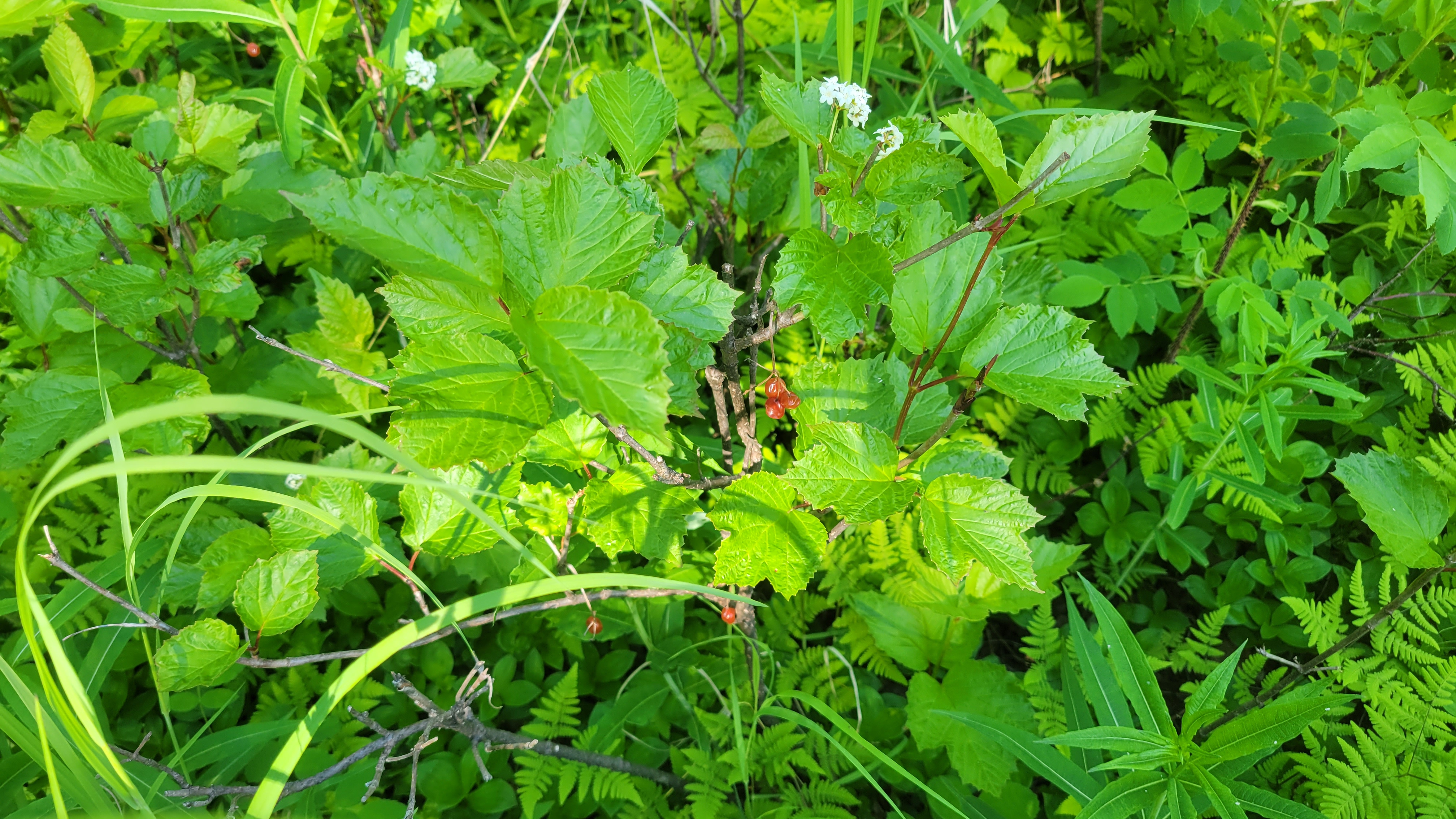
Exploring around, I saw some cool things. This is mooseberry, or squashberry, or highbush cranberry, or crampbark, or one of a bunch of other names but its scientific name is viburnum edule. It's supposed to be edible, but tastes like soap (not that I've tried.) The berries and bark seem to have medicinal uses, which bodes well for self-sufficiency.
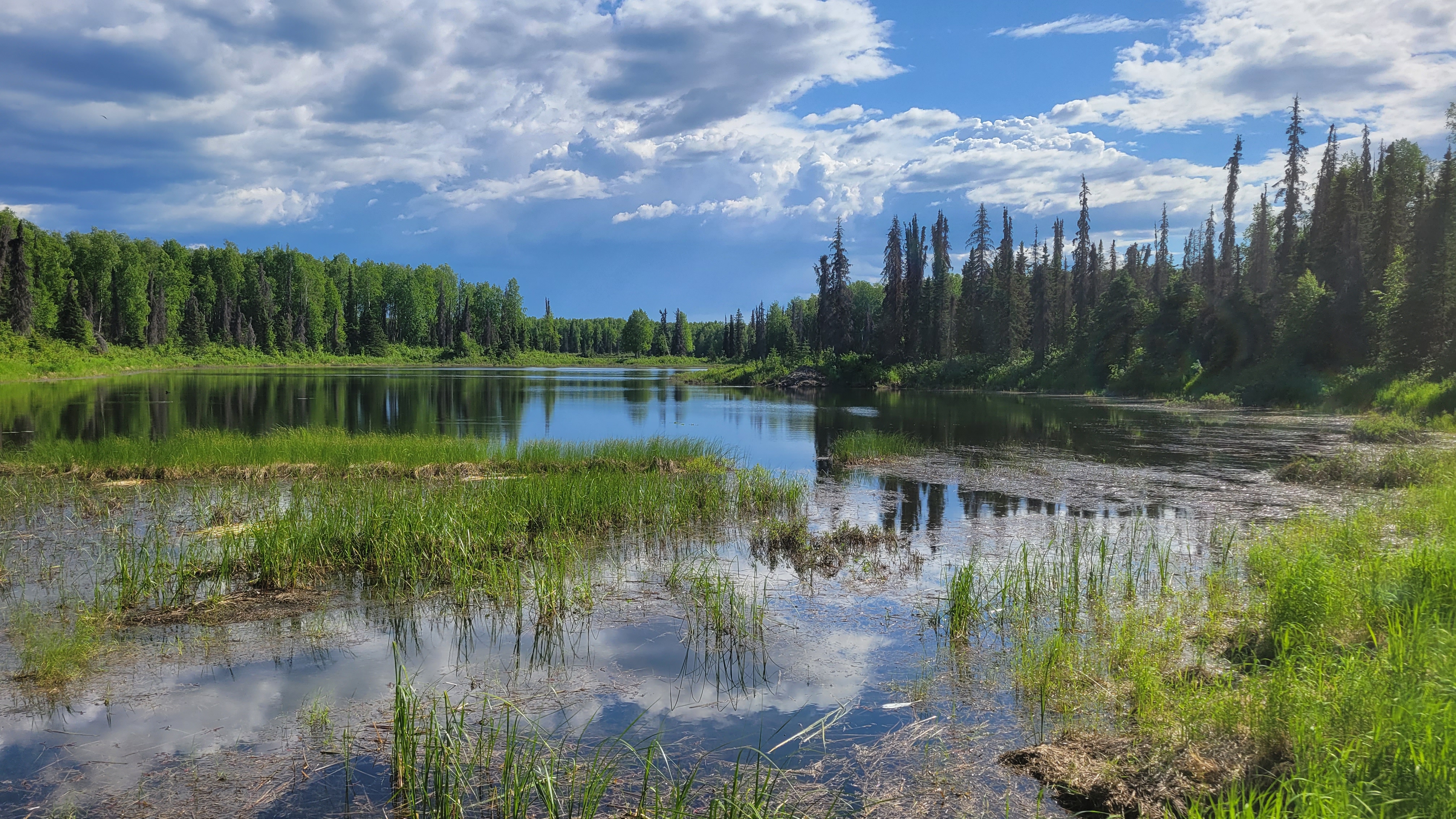
There happens to be a lake beyond the edge of my property, within publicly owned land. I don't know if it contains fish, but I saw ducks swimming. They're present in the photo, but you almost can't see them. Everyone warns you to not drink standing water, but if I can't manage to dig a well, I could filter and boil the water from this lake. Near the lake was this beautiful flower, blue flag. Unlike the other plants I've mentioned so far, this one is considered poisonous. Plantnet has been an indispensible starting point to learn about plants I know nothing about. Emergency services won't come for you when you're blasting out of both ends if you're innawoods.

Now, I have some questions that I hope someone out there can help answer.
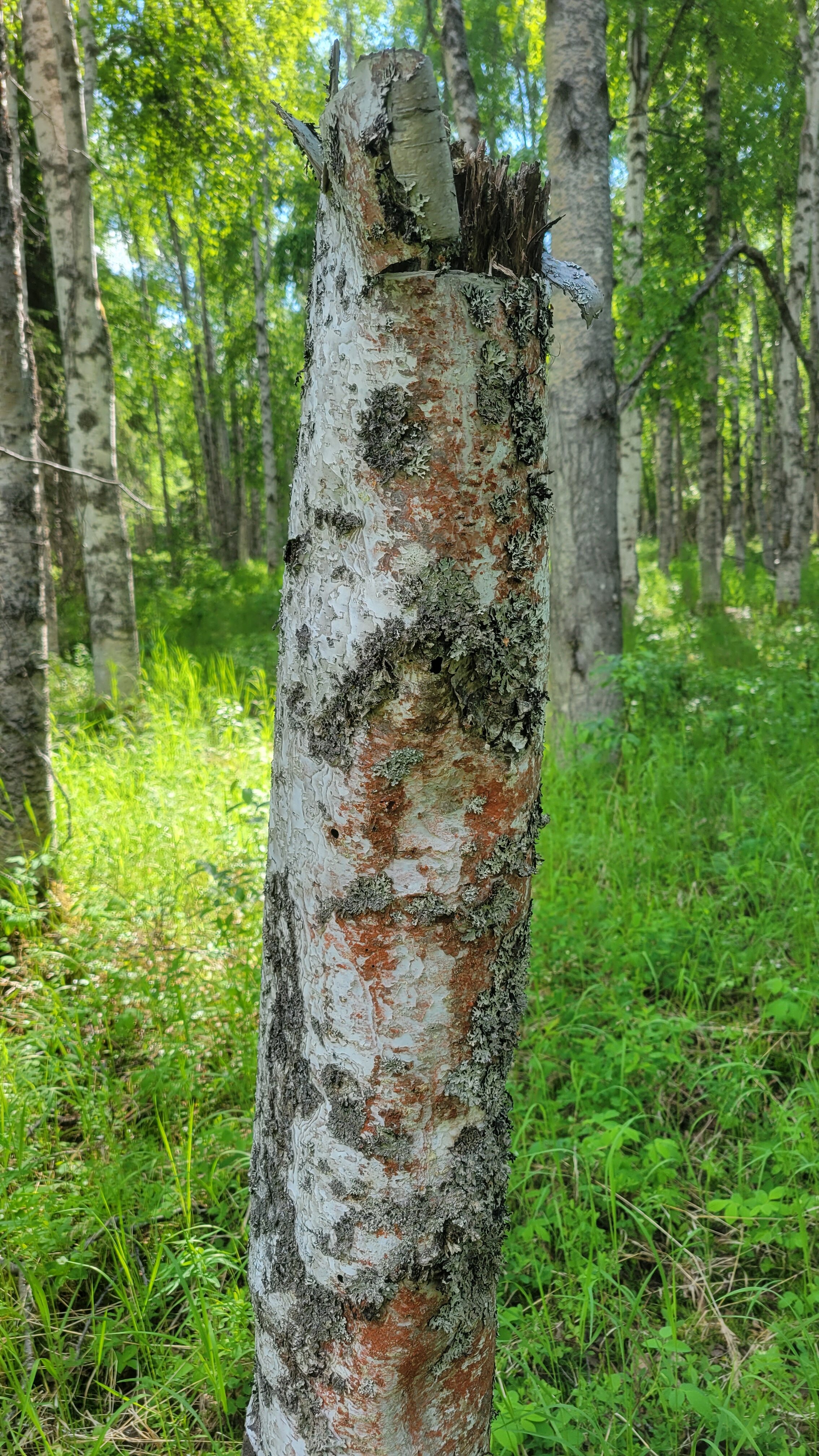
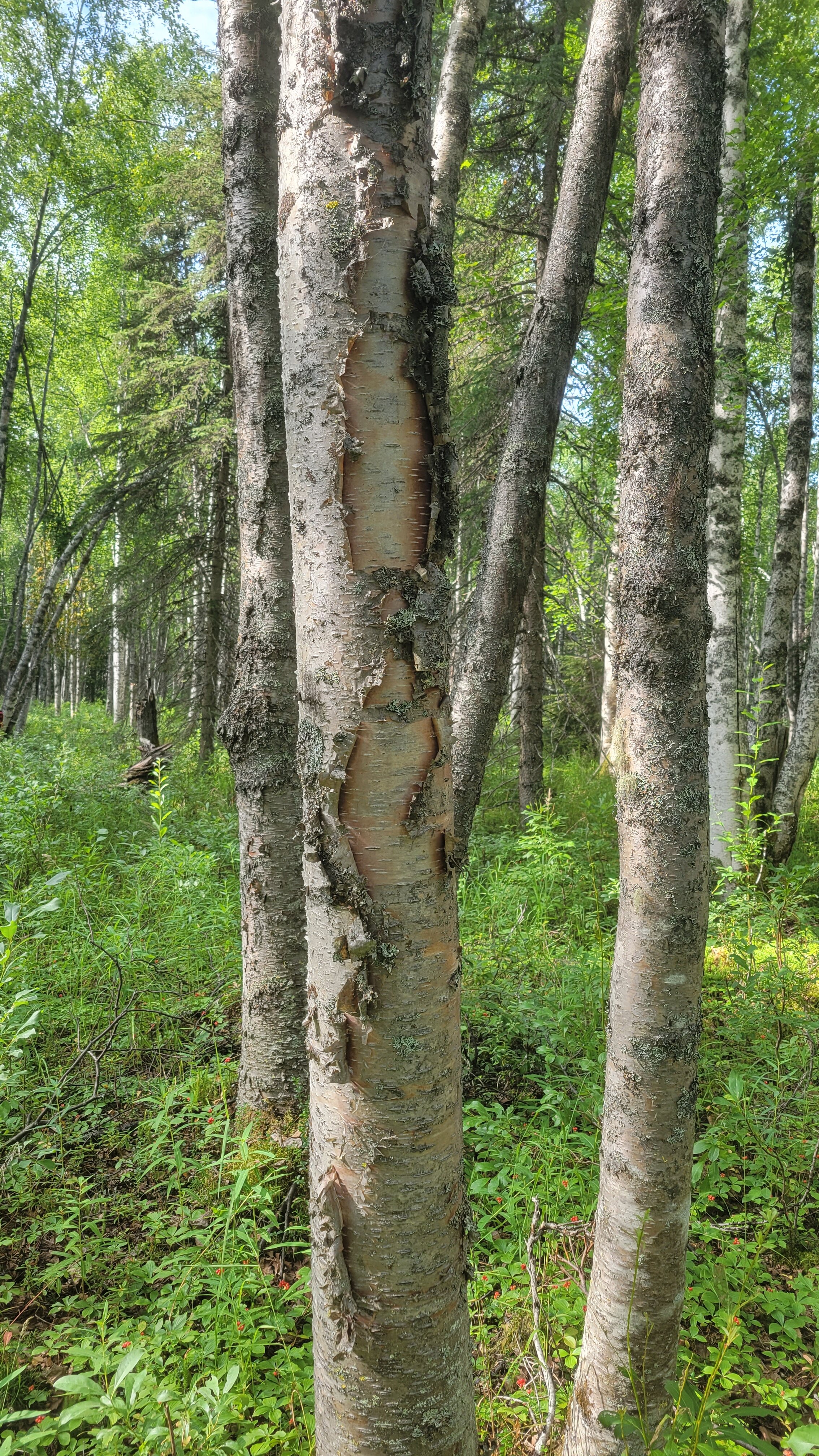
There seems to be only birch and spruce in the area. I plan to build a log cabin and all the spruce looks thin and pathetic, so my only option is to cut down the straightest birch trees I can find. However, I worry about the quality of the wood. Take a look at these. These trees seem to be rusting, but only metal rusts, so what is this? The tree in the second picture also had these little holes in the bark as well. Is that a bad sign or is that normal? In the third photo, the bark seems to be peeling or molting. Is that normal for birch trees? Are these specimens healthy? Infected?

Speaking of infections, it seems no tree is completely immune to fungus or lichen. First, does anyone know what sort of mushroom/fungus this is? I didn't see much of it and the hoof shape is distinct. Second, lichen was much more commonly found. I'm sure the mushroom makes the infected tree bad building material, but what about lichen? That stuff will grow on rocks because algae or cyanobacteria supply the energy, so it shouldn't affect the wood, right? Are there any lumberjacks or millers here who can tell me what to look for and avoid when picking my trees to cut?


Then, there's this. It was so odd I felt compelled to take a picture. I asked only one person what it might be, and I was told this was bear dung. Is that true? If this isn't bear dung, what is it?

Anyway, I hope this was a decent enough OP. I'll keep posting updates as they happen. For now, I need to save up more money to buy more equipment so I can start prepping logs and digging a well.
Certain events convinced me to stop living in a society and transition to living like a lunatic in the woods. I sold my house, moved far away, and bought a lot of raw land for cheap (less than $2,000 per acre.) Due to the fact that I am stupid, I did things I wasn't properly prepared to do and had to figure things out after the fact. Nevertheless, I had fun throughout the start of my troubles and will continue to incur more troubles as I stubbornly develop a homestead for myself. I want to share what I do in hopes others who want "leave society" find the confidence to just do it.
This is what my land looks like. It's beautiful and serene. If not for a considerable mosquito presence, I'd call it paradise.
The land doesn't only come with ample supply of wood (which literally grows on trees), there's an ample supply of free berries!
Using a handy plant identifying website, I'm confident these are bunchberries. They're edible, albeit not very appetizing, according to cursory Internet searches for cornus canadensis. These grow in acidic soils, bogs, and mountain regions. An Internet search for crops that like acidic soil says that currants, blueberries, rhubarb, parsley, potatoes, beans, broccoli, carrots, sweet corn, cucumbers, turnips, parsnips, elderberries, and cranberries grow well, which helps enable me to grow my own food when the time comes. I might not need raised beds or planters, just the dirt under my feet.
The bog and mountain region part seems to be true in my case. My land is at the bottom of a mountain range and there's a wetland not far. One of my blunders was venturing onto an area with little tree growth. There was a well traveled trail, so I know people have gone through there regularly, but I underestimated the mud. This UTV has a 14 inch ground clearance and aggressive tires, but it can't drive through milkshake. Thankfully, there's a way around the bog. It takes longer to reach my land, but it's safer that way.
If $2,000 per acre seems really cheap, there's a reason: the land I bought is deep in the woods. Accessing it requires towing an off-road vehicle (they're not road-legal) to a trail, driving miles on the trail, fording enormous puddles, then venturing off the trail where no one goes. If not for the fact that I still get a trickle of cellular data out there to help me navigate with map app, I don't think I could make it to the place I took the first picture.
Exploring around, I saw some cool things. This is mooseberry, or squashberry, or highbush cranberry, or crampbark, or one of a bunch of other names but its scientific name is viburnum edule. It's supposed to be edible, but tastes like soap (not that I've tried.) The berries and bark seem to have medicinal uses, which bodes well for self-sufficiency.
There happens to be a lake beyond the edge of my property, within publicly owned land. I don't know if it contains fish, but I saw ducks swimming. They're present in the photo, but you almost can't see them. Everyone warns you to not drink standing water, but if I can't manage to dig a well, I could filter and boil the water from this lake. Near the lake was this beautiful flower, blue flag. Unlike the other plants I've mentioned so far, this one is considered poisonous. Plantnet has been an indispensible starting point to learn about plants I know nothing about. Emergency services won't come for you when you're blasting out of both ends if you're innawoods.
Now, I have some questions that I hope someone out there can help answer.
There seems to be only birch and spruce in the area. I plan to build a log cabin and all the spruce looks thin and pathetic, so my only option is to cut down the straightest birch trees I can find. However, I worry about the quality of the wood. Take a look at these. These trees seem to be rusting, but only metal rusts, so what is this? The tree in the second picture also had these little holes in the bark as well. Is that a bad sign or is that normal? In the third photo, the bark seems to be peeling or molting. Is that normal for birch trees? Are these specimens healthy? Infected?
Speaking of infections, it seems no tree is completely immune to fungus or lichen. First, does anyone know what sort of mushroom/fungus this is? I didn't see much of it and the hoof shape is distinct. Second, lichen was much more commonly found. I'm sure the mushroom makes the infected tree bad building material, but what about lichen? That stuff will grow on rocks because algae or cyanobacteria supply the energy, so it shouldn't affect the wood, right? Are there any lumberjacks or millers here who can tell me what to look for and avoid when picking my trees to cut?
Then, there's this. It was so odd I felt compelled to take a picture. I asked only one person what it might be, and I was told this was bear dung. Is that true? If this isn't bear dung, what is it?
Anyway, I hope this was a decent enough OP. I'll keep posting updates as they happen. For now, I need to save up more money to buy more equipment so I can start prepping logs and digging a well.


 ️
️