
TheMonkeyMan
kiwifarms.net
- Joined
- Mar 27, 2015
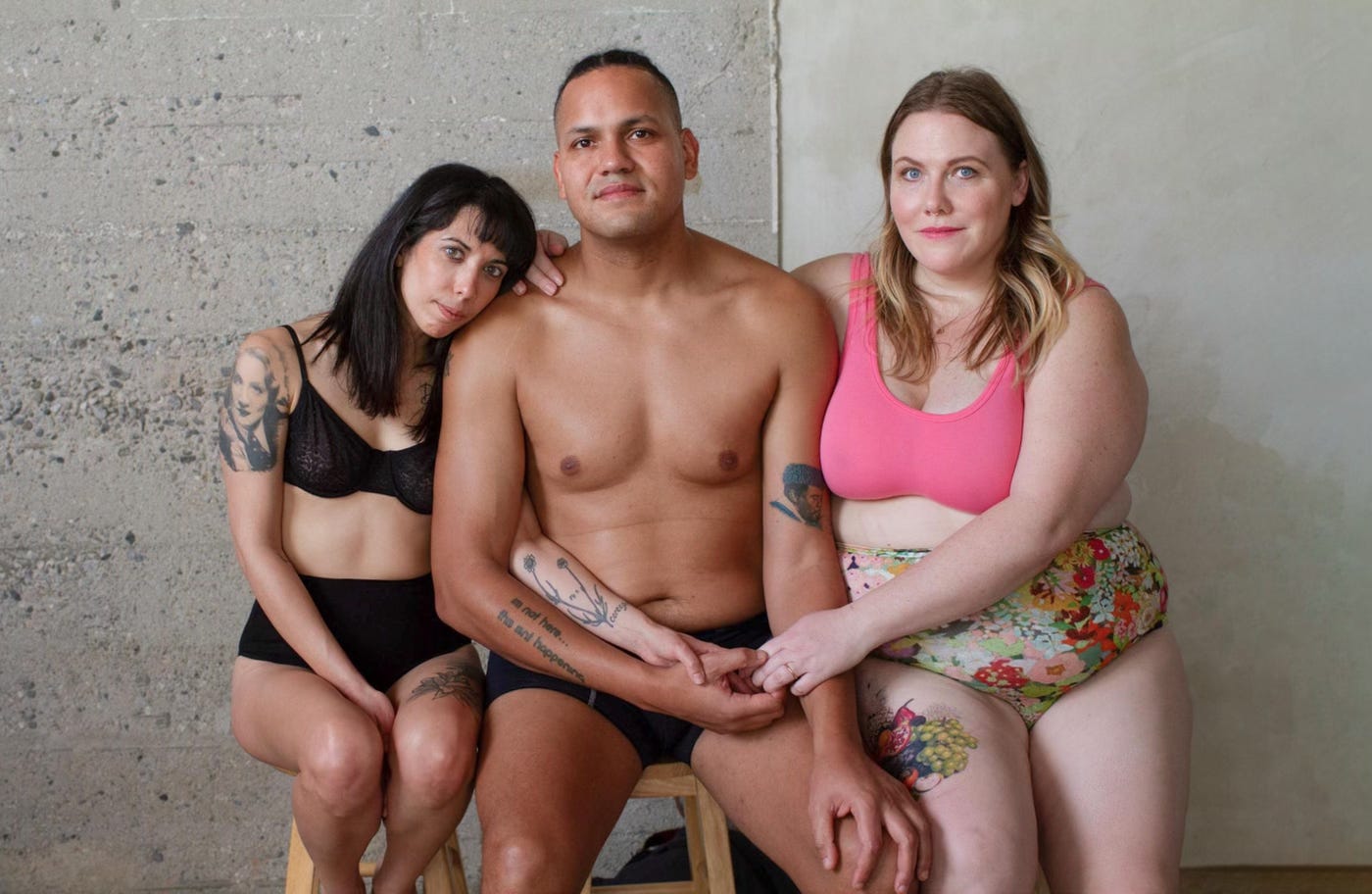
Damn, Roya has one hell of a thousand-yard stare.
Last edited by a moderator:
Follow along with the video below to see how to install our site as a web app on your home screen.
Note: This feature may not be available in some browsers.

Damn, Roya has one hell of a thousand-yard stare.
View attachment 8736675

https://www.theatlantic.com/ideas/2026/03/lindy-west-millennial-feminism/686488/The Death of Millennial Feminism
Lindy West has unwittingly written the obituary for an era.
By Helen Lewis
Lindy west is the most successful feminist writer of her (and my) generation. In her pomp at Jezebel, she mastered both viral takedowns—sorry, Love Actually—and confessional writing. She embraced adjectives that were meant to demean her: loud, fat, shrill. When Lindy shouted, women listened.
That background is what makes the publication of her new memoir, Adult Braces, such a cultural moment. Adult Braces is many things: a paean to the varied landscapes of America, an advert for #vanlife, a reminder to be grateful that your partner hasn’t talked you into a throuple with a much thinner woman. It is also the tombstone for Millennial Feminism—that swirling brew of Media Twitter, blog snark, the Great Awokening, whaling on Lena Dunham, fat positivity, and boring straight people identifying as queer through accounting tricks. To read Lindy West is to gaze backwards in time, to an era when it was acceptable to write “welp!” in copy.
West lived the Millennial writer’s dream. She rose from blogging for the Seattle alt-weekly The Stranger to a similar job at the new media darling Jezebel, and went on to write columns for legacy outlets such as The Guardian. On the side, she published a New York Times best-selling memoir, Shrill, and turned it into a television show that ran for three seasons. She left Twitter after being bombarded with abuse but remained unbowed. Sure, #MeToo was a witch-hunt, she wrote in the Times: “I’m a Witch and I’m Hunting You.” There was even a fairy-tale ending, with a handsome musician named Ahamefule Oluo who loved her just as she was. “My wedding was perfect,” she wrote in 2015, “and I was fat as hell the whole time.” Can women have it all? It looked like Lindy West could.
In light of this, Adult Braces makes two big claims. The first is that quite a lot of the above story—the Authorized Version of the Life of Lindy West—was a buffed-up version of the truth. Getting death threats was not character-building, not some little online brouhaha, but psychologically disturbing in a way that spilled over into her offline life. (“The trolling was so extreme that Monica Lewinsky reached out,” she writes.) She felt like an outsider on Shrill, reduced to hearing other writers discuss whether her (real) dad’s death was too much of a downer to include in the series. Her fatness wasn’t only a joyful expression of her appetites; instead she has now realized that “I am at my biggest when I am at my saddest.”
Even her relationship wasn’t all that it seemed. In her 2019 essay collection, The Witches Are Coming, she had written that she and Oluo—her “best friend” and a “once in a generation” musical talent—had a “dawn ritual” where they lay in bed talking for hours. In Adult Braces, she adds that “what I omitted was that we’d only developed that ‘ritual’ to mitigate a toxic pattern we’d been stuck in for years: I’d wake up anxious, I’d vomit my anxiety on Aham, he’d snap at me for triggering his anxiety, I’d feel alone and unsupported, I’d stare at him with tears in my eyes until he had a panic attack, he’d zone out for the rest of the day and not listen to a word I said.”
As it offers a revisionist history of West’s 2010s, Adult Braces makes another grand claim: that West is now polyamorous and lovin’ it. Yes, she might have been upset when a fan texted her with the news that Oluo was out in public kissing another woman. (Even then, she admits halfway through the book, that wasn’t the whole truth: “I told you Aham was secretly seeing one woman in 2019. He was actually seeing two.”) But really, she absolutely adores her and Oluo’s now-mutual girlfriend, Roya, to the extent that through sheer force of will, she has become bisexual. It only took driving a van from Seattle to the Florida Keys and back, while also undergoing cosmetic dentistry, to realize this.
When I read Adult Braces, my instinctive reaction was: I don’t believe you.
To me, it seemed obvious that Oluo, who is mixed race, had successfully used West’s desire to be progressive against her: “He believed that monogamy was, at its root, a system of ownership. I had to admit that perhaps I didn’t feel it as keenly, as a white person.” Oluo had also rebranded himself as a “non-binary he/they,” perhaps to shrug off any suggestion that he was acting like every harem-patrolling patriarch in history.
Now, I know plenty of people who have come to a different understanding of their sexuality as adults—mostly Later-Life Lesbians, or LLLs—but it seems an unlikely coincidence that the first woman West has ever been attracted to was already her husband’s girlfriend. Not least when the book includes this line: “Being cool about polyamory felt like a growing imperative in progressive circles.”
The reaction to the book has been fascinating, by which I mean that basically no one else believes West’s account of her polyamorous relationship either. This discourse has become so overwhelming that in a recent Substack post, West expressed annoyance and defensiveness that anyone would question the latest version of her story: “My life isn’t subject to public audit. I already gave you what I wanted to give you.”
This might be true, although I would say again that if you don’t want people picking over your personal life, avoid writing a memoir.
Nonetheless, I do feel great sympathy for West. How was she to know that the great omertà of Millennial Feminism—that we had to take whatever people said about their life stories at face value—had broken?
Over the past half decade, our unchallenged deference to people’s own declarations about their lives has collapsed. We saw too many flimsy or obviously politicized accusations sneak under the wire of “Believe women.” Just think of Tara Reade, whose unconvincing claims of sexual assault against Joe Biden were seized on by Republicans, and who announced that she had defected to Russia in 2023. We have watched as former icons of body positivity shot themselves up with GLP-1s at the first opportunity—suggesting that they did not, in fact, feel happy and healthy at any size. Some of them, like Lizzo, maintain that they only tried GLP-1s, but have actually lost weight through “mind-over-matter.” (If you believe that, I’ve got a crystal flute to sell you.)
The debate around West’s book has focused almost exclusively on litigating the happiness of her relationship, but Adult Braces offers another example of the collapse of self-identification. At one point, her therapist, Judith, suggests that she might have ADHD. West is skeptical, but she has always been disorganized, though high-achieving, and figures: Why not get a prescription for stimulants? Sadly, her health provider has other ideas. Dr. Buzzkill tells West that she will need to speak with her mother, because (as the DSM-5states) ADHD is a disorder that is present from childhood. “I should have said no,” West writes. “I was nearly forty years old at this point. My word on my own life should be sufficient, and under no circumstances should a medical professional need to call my mommy!”
My word on my own life should be sufficient—there it is. This, to put it bluntly, is not how medical diagnoses work, or I would have had a brain tumor 15 times so far. But it is the Millennial mantra—I am the captain of my ship, the author of my life, the protagonist of reality. Incidentally, this is the same logic that uncritically affirms young children’s assertions that they are the opposite sex. That position is also part of the progressive package endorsed by West, despite her writing this about GLP-1 prescriptions for adolescents: “Wegovy has been approved for children as young as twelve, when we don’t even know the long-term physical effects, let alone the mental ones.” Wow, sounds like we should be very careful about powerful, life-altering drugs and probably not accuse anyone who has questions about them of secretly wanting chubby kids to die.
The interesting question is why West craved an ADHD diagnosis so badly—apart, presumably, from access to the delicious fruits of Big Pharma. “When Judith introduced the notion I might have ADHD, a weight of shame I didn’t even know I carried was vaporized,” she writes. To me, this is a very telling remark about the milieu in which West has found herself. Perhaps the greatest hallmark of Millennial Feminism was how harshly it treated women. We were the ones who were supposed to give up our boundaries, rewrite our sexualities, and defenestrate our heroines. (Oh, so you admire the suffragists for passing the Nineteenth Amendment? Incorrect, they were “white feminists.”) And if we were ever fallible, we were supposed to be very, very ashamed.
This is why so many women who considered themselves left-wing—myself included—eventually parted ways with Millennial Feminism. At the beginning, the movement felt intoxicating and liberating, but it soon became clear that sticking with Millennial Feminism would have required submitting ourselves to a voluntary lobotomy. After all, Lindy West essentially did. The entire ADHD passage in Adult Braces shows a naturally funny writer wrestling with the injunction that huge swaths of life are exempt from even the mildest mockery. She concedes that other people might be part of what she calls the “social media ADHD self-diagnosis boom” with behavior “that frays the edges of credibility (not everything can be because of your ADHD, babe!)”. But of course this could not apply to her. As an aside, it appears that West has learned to manage her disorganization the same way that many men do: She now has a wife. In her post defending their relationship, she notes that Roya is excellent at “watering plants,” obtaining pet insurance, and “send[ing] calendar invites.”
For me, writing conduct manuals—that is, instructing readers on the latest points of political etiquette—was no way to live, and both the style and content of my writing has changed over the past decade. One of the headiest things about Adult Braces is how West’s prose style was pickled in the mid-2010s, so her use of caps lock and exclamation marks acted on me as a powerful Proustian madeleine. Please enjoy this dispatch from Savannah, Georgia, once West discovers that the composer of “Jingle Bells” also served in the Confederate Army: “James L. Pierpont was a little bitch, and I’m GLAD he got into a drifted bank and I’m GLAD he got upsot, tbh! More like Shidnight in the Shartin’ of Poop and Peepee!!!!!!!!”
You can trace the exact moment that West decided she wanted to remain a progressive in good standing more than she wanted to take the piss. It happened right after she was brutalized by the social-media backlash to her take-no-prisoners blogging persona at Jezebel. “It turns out that having thousands of people make fun of you and threaten to rape and murder you can make you feel unsafe in certain spaces for way longer than you expect,” she writes of this period in Adult Braces. Much like the liberals driven into the arms of MAGA by a brush with cancellation, West had a taste of vicious misogynistic backlash from internet strangers and retreated into the progressive community of the Pacific Northwest. She went from comparing Hooters to a slavery-themed restaurant in 2009 to having her stand-in character in the TV series Shrill, Annie, get educated by strippers that their work was actually very empowering.
West herself acknowledged the shift in 2016, although she attributed it to “learning to be a socially responsible person.” She added: “Yeah, please don’t read anything of mine from before 2014.”
Of course, it’s one thing to set rigid and unforgiving rules of human conduct. It’s quite another to expect anyone to live by them. What killed Millennial Feminism was the gap between what its high priestesses demanded and what they were able to endure themselves. If you insist that accepting polyamory is the price of being a good person, and then write a book about your throuple where the front cover shows you with mascara-streaked tears running down your face, people will spot the dissonance.
Similarly, West’s body positivity required her to be superhuman—to be, unlike every other person on the planet, entirely unaffected by waves of strangers criticizing her weight. Her fans demanded that she be permanently fat and permanently happy, and guilt-tripped her for any deviation. “Sometimes, when I am doing better and can find the will to cook and think and move and live, I get smaller,” she writes in Adult Braces. “Once, when I posted a selfie on the far side of a particularly epic depression, I received this comment from a stranger: ‘Can we not watch another fat positive body shrink?’”
As someone with an overfamiliar relationship with the biscuit tin myself, I see 2010s fat activism as an understandable reaction by larger people to being attacked for having an (at the time) incurable metabolic disease. It’s not a betrayal to want to be cured of an illness: We don’t think statins are for the weak, or that people with high blood pressure just need to learn self-control. Yet both sides of the weight-loss debate became attached to impossibly doctrinaire positions. One side argued that no one could possibly be fat andhappy, the other that no one was allowed to be unhappy about being fat.
In 2017, West interviewed another icon of Millennial Feminism, Roxane Gay, and told her, “It is important to talk about the fact that weight-loss surgery is dangerous, that people die. It’s barbaric that so many people feel pressured to have this surgery that can kill them.” Gay agreed, describing the treatment as driven by fatphobia, a “surgery to completely rearrange my body for the rest of my life, and I’m going to be nutrient-deprived for the rest of my life, and I might die doing this, but that’s better than spending another day in this body in this world.” Gay had a sleeve gastrectomy in 2018.
I don’t judge her for that: Gay made a rational decision about the risks of a procedure to expand and prolong her life. But it isn’t purely fatphobia that sees doctors recommend weight-loss treatments. It isn’t social conservatism that has seen so many readers disbelieve West’s rapid-onset bisexuality. Millennial Feminism failed because it was suffocating, immiserating, and often at odds with observable facts about human nature.
Today, very few traces of it remain. Jezebel was sold off and closed. Tumblr has withered. The viral internet no longer reliably delivers traffic to epic takedowns of problematic figures, so hungry young freelancers have largely stopped pitching them. The publishing industry’s lust for jeremiads about“white feminism” is over. No one has used the word girlboss unironically in years. A key feminist legal precedent, Roe v. Wade, fell in part because Ruth Bader Ginsburg refused to retire, a fact that makes me wince every time I remember that one of the most-lauded books of Millennial Feminism was Irin Carmon’s Notorious RBG.
In 2014, West wrote a farewell post to mark the end of her time at Jezebel, headlined, for reasons best known to herself: “My Fart Will Go On.” (Her Substack is called Butt News, so credit for sticking to a theme.) The post ended with some words of advice for her readers: “You don’t have to be the Cool Girl. You don’t have to pander. You can be funny and sharp and responsible and humane all at the same time. But don’t be afraid to defend your boundaries. Call a dick a dick. Stuff is changing. We’re winning.”
Sadly, there was no time for Millennial Feminism to get tired of all the winning. Nine months later, Donald Trump announced his run for the presidency.
As it offers a revisionist history of West’s 2010s, Adult Braces makes another grand claim: that West is now polyamorous and lovin’ it. Yes, she might have been upset when a fan texted her with the news that Oluo was out in public kissing another woman. (Even then, she admits halfway through the book, that wasn’t the whole truth: “I told you Aham was secretly seeing one woman in 2019. He was actually seeing two.”) But really, she absolutely adores her and Oluo’s now-mutual girlfriend, Roya, to the extent that through sheer force of will, she has become bisexual. It only took driving a van from Seattle to the Florida Keys and back, while also undergoing cosmetic dentistry, to realize this.
When I read Adult Braces, my instinctive reaction was: I don’t believe you.
Nonetheless, I do feel great sympathy for West. How was she to know that the great omertà of Millennial Feminism—that we had to take whatever people said about their life stories at face value—had broken?
The interesting question is why West craved an ADHD diagnosis so badly—apart, presumably, from access to the delicious fruits of Big Pharma. “When Judith introduced the notion I might have ADHD, a weight of shame I didn’t even know I carried was vaporized,” she writes. To me, this is a very telling remark about the milieu in which West has found herself. Perhaps the greatest hallmark of Millennial Feminism was how harshly it treated women. We were the ones who were supposed to give up our boundaries, rewrite our sexualities, and defenestrate our heroines. (Oh, so you admire the suffragists for passing the Nineteenth Amendment? Incorrect, they were “white feminists.”) And if we were ever fallible, we were supposed to be very, very ashamed.
You can trace the exact moment that West decided she wanted to remain a progressive in good standing more than she wanted to take the piss. It happened right after she was brutalized by the social-media backlash to her take-no-prisoners blogging persona at Jezebel. “It turns out that having thousands of people make fun of you and threaten to rape and murder you can make you feel unsafe in certain spaces for way longer than you expect,” she writes of this period in Adult Braces. Much like the liberals driven into the arms of MAGA by a brush with cancellation, West had a taste of vicious misogynistic backlash from internet strangers and retreated into the progressive community of the Pacific Northwest. She went from comparing Hooters to a slavery-themed restaurant in 2009 to having her stand-in character in the TV series Shrill, Annie, get educated by strippers that their work was actually very empowering.
West herself acknowledged the shift in 2016, although she attributed it to “learning to be a socially responsible person.” She added: “Yeah, please don’t read anything of mine from before 2014.”

In Adult Braces, she adds that “what I omitted was that we’d only developed that ‘ritual’ to mitigate a toxic pattern we’d been stuck in for years: I’d wake up anxious, I’d vomit my anxiety on Aham, he’d snap at me for triggering his anxiety, I’d feel alone and unsupported, I’d stare at him with tears in my eyes until he had a panic attack, he’d zone out for the rest of the day and not listen to a word I said.”


This is a good article but it left out the harsh reality that for Lindy, it was either going polyamory or a divorce. This beige-ish loser is as good as it gets for her. It’s easy to talk about how stronk and independant who don’t need no man when you’re in your early 20s but this fat bitch is 44 years old now. Being a guest in your own marriage beats going home alone, apparently.It's been posted in A&N, but I thought I'd link to it here as well. Helen Lewis recently dropped this takedown of Lindy West. It's well worth a read.
I made a new email just to get free trial on audible it is WAAAAAAAY worse than you can imagine, totally recommendbleak. fascinating. honestly tempted to read the book. will see if I can pirate it.


I pirated the audio book myself. thinking it would be the ebook. not sure if I'm ready to hear lindy narrate 10 hours of her own psychological obliteration but I just hit play.I made a new email just to get free trial on audible it is WAAAAAAAY worse than you can imagine, totally recommend

Her narrating it makes it better! Trust me! LolI pirated the audio book myself. thinking it would be the ebook. not sure if I'm ready to hear lindy narrate 10 hours of her own psychological obliteration but I just hit play.
He gets a free studio in the Seattle area out of it


Oluo's an adult, he can take a little criticism, right? I'm sure his critiques will be reasonable.Update, March 23, 2026, at 12:16 p.m.: The weekend after we published this profile of Lindy West, she and her partners all emailed me about their displeasure with the result. “I feel hurt by this piece. It feels subtly designed to generate exactly the kind of backlash against Ahamefule and, by extension, me,” West wrote in part. “It’s hard to weather backlash that’s about someone else, especially when I tried so hard in my book to convey who we are and the complexities of what really happened. Perhaps I failed.”
Roya Amirsoleymani was, similarly, unimpressed with the profile. “If I’m honest, it just feels like a Slate article. Which no one I know actually reads—and certainly wouldn’t pay to access, even for this,” she wrote in part. “I hope that one day, you can apologize sincerely to Lindy. She deserves it.”
Ahamefule Oluo’s email indicated the most dissatisfaction among the triad. It’s republished in full at the bottom of this piece. You can also listen to me discuss this on Slate’s podcast ICYMI with host Kate Lindsay.
He seems like an utter delight. I'm aghast at the thought of someone diminishing his personhood.Here’s one of the emails Oluo sent me about this profile, republished here in full:
When we reached out to Oluo for comment about this email, he replied, “Yes, my email was a typo, what I meant to say was: Free Palestine. Thank you for correcting the record.”This was such a shitty thing to do, Scaachi. You intentionally skewed this story to fit your own bitter narrative, you wasted my time and all of our time to write an article that was gonna be the same no matter what we said. You absolutely dehumanized me and intentionally diminished my personhood and career. Roya and I were on a “shared project” in Boston??? Or however you worded it??? I was performing 4 shows at the Paramount! and Roya is my producer. I am a person with a life and a great career and a complicated life and you boiled me down to a “cheater” who was on a school project making a diorama or some shit because you are mad about your life. You barely wrote about the book, you just wrote rage bait article specifically designed to direct hate toward me.
You are a shitty fucking person, you’re a bitter, untalented, mean-girl and you should be absolutely ashamed of yourself. You fucking suck.
—Ahamefule J. Oluo-

Can you even write a newsletter called Book Gossip without somehow getting into the Lindy West of it all? The former Jezebel writer, author of Shrill, and popular feminist who made her name by being outspoken online is no stranger to pushback or scorn, and, following the release of her second memoir last month, West has been subject to another round of endless chatter.
In Adult Braces, West threads the tale of her solo cross-country road trip to the Florida Keys with the story of how she conquered her fear of polyamory at the behest of her husband, Ahamefule Oluo. A memoir about a public figure like West openly wading into non-monogamy was always going to light the internet on fire, but many are now claiming that the arrangement was built on coercion rather than consent. Haters and defenders alike are particularly incensed by the revelation that Oluo had not one but two secret girlfriends by the time a fan spotted him kissing another woman in public and broke the news to West. The author is now in a throuple with Oluo and one of his formerly secret girlfriends, and she’s painted their unit as a utopian one in which there’s more love to go around and more hands to do the dishes. Her depiction of the polycule has been cast online as everything from a “blue-state mirror image of tradwifery” to a repackaging of “emotional abuse as empowerment,” an instance of the Shrill author “psyop-ing herself into being poly,” and a sign that the millennial feminism that West so significantly helped shape is officially dead.
West’s defensiveness since the memoir’s release has only fanned the flames. “If believing that I am a brainwashed, abused woman helps you process your own traumas in some way—or even if you just find it fun—I guess that’s simply a different facet of how people have always used my work,” the writer commented in a since-deleted Substack post. To make matters worse, Oluo personally insulted Slate’s Scaachi Koul over her even-handed profile of West for which Koul traveled to West’s family’s remote Washington home, where the throuple now lives. In the profile, West admits that she wrote Adult Braces at least in part for the money. “I feel a pressure to take care of my family, and so on this very cynical surface level, I would love for the book to be a success,” she said.
What’s undeniable is that a lot more people have opinions about West’s personal life than have bought her book. According to BookScan — the leading industry tracker that captures mostly print sales and with a week or so delay — total Adult Braces sales stand, as of this writing, at just over 3,000 copies. It is generally believed that authors need to sell between 5,000 and 10,000 the first week to make the New York Times’ best-seller list; West sold only 1,800 in that time. On the other hand, Belle Burden’s divorce memoir, Strangers — which is currently at the top of the Times best-seller list for combined print & e-book nonfiction — sold nearly 7,000 its first week and saw another bump after it was announced that Gwyneth Paltrow would star in a screen adaptation.
“For all the online discourse, we’ve sold a lot fewer copies of Adult Braces than you might think,” said Jack Kyono, the director of marketing at McNally Jackson. Kyono mentioned that he had seen a fair amount of bookstore patrons pointing at the cover, summarizing the drama, then summarily moving on. Kyono also contrasted West’s book to Burden’s, a consistent best seller at McNally. While there may have “plenty of online summaries of Strangers’s splashiest, most discourse-inducing moments, that’s not stopping customers from wanting to take it home with them and actually read it.” Over at Greenlight, buying manager Matt Stowe agreed. “Strangers is going crazy. We’ve sold about 40 each week the past couple of weeks,” he said. Meanwhile, the store has only sold about four copies of Adult Braces a week.
Whether or not the drama around West’s memoir dies down anytime soon, for now it doesn’t appear that West is cashing in on all that talk. As Kyono noted, that is not so rare — other recent memoirs “about which the internet seemed to have a lot to say by Olivia Nuzzi, Elizabeth Gilbert, and Molly Roden Winter” also had small spikes, then quickly petered out. And as for Adult Braces? “I think it’s not long for the tables,” he said.

Meanwhile, those of us who just like gawping at trainwrecks are simply amused by the whole thing.Haters and defenders alike are particularly incensed by the revelation that Oluo had not one but two secret girlfriends by the time a fan spotted him kissing another woman in public and broke the news to West.
Cope harder. It will be eternally hilarious that someone who built a career on being a feminist and fat activist has thrown out the former to chase the ever-more-elusive validation for the latter. She would have been better off marrying an actual ham.“If believing that I am a brainwashed, abused woman helps you process your own traumas in some way—or even if you just find it fun—I guess that’s simply a different facet of how people have always used my work,”
the writer commented in a since-deleted Substack post


