Link (Archive)
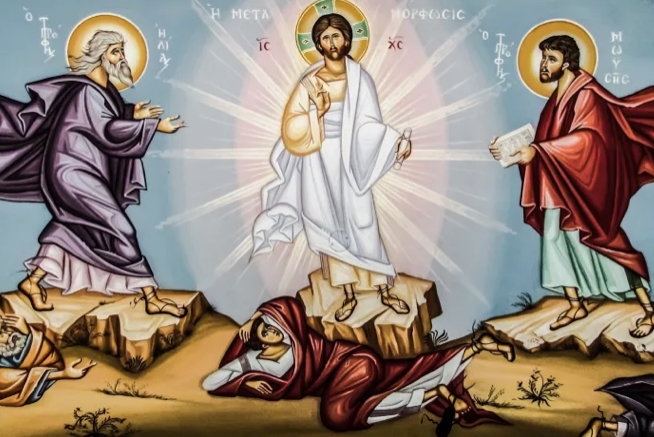
The most basic reading of Jesus’ transfiguration says that these texts reveal who Jesus is, what Jesus did, and what he is still doing for us. Rather than a big announcement or demonstration to all of his disciples, Jesus brings three of his apostolic besties, Peter, James, and John, to join him in experiencing his relationship with God. Instead of going alone up the mountain, as he usually does, Jesus invites them to join him in the cloud(s). And, not surprisingly, the disciples are first confused, and then terrified. Poor Peter, as usual, feels the need to say something to fill the silence, and then all three hit the decks until their friend gently nudges them back to awareness and tells them, implausibly, not to be afraid.
This basic reading follows the pattern of a classic LGBTQ+ coming out story: Jesus lets himself be seen, really seen, as the Christ, as God’s Beloved Child, as our Lord and Savior. And, as in a classic coming out story, his friends’ reactions range from awkward attempts to be present, amazement, fear, and – eventually – a greater understanding of who Jesus is. In that sense, this story, with its images of Jesus’ face shining “like the sun” and of his clothing “white as light” completes the trajectory of light imagery going back to Epiphany and to all of the stories in which Jesus gradually is revealed to God’s Beloved Son and “the true light, which enlightens everyone, [that] was coming into the world.” (John 1:6) The Transfiguration is a sneak preview of the reality of the glorified Christ, a lamp shining in the darkness to comfort his disciples, and us, as we wait for the full dawning of his glory (Cf. 2 Peter 1:19).
This important starting point can comfort us in our dark and frightening world. As LGBTQ+ Catholics and allies, we might take special comfort in remembering Jesus as the Holy One who stays close, who meets us where we are with a gentle word, a loving touch, and a call to see him as he truly is, to rise up, and to not be afraid.
A second aspect of this story also has particular relevance for us as LGBTQ+ Catholics and allies: the Transfiguration isn’t just about revealing who Jesus is, but also about who we are. This moment isn’t just about the presence of God in the life of Jesus, but about the potential presence of God in our own humanity.
Our Eastern Christian siblings have often done a better job of preserving St. Athanasius’ (and countless others’) teaching that “God became human so that humans could become God.” This idea of theosis or divinization suggests that what is revealed in the life of Jesus is not simply Jesus’ particular mission and identity, but also the capacity of a human being – and by extension, of all human beings – to be restored and elevated images of God. When we become adopted children of God, we are brought into a relationship with God Jesus’ relationship with God. St. Augustine writes, “If we have been made sons [children] of God, we have also been made gods.”
That’s shocking language, and it’s meant to be, because it’s language that’s trying to point to the new idea of the relation between God and creation that Jesus’ incarnation exemplifies. It’s odd language. Queer language, even.
Use “queer” here intentionally, drawing upon the scholarship of my friend Andy Buechel, and his book That We Might Become God: The Queerness of Creedal Christianity (from which the quotations from Athanasius and Augustine above are taken). Andy draws upon the meanings of “queer” as strange, as LGBTQ+, and as breaking apart easy identities and seemingly fixed boundaries to unpack the ultimate boundary-breaking of God becoming human – and, by extension, the boundary-breaking of humans becoming divine through their participation in Christ.
From this queer perspective, the story of Christianity is a story of a God who wants to be close to us, breaking through the categories of identity in which we have sought comfort and convenience. What could be more queer, Buechel suggests, than the idea of God become human? Or the idea of humanity and creation as a whole participating so intimately in the life of God?
From this angle, the Transfiguration is not only a story about Jesus revealing something about himself to his friends, but it’s also a story about Jesus revealing something about us, and about who we are called to be. This is why, I think, we hear this story towards the beginning of our Lenten journey – not only to remind us of what Jesus has done for us, but also to remind us of what we are capable of, and what our God is hoping of each of us to become as we are graced into being children of God. If we hold on to that possibility, then this is not only a story about Jesus’ past, but also a story about our–about your–future.
That capacity to see ourselves as capable of holiness, as capable of being the real presence of Christ in the world, is one often denied to LGBTQ+ folks, and yet here we can not only affirm that possibility, but think about how our experience helps us better understand the Incarnation. LGBTQ+ experience opens up the category of queerness in such a way that we can better understand the boundary-transgressing relationship of the divine and the human in Christ, and of our own boundary-transgressing potential as adopted children of God. This is good news for all of us, and not just LGBTQ+ Catholics – God calls everyone to the always more beyond our limits, and God in this Lent is calling us to let go of everything that hinders God’s presence in our hearts and lives.
The transfigured Christ is always already touching us to heal us, to free us from our fear, and, in the fullness of God’s time, to transfigure us in his love. We see in today’s Gospel the deep truth of Jesus’ identity, and the call to listen to him more than to our own fear.
Jesus’ Transfiguration: What a Queer Story!
Today’s Gospel story shines with the light of Jesus’ Transfiguration. But what relevance does this story have for all of us as disciples of Christ, here in the second week of Lent, and for us as LGBTQ+ Catholics and allies, in particular?The most basic reading of Jesus’ transfiguration says that these texts reveal who Jesus is, what Jesus did, and what he is still doing for us. Rather than a big announcement or demonstration to all of his disciples, Jesus brings three of his apostolic besties, Peter, James, and John, to join him in experiencing his relationship with God. Instead of going alone up the mountain, as he usually does, Jesus invites them to join him in the cloud(s). And, not surprisingly, the disciples are first confused, and then terrified. Poor Peter, as usual, feels the need to say something to fill the silence, and then all three hit the decks until their friend gently nudges them back to awareness and tells them, implausibly, not to be afraid.
This basic reading follows the pattern of a classic LGBTQ+ coming out story: Jesus lets himself be seen, really seen, as the Christ, as God’s Beloved Child, as our Lord and Savior. And, as in a classic coming out story, his friends’ reactions range from awkward attempts to be present, amazement, fear, and – eventually – a greater understanding of who Jesus is. In that sense, this story, with its images of Jesus’ face shining “like the sun” and of his clothing “white as light” completes the trajectory of light imagery going back to Epiphany and to all of the stories in which Jesus gradually is revealed to God’s Beloved Son and “the true light, which enlightens everyone, [that] was coming into the world.” (John 1:6) The Transfiguration is a sneak preview of the reality of the glorified Christ, a lamp shining in the darkness to comfort his disciples, and us, as we wait for the full dawning of his glory (Cf. 2 Peter 1:19).
This important starting point can comfort us in our dark and frightening world. As LGBTQ+ Catholics and allies, we might take special comfort in remembering Jesus as the Holy One who stays close, who meets us where we are with a gentle word, a loving touch, and a call to see him as he truly is, to rise up, and to not be afraid.
A second aspect of this story also has particular relevance for us as LGBTQ+ Catholics and allies: the Transfiguration isn’t just about revealing who Jesus is, but also about who we are. This moment isn’t just about the presence of God in the life of Jesus, but about the potential presence of God in our own humanity.
Our Eastern Christian siblings have often done a better job of preserving St. Athanasius’ (and countless others’) teaching that “God became human so that humans could become God.” This idea of theosis or divinization suggests that what is revealed in the life of Jesus is not simply Jesus’ particular mission and identity, but also the capacity of a human being – and by extension, of all human beings – to be restored and elevated images of God. When we become adopted children of God, we are brought into a relationship with God Jesus’ relationship with God. St. Augustine writes, “If we have been made sons [children] of God, we have also been made gods.”
That’s shocking language, and it’s meant to be, because it’s language that’s trying to point to the new idea of the relation between God and creation that Jesus’ incarnation exemplifies. It’s odd language. Queer language, even.
Use “queer” here intentionally, drawing upon the scholarship of my friend Andy Buechel, and his book That We Might Become God: The Queerness of Creedal Christianity (from which the quotations from Athanasius and Augustine above are taken). Andy draws upon the meanings of “queer” as strange, as LGBTQ+, and as breaking apart easy identities and seemingly fixed boundaries to unpack the ultimate boundary-breaking of God becoming human – and, by extension, the boundary-breaking of humans becoming divine through their participation in Christ.
From this queer perspective, the story of Christianity is a story of a God who wants to be close to us, breaking through the categories of identity in which we have sought comfort and convenience. What could be more queer, Buechel suggests, than the idea of God become human? Or the idea of humanity and creation as a whole participating so intimately in the life of God?
From this angle, the Transfiguration is not only a story about Jesus revealing something about himself to his friends, but it’s also a story about Jesus revealing something about us, and about who we are called to be. This is why, I think, we hear this story towards the beginning of our Lenten journey – not only to remind us of what Jesus has done for us, but also to remind us of what we are capable of, and what our God is hoping of each of us to become as we are graced into being children of God. If we hold on to that possibility, then this is not only a story about Jesus’ past, but also a story about our–about your–future.
That capacity to see ourselves as capable of holiness, as capable of being the real presence of Christ in the world, is one often denied to LGBTQ+ folks, and yet here we can not only affirm that possibility, but think about how our experience helps us better understand the Incarnation. LGBTQ+ experience opens up the category of queerness in such a way that we can better understand the boundary-transgressing relationship of the divine and the human in Christ, and of our own boundary-transgressing potential as adopted children of God. This is good news for all of us, and not just LGBTQ+ Catholics – God calls everyone to the always more beyond our limits, and God in this Lent is calling us to let go of everything that hinders God’s presence in our hearts and lives.
The transfigured Christ is always already touching us to heal us, to free us from our fear, and, in the fullness of God’s time, to transfigure us in his love. We see in today’s Gospel the deep truth of Jesus’ identity, and the call to listen to him more than to our own fear.


