The Japan Times
Japan needs Indian migrants. How can it attract them?
‘Improvised perfection’ could become a mantra for foreign residents to thrive
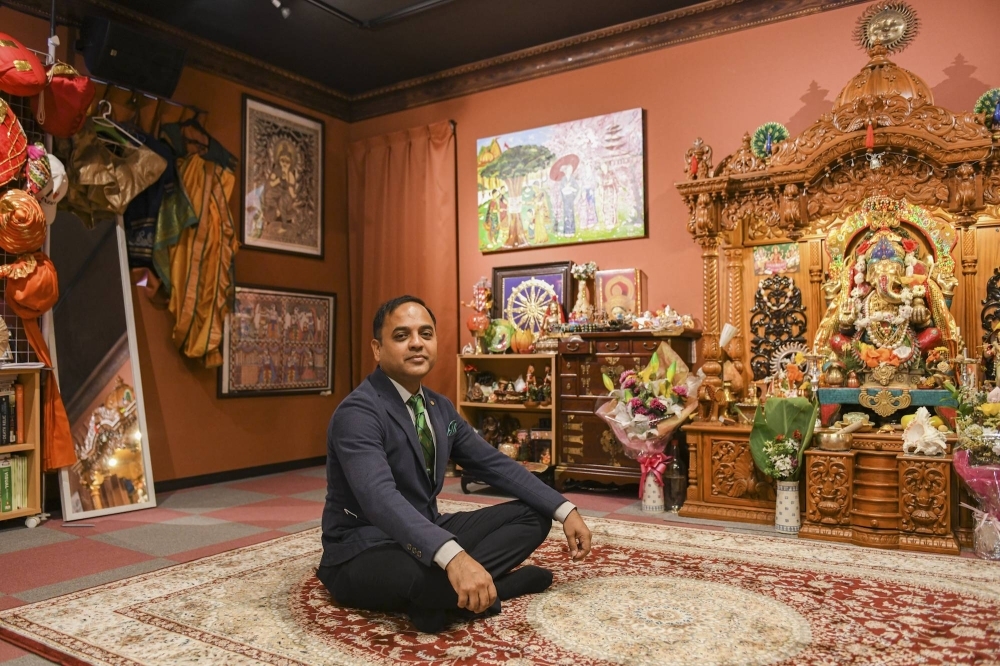
Yogendra Puranik, the first person from India to win elected office in Japan, at the Indian cultural center he manages in Tokyo's Edogawa Ward in October 2022.
By Megha Wadhwa
Contributing Writer
Nov 6, 2023
How much knowledge of foreign residents' cultures should Japan have? How much English proficiency should Japanese people acquire to support migrants in their workplaces?
These questions are essential when considering growing immigration to Japan — with the Indian diaspora, in particular, experiencing a surge.
When I first moved to Japan in 2007, there were 20,589 Indians. Six years later, as I began my academic research into that community, the ranks had grown by a mere 2,000 or so people. However, by December 2022, the number had ballooned to close to 44,000.
A decade ago, I conducted interviews with nearly 100 migrants who had lived in Japan for 10 years or more. Their reasons for moving varied, from the lack of economic opportunities back home, to the pursuit of education in Japan, to company transfers and spousal relocation.
I found that, for many, Japan wasn’t seen as a dream destination like Western countries such as the U.S., U.K. and Canada.
However, as I continue my research, looking into the lives of newer migrants who arrived over the past decade, I have encountered a shift: Alongside the traditional reasons for migrating, new motivations have emerged, including a fascination with anime, cherry blossoms or the works of authors like Haruki Murakami.
Some express fervent dreams of settling in Japan, while a few boast about having been recruited from university campuses in India. I once encountered a female mechanical engineer, hired in 2015 through an Indian campus, who was the first Indian woman her company — a traditional Japanese firm — had ever employed.
The first Indian merchants arrived in Japan in the early 1870s to facilitate the trade in Japanese silk. Fast-forward 150 years, and the landscape has undergone a notable transformation, with a surge in skilled Indian professionals in Japan.
The pivotal role of India's IT boom in changing the country’s image worldwide and propelling overseas demand — further fueled by demographic decline in developed nations — for its migrants cannot be overstated.
A shift in Japan’s own perception of India is also evident. In my first years living here, I often encountered Japanese students of various ages at eikaiwa (“English conversation” schools) in Tokyo who had a limited understanding of my country, often associating it with culinary stereotypes like naan and curry, as well as hot weather, abject poverty and religious fervor.
Some were also surprised to meet an Indian who spoke fluent English. Many of these perceptions, albeit laced with genuine curiosity, combined to form a caricature of India picked up either from domestic media or school textbooks.
On one occasion, a high school student inquired if I used to commute to work in Delhi atop an elephant. I elaborated on the intricacies of navigating Delhi's bustling streets and parking issues, and the impracticality of an elephant in such a scenario. My efforts to paint a humorous, but also more comprehensive, portrait bore fruit as she gradually came to grasp India’s multifaceted nature.
In recent times, Japanese have begun recognizing India as a rapidly growing economic force, adding a new narrative to their existing perceptions. There has been a shift from “where is India?” to “wow, India!”
The political, strategic and economic relationship between India and Japan has undergone significant changes since the end of the Cold War.
In 1998, India's first nuclear test strained relations with Japan, but former Prime Minister Yoshiro Mori's visit to India in August 2000 marked an improvement. Since then, the relationship has grown stronger. In 2016, there was a significant turnaround as the two nations signed an agreement to collaborate in the peaceful application of nuclear energy.
Both countries are making efforts to promote Japan as a destination not only for highly skilled, but also unskilled Indian migrants. Obversely, India is increasingly seen as an attractive destination for Japanese businesses and investment.
In India, Japan is associated with diligence and the pursuit of perfectionism; an emphasis is being placed on educating prospective migrants on Japanese culture and language, and how Indians can learn valuable lessons from Japan’s disciplined approach.
As an Indian migrant to Japan, I can attest to the appeal of this idealized notion and that most of us genuinely appreciate the safety, politeness and cleanliness that Japan, generally, offers. However, as a scholar who has spent almost a decade listening to migrants’ stories and challenges, I cannot help but be critical of how, in many cases, people are lured into the migrant “dream” without being given the full picture.
Some Indians are promised a certain job profile when they are hired but end up working on something completely different, which can lead to deskilling. Others are promised a global work environment, only to find themselves bogged down with meetings and documentation only in Japanese. And then there are the trailing spouses, mostly women, some of whom have to spend years re-skilling and re-establishing themselves in their careers alongside balancing responsibilities in the home.
Growing up in a country where jugaad — often translated as “improvisation” — is a way of life, the pressure of being a perfectionist once in Japan can be mentally and physically overwhelming. The idealized image of a flawless Japan can quickly turn into a nightmare.
This is often compounded by the pressure that new migrants face from within the established Indian diaspora, who may forget the challenges they experienced when they first arrived and, instead, offer strict instruction on Japanese customs, expecting quick assimilation.
In the past, countries like India were a source of indentured laborers who were at the mercy of their host societies and subjected to strict rules. However, times have changed. In a more globalized world, migration has become a two-way street and developed nations like Japan require migrants to fill gaps in the labor market as their populations age and shrink.
Therefore, in answer to the questions I raised at the outset, I can answer that, if learning an additional language is beneficial for foreigners, the same is true for Japanese people.
Also, combining jugaad and the pursuit of kodawari, “perfection” in Japanese, should make the India-Japan partnership unbeatable. But to realize this vision, it is imperative for Japan to make a genuine effort to understand the intricacies of the various cultural groups that contribute to its society and economic growth, and embrace them wholeheartedly.
An intercultural approach aimed at fostering a deeper understanding, beyond mere stereotypes, can play a pivotal role in minimizing everyday aggressions and microaggressions, and promoting awareness about foreign cultures.
Such initiatives not only have the potential to attract Indian migrants but also make life a more positive experience for all foreign residents.
As is so often the case in Japan, discussing these ideas and committing to them are likely to be arduous and lengthy tasks. But the beauty of kodawari is that, once Japan makes up its mind, things can change pretty fast — and that is potentially good news for Indian migrants and the companies in Japan that need them.
Megha Wadhwa is a faculty member at the Free University of Berlin's Japanese Studies department and teaches at Temple University Japan. She is the author of “Indian Migrants in Tokyo: A Study of Socio-Cultural, Religious, and Working Worlds” (Routledge, 2021).
Yogendra Puranik, the first person from India to win elected office in Japan, at the Indian cultural center he manages in Tokyo's Edogawa Ward in October 2022. | Noriko Hayashi / The New York Times
(+)
Source : https://www.japantimes.co.jp/commentary/2023/11/06/japan/india-diaspora-japan-growing-myths/
Japan needs Indian migrants. How can it attract them?
‘Improvised perfection’ could become a mantra for foreign residents to thrive
Yogendra Puranik, the first person from India to win elected office in Japan, at the Indian cultural center he manages in Tokyo's Edogawa Ward in October 2022.
By Megha Wadhwa
Contributing Writer
Nov 6, 2023
How much knowledge of foreign residents' cultures should Japan have? How much English proficiency should Japanese people acquire to support migrants in their workplaces?
These questions are essential when considering growing immigration to Japan — with the Indian diaspora, in particular, experiencing a surge.
When I first moved to Japan in 2007, there were 20,589 Indians. Six years later, as I began my academic research into that community, the ranks had grown by a mere 2,000 or so people. However, by December 2022, the number had ballooned to close to 44,000.
A decade ago, I conducted interviews with nearly 100 migrants who had lived in Japan for 10 years or more. Their reasons for moving varied, from the lack of economic opportunities back home, to the pursuit of education in Japan, to company transfers and spousal relocation.
I found that, for many, Japan wasn’t seen as a dream destination like Western countries such as the U.S., U.K. and Canada.
However, as I continue my research, looking into the lives of newer migrants who arrived over the past decade, I have encountered a shift: Alongside the traditional reasons for migrating, new motivations have emerged, including a fascination with anime, cherry blossoms or the works of authors like Haruki Murakami.
Some express fervent dreams of settling in Japan, while a few boast about having been recruited from university campuses in India. I once encountered a female mechanical engineer, hired in 2015 through an Indian campus, who was the first Indian woman her company — a traditional Japanese firm — had ever employed.
The first Indian merchants arrived in Japan in the early 1870s to facilitate the trade in Japanese silk. Fast-forward 150 years, and the landscape has undergone a notable transformation, with a surge in skilled Indian professionals in Japan.
The pivotal role of India's IT boom in changing the country’s image worldwide and propelling overseas demand — further fueled by demographic decline in developed nations — for its migrants cannot be overstated.
A shift in Japan’s own perception of India is also evident. In my first years living here, I often encountered Japanese students of various ages at eikaiwa (“English conversation” schools) in Tokyo who had a limited understanding of my country, often associating it with culinary stereotypes like naan and curry, as well as hot weather, abject poverty and religious fervor.
Some were also surprised to meet an Indian who spoke fluent English. Many of these perceptions, albeit laced with genuine curiosity, combined to form a caricature of India picked up either from domestic media or school textbooks.
On one occasion, a high school student inquired if I used to commute to work in Delhi atop an elephant. I elaborated on the intricacies of navigating Delhi's bustling streets and parking issues, and the impracticality of an elephant in such a scenario. My efforts to paint a humorous, but also more comprehensive, portrait bore fruit as she gradually came to grasp India’s multifaceted nature.
In recent times, Japanese have begun recognizing India as a rapidly growing economic force, adding a new narrative to their existing perceptions. There has been a shift from “where is India?” to “wow, India!”
The political, strategic and economic relationship between India and Japan has undergone significant changes since the end of the Cold War.
In 1998, India's first nuclear test strained relations with Japan, but former Prime Minister Yoshiro Mori's visit to India in August 2000 marked an improvement. Since then, the relationship has grown stronger. In 2016, there was a significant turnaround as the two nations signed an agreement to collaborate in the peaceful application of nuclear energy.
Both countries are making efforts to promote Japan as a destination not only for highly skilled, but also unskilled Indian migrants. Obversely, India is increasingly seen as an attractive destination for Japanese businesses and investment.
In India, Japan is associated with diligence and the pursuit of perfectionism; an emphasis is being placed on educating prospective migrants on Japanese culture and language, and how Indians can learn valuable lessons from Japan’s disciplined approach.
As an Indian migrant to Japan, I can attest to the appeal of this idealized notion and that most of us genuinely appreciate the safety, politeness and cleanliness that Japan, generally, offers. However, as a scholar who has spent almost a decade listening to migrants’ stories and challenges, I cannot help but be critical of how, in many cases, people are lured into the migrant “dream” without being given the full picture.
Some Indians are promised a certain job profile when they are hired but end up working on something completely different, which can lead to deskilling. Others are promised a global work environment, only to find themselves bogged down with meetings and documentation only in Japanese. And then there are the trailing spouses, mostly women, some of whom have to spend years re-skilling and re-establishing themselves in their careers alongside balancing responsibilities in the home.
Growing up in a country where jugaad — often translated as “improvisation” — is a way of life, the pressure of being a perfectionist once in Japan can be mentally and physically overwhelming. The idealized image of a flawless Japan can quickly turn into a nightmare.
This is often compounded by the pressure that new migrants face from within the established Indian diaspora, who may forget the challenges they experienced when they first arrived and, instead, offer strict instruction on Japanese customs, expecting quick assimilation.
In the past, countries like India were a source of indentured laborers who were at the mercy of their host societies and subjected to strict rules. However, times have changed. In a more globalized world, migration has become a two-way street and developed nations like Japan require migrants to fill gaps in the labor market as their populations age and shrink.
Therefore, in answer to the questions I raised at the outset, I can answer that, if learning an additional language is beneficial for foreigners, the same is true for Japanese people.
Also, combining jugaad and the pursuit of kodawari, “perfection” in Japanese, should make the India-Japan partnership unbeatable. But to realize this vision, it is imperative for Japan to make a genuine effort to understand the intricacies of the various cultural groups that contribute to its society and economic growth, and embrace them wholeheartedly.
An intercultural approach aimed at fostering a deeper understanding, beyond mere stereotypes, can play a pivotal role in minimizing everyday aggressions and microaggressions, and promoting awareness about foreign cultures.
Such initiatives not only have the potential to attract Indian migrants but also make life a more positive experience for all foreign residents.
As is so often the case in Japan, discussing these ideas and committing to them are likely to be arduous and lengthy tasks. But the beauty of kodawari is that, once Japan makes up its mind, things can change pretty fast — and that is potentially good news for Indian migrants and the companies in Japan that need them.
Megha Wadhwa is a faculty member at the Free University of Berlin's Japanese Studies department and teaches at Temple University Japan. She is the author of “Indian Migrants in Tokyo: A Study of Socio-Cultural, Religious, and Working Worlds” (Routledge, 2021).
Yogendra Puranik, the first person from India to win elected office in Japan, at the Indian cultural center he manages in Tokyo's Edogawa Ward in October 2022. | Noriko Hayashi / The New York Times
(+)
Source : https://www.japantimes.co.jp/commentary/2023/11/06/japan/india-diaspora-japan-growing-myths/


