Historical images - Images that made history

  • Want to keep track of this thread?
    Accounts can bookmark posts, watch threads for updates, and jump back to where you stopped reading.
    Create account
tumblr_ofen75p2JX1u5yqcfo1_640.jpg


scary-vintage-halloween-creepy-costumes-43-57f6615593cba__605.jpg


https://sneed.hswstatic.com/gif/stuffyoushouldknow-14-2013-09-vintage-halloween6.jpg

https://sneed.hswstatic.com/gif/stuffyoushouldknow-14-2013-09-vintage-halloween22.jpg

Vintage Halloween costumes.
 
709329


Queen, December 7, 1978, Chicago, Illinois.

709332


Queen, July 12, 1986, Wembley Stadium, London

709333


The last picture taken of Freddie Mercury, February of 1990. He's wearing an oversized suit to disguise the ravages of AIDS. He passed away on November 24th of 1991.
 
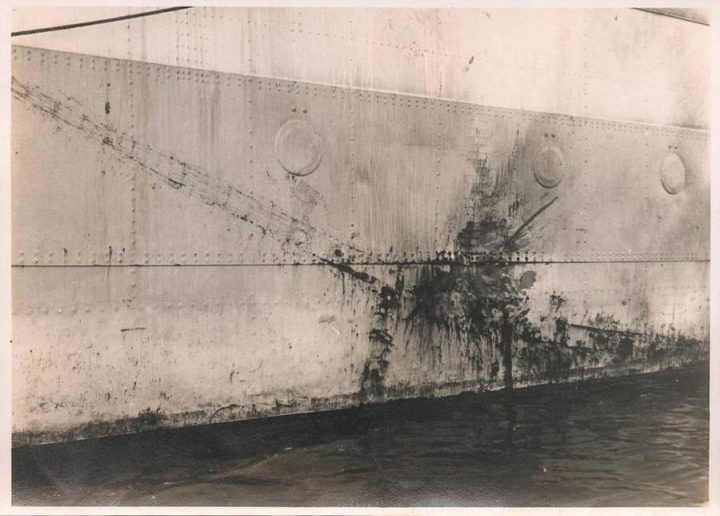
Imprint of a Mitsubishi Ki-51 "Sonia" dive bomber that was deliberately flown by it's pilot into the side of the cruiser HMS Sussex in a kamikaze suicide attack, closing months of WWII - July 26, 1945. There is perhaps no better illustration of the futility of the Japanese defense and mindset at the time than a man being willing to give his life for nothing more than to make a half-meter dent in the side of a warship - The very ship that the Japanese commander of the last remaining garrison at Singapore would surrender on two months later in September.

It was a desperate, wasteful and ultimately pointless gesture, in every sense.
bX1kn.jpg
 
Last edited:
The early cast of Saturday Night Live in the late 1970's.

_Cr5asHwzrwylpOGNjKA7KUqe9oxoIzsep_uhS7BVCU.jpg


Hugh Laurie and Stephen Fry play chess in Fry's rooms at Cambridge, 1980.

3630008956.3.jpg
 
Last edited:
Imprint of a Mitsubishi Ki-51 "Sonia" dive bomber that was deliberately flown by it's pilot into the side of the cruiser HMS Sussex in a kamikaze suicide attack, closing months of WWII - July 26, 1945. There is perhaps no better illustration of the futility of the Japanese defense and mindset at the time than a man being willing to give his life for nothing more than to make a half-meter dent in the side of a warship - The very ship that the Japanese commander of the last remaining garrison at Singapore would surrender on two months later in September.

It was a desperate, wasteful and ultimately pointless gesture, in every sense.
bX1kn.jpg
One thing to keep in mind is the almost hilariously asymmetric nature of the pacific war, especially in the later stages.

Past Midway, the Japanese lacked resources to actually deploy their fleet in any meaningful way, similarly, the huge imbalance in war-production started to affect warfare and snowballed out of control for the Japanese. Combine that with newer and better planes and technology on the side of the US with stagnating (or at worst even depreciating) technology of the Japanese and the whole idea of Kamikaze comes under a completely new light.
At the beginning of the Kamikaze attacks, casualties for aircraft had been very high to begin with and the effectiveness of regular attacks were comparatively low.
When the Kamikaze first were deployed, the idea was to use them in limited numbers (usually only a dozen or so planes in a group of 100+ were designated Kamikaze) to even out the battlefield, to stall US progress and to hopefully impact US willingness to fight.
This was very effective at the beginning, but US tactics soon adapted and Japan's shrinking number of well-kept planes didn't help either.
At the end, you'd have an asortment of (say) 100ish random planes, ranging from actually decent planes to old training aircraft, in various states of neglected maintenance, flown by poorly trained pilots on one hand against an entire carrier group that fields more than a hundred well-maintained, well-built airplanes just as scouts in the air simultaneously, flown by skilled, experienced combat-hardened pilots with the carriers being capable of starting to launch 200+ more aircraft within minutes of spotting an enemy plane.
On the strategic level, the US had an amazing amount of intel based on numerous scout planes, radar and the other carrier groups, meanwhile, the Japanese oftentimes didn't know their enemy's location, his numbers, his composition... or even just the weather in the intended battlefield.
Under such circumstances, even a regular attack would net you a casualty rate in excess of 90%. Sending out planes was a suicide mission, no matter whether they had been literally ordered to ram a ship or not. Kamikaze attacks also almost trippled the ranges of these planes, since you didn't really expect them to engage for a long time and then head back, which was another huge factor in strategic thinking, given the lack of carriers and the long distances involved to strike at carrier groups that were preparing to assault some forward base on a remote island.

I guess what I'm saying is: The "desperate, wasteful and ultimately pointless gesture" wasn't so much the Kamikaze attacks themselves, it was keeping on fighting in the first place.
 
corpse_custom-1a2c8e99bc85469ad8a5a976f4bfbc91d056a09a-s800-c85.jpg

The audio of him cursing out the idiots who sent him up to die because he already knew when he went up that the mission was doomed.


He volunteered for the doomed mission, knowing he was going to die, so that his friend Yuri Gagarin would not die.
 
The audio of him cursing out the idiots who sent him up to die because he already knew when he went up that the mission was doomed.

https://youtube.com/watch?v=3Z_m7onLw74
He volunteered for the doomed mission, knowing he was going to die, so that his friend Yuri Gagarin would not die.

I read about it. It was such a noble thing to do for a friend. And it's such a scary story that they sent up a person knowing it was doomed.
 
Soviet WW2 sniper Roza Shanina (1924-1945, 59 confirmed kills)
714362

Soviet sniper Ludmila Pavlitjenko (1916-1974, credited with 309 kills)
714367
 
Last edited:
1973 Formula 1 driver David Purley standing next to the racetrack of Zandvoort, Netherlands, desperately motioning for help, while the wreck of Roger Williamson's car burns in the background with its driver still trapped inside.
david-purley-roger-williamson-crash-1973-dutch-gp.jpg


Roger Williamson's car suffered a tyre failure in lap 8, leading him to crash at high velocity, the car flipping upside down and skidding over the racetrack for hundreds of meters, engulfed in flames.
When it came to a rest, Purley, witnessing the crash of his friend, stopped his car and ran across the racetrack and tried to help Williams, who was unable to get out of the car. Purley even grabbed an extinguisher from the marshalls and tried his best to put out the fire, but it just wasn't enough.
Racetrack marshalls were not wearing fireproof overalls at the time, meaning they were of little help while Purley attempted to free Williamson.
Other drivers thought Purley was the driver of the burning car, thus they didn't come to help, even as he motioned them to stop.
Spectators, who wanted to help, were held back by police with dogs. It took several minutes for a firefighter crew to arrive.

a49f538c64c96d85fd28e1ad173fb50e.jpg


Purley said he could hear his friend's screams while they were trying to overturn the car and extinguish the fire.

Unfortunately, Purley's brave actions could not prevent Williams' death.
tumblr_mv8z3wD9491re5o97o1_400.jpg
The body was recovered after the race was over.

If you truly want to ruin your day, watch the video.
 
I read about it. It was such a noble thing to do for a friend. And it's such a scary story that they sent up a person knowing it was doomed.

The real tragedy was, even then, even flying an underdeveloped and untested prototype craft, even knowing it would probably kill him, even after it had critically malfunctioned, just like he knew it would, in spit of it all, he ALMOST made it back.

Through a remarkable personal effort, he got himself lined up for a proper return and survived reentry, only to die because of a final malfunction of his parachutes, causing him to hit the ground as a human meteorite.

Astronauts/Cosmonauts are made of some pretty stout stuff.


1973 Formula 1 driver David Purley standing next to the racetrack of Zandvoort, Netherlands, desperately motioning for help, while the wreck of Roger Williamson's car burns in the background with its driver still trapped inside.

The "daredevil" nature of F-1 in the 60's and early 70's can only really be appreciated by looking at the Wikipedia list of F1 drivers who died in that era. It's shockingly long, but understandable when you realize that a culture of safety didn't exist. Most tracks had no retaining walls, and if they did, they were either flammable haybales, or flimsy metal highway barriers that did nothing, except decapitate you if you hit them wrong. One of the more ghoulish ways to go, and it wasn't even a one-time event. As shown in the film Drive, (a large part of it centered on Nikki Lauda recovering from a fiery near-fatal accident at Nuremburg) shows the aftermath of an F-1 crash at Watkins Glen wherein a car was able to punch through the poorly-secured lower section of guardrail, leaving the top section intact for the driver to run face-first into with predictably messy results. Such an accident happened twice in the early 70's, killing both Francois Cevert and Helmuth Konigg.

There also were no dedicated safety personnel/marshals. Fire equipment, if it was present, was locally provided by volunteers who knew little about rescue/firefighting in a race setting, and didn't have modern extraction tools to get someone trapped in a wrecked car out quickly.

In an oft-told story by Jackie Stewart, he recalls the time that he crashed at Spa in 1966 and not only spent an inordinate amount of time trapped in his car, pinned by the steering wheel, as it slowly filled with leaking gasoline, but once they got him out.... the ambulance got lost on the way to the hospital.
 
Through a remarkable personal effort, he got himself lined up for a proper return and survived reentry, only to die because of a final malfunction of his parachutes, causing him to hit the ground as a human meteorite.

If you ever wondered why Russians have such a dark, fatalistic sense of humor, that parachute shit would be an example.
 
Detroit race riots in 1967

717243
717244


The 1919-1920s (First red scare in the US, Spartacus uprising in Germany), and 60-70's (Red Army Faction in West Germany, Maoists in Japan, Pro Imperialists bombings in France)were so violent. Why do zoomer retards think we're anywhere near a civil war today? Because some homo said some retarded shit on twitter? In terms of sheer scale and numbers its a fuckin joke.

They lack perspective. Europe and the US were drowning in civil unrest, terrorist acts, and violent crime through much of the 60s-90s, to a degree that makes modern shit look like nothing. Zoomers today just don't know how crazy shit was, so they think a scuffle between left wing and right wing protesters that results in a few arrests is a big deal.

Ground Koreans in the 92 LA riots
717245
 
Back
Top Bottom