Historical images - Images that made history

  • Want to keep track of this thread?
    Accounts can bookmark posts, watch threads for updates, and jump back to where you stopped reading.
    Create account
School shooter Kip Kinkel. He taped a bullet to his chest so he wouldn't run out of ammunition (meant to be used on himself)
sdifjs;fis.jpg
 
flying_first_class_1960s (1).jpg

Flying first class on Swissair, 1950s

batman 1989.PNG

Batman merchandise for sale in a mall, 1989


Guardian Angels on the NYC subway, 1980.jpg

Guardian Angels on the New York City subway, 1980


president_nixon_quarantine_astronauts_1969.jpg


Richard Nixon meets with the quarantined Apollo 11 crew, 1969
 
president_nixon_quarantine_astronauts_1969-jpg.646266


Richard Nixon meets with the quarantined Apollo 11 crew, 1969

Fun Fact:
This quarantine module was placed inside the hangar of the Carrier that picked up the Apollo 11 crew.
As a precaution, Marine One was on standby on the Carrier deck with running engine, in case Nixon would have to make a quick escape. Had anything happened, he would have made a dash through the hangar, up a flight of stairs, climb into the helicopter and they'd take off immediately, leaving all the reporters and so on behind.

Sounds like a neat foundation for an alternate history/horror movie, doesn't it?
 
this is Masato Shinohara, a worker at a tokaimura nuclear power plant who got hit by a massive dose of radiation when a tank of uranium solution he was working on suddenly went critical.
the incident happened on september 30, 1999. he survived in hospital until april 2000.
The last picture is frequently mis-attributed to this event, but is most likely not a picture of the victim, as the incredibly detailed medical records do not mention anything about amputation of the feet.

Also, I’ve always seen the guy named as “ouchi”, which I suppose is appropriate.
 
this is Masato Shinohara, a worker at a tokaimura nuclear power plant who got hit by a massive dose of radiation when a tank of uranium solution he was working on suddenly went critical.
the incident happened on september 30, 1999. he survived in hospital until april 2000.

If you are ever exposed to this level of radiation, use your opportunity to shoot yourself in the head.
 
this is Masato Shinohara, a worker at a tokaimura nuclear power plant who got hit by a massive dose of radiation when a tank of uranium solution he was working on suddenly went critical.
the incident happened on september 30, 1999. he survived in hospital until april 2000.

IIRC, Ouchi was exposed to 17 Sv*, while his colleagues received around 3-10 Sv.

During his stay in the University of Tokyo Hospital, his chromosomes and immune system got destroyed and the white blood cell count dropped to near zero, that he was even given:

- World's first peripheral stem cell transfusion
- A shitload of blood transfusions
- Fluids
- Skin transplants
- Medicine that wasn’t available in Japan at that moment.

At the 59th day, he got resuscitated when his heart stopped 3 times within a period of 49 minutes. Despite he requested the doctors to let him die, they decided to keep him alive and as a guinea pig against his will. After 83 days of struggle, transfusions, meds and transplants, he died due to a multiple organ failure and the doctors didn't resuscitate him after his family pressured them to give him a peaceful death (I'm not sure if Ouchi's family found out about his request earlier, though).

In short, this poor nigga and one of his colleagues had extremely painful deaths.


NOTE: There's a book based on this: https://www.goodreads.com/book/show/5496513-a-slow-death

*= 8 Sv is considered fatal, and 50 milli Sv is the maximum limit of annual dose allowed for Japanese nuclear workers.
 
Last edited:
IIRC, Ouchi was exposed to 17 Sv*, while his colleagues received around 3-10 Sv.

During his stay in the University of Tokyo Hospital, his chromosomes and immune system got destroyed and the white blood cell count dropped to near zero, that he was even given:

- World's first peripheral stem cell transfusion
- A shitload of blood transfusions
- Fluids
- Skin transplants
- Medicine that wasn’t available in Japan at that moment.

At the 59th day, he got resuscitated when his heart stopped 3 times within a period of 49 minutes. Despite he requested the doctors to let him die, they decided to keep him alive and as a guinea pig against his will. After 83 days of struggle, transfusions, meds and transplants, he died due to a multiple organ failure and the doctors didn't resuscitate him after his family pressured them to give him a peaceful death (I'm not sure if Ouchi's family found out about his request earlier, though).

In short, this poor nigga and one of his colleagues had extremely painful deaths.


NOTE: There's a book based on this: https://www.goodreads.com/book/show/5496513-a-slow-death

*= 8 Sv is considered fatal, and 50 milli Sv is the maximum limit of annual dose allowed for Japanese nuclear workers.
Afaik, they didn't keep him alive out of some malicious idea to use him as a guinea pig and rather out of a legal obligation to prolong their patients survival as long as possible, no matter the cost.

It's the same in many jurisdictions around the globe, where doctors are essentially forced to prolong the suffering of someone who might prefer to die, but "medicide" isn't legal and simply letting him die is seen as a failure to render medical assistance.
 
Afaik, they didn't keep him alive out of some malicious idea to use him as a guinea pig and rather out of a legal obligation to prolong their patients survival as long as possible, no matter the cost.

It's the same in many jurisdictions around the globe, where doctors are essentially forced to prolong the suffering of someone who might prefer to die, but "medicide" isn't legal and simply letting him die is seen as a failure to render medical assistance.

https://en.wikipedia.org/wiki/Legality_of_euthanasia

Japan
The Japanese government has no official laws on the status of euthanasia and the Supreme Court of Japan has never ruled on the matter. Rather, to date, Japan's euthanasia policy has been decided by two local court cases, one in Nagoya in 1962, and another after an incident at Tokai University in 1995. The first case involved "passive euthanasia"(消極的安楽死 shōkyokuteki anrakushi) (i.e., allowing a patient to die by turning off life support) and the latter case involved "active euthanasia" (積極的安楽死 sekkyokuteki anrakushi) (e.g., through injection). The judgments in these cases set forth a legal framework and a set of conditions within which both passive and active euthanasia could be legal. Nevertheless, in both of these particular cases the doctors were found guilty of violating these conditions when taking the lives of their patients. Further, because the findings of these courts have yet to be upheld at the national level, these precedents are not necessarily binding. Nevertheless, at present, there is a tentative legal framework for implementing euthanasia in Japan.[50]

In the case of passive euthanasia, three conditions must be met:

  1. the patient must be suffering from an incurable disease, and in the final stages of the disease from which he/she is unlikely to make a recovery;
  2. the patient must give express consent to stopping treatment, and this consent must be obtained and preserved prior to death. If the patient is not able to give clear consent, their consent may be determined from a pre-written document such as a living will or the testimony of the family;
  3. the patient may be passively euthanized by stopping medical treatment, chemotherapy, dialysis, artificial respiration, blood transfusion, IV drip, etc.
For active euthanasia, four conditions must be met:

  1. the patient must be suffering from unbearable physical pain;
  2. death must be inevitable and drawing near;
  3. the patient must give consent. (Unlike passive euthanasia, living wills and family consent will not suffice.)
  4. the physician must have (ineffectively) exhausted all other measures of pain relief.
The problems that arose from this, in addition to the problem faced by many other families in the country, has led to the creation of "bioethics SWAT teams".[51] These teams will be made available to the families of terminally ill patients in order to help them, along with the doctors, come to a decision based on the personal facts of the case. Though in its early stages and relying on "subsidies from the Ministry of Health, Labor and Welfare" there are plans to create a nonprofit organization to "allow this effort to continue.

I personally think that what happened to Ouchi and his colleagues is the very last thing people ever want to experience...

EDIT: I've found an interesting post: https://www.reddit.com/user/willowo...t/83_days_of_radiation_sickness_the_death_of/

____________

Pripyat at night, some years before the 1986 nuclear accident.

DK1XS3TXoAY5eYY
 
Last edited:
SHORPY-303-01.jpg

New York City bodega, 1947

SHORPY-1284.jpg

Teenage boy and his gun collection, Columbus, GA 1959


SHORPY-8c05523a.jpg

Ft. Benning soldiers on liberty in Phenix City, Alabama, 1941

SHORPY-40859a.jpg


Harry Houdini about to jump into the Charles River in Boston, 1908
 
SHORPY-318-02.jpg

Civil War reenactors driving a rare GM Sheridan sedan, 1920s.

SHORPY-8c32317a.jpg

Comic books and magazines for sale, Rohnert Park, CA 1942

SHORPY_09549u.jpg

Tuskegee Airmen being issues 'exit kits' i.e. suicide pills, Italy, 1945
 
276072d1306674042-hello-kitty-murder-tsim-sha-tsui-hong-kong-1999-4ab8cbe8ae918.jpg
The hello kitty doll in the infamous Hello Kitty Murder.
There's a boiled human head in it...
Edit: Hong Kong has many fucked up things happened. Sure, the casualty number cannot be on per with the Great America. But there's a lot of disembodiment, filming of said disembodiment and necrophilia.
This case in particular, just show how sadistic people can be. Just search it up if you want to.
 
Last edited:
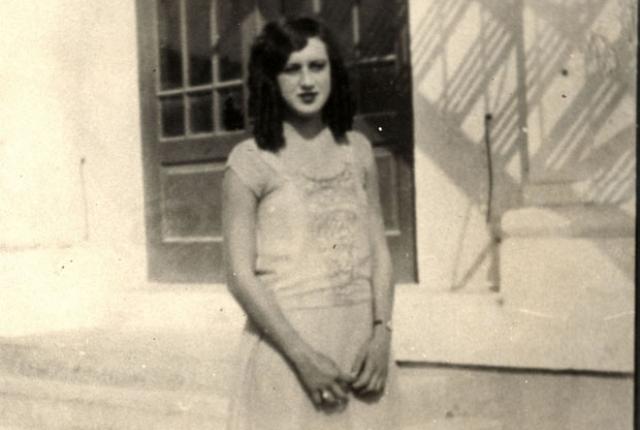
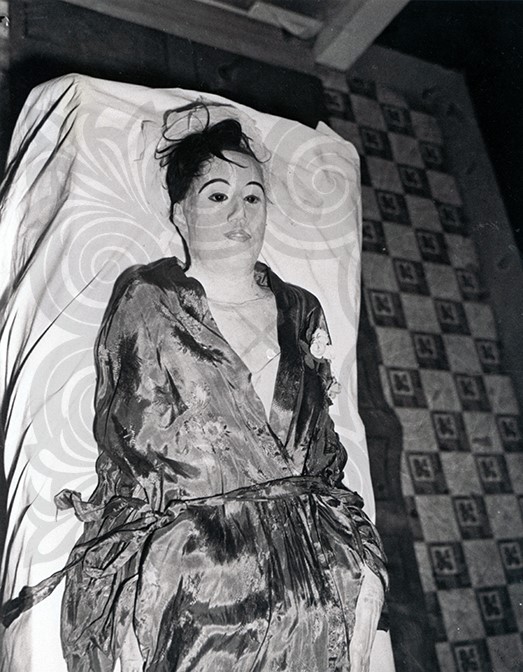
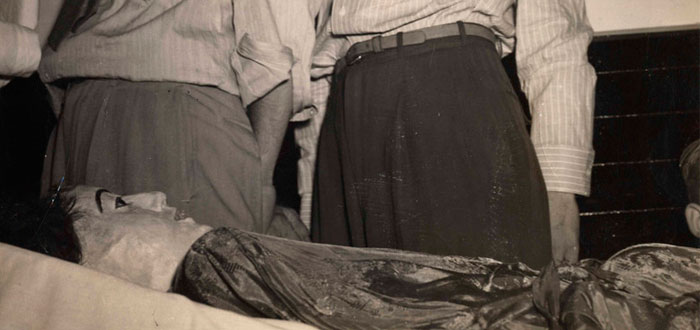
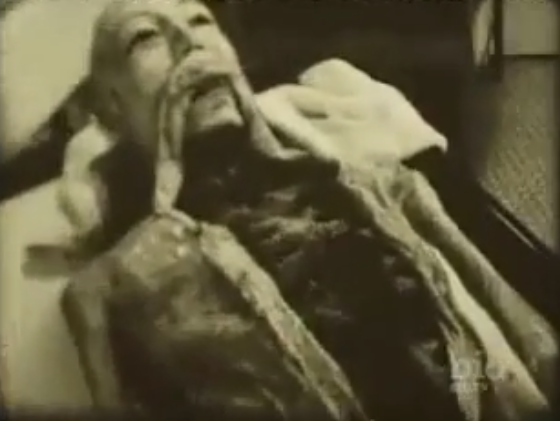
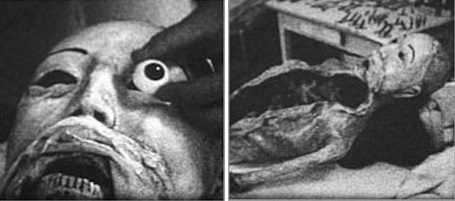
Dr. Carl Tanzler, who've developed an unhealthy obsession for a young Cuban-American tuberculosis patient María Elena Milagro de Hoyos (she died despite his efforts), to the point of removing her body from its tomb in 1933 and lived with the corpse at his home, until his ass got caught by authorities and her relatives in 1940

Carl_Tanzler.jpg

PpuYHbx.jpg

^ Elena Hoyos, when she was alive.

Her corpse's skin was replaced with contained silk cloth soaked in wax and plaster. Tanzler used a shitload of perfume, preserving agents and other stuff to mask its odor and keep her decaying body intact.

WoStQhb.jpg

lUR2Zbj.jpg

hIqoAi7.png

1hAYRMe.jpg
 
Last edited:
Back
Top Bottom