Heat Down Below Is Making the Ground Shift Under Chicago
The New York Times (archive.ph)
By Raymond Zhong
Photographs by Jamie Kelter Davis
2023-07-11 09:00:44GMT
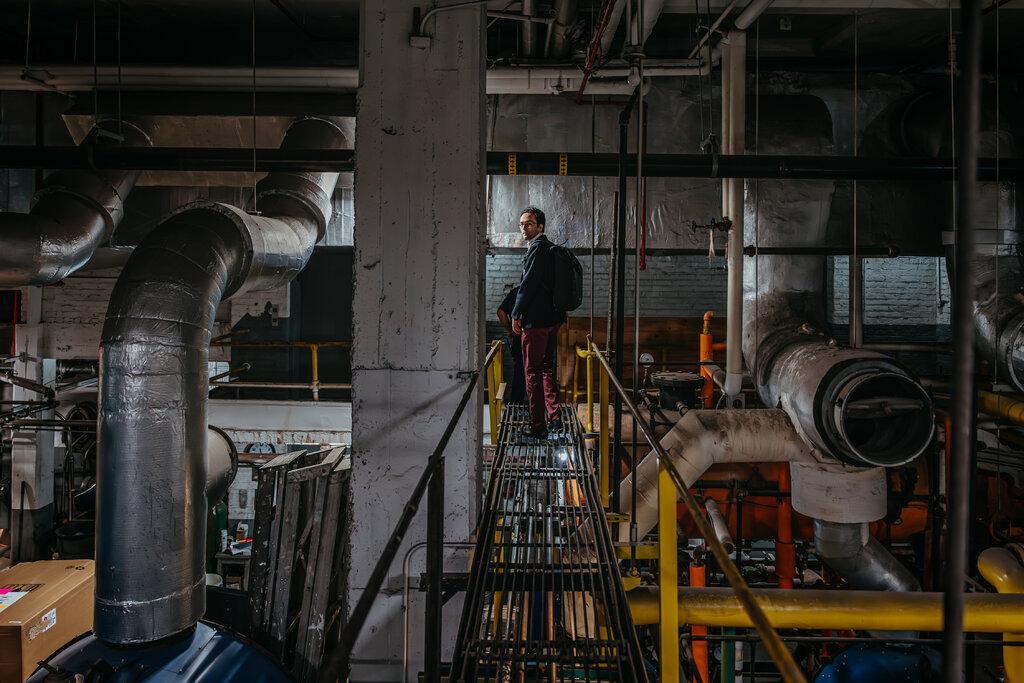
Alessandro F. Rotta Loria, an assistant professor at Northwestern University, walked through a boiler room of the Union League Club of Chicago to examine a temperature sensor.
Underneath downtown Chicago’s soaring Art Deco towers, its multilevel roadways and its busy subway and rail lines, the land is sinking, and not only for the reasons you might expect.
Since the mid-20th century, the ground between the city surface and the bedrock has warmed by 5.6 degrees Fahrenheit on average, according to a new study out of Northwestern University. All that heat, which comes mostly from basements and other underground structures, has caused the layers of sand, clay and rock beneath some buildings to subside or swell by several millimeters over the decades, enough to worsen cracks and defects in walls and foundations.
“All around you, you have heat sources,” said the study’s author, Alessandro F. Rotta Loria, walking with a backpack through Millennium Station, a commuter rail terminal underneath the city’s Loop district. “These are things that people don’t see, so it’s like they don’t exist.”
It isn’t just Chicago. In big cities worldwide, humans’ burning of fossil fuels is raising the mercury at the surface. But heat is also pouring out of basements, parking garages, train tunnels, pipes, sewers and electrical cables and into the surrounding earth, a phenomenon that scientists have taken to calling “underground climate change.”
Rising underground temperatures lead to warmer subway tunnels, which can cause overheated tracks and steam-bath conditions for commuters. And, over time, they cause tiny shifts in the ground beneath buildings, which can induce structural strain, whose effects aren’t noticeable for a long time until suddenly they are.
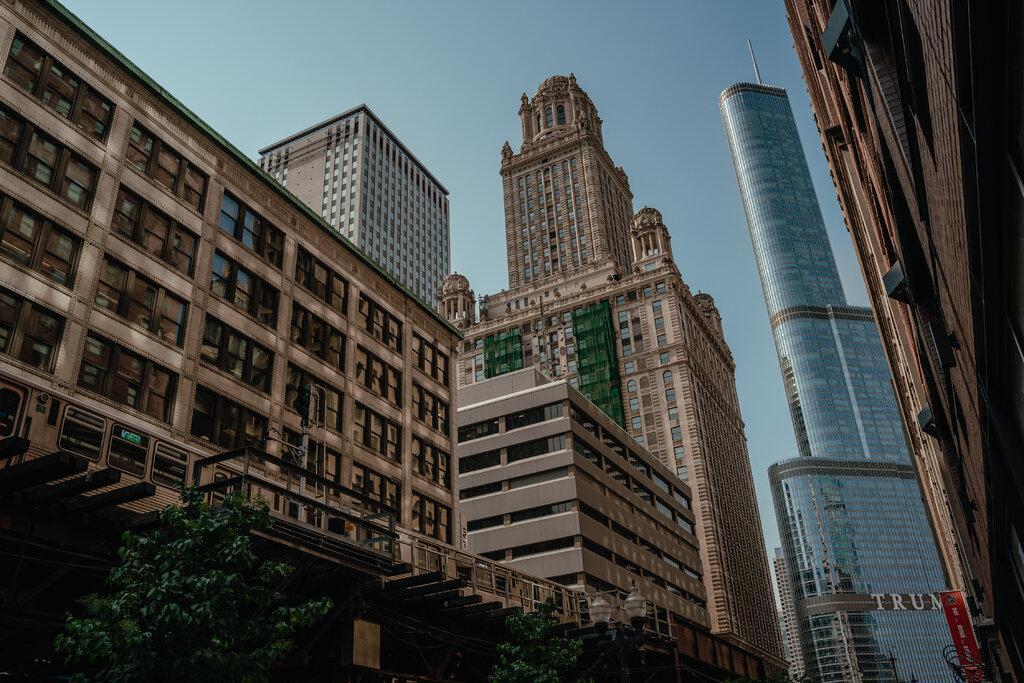
The weight of all that concrete and steel isn’t the only reason Chicago is sinking.

A train station entrance in Chicago. The upper layers of ground beneath Chicagoans’ feet have warmed by 5.6 degrees Fahrenheit over the past seven decades, Dr. Rotta Loria said.
“Today, you’re not seeing that problem,” said Asal Bidarmaghz, a senior lecturer in geotechnical engineering at the University of New South Wales in Australia. “But in the next 100 years, there is a problem. And if we just sit for the next 100 years and wait 100 years to solve it, then that would be a massive problem.”
Dr. Bidarmaghz has studied subterranean heat in London but wasn’t involved in the research in Chicago.
To assess underground climate change in Chicago, Dr. Rotta Loria, an assistant professor of civil and environmental engineering at Northwestern, has installed more than 150 temperature sensors above and below the surface of the Loop. He combined three years of readings from these sensors with a detailed computer model of the district’s basements, tunnels and other structures to simulate how the ground at different depths has warmed between 1951 and now, and how it will warm from now through 2051.
Near some heat sources, the ground beneath Chicagoans’ feet has warmed by 27 degrees Fahrenheit over the past seven decades, he found. This has caused the earthen layers to expand or contract by as much as half an inch under some buildings.


Temperature sensors placed around Chicago. “It’s hard for even us to find them,” said Anjali Thota, a Northwestern doctoral candidate in civil engineering, who helped Dr. Rotta Loria place many of them.
The warming and ground deformation are now happening more slowly than in the 20th century, he found, simply because the earth is closer to being just as warm as the basements and tunnels buried within it. More and more, those structures will stay warm rather than dissipating heat into the ground around them.
Dr. Rotta Loria’s findings were published Tuesday in the journal Communications Engineering.
The most effective way for building owners and tunnel operators to address the issue, he said, would be to improve insulation so less heat leaks into the earth. They could also put the heat to work. Dr. Rotta Loria is chief technology officer for Enerdrape, a start-up in Switzerland making panels that absorb the ambient heat in tunnels and parking garages and use it to run electric heat pumps, cutting down on utility bills. The company has installed 200 of its panels in a supermarket parking garage near Lausanne as a pilot project.
Dr. Rotta Loria purposefully didn’t include one factor in his estimates of underground warming in Chicago: climate change at the city surface.
Hot weather warms the upper layers of soil. But Dr. Rotta Loria’s calculations assume that air temperatures in Chicago remain at their average recent levels all the way through 2051 — that is, his estimates don’t incorporate climate scientists’ projections for future global warming. Nor do they account for the fact that, as we continue warming the planet, large buildings will most likely use more air-conditioning and pump even more waste heat into the ground.
The reason for these omissions, Dr. Rotta Loria said, is that he is trying to figure out a conservative lower bound on underground warming, not a worst-case scenario. “It already shows that there is a problem,” he said.
The office of Chicago’s mayor, Brandon Johnson, didn’t respond to requests for comment.
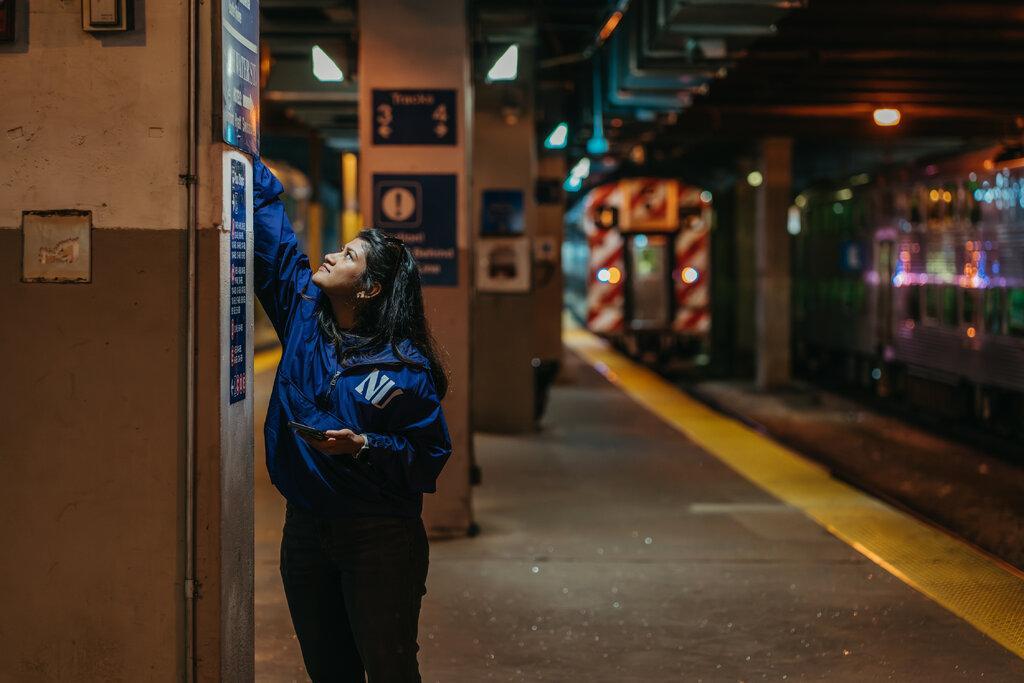
Ms. Thota activating a temperature sensor on a commuter train platform in Chicago.

Steam emanating from cracks in the basement boiler room at the Union League Club.
On a recent morning, Dr. Rotta Loria and Anjali Thota, a Northwestern doctoral candidate in civil engineering, took a reporter and a photographer on a tour of their network of temperature sensors, which trace out a kind of invisible city beneath the city.
Dr. Rotta Loria said the Chicago Transit Authority didn’t allow him to install sensors in subway stations out of concern that people would mistake them for bomb detonators. But he and his team have managed to get sensors into plenty of other known and less-known spots: on commuter rail platforms and at service entrances behind high-rises, in leafy Millennium Park and down Wacker Drive, the cavernous concrete lair made famous by car chases in the “Blues Brothers” and “Dark Knight” movies.
The sensors themselves are nondescript: a white plastic box with a button and two indicator lights. They cost Dr. Rotta Loria $55 each. The temperature information they collect — one reading every minute or one every 10 minutes, depending on the location — is downloaded onto a phone via Bluetooth, which means Dr. Rotta Loria and his students must periodically visit them in person to harvest their data, around 20,000 records per day in all.

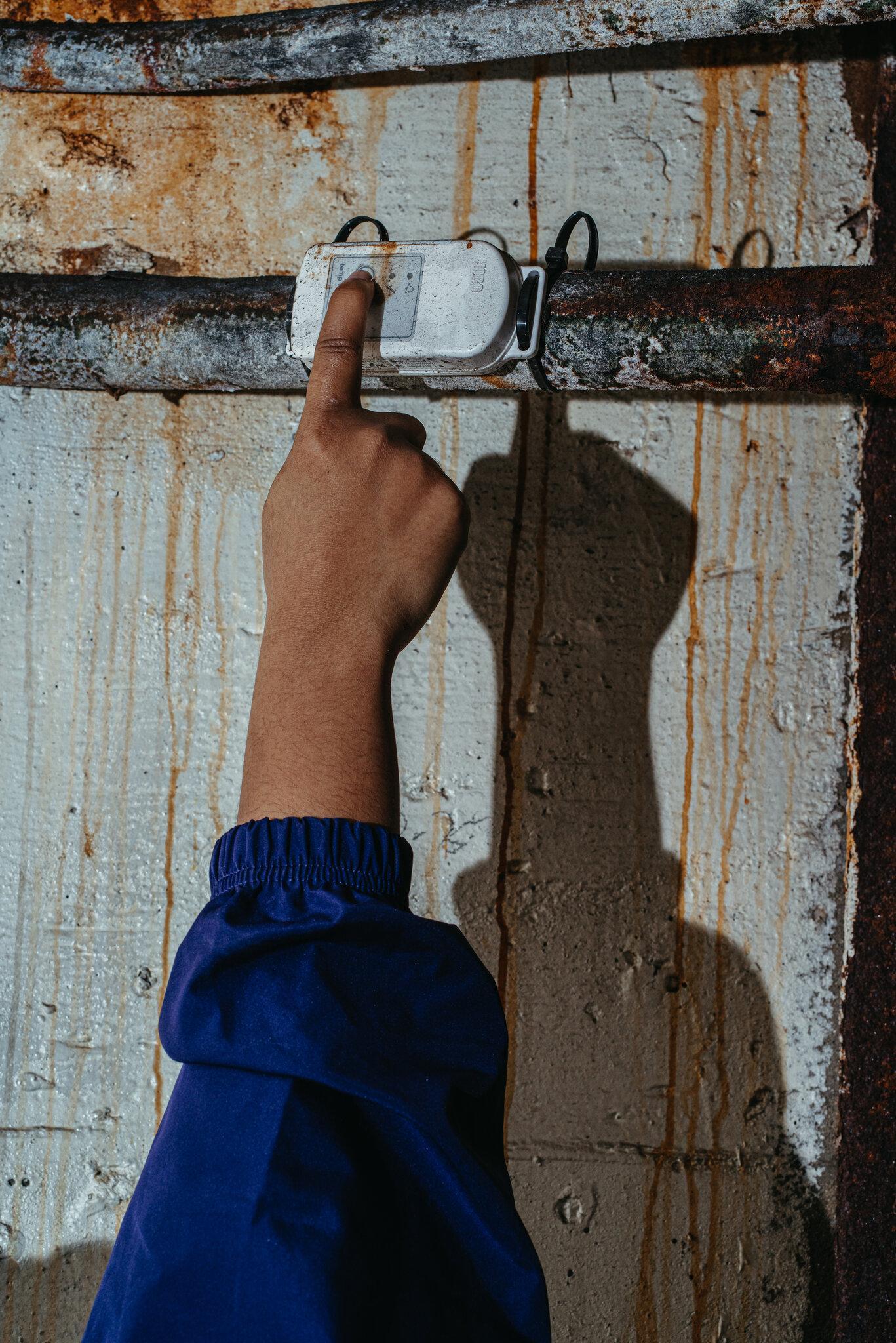


Though the sensors’ locations are saved on Google Maps, they can be hard to spot underground, forcing Dr. Rotta Loria and Ms. Thota to hunt around to find them and harvest their data.
Many of the sensors have been swiped or have disappeared over the years, leaving 100 in service. At Millennium Garages, an underground parking complex, one of them is zip-tied to a pipe behind a column.
“That’s all it is, huh?” said Admir Sefo, an executive at the garage, peering at the widget. “And nobody’s found them?”
“It’s hard for even us to find them,” Ms. Thota said. She has their locations saved on Google Maps, but underground, there often isn’t cell reception, forcing her to hunt around.
Another sensor, at the Blackstone hotel, is in a basement room filled with chairs and sacks of ice-melting pellets. There’s one in the boiler room of the Union League Club of Chicago that has logged temperatures as high as 96 Fahrenheit. A sensor in the Grant Park South parking garage recorded 97 degrees in September 2021.
Just beyond the walls at each of these spots, out of sight and out of mind, this heat is silently doing what heat does: spread.
The New York Times (archive.ph)
By Raymond Zhong
Photographs by Jamie Kelter Davis
2023-07-11 09:00:44GMT
Alessandro F. Rotta Loria, an assistant professor at Northwestern University, walked through a boiler room of the Union League Club of Chicago to examine a temperature sensor.
Underneath downtown Chicago’s soaring Art Deco towers, its multilevel roadways and its busy subway and rail lines, the land is sinking, and not only for the reasons you might expect.
Since the mid-20th century, the ground between the city surface and the bedrock has warmed by 5.6 degrees Fahrenheit on average, according to a new study out of Northwestern University. All that heat, which comes mostly from basements and other underground structures, has caused the layers of sand, clay and rock beneath some buildings to subside or swell by several millimeters over the decades, enough to worsen cracks and defects in walls and foundations.
“All around you, you have heat sources,” said the study’s author, Alessandro F. Rotta Loria, walking with a backpack through Millennium Station, a commuter rail terminal underneath the city’s Loop district. “These are things that people don’t see, so it’s like they don’t exist.”
It isn’t just Chicago. In big cities worldwide, humans’ burning of fossil fuels is raising the mercury at the surface. But heat is also pouring out of basements, parking garages, train tunnels, pipes, sewers and electrical cables and into the surrounding earth, a phenomenon that scientists have taken to calling “underground climate change.”
Rising underground temperatures lead to warmer subway tunnels, which can cause overheated tracks and steam-bath conditions for commuters. And, over time, they cause tiny shifts in the ground beneath buildings, which can induce structural strain, whose effects aren’t noticeable for a long time until suddenly they are.
The weight of all that concrete and steel isn’t the only reason Chicago is sinking.
A train station entrance in Chicago. The upper layers of ground beneath Chicagoans’ feet have warmed by 5.6 degrees Fahrenheit over the past seven decades, Dr. Rotta Loria said.
“Today, you’re not seeing that problem,” said Asal Bidarmaghz, a senior lecturer in geotechnical engineering at the University of New South Wales in Australia. “But in the next 100 years, there is a problem. And if we just sit for the next 100 years and wait 100 years to solve it, then that would be a massive problem.”
Dr. Bidarmaghz has studied subterranean heat in London but wasn’t involved in the research in Chicago.
To assess underground climate change in Chicago, Dr. Rotta Loria, an assistant professor of civil and environmental engineering at Northwestern, has installed more than 150 temperature sensors above and below the surface of the Loop. He combined three years of readings from these sensors with a detailed computer model of the district’s basements, tunnels and other structures to simulate how the ground at different depths has warmed between 1951 and now, and how it will warm from now through 2051.
Near some heat sources, the ground beneath Chicagoans’ feet has warmed by 27 degrees Fahrenheit over the past seven decades, he found. This has caused the earthen layers to expand or contract by as much as half an inch under some buildings.
Temperature sensors placed around Chicago. “It’s hard for even us to find them,” said Anjali Thota, a Northwestern doctoral candidate in civil engineering, who helped Dr. Rotta Loria place many of them.
The warming and ground deformation are now happening more slowly than in the 20th century, he found, simply because the earth is closer to being just as warm as the basements and tunnels buried within it. More and more, those structures will stay warm rather than dissipating heat into the ground around them.
Dr. Rotta Loria’s findings were published Tuesday in the journal Communications Engineering.
The most effective way for building owners and tunnel operators to address the issue, he said, would be to improve insulation so less heat leaks into the earth. They could also put the heat to work. Dr. Rotta Loria is chief technology officer for Enerdrape, a start-up in Switzerland making panels that absorb the ambient heat in tunnels and parking garages and use it to run electric heat pumps, cutting down on utility bills. The company has installed 200 of its panels in a supermarket parking garage near Lausanne as a pilot project.
Dr. Rotta Loria purposefully didn’t include one factor in his estimates of underground warming in Chicago: climate change at the city surface.
Hot weather warms the upper layers of soil. But Dr. Rotta Loria’s calculations assume that air temperatures in Chicago remain at their average recent levels all the way through 2051 — that is, his estimates don’t incorporate climate scientists’ projections for future global warming. Nor do they account for the fact that, as we continue warming the planet, large buildings will most likely use more air-conditioning and pump even more waste heat into the ground.
The reason for these omissions, Dr. Rotta Loria said, is that he is trying to figure out a conservative lower bound on underground warming, not a worst-case scenario. “It already shows that there is a problem,” he said.
The office of Chicago’s mayor, Brandon Johnson, didn’t respond to requests for comment.
Ms. Thota activating a temperature sensor on a commuter train platform in Chicago.
Steam emanating from cracks in the basement boiler room at the Union League Club.
On a recent morning, Dr. Rotta Loria and Anjali Thota, a Northwestern doctoral candidate in civil engineering, took a reporter and a photographer on a tour of their network of temperature sensors, which trace out a kind of invisible city beneath the city.
Dr. Rotta Loria said the Chicago Transit Authority didn’t allow him to install sensors in subway stations out of concern that people would mistake them for bomb detonators. But he and his team have managed to get sensors into plenty of other known and less-known spots: on commuter rail platforms and at service entrances behind high-rises, in leafy Millennium Park and down Wacker Drive, the cavernous concrete lair made famous by car chases in the “Blues Brothers” and “Dark Knight” movies.
The sensors themselves are nondescript: a white plastic box with a button and two indicator lights. They cost Dr. Rotta Loria $55 each. The temperature information they collect — one reading every minute or one every 10 minutes, depending on the location — is downloaded onto a phone via Bluetooth, which means Dr. Rotta Loria and his students must periodically visit them in person to harvest their data, around 20,000 records per day in all.
Though the sensors’ locations are saved on Google Maps, they can be hard to spot underground, forcing Dr. Rotta Loria and Ms. Thota to hunt around to find them and harvest their data.
Many of the sensors have been swiped or have disappeared over the years, leaving 100 in service. At Millennium Garages, an underground parking complex, one of them is zip-tied to a pipe behind a column.
“That’s all it is, huh?” said Admir Sefo, an executive at the garage, peering at the widget. “And nobody’s found them?”
“It’s hard for even us to find them,” Ms. Thota said. She has their locations saved on Google Maps, but underground, there often isn’t cell reception, forcing her to hunt around.
Another sensor, at the Blackstone hotel, is in a basement room filled with chairs and sacks of ice-melting pellets. There’s one in the boiler room of the Union League Club of Chicago that has logged temperatures as high as 96 Fahrenheit. A sensor in the Grant Park South parking garage recorded 97 degrees in September 2021.
Just beyond the walls at each of these spots, out of sight and out of mind, this heat is silently doing what heat does: spread.


