L | A (Translated with DeepL)
By Alberto Alpozzi
Colonialism is often seen as a bloody endeavor of invaders and exploiters, but if one digs deeper, it will be easily discovered that colonial history is different from how it has been narrated to us so far, imposing an extremely manipulated view.
Countless names, works and events have been erased. Historical documents altered if not hidden by the watchdogs of the past. Through the disclosure of otherwise removed works, our view of the colonial past shifts. A fairer and truly free society also involves giving back to the history of Italians in Africa what is rightfully theirs.
Only by including in our vision and knowledge of history all those works and people that have been erased from official documents can we change our way of looking at the present and, above all, our future.

The process of colonization, like every other human activity, was carried out in accordance with ideals and interests, with the detail that in the overall economy of human civilization, interest was no longer conceived as a purely selfish activity benefiting individual people, groups, or nations through a regime of mere exploitation.
Especially in the field of Italian colonization, interest was intended to serve the ideal.
But since the early years of the twentieth century, an exaggeration typical of so-called libertarian ideologies sought to portray every colonial activity solely in terms of the violent conquest and oppression, which did occur, of the white race over the poor African populations.
It proclaimed the right of backward peoples, that's what it's about (let's not forget Positivism), to remain as they are in their lands of origin, thus extending to the most primitive nomadic tribes the principle of self-determination but, and here lies the contradiction, according to the standards and ethics of more advanced societies.
The condemnation of the legitimacy of colonial possession, in other words, anti-colonialism, falsely inspired by humanitarian sentiments, argued (and continues to argue) that the well-being of African peoples consisted in remaining perpetually in their traditional state: civil, moral, and industrial backwardness, except to use those same peoples today for moral and ideological battles in the (former) colonizing nations.
"Ignorance of the true interests of the colored peoples and the culpable negligence of justice, exacerbated by selfish prejudices, constitute the most serious obstacles to the establishment of wise government,” wrote Lord E. Broucham in Political Philosophy in 1853 (Part III: Of Democracy and Mixed Monarchy).

But when we think of progress (modern agriculture, irrigation, prophylaxis, famine control, civil rights, education), it should not know limitations other than that of the benefit of the human community. All of it. Let us then consider the healthcare work being carried out today, in various capacities, by the most diverse (and aligned) NGOs in African countries.
Or let us recall the "two Simones" kidnapped in Baghdad. Simona Pari and Simona Torretta who taught "recycling to Iraqi children" as Emergency Volunteers.
It is therefore contrary to this conception of social and civil progress (like recycling?) that vast regions of the earth should remain eternally, for example, the domain of deadly plagues, cruel customs, and illicit trafficking of human beings, or that immense territories should remain unproductive and useful raw materials (both precious and not) should be wasted.
The absurd revolutionary idea of yesterday, which today is called progressivism, aimed, in reaction to the bourgeois and conservative evolutionary myth, to eradicate every traditionalistic element by completely erasing the past.
It's a pity, however, that peoples, regardless of whether they are white or of color, must always draw from the original sources of their race and historical identity, despite the passage of time and the subsequent transformations of customs, traditions, and laws, in order to trace and form the ultimate and fundamental reasons for their existence and, above all, for the goals in their future.
In the total renewal of political ideas in the early twentieth century, a new theory of colonization emerged: The overseas territories were not and should no longer be territories of conquest foreign to the spiritual life of the motherland. And modern colonial doctrine defined the colony as a strip of national land where people worked, struggled and produced for the greater good of humanity and civil progress.
Good governance thus sanctioned the right of colonization.
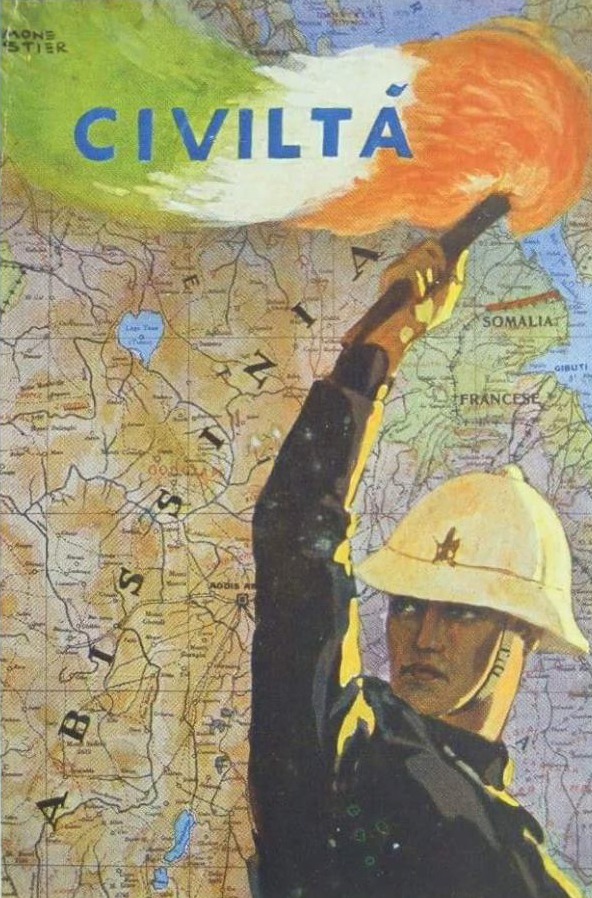
Agricultural or industrial production should not be achieved at the expense of the moral and material well-being of the indigenous people. It was essentially necessary to consider the colonizing work within the broader context of the civilizing mission entrusted to a great power rich in culture and energy.
In light of the present results of the total failure of decolonization, it is necessary to study future possibilities for collaboration between nations, excluding the perpetual sources of rivalry and competition.
The decisive influence of some nations to the detriment of others is well known, and even in this area, the work of the United Nations encounters the organic difficulties arising from the antithesis between its moral and humanitarian premises, between a theoretical ideal of distributive justice and, ultimately, a practical reality of international injustice.
Following the Second World War, the peoples and territories of Africa ceased to be under the sovereignty of the states that previously governed them, according to the sacred mission of civilization. But these populations, still deemed incapable of self-governance, were placed under the guardianship of mandatory powers, in the name and under the control of the League of Nations, which soon became the United Nations.
However, the legal nature of the mandate and its application have raised problems regarding the concept of "sovereignty", a legal quality now well applicable to former colonies but not attributable to former colonizers who, on the contrary, must renounce it, cede it and limit it. Another progressive short-circuit.

The connection between global economic problems and the production of former colonial territories in relation to consumer markets and the interests of exporting countries, especially European ones, requires a review for peaceful international coexistence, in addition to needing to limit the damage arising from the crystallization of positions of dominance and systems of exploitation disproportionate to the absorption capacities of individual nations.
Whatever the future of Africa may be, a new approach to the "colonial" issue is necessary, both as an ideal in itself and always to be harmonized with the higher purposes of life and the governments of all peoples. the mission of civilization (recycling?), well-being and development.
But at the moment, colonial imperialism has evolved into economic imperialism, with the overt tendency towards global supremacy of those who evade all control and incite tensions, if not armed conflicts, between nations.
This attitude cannot be accepted as a fatal and inescapable historical necessity, as a force destined to forever escape the control of human society, condemned to merely endure the consequences of an eternal colonialism that changes its name and has regressed by two hundred years.
By Alberto Alpozzi
Colonialism is often seen as a bloody endeavor of invaders and exploiters, but if one digs deeper, it will be easily discovered that colonial history is different from how it has been narrated to us so far, imposing an extremely manipulated view.
Countless names, works and events have been erased. Historical documents altered if not hidden by the watchdogs of the past. Through the disclosure of otherwise removed works, our view of the colonial past shifts. A fairer and truly free society also involves giving back to the history of Italians in Africa what is rightfully theirs.
Only by including in our vision and knowledge of history all those works and people that have been erased from official documents can we change our way of looking at the present and, above all, our future.
The process of colonization, like every other human activity, was carried out in accordance with ideals and interests, with the detail that in the overall economy of human civilization, interest was no longer conceived as a purely selfish activity benefiting individual people, groups, or nations through a regime of mere exploitation.
Especially in the field of Italian colonization, interest was intended to serve the ideal.
But since the early years of the twentieth century, an exaggeration typical of so-called libertarian ideologies sought to portray every colonial activity solely in terms of the violent conquest and oppression, which did occur, of the white race over the poor African populations.
It proclaimed the right of backward peoples, that's what it's about (let's not forget Positivism), to remain as they are in their lands of origin, thus extending to the most primitive nomadic tribes the principle of self-determination but, and here lies the contradiction, according to the standards and ethics of more advanced societies.
The condemnation of the legitimacy of colonial possession, in other words, anti-colonialism, falsely inspired by humanitarian sentiments, argued (and continues to argue) that the well-being of African peoples consisted in remaining perpetually in their traditional state: civil, moral, and industrial backwardness, except to use those same peoples today for moral and ideological battles in the (former) colonizing nations.
"Ignorance of the true interests of the colored peoples and the culpable negligence of justice, exacerbated by selfish prejudices, constitute the most serious obstacles to the establishment of wise government,” wrote Lord E. Broucham in Political Philosophy in 1853 (Part III: Of Democracy and Mixed Monarchy).
But when we think of progress (modern agriculture, irrigation, prophylaxis, famine control, civil rights, education), it should not know limitations other than that of the benefit of the human community. All of it. Let us then consider the healthcare work being carried out today, in various capacities, by the most diverse (and aligned) NGOs in African countries.
Or let us recall the "two Simones" kidnapped in Baghdad. Simona Pari and Simona Torretta who taught "recycling to Iraqi children" as Emergency Volunteers.
It is therefore contrary to this conception of social and civil progress (like recycling?) that vast regions of the earth should remain eternally, for example, the domain of deadly plagues, cruel customs, and illicit trafficking of human beings, or that immense territories should remain unproductive and useful raw materials (both precious and not) should be wasted.
The absurd revolutionary idea of yesterday, which today is called progressivism, aimed, in reaction to the bourgeois and conservative evolutionary myth, to eradicate every traditionalistic element by completely erasing the past.
It's a pity, however, that peoples, regardless of whether they are white or of color, must always draw from the original sources of their race and historical identity, despite the passage of time and the subsequent transformations of customs, traditions, and laws, in order to trace and form the ultimate and fundamental reasons for their existence and, above all, for the goals in their future.
In the total renewal of political ideas in the early twentieth century, a new theory of colonization emerged: The overseas territories were not and should no longer be territories of conquest foreign to the spiritual life of the motherland. And modern colonial doctrine defined the colony as a strip of national land where people worked, struggled and produced for the greater good of humanity and civil progress.
Good governance thus sanctioned the right of colonization.
Agricultural or industrial production should not be achieved at the expense of the moral and material well-being of the indigenous people. It was essentially necessary to consider the colonizing work within the broader context of the civilizing mission entrusted to a great power rich in culture and energy.
In light of the present results of the total failure of decolonization, it is necessary to study future possibilities for collaboration between nations, excluding the perpetual sources of rivalry and competition.
The decisive influence of some nations to the detriment of others is well known, and even in this area, the work of the United Nations encounters the organic difficulties arising from the antithesis between its moral and humanitarian premises, between a theoretical ideal of distributive justice and, ultimately, a practical reality of international injustice.
Following the Second World War, the peoples and territories of Africa ceased to be under the sovereignty of the states that previously governed them, according to the sacred mission of civilization. But these populations, still deemed incapable of self-governance, were placed under the guardianship of mandatory powers, in the name and under the control of the League of Nations, which soon became the United Nations.
However, the legal nature of the mandate and its application have raised problems regarding the concept of "sovereignty", a legal quality now well applicable to former colonies but not attributable to former colonizers who, on the contrary, must renounce it, cede it and limit it. Another progressive short-circuit.
The connection between global economic problems and the production of former colonial territories in relation to consumer markets and the interests of exporting countries, especially European ones, requires a review for peaceful international coexistence, in addition to needing to limit the damage arising from the crystallization of positions of dominance and systems of exploitation disproportionate to the absorption capacities of individual nations.
Whatever the future of Africa may be, a new approach to the "colonial" issue is necessary, both as an ideal in itself and always to be harmonized with the higher purposes of life and the governments of all peoples. the mission of civilization (recycling?), well-being and development.
But at the moment, colonial imperialism has evolved into economic imperialism, with the overt tendency towards global supremacy of those who evade all control and incite tensions, if not armed conflicts, between nations.
This attitude cannot be accepted as a fatal and inescapable historical necessity, as a force destined to forever escape the control of human society, condemned to merely endure the consequences of an eternal colonialism that changes its name and has regressed by two hundred years.

