Link (Archive)
San Francisco is the birthplace of the signature pant and has served as the headquarters of the venerable Levi Strauss & Co. for 171 years. An heir to the company, Daniel Lurie, is running for mayor. The San Francisco 49ers call Levi’s Stadium in Santa Clara, which hosted Super Bowl 50 in 2016, their home.
Then there’s the LGBTQ community, whose relationship with the 501 has been enmeshed with art, social coding and pop culture. A Levi’s outpost was even part of the Castro district’s business corridor for 14 years before closing in 2022.

But even something as ubiquitous as the blue jean can use a shoutout from the cultural juggernaut — and gay icon — that is Beyoncé Knowles Carter.
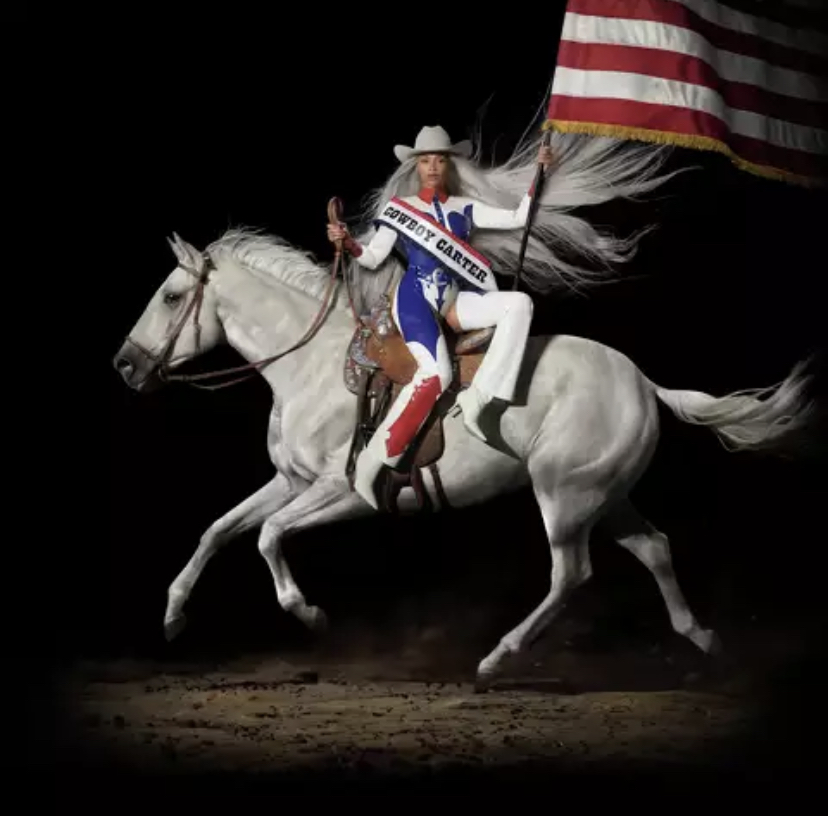
The brand got an unexpected gift this spring when Beyoncé released her country-western-inspired album, “Act II: Cowboy Carter,” featuring “Levii’s Jeans,” a duet with rapper/singer Post Malone. (The double “i” in the brand’s name is a reference to the album being the second in the artist’s “Renaissance” series.)
“Boy, I’ll let you be my Levi’s jeans, so you can hug that ass all day long,” the record-breaking Grammy winner sings on one of the most talked-about songs on the release.
As though setting the fashion agenda for seasons to come, she declares on the track: “Denim on denim, on denim, on denim. Give you high fashion in a simple white tee. Give you these blues, it’s in my jeans.”
The Beyoncé blessing had its benefits. Visits to Levi’s stores increased 20% during the week of Easter Sunday, shortly after the album dropped on March 29, compared to the average for Easter week over the past three years (which saw a slump due to the COVID pandemic and the popularity of athleisure), according to Pass_by, a foot traffic data tool.
While Levi’s declined to share sales data with the Chronicle, Levi’s CEO Michelle Gass said in a spring earnings call, “I don’t think there’s any better evidence or proof point than having someone like Beyoncé, who is a culture shaper, to actually name a song after us.”
But Levi Strauss & Co. historian Tracey Panek is quick to point out that the brand’s celebrity iconography goes back decades before Beyoncé.
With miners and cowboys among the earliest wearers of Levis, it made sense that jeans would make their way into Hollywood Westerns, aided by the brand’s proximity to the California film industry. In the 1930s, as movie star John Wayne was wearing 501s on the big screen, the cowboy was also being adopted as the brand’s official logo, Panek said.

Meanwhile, Emma McClendon, an assistant professor of fashion studies at St. John’s University and the author of “Denim: Fashion’s Frontier,” based on an exhibition she curated at New York’s Fashion Institute of Technology, noted that almost from the beginning of the modern LGBTQ rights movement, denim was a part of gay culture.
“At the Stonewall Inn and the Stonewall Riots, there were chants that mentioned wearing jeans, denim was being worn and championed for the fact that it blurred class lines and gender lines,” said McClendon of the inciting event of the modern LGBTQ rights movement in 1969. “You see it being used like a canvas, as a way to play with the body and classic representations of stereotypical American masculinity, but reclaiming it, and using it in a different way.”

In San Francisco in the 1970s, photographer Hal Fischer created portraits of the gay male culture of the Castro district in his pivotal multipart series “Gay Semiotics” in 1977 and “Cheap Chic Homo” in 1979. It was the era, Fischer said, of the “Castro Clone” look, which was adopted by the predominantly white, cisgender gay men in that scene. The Levi’s 501 was an essential part of the Clone uniform.
“I’d say 90% of the guys were wearing them,” said Fischer, who has exhibited “Gay Semiotics” globally and recently presented the show “Unseen Work” at Et al. gallery in the Mission District. “You’ve got your denim, flannel shirts, the zipper sweatshirt — those things were ubiquitous.”
The 501s were chosen specifically, Fischer said, because they had a “lift-and-separate quality to them that show the butt off to very good advantage.” Also key was the button fly.
“People would do things like leaving a button unbuttoned as a sort of a come-hither move,” he recalled.
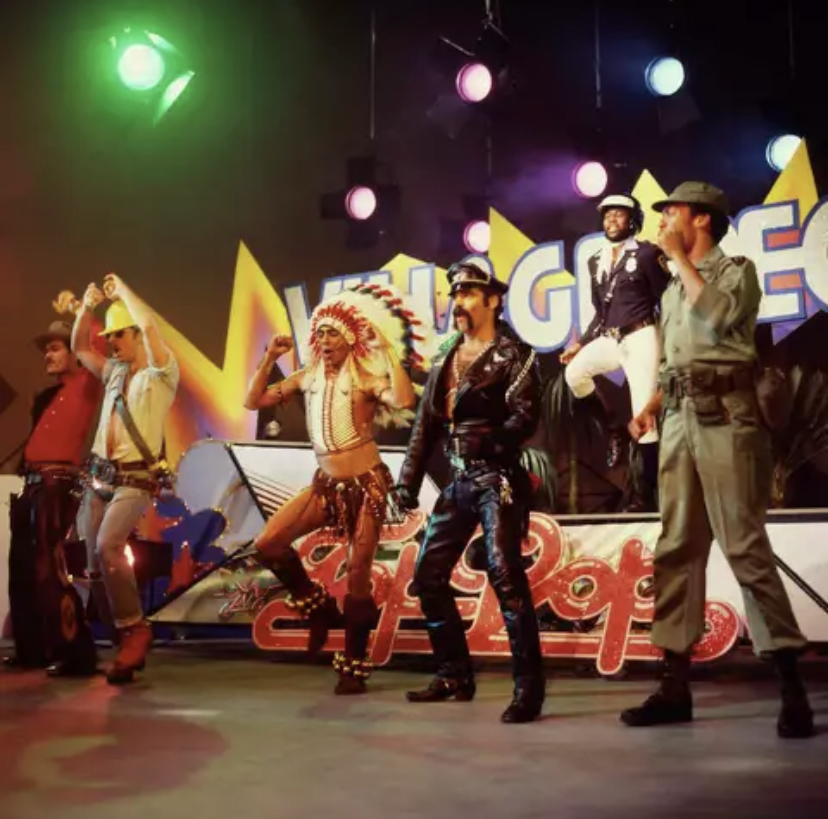
While Fischer said 501s were part of the broader culture because of their masculine connotations and associations both with blue-collar workers and bad-boy movie stars like James Dean and Marlon Brando, “they now have this meaning that’s specifically identified with the Castro in that era.” In something of a cultural ouroboros, the Castro Clone look became part of pop culture when it was part of the costumes for the construction worker and cowboy personas of Village People members David Hodo and Randy Jones.
San Francisco photographer Chloe Sherman said workwear and the 501 were also part of certain lesbian and butch aesthetics that she photographed in the city in the 1990s.

“The ’90s in San Francisco were fashion-forward in the sense that we were using fashion and self-expression to play with and defy gender expectations,” said Sherman, whose work documenting the city’s rich lesbian culture of that era is collected in the book “Renegades: San Francisco: The 1990s” and has been exhibited twice by San Francisco’s Schlomer Haus Gallery. “A sagging, sexy 501 with some keys and a wallet chain, maybe a hanky, was definitely an iconic butch dyke uniform.”
The fact that denim blurred both gender and class lines was a critical part of the aesthetic, Sherman added.

All these strains of queer culture seem to collide in the present-day city. “Cowboy Carter” has been a popular soundtrack to the gay nightlife scene, and during the April 20 grand reopening of the Stud at its new South of Market location at 1123-1125 Folsom St., denim was the look of choice. (Coincidentally, Stud Collective member and bar co-owner Paul Dillinger is the head of global product innovation at Levi Strauss & Co.)
In the Mission District, at the weekly queer line dancing night Stud Country (unrelated to the Stud bar), blue jeans and other staples of Western wear — rodeo shirts and belt buckles, Stetson hats, bolo ties — are the norm. Levi’s Pride collection also has a distinctly Western bent this year, featuring items inspired by “LGBTQIA+ rodeo culture from the ’70s to today.” Queer country musician Orville Peck and Stud Country founders Bailey Salisbury and Sean Monaghan are among the models, further solidifying 501s to pop culture and the queer aesthetic.

“Denim is good if not better when used and worn out and recycled or repurposed,” Sherman said, observing that it’s “synonymous and symbolic of queers’ struggle.”
“Our flag should be made of denim,” she added, “it’s so ingrained with the history of the underdog.”
Denim is back, and more queer than ever
Levi’s 501 jeans are woven into the fabric of the Bay Area.San Francisco is the birthplace of the signature pant and has served as the headquarters of the venerable Levi Strauss & Co. for 171 years. An heir to the company, Daniel Lurie, is running for mayor. The San Francisco 49ers call Levi’s Stadium in Santa Clara, which hosted Super Bowl 50 in 2016, their home.
Then there’s the LGBTQ community, whose relationship with the 501 has been enmeshed with art, social coding and pop culture. A Levi’s outpost was even part of the Castro district’s business corridor for 14 years before closing in 2022.
But even something as ubiquitous as the blue jean can use a shoutout from the cultural juggernaut — and gay icon — that is Beyoncé Knowles Carter.
The brand got an unexpected gift this spring when Beyoncé released her country-western-inspired album, “Act II: Cowboy Carter,” featuring “Levii’s Jeans,” a duet with rapper/singer Post Malone. (The double “i” in the brand’s name is a reference to the album being the second in the artist’s “Renaissance” series.)
“Boy, I’ll let you be my Levi’s jeans, so you can hug that ass all day long,” the record-breaking Grammy winner sings on one of the most talked-about songs on the release.
As though setting the fashion agenda for seasons to come, she declares on the track: “Denim on denim, on denim, on denim. Give you high fashion in a simple white tee. Give you these blues, it’s in my jeans.”
The Beyoncé blessing had its benefits. Visits to Levi’s stores increased 20% during the week of Easter Sunday, shortly after the album dropped on March 29, compared to the average for Easter week over the past three years (which saw a slump due to the COVID pandemic and the popularity of athleisure), according to Pass_by, a foot traffic data tool.
While Levi’s declined to share sales data with the Chronicle, Levi’s CEO Michelle Gass said in a spring earnings call, “I don’t think there’s any better evidence or proof point than having someone like Beyoncé, who is a culture shaper, to actually name a song after us.”
But Levi Strauss & Co. historian Tracey Panek is quick to point out that the brand’s celebrity iconography goes back decades before Beyoncé.
With miners and cowboys among the earliest wearers of Levis, it made sense that jeans would make their way into Hollywood Westerns, aided by the brand’s proximity to the California film industry. In the 1930s, as movie star John Wayne was wearing 501s on the big screen, the cowboy was also being adopted as the brand’s official logo, Panek said.
Meanwhile, Emma McClendon, an assistant professor of fashion studies at St. John’s University and the author of “Denim: Fashion’s Frontier,” based on an exhibition she curated at New York’s Fashion Institute of Technology, noted that almost from the beginning of the modern LGBTQ rights movement, denim was a part of gay culture.
“At the Stonewall Inn and the Stonewall Riots, there were chants that mentioned wearing jeans, denim was being worn and championed for the fact that it blurred class lines and gender lines,” said McClendon of the inciting event of the modern LGBTQ rights movement in 1969. “You see it being used like a canvas, as a way to play with the body and classic representations of stereotypical American masculinity, but reclaiming it, and using it in a different way.”
In San Francisco in the 1970s, photographer Hal Fischer created portraits of the gay male culture of the Castro district in his pivotal multipart series “Gay Semiotics” in 1977 and “Cheap Chic Homo” in 1979. It was the era, Fischer said, of the “Castro Clone” look, which was adopted by the predominantly white, cisgender gay men in that scene. The Levi’s 501 was an essential part of the Clone uniform.
“I’d say 90% of the guys were wearing them,” said Fischer, who has exhibited “Gay Semiotics” globally and recently presented the show “Unseen Work” at Et al. gallery in the Mission District. “You’ve got your denim, flannel shirts, the zipper sweatshirt — those things were ubiquitous.”
The 501s were chosen specifically, Fischer said, because they had a “lift-and-separate quality to them that show the butt off to very good advantage.” Also key was the button fly.
“People would do things like leaving a button unbuttoned as a sort of a come-hither move,” he recalled.
While Fischer said 501s were part of the broader culture because of their masculine connotations and associations both with blue-collar workers and bad-boy movie stars like James Dean and Marlon Brando, “they now have this meaning that’s specifically identified with the Castro in that era.” In something of a cultural ouroboros, the Castro Clone look became part of pop culture when it was part of the costumes for the construction worker and cowboy personas of Village People members David Hodo and Randy Jones.
San Francisco photographer Chloe Sherman said workwear and the 501 were also part of certain lesbian and butch aesthetics that she photographed in the city in the 1990s.
“The ’90s in San Francisco were fashion-forward in the sense that we were using fashion and self-expression to play with and defy gender expectations,” said Sherman, whose work documenting the city’s rich lesbian culture of that era is collected in the book “Renegades: San Francisco: The 1990s” and has been exhibited twice by San Francisco’s Schlomer Haus Gallery. “A sagging, sexy 501 with some keys and a wallet chain, maybe a hanky, was definitely an iconic butch dyke uniform.”
The fact that denim blurred both gender and class lines was a critical part of the aesthetic, Sherman added.
All these strains of queer culture seem to collide in the present-day city. “Cowboy Carter” has been a popular soundtrack to the gay nightlife scene, and during the April 20 grand reopening of the Stud at its new South of Market location at 1123-1125 Folsom St., denim was the look of choice. (Coincidentally, Stud Collective member and bar co-owner Paul Dillinger is the head of global product innovation at Levi Strauss & Co.)
In the Mission District, at the weekly queer line dancing night Stud Country (unrelated to the Stud bar), blue jeans and other staples of Western wear — rodeo shirts and belt buckles, Stetson hats, bolo ties — are the norm. Levi’s Pride collection also has a distinctly Western bent this year, featuring items inspired by “LGBTQIA+ rodeo culture from the ’70s to today.” Queer country musician Orville Peck and Stud Country founders Bailey Salisbury and Sean Monaghan are among the models, further solidifying 501s to pop culture and the queer aesthetic.
“Denim is good if not better when used and worn out and recycled or repurposed,” Sherman said, observing that it’s “synonymous and symbolic of queers’ struggle.”
“Our flag should be made of denim,” she added, “it’s so ingrained with the history of the underdog.”


