Disaster 3 Dead After 2 Small Planes Collide Mid-Air, Authorities Say - TL;DR - What happens when 2 Cessnas try to land at an uncontrolled airport.

  • 🏰 The Fediverse is up. If you know, you know.
  • Want to keep track of this thread?
    Accounts can bookmark posts, watch threads for updates, and jump back to where you stopped reading.
    Create account
3 Dead After 2 Small Planes Collide Mid-Air, Authorities Say

Article / Archive [ https://archive.ph/fWjRt ]


Three people are dead after two small planes collided mid-air at a California airport on Thursday, authorities said.

The crash occurred shortly before 3 p.m. local time at the Watsonville Municipal Airport in Watsonville, an agricultural area located about 50 miles south of San Jose, officials said.

The two planes were attempting to land when they collided, the city of Watsonville said on social media. "We have reports of multiple fatalities," it said.
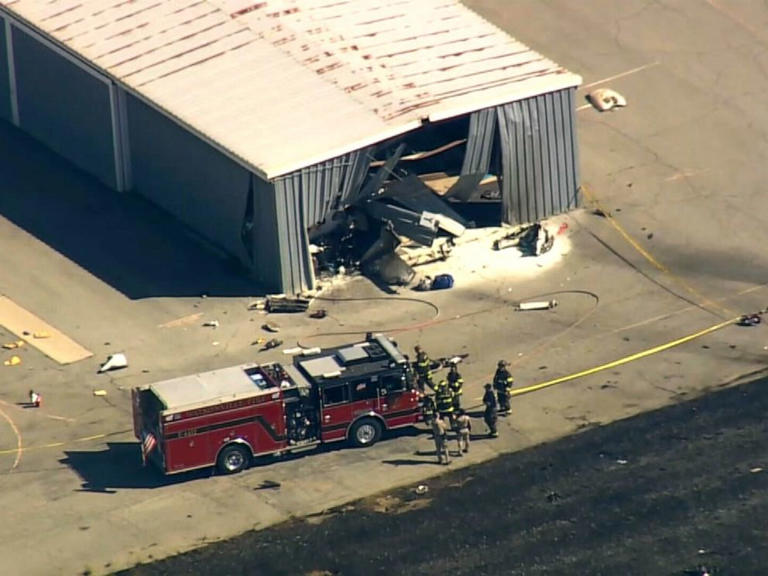
planecrash_1.jpg

© KGO
Two small planes collided while landing at the Watsonville Municipal Airport in Watsonville, California, Aug. 18, 2022.


A single-engine Cessna 152 and a twin-engine Cessna 340 "collided while the pilots were on their final approaches," the Federal Aviation Administration said in a statement.

One person was in the Cessna 152 and two were in the Cessna 340, the agency said. No injuries were reported to anyone on the ground.

The Santa Cruz Sheriff's Office said Friday that all three onboard the planes were killed in the crash. The names of the victims will be released following family notification. All three victims were adults, airport officials said.

Santa Cruz County Sheriff's Office.png

Screenshot of the statement given by the Santa Cruz Sheriff's Office on Facebook, linked above [Archive Unavailable].


Based on preliminary information, it appears one aircraft was operating in the traffic pattern, and the other was coming in to land, Fabian Salazar, an air safety investigator for the National Transportation Safety Board, told reporters during a briefing on Friday.

The airport is an "uncontrolled airport," with no control tower, and pilots communicate through a traffic advisory frequency, Salazar said.

"We are working to get the radio communications that were occurring," Salazar said.

The investigation will also consider factors such as the weather and the airspeed into the approach, he said.

Watsonville Municipal Airport Director Rayvon Williams told reporters he hasn't seen a collision of this nature since he started there in 2011. Neither the airspace nor volume of traffic at the airport supports the cost of bringing a control tower to the field, he said.

The city tweeted Thursday that it was "absolutely saddened to hear about the tragic incident that took the lives of several people."

"The City of Watsonville sends its deepest condolences to the friends and family of those who passed," it added.

"We are grieving tonight from this unexpected and sudden loss," Watsonville Mayor Ari Parker said. "I want to express my deepest and most heartfelt condolences."
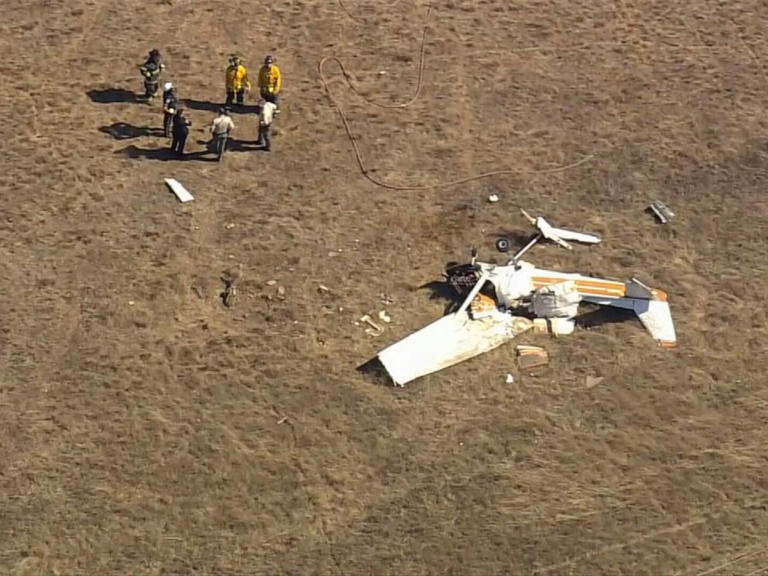
planecrash_2.jpg

© KGO
Two small planes collided while landing at the Watsonville Municipal Airport in Watsonville, California, Aug. 18, 2022.


The Santa Cruz County Sheriff's Office said it responded to an aircraft collision on Aviation Way near the airport and secured the scene with the Watsonville Police Department.

"This afternoon, two planes collided and came to rest at and near the Watsonville airport. There are multiple fatalities right now," Lt. Patrick Dimick said. "There are multiple fatalities. We cannot confirm anything else at this time as we've just secured the airport for the NTSB and FAA to arrive and conduct their investigation."


I'll be honest, as someone who grew up in farmin' country, personal planes like these Cessnas have always largely just been screaming metal deathtraps on their own. Why the fuck you would then decide to challenge god and try to land at an airport with NO control tower defies all logic and reason, imo.
 
It seems that private plane pilots all seem to want to die as soon as possible.

They love leaded gasoline, hate anything that might make their planes a bit safer, and generally do stupid stuff like the landing in the article.

That's why if I ever learn to fly, it'll be autogyros.
 
Happened about twenty miles north of me. For the life of me cannot believe there was no controller. You have San Jose about 50 miles away, the Monterey Regional Airport 35 miles away, and Marina and Salinas airports, both small. Monterey's big enough to have a tower and controllers. Marina has a tower since it was a former US Army airfield, doubt it was manned. Add all these up and there's a lot of air traffic in the area.

Weather was nice, sunny, visual flying rules would have applied. But nobody was watching what the fuck they were doing. Just lucky nobody on the ground was killed. One plane hit a building.
 
Happened about twenty miles north of me. For the life of me cannot believe there was no controller. You have San Jose about 50 miles away, the Monterey Regional Airport 35 miles away, and Marina and Salinas airports, both small. Monterey's big enough to have a tower and controllers. Marina has a tower since it was a former US Army airfield, doubt it was manned. Add all these up and there's a lot of air traffic in the area.

Weather was nice, sunny, visual flying rules would have applied. But nobody was watching what the fuck they were doing. Just lucky nobody on the ground was killed. One plane hit a building.
Also lucky that no one on the ground was even injured by the falling debris. There's been some surveillance video from a neighborhood put out that shows stuff falling from the sky just a short distance from the houses.

I kind of look forward to what may come of the NTSB/FAA reports from this. Not for the "how/why it happened", 'cause that's obvious, but more for all the finger pointing and petty fighting their investigations always bring out when every party shares at least a little bit of the blame. The fact that they continue to piss off Egypt over Flight 990 tickles me.

I'll also give both of them this, they're probably two of the last groups of feds that really take their jobs seriously and to heart. I'm sure that if any of those manned towers in nearby airfields even saw a blip of either plane and ignored it, the NTSB will find out about it and come in with some questions.
 
I found a high enough resolution shot of the 152 to get the N number: N49931

IMG_1240.jpg
Using that, you can look up his last flight history:
n49931.png
Looks like he was doing touch-and-goes when he got felted.
 
That's why if I ever learn to fly, it'll be autogyros.
So you want to die immediately when a Cessna or Piper smashes through you because they can't see your flying pipe frame while flying VFR. You can also paraglide so your lines get caught on the plane and cause it to crash. Both get you the Beyond the Grave achievement.
A lot of these seem to be due to lack of communication at unmanned airfields.
 
Last edited:
I'll also give both of them this, they're probably two of the last groups of feds that really take their jobs seriously and to heart. I'm sure that if any of those manned towers in nearby airfields even saw a blip of either plane and ignored it, the NTSB will find out about it and come in with some questions.
It's not that simple, just because you can see two planes on your radar doesn't mean it's your job or even within your authority to give them orders. Regulations stipulate you can only ever be under the control of ONE ATC who will hand you off to the next one when they are done with you. It all depends on what airspace you are in charge of.

At my closest local airport, despite being above soil owned by the Commonwealth of Pennsylvania, you are actually under the control of ATC for the greater NYC airspace, down to a certain altitude.

Below that? You are on your own with only a flight plan and your own MK1 eyeballs to maintain visual with other aircraft and land, the mountains mean the NYC radar can't see you and not every airport can afford it's own radar or full-time tower.

Back in high school, a twin-engine Beechcraft augured into the hillside above town when the pilot attempted to land in bad weather and ignored the fact he didn't have the required minimum visual distance for the airport. But he tried it anyway.

They think he got confused and mistook the lights of the main street up through downtown for the airport, lined up on them, and, flying at night, didn't realize his error until the ridge line he was unknowingly heading for rose up and blotted all visual light out. There was no tower to warn him he was too low or ATC to warn him... he probably thought everything was fine until 5 seconds before he hit the deck.

You can still see the "Hole" in the foliage where all the trees are suddenly 20 years younger than the rest.

A LOT of airspace in this country is similarly, uncontrolled.
 
Last edited:
It's not that simple, just because you can see two planes on your radar doesn't mean it's your job or even within your authority to give them orders. Regulations stipulate you can only ever be under the control of ONE ATC who will hand you off to the next one when they are done with you. It all depends on what airspace you are in charge of.

At my closest local airport, despite being above soil owned by the Commonwealth of Pennsylvania, you are actually under the control of ATC for the greater NYC airspace, down to a certain altitude.

Below that? You are on your own with only a flight plan and your own MK1 eyeballs to maintain visual with other aircraft and land, the mountains mean the NYC radar can't see you and not every airport can afford it's own radar or full-time tower.

Back in high school, a twin-engine Beechcraft augured into the hillside above town when the pilot attempted to land in bad weather and ignored the fact he didn't have the required minimum visual distance for the airport. But he tried it anyway.

They think he got confused and mistook the lights of the main street up through downtown for the airport, lined up on them, and, flying at night, didn't realize his error until the ridge line he was unknowingly heading for rose up and blotted all visual light out. There was no tower to warn him he was too low or ATC to warn him... he probably thought everything was fine until 5 seconds before he hit the deck.

You can still see the "Hole" in the foliage where all the trees are suddenly 20 years younger than the rest.

A LOT of airspace in this country is similarly, uncontrolled.
I wasn't being literal, fren. I know it's a lot more complicated than that. And I definitely know that pretty much every jurisdiction has some pretty vast differences to one another, from the lingo controllers use to things that the pilots themselves are expected to handle themselves and/or the specific ways it must be communicated. Technically a trans-international flight, but the Avianca flight wreck is a good example of those minuscule-yet-meaningful differences (coincidentally also a good example of just how hectic/intimidating the JFK/New York airspace can be.)

What I was getting at is that the NTSB and the FAA take their jobs very, very fucking seriously, and they're passionate about it. They will go through every single shard, fiber, and wire with a magnifying glass, they will interview whoever last handled repairs or provided the parts, track the prior movements of the pilots as far back as they feel they need to; anything to find any underlying issues that may have contributed to the wreckage. Even if it's an open-and-shut case, they always want to septuple check every bit of it to make sure the plane itself had no manufacturing errors that could ground every other model of that same plane, and definitely want to ensure no lazy repairs were made. My remark was just pointing out how they will absolutely drag in anyone that they hear might have so much as glanced at a monitor that may have picked up even one of the Cessnas, that's all. :)


Well, that and to remind everyone that personal little planes like this aren't to be trusted, just in general.
 
So I am guessing one or both of the pilots didn't have a transponder with TCAS or something similar?
 
Happened about twenty miles north of me. For the life of me cannot believe there was no controller. You have San Jose about 50 miles away, the Monterey Regional Airport 35 miles away, and Marina and Salinas airports, both small. Monterey's big enough to have a tower and controllers. Marina has a tower since it was a former US Army airfield, doubt it was manned. Add all these up and there's a lot of air traffic in the area.

Weather was nice, sunny, visual flying rules would have applied. But nobody was watching what the fuck they were doing. Just lucky nobody on the ground was killed. One plane hit a building.
America seems to have a love of uncontrolled general aviation space. The amount of ATC videos on YT and NTSB reports on this shit are insane. There's so many GA pilots flying in IFR when they're only rated for VFR, they fly into unapproved class airspace all the time, they don't monitor the other radio to communicate etc.

It's tragic, but light aircraft like Bonanza's and 152's are known as Doctor Killers for a reason.
 
So I am guessing one or both of the pilots didn't have a transponder with TCAS or something similar?
TCAS isn't required for general aviation aircraft with fewer than 10 passengers.


America seems to have a love of uncontrolled general aviation space.
I don't think it's a love of the thrill of danger causing it. Much like people using cars to go to work instead of biking, to the consternation of the rest of the word, it is not a deliberate choice but rather a consequence of this country being freakin' HUGE and there not being enough money to bring every single bit of infrastructure up to the ideal standard.

And for all it's fault and risks, the system works the vast majority of the time, after all, plane crashes make the NEWS when they happen, as opposed to car crashes that don't get mentioned unless they were bad enough to close a road.

And when that system breaks down, it's usually the result of a pilot not doing their due diligence or ignoring the aerial version of a traffic light, like, as you said, flying into IFR conditions when they aren't rated for it.

Becoming disoriented in clouds and crashing from not being able to read your instruments and trusting your natural senses as the only back-up is so common it also has a cutesy name : "The Graveyard Spiral"

Short version - the reason a plane has an artificial horizon, the instrument that shows you if your wings are level with the ground, and climbing or descending, is because you can't trust your own human sense of balance while in the air. Once your feet are off the ground the parts of your ear that do that will also register a "level" sensation if you are in a constant circle. So, if you fly into the murk, and don't know how to read (or trust) the instruments, and just try to feel it out "naturally" it's only a matter of time before you enter into a slow turning circle that you can't detect.

The natural consequence of any turn while flying is a slow loss of speed and altitude. And again, since you can't feel the turn, you'll wonder why your airspeed and altitude are going down. You naturally will either pull back on the stick or increase throttle to "fix" this. But in a turn? Those actions SPEED UP the turn and you get into a self-reinforcing feedback loop where you are unknowingly tightening into an unrecoverable spiral and don't even know it until you punch out of the clouds and see the trees coming at you with less than 2 seconds to do anything but scream....
 
Last edited:
I don't think it's a love, it, like people using cars to go to work instead of biking, is a consequence of this country being freakin' HUGE and there not being enough money to bring every single bit of infrastructure up to the ideal standard.
It's a practicality thing as well. There's close to a thousand uncontrolled, small airstrips in the UK for general aviation. They see very little traffic. Having manned towers at every single one, with all of the radar equipment necessary to make them controlled, would be ludicrously expensive and absolutely pointless 99% of the time. It would be like making every junction on every country lane light controlled.
 
it appears one aircraft was operating in the traffic pattern, and the other was coming in to land
Which shouldn't cause a crash, unless the dude trying to land was coming straight in. You're supposed to land from the traffic pattern for this exact reason.
Why the fuck you would then decide to challenge god and try to land at an airport with NO control tower defies all logic and reason, imo.
It's pretty common. It's like intersections with stop signs vs roundabouts vs intersections with traffic light; there are separate rules for all of these to help you get through them safely.

What this one guy did is the equivalent of driving through the middle of a roundabout to get to the other side faster.
you are actually under the control of ATC for the greater NYC airspace, down to a certain altitude.

Below that? You are on your own with only a flight plan and your own MK1 eyeballs to maintain visual with other aircraft and land
That altitude is usually 1200' and 700' AGL near untowered airports which is very low. You should basically only be that low for takeoff and landing, as it's below the "I can still recover if I fuck up" altitude. Most traffic patterns are 1000'+ above the airport, which is loosely monitored Class E airspace (the vast majority of all airspace). If it's a busy untowered airport, it can be Class E all the way to the ground.

If you get lost, you can always call Center and ask for vectors. Most of their time will be spent dealing with IFR traffic, but if they have time you can ask them for radar service and they'll keep an eye on you. If you're in conditions you're uncomfy with, they will absolutely help vector you in for a landing.

Truly unmonitored airspace (Class G) is quite rare in the US.

As for danger... virtually all general aviation crashes can be attributed to some sort of failure to follow the rules. The cost of flying has come up considerably since the 1970s (where, honestly, an absolute ton of regular dudes had aircraft, often because they'd flown in WW2, or Korea, or Vietnam) not because of natural factors but because the regulations on inspection and replacement have become so onerous you're lucky if you get out for under $15k/yr before you even get off the ground. As a result, the actual aircraft aren't that expensive; you can get a Cessna 152 for like $70k--there are far more planes than pilots these days.
There's close to a thousand uncontrolled, small airstrips in the UK for general aviation. They see very little traffic.
Fun fact: FAA regulations state that if you have a site that you take off or land at more than 5 times a year, you must register it as an airstrip. This is so planes can land there in an emergency.

Emergencies in aviation are treated with the highest priority, to an extent that is uncommon in other spheres of life. If you run out of gas or lose an engine, you can land virtually anywhere with an airstrip and they will roll out the red carpet for you. This includes Air Force bases. They probably won't be thrilled about it, but they'll worry about that after the fact. Hard to imagine a situation where like your car runs out of gas and you can go refuel at like Fort Bragg or something, but that's how it be.
So I am guessing one or both of the pilots didn't have a transponder with TCAS or something similar?
TCAS is pretty rare in these little Cesnas. Most of them still have the vacuum tube 6 pack instruments. They're meant for dicking around on the weekend and laughing at God; not any kind of serious travel.
 
https://youtube.com/watch?v=cFB16XApWYg
VASA already has the radio traffic from the accident. From the sound of things, the twin wasn't paying attention.

A few more things that have been noticed by pilots and amateur investigators looking at the preliminary facts of the crash:

- The twin heading straight in was still being tracked at 180 kts at time of collision , that's well above what speed you ideally should be at to enter the pattern (85 - 90)
- The other Cessna turned in front of the Twin at about 3 miles, best practice says you should not turn in front of incoming traffic that's closer than 5 miles.
- Back to the twin, it's also not considered best practice to attempt a straight in at any airport where there is already traffic in the pattern.
 
Last edited:
Back
Top Bottom