Culture The Great Outdoors Was Made for White People. - Man-made nature?

  • 🏰 The Fediverse is up. If you know, you know.
  • Want to keep track of this thread?
    Accounts can bookmark posts, watch threads for updates, and jump back to where you stopped reading.
    Create account
I know she's black, but is she confusing white people for god?

What happened to melanin being the 'god gene'?
At this moment of nationwide racial justice reckoning, let’s not forget to interrogate the great outdoors. Like many of the most insidiously imbalanced institutions, it may appear neutral or “natural,” but it’s anything but. It’s a man-made construction, structured to exclude.

As summer beckons, let’s think about how to create more inclusive outdoor spaces.

By Marya T. Mtshali

MAY 28, 2021

1622644175900.png

After social distancing protocols forced countless Americans into indoor isolation for the winter, many of us are eager to run into the warm embrace of Mother Nature and the outdoors with gusto. While the pandemic has exposed structural inequities in everything from health care to education to housing, less remarked upon has been the institution of the great outdoors. And like most American institutions, outdoor space—and, crucially, access to it—has been socially and physically constructed by white supremacy and settler colonialism.

In his 1869 book, The Switzerland of America: A Summer Vacation in the Parks and Mountains of Colorado, journalist Samuel Bowles III wrote that within the beautiful US outdoors “lie the pleasure-ground and the health-home of the nation.” When European colonists first set eyes on North America, they considered it “undeveloped,” ripe for instrumentalization—never mind that it was hardly uninhabited. Fast-forward several centuries, past untold destruction of natural resources to create often-wasteful urban and suburban sprawl, the patches of nature that seemingly remained untouched began to take on a new meaning.

The Great Outdoors” was constructed as a place to go to escape the stress of modern life, to be more in touch with nature. We like to think of the great outdoors that this country has cultivated—national and public parks, campgrounds, and nature preserves—as representative of our democratic ideals: They are for everyone. But this belies their origin. Through military and legislative intervention, such as the Mariposa Battalion’s violent raid of the village of Ahwahneechee in 1851, which expelled the remaining Indigenous people from Yosemite, these places were cultivated primarily for white people. Early conservationists like Bowles, or the venerated John Muir or Madison Grant (who wrote one of the foundational texts of the American eugenics movement, The Passing of the Great Race: Or, The Racial Basis of European History), were not shy in advocating racial exclusivity: When they spoke of the importance of nature for our nation, they meant the white nation.

The picturesque image of the American road trip to a national park? It was mainly for white people until the Civil Rights Act of 1964. Erasure of nonwhite subjects is inextricable from the project of the American wilderness: The land that the US federal government annexed into national parks became “available” only through the forcible removal of Indigenous people.

The notion that national parks were created for “the enjoyment of the people” implies that these spaces were formerly devoid of people: According to legal scholar Isaac Kantor, all US national parks exist on lands that were inhabited by Indigenous people.

African Americans have a complex history with the great outdoors. Our African ancestors had a deep and symbiotic relationship to nature, and their descendants found ways to recreate these connections in America. And while it was a refuge for socializing outside of the eyes of watchful slave-masters and, for free African-Americans farmers, a source of sustenance and financial independence, it was also associated with danger and violence. It was a site of potential capture and execution, or simply death by exposure to the elements, for runaway slaves. After Emancipation, it became the setting for countless attempted and completed lynchings, primarily of African Americans but also of Latinx, Asian American, and Indigenous people. The complicated relationships that people of color in the United States have developed with the outdoors because of white violence, coupled with the fact that many local parks—and all national parks—either did not admit people of color or, in some cases, segregated them until 1964, rendered it an effectively white domain. White America had time to cultivate popular images of camping, hiking, and kayaking—indeed, to develop an entire outdoor leisure culture, whose participants, they assumed, looked like them.

Even now, the cost of access to activities like camping is prohibitive for a large portion of Americans: Camping equipment can easily run $550 and up. Considering that Black, brown, and Indigenous people are disproportionately low-income, it’s easy to understand why they are underrepresented in recreational activities like this. For the people of color who do have the means and access to activities such as camping, it is not uncommon to hear of reports of racist comments, stares, threats, or violence. (Amy Cooper, anyone?)

Maybe they should ignore the local and national parks and just enjoy their neighborhood greenery instead? Well, there’s a problem there, too. Areas that were redlined—typically neighborhoods of people of color—are less likely to have green space. The dearth of green space in these areas has also been influenced by earlier ideas around policing, which suggested that parks made it easier for people to commit crimes. Current research now suggests the opposite, as long as the space is well-designed and maintained. This issue is particularly important considering the empirical research asserting that access to green space has mental, physical, and psychological health benefits.
How can we make outdoor spaces more accessible and inclusive to all? Here are a few good places to start:

  • More representation and inclusion of people of color in media about the outdoors and in nature-oriented organizations and businesses. This means more park rangers and more management roles in conservation and nature nonprofits and businesses. Include the perspective of people of color when considering both the history and the future of conservation.
  • Make the great outdoors more physically accessible. A campground I went to last year gave detailed instructions on how to get there via public transit, and picked up and dropped off customers and their equipment to their campsite by shuttle; it also rented out camping gear. These practices accommodate people without cars, who live far from nature, or who are unable to afford the purchase or storage of equipment. Accessibility doesn’t stop there. Gender-neutral bathrooms and accommodations for those with physical disabilities are also a part of the equation.
  • Offer affordable trainings and inclusive community organizations that create safe spaces for people of color to accrue the knowledge and skills needed to do outdoor activities like camping. Great examples of inclusive organizations include Outdoor Afro or Latino Outdoors.
  • Develop more access for Indigenous communities to utilize these spaces for subsistence farming. This will help Indigenous people not only to feel welcomed into these spaces but also to maintain aspects of their traditional foodways, which are significantly healthier than the processed foods that are easier to find on reservations.
  • Support local and national government initiatives to fund the engagement of people of color in the outdoors, as well as the creation of more green spaces in low-income communities. This is particularly crucial given that we know that access to green space is a public health issue.
As many of us—myself included—are itching to be outside in the greenness of summer, it is important to recognize that these are privileges that have not been afforded to everyone. At this moment of nationwide racial justice reckoning, let’s not forget to interrogate the great outdoors. Like many of the most insidiously imbalanced institutions, it may appear neutral or “natural,” but it’s anything but. It’s a man-made construction, structured to exclude. So we must work to make it truly democratic so everyone can enjoy the physical, mental, and psychological benefits of our beautiful land. Let’s truly make it “our land.”


Marya T. Mtshali, Ph.D., is a sociologist, postdoctoral research fellow at the Shorenstein Center in Harvard Kennedy School, and lecturer in Studies on Women, Gender, and Sexuality at Harvard University. Her areas of specialty include intersectionality and inequality.

1622644334100.png
1622644349400.png


Last edited:

HOLY SHIT​

As summer beckons, let’s think about how to create more inclusive outdoor spaces.

By Marya T. Mtshali

MAY 28, 2021

View attachment 2224573
After social distancing protocols forced countless Americans into indoor isolation for the winter, many of us are eager to run into the warm embrace of Mother Nature and the outdoors with gusto. While the pandemic has exposed structural inequities in everything from health care to education to housing, less remarked upon has been the institution of the great outdoors. And like most American institutions, outdoor space—and, crucially, access to it—has been socially and physically constructed by white supremacy and settler colonialism.

In his 1869 book, The Switzerland of America: A Summer Vacation in the Parks and Mountains of Colorado, journalist Samuel Bowles III wrote that within the beautiful US outdoors “lie the pleasure-ground and the health-home of the nation.” When European colonists first set eyes on North America, they considered it “undeveloped,” ripe for instrumentalization—never mind that it was hardly uninhabited. Fast-forward several centuries, past untold destruction of natural resources to create often-wasteful urban and suburban sprawl, the patches of nature that seemingly remained untouched began to take on a new meaning.

The Great Outdoors” was constructed as a place to go to escape the stress of modern life, to be more in touch with nature. We like to think of the great outdoors that this country has cultivated—national and public parks, campgrounds, and nature preserves—as representative of our democratic ideals: They are for everyone. But this belies their origin. Through military and legislative intervention, such as the Mariposa Battalion’s violent raid of the village of Ahwahneechee in 1851, which expelled the remaining Indigenous people from Yosemite, these places were cultivated primarily for white people. Early conservationists like Bowles, or the venerated John Muir or Madison Grant (who wrote one of the foundational texts of the American eugenics movement, The Passing of the Great Race: Or, The Racial Basis of European History), were not shy in advocating racial exclusivity: When they spoke of the importance of nature for our nation, they meant the white nation.

The picturesque image of the American road trip to a national park? It was mainly for white people until the Civil Rights Act of 1964. Erasure of nonwhite subjects is inextricable from the project of the American wilderness: The land that the US federal government annexed into national parks became “available” only through the forcible removal of Indigenous people.

The notion that national parks were created for “the enjoyment of the people” implies that these spaces were formerly devoid of people: According to legal scholar Isaac Kantor, all US national parks exist on lands that were inhabited by Indigenous people.

African Americans have a complex history with the great outdoors. Our African ancestors had a deep and symbiotic relationship to nature, and their descendants found ways to recreate these connections in America. And while it was a refuge for socializing outside of the eyes of watchful slave-masters and, for free African-Americans farmers, a source of sustenance and financial independence, it was also associated with danger and violence. It was a site of potential capture and execution, or simply death by exposure to the elements, for runaway slaves. After Emancipation, it became the setting for countless attempted and completed lynchings, primarily of African Americans but also of Latinx, Asian American, and Indigenous people. The complicated relationships that people of color in the United States have developed with the outdoors because of white violence, coupled with the fact that many local parks—and all national parks—either did not admit people of color or, in some cases, segregated them until 1964, rendered it an effectively white domain. White America had time to cultivate popular images of camping, hiking, and kayaking—indeed, to develop an entire outdoor leisure culture, whose participants, they assumed, looked like them.

Even now, the cost of access to activities like camping is prohibitive for a large portion of Americans: Camping equipment can easily run $550 and up. Considering that Black, brown, and Indigenous people are disproportionately low-income, it’s easy to understand why they are underrepresented in recreational activities like this. For the people of color who do have the means and access to activities such as camping, it is not uncommon to hear of reports of racist comments, stares, threats, or violence. (Amy Cooper, anyone?)

Maybe they should ignore the local and national parks and just enjoy their neighborhood greenery instead? Well, there’s a problem there, too. Areas that were redlined—typically neighborhoods of people of color—are less likely to have green space. The dearth of green space in these areas has also been influenced by earlier ideas around policing, which suggested that parks made it easier for people to commit crimes. Current research now suggests the opposite, as long as the space is well-designed and maintained. This issue is particularly important considering the empirical research asserting that access to green space has mental, physical, and psychological health benefits.
How can we make outdoor spaces more accessible and inclusive to all? Here are a few good places to start:

  • More representation and inclusion of people of color in media about the outdoors and in nature-oriented organizations and businesses. This means more park rangers and more management roles in conservation and nature nonprofits and businesses. Include the perspective of people of color when considering both the history and the future of conservation.
  • Make the great outdoors more physically accessible. A campground I went to last year gave detailed instructions on how to get there via public transit, and picked up and dropped off customers and their equipment to their campsite by shuttle; it also rented out camping gear. These practices accommodate people without cars, who live far from nature, or who are unable to afford the purchase or storage of equipment. Accessibility doesn’t stop there. Gender-neutral bathrooms and accommodations for those with physical disabilities are also a part of the equation.
  • Offer affordable trainings and inclusive community organizations that create safe spaces for people of color to accrue the knowledge and skills needed to do outdoor activities like camping. Great examples of inclusive organizations include Outdoor Afro or Latino Outdoors.
  • Develop more access for Indigenous communities to utilize these spaces for subsistence farming. This will help Indigenous people not only to feel welcomed into these spaces but also to maintain aspects of their traditional foodways, which are significantly healthier than the processed foods that are easier to find on reservations.
  • Support local and national government initiatives to fund the engagement of people of color in the outdoors, as well as the creation of more green spaces in low-income communities. This is particularly crucial given that we know that access to green space is a public health issue.
As many of us—myself included—are itching to be outside in the greenness of summer, it is important to recognize that these are privileges that have not been afforded to everyone. At this moment of nationwide racial justice reckoning, let’s not forget to interrogate the great outdoors. Like many of the most insidiously imbalanced institutions, it may appear neutral or “natural,” but it’s anything but. It’s a man-made construction, structured to exclude. So we must work to make it truly democratic so everyone can enjoy the physical, mental, and psychological benefits of our beautiful land. Let’s truly make it “our land.”


Marya T. Mtshali, Ph.D., is a sociologist, postdoctoral research fellow at the Shorenstein Center in Harvard Kennedy School, and lecturer in Studies on Women, Gender, and Sexuality at Harvard University. Her areas of specialty include intersectionality and inequality.

View attachment 2224578View attachment 2224580

GO OUTSIDE​

 
It's always amazing to me how much black women hate long haired red heads. The absolute seething envy they have for them is patently obvious.
Yep. Why else do you think (((they))) keep replacing red heads with black characters in entertainment, it's an easy way to pander to them since they despise red heads so much.
1622611616809m.jpg

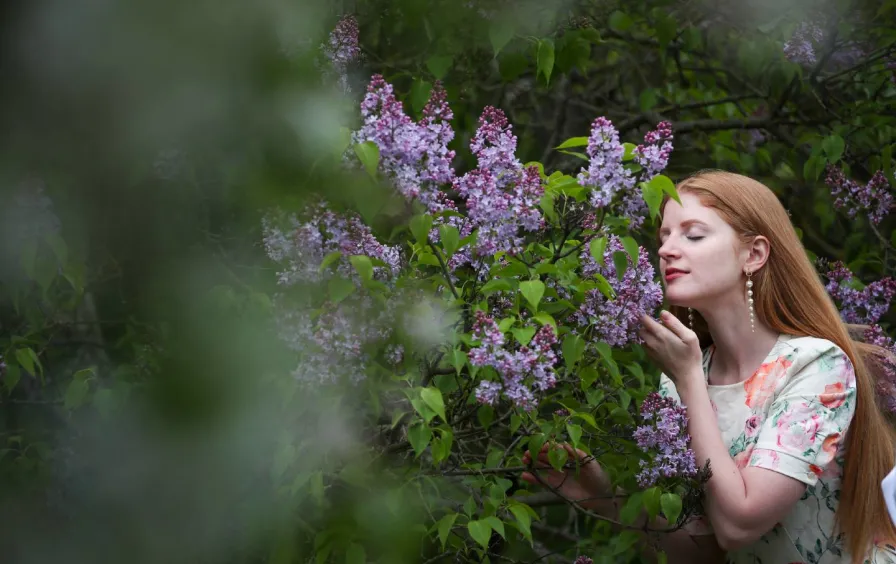
This is what they took from us bros.
 
Why is it that these anti-racist articles always make whites sound inherently superior? Are they unable to avoid implying that the subjugation of other races stems from a difference in cultural or genetic quality, or simply unwilling?
 
Slight power level I come from a family That has produced no less than 8 Eagle scouts. In my entire time being dragged across the wilderness wastelands of America. I have never seen a nigger camping nor black familys except for Urban campsites
 
No, he was a sandnigga.
Not really, genetic studies show that biblical Hebrews were Indo-Aryan (shroud of Turin has the same rare blood group as ancient Hebrew burials from Old Testament, even the lost 10 tribes deported from Palestine to Caucasus [modern day Armenians, Georgians, Ossetians etc.] are visibly non-semitic). There are also ethnographic studies which supplement genetics, Galilee was an area of heavy Assyriac colonization before Jesus was born, there's also a possibility that the very name "Nazarene" was a nickname referring to JC's blue eyes (the word "nazar" in modern day arabic & other semitic languages means "blue eye").

tl;dr Jesus was Aryan and he started the eternal White Boy Summer
 
Last edited:
I've read this exact same article about five times now in the last few years. I remember about 3-4 years ago Lindsay Shepherd doing a YT video about this tripe appearing in the media in Canada.
I've even seen a segment on Countryfile (UK country life magazine show) with two gobby London black women regurgitating these ideas verbatim, quite obvious neither of them had ever had any desire before (or since) to visit a national park until they'd read one of these articles, the BBC of course only happy to enable it.
 
good way to get on the sex offender list ifn you get caught. most parks also ban trimming branches for firewood, sometimes including picking up branches for fires, and trespass for not sleeping within the congested camp zones.
That's why you have a hiking buddy or two spot for you, or pick a nice thick tree to pass behind.
It's always amazing to me how much black women hate long haired red heads. The absolute seething envy they have for them is patently obvious.
Maybe it is because the Irish used to bitch and moan about oppreshun.
Yep. Why else do you think (((they))) keep replacing red heads with black characters in entertainment, it's an easy way to pander to them since they despise red heads so much.View attachment 2225116
This is what they took from us bros.
Why must they genocide redheads and tomboys?
Every nice family park I've lived near has been turned into a shithole by niggers

keep niggers out of nature
I visited Charleston once. There was a nice looking park with a statue to some white guy or something. Unfortunately the entire park was littered with empty beer bottles, joggers lounging in the shade with shitbulls, and drugs.

Instead of strolling through it I took a walk through some ugly Holocaust memorial nearby.
 
Undeveloped? So is it time to ignore that ancient Native civilizations completely changed the landscape for agriculture back in the 14th/15th centuries?
 
Anyway, I've read a few "camping while black" articles and I guess it's a trend now.
It is. I started seeing articles about it last year, and it quickly graduated to luxury camping and how there should be luxury camping for blacks only. Needless to say, luxury camping isn't camping at all. I didn't realize that eating lobster under a silk canopy on a private beach at 11pm needed to be an experience for black people only. But you know they would have been pissed if your average lower class pavement apes showed up.

No fuck that keep these fuckers bottled up in urban hell, they get into the wilderness they'll fucking shit it up with Swisher packages and malt liquor bottles too.
Agreed, let them stay in their self-made shit holes.

Incoming PL, I get to go camping once a year. Just once a year for seven days. Last year that trip was ruined by pissy loud inner city blacks. They spent their stimulus bux and increased unemployment checks on ATVs and mini bikes for their feral screeching children, and they thought that clean, quiet camping spots would be the perfect place to let their ferals raise hell. Every black family had 3-7 kids, and it was a screaming match every hour while they drove their noisy small metal death machines through trails, circled lakes, got way too close to tents, scared off local wildlife, caused someone to be thrown off of their horse, noise, noise, noise, day and night. And none of those morbidly obese moms wanted to wear more than a string bikini top with zero support and ill-fitting Daisy Dukes. To say my senses were assaulted would be an understatement. My SO and I packed up and left early. We tried to take a weekend trip to a different location the following month just to have some quiet and enjoyable time together, and pavement apes were using their stimmy checks to shit up that area as well.

Some people actually work to earn their vacation time, may it be expensive or cheap. Build a wall around the inner city retards who ruin everything good for the rest of us.
 
And like most American institutions, outdoor space—and, crucially, access to it—has been socially and physically constructed by white supremacy and settler colonialism.
And what the fuck are you going to do about it? Tough shit! Yes it was the whites that settled and dominated most areas of the world and it was the whites that developed nearly all of today's modern conveniences EVERYONE enjoys. Just shut the fuck up. You could never even fathom a world without what you call "white supremacy and settler colonialism." Today's world is much more accepting and nuanced than your little worldview, but you must make everything out to be a simple game of dominance because that's all you can understand then I will say yes, you lost. Cry me a river bitch.
 
You heard'em boys, drag the niggers into the woods and hang them from the trees!!!
 
Apparently, in Black Utopia, everything, even going out the door, is handled via guvment subsidy....you don't move a muscle without gibs for it..... not even the sphincter, unless you give them a $5 to use a toilet, they'll gladly shit on the floor and call the constant cholera outbreaks "white supremacy".

That's what this "We need to pay to have black spokespersons to promote the outdoors and programs to bus them out there for free" just absolutely REEKS of.

A way to profit off other's failures..... with no intent to fix them.
 
Last edited:
Cope and seethe in your urban hellpits. Or take a step out here and try acting like a fucking punk. The trees could always use a good bit of nourishment.
 
I know she's black, but is she confusing white people for god?

What happened to melanin being the 'god gene'?


As summer beckons, let’s think about how to create more inclusive outdoor spaces.

By Marya T. Mtshali

MAY 28, 2021

View attachment 2224573
After social distancing protocols forced countless Americans into indoor isolation for the winter, many of us are eager to run into the warm embrace of Mother Nature and the outdoors with gusto. While the pandemic has exposed structural inequities in everything from health care to education to housing, less remarked upon has been the institution of the great outdoors. And like most American institutions, outdoor space—and, crucially, access to it—has been socially and physically constructed by white supremacy and settler colonialism.

In his 1869 book, The Switzerland of America: A Summer Vacation in the Parks and Mountains of Colorado, journalist Samuel Bowles III wrote that within the beautiful US outdoors “lie the pleasure-ground and the health-home of the nation.” When European colonists first set eyes on North America, they considered it “undeveloped,” ripe for instrumentalization—never mind that it was hardly uninhabited. Fast-forward several centuries, past untold destruction of natural resources to create often-wasteful urban and suburban sprawl, the patches of nature that seemingly remained untouched began to take on a new meaning.

The Great Outdoors” was constructed as a place to go to escape the stress of modern life, to be more in touch with nature. We like to think of the great outdoors that this country has cultivated—national and public parks, campgrounds, and nature preserves—as representative of our democratic ideals: They are for everyone. But this belies their origin. Through military and legislative intervention, such as the Mariposa Battalion’s violent raid of the village of Ahwahneechee in 1851, which expelled the remaining Indigenous people from Yosemite, these places were cultivated primarily for white people. Early conservationists like Bowles, or the venerated John Muir or Madison Grant (who wrote one of the foundational texts of the American eugenics movement, The Passing of the Great Race: Or, The Racial Basis of European History), were not shy in advocating racial exclusivity: When they spoke of the importance of nature for our nation, they meant the white nation.

The picturesque image of the American road trip to a national park? It was mainly for white people until the Civil Rights Act of 1964. Erasure of nonwhite subjects is inextricable from the project of the American wilderness: The land that the US federal government annexed into national parks became “available” only through the forcible removal of Indigenous people.

The notion that national parks were created for “the enjoyment of the people” implies that these spaces were formerly devoid of people: According to legal scholar Isaac Kantor, all US national parks exist on lands that were inhabited by Indigenous people.

African Americans have a complex history with the great outdoors. Our African ancestors had a deep and symbiotic relationship to nature, and their descendants found ways to recreate these connections in America. And while it was a refuge for socializing outside of the eyes of watchful slave-masters and, for free African-Americans farmers, a source of sustenance and financial independence, it was also associated with danger and violence. It was a site of potential capture and execution, or simply death by exposure to the elements, for runaway slaves. After Emancipation, it became the setting for countless attempted and completed lynchings, primarily of African Americans but also of Latinx, Asian American, and Indigenous people. The complicated relationships that people of color in the United States have developed with the outdoors because of white violence, coupled with the fact that many local parks—and all national parks—either did not admit people of color or, in some cases, segregated them until 1964, rendered it an effectively white domain. White America had time to cultivate popular images of camping, hiking, and kayaking—indeed, to develop an entire outdoor leisure culture, whose participants, they assumed, looked like them.

Even now, the cost of access to activities like camping is prohibitive for a large portion of Americans: Camping equipment can easily run $550 and up. Considering that Black, brown, and Indigenous people are disproportionately low-income, it’s easy to understand why they are underrepresented in recreational activities like this. For the people of color who do have the means and access to activities such as camping, it is not uncommon to hear of reports of racist comments, stares, threats, or violence. (Amy Cooper, anyone?)

Maybe they should ignore the local and national parks and just enjoy their neighborhood greenery instead? Well, there’s a problem there, too. Areas that were redlined—typically neighborhoods of people of color—are less likely to have green space. The dearth of green space in these areas has also been influenced by earlier ideas around policing, which suggested that parks made it easier for people to commit crimes. Current research now suggests the opposite, as long as the space is well-designed and maintained. This issue is particularly important considering the empirical research asserting that access to green space has mental, physical, and psychological health benefits.
How can we make outdoor spaces more accessible and inclusive to all? Here are a few good places to start:

  • More representation and inclusion of people of color in media about the outdoors and in nature-oriented organizations and businesses. This means more park rangers and more management roles in conservation and nature nonprofits and businesses. Include the perspective of people of color when considering both the history and the future of conservation.
  • Make the great outdoors more physically accessible. A campground I went to last year gave detailed instructions on how to get there via public transit, and picked up and dropped off customers and their equipment to their campsite by shuttle; it also rented out camping gear. These practices accommodate people without cars, who live far from nature, or who are unable to afford the purchase or storage of equipment. Accessibility doesn’t stop there. Gender-neutral bathrooms and accommodations for those with physical disabilities are also a part of the equation.
  • Offer affordable trainings and inclusive community organizations that create safe spaces for people of color to accrue the knowledge and skills needed to do outdoor activities like camping. Great examples of inclusive organizations include Outdoor Afro or Latino Outdoors.
  • Develop more access for Indigenous communities to utilize these spaces for subsistence farming. This will help Indigenous people not only to feel welcomed into these spaces but also to maintain aspects of their traditional foodways, which are significantly healthier than the processed foods that are easier to find on reservations.
  • Support local and national government initiatives to fund the engagement of people of color in the outdoors, as well as the creation of more green spaces in low-income communities. This is particularly crucial given that we know that access to green space is a public health issue.
As many of us—myself included—are itching to be outside in the greenness of summer, it is important to recognize that these are privileges that have not been afforded to everyone. At this moment of nationwide racial justice reckoning, let’s not forget to interrogate the great outdoors. Like many of the most insidiously imbalanced institutions, it may appear neutral or “natural,” but it’s anything but. It’s a man-made construction, structured to exclude. So we must work to make it truly democratic so everyone can enjoy the physical, mental, and psychological benefits of our beautiful land. Let’s truly make it “our land.”


Marya T. Mtshali, Ph.D., is a sociologist, postdoctoral research fellow at the Shorenstein Center in Harvard Kennedy School, and lecturer in Studies on Women, Gender, and Sexuality at Harvard University. Her areas of specialty include intersectionality and inequality.

View attachment 2224578View attachment 2224580


Include perspectives and more representation... Nigress HOW??

There is no interest. I'll say it louder for those in the back: THERE. IS. NO. INTEREST.

I heard this same whining in my teaching licensure program. The ONLY interest from blacks I ever saw was allllllllllllll the black gym teachers. Nothing wrong with that, but there were no black academic teachers in my cohort. But the white race traitor profs carped and complained and tried forcing blacks where they weren't even interested. The high schools in my city now have strong morbidly obese lip smackin sheboons with neck tattoos using non-words like "conversate," "libarry," "ambalance." and some of them hold a Type 9 (scary!).

You cannot force interest in activities where none exists. You build resentment--both from the people you foist it on and the people you foisted false interest on in the name of you being able to go beddy bye at night with a clear conscience.
 
Back
Top Bottom