Historical images - Images that made history

  • Want to keep track of this thread?
    Accounts can bookmark posts, watch threads for updates, and jump back to where you stopped reading.
    Create account
Soviet sniper Ludmila Pavlitjenko (1916-1974, credited with 309 kills)
View attachment 714367

real deal tough lady and an iconic figure who came to white house to lobby to support war effort. I'd hope young girls can draw strength from women like her.

Ch-uPiuVIAAIlu6.jpg


This is a great movie with equally great sound track, I hate song remakes but Cuckoo Bird was awesome.


Her trophy sidearm, Sig Sauer is still on display in Kiev memorial.
 
1c9387a6-e170-4a8a-a34e-8cb2db00e703-VPC_D-DAY_75TH_EISENHOWER_WIDE_us_army.jpg.jpg


Some men with balls of steel landing on the beaches, presumably still under fire from Nazi forces

d-day-anniversary-03.jpg


Allied forces with the beaches secure unloading supplies and more ground forces to start retaking France


1280px-Normandy_American_Cemetery_and_Memorial%2C_June_2012.jpg


Overlooking Omaha Beach, the Normandy American Cemetery and Memorial


Today commemorates the 75th anniversary of the Allied landings on Normandy in 1944. Under heavy and relentless gunfire from Nazis forces they stormed the beaches and would formally begin the liberation of France and the rest of central Europe.
 
Last edited:
Famously, Hitler was expecting the allies in an entirely different area, thus they held back support troops when the actual attack came (thinking it's just a distraction). Worse still, Hitler slept when the attack started and no one dared waking him, which further delayed any reaction.

At one place, Heinrich Severloh held his ground completely on his own for hours, firing more than 13,000 rounds with his MG42 and roughly 400 rounds with his 2 K98s. He killed hundreds of American soldiers and they could only force him to give up his position after they breached through at a different place and attacked his position from behind. He managed to escape wounded, got taken PoW the following day, but didn't mention what role he had played (for obvious reasons).

This is a photo of said guy:

10440525_600.jpg


Here' we see him with David Silva, a former soldier that was struck 3 times in the chest by Severloh during D-Day:
ob_39e770_se15-jpg


They became close friends in the 60s, Silva was serving as chaplain in Karlsruhe and was contacted by Severloh.
 
Last edited:
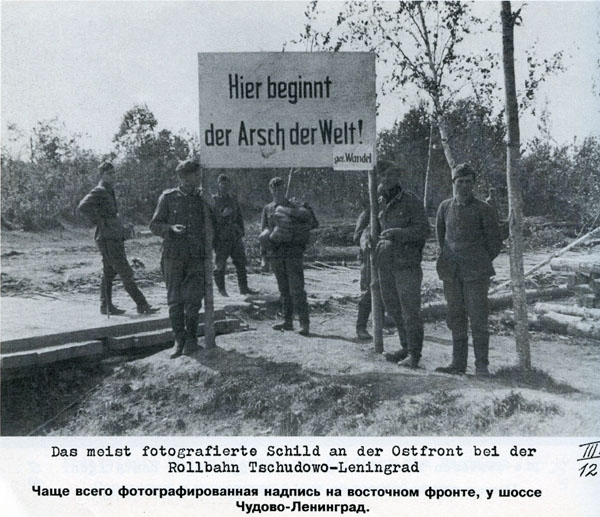
1942. Eastern Front. Volhov swamps. Here begins Hell (literally "here begins ass of the world")

tmp_aJiNj.jpg


Rzhev salient. For the next 14 months, every week the losses on both sides will exceed D-day invasion. .... every week ... for the next year.

C1oqMDhXgAAxaZF.jpg:large


1465674788_141637326419942766562.jpeg


Я убит подо Ржевом, I was killed near Rzhev,
В безымянном болоте, In an unnamed swamp,
В пятой роте, Fifth company,
На левом, при жестоком налете. To the left, in a hale of fire.

Я не слышал разрыва I did not hear the explosion,
И не видел той вспышки, — I did not see the flash,
Точно в пропасть с обрыва — Like into abyss from a cliff,
И ни дна, ни покрышки. I have fallen, bottomless.

И во всем этом мире In this whole world,
До конца его дней — To the end of days,
Ни петлички, ни лычки Not a shred or thread,
С гимнастерки моей. From my uniform is left.

Я — где корни слепые I am where blind roots
Ищут корма во тьме; Seek nourishment in darkness,
Я — где с облаком пыли I am with the cloud of dust,
Ходит рожь на холме. Over the waves of rye on a hill.

Я — где крик петушиный I am rooster's crow
На заре по росе; At the dawn, in the dew;
Я — где ваши машины I am where cars,
Воздух рвут на шоссе. Roars on a highway.

Где — травинку к травинке — Where blades of grass,
Речка травы прядет, River knits on a bank,
Там, куда на поминки There not even my mother,
Даже мать не придет. Can come to remember me.


75 years later, volunteers still dig up and bury bones of soldiers.
 
1942. Eastern Front. Volhov swamps. Here begins Hell (literally "here begins ass of the world")

tmp_aJiNj.jpg


Rzhev salient. For the next 14 months, every week the losses on both sides will exceed D-day invasion. .... every week ... for the next year.

C1oqMDhXgAAxaZF.jpg:large


1465674788_141637326419942766562.jpeg


Я убит подо Ржевом, I was killed near Rzhev,
В безымянном болоте, In an unnamed swamp,
В пятой роте, Fifth company,
На левом, при жестоком налете. To the left, in a hale of fire.

Я не слышал разрыва I did not hear the explosion,
И не видел той вспышки, — I did not see the flash,
Точно в пропасть с обрыва — Like into abyss from a cliff,
И ни дна, ни покрышки. I have fallen, bottomless.

И во всем этом мире In this whole world,
До конца его дней — To the end of days,
Ни петлички, ни лычки Not a shred or thread,
С гимнастерки моей. From my uniform is left.

Я — где корни слепые I am where blind roots
Ищут корма во тьме; Seek nourishment in darkness,
Я — где с облаком пыли I am with the cloud of dust,
Ходит рожь на холме. Over the waves of rye on a hill.

Я — где крик петушиный I am rooster's crow
На заре по росе; At the dawn, in the dew;
Я — где ваши машины I am where cars,
Воздух рвут на шоссе. Roars on a highway.

Где — травинку к травинке — Where blades of grass,
Речка травы прядет, River knits on a bank,
Там, куда на поминки There not even my mother,
Даже мать не придет. Can come to remember me.


75 years later, volunteers still dig up and bury bones of soldiers.

1916 is a good song.
Sixteen years old when I went to the war,
To fight for a land fit for heroes,
God on my side, and a gun in my hand,
Chasing my days down to zero,
And I marched and I fought and I bled and I died,
And I never did get any older,
But I knew at the time that a year in the line,
Was a long enough life for a soldier,
We all volunteered, and we wrote down our names,
And we added two years to our ages,
Eager for life and ahead of the game,
Ready for history's pages,
And we brawled and we fought and we whored 'til we stood,
Ten thousand shoulder to shoulder,
A thirst for the Hun, we were food for the gun,
And that's what you are when you're soldiers,
I heard my friend cry, and he sank to his knees,
Coughing blood as he screamed for his mother,
And I fell by his side, and that's how we died,
Clinging like kids to each other,
And I lay in the mud and the guts and the blood,
And I wept as his body grew colder,
And I called for my mother and she never came,
Though it wasn't my fault and I wasn't to blame,
The day not half over and ten thousand slain,
And now there's nobody remembers our names
And that's how it is for a soldier
 
The Texas Rangers charging the field with bats to rescue the outfielders during the Ten Cent Beer Night riot in Cleveland.

In the annals of baseball history, it's a tossup to me if this, or Disco Demolition Night should earn the top spot of "Most Surreal This-has-got-to-be-a-movie" moment in the sport.


@Smaug's Smokey Hole - You can look at the pictures, you can see the film, you can read the numbers, and you'll still never ever truly get a grasp of the colossal, horrifying, wholesale waste of life that was the Eastern Front in WWII, the human mind can't comprehend it.


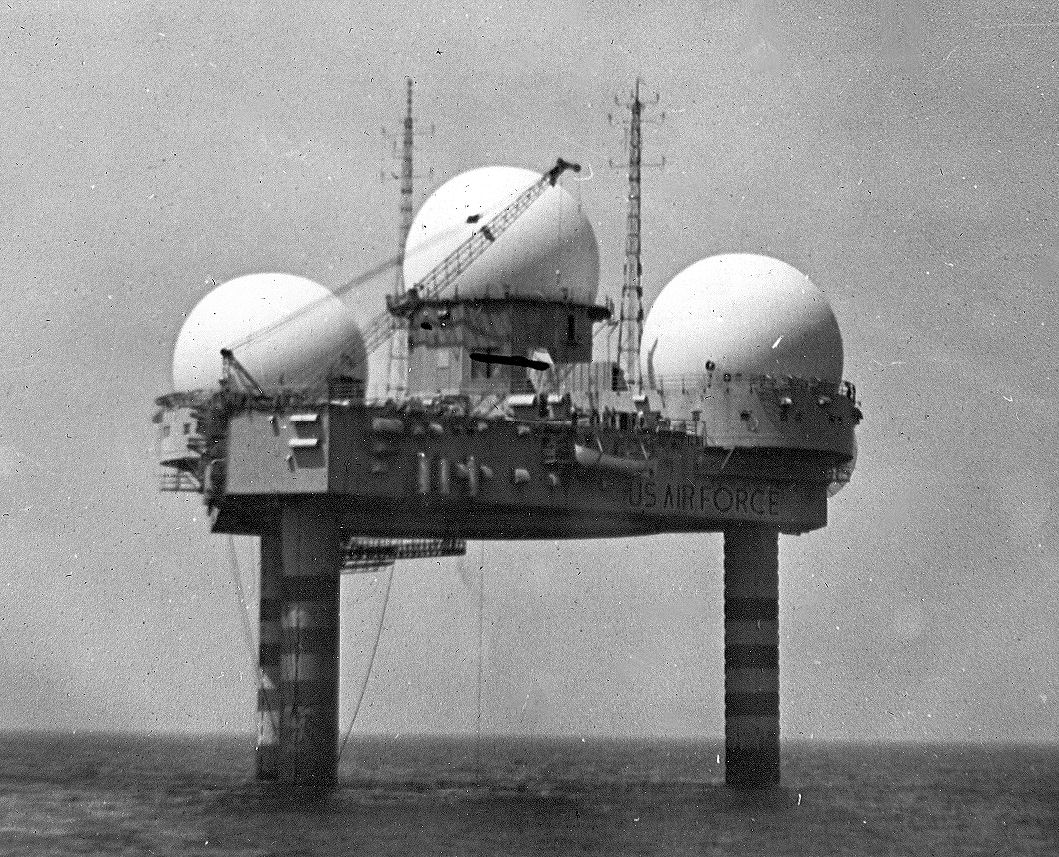
Texas Tower #4

Texas_Tower_4.jpg


Part of the DEW (distant early warning) line, an early Cold War network of radar stations purpose-built to detecting incoming Soviet bombers, the "Texas Towers" were radars perched on off-shore platforms to cover a "gap" at the edge of the Northeastern US and Canada where there wasn't natural dry land to set up a permanent station. The name came from their similarity in appearance to oil drilling platforms found in the Gulf of Mexico, not their actual location off the shore of Nantucket and Boston in the Atlantic.

By 1957, three of the first four planned towers had been towed out to sea and put in place. And it didn't take long for one of the trio, Tower 4, to gain a reputation as a miserable place to work. Aside from the constant boredom, monotonous drone of the radars and dreary, disagreeable North Atlantic weather, Tower 4 picked up the nickname "Old Shaky" for it's tendency to buck and heave in storms, which was acerbated by the fact it was placed on a soft, muddy bottom instead of a firm bed of rock the other two Towers enjoyed.

As time wore on, the stability of the platform continued to degrade, with at least two major hurricanes battering the Tower and frequent repairs being required to the supporting legs as bits of the bracing were gradually knocked off by the elements. As early as 1960, the Air Force cut the number of crew to the bare minimum and planned to decommission the unruly structure, but wouldn't allow for total abandonment for fear that Soviet spy ships that were known to observe the Tower from a distance would then board it and abscond with the radars and other equipment. Thus, 28 men, 14 enlisted and 14 civilian contractors were aboard Texas Tower 4 on the night of January 15th of 1961 when yet another severe storm lashed the area. This time, the power of the wind and waves proved too much and one of the three large supporting legs tore away. A frantic distress call went out and rescue ships were dispatched, but by the time they reached the scene, there were only churning seas and two bodies. Tower 4 had collapsed into the ocean, taking all aboard with it.

The real tragedy was that even only 4 years into it's service life, Tower 4, and the whole tower system itself, was obsolete. Advances in airborne warning systems and the maturation of reliable missile technology were increasingly marginalizing the usefulness of strategic nuclear bombing, and with any future nuclear exchange likely to be ICBM-based, the extra few minutes of warning gained by putting a radar off the coast was of little value. The men who lost their lives in service that night were ultimately sacrificed to protect outdated technology in an environment that was ill-suited for it in the first place, bitterly exemplifying the reflexive paranoia and brinkmanship of an era where it was better to risk lives than be shown to actively back down.
 
Last edited:
An 1886 photo of the Boston Beaneaters and New York Giants, where Charles Radbourn (back row, far left) gave da fingah. It's the earliest known pic where the gesture is depicted.

4dz9toe6o2a01.jpg
 
"Rufus" - the core to a 3rd nuclear bomb that was to be dropped on Japan. It was only 4 days away from being shipped out from the American nuclear program's base of operations at Los Alamos to be fitted in the shell of a "Fat Man"-style implosion bomb when the Emperor himself surrendered on August 15th, 1945.

001-demon-core-nuclear-bomb-plutonium-1.jpg


About 13 and a half pounds of metallic material, mostly Plutonium, in a sphere that was 3.5 inches in diameter.

That's smaller than a baseball, but slightly larger than the cue ball in a billiards set. Either way, you could easily hold it in the palm of your hand.

That's all you need... to flatten a city and kill everyone in it.....


And though the body count wouldn't be anywhere near the estimated 200,000 that died in the nuclear bombings of Hiroshima and Nagasaki, Rufus would kill just enough people in its' short life that it would earn the nickname "The Demon Core"

With the bombing called off, the Los Alamos scientists had a unique opportunity to use the core, far too expensive to have produced just to tinker with, to test on.

Specifically, they were interested in just how close it could be brought to criticality (the point at which nuclear reaction can self-sustain) without actually going critical. As-built, the core was 5% below this limit as a safety feature. It's important to note, passing this threshold would not make the thing explode in a mushroom cloud, that's a phenomenon called Prompt SUPERcriticality and can only be achieved by using lenses of explosive material to compact it into a much tighter space and do it so rapidly that it doesn't have a chance to stabilize itself by shedding radioactive byproducts and heat. Still, if the core did go critical, it would release an enormous amount of ionizing radiation, the same as if you were to stand directly next to a nuclear reactor and have someone turn it on, so, not a good idea....

No points for guessing what happened only a week after the bomb it was intended for was canceled.

On August 21st of that year, Physicist Harry Daghlian Jr was working on the core in a lab, alone and in violation of safety protocol. He had been stacking a series of tungsten carbide bricks around the core to act as neutron reflectors. The purpose of these blocks of dense and heat resistant material was to take neutrons that had escaped without impacting any of the other plutonium atoms and reflect them back into the core, thereby increasing the number of free neutrons flying around, upping the rate of fission, and inching \that much closer to critical.

As he worked, he accidentally dropped one of these bricks directly on top of the core. Though he swatted it away almost instantly, it was too late. A fatal dose of radiation had blasted Daghlian who would slip into a coma and die 25 days later of acute radiation poisoning. The pictures of his bare hand after he used it to pick up the brick off the critical core are not for the squeamish.

Incredibly, this mishap didn't seem to dampen the other scientists from continuing to toy with Rufus. A new procedure was developed that was supposedly "safer". In this protocol, the core would be sandwiched between two hemispheres of reflective beryllium. The top one would be lowered until it rested on a set of shims that would keep it from closing completely, this tiny slit between the two providing room for just enough neutrons to leak out and prevent criticality.

Naturally, being so perilously close to disaster proved an irresistible compulsion for one scientist, Louis Slotin, to "Tickle the dragon's tail" , a term he used for removing the safety shims and holding the two hemispheres apart with only the tip of a flathead screwdriver. It was a trick he supposedly sometimes performed for no other reason than to amaze onlookers.

No less an authority than famed Italian nuclear physicist Enrico Fermi had warned him that if he kept it up, he'd be "Dead within a year".

It didn't even take that long.

On May 21st, 1946, Slotin was demonstrating the core and his "tickling" procedure to a group of new scientist that were slated to take over research when the inevitable happened. Slotin's hand slipped, the screwdriver pulled out, and the two reflectors came completely together.

Despite it being daytime and in a room with large windows, everyone present testified they saw a bright blue flash and felt the heat as the core went critical, again.

Like Daghlian, Slotin immediately stopped the reaction by pulling the upper reflector off, but it was already too late, and he knew it. He reportedly told physicist Alvin Graves, standing nearby "Well, that does it".

In all, seven men in the room were exposed to high levels of radiation, but only Slotin's dose would prove fatal. Having been standing directly over the core at the time of the incident, it was later estimated he'd received double the amount of radiation needed to kill him. Rushed to hospital immediately, Slotin's condition still deteriorated rapidly, and he died only nine days later. His doctors, describing his condition to the press, said Slotin was "Suffering a three dimensional sunburn". Several of the others present also had to be treated for acute radiation poisoning, and would survive, albeit with long-term effects on their health.

The second accident delayed the core's scheduled inclusion into the famous "Crossroads" nuclear test (the one where that cluster of obsolete warships get blown up) and the reputation of it was such that aside from earning it's macabre "Demon Core" nickname, it was thought best to quietly ship it back to be melted down and re-integrated into the military's stockpile of weapons material.

It also finally drilled into the heads of the scientific community that working hands-on with radioactive materials was too dangerous, and safety procedures changed again so that only remote controlled robots and mechanical arms, viewed by closed circuit TV as they worked, could be used to conduct further research on such things.

Which is really the most amazing thing about it all, two men, who surely knew the risks of what they were doing, especially after Daughlian's mistake, continued to be cavalier to the point of near-suicide around things they should, by all conventional wisdom, know how to avoid dying to.
 
Last edited:
Which is really the most amazing thing about it all, two men, who surely knew the risks of what they were doing, especially after Daughlian's mistake, continued to be cavalier to the point of near-suicide around things they should, by all conventional wisdom, know how to avoid dying to.

It's an odd type of person who is not only capable of but actually does design and build a bomb that could be used to destroy the entire world.
 
Sometimes, I think the expert is the most likely to get killed by a simple mistake since they've been around the stuff for so long, they no longer have the hesitant and respectful weight in their actions that a rookie does. They've been around it so long the "Before I do this... remember, screw up and you die" is just background noise.
 
Indira Gandhi and Nicolae Ceauşescu during the latter's state visit to India in 1969


The end of Ceauşescu was one of the most brutal, symbolic, and in a way, karmic, chapters in the annals of the sudden fall of Eastern European communism. When the Soviet Satellites unexpectedly collapsed by mass popular revolt in 1989, his was the only one that imploded with violence, such was the degree to which the populace hated him and every facet of the communist state and ideology he represented. It's like the sum-total of forty years of an entire nation's pent-up rage were unleashed in just 72 hours on one man. Seriously, he was giving a speech from a balcony in Bucharest on the 21st of December in which he declared Romanian communism would continue and the massive political changes all around him were the work of "subversives" out to destroy the glorious socialist system.... the crowd went ape shit against him. Just one day later, he was reducing to hitchhiking roadside, all of his power gone to the point he only got a ride when his last loyal bodyguard pulled out a gun and carjacked someone. He was arrested and condemned to death for Christmas, and perforated by an AK-47 on the 25th.

Nicolae-Ceausescu-2-e1476651892844.jpg


This is both he and his wife Elana being drug off to be summarily shot against the wall outside after a trial so brief and preordained of sentence that even Romanians admit it wasn't fair..... " shameful, but necessary " was how the provisional government put it.
 
Back
Top Bottom