Navigation
Install the app
How to install the app on iOS
Follow along with the video below to see how to install our site as a web app on your home screen.
Note: This feature may not be available in some browsers.
More options
Style variation
You are using an out of date browser. It may not display this or other websites correctly.
You should upgrade or use an alternative browser.
You should upgrade or use an alternative browser.
Historical images - Images that made history
- Thread starter Monika H.
- Start date
-
Want to keep track of this thread?
Accounts can bookmark posts, watch threads for updates, and jump back to where you stopped reading.
Create account


SparklyFetuses
kiwifarms.net
- Joined
- Mar 1, 2017


Pope John Paul II, when he visited Japan (and met Hirohito) for the first time in February 1981.

- Joined
- Mar 23, 2016
It's kind of strange, when you think about it. Pope John Paul II represents a faith that emerged roughly 2000 years ago and has been an official religion for roughly 1700 years, whereas Hirohito represents a dynasty that was founded some 1800 years ago (taking the mythological mumbo jumbo into consideration, the japanese imperial family is even older).
Pope John Paul II, when he visited Japan (and met Hirohito) for the first time in February 1981.
Still, Hirohito should have abdicated after WWII.

- Joined
- Dec 28, 2014
Still, Hirohito should have abdicated after WWII.
Part of not forcing that was going out of our way not to humiliate the losers of WW II excessively, because doing so after WW I was at least part of why WW II became inevitable.
Turning enemies into allies is a lot of why the U.S. was the dominant world power after WW II.
I
IV 445
Guest
kiwifarms.net
- Joined
- Mar 23, 2016
Abolishing the imperial system entirely would have caused some severe social unrest, yes, but I think it would have been well possible to "suggest" to Hirohito that he might want to "decide of his own free will" to abdicate and let his place as Emperor be taken over by his successor (Akihito was born in 1933, so he would have had to name a regent in the meantime).Part of not forcing that was going out of our way not to humiliate the losers of WW II excessively, because doing so after WW I was at least part of why WW II became inevitable.
Turning enemies into allies is a lot of why the U.S. was the dominant world power after WW II.
After WWII, there was quite a significant social movement to look into the Emperor's war responsibility combined with a left-leaning population.
Overall, it would have been nothing more than a mere gesture, given how the post-war constitution heavily limited the Emperor's power anyway.
But it would have been a clear signal that he has taken responsibility. The way it happened, questions of imperial war resonsibility were addressed after Hirohito's death in 1989 (and still not really discussed in depth), which is way too late to bring up such a topic.

- Joined
- Jun 6, 2018
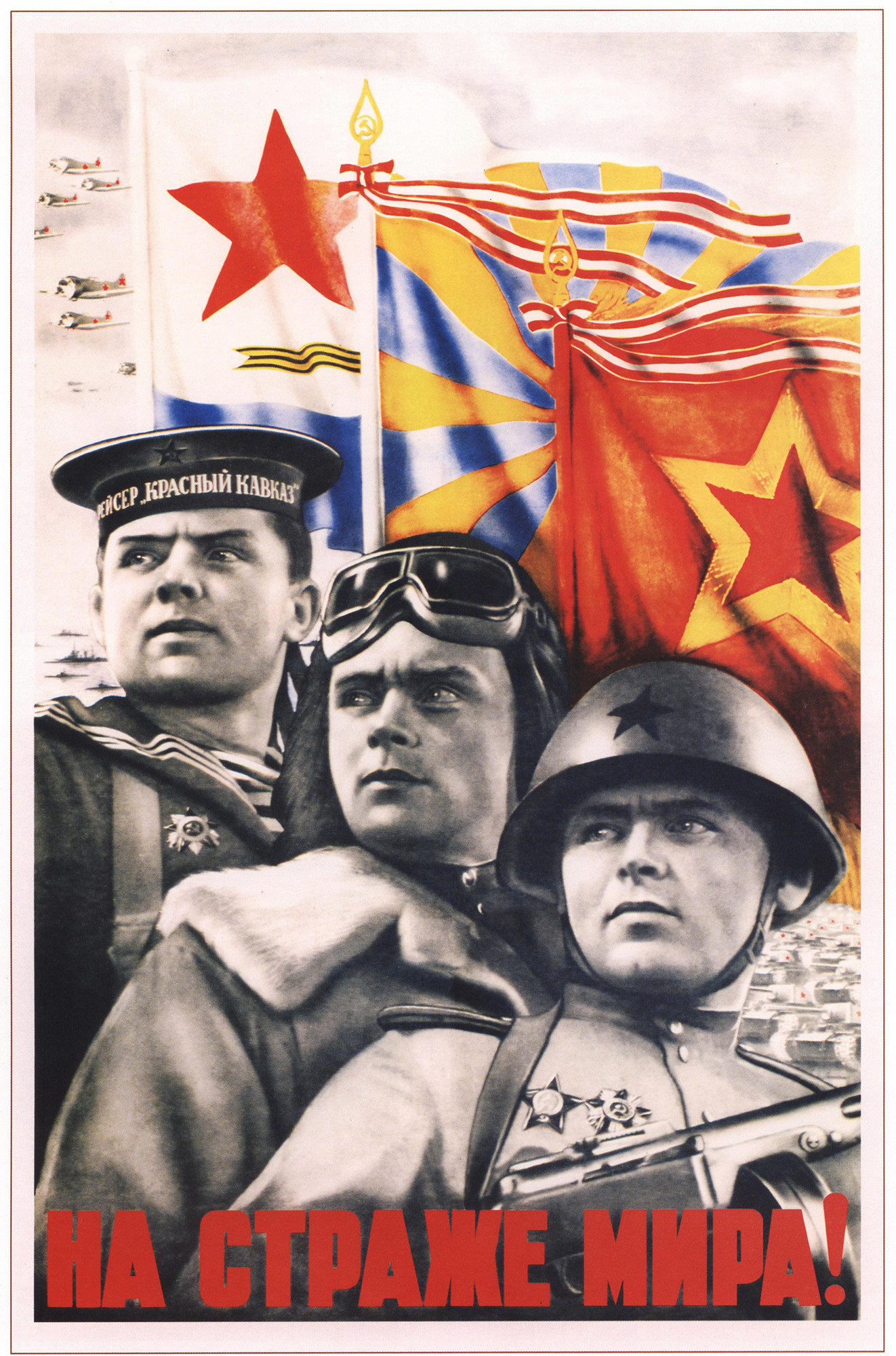
Old Soviet war propaganda poster
Japanese Manchukuo/Manchuria propaganda poster

Japanese Manchukuo/Manchuria propaganda poster
SparklyFetuses
kiwifarms.net
- Joined
- Mar 1, 2017
The guys themselves (with the exception of Boris... I've failed to find any actual pic of him. Halp.):

To be fair, the last time the Yamato Dynasty had actual direct power rather than clans, shoguns, oligarchs, and/or the military, the Catholic Church under the Pope was flexing its muscles with the Crusades. Hence why apart from the whole divinity thing and his final "blessing" under the advice from those in charge, the Emperor effectively had no power and there was no reason to abdicate or abolish the monarchy. However, many lesser members of Imperial Family branches held government power and were purged from the government after the war.It's kind of strange, when you think about it. Pope John Paul II represents a faith that emerged roughly 2000 years ago and has been an official religion for roughly 1700 years, whereas Hirohito represents a dynasty that was founded some 1800 years ago (taking the mythological mumbo jumbo into consideration, the japanese imperial family is even older).
Still, Hirohito should have abdicated after WWII.
Encroaching communism and fact we were relatively chummy with Japan, including being allies in WWI helped, until they sided with the Axis because of communism.Part of not forcing that was going out of our way not to humiliate the losers of WW II excessively, because doing so after WW I was at least part of why WW II became inevitable.
Turning enemies into allies is a lot of why the U.S. was the dominant world power after WW II.
SparklyFetuses
kiwifarms.net
- Joined
- Mar 1, 2017

Jean Michel Jarre (a french electronic musician), when he put his one-copy album "Music for Supermarkets" on auction and destroyed its master plate* in July 6th, 1983.
Even though Radio Luxembourg played the whole album in mono quality once, 3 of "Music for Supermarkets'" tracks were included in "Zoolook" ("Blah Blah Cafe" and "Diva", the latter contained Laurie Anderson's voice) and "Rendez Vous" (RV Part 5's second half).
*= The tapes were left.
Last edited:

- Joined
- Nov 15, 2017

Oldest known photo of Irish potato famine survivor.
As the photo was taken a year after the Famine reached an end, the laborer is one of the first famine survivors to ever be photographed, as photography was still extremely new at the time.
The image itself was taken by photographer John Gregory Crace, but nothing more is known about the subject of the portrait other than his good fortune in surviving hunger and disease throughout the years 1845 to 1852, and at not having had to emigrate to survive.

- Joined
- Jul 25, 2016
Zoltán Dani, commander of the 250th Air Defense Missile Brigade of the VJ, sitting on the wreckage of an F-117 "Nighthawk", 1999
Zoltán Dani is an ethnic Hungarian from the Serb province of Vojvodina whose unit shot down the F-117 stealth bomber, piloted by Lt. Colonel Darell Patrick "Dale" Zelko, during the Kosovo War. The VJ used almost primitive 1960s era Soviet technology to accomplish that feat, though to be fair to Zelko, the Serbs were preparing for this situation for decades as in Tito's Yugoslavia both the army and the people were prepared for an eventual military aggression either from NATO or the Warsaw Pact. At the time of me writing this, Serbia is so far the only nation to down a stealth bomber. Zelko himself successfully ejected and was retrieved by a search and rescue party.
Years later Zelko and Dani would meet and even become friends which was beautifully shown in the documentary The Second Meeting. Zelko even gave Dani as a gift a model replica of an F-117 while saying "Please don't break this one too!". Lols were had on both sides.
Last edited:

- Joined
- Feb 26, 2019

- Joined
- Sep 25, 2014
An image of what the Industrial Revolution meant for America.

Some nice, possibly pointless information on the guy who made that quote...
https://en.wikipedia.org/wiki/Samuel_M._Jones
Some nice, possibly pointless information on the guy who made that quote...
https://en.wikipedia.org/wiki/Samuel_M._Jones
Last edited:

Hellbound Hellhound
kiwifarms.net
- Joined
- Apr 2, 2018
The building of the Panama Canal:


- Joined
- Jan 24, 2018
22 years ago, Emil Matasareanu and Larry Phillips Jr attempted to rob a bank in North Hollywood, Los Angeles, California but after being sighted by police exchanged gunfire lasting for almost an hour which would be the longest and bloodiest gunfire exchange with police in American history, leaving 18 people injured and 2 dead. This was Emil Matasareanu last known picture of him being alive before dying of injuries.
- Joined
- Mar 23, 2016
Don't forget to mention the valiant sacrifice of all those that died of the yellow fever during the Panama Canal's construction.The building of the Panama Canal:

In case you don't get the reference, watch Arsenic and Old Lace now.

- Joined
- Sep 19, 2013
22 years ago, Emil Matasareanu and Larry Phillips Jr attempted to rob a bank in North Hollywood, Los Angeles, California but after being sighted by police exchanged gunfire lasting for almost an hour which would be the longest and bloodiest gunfire exchange with police in American history, leaving 18 people injured and 2 dead. This was Emil Matasareanu last known picture of him being alive before dying of injuries.
The equipment worn by Philips and Matasareanu at the LAPD museum.

- Joined
- Sep 30, 2016
Christine Chubbuck

She became famous for being the first person to commit suicide live on television during a news broadcast in 1974.
July 15, 1974: After covering several national news stories, she began to report on a shooting at a local restaurant but the film reel had jammed. She didn’t blink and shrugged it off before she continued and spoke her last sentence.
“In keeping with Channel 40’s policy of bringing you the latest in 'blood and guts’, and in living color, you are going to see another first – attempted suicide.” Then Christine drew a revolver and shot herself behind her right ear. Coworkers first believed it to be a joke until she slumped to the floor and realized that it wasn’t a joke. Her suicide note was found with her papers on the desk, including a news report for herself. She referred to herself in the third person and had her condition listed as critical.
Christine Chubbuck died fourteen hours later.
Video:

Liveleak.com - Christine Chubbuck suicide footage
Rare. In keeping with Channel 40's policy of bringing you the latest..
 www.liveleak.com
I think it's fake, though.
- Joined
- Jun 6, 2018
One of Adolfo Farsari's Japan photos, 1860
