First time posting on this forum so please don't kill me if mess up the formatting. Article is from 2005.
Link: http://news.bbc.co.uk/2/hi/south_asia/4506382.stm
In a quiet government office in the Indian capital, Delhi, some 100 doctors are hunched over computers poring over ancient medical texts and keying in information.
These doctors are practitioners of ayurveda, unani and siddha, ancient Indian medical systems that date back thousands of years.

Yoga exercises have been patented in the west
One of them is Jaya Saklani Kala, a young ayurveda doctor, who is wading through a dog-eared 500-year-old text book for information on a medicine derived from the mango fruit.
"Soon the world will know the medicine, and the fact that it originated from India," she says.
With help from software engineers and patent examiners, Ms Kala and her colleagues are putting together a 30-million-page electronic encyclopaedia of India's traditional medical knowledge, the first of its kind in the world.
'Bio-piracy'
The ambitious $2m project, christened Traditional Knowledge Digital Library, will roll out an encyclopaedia of the country's traditional medicine in five languages - English, French, German, Japanese and Spanish - in an effort to stop people from claiming them as their own and patenting them.
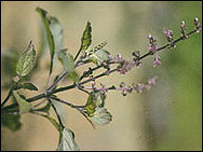
The tulsi (holy basil) plant has medicinal qualities
The electronic encyclopaedia, which will be made available next year, will contain information on the traditional medicines, including exhaustive references, photographs of the plants and scans from the original texts.
Indian scientists say the country has been a victim of what they describe as "bio-piracy" for a long time.
"When we put out this encyclopaedia in the public domain, no one will be able to claim that these medicines or therapies are their inventions. Till now, we have not done the needful to protect our traditional wealth," says Ajay Dua, a senior bureaucrat in the federal commerce ministry.
Putting together the encyclopaedia is a daunting task.
For one, ayurvedic texts are in Sanskrit and Hindi, unani texts are in Arabic and Persian and siddha material is in Tamil language. Material from these texts is being translated into five international languages, using sophisticated software coding.
The sheer wealth of material that has to be read through for information is enormous - there are some 54 authoritative 'text books' on ayurveda alone, some thousands of years old.

"People outside India are not aware of our immense traditional knowledge wealth "
VK Gupta, project director
Then there are nearly 150,000 recorded ayurvedic, unani and siddha medicines; and some 1,500 asanas (physical exercises and postures) in yoga, which originated in India more than 5,000 years ago.
Under normal circumstances, a patent application should always be rejected if there is prior existing knowledge about the product.
But in most of the developed nations like United States, "prior existing knowledge" is only recognised if it is published in a journal or is available on a database - not if it has been passed down through generations of oral and folk traditions.
The irony here is that India has suffered even though its traditional knowledge, as in China, has been documented extensively.
But information about traditional medicine has never been culled from their texts, translated and put out in the public domain.
Litigation
No wonder then that India has been embroiled in some high-profile patent litigation in the past decade - the government spent some $6m alone in fighting legal battles against the patenting of turmeric and neem-based medicines.
In 1995, the US Patent Office granted a patent on the wound-healing properties of turmeric.
Indian scientists protested and fought a two-year-long legal battle to get the patent revoked.
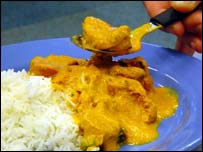
India got a patent on turmeric,
used in curries, revoked
Last year, India won a 10-year-long battle at the European Patent Office against a patent granted on an anti-fungal product, derived from neem, by successfully arguing that the medicinal neem tree is part of traditional Indian knowledge.
In 1998 the US Patent Office granted patent to a local company for new strains of rice similar to basmati, which has been grown for centuries in the Himalayan foothills of north-west India and Pakistan and has become popular internationally. After a prolonged legal battle, the patent was revoked four years ago.
And, in the US, an expatriate Indian yoga teacher has claimed copyright on a sequence of 36 yoga asanas, or postures.
Dr Vinod Kumar Gupta, who is leading the traditional wealth encyclopaedia project and heads India's National Institute of Science Communication and Information Resources (Niscair), reckons that of the nearly 5,000 patents given out by the US Patent Office on various medical plants by the year 2000, some 80% were plants of Indian origin.
Practitioners of traditional medicines say their importance cannot be denied - according to the WHO, 70% of the people living in India use traditional medicine for primary health care.
Also, some 42% of the people living in the US and 70% of the people living in Canada have used traditional medicines at least once for treatment.
By one estimate, a quarter of the new drugs produced in the US are plant-based, giving the sometimes much-criticised practitioners of alternative traditional medicine something to cheer about.
The mammoth Indian encyclopaedia may finally give alternative medicine the shot in the arm it sorely needs.
Link: http://news.bbc.co.uk/2/hi/south_asia/4506382.stm
In a quiet government office in the Indian capital, Delhi, some 100 doctors are hunched over computers poring over ancient medical texts and keying in information.
These doctors are practitioners of ayurveda, unani and siddha, ancient Indian medical systems that date back thousands of years.
Yoga exercises have been patented in the west
One of them is Jaya Saklani Kala, a young ayurveda doctor, who is wading through a dog-eared 500-year-old text book for information on a medicine derived from the mango fruit.
"Soon the world will know the medicine, and the fact that it originated from India," she says.
With help from software engineers and patent examiners, Ms Kala and her colleagues are putting together a 30-million-page electronic encyclopaedia of India's traditional medical knowledge, the first of its kind in the world.
'Bio-piracy'
The ambitious $2m project, christened Traditional Knowledge Digital Library, will roll out an encyclopaedia of the country's traditional medicine in five languages - English, French, German, Japanese and Spanish - in an effort to stop people from claiming them as their own and patenting them.
The tulsi (holy basil) plant has medicinal qualities
The electronic encyclopaedia, which will be made available next year, will contain information on the traditional medicines, including exhaustive references, photographs of the plants and scans from the original texts.
Indian scientists say the country has been a victim of what they describe as "bio-piracy" for a long time.
"When we put out this encyclopaedia in the public domain, no one will be able to claim that these medicines or therapies are their inventions. Till now, we have not done the needful to protect our traditional wealth," says Ajay Dua, a senior bureaucrat in the federal commerce ministry.
Putting together the encyclopaedia is a daunting task.
For one, ayurvedic texts are in Sanskrit and Hindi, unani texts are in Arabic and Persian and siddha material is in Tamil language. Material from these texts is being translated into five international languages, using sophisticated software coding.
The sheer wealth of material that has to be read through for information is enormous - there are some 54 authoritative 'text books' on ayurveda alone, some thousands of years old.
"People outside India are not aware of our immense traditional knowledge wealth "
VK Gupta, project director
Then there are nearly 150,000 recorded ayurvedic, unani and siddha medicines; and some 1,500 asanas (physical exercises and postures) in yoga, which originated in India more than 5,000 years ago.
Under normal circumstances, a patent application should always be rejected if there is prior existing knowledge about the product.
But in most of the developed nations like United States, "prior existing knowledge" is only recognised if it is published in a journal or is available on a database - not if it has been passed down through generations of oral and folk traditions.
The irony here is that India has suffered even though its traditional knowledge, as in China, has been documented extensively.
But information about traditional medicine has never been culled from their texts, translated and put out in the public domain.
Litigation
No wonder then that India has been embroiled in some high-profile patent litigation in the past decade - the government spent some $6m alone in fighting legal battles against the patenting of turmeric and neem-based medicines.
In 1995, the US Patent Office granted a patent on the wound-healing properties of turmeric.
Indian scientists protested and fought a two-year-long legal battle to get the patent revoked.
India got a patent on turmeric,
used in curries, revoked
Last year, India won a 10-year-long battle at the European Patent Office against a patent granted on an anti-fungal product, derived from neem, by successfully arguing that the medicinal neem tree is part of traditional Indian knowledge.
In 1998 the US Patent Office granted patent to a local company for new strains of rice similar to basmati, which has been grown for centuries in the Himalayan foothills of north-west India and Pakistan and has become popular internationally. After a prolonged legal battle, the patent was revoked four years ago.
And, in the US, an expatriate Indian yoga teacher has claimed copyright on a sequence of 36 yoga asanas, or postures.
Dr Vinod Kumar Gupta, who is leading the traditional wealth encyclopaedia project and heads India's National Institute of Science Communication and Information Resources (Niscair), reckons that of the nearly 5,000 patents given out by the US Patent Office on various medical plants by the year 2000, some 80% were plants of Indian origin.
Practitioners of traditional medicines say their importance cannot be denied - according to the WHO, 70% of the people living in India use traditional medicine for primary health care.
Also, some 42% of the people living in the US and 70% of the people living in Canada have used traditional medicines at least once for treatment.
By one estimate, a quarter of the new drugs produced in the US are plant-based, giving the sometimes much-criticised practitioners of alternative traditional medicine something to cheer about.
The mammoth Indian encyclopaedia may finally give alternative medicine the shot in the arm it sorely needs.


