@chiobu @AltisticRight Previously: https://kiwifarms.st/threads/what-a...eutral-chinese-character-being-touted.113791/
By Jessie Yeung, CNN
Thu December 25, 2025
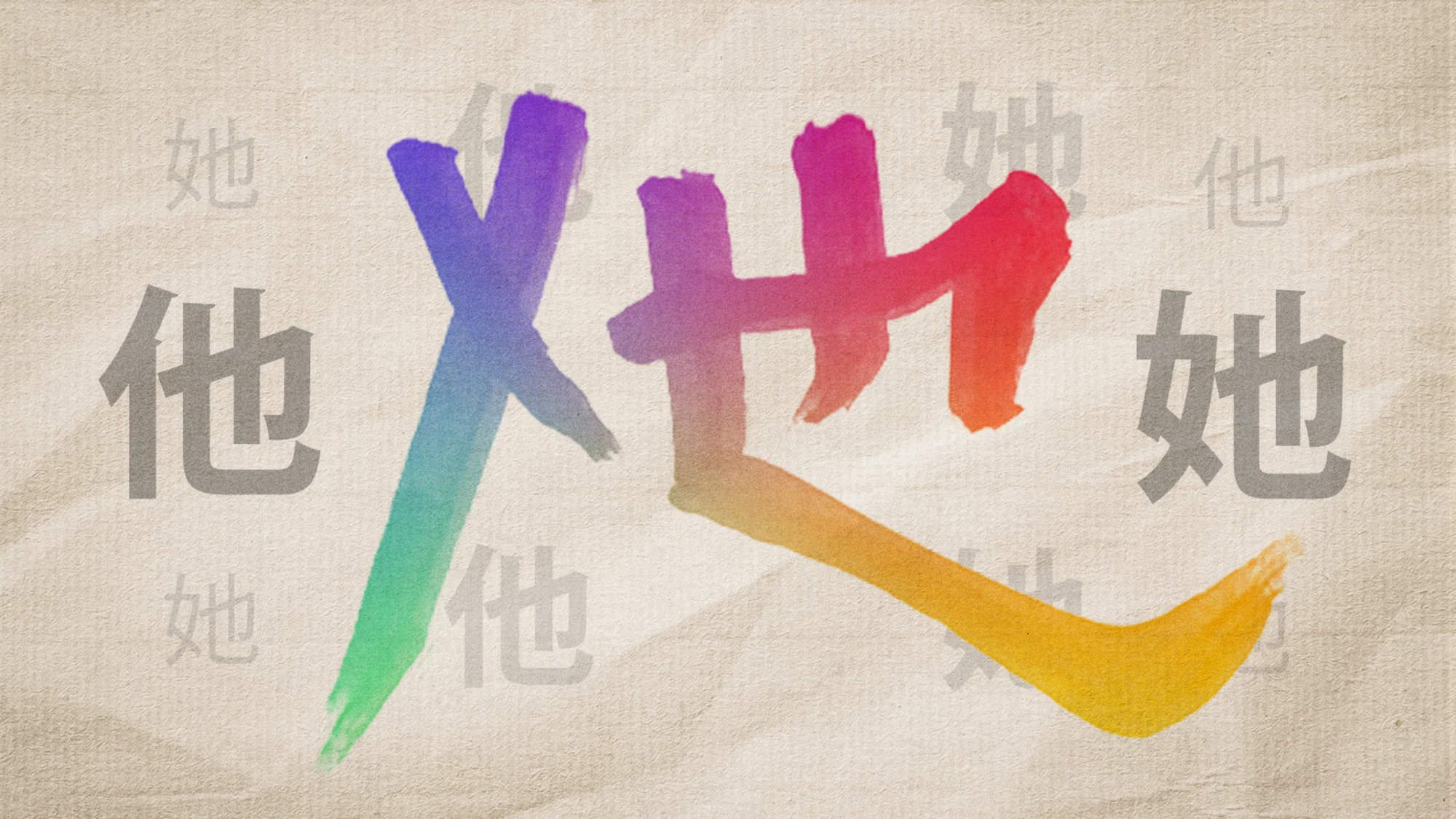
Illustration by Leah Abucayan/CNN
Whenever high-profile non-binary activist Siufung Law did media interviews, journalists always asked: what pronoun would they like to use?
For a long time, the Hong Kong native, who uses they/them pronouns in English, had no easy answer because Chinese pronouns are largely split into two when referring to people – a male and female form – and neither felt right.
Finally, in 2017, Law came across a potential solution: an unofficial pronoun that had been invented by the intersex and non-binary community. The character looked similar to the existing Chinese pronouns but was altered with what looked like an X on the side, which reminded Law of Gender X – the “third pronoun” sometimes used on IDs and passports in other countries.
Despite having been around for nearly a decade, this invented Chinese pronoun has remained on the fringes for one reason: as an unofficial character, it doesn’t exist on our keyboards, and while it’s often stylized as X也, that’s a hassle to type and confusing to people who are unfamiliar with it.
That, however, could soon change. In September, the pronoun was added to Unicode – a global standard of symbols and characters used by web developers and tech giants worldwide.
This means users may eventually be able to type the character on phones and laptops, and search and display it online. The process could take several more years, but it’s been celebrated nonetheless as a major step toward broader recognition – especially in China, where conservative attitudes and government crackdowns have made life increasingly tough for the LGBTQ+ community.
“Having a pronoun that is more specifically addressed to people who do not want to be labeled or boxed within the male and female pronouns … could be a really good alternative,” said Law, also a PhD candidate in gender and sexuality studies.
It’s “the acknowledgement (that) people like myself do exist, and we are not erased within … those binary systems, whether it’s language or culture or history itself.”
That’s evident in how it’s written, too. Chinese characters are composed of building blocks that often offer clues about their meaning or origin; in the case of the once-universal pronoun, its building blocks simply mean “person,” without any indication of gender.
“For thousands of years, it seems that nobody felt the need to make this distinction,” wrote Chinese scholar Huang Xingtao in his 2009 book on the topic. But in the early 20th century, China came into greater contact with Western nations – pushing the country to “vigorously create new characters … to express certain terms in Western languages.”
That’s also when China’s early feminist movement gained momentum, with activists demanding women’s independence, education, and representation – including in the written word.
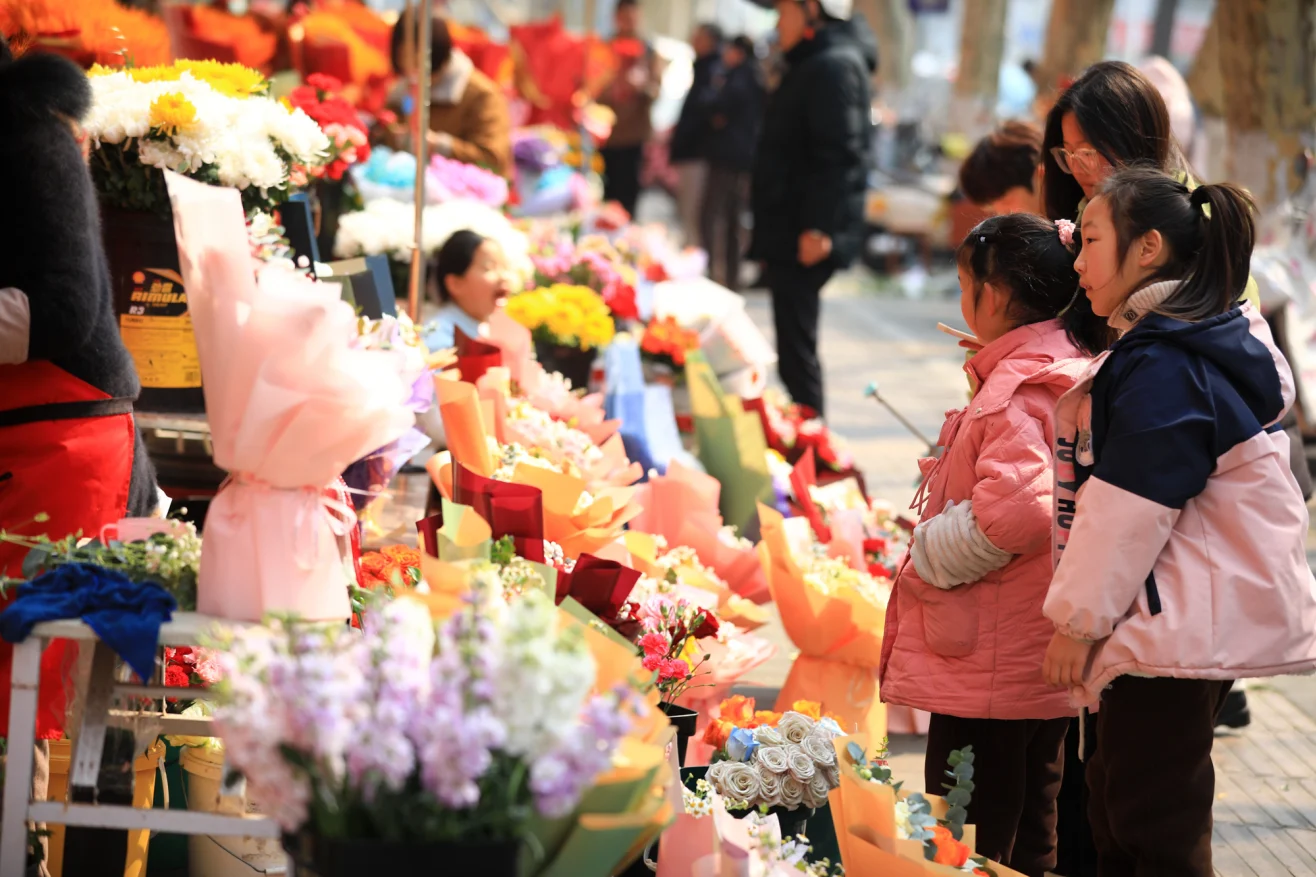
Customers shop for flowers at a market to celebrate International Women's Day on March 8, 2025 in Huai'an, China.
These concurrent movements birthed the new female pronoun, 她. It is pronounced “ta,” the same as the original 他, the new X也, and other Chinese pronouns used for animals and inanimate objects.
That’s why some people now argue that the creation of a new gender-neutral pronoun is unnecessary, as that’s what existed in the first place.
These linguistic evolutions have wide-reaching implications. Chinese has the highest number of native speakers out of all languages worldwide, and is used from Hong Kong to Taiwan to Chinese-speaking diasporas. Even Sinitic languages like Cantonese, distinct from Mandarin in many ways, share many written characters.
Fan, a 23-year-old agender Hong Konger, tried to adopt the 他 pronoun when they began using they/them pronouns a few years ago. After all, they figured, it was once gender-neutral, and is still sometimes used that way.
But, they said writing the 他 character felt “not very right for me.” That’s because it’s now too widely associated with maleness, which “made me realize we are past the stage where we could use it as a gender-neutral pronoun,” they said.
Instead, Fan uses another alternative that has become popular among Chinese speakers: writing out the English letters TA in all caps. This captures how all Chinese pronouns are said out loud, but strips away the “building blocks” of written characters that would typically indicate gender.
Compared to X也, which remains niche, TA is more widely seen, especially in mainland China. It has appeared on social media as well as in ad campaigns and other mainstream materials, said Kaspar Wan, founder of the Hong Kong-based transgender rights organization Gender Empowerment.
But even those who use TA say there’s something odd about inserting English letters in a sentence of Chinese characters.
“Usually I use TA, but I do find that having another Chinese (written pronoun) is quite important for me,” said Fan, who CNN is identifying by their nickname for privacy reasons.
Law agrees – TA “still looks like an English word to me,” which makes it “not very satisfying,” they said. “I’m really looking forward to being able to type (X也) with my phone … if this pronoun is much more easy to type, I would actually prefer it over TA.”
And challenges still remain, Bauer told a panel on the topic earlier this summer. It could take months or years for tech platforms and font manufacturers to update their systems and implement this new character so that users can easily search and type it on their devices, he said.
Even then, there’s the task of convincing people to actually use it. In Hong Kong, for instance, most people speak Cantonese, an informal and colloquial language that has its own version of a gender-neutral pronoun – lessening the demand for a new character, said Wan, of rights group Gender Empowerment.
But everyone who spoke to CNN agreed that the move holds symbolic power, regardless of any practical difficulties.
“Now that Unicode has this character, if you use it, people may say – oh, you’re non-binary,” said Wan. It lends weight and legitimacy to the pronoun; instead of being an unofficial character made up by a few individuals, it’s now “part of the grammar, or part of the language,” he said.
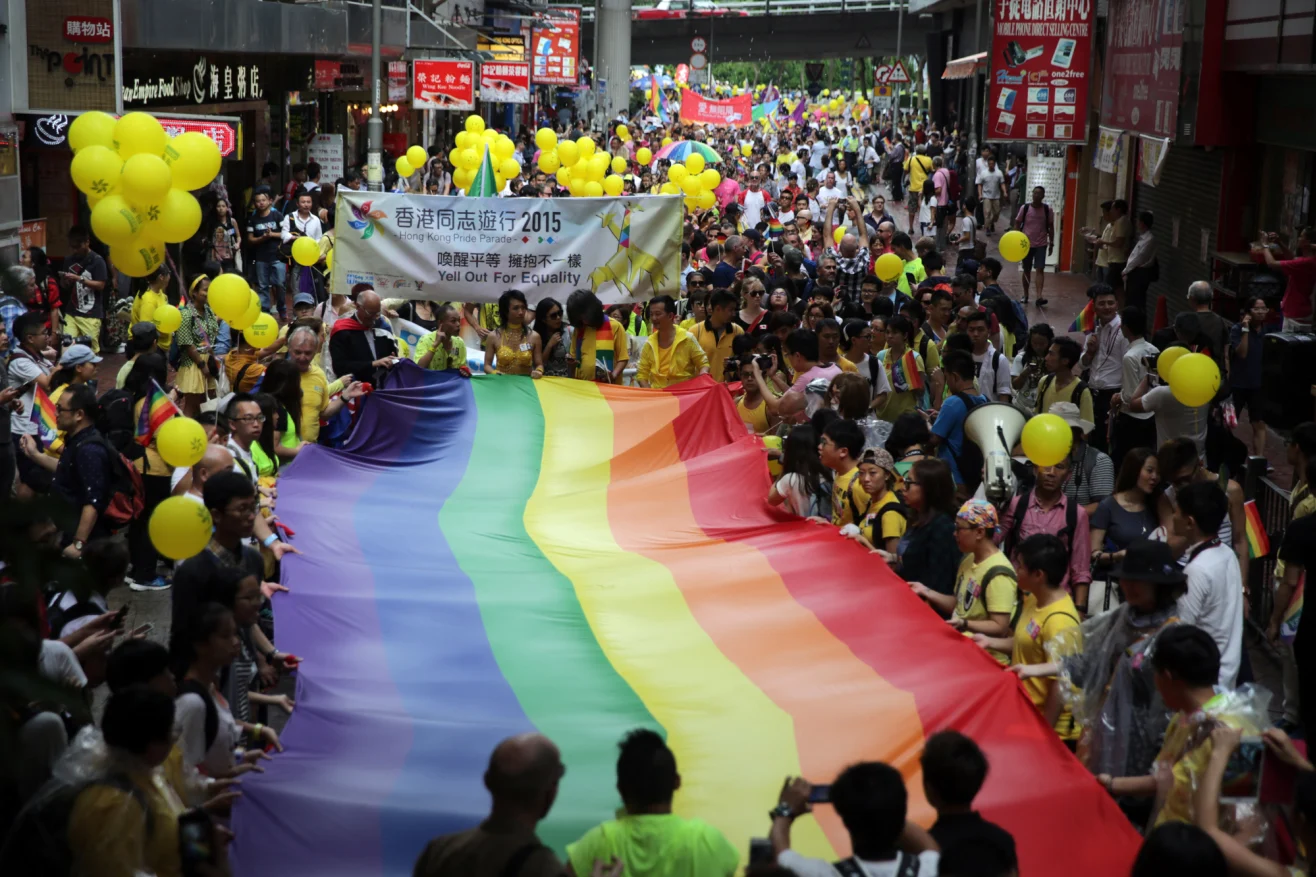
People take part in the Lesbian, Gay, Bi-sexual and Transgender (LGBT) parade in Hong Kong on November 6, 2015.
That’s especially important given that Chinese-speaking cultures often lean more conservative on LGBTQ+ rights and representation. In mainland China, the community has faced an intensifying crackdown since Xi Jinping came to power more than a decade ago; Pride parades have been canceled, films and TV shows featuring same-sex themes banned, and LGBTQ+ accounts shut down on the nation’s most popular messaging app.
Hong Kong – a former British colony and international finance hub – is generally more open-minded than mainland China, though it has yet to recognize same-sex marriage or legislate against discrimination based on sexual orientation, despite successive court rulings urging greater equality.
The city has also undergone a national security crackdown in recent years that has stifled dissent and caught up many leading LGBTQ+ activists, many of whom were also pro-democracy campaigners
Taiwan is far and away the most progressive, as the first place in Asia to legalize same-sex marriage.
In this context, “having a pronoun that recognizes us is so important at this time,” said Law, who pointed to a rise in homophobia and transphobia in various parts of the world – including anti-transgender legislation across the United States.
Unicode’s adoption of X也 also “opened up a space, or (set) an example, to let us explore other gendered words,” said Fan. They pointed to the many ways people use casually gendered language every day – for instance, one common Chinese phrase for “children” literally translates to “sons and daughters.” Other times, street vendors and restaurant servers may shout out to you: “Miss!” or “Mister!”
“Actually, a lot of non-binary people struggle with this, because no matter how people address you, you’re being misgendered,” Fan said. Maybe X也 could provoke more conversations and inspire more gender-neutral terms, they said.
At the very least, it offers a choice that wasn’t there before, to a group of people often left on the margins.
“When you have a choice, it tells you that your desire or your identity is a valid option,” Fan said. “The existence of this option itself is a very empowering thing.”
I looked around for some stuff related to this to archive:
https://en.wikipedia.org/wiki/Chinese_pronouns (archive) - Page not yet updated to reflect any new addition to Unicode:
https://www.genderinlanguage.com/mandarin (archive) (mega)
https://hc.jsecs.org/irg/ws2021/app/?id=00029 (archive) (mega)
https://genderempowerment.org/ (archive) (mega)
https://runxiyu.org/blog/zhpronoun/ (archive) (mega)
https://blog.fivest.one/archives/7064 (archive) (mega)
https://www.reddit.com/r/ChineseLanguage/comments/1pw7f80/thoughts_on_x也_vs_ta_vs_他/ (archive) (mega)
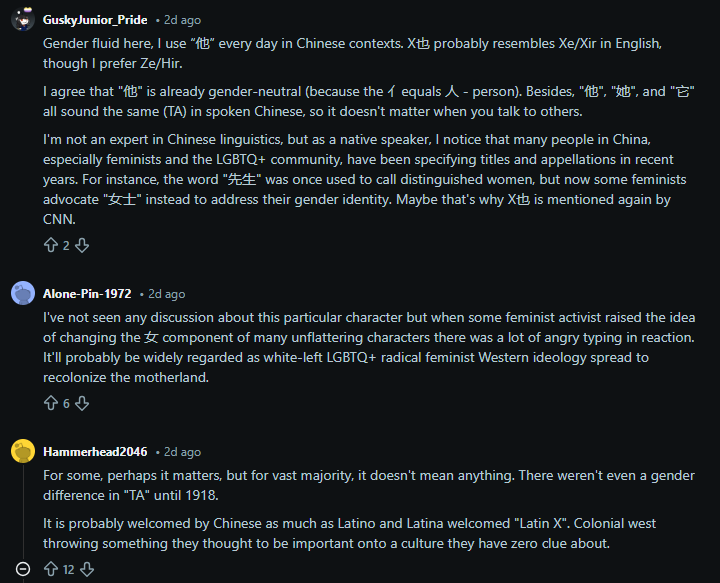
Some white devil I found:
https://www.linkedin.com/posts/jane...-of-chinese-activity-7343085075254722560-HHl1 (archive)
https://www.imageandnarrative.be/index.php/imagenarrative/article/view/3417/2829 (archive) (PDF attached)
https://theconversation.com/chinese...-it-might-adopt-a-gender-inclusive-one-221013 (archive) (mega)
https://theconversation.com/profiles/janet-davey-1359711 (archive) (mega)

At first, I was missing official information from Unicode.org, like a blog post, page for the new character, or discussion of it. The new character was added to Unicode 17.0.0 in September 2025.
I found what I needed in this document:
https://www.unicode.org/irg/docs/n2866r-ScriptHybridFeedback.pdf (mega) (PDF attached)
It's in the new "CJK Unified Ideographs Extension J" Unicode block along with 4,297 other new(?) unified ideographs:
https://www.unicode.org/charts/PDF/Unicode-17.0/U170-323B0.pdf (mega)

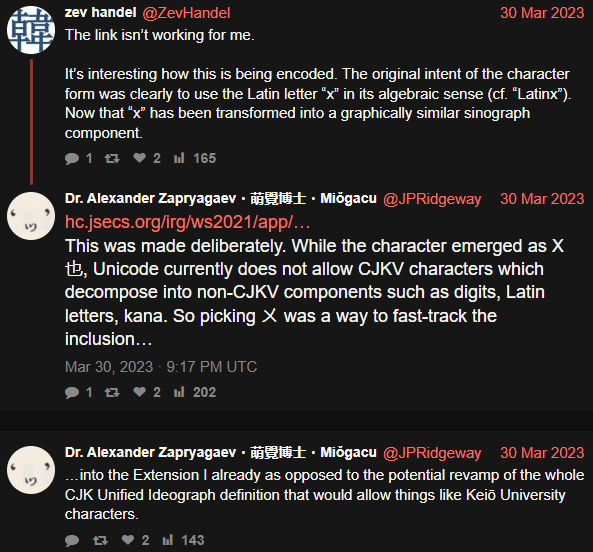
Basically, one of the original proposals was to combine the Latin character "X" with the 也 ("yě") character, reflecting usage seen on social media by the Western-influenced. It would be like the LatinX of Chinese, referring to so-called "non-binary" people. Purists do not want Latin characters to be officially combined with Chinese characters. So the fol㐅 behind this sneakily substituted "㐅", a Han Chinese character that looks like an X, in order to get the proposal approved faster.
https://x.com/JPRidgeway/status/1641550320848502784 (nitter - mega)
The code point is too new to find it properly rendered on Unicode reference websites yet:
This is the character (\uD888\uDFBF) that may eventually be rendered by your browser:
BTW, I don't care about Chinese characters, I'm researching this to strengthen my transmisia.
By Jessie Yeung, CNN
Thu December 25, 2025
Illustration by Leah Abucayan/CNN
Whenever high-profile non-binary activist Siufung Law did media interviews, journalists always asked: what pronoun would they like to use?
For a long time, the Hong Kong native, who uses they/them pronouns in English, had no easy answer because Chinese pronouns are largely split into two when referring to people – a male and female form – and neither felt right.
Finally, in 2017, Law came across a potential solution: an unofficial pronoun that had been invented by the intersex and non-binary community. The character looked similar to the existing Chinese pronouns but was altered with what looked like an X on the side, which reminded Law of Gender X – the “third pronoun” sometimes used on IDs and passports in other countries.
Despite having been around for nearly a decade, this invented Chinese pronoun has remained on the fringes for one reason: as an unofficial character, it doesn’t exist on our keyboards, and while it’s often stylized as X也, that’s a hassle to type and confusing to people who are unfamiliar with it.
That, however, could soon change. In September, the pronoun was added to Unicode – a global standard of symbols and characters used by web developers and tech giants worldwide.
This means users may eventually be able to type the character on phones and laptops, and search and display it online. The process could take several more years, but it’s been celebrated nonetheless as a major step toward broader recognition – especially in China, where conservative attitudes and government crackdowns have made life increasingly tough for the LGBTQ+ community.
“Having a pronoun that is more specifically addressed to people who do not want to be labeled or boxed within the male and female pronouns … could be a really good alternative,” said Law, also a PhD candidate in gender and sexuality studies.
It’s “the acknowledgement (that) people like myself do exist, and we are not erased within … those binary systems, whether it’s language or culture or history itself.”
That’s evident in how it’s written, too. Chinese characters are composed of building blocks that often offer clues about their meaning or origin; in the case of the once-universal pronoun, its building blocks simply mean “person,” without any indication of gender.
“For thousands of years, it seems that nobody felt the need to make this distinction,” wrote Chinese scholar Huang Xingtao in his 2009 book on the topic. But in the early 20th century, China came into greater contact with Western nations – pushing the country to “vigorously create new characters … to express certain terms in Western languages.”
That’s also when China’s early feminist movement gained momentum, with activists demanding women’s independence, education, and representation – including in the written word.
Customers shop for flowers at a market to celebrate International Women's Day on March 8, 2025 in Huai'an, China.
These concurrent movements birthed the new female pronoun, 她. It is pronounced “ta,” the same as the original 他, the new X也, and other Chinese pronouns used for animals and inanimate objects.
That’s why some people now argue that the creation of a new gender-neutral pronoun is unnecessary, as that’s what existed in the first place.
These linguistic evolutions have wide-reaching implications. Chinese has the highest number of native speakers out of all languages worldwide, and is used from Hong Kong to Taiwan to Chinese-speaking diasporas. Even Sinitic languages like Cantonese, distinct from Mandarin in many ways, share many written characters.
Fan, a 23-year-old agender Hong Konger, tried to adopt the 他 pronoun when they began using they/them pronouns a few years ago. After all, they figured, it was once gender-neutral, and is still sometimes used that way.
But, they said writing the 他 character felt “not very right for me.” That’s because it’s now too widely associated with maleness, which “made me realize we are past the stage where we could use it as a gender-neutral pronoun,” they said.
Instead, Fan uses another alternative that has become popular among Chinese speakers: writing out the English letters TA in all caps. This captures how all Chinese pronouns are said out loud, but strips away the “building blocks” of written characters that would typically indicate gender.
Compared to X也, which remains niche, TA is more widely seen, especially in mainland China. It has appeared on social media as well as in ad campaigns and other mainstream materials, said Kaspar Wan, founder of the Hong Kong-based transgender rights organization Gender Empowerment.
But even those who use TA say there’s something odd about inserting English letters in a sentence of Chinese characters.
“Usually I use TA, but I do find that having another Chinese (written pronoun) is quite important for me,” said Fan, who CNN is identifying by their nickname for privacy reasons.
Law agrees – TA “still looks like an English word to me,” which makes it “not very satisfying,” they said. “I’m really looking forward to being able to type (X也) with my phone … if this pronoun is much more easy to type, I would actually prefer it over TA.”
And challenges still remain, Bauer told a panel on the topic earlier this summer. It could take months or years for tech platforms and font manufacturers to update their systems and implement this new character so that users can easily search and type it on their devices, he said.
Even then, there’s the task of convincing people to actually use it. In Hong Kong, for instance, most people speak Cantonese, an informal and colloquial language that has its own version of a gender-neutral pronoun – lessening the demand for a new character, said Wan, of rights group Gender Empowerment.
But everyone who spoke to CNN agreed that the move holds symbolic power, regardless of any practical difficulties.
“Now that Unicode has this character, if you use it, people may say – oh, you’re non-binary,” said Wan. It lends weight and legitimacy to the pronoun; instead of being an unofficial character made up by a few individuals, it’s now “part of the grammar, or part of the language,” he said.
People take part in the Lesbian, Gay, Bi-sexual and Transgender (LGBT) parade in Hong Kong on November 6, 2015.
That’s especially important given that Chinese-speaking cultures often lean more conservative on LGBTQ+ rights and representation. In mainland China, the community has faced an intensifying crackdown since Xi Jinping came to power more than a decade ago; Pride parades have been canceled, films and TV shows featuring same-sex themes banned, and LGBTQ+ accounts shut down on the nation’s most popular messaging app.
Hong Kong – a former British colony and international finance hub – is generally more open-minded than mainland China, though it has yet to recognize same-sex marriage or legislate against discrimination based on sexual orientation, despite successive court rulings urging greater equality.
The city has also undergone a national security crackdown in recent years that has stifled dissent and caught up many leading LGBTQ+ activists, many of whom were also pro-democracy campaigners
Taiwan is far and away the most progressive, as the first place in Asia to legalize same-sex marriage.
In this context, “having a pronoun that recognizes us is so important at this time,” said Law, who pointed to a rise in homophobia and transphobia in various parts of the world – including anti-transgender legislation across the United States.
Unicode’s adoption of X也 also “opened up a space, or (set) an example, to let us explore other gendered words,” said Fan. They pointed to the many ways people use casually gendered language every day – for instance, one common Chinese phrase for “children” literally translates to “sons and daughters.” Other times, street vendors and restaurant servers may shout out to you: “Miss!” or “Mister!”
“Actually, a lot of non-binary people struggle with this, because no matter how people address you, you’re being misgendered,” Fan said. Maybe X也 could provoke more conversations and inspire more gender-neutral terms, they said.
At the very least, it offers a choice that wasn’t there before, to a group of people often left on the margins.
“When you have a choice, it tells you that your desire or your identity is a valid option,” Fan said. “The existence of this option itself is a very empowering thing.”
I looked around for some stuff related to this to archive:
https://en.wikipedia.org/wiki/Chinese_pronouns (archive) - Page not yet updated to reflect any new addition to Unicode:
In the early 21st century, some members of genderfluid and queer Chinese online communities started using X也 and TA to refer to a generic, anonymous, or non-binary third person. As of June 2022, neither have been encoded as a single code point in Unicode, and neither are considered standard usage. Since at least 2014, Bilibili has used TA in its user pages.
https://www.genderinlanguage.com/mandarin (archive) (mega)
https://hc.jsecs.org/irg/ws2021/app/?id=00029 (archive) (mega)
https://genderempowerment.org/ (archive) (mega)
https://runxiyu.org/blog/zhpronoun/ (archive) (mega)
https://blog.fivest.one/archives/7064 (archive) (mega)
https://www.reddit.com/r/ChineseLanguage/comments/1pw7f80/thoughts_on_x也_vs_ta_vs_他/ (archive) (mega)
Some white devil I found:
https://www.linkedin.com/posts/jane...-of-chinese-activity-7343085075254722560-HHl1 (archive)
https://www.imageandnarrative.be/index.php/imagenarrative/article/view/3417/2829 (archive) (PDF attached)
https://theconversation.com/chinese...-it-might-adopt-a-gender-inclusive-one-221013 (archive) (mega)
https://theconversation.com/profiles/janet-davey-1359711 (archive) (mega)
At first, I was missing official information from Unicode.org, like a blog post, page for the new character, or discussion of it. The new character was added to Unicode 17.0.0 in September 2025.
I found what I needed in this document:
https://www.unicode.org/irg/docs/n2866r-ScriptHybridFeedback.pdf (mega) (PDF attached)
In Unicode 17.0, the case now encoded as U+323BF (WS2021 UK-20538) was accepted; in the final code chart its left component is rendered as the Han component 㐅, not a Latin ‘X’. However, it should trace to a Latin 'X', from an intent standpoint. These developments have prompted active discussion but no consensus on a stable way forward. In the meantime, these forms—especially those that combine Latin or hiragana with Han components—are categorically distinct from CJK Unified Ideographs; accordingly, in this document I treat them as characters rather than ideographs.
It's in the new "CJK Unified Ideographs Extension J" Unicode block along with 4,297 other new(?) unified ideographs:
https://www.unicode.org/charts/PDF/Unicode-17.0/U170-323B0.pdf (mega)
Basically, one of the original proposals was to combine the Latin character "X" with the 也 ("yě") character, reflecting usage seen on social media by the Western-influenced. It would be like the LatinX of Chinese, referring to so-called "non-binary" people. Purists do not want Latin characters to be officially combined with Chinese characters. So the fol㐅 behind this sneakily substituted "㐅", a Han Chinese character that looks like an X, in order to get the proposal approved faster.
https://x.com/JPRidgeway/status/1641550320848502784 (nitter - mega)
The code point is too new to find it properly rendered on Unicode reference websites yet:
This is the character (\uD888\uDFBF) that may eventually be rendered by your browser:
BTW, I don't care about Chinese characters, I'm researching this to strengthen my transmisia.
Attachments
Last edited:


