You need to increase wages to attract workers. That's why the most profitable companies (banks, tech companies, law firms) are also the ones with the highest wages
Workers still abide by the basic rule of supply and demand, and that logic doesn't really track considering how few people those companies actually hire at any given time.
More people, fewer jobs = jobs providers hold more leverage.
Fewer people, more jobs = potential employees hold more advantage.
We've known about this since the black death.
Within the ecosystem of a country, since population figures constantly rise (a big contributing factor to this being immigration, which puts some responsibility on the state for why this is happens) workers/potential workers are constantly rising faster in proportion to the number of low-skilled jobs available. Because of this, low-skilled work has no need to offer extra incentive for those searching for a job since they're not in dire need of people to fill those slots. Late 70s/80s Europe and America saw industries flee to China for the pursuit of cheap labour, because it's in their interests to pursue cheaper labour to help increase the overall costs of running the business, which when coupled with increases to profit, can help them hit their target for growth that quarter, which is is both the CEO's job and the responsibility (as forced by the state) to do.
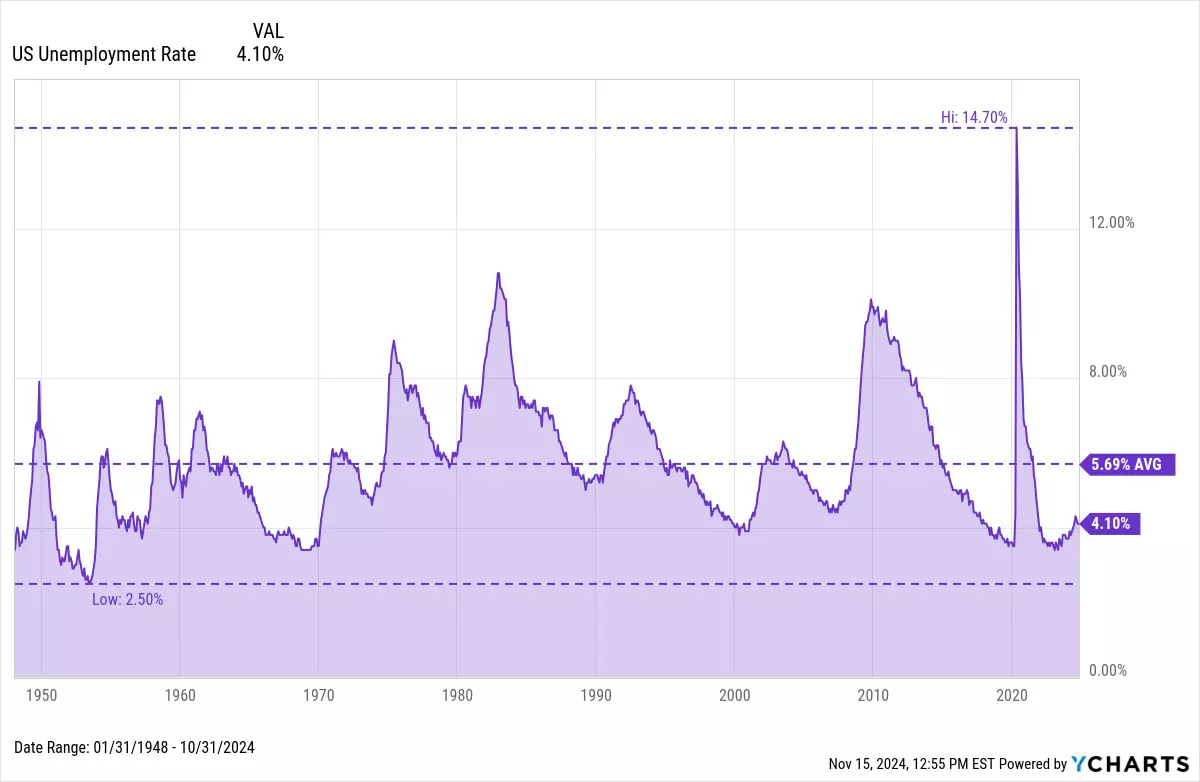
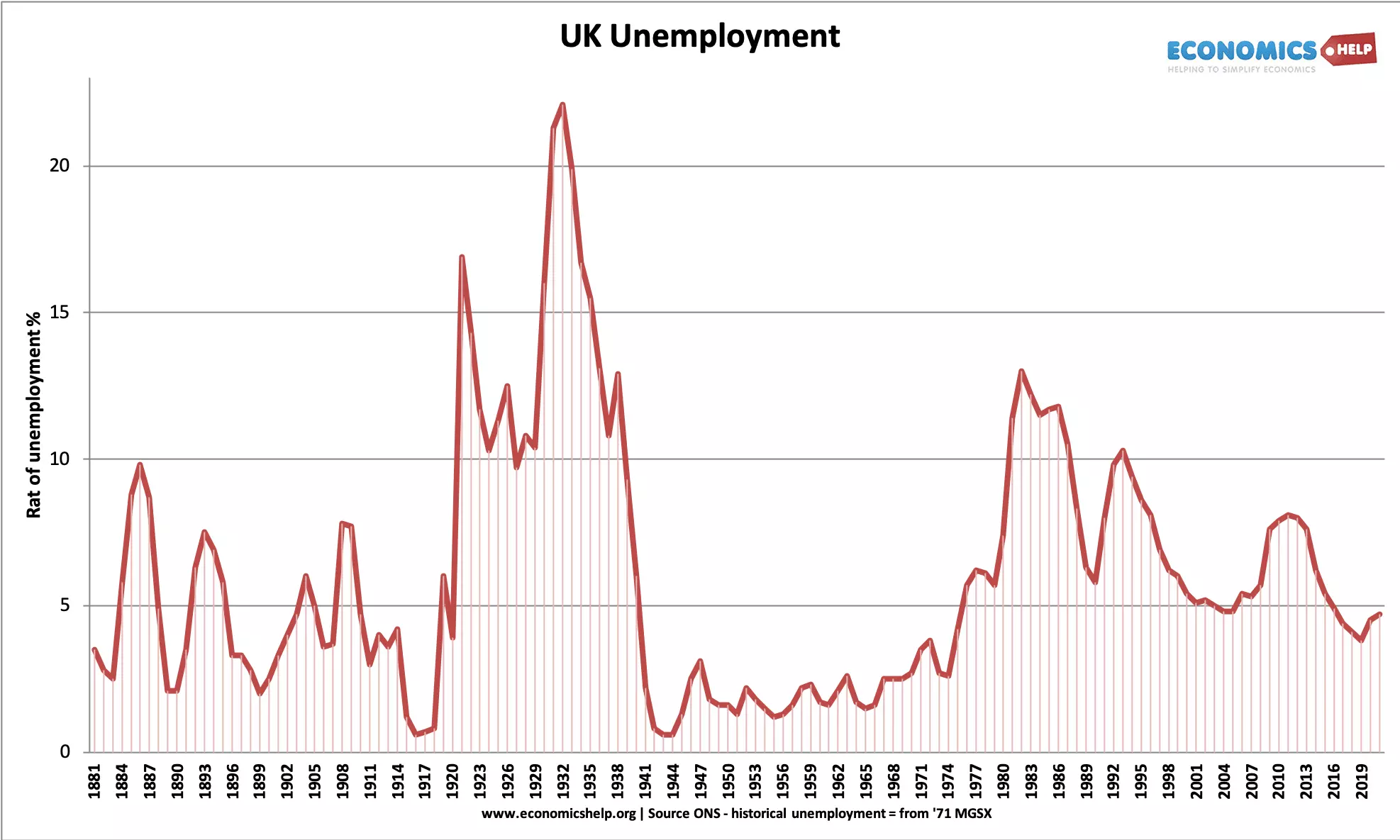
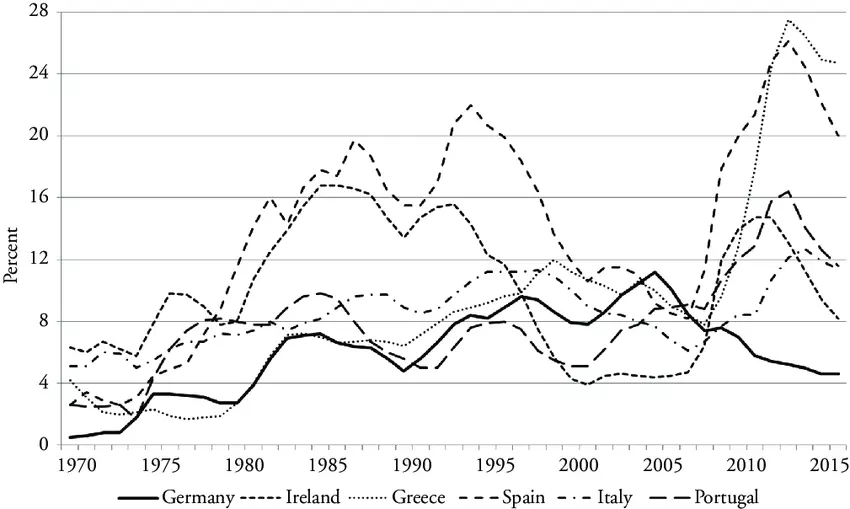
How wages are dispersed in a company is a whole other thing (marginal productivity theory), but it's generally how much value they gain from an individual worker operating within them. One could collate the value of a company (profits + assets) divided by its number of employees, with said value distributed on who contributes most to that value.
I don't disagree with the people higher up getting paid than those lower down, I'm not a communist, the main contention is that a truly free market environment with a personal/individual element running the company at the top would likely be
better for everyone involved than companies being run like bought-in communes (
when you see how investors/shareholders hold equal or even greater say over the CEO, that analogy makes sense I swear).
Minimum wage eradicates the need to offer pay competitively, but fiduciary responsibility to shareholders means that it's in the company's best interests to not do that, so you get stagnant pay at the low-skilled threshold dictated by the state and further minimising risk often comes at the consumer and employee expense as opposed to net income.
The companies you put forward (banking, tech, and law), don't need as many employees relative to their overall value, so their individual employees can be paid more than most because each employee in theory generates more value for the company. However tech companies tend to outsource production on their hardware designs, which is why Nvidia has 36k employees with a median pay of $301k but the company they outsource their hardware production to, TSMC, has 84k employees and a median pay of $78k a
year ($40k bonuses are paid out often). TSMC revenue so far in the fiscal year is $90 billion, whereas Nvidia's was $130 billion. That's just comparing two companies but fewer jobs + higher value = higher wages. The inverse is true too. This also applies to banks. What differs between them and tech is how their value can be assessed, since shit like fractional-reserve exists where they don't technically need to have liquid capital, just money that exists in theory on paper (loans, expected interest, etcetera) can contribute. It's all very complicated but the main point of contention here is low-skilled work, which constitutes the plurality of work available since if more high-skilled positions were to open up with their high salaries, you'd likely see those salaries depreciate.
Basically, I get it.
I'm essentially basing this train of thought on Hoppe's comparisons between a state being run under a democratic system of short-term stewards being compared to a company being run badly. Commie gobbledygook would infer that there's a grand conspiracy in the dark that enables all this for purposes of oppression, when I simply posit that this is the result of one very poorly thought out decision made in 1919, another in 1971, then a killing blow in 1978, and the consequences have just continued to compound into the present day problems we're all familiar with. I even attribute mass migration to this as well.
You don't need to make a kneejerk assumption based on the fact I'm shit talking investors/shareholders. I have no idea where you're getting the idea from that I'm a communist when I ended my post lamenting the death of the free market, which everyone who wants said free market should agree
has happened due to government interference.
As for investors/shareholders/elected CEOs, what incentive do they have
personally for the long-term health of a business if they intend to sell their shares after the next quarter, or operate the company in just such a way to make their bonus? It's a current, acknowledged phenomena in the business world.
I'm not even making this shit up, it so common it has a term associated with it.
As a practice it started becoming a common in the "
Wallstreet vs Main Street" era but it became pretty much enshrined in American law with the
Sarbanes–Oxley Act.
Here the government, at the expense of corporations themselves, made further advancements to investor protection (mitigating risk entirely and giving them even more authority over the company) which disincentivised companies launching IPOs which continues to this day.
Short-termism is even a point of
contention in the business world as well.
Et tu, Walmart
Analysts covering the world’s largest retailer will have to sharpen their pencils now that it has joined several other companies in scrapping quarterly earnings guidance (it kept it for the full year). Leaving forecasters guessing is rarely seen as a good thing, but the blue chip got the benefit of the doubt from the market Thursday. When social-media company Snap did the same a few weeks ago, its shares fell more than 12%.
“Uncertainty” is practically a dirty word on Wall Street. After competitors scrapped their public forecasts, United Airlines instead took the unusual step last month of publishing two scenarios—one for a recession and another for an expansion.
That was bold, but imagine if its chief executive had been even bolder by telling the investing community that he would stop giving guidance altogether.
Unfortunately, that is a luxury mainly available to elite CEOs who are extremely secure in their jobs: Apple’s Tim Cook, JPMorgan Chase’s Jamie Dimon and, of course, Warren Buffett, who recently announced his impending retirement after six decades running Berkshire Hathaway.
It is a shame because avoiding the short-termism of Wall Street’s expectations game might be a good thing for more companies. An earlier generation of successful bosses were even greater iconoclasts. Some had little use not only for guidance but even accounting profits.
“I used to go to shareholder meetings and someone would ask about earnings, and I’d say, ‘I think you’re in the wrong meeting,’” said John Malone, who made investors a fortune at his complicated web of cable and entertainment companies by focusing only on cash flow. He’s credited with popularizing “Ebitda,” which is a financial measure some companies now use to mask weak results.
Another article
WASHINGTON – Business Roundtable today announced the release of a new Statement on the Purpose of a Corporation signed by 181 CEOs who commit to lead their companies for the benefit of all stakeholders – customers, employees, suppliers, communities and shareholders.
Since 1978, Business Roundtable has periodically issued Principles of Corporate Governance. Each version of the document issued since 1997 has endorsed principles of shareholder primacy – that corporations exist principally to serve shareholders. With today’s announcement, the new Statement supersedes previous statements and outlines a modern standard for corporate responsibility.
“The American dream is alive, but fraying,” said Jamie Dimon, Chairman and CEO of JPMorgan Chase & Co. and Chairman of Business Roundtable. “Major employers are investing in their workers and communities because they know it is the only way to be successful over the long term. These modernized principles reflect the business community’s unwavering commitment to continue to push for an economy that serves all Americans.”
“This new statement better reflects the way corporations can and should operate today,” added Alex Gorsky, Chairman of the Board and Chief Executive Officer of Johnson & Johnson and Chair of the Business Roundtable Corporate Governance Committee. “It affirms the essential role corporations can play in improving our society when CEOs are truly committed to meeting the needs of all stakeholders.”
Industry leaders also lent their support for the updated Business Roundtable Statement, citing the positive impact this commitment will have on long-term value creation:
“I welcome this thoughtful statement by Business Roundtable CEOs on the Purpose of a Corporation. By taking a broader, more complete view of corporate purpose, boards can focus on creating long-term value, better serving everyone – investors, employees, communities, suppliers and customers,” said Bill McNabb, former CEO of Vanguard.
“CEOs work to generate profits and return value to shareholders, but the best-run companies do more. They put the customer first and invest in their employees and communities. In the end, it’s the most promising way to build long-term value,” said Tricia Griffith, President and CEO of Progressive Corporation.
“This is tremendous news because it is more critical than ever that businesses in the 21st century are focused on generating long-term value for all stakeholders and addressing the challenges we face, which will result in shared prosperity and sustainability for both business and society,” said Darren Walker, President of the Ford Foundation.
The Business Roundtable Statement on the Purpose of a Corporation is below and the full list of signatories is available here.
Statement on the Purpose of a Corporation
Americans deserve an economy that allows each person to succeed through hard work and creativity and to lead a life of meaning and dignity. We believe the free-market system is the best means of generating good jobs, a strong and sustainable economy, innovation, a healthy environment and economic opportunity for all.
Businesses play a vital role in the economy by creating jobs, fostering innovation and providing essential goods and services. Businesses make and sell consumer products; manufacture equipment and vehicles; support the national defense; grow and produce food; provide health care; generate and deliver energy; and offer financial, communications and other services that underpin economic growth.
While each of our individual companies serves its own corporate purpose, we share a fundamental commitment to all of our stakeholders. We commit to:
•Delivering value to our customers. We will further the tradition of American companies leading the way in meeting or exceeding customer expectations.
•Investing in our employees. This starts with compensating them fairly and providing important benefits. It also includes supporting them through training and education that help develop new skills for a rapidly changing world. We foster diversity and inclusion, dignity and respect.
•Dealing fairly and ethically with our suppliers. We are dedicated to serving as good partners to the other companies, large and small, that help us meet our missions.
•Supporting the communities in which we work. We respect the people in our communities and protect the environment by embracing sustainable practices across our businesses.
•Generating long-term value for shareholders, who provide the capital that allows companies to invest, grow and innovate. We are committed to transparency and effective engagement with shareholders.
Each of our stakeholders is essential. We commit to deliver value to all of them, for the future success of our companies, our communities and our country.
I don't know how to fix this issue without breaking off into hundreds of tangents relating to corporate tax versus income tax and so on but there's nowt wrong with calling a spade a spade; a problem a problem.
As as aside, I used Dodge v Ford before, but a more recent example of a single minority shareholder being able to fuck over a majority shareholder involves Elon Musk, which gave an exorbitant amount of power to someone with a single share ($322) over the majority shareholder and the other shareholders (which when added to Musk, constituted over 51% of the company) in deciding the pay out of Musk's bonus. The guy who sued received $32 million in restitution.
I cannot fucking fathom why these fucking Internet communists can keep making these fucking grand declarations and still get people looking at these fucking walls of text and go "well, it's a lot of words, maybe he's got a point"
I learnt this in primary school.
 Also not a communist. Marxism indirectly lead to trannies. Don't assume: criticises corporations = communist.
When you lower taxes and reduces regulations on businesses they develop faster and better and they need to put out better products to keep their customers and pay higher wages to attract the best employees.
Yeah, that's the basic gist of how free market is
supposed to work. But what happens when it
doesn't do that?
Lower taxes: Buy, borrow, die already mitigates this issue for the billionaires. This would just be good for people in general.
Get rid of property taxes whilst you're at it.
Lower corporate taxes: I'll use McDonalds since you're American:
Net income in 2024 was $8.2 billion after taxes and other operational expenses.
But total, they had $9.4B in operating cash.
Investing (for company) Activities:
Property & Equipment: -$2,653M
Subsidiary Acquisitions: -$358M
Investments: -$1,837M
Other Investing: -$498M
Total Investing Outflows: -5,346M
Financing Activities:
Stock Buybacks: -$2,496M
Debt Repayment (net): -$71M
Long-Term: -$397M
Short-Term: +$326M
Dividends: -$4,870M
Other Financing: -$56M
Total Financing Outflows: -7,495M
Cash total: -$3.495B
Income Tax in 2024: -2,121M
Laying this shit out gave me a headache.
The main point here is over $6 billion of their $9 billion profit went into buying back stock, dividend payments and loans, and in the end they dipped into their reserves. Even eliminating income tax entirely would've still had them spend at least a billion in excess. Their investment scheme as far as I'm aware is in delivery services like Uber, not exactly an improvement on their services/products.
Lessen regulations: What regulations? This is how I know you're just parroting shit because you could've just used "regulations" without even making reference to taxes.
Here's the US Chamber of commerce's latest data on what most ails small businesses in America today. The complexity of even paying some taxes is a big issue, but it's mostly the regulations that apply to them despite their size (changing air filtration on your store being one example I can remember off the top of my head).
Rather than just slash regulations for
everybody, I'd apply them using common sense, perhaps not applying to anyone with less than a certain net value attached to them? Or a company's total assets being below a certain cap? A small business shouldn't be as stringent as maintaining environmental standards as some gigahuge conglomerate. Don't want a repeat of this shit:
EPA rolls back Biden-era rules against ‘forever chemicals’ in drinking water
Regardless my main contention with these arguments is they seem constructed to justify the rage communists feel when corporate taxes are decreased and regulations slashed in general, but not explain the stagnation of wages near the bottom, the lack of development in spite of profit, nor how people can visibly see that a lot of businesses have not gotten "better" in spite of rising productivity and profits. They're arguments to defend giants, not defending the concept of business and private enterprise in general, nor do they adequately address the
actual problems and their causes I spoke about because you'd rather shotgun blast platitudes regarding the free market for some reason.
Salary in the tech industry have increased by about 300% since the 70's.
It's true, but it's the exception and not the rule. I explained why this is relating to their value above but they essentially met supply and demand that emerged during the era. NASDAQ was the first global electronic stock exchange and with it you saw the proliferation and spread of mass communication technologies and so on and so forth. Are you applying one booming sector of the economy (which emerged to meet an entirely new market demand which had little to no supply) to counter argue the economy isn't shit or declining?
We know productivity has been rising. Technology has been a boon in regard to this, but it hasn't correlated with rising wages. Have you considered personally why this is? Or have you considered the possibility that if a corporation could get away with paying less wages, they could?
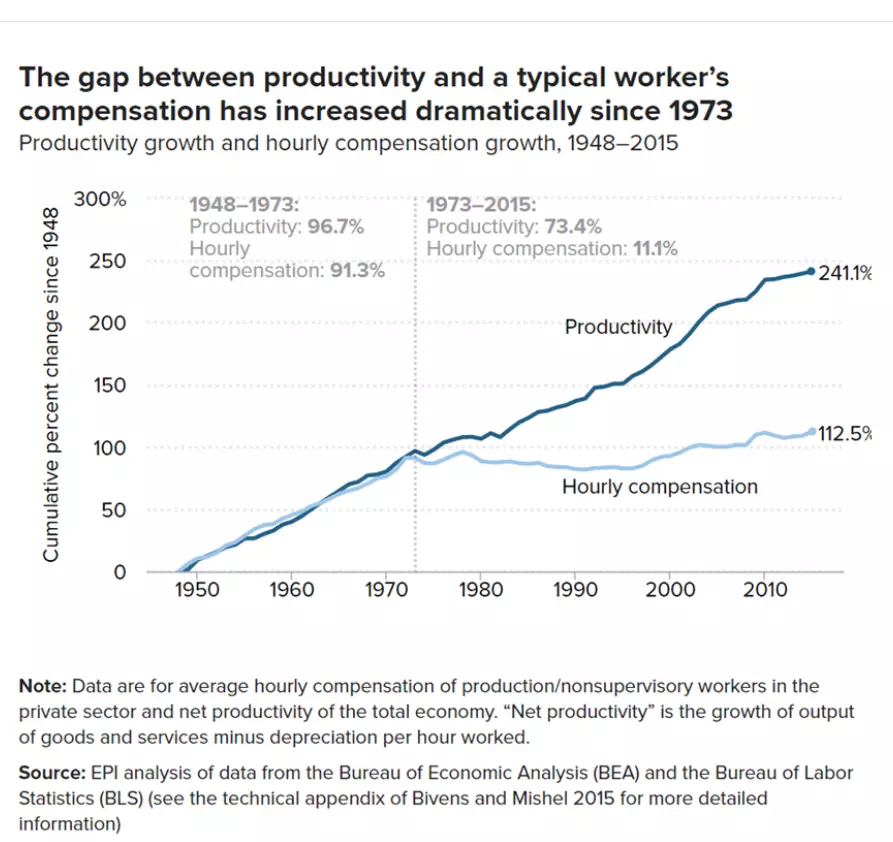
You can bring back manufacturing jobs all you want but it won't change anything because it will all be automated.
Their population is demoralized and doesn't work.
Kek
tax these companies and redistribute tax incomes to the population, just look at France, Italy, Spain etc.
total the tax burden on the American citizen since the 70's has increased by 65% and that's why salaries are stagnating.
That's because the burden was shifted onto the middle and lower income tax payers over time. Despite seeing overall taxes lower over the decades the middle and lower classes have been made to shoulder more of the tax burden overall.
Revenue act of 1964: "Top threshold of income tax reduced from 91% to 70%" / "Corporation tax refused from 52% to 48%"
Economic recovery act of 1981: "phased-in 23% cut in individual tax rates over 3 years; top rate dropped from 70% to 50%" / "capital gains tax was reduced from 28% to 20%"
Tax reform act of 1986: " The act lowered federal income tax rates, decreasing the number of tax brackets and reducing the top tax rate from 50 percent to 28 percent"
Budget reconciliation act of 1990: "The Act increased individual income tax rates. The top statutory tax rate increased from 28% to 31%, and the individual alternative minimum tax rate increased from 21% to 24%. The capital gains rate was capped at 28%."
Taxes had decreased across the board, but now they were burdened less on the rich and more evenly across everybody.
The unemployment spike during the period coinciding with a recession that occurred around the same time industries fled on mass to to China, just to refocus this back on the prime suspect behind all this I raised in my initial post.
Meanwhile I have no clue where you pulled that graph from. Tax burden tends to differ by state.
You know what else is killing the market? The welfare programs.
Which ones? Social Security? Medicare? SNAP?
Don't they help it by giving consumers who would have no disposable income otherwise to spend money on said market? Or is this some connection of taxes = high = failing free market ergo welfare kills the market?
TLDR: Supply and demand applied to all levels of the market, not just with products. High skill labour = high in demand, fewer candidates, higher wages. Low skilled labour = high in demand, more candidates than spots, lower wages.
Company lack of incentive coupled with governments providing them the floor/excuse to pay the bare minimum via minimum wage means wages won't see substantial increases. A worker in America has to compete with a worker in India, who works for less and is thus a more titillating prospect for hire.
Investors don't
add value other than maybe forcing directors and CEO into obligations, which only are only tied to them only and enforced by the law of the state if need be. The positive side effect of boons passing onto the consumer or worker rarely if ever manifest.
Short-termism is killing the quality of service/good for the consumer, and the lack of competition means a lack of alternatives, means the effective lack of consequence for a shitty business. Alternatives can't emerge due to stymying regulation, and potential investment from IPOs have dwindled in the past 20-30 years. Regulations are applied too indiscriminately, and broad stroke removal can cause more negatives than positives.
Re-investment as envisioned rarely occurs. Buybacks, dividend payments and and debts take up a larger chunk of expenditure overall.
American tax burden has been spread more evenly out amongst the lowest, middle and upper earners when it was top heavy in years past.
Sorry for this everybody.


