Article (Archive)
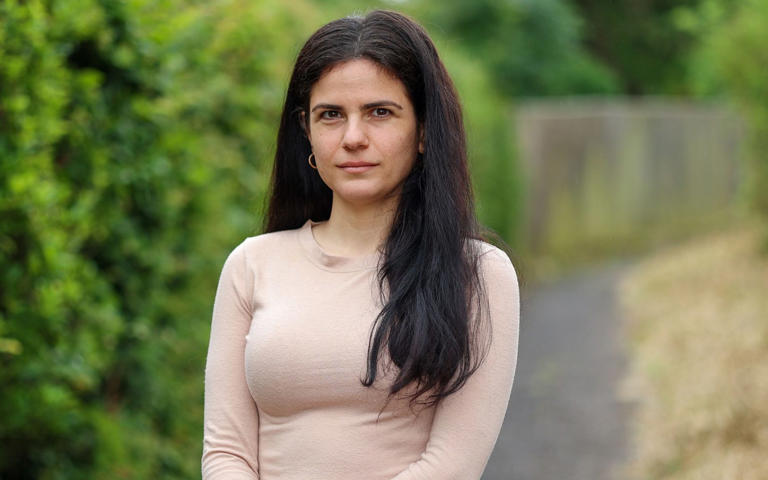
Lois Mendelsohn, from Oxford, has fallen out with friends over their anti-Israel stance and says it's as if 'ending a friendship with a Jew is a way of supporting the Palestinians'
The silence was deafening. From the distress of bullied children to the cold shoulder of colleagues or the parade of friends who turned out not to be friends at all, testimonies from the Jewish community in Britain reveal the same bleak experiences.
It wasn’t just the world that changed the day Hamas attacked Israel on October 7 last year. The world of British Jews did too, as mutating strains of anti-Semitism worked their way beyond smashed shopfronts and violent protests and into the domestic and everyday. And each witness uses the same expression. The silence was deafening.
“My whole life has changed since October 7,” says Barbara Smith*, 49, from London. “I’ve lost half my friends. I’ve lost my best friend. I don’t know how the situation will ever right itself.”
There are only 287,000 Jews in Britain, the same number as Buddhists but a tiny minority compared to the four million Muslims. There is a new political climate in which – willingly or otherwise – British Jews have become inextricably linked to the state of Israel. Across a scale of opinion that ranges from wishing Israel to be destroyed to opposing Israel’s actions in Gaza, Jewish people are an enemy – supportive of and complicit in the appropriated words “genocide” and “Zionism”.
Stemming from this, some Jews say, is hostility and suspicion that has seeped into every area of their lives, fuelling uncertainty about where it will flare up next, never being sure of the intentions of those with whom they interact daily.
Two incidents last week – both of which took place in the context of what should have been light entertainment – added to the sense of anxiety and discomfort felt by many Jews.
On Sunday, in an ill-judged joke following the departure of two Israeli audience members offended by a previous quip at his Edinburgh Fringe show, the comedian Reginald D Hunter recounted a remark that his female partner had previously made about having difficulty accessing the Jewish Chronicle’s website: “Typical f---ing Jews, they won’t tell you anything unless you subscribe.” He then added: “It’s just a joke.”
In another incident, broadcast on Tuesday, the actress Miriam Margolyes, who is Jewish herself, described Charles Dickens’s Fagin as “Jewish and vile”, prompting laughter from the audience on BBC Radio 4’s Front Row. The 83-year-old, a vociferous critic of Israel, added: “I didn’t know Jews like that then – sadly I do now.”
Dave Rich, policy director of the Community Security Trust (CST), pointed out the irony of audiences laughing at such remarks after “two weeks of the whole country going on about how racism is evil and everyone is valued”.
Meanwhile, everywhere, in every moment, social media picks at old wounds and opens new ones.
“Jewish people’s sense of who they are is different after October 7,” says Rich, the author of Everyday Hate: How Antisemitism Is Built Into Our World – And How You Can Change It.
“It was such a shattering blow and the reaction to it – either disinterest or denial – and the wave of anti-Semitism that came straight away was shocking. It has left a lot of Jewish people thinking ‘Is this still the same country we thought it was?’
“Those incidental, day-to-day, very personal interactions have been chilling – within workplaces, schools, WhatsApp groups. The space for Jewish people to live a happy, comfortable life without being affected by all this is getting squeezed.”
In February the CST reported a 147 per cent rise in anti-Semitic attacks and abuse over the same period last year. In the first six months of this year it recorded 1,978 incidents in the UK, the highest ever total in the first six months of any year. It’s vital to understand that the sea change came immediately after Hamas attacked on October 7, 20 days before Israeli forces entered Gaza.
Collecting stories of these day-to-day interactions feels a bit like Dr Johnson collecting words for his dictionary. There is always another one just waiting to be discovered. That explains why the majority of people I spoke to did not wish to use their real names. You cannot underestimate how deeply cultural memory processes these acts of personal and public discrimination. Adult Jews today are only three generations from the Holocaust and five from the Russian pogroms. What is happening is a kind of silent, slow-moving Kristallnacht. This is everyday anti-Semitism.
Where that positions Jews in this very public conflict is obvious. Each testimony replays an uncannily similar pattern in which social media and messaging apps are used as the facilitator for mistrust and division.
“After October 7 people I had known for years deleted me from their friends groups,” says Smith. “When I told my best friend about the Hamas attack her response was ‘for every Israeli death there are 100 Palestinian deaths”. I asked her to understand how upsetting it was for me but she just wanted to tell me claims of anti-Semitism were propaganda. We’ve never spoken again.”
“People who have shown no interest in Israel or Palestine are suddenly becoming ‘experts’ and that’s where the tension lies,” says Elliott Lewis*, a secondary school teacher in Essex.
“My wife and I had friends in Cornwall. We were the first Jews they’d ever met. After October 7 my wife had been posting on Instagram about anti-Semitism and then discovered her friend in Cornwall had stopped following her. This woman was publishing stuff about genocide and Nazi state and the playbook of dodgy Israel discourse. So we had a complete falling out. People are so traumatised by this. I don’t use that word lightly.”
Many on the Left most energised by Israel and Palestine can’t accept they could ever be anti-Semitic because they believe they’ve always fought racism. Well-meaning people end up being anti-Semitic by accident, susceptible to peer pressure, half-truths and outright falsehoods. That means that those who have convinced themselves they possess the facts – let alone the armies of previously uninterested and ignorant newbies – feel their desire to be morally right outweighs the sensitivities of those they see as wrong. Others of a less Puritan disposition could argue that although it is not anti-Semitic to criticise Israel, it certainly looks like it if you only ever criticise Israel and nobody else.
“I had a friend for 10 years in Glasgow and after October 7 he started posting all this anti-Israel stuff,” explains Lois Mendelsohn, 39, a digital content creator in Oxford. “I tried to talk to him about the other side and that he was supporting terrorism and Islamic fundamentalism but he said he understood the history.
“My old friend doesn’t care what I feel. In his mind Israel is the bad guy. I don’t see how we can be on good terms again. I’ve lost other friends who won’t speak to me and it’s almost as if ending a friendship with a Jew is a way of supporting the Palestinians.”
“My son’s bar mitzvah was a week after the Hamas attacks and on the night I realised my friend hadn’t turned up,” says Victoria Portnoy, 40, from Essex. “The next day I sent her a message to see if she was OK. She said she was having ‘sad feelings’. I knew she was referring to the Hamas attacks. From October 7 until the bar mitzvah she had been posting pro-Palestinian content on social media but had changed her settings so I couldn’t see it.
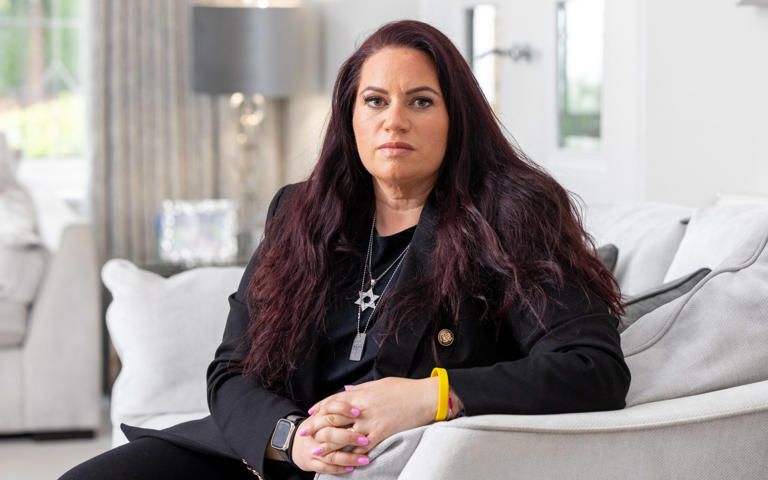
Victoria Portnoy, from Essex, said her friend refused to attend her son's bar mitzvah because of the situation in Israel - Daniel Jones
“She never once asked about me or my family. I’d been in her house two weeks before for her birthday party but she couldn’t come to a bar mitzvah because of what was happening in Israel. She refuses to see me and none of our other friends will even discuss it.”
When casual conversation becomes a duel equipped with words such as “genocide” or when “Zionist” metastasises into “racist”, it destroys trust and the scope for constructive dialogue and empathy disappears.
“I’ve been friends with a girl since we were 11,” says Shelley Lipman, 52, a nurse in Cambridge. “She’s always been pro-Palestine, so come October 7 I was dreading talking to her about it. She said: ‘I condemn what Hamas did, but what do you expect?’
“In the end I said I couldn’t speak to her because I was too emotional. A mutual friend told me she wants an apology from me. My great grandparents did not survive the Holocaust and I have to speak up.”
The largest LGBT+ Jewish charity decided not to take part in the London Pride this year, citing their members and congregants’ fears over safety on the march. “I’ve been cut off from a lot of people and I feel very alienated from the gay community,” says Steven Steyn*, 43, a digital marketer who’s lived in London for 20 years. “For a community that talks about inclusivity it’s been very alienating towards gay Jews. My best friend just stopped messaging me and we don’t talk any more. We’d been close for seven years. He’d even been to Israel with me.”
“I have a close friend of 25 years who married a Muslim woman a couple of years ago,” says Marc Phillipson*, 50, a banker from London. “I was one of the ushers and he and his wife referred to me and my wife as “family”.
“After the Hamas attack my friend’s wife started posting a lot of content about Israel. I asked her to get together with me in person to find some common ground. Then I got a call from my friend who said there was no way of finding common ground. He suggested I didn’t contact her again. It was unbelievably upsetting.”
“I work in diversity and inclusion and I never questioned why anti-Semitism wasn’t discussed,” says Sarah Goldsmith*, 37, from London. “Now I see people using D&I to justify their anti-Semitism.
“When you look at company statements after the murder of George Floyd and how they organised talking circles to ensure their black employees were OK and then the almost non-existent corporate response after October 7, it was a surprise to me.
“I feel naive saying that now. D&I is based on a framework organised around privilege and oppression. And Jews are perceived as the ultimate white privileged people. It totally discounts the existence of non-white Jews and the fact that six million “white” Jews were murdered because they weren’t seen as white.”
Portrayals of Israel as uniquely oppressive and violent not only wreck any chance of understanding from those drawn to the other “side” but also encourage an already narrow definition of racism, from which Jews are often excluded. This appears in the common assumption that Jews can’t suffer discrimination. It also follows that those who indulge in it often don’t understand or recognise it. “We should probably just call it anti-Jewish racism,” argues Rich.
For the victims of this racism, the ubiquity of social media and the types of performative behaviour it fosters means that the Hamas attacks were like the codeword that activated a million anti-Semitic sleeper agents.
“We’ve had reports of people putting anti-Semitic or extreme anti-Israel comments on company intranet and chat boards,” says Rich. “It’s especially the case in cultural industries such as publishing, museums, galleries – and professional organisations and the medical profession. It’s usually more insidious than actual discrimination.”
“Jewish children get people screaming ‘Free Palestine’ at them on the school field,” says Lewis. “The social media timelines of the children are almost exclusively pro-Palestinian or anti-Israel.“
The content can range from classic Nazi-related tropes and conspiracies about the role of Jews in world events such as 9/11 or their responsibility for October 7 attacks, to a mass of misinformation and falsification relating to the actions of Hamas and the IDF. In November a report by US data scientist Anthony Goldbloom found 98.6 per cent of views on TikTok of content related to the war carried a pro-Palestinian hashtag. In February TikTok representatives admitted they had identified 160 million fake accounts spreading anti-Semitism on the platform.
There are examples of schools cancelling or avoiding events that threatened even the slightest possibility of conflict, such as “wear your own clothes day” or “international day”, in fear that either Muslim children would arrive wrapped in Palestinian flags or Jewish children would turn up with Israeli costumes.
“Teachers I know tell me some of the children in their primary schools have been asked to sign ‘purity pledges’ by other pupils to force them to declare which side they were on,” says Angie Konrad, 73, from Hove. Several Jewish parents told me similar stories. Others said Israel had been scratched out of their school’s atlases by children in Years 5 and 6. Another recounts how Muslim pupils drew Palestinian flags on paper aeroplanes and threw them at a Jewish girl’s head.
TikTok has somehow made a 1930s German army marching song popular with impressionable boys in Britain and the US. One parent reported the title “Erika” being written on the desk of his daughter and in June footage was released of the song being played at Warwick University Conservative Association party.
“My son was very upset by the song,” says Anna Gerson*, 40, a therapist from Buckinghamshire. “He said everyone sings it and hums it in school. When he walks down the hallway they shout “Erika” and do a Nazi salute. The song is used as background music for gaming videos. He gets very emotional about it.”
As hardy as the common cold, no two strains of anti-Semitism are exactly the same and inoculation remains elusive.
“You can’t avoid really extreme demonisation of Israel sliding into open anti-Semitism,” says Rich. “The question ‘What is this country going to be like for our children?’ is being asked a lot. What people come back to is, why does this conflict generate so much emotion and attention. There is no other conflict that will get 20,000 people on a march, let alone 200,000 and certainly not where a large proportion of people on that march are calling for one of the countries involved to disappear from the map completely.”
Personal links to Israel, a sense of historical tragedy and the fear that those horrors might reappear are making the majority of Britain’s Jews refocus on their identity.
“I feel scared to wear any Jewish symbols,” says Louise Petersen*, 53, a writer from London. “I tell my daughters to behave differently and play their Jewishness down. It kills me. Jews need our friends to speak up. We feel alone.”
In responses that vacillate between anxiety and militancy, many said things such as “I’ve started going to shul [synagogue] again”.
“My mother was in a concentration camp and my father lived in hiding in Budapest,” says Konrad. “Both my parents said ‘Don’t think this [the Holocaust] couldn’t happen again.’ I feel scared now because when I see someone carrying a Palestinian flag I feel sick, not because I hate Palestinians but because I know there’s a good chance the person carrying that flag wants me dead.”
Everyone who contributed to this article said they’d had “the conversation” about leaving the UK. “I’m a very British Jew and I always saw my home being here,” says Phillipson. “Now I’m not convinced it will be. More for my children’s generation, I’m worried about being such a tiny minority. Even after October 7, Israel might be the safest place to live.”
“When I go to Israel I feel like I can breathe,” says Steyn. “I was in a war zone the last time but it felt safer than London.”
In the film Chariots Of Fire, the sprinter Harold M Abrahams says something about anti-Semitism in 1924 that applies to 2024. “Sometimes I say to myself, ‘Hey, steady on, you’re imagining all this.’ And then I catch that look again. Catch it on the edge of a remark, feel a cold reluctance in a handshake.”
“Sometimes in the Jewish community we miss the fact that most people in Britain are horrified by anti-Semitism,” says Rich. “We need the help of public organisations who are rightly quick to address other forms of racism but have rarely thought about anti-Semitism before. And from liberal educated people who would not say prejudiced things about other minorities but think this is the one hatred you’re allowed to have. People need to speak up about it and recognise the impact it’s having.”
*Names have been changed
Lois Mendelsohn, from Oxford, has fallen out with friends over their anti-Israel stance and says it's as if 'ending a friendship with a Jew is a way of supporting the Palestinians'
The silence was deafening. From the distress of bullied children to the cold shoulder of colleagues or the parade of friends who turned out not to be friends at all, testimonies from the Jewish community in Britain reveal the same bleak experiences.
It wasn’t just the world that changed the day Hamas attacked Israel on October 7 last year. The world of British Jews did too, as mutating strains of anti-Semitism worked their way beyond smashed shopfronts and violent protests and into the domestic and everyday. And each witness uses the same expression. The silence was deafening.
“My whole life has changed since October 7,” says Barbara Smith*, 49, from London. “I’ve lost half my friends. I’ve lost my best friend. I don’t know how the situation will ever right itself.”
There are only 287,000 Jews in Britain, the same number as Buddhists but a tiny minority compared to the four million Muslims. There is a new political climate in which – willingly or otherwise – British Jews have become inextricably linked to the state of Israel. Across a scale of opinion that ranges from wishing Israel to be destroyed to opposing Israel’s actions in Gaza, Jewish people are an enemy – supportive of and complicit in the appropriated words “genocide” and “Zionism”.
Stemming from this, some Jews say, is hostility and suspicion that has seeped into every area of their lives, fuelling uncertainty about where it will flare up next, never being sure of the intentions of those with whom they interact daily.
Two incidents last week – both of which took place in the context of what should have been light entertainment – added to the sense of anxiety and discomfort felt by many Jews.
On Sunday, in an ill-judged joke following the departure of two Israeli audience members offended by a previous quip at his Edinburgh Fringe show, the comedian Reginald D Hunter recounted a remark that his female partner had previously made about having difficulty accessing the Jewish Chronicle’s website: “Typical f---ing Jews, they won’t tell you anything unless you subscribe.” He then added: “It’s just a joke.”
In another incident, broadcast on Tuesday, the actress Miriam Margolyes, who is Jewish herself, described Charles Dickens’s Fagin as “Jewish and vile”, prompting laughter from the audience on BBC Radio 4’s Front Row. The 83-year-old, a vociferous critic of Israel, added: “I didn’t know Jews like that then – sadly I do now.”
Dave Rich, policy director of the Community Security Trust (CST), pointed out the irony of audiences laughing at such remarks after “two weeks of the whole country going on about how racism is evil and everyone is valued”.
Meanwhile, everywhere, in every moment, social media picks at old wounds and opens new ones.
“Jewish people’s sense of who they are is different after October 7,” says Rich, the author of Everyday Hate: How Antisemitism Is Built Into Our World – And How You Can Change It.
“It was such a shattering blow and the reaction to it – either disinterest or denial – and the wave of anti-Semitism that came straight away was shocking. It has left a lot of Jewish people thinking ‘Is this still the same country we thought it was?’
“Those incidental, day-to-day, very personal interactions have been chilling – within workplaces, schools, WhatsApp groups. The space for Jewish people to live a happy, comfortable life without being affected by all this is getting squeezed.”
In February the CST reported a 147 per cent rise in anti-Semitic attacks and abuse over the same period last year. In the first six months of this year it recorded 1,978 incidents in the UK, the highest ever total in the first six months of any year. It’s vital to understand that the sea change came immediately after Hamas attacked on October 7, 20 days before Israeli forces entered Gaza.
Collecting stories of these day-to-day interactions feels a bit like Dr Johnson collecting words for his dictionary. There is always another one just waiting to be discovered. That explains why the majority of people I spoke to did not wish to use their real names. You cannot underestimate how deeply cultural memory processes these acts of personal and public discrimination. Adult Jews today are only three generations from the Holocaust and five from the Russian pogroms. What is happening is a kind of silent, slow-moving Kristallnacht. This is everyday anti-Semitism.
Friendships broken
Jeremy Ginges, Professor in Behavioural Science at the LSE explains how Gaza has become, uniquely, a dividing line at the most intimate level of social interaction. “This is a moral litmus test where you have to pick one side or the other. Opinions on Israel’s actions in Gaza and Hamas’ attack on Israel have become the essence of who people are or want to be. It’s almost as if for some in the UK it defines what it means to be a ‘good person’.”Where that positions Jews in this very public conflict is obvious. Each testimony replays an uncannily similar pattern in which social media and messaging apps are used as the facilitator for mistrust and division.
“After October 7 people I had known for years deleted me from their friends groups,” says Smith. “When I told my best friend about the Hamas attack her response was ‘for every Israeli death there are 100 Palestinian deaths”. I asked her to understand how upsetting it was for me but she just wanted to tell me claims of anti-Semitism were propaganda. We’ve never spoken again.”
“People who have shown no interest in Israel or Palestine are suddenly becoming ‘experts’ and that’s where the tension lies,” says Elliott Lewis*, a secondary school teacher in Essex.
“My wife and I had friends in Cornwall. We were the first Jews they’d ever met. After October 7 my wife had been posting on Instagram about anti-Semitism and then discovered her friend in Cornwall had stopped following her. This woman was publishing stuff about genocide and Nazi state and the playbook of dodgy Israel discourse. So we had a complete falling out. People are so traumatised by this. I don’t use that word lightly.”
Many on the Left most energised by Israel and Palestine can’t accept they could ever be anti-Semitic because they believe they’ve always fought racism. Well-meaning people end up being anti-Semitic by accident, susceptible to peer pressure, half-truths and outright falsehoods. That means that those who have convinced themselves they possess the facts – let alone the armies of previously uninterested and ignorant newbies – feel their desire to be morally right outweighs the sensitivities of those they see as wrong. Others of a less Puritan disposition could argue that although it is not anti-Semitic to criticise Israel, it certainly looks like it if you only ever criticise Israel and nobody else.
“I had a friend for 10 years in Glasgow and after October 7 he started posting all this anti-Israel stuff,” explains Lois Mendelsohn, 39, a digital content creator in Oxford. “I tried to talk to him about the other side and that he was supporting terrorism and Islamic fundamentalism but he said he understood the history.
“My old friend doesn’t care what I feel. In his mind Israel is the bad guy. I don’t see how we can be on good terms again. I’ve lost other friends who won’t speak to me and it’s almost as if ending a friendship with a Jew is a way of supporting the Palestinians.”
“My son’s bar mitzvah was a week after the Hamas attacks and on the night I realised my friend hadn’t turned up,” says Victoria Portnoy, 40, from Essex. “The next day I sent her a message to see if she was OK. She said she was having ‘sad feelings’. I knew she was referring to the Hamas attacks. From October 7 until the bar mitzvah she had been posting pro-Palestinian content on social media but had changed her settings so I couldn’t see it.
Victoria Portnoy, from Essex, said her friend refused to attend her son's bar mitzvah because of the situation in Israel - Daniel Jones
“She never once asked about me or my family. I’d been in her house two weeks before for her birthday party but she couldn’t come to a bar mitzvah because of what was happening in Israel. She refuses to see me and none of our other friends will even discuss it.”
When casual conversation becomes a duel equipped with words such as “genocide” or when “Zionist” metastasises into “racist”, it destroys trust and the scope for constructive dialogue and empathy disappears.
“I’ve been friends with a girl since we were 11,” says Shelley Lipman, 52, a nurse in Cambridge. “She’s always been pro-Palestine, so come October 7 I was dreading talking to her about it. She said: ‘I condemn what Hamas did, but what do you expect?’
“In the end I said I couldn’t speak to her because I was too emotional. A mutual friend told me she wants an apology from me. My great grandparents did not survive the Holocaust and I have to speak up.”
The largest LGBT+ Jewish charity decided not to take part in the London Pride this year, citing their members and congregants’ fears over safety on the march. “I’ve been cut off from a lot of people and I feel very alienated from the gay community,” says Steven Steyn*, 43, a digital marketer who’s lived in London for 20 years. “For a community that talks about inclusivity it’s been very alienating towards gay Jews. My best friend just stopped messaging me and we don’t talk any more. We’d been close for seven years. He’d even been to Israel with me.”
“I have a close friend of 25 years who married a Muslim woman a couple of years ago,” says Marc Phillipson*, 50, a banker from London. “I was one of the ushers and he and his wife referred to me and my wife as “family”.
“After the Hamas attack my friend’s wife started posting a lot of content about Israel. I asked her to get together with me in person to find some common ground. Then I got a call from my friend who said there was no way of finding common ground. He suggested I didn’t contact her again. It was unbelievably upsetting.”
Work and public life
These accumulating acts of dissociation have for many Jews produced a hum of paranoia, though the definition of paranoia is “unjustified suspicion” and, they say, there is little unjustified about the evidence of their own eyes and ears. One person reported six successive Uber drivers accepting then refusing a fare once they realised the destination was a synagogue.“I work in diversity and inclusion and I never questioned why anti-Semitism wasn’t discussed,” says Sarah Goldsmith*, 37, from London. “Now I see people using D&I to justify their anti-Semitism.
“When you look at company statements after the murder of George Floyd and how they organised talking circles to ensure their black employees were OK and then the almost non-existent corporate response after October 7, it was a surprise to me.
“I feel naive saying that now. D&I is based on a framework organised around privilege and oppression. And Jews are perceived as the ultimate white privileged people. It totally discounts the existence of non-white Jews and the fact that six million “white” Jews were murdered because they weren’t seen as white.”
Portrayals of Israel as uniquely oppressive and violent not only wreck any chance of understanding from those drawn to the other “side” but also encourage an already narrow definition of racism, from which Jews are often excluded. This appears in the common assumption that Jews can’t suffer discrimination. It also follows that those who indulge in it often don’t understand or recognise it. “We should probably just call it anti-Jewish racism,” argues Rich.
For the victims of this racism, the ubiquity of social media and the types of performative behaviour it fosters means that the Hamas attacks were like the codeword that activated a million anti-Semitic sleeper agents.
“We’ve had reports of people putting anti-Semitic or extreme anti-Israel comments on company intranet and chat boards,” says Rich. “It’s especially the case in cultural industries such as publishing, museums, galleries – and professional organisations and the medical profession. It’s usually more insidious than actual discrimination.”
Schools and children
The pervasiveness of everyday anti-Semitism shows up in education, with even primary school children being politicised by a combination of parental prejudice and the seemingly unavoidable influence of YouTube and TikTok.“Jewish children get people screaming ‘Free Palestine’ at them on the school field,” says Lewis. “The social media timelines of the children are almost exclusively pro-Palestinian or anti-Israel.“
The content can range from classic Nazi-related tropes and conspiracies about the role of Jews in world events such as 9/11 or their responsibility for October 7 attacks, to a mass of misinformation and falsification relating to the actions of Hamas and the IDF. In November a report by US data scientist Anthony Goldbloom found 98.6 per cent of views on TikTok of content related to the war carried a pro-Palestinian hashtag. In February TikTok representatives admitted they had identified 160 million fake accounts spreading anti-Semitism on the platform.
There are examples of schools cancelling or avoiding events that threatened even the slightest possibility of conflict, such as “wear your own clothes day” or “international day”, in fear that either Muslim children would arrive wrapped in Palestinian flags or Jewish children would turn up with Israeli costumes.
“Teachers I know tell me some of the children in their primary schools have been asked to sign ‘purity pledges’ by other pupils to force them to declare which side they were on,” says Angie Konrad, 73, from Hove. Several Jewish parents told me similar stories. Others said Israel had been scratched out of their school’s atlases by children in Years 5 and 6. Another recounts how Muslim pupils drew Palestinian flags on paper aeroplanes and threw them at a Jewish girl’s head.
TikTok has somehow made a 1930s German army marching song popular with impressionable boys in Britain and the US. One parent reported the title “Erika” being written on the desk of his daughter and in June footage was released of the song being played at Warwick University Conservative Association party.
“My son was very upset by the song,” says Anna Gerson*, 40, a therapist from Buckinghamshire. “He said everyone sings it and hums it in school. When he walks down the hallway they shout “Erika” and do a Nazi salute. The song is used as background music for gaming videos. He gets very emotional about it.”
Identity and the future
Up to the 19th century, anti-Semitism was religious. Then it became political, then ethnic. Now, incredibly, it is all three. Jewish people have gone from usurious deniers of Christ in the Middle Ages to the agents of capitalism or Marxism to the Nazi untermenschen to being complicit in Palestinian “genocide”.As hardy as the common cold, no two strains of anti-Semitism are exactly the same and inoculation remains elusive.
“You can’t avoid really extreme demonisation of Israel sliding into open anti-Semitism,” says Rich. “The question ‘What is this country going to be like for our children?’ is being asked a lot. What people come back to is, why does this conflict generate so much emotion and attention. There is no other conflict that will get 20,000 people on a march, let alone 200,000 and certainly not where a large proportion of people on that march are calling for one of the countries involved to disappear from the map completely.”
Personal links to Israel, a sense of historical tragedy and the fear that those horrors might reappear are making the majority of Britain’s Jews refocus on their identity.
“I feel scared to wear any Jewish symbols,” says Louise Petersen*, 53, a writer from London. “I tell my daughters to behave differently and play their Jewishness down. It kills me. Jews need our friends to speak up. We feel alone.”
In responses that vacillate between anxiety and militancy, many said things such as “I’ve started going to shul [synagogue] again”.
“My mother was in a concentration camp and my father lived in hiding in Budapest,” says Konrad. “Both my parents said ‘Don’t think this [the Holocaust] couldn’t happen again.’ I feel scared now because when I see someone carrying a Palestinian flag I feel sick, not because I hate Palestinians but because I know there’s a good chance the person carrying that flag wants me dead.”
Everyone who contributed to this article said they’d had “the conversation” about leaving the UK. “I’m a very British Jew and I always saw my home being here,” says Phillipson. “Now I’m not convinced it will be. More for my children’s generation, I’m worried about being such a tiny minority. Even after October 7, Israel might be the safest place to live.”
“When I go to Israel I feel like I can breathe,” says Steyn. “I was in a war zone the last time but it felt safer than London.”
In the film Chariots Of Fire, the sprinter Harold M Abrahams says something about anti-Semitism in 1924 that applies to 2024. “Sometimes I say to myself, ‘Hey, steady on, you’re imagining all this.’ And then I catch that look again. Catch it on the edge of a remark, feel a cold reluctance in a handshake.”
“Sometimes in the Jewish community we miss the fact that most people in Britain are horrified by anti-Semitism,” says Rich. “We need the help of public organisations who are rightly quick to address other forms of racism but have rarely thought about anti-Semitism before. And from liberal educated people who would not say prejudiced things about other minorities but think this is the one hatred you’re allowed to have. People need to speak up about it and recognise the impact it’s having.”
*Names have been changed


