Dinosaur autism, if we all pool together our love for them they may just live again - Just get on the floor, the raptor has already opened the door

  • Want to keep track of this thread?
    Accounts can bookmark posts, watch threads for updates, and jump back to where you stopped reading.
    Create account
i memed myself into believing they're not real.

(brachiosaurus are my favorite)
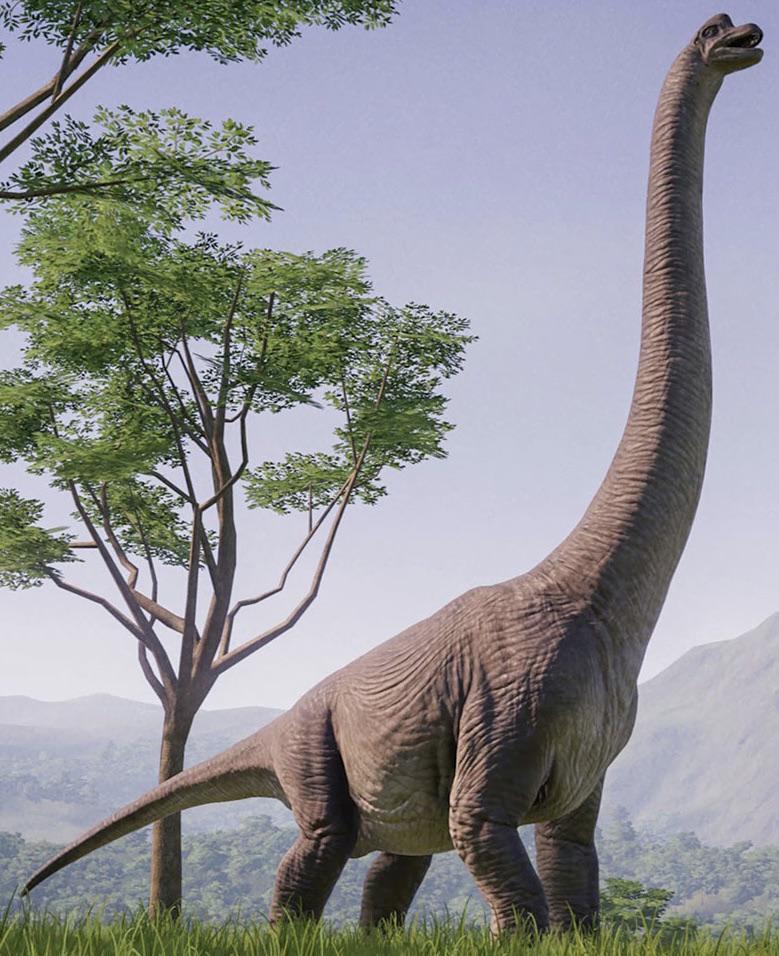
eh0r94ak87kc1.jpeg
 
tried Apple's Prehistoric planet, but it wasn't doing it for me. I think it was the air sacs in this scene.
I liked Prehistoric Planet overall, but I hate the constant disney music and the excessive obsession with "quirky!!!!" speculative behaviour. You can tell the main audience is supposed to be paleoart trannies. WWD was superior in that it didn't have annoying music, and felt like an actual nature documentary rather than an adaptation of All Yesterdays.
 
Due to overwhelming popular demand, I've decided to copy some of the paleo posts I've made in DM chains into this thread. Be warned that most animals included in both lists are NOT dinosaurs. Though there are some.

As a newly invited member of this DM chain, I'd like to dedicate this post to share and sperg out about one of the topics I am most passionate about: Paleontology!

We all like cute animals, right? So what better way to catch your attention than to share an exhaustive list of cool, rather unknown cute prehistoric critters that you guys probably never heard of, and never would otherwise. I hope ya'll appreciate it. (Doing this mostly because I'm bored)

In no particular order:

Unnamed azharchid pterosaur (dream pet 💔💔💔)
1762640414411.png 1762640445967.png

Simosuchus (veggie croc)
1762640457781.png 1762640461631.png

Zalmoxes
1762640477256.png 1762640481113.png 1762640485496.png

Psittacosaurus (we know its exact colors)
1762640501241.png 1762640504698.png 1762640510753.png

Diictodon
1762640556560.png 1762640570964.png 1762640576743.png 1762640598957.png

Moeritherium (pig-sized elephant)
1762640598968.png 1762640634375.png

Numidotherium
1762640657190.png 1762640662069.png

Anurognathus
1762640668671.png 1762640673897.png

Compsognathus (yes, the one from jurassic park. they were actually harmless unless you were an insect)
1762640682457.png 1762640686886.png

Pteraspis (love goofball fish)
1762640698642.png 1762640703680.png 1762640711016.png

Hyperodapedon
1762640731211.png 1762640734842.png 1762640738890.png

Stethacanthus
1762640756829.png 1762640761161.png

Palaeoloxodon falconeri
1762640769539.png

Cartorhynchus
1762640782250.png 1762640786088.png 1762640790498.png

Mononykus
1762640797146.png 1762640802272.png

Alethoalaiornis
1762640810227.png 1762640814204.png

Nemicolopterus
1762640820277.png 1762640824600.png

Leptictidium
1762640831970.png 1762640836302.png

Mixosaurus
1762640844610.png 1762640848872.png 1762640853091.png

Rostropycnodus
1762640861743.png 1762640865581.png

Mekosuchus
1762640877840.png 1762640882077.png

Falcatus
1762640893081.png 1762640918584.png 1762640923135.png

Peligrotherium
1762640930733.png

(React for more lists like this one)
 
Last edited:
We all like cute animals, right? So what better way to catch your attention than to share an exhaustive list of cool, rather unknown cute prehistoric critters that you guys probably never heard of, and never would otherwise. I hope ya'll appreciate it. (Doing this mostly because I'm bored)
The best ones are Simosuchus and Mekosuchus of course, the rest can't even COMPETE with the cute crocodilian chads.
 
I'm not a fan of feathered dinosaurs. I know some of them did have feathers. But I like to think of them the way I saw them in books and media as a kid. The featherless half bird half reptile killing machines.
Personally I really like feathered raptors in particular, I don't think feathers make them less cool, though I believe it's really just the raptors that had feathers, as they're one of the closest relatives to birds
 
🧩AUTISM ALERT!!!🧩

Seeing the success of the last list I made, I decided to touch on a different sort of animals: gentle (or not so gentle) giants! Large herbivores that most people have never heard of.
And as a little twist, instead of just dumping a ton of images and leaving random facts between parenthesis, I'll leave a little spoilered section in case you guys would like to learn a little more about them.

So with that out of the way:

Castoroides
1762707690766.png 1762707698961.png
Alongside much of the pleistocene megafauna such as the giant sloths, mammoths and mastodons, one animal that lived among them and is seldomly mentioned is the giant beaver. Their range extended from the midwest United States up to Canada and even Alaska. Unlike modern day beavers, they did not chew through wood nor did they build dams. They fed mostly on aquatic plants, filtering through the substrate much like modern manatees. With the climate change that came with the end of the pleistocene, however, their wetlands shrunk and the plants they fed on became scarce, which likely was the major cause of their extinction. Thought @Cheesy Beavy might like this one ;)

Leedsichthys
1762707709398.png 1762707714174.png
The largest bony fish to have ever lived, Leedsichthys was a filter feeder that swam accross the oceans from the middle jurassic. Leedsichthys was a filter feeder, living in a way most similar to modern whale sharks and basking sharks by ram feeding, catching food as it swam with its mouth open. And while adults were nigh invulnerable to predators at nearly 20 meters and over 50 tons, younger fish had to deal with many dangers, in the form of marine crocs such as Metriorhynchus and pliosaurs such as Liopleurodon. Leedsichthys belonged to a now extinct clade called the Pachychormids, and while they manage to hang on up until the cretaceous with relatives such as Bonnerichthys and Rhinconichthys, they would eventually go extint during the K-Pg extinction alongside the dinosaurs and other such megafauna. They have no close relatives today.

Moropus
1762707729146.png 1762707733526.png 1762707738096.png
Moropus is a chalicothere, a funny looking looking group of animals that belongs to the order peryssodactyla, which means that this weird gorilla-looking nigger is related to modern horses, tapyrs and rhinos, though we're still not sure yet of which of these groups exactly they were most closely related to. Moropus weighed about as much as a large white rhinoceros, though instead of having a big horn, it had powerful arms and nasty claws. They lived in north america during the miocene. It existed waaaaay earlier than giant sloths ever evolved, and yet it had a lot of similarities to them as it used its powerful arms to reach for tree branches which gave them access to plants most other herbivores that lived alongside them couldn't reach, which is why they were built like this. Life as a Moropus was not easy as they were hunted by some of the biggest, most brutal mammalian predators to ever grace the continent such as the monstrous 'Hell Pig' Daeodon (though it wasn't really a pig) and Amphycions that were bigger than polar bears. I couldn't really find much information about the exact cause of their extinction, but it was likely from failing to adapt to environmental and climatic changes.

Perucetus
1762707790967.png 1762707797475.png 1762707824238.png 1762707830238.png
Perucetus was a big chonky whale that lived in the Eocene that differed in many ways from other whales that went beyond appearance. It was closely related to the famous basilosaurus, but unlike its more predatory cousin, he mostly ate shellfish and other critters buried in the sand. Also unlike most whales today, it stuck around near the coast in shallower waters as it rummaged through the soul for food, also a lot like dugongs and manatees. It was just described in 2023, so we don't know a whole lot about it just yet. Funnily enough, when it came out, the media was astroturfing the hell out of these guys for supposedly being bigger than blue whales, but later estimates shown that its earlier size was very much overblown.

Palaeoloxodon namadicus
1762707845722.png 1762707863687.png 1762707878292.png 1762707889146.png 1762708173145.png

You might recognize the name 'Palaeoloxodon' from my previous post, and that is because this genus houses not only one of the smallest elephants of all time in falconeri, but also the absolute largest and most powerful land mammal to ever walk the earth in namadicus. If there's any land mammal that could go toe-to-toe with t rex and win, it's this guy.
Palaeoloxon namadicus' remains can be found from the indian subcontinent to myanmar, laos, vietnam, indonesia and malaysia, though despite that it's actually very closely related to modern day african elephants. So much so that the african forest elephant is more closely related to Palaeoloxodon than it is to the african bush elephant. It went extinct rather recently, around 50.000 years ago. And though our ranges coincided, there's no evidence for human hunting of these animals, so at least it wasn't our fault that they went extinct.

Paraceratherium
1762707911609.png 1762707920654.png 1762707926097.png
Another contender for one of the biggest land mammals to ever live, Paraceratherium was a rhino but fulfilled a similar niche to giraffes during the oligocene in pakistan. They didn't have much to fear in the way of predators as most were hardly bigger than a wolf, but younger ones they did face predation from Astorgosuchus. Their size, however, would be their undoing as the arrival of gomphotheres migrating from africa would spell their doom. The gomphotheres uprooted every forest in their path which irreversably ruined the environment they lived in which led to their extinction. Speaking of which...

Gomphotherium
1762707938444.png 1762707943091.png 1762707948429.png
Yes, these are the assholes responsible for the extinction of the creature above. But don't let that cloud your judgement, for they were very fascinating beasts in their own right. They were around the size of modern asian elephants and one of the most successful groups of proboscideans to have ever lived, and though they started off in africa, they ended up radiating to europe and asia, which is why they led to the extinction of the Paraceratherium. And as if that wasn't enough, as the strait of bering formed, they even went to north america, and then down to south america. They were so successful, that they led to the evolution of the elephants, mammoths and mastodons that we know today. So yeah, while they have unleashed unimaginable amounts of destruction wherever they roamed, if it wasn't for them, both modern elephants and even Palaeoloxodon wouldn't have existed if it weren't for them

Shantungosaurus
1762708018595.png 1762708023383.png
When we think of giant dinosaurs, the long-necked sauropods usually come to mind, right? Well, Shantungosaurus was the largest non-sauropod dinosaur to have ever lived. It lived in the hell creek formation, alongside other big stars like triceratops, ankylosaurus and even the tyrant lizard king himself. And despite not being as famous as them, it was way bigger. An adult shantungosaurus was pretty much impervious to predation unless outnumbered, and they also lived in herds, which made it all the more unlikely for them to become prey as adults. Youngins however did have to contend not only with trex itself but also nanotyrannus, quetzalcoatlus, and mosasaurus in the water. Just like the other dinosaurs mentioned, it went extinct during the K-Pg extinction alongside every other non avian dinosaur

Lisowicia
1762708035589.png 1762708044695.png 1762708051692.png
Perhaps the oddest entry on this list yet, Lisowicia belonged to a group of animals called dicynodonts, weird, heavy-bodied beaked herbivores with a pair of tusks on each side (including diictodon from my previous list). And despite their more reptilian-esque appearance, they actually were more closely related to mammals than anything else. Lisowicia lived during the late triassic, being around the size of an african bush elephant and the largest animal of its time. It was a grazer that fed on TONS of lower vegetation, grass, conifers and even wood. It didn't have much to worry about in terms of predation, though younger Lisowicia could become prey to Smok (yes, that's what the animal is called). It would go extinct alongside the rest of the dicynodonts, hwoever, as the triassic-jurassic extinction took place.

Eremotherium
1762708074558.png 1762708089743.png
You guys probably heard about giant sloths, but did you know that they could be elephant-sized? Such was the case with the north american eremotherium which lived in the late pleistocene, around the same time and in the same places as the giant beaver above it. Their closest living relatives are the three-toed sloths. Eremotherium used its powerful limbs to reach for branches so they could feed on their leaves. They faced many of the same predators as the other megafaunal herbivores it lived with, such as the short faced bear, american lion and smilodon (the famous saber-toothed cat). It died around the same time as the giant beaver and other megafaunal animals of its time due to climate changes and perhaps even human intervention

Megalochelys
1762708119505.png 1762708126867.png 1762708133136.png
Anyone who played elden ring for a bit might have come across Miriel at some point. What if I told you there were tortoises whose sizes were not far off from his? Megalochelys weighed about as much as a hippo. Unfortunately I couldn't find much info on its diet or the other animals that lived alongside it. I know it lived from the pliocene to the pleistocene throughout asia and eastern europe, and one of the big reasons it went extinct was the arrival of homo erectus. So yeah, we killed it

Hilarcotherium
1762708144214.png 1762708148532.png
Hilarcotherium was a very interesting beast indeed. It belonged to a family of animals called the astrapotheres, a south american group of large mammals with many convergent similarities and adaptations to modern day hippos, only on a bigger scale. And they also lived in very similar ways to hippost, foraging aquatic plants in the riverbanks they inhabited. It lived in middle miocene colombia. I couldn't find much about. It didn't have any natural predators, though sparassodonts like thylascomilus, crocodiles and sebecids like langstonia lived alongside them. It likely went extinct once their wetlands dried out, alongside the rest of the astrapotheres. They have no close relatives today.

Josephoartigasia
1762708160488.png 1762708165105.png
Seeing as I started this list with a rodent, what better way to end it than with another rodent? And the largest of all at that. Meet Josephoartigasia, and though they resemble capybaras, they are actually more closely related to pacaranas. Josephoartigasia lived in estuarine environments from the early pliocene all the way to the early pleistocene in uruguay, uprooting trees and feeding on aquatic vegetation much like the capybaras they resemble, and they did actually coexist with capybaras lol. There were also glyptodons and toxodons among other herbivores that shared their environment, And for predators, they had to contend with scimitar toothed cats and the terror bird Devincenzia. And as if that wasn't enough they were also parasitized by vampire bats. They would go extinct during the quartenary glaciation period, ending the reign of the largest rodent to ever live
 
As a child my mom used to buy me that dinosaur magazine with the glow in the dark tyrannosaurus rex skeleton parts each issue, it featured a dinosaur or two, had a 3D picture as center fold and it was just generally awesome and informative.
I think often about it. I wish I kept them.
 
apology for poor english

when were you when nanotyrannus real?

i was sat at home drinkimg fanta when youtube show

‘nanotyrannus is real’

‘no’
 
Back
Top Bottom