Culture D&D Renaissance Could Usher in More Accessibility, Inclusivity in TTRPG Fandom - Normies ruin everything

  • 🏰 The Fediverse is up. If you know, you know.
  • Want to keep track of this thread?
    Accounts can bookmark posts, watch threads for updates, and jump back to where you stopped reading.
    Create account
Link

D&D Renaissance Could Usher in More Accessibility, Inclusivity in TTRPG Fandom​

Fan Service is a column by pop culture and fandom writer Stitch that looks at the highs and lows of fandom, and unpacks how what we do online, and for fun, connects back to the way we think about the offline world.

BY STITCH
JUNE 25, 2021
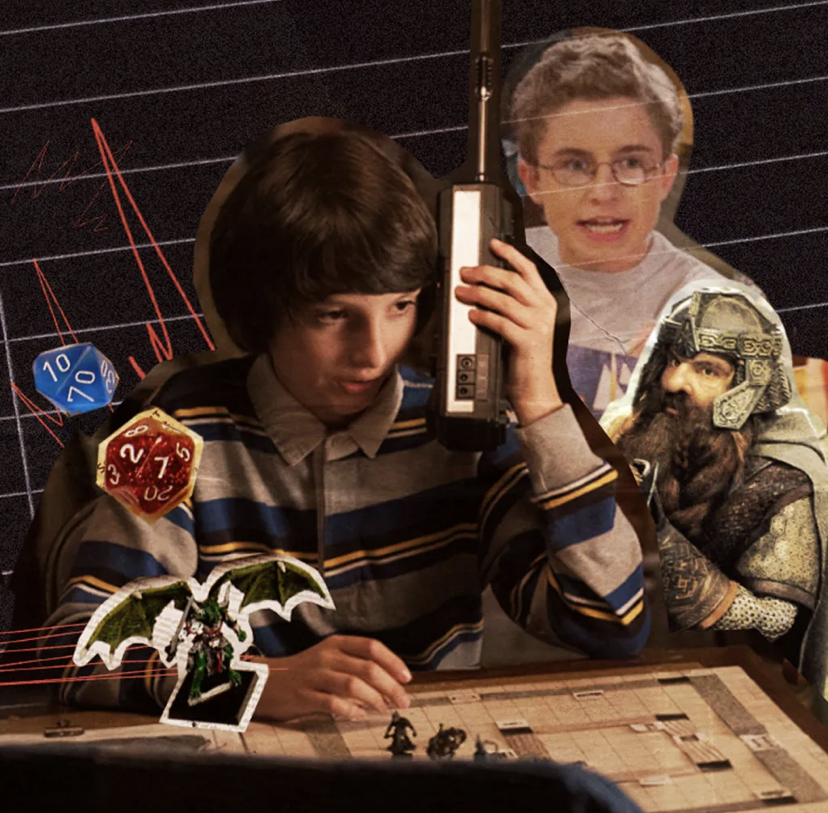
3E9D68D2-80E5-4FBE-9258-F4B20B6BAE3F.jpeg
We’re in the middle of a tabletop roleplaying game (TTRPG) renaissance. While streamed video and podcast campaigns for Dungeons and Dragons (D&D) have been around for a hot minute — with well-known shows Critical Role and The Adventure Zone dating back to 2015 and 2014 respectively — the chaos and stress of 2020 has seemed to reinvigorate tabletop gaming and those related fandoms as sources of escapism.

Tabletop RPG games have always brought people together through collaborative storytelling and the way that players work in groups to defeat bosses. Prior to 2020, they were a way for people to connect with each other and have fun, whether it was as part of an active campaign with local friends or by joining the fandom for a streaming show hosted by celebrities. With the ongoing COVID-19 pandemic, how we engage with these games and the fandoms for long-running campaigns has shifted to accommodate the ways that the world has changed, and how we’ve changed as a result. This means that many people are seeing and challenging how these fandoms and canons work for the first time, with streamers, podcasters, and a newer generation of fans coming together to make these spaces more accessible than they were in the past.


Across decades, the different tabletop communities and canons have always worked in a way that conveniently excluded marginalized people. Gatekeeping, in the form of knowledge tests from other players or the insistence that Black characters can't exist in D&D outside of the drow, was a frequent barrier to new players. For years, many parts of the TTRPG community took a “no girls allowed” approach to setting up their campaigns, making it difficult for many girls and women to even believe there was a place for them in these spaces until streaming opened the door to mode widely visible female players. That point of view has been reinforced in the demographics of pop culture versions of these games; in shows like Stranger Things and Big Bang Theory, their diehard D&D fans are depicted as geeky men and boys.

“I can only imagine what my relationship with D&D would look like today if I’d grown up with Twitch and YouTube, and seen this sort of representation exemplified,” The Mary Sue editor Valerie Kane pointed out back in 2018, “I grew up surrounded by D&D, but in a weird turn, it wasn’t until I visited Wizards of the Coast that I actually played my first game.”

While gaming communities and fandoms were a significant portion of the reason why marginalized players couldn’t get into these games, the canon served up its own roadblocks. In June 2020, Dungeons & Dragons publisher Wizards of the Coast posted a diversity statement acknowledging the racist histories behind several of their popular character types (focusing specifically on orcs and the drow) and how they had already taken steps to rectify their franchise’s racist past and make the game more accessible for players. But is that enough?

I had the opportunity to speak with Multitude CEO Amanda McLoughlin and head of creative Eric Silver about their D&Dpodcast Join The Party and accessibility in gaming and podcasting — and they shared their thoughts on the fraught (and frequently racist) history of D&D that stems from the fantasy genre itself. Starting with the dwarves. “The thing is I've written and spoken about the ingrained anti-semitism that is just like in a lot of things that we understand from fantasy,” Eric said during our conversation in April. “The dwarves that Tolkien made, they're just Jews, they're literally Jews. Like he said they were Jews. And they were gruff and stubborn and very miserly in The Hobbit. And then World War II happened, and he's like, ‘Oh, no, they're actually really cool, guys. They're still stubborn and miserly, but I love them’.”


Dwarves and goblins are portrayed via anti-semitic stereotypes across much of fantasy media, including D&D and media inspired by that game. In D&D and the decades of fantasy media it inspired, orcs have often been portrayed as a racialized (and racist) Other, pulling heavily from what Helen Young calls “colonialist discourses of Blackness” in the chapter on orcs in her book Race and Popular Fantasy Literature: Habits of Whiteness. Beyond the way that the fantasy races in D&D have come with real world racist elements tacked on to them, D&D has also been a site for racist settings.

Reckoning directly with tabletop RPGs’ history of racist settings is Into the Motherlands, an RPG created by I Need Diverse Games founder and director Tanya DePass and led by devs, cast, and crew of color. In an interview with Polygon’s Charlie Hall, DePass and lead designer B. Dave Walters talked about the diversity designed into their worldbuilding. Walters noted, “Black excellence was a foundational idea, so we came up with a premise that would allow lots of different kinds of people of color to have a place where they flourish and are at the center stage rather than being in addition to, or as a ‘noble savage’ or something that was bolted on to the side [of a Euro-centric universe].”

Inclusive TTRPG games and shows go beyond pushing back against racist stereotypes and worldbuilding. Fans and creators alike have confronted the anti-queer history of many of these games, misogynybuilt into the games and pushed by the players, and ableism (both in gameplay and in the worldbuilding itself).

The rise in diverse casts, campaigns, and fandoms for D&D and other tabletop games over the past two years has created a shift in how people play these games and what their fandoms look like. TTRPG fandoms are spaces that gravitate toward the data-oriented game play and the transformative experience of making a world their own. In some cases, the fandom dynamics of these TTRPG spaces can turn out negatively, as with The Adventure Zone’s fandom; they’ve come under fire, in part, for an unofficial “no bummers” policy that leaves fans of color and other people with criticisms feeling like they can’t speak up.

So, how can creators — of TTRPG streams or podcasts — help make their fandoms more accessible and welcoming to new and fans alike? For this, I asked Amanda about how she and Eric make the fandom spaces they run for Join the Party more accessible to and safer for fans. “I would say as creators, too, we try to model the kind of engagement we are looking for from our community,” she said. “I’m not assuming anyone brings anything to what we're doing. Like I want to enhance their enjoyment however they want to bring it, which is really important to us.”

This sort of positive behavior modeling from creators and streamers (who are also fans themselves) makes it possible for the fans in these developing D&D communities — like the Discord servers for popular streaming shows — to replicate the behavior seen as acceptable and welcome. They also make sure that fans who have concerns or criticism can feel comfortable raising them without being attacked or otherwise punished by other fans.

At the end of the day, there should be room at the table for everyone to join the campaign and feel represented — and that depends on opening up these spaces to fans who can celebrate their gameplay and critique the rough spots. Having a good experience while playing or streaming a TTRPG shouldn’t be determined by a roll of the dice.
 
They already have started trying to come for 40K. There's been articles about it elsewhere here on the Farms. The Ultrasmurfs (or maybe it's the Space Furries?) apparently have a "sister chapter" called the Sisters of Battle or something, and are apparently simultaneously super awesome and weak AF (Schroedinger's Feminist in Space Marine Form, basically). ...or something. I haven't seen one in a while and I don't remember much of the last article I did see, but the usual suspects were whining and kvetching about soggy knees and shit.
 
Eric said during our conversation in April. “The dwarves that Tolkien made, they're just Jews, they're literally Jews. Like he said they were Jews. And they were gruff and stubborn and very miserly in The Hobbit. And then World War II happened, and he's like, ‘Oh, no, they're actually really cool, guys. They're still stubborn and miserly, but I love them’.”
What is this retard on about. Dwarves were never assholes in Tolkien's universe. They're fericely independent but they are reliable and a hardy people, far from a negative Jewish stereotype.
 
When i read the headline that tabletop has become more inclusive, i thought they were raising the table so disabled people could join, or they've added brail for blind people. I thought "That's pretty cool, more people should enjoy D&D and we have the tech to do so"

But no, it's just faggots ruining more shit. God-fucking-damnit.

D&D ruined
Gaming ruined
Movies ruined
Comedies ruined
Music ruined

What else is there to enjoy? Fuck sake.
 
I want to play a crippled transgender dwarf retard who is half-black. His is wizard, but also in a wheel chair and has trouble figuring out social norms, thus his need of nonstop dragon dildos for anxiety relief.
 
There is literally no reason to play any Dungeons & Dragons post-Advanced Dungeons & Dragons. You want your inclusivity bullshit? AD&D has it. You want your traditional hardcore tabletop campaign? AD&D has it. You want to do whatever the fuck you want? AD&D has it. AD&D is perfect. Buy the old books and have fun.
 
I know the feelings in the Farms is already clear but since a "news" article slithered its way out I am genuinely curious. What the fuck is the appeal of Critical Role?

Near as I can tell the players are in character far less than out, barely understand the rules and are so easily distracted that I want to slap them upside the head. I could and indeed have GM'd for a dozen 18 year olds that had better focusing skills than them. Who watches Critical Role and enjoys it?
 
Screenshot_20210625-180036_Chrome.jpg


Lmao she writes under a pseudonym but doxes herself by begging for jewgolds with her PayPal
 
Tabletop RPGs, among all things tabletop, are some of the most "inclusive" things there are. You need a table and people to play with, that's it. What they really want is for it to be extra faggoty and cater exclusively to them, which is retarded because one of the best things about tabletop anything is you can just bend the rules as you see fit. It's not uncommon for a group to evolve their own house rules with custom settings and stories so this is a fictional problem, as they often are.
 
We’re in the middle of a tabletop roleplaying game (TTRPG) renaissance.
No, we're in the middle of an invasion by imposters who add nothing to the game, the culture, or the social groups.

We're being attacked by parasites.
While streamed video and podcast campaigns for Dungeons and Dragons (D&D) have been around for a hot minute — with well-known shows Critical Role and The Adventure Zone dating back to 2015 and 2014 respectively — the chaos and stress of 2020 has seemed to reinvigorate tabletop gaming and those related fandoms as sources of escapism.
Look, newcomer, GTFO.

Both of those shows are hot fucking trash and you've done your best to remove escapism by making everything political and 'social struggle' to the point where I can't even pick up an official product without being reminded of some CRT bullshit.
Tabletop RPG games have always brought people together through collaborative storytelling and the way that players work in groups to defeat bosses.
This right here shows that whoever wrote this knows NOTHING about it.

"Defeat bosses"

Go back to WoW, faggot.
Prior to 2020, they were a way for people to connect with each other and have fun,
Which you newcomer parasites and SJW freakazoids and early 2000's wokescols promptly shit all over.
whether it was as part of an active campaign with local friends or by joining the fandom for a streaming show hosted by celebrities.
The second one does not make you a TTRPG player. It makes you someone who watches faggot streams.
With the ongoing COVID-19 pandemic, how we engage with these games and the fandoms for long-running campaigns has shifted to accommodate the ways that the world has changed, and how we’ve changed as a result. This means that many people are seeing and challenging how these fandoms and canons work for the first time, with streamers, podcasters, and a newer generation of fans coming together to make these spaces more accessible than they were in the past.
How was it not accessible?

Go and buy the books, throw an ad up or go to the comics shop and BOOM!

No, you didn't want to, until you found out that people were having fun without you and in a way you did not approve of.
Across decades, the different tabletop communities and canons have always worked in a way that conveniently excluded marginalized people.
Bullshit. I've been playing since 1980. I've had bitches, lesbians, chinks, buffalo fuckers, mayo ghouls, negroes, slants, gooks, burrito chompers, pole smokers, and dipshits in my games.

NOBODY was excluded by the game or the community.

WE were the ones excluded. Stop trying the DARVO shit.
Gatekeeping, in the form of knowledge tests from other players
Goddamn right. There's nothing wrong with Gatekeeping, and I sure as shit want to know if you READ THE FUCKING BOOK before playing, or at the very least, in the case of a titty-haver, at least remembered what I told you twenty minutes ago or last session.
or the insistence that Black characters can't exist in D&D outside of the drow,
CITATION FUCKING NEEDED! RIGHT FUCKING NOW!
was a frequent barrier to new players. For years, many parts of the TTRPG community took a “no girls allowed” approach to setting up their campaigns,
AHAHAHHAHAHAHHAHA!
No.

It was more like girls took an approach of "No geeks allowed".
making it difficult for many girls and women to even believe there was a place for them
After a while, for the most part, there wasn't.

Blame the bitches who mocked and ruthlessly belittled the people who played those games.

I was willing to allow vagina-havers at my table, but I knew some guys who didn't because they were just sick of girls.
in these spaces until streaming opened the door to mode widely visible female players.
So, until you could watch video and realize that people were having fun without the vagina-havers whining and bitching and making it all about them.

Fuck off.
That point of view has been reinforced in the demographics of pop culture versions of these games; in shows like Stranger Things and Big Bang Theory, their diehard D&D fans are depicted as geeky men and boys.
BECAUSE WE WERE!

Oh, wait, not entirely. There were a lot of guys that were lettermen, athletes, soldiers, cops, construction workers.

But SOCIETY said everyone who played D&D was a geeky man who was icky and gross.

Fuck off, bitch.
“I can only imagine what my relationship with D&D would look like today if I’d grown up with Twitch and YouTube, and seen this sort of representation exemplified,” The Mary Sue editor Valerie Kane pointed out back in 2018, “I grew up surrounded by D&D, but in a weird turn, it wasn’t until I visited Wizards of the Coast that I actually played my first game.”
NOBODY WAS FUCKING STOPPING YOU, SLAG!

Actually, GTFO, Kane. Nobody likes your wine-aunt cat-lady ass.
While gaming communities and fandoms were a significant portion of the reason why marginalized players couldn’t get into these games,
Oh, fuck off with victim blaming and DARVO, you bitch.
the canon served up its own roadblocks. In June 2020, Dungeons & Dragons publisher Wizards of the Coast posted a diversity statement acknowledging the racist histories behind several of their popular character types (focusing specifically on orcs and the drow) and how they had already taken steps to rectify their franchise’s racist past and make the game more accessible for players. But is that enough?
Of course you'll say it wasn't, even though that was a stupid fucking statement and I'll fight any of you bitches who try that shit with the drow or orcs to me.

Wizards caved so they could get on their knees and suck woke bucks out of the cocks of soygolems and dangerhairs infesting the hobby.
I had the opportunity to speak with Multitude CEO Amanda McLoughlin and head of creative Eric Silver about their D&Dpodcast Join The Party and accessibility in gaming and podcasting — and they shared their thoughts on the fraught (and frequently racist) history of D&D that stems from the fantasy genre itself. Starting with the dwarves. “The thing is I've written and spoken about the ingrained anti-semitism that is just like in a lot of things that we understand from fantasy,” Eric said during our conversation in April.
Of course, the eternal Jew, jewing it up even if he has to lie about shit.
“The dwarves that Tolkien made, they're just Jews, they're literally Jews. Like he said they were Jews. And they were gruff and stubborn and very miserly in The Hobbit. And then World War II happened, and he's like, ‘Oh, no, they're actually really cool, guys. They're still stubborn and miserly, but I love them’.”
This is a fucking twisting words example right here.

THIS is the exact quote:
Tolkien thought of Dwarves like Jews, in that they were both native and alien in their habitations, speaking the local language but with an accent since they had a private tongue.
In other words, that certain PARTS of their culture was Jewish.

So fuck off with that disingenuous fucking shit.
Dwarves and goblins are portrayed via anti-semitic stereotypes across much of fantasy media,
No they aren't.
Goblin circa 1980:
goblin 1e.PNG

Goblin circa 1985


DnD_Goblin.png

Goblin circa 1990's (Post Legend with Tom Cruise, which had a lot of effect on fantasy goblin art)
malicious-goblin-mask-393694_1024x1024.jpg

Goblin Circa 2002's:
f61511733e70507edfc2de2f86c33bc7.jpg

Goblin circa 2010's
71NrL8AiNgL._AC_SX425_.jpg

Goblins now:
Goblin_poco_seri.jpg


Now, Jew:
83cf704f3b15899ff51b6621d39e3e7a.jpg

WHY, I CAN'T TELL THEM APART!

The only thing I've seen at all Jewish about goblins is how in more than a few modules they end up in ovens and die.

Dwarf circa 80's:
8331487_orig.png

Dwarves circa 1990's
16822.jpg

Dwarf Circa 2000's:
84-847398_d-d-dwarf-png-picture-transparent-stock-d.jpg

Bearded Dwarven Women:
berronar.jpg

morgana__as_a_dwarf_by_nephilim_phoenix.jpeg


Jew, circa 2000's.
depositphotos_63822245-stock-photo-orthodox-jewish-man-israel.jpg


Yeah, Jews are well known for battle axes, heavy armor.

And no, they don't covet gold. That's actually seen as a way to attract ALL the dragons. For the most part, they desire gold to make JEWELRY, not JEWery.

Fuck off with that shit.
including D&D and media inspired by that game. In D&D and the decades of fantasy media it inspired, orcs have often been portrayed as a racialized (and racist) Other,
Oh, you want to go there...

OK, the orcs are a savage people, bloodthirsty and cruel, who COULD have a better society, except for their VERY ACTIVE AND VERY REAL gods keep them at constant war with the strong dominating the weak and even the gods taking part in killing those who are unfit. Orcs do not wish co-existence, at all, what so ever with the other races.

That's just to start.

pulling heavily from what Helen Young calls “colonialist discourses of Blackness” in the chapter on orcs in her book Race and Popular Fantasy Literature: Habits of Whiteness. Beyond the way that the fantasy races in D&D have come with real world racist elements tacked on to them, D&D has also been a site for racist settings.
Fuck off with all that shit.

First you demand inclusion, then you bitch that we do.

Oh, that blog article? check it:
“…The mysterious and exotic Orient, land of spices and warlords, has at last opened her gates to the West.”TSR, Inc.1

The above blurb was printed on the back of the 1985 “official” Advanced Dungeons & Dragons supplement Oriental Adventures. Tellingly, it reveals much about the target reader. The reader here is assumed to be of western descent, specifically American, Canadian, or British.2 They find the “Orient”3 mysterious and exotic, notable for both its colonial bounty—the riches of the spice trade—and its war-torn landscape, made famous by warlords like Genghis Khan.
In the 1980's, Japan, China, anything beyond Vietnam and how well gooks catch on fire when you napalm them, was mysterious. Japanese, ninjas, Asia, were ALL OVER POP CULTURE.

And of course the reader was western descent. IT WAS A WESTERN GAME PUBLISHED IN THE UK AND USA! It wasn't published in Slanteye City Gookland.

So piss right off.
Reckoning directly with tabletop RPGs’ history of racist settings is Into the Motherlands, an RPG created by I Need Diverse Games founder and director Tanya DePass and led by devs, cast, and crew of color.
I don't even need to look at this to know it's trash, just by the name of the company.
In an interview with Polygon’s Charlie Hall, DePass and lead designer B. Dave Walters talked about the diversity designed into their worldbuilding. Walters noted, “Black excellence was a foundational idea, so we came up with a premise that would allow lots of different kinds of people of color to have a place where they flourish and are at the center stage rather than being in addition to, or as a ‘noble savage’ or something that was bolted on to the side [of a Euro-centric universe].”
Probably by using that part of black culture that everyone respects.

Stealing better authors shit, filing off the serial numbers, repainting it, and presenting it like a new bike at Christmas.

What did the PoC designer get for Christmas?

Someone else's game system.
Inclusive TTRPG games and shows go beyond pushing back against racist stereotypes and worldbuilding. Fans and creators alike have confronted the anti-queer history of many of these games, misogynybuilt into the games and pushed by the players, and ableism (both in gameplay and in the worldbuilding itself).
One word about anti-queer history:

Silverymoon.

If you don't know what that means: GET THE FUCK OUT OF THE HOBBY, FAGGOT!
The rise in diverse casts, campaigns, and fandoms for D&D and other tabletop games over the past two years
So the official date of colonization is two years ago.

Good to know.
has created a shift in how people play these games and what their fandoms look like.
Like, all the fun sucked out of it?
TTRPG fandoms are spaces that gravitate toward the data-oriented game play
NOT YOU NEW NIGGAS OVER THERE!

No, Critical Role isn't data-oriented shit, and all you knew faggots want "I WIN, DAD!" the game.

Fuck off.
and the transformative experience of making a world their own. In some cases, the fandom dynamics of these TTRPG spaces can turn out negatively, as with The Adventure Zone’s fandom; they’ve come under fire, in part, for an unofficial “no bummers” policy that leaves fans of color and other people with criticisms feeling like they can’t speak up.

So, how can creators — of TTRPG streams or podcasts — help make their fandoms more accessible and welcoming to new and fans alike?
KICK OUT ALL OF THESE WOKESCOLD FUCKS!

In closing:
d34lb5o-6dac07aa-5b14-4129-869b-dd316b2b2594.jpg

POV: You're party of 12th level characters has just realized that they are fucking dead.

All the wizard's snazzy spells isn't going to help shit.

Might as well break out the character sheets and start rolling up new ones.

Because they're fucking dead.
 

Attachments

  • Monster_manual_1_-_Goblin_-_p47.jpg
    Monster_manual_1_-_Goblin_-_p47.jpg
    39 KB · Views: 17
  • Dwarf AD&D.jpg
    Dwarf AD&D.jpg
    312.3 KB · Views: 13
Gatekeeping, in the form of knowledge tests from other players or the insistence that Black characters can't exist in D&D outside of the drow, was a frequent barrier to new players.
Imagine being such a gross, moronic, imbecilic newfag that you don't know about the Turami (Faerun blacks).

Yes, sweaty, you need to be gatekept, because you're not here to play, you're here to cause problems.
For years, many parts of the TTRPG community took a “no girls allowed” approach to setting up their campaigns, making it difficult for many girls and women to even believe there was a place for them in these spaces until streaming opened the door to mode widely visible female players.
On what planet did this take place? Because every time the semi-mythical 'nerd girl' appeared in my local haunts and wanted to join a game, the kissless virgins practically offered to roll her dice and make her character for her.
In June 2020, Dungeons & Dragons publisher Wizards of the Coast posted a diversity statement acknowledging the racist histories behind several of their popular character types (focusing specifically on orcs and the drow) and how they had already taken steps to rectify their franchise’s racist past and make the game more accessible for players. But is that enough?
Of course not. It's never enough. Nothing will ever be enough.
And imagine races that almost universally worship evil gods doing evil things, and then other people noticing patterns of behavior. Crazy stuff.
In some cases, the fandom dynamics of these TTRPG spaces can turn out negatively, as with The Adventure Zone’s fandom; they’ve come under fire, in part, for an unofficial “no bummers” policy that leaves fans of color and other people with criticisms feeling like they can’t speak up.
"WAH! They won't let me derail their show so I can kvetch about faggy pseudo-marxist politics! WAH!"

At the end of the day, there should be room at the table for everyone to join the campaign and feel represented
Not everything has to be for you, or about you, sweaty. If you want to indulge in your narcissism, fanfic is the way to go.
 
They already have started trying to come for 40K. There's been articles about it elsewhere here on the Farms. The Ultrasmurfs (or maybe it's the Space Furries?) apparently have a "sister chapter" called the Sisters of Battle or something, and are apparently simultaneously super awesome and weak AF (Schroedinger's Feminist in Space Marine Form, basically). ...or something. I haven't seen one in a while and I don't remember much of the last article I did see, but the usual suspects were whining and kvetching about soggy knees and shit.
Wait, I thought the Sisters of Battle were their own thing and not really related to any chapter, just basically space nuns with flamethrowers and intense pyromania.

On what planet did this take place? Because every time the semi-mythical 'nerd girl' appeared in my local haunts and wanted to join a game, the kissless virgins practically offered to roll her dice and make her character for her.
It did happen, but it really wasn't intentional. It's more along the lines that girls back in the day just didn't play tabletop games (or videogames) and the social stigma kept nearly all of them away because only gross nerd did that, and no girl wanted to be a nerd.
 
Trying really hard to peddle that 5E isn't shit, lol.
4E was a warning retard, and WoTC half-assed their attempt to fix it - we are beyond warnings now, have fun with the used up husk when everyone's done fucking it.

Let's see if Pathfinder holds better, but right now 5E is a dead game, only fun by merit of the DM and not the game itself.
 
While I love the fact that D&D and other TRPGs are getting a lot of attention right now (I wouldn't have made the drunken decision with a couple of friends to play it five years ago had it not), it's clearly a double edged sword. Not just cause of the woke shit, but in the case of 5e, it's really starting to create this power creep in the newer classes cause normies are probably complaining that the game is too hard.

My only solace is that unlike video games, it's down to me what flies on my table. If someone wants to run a goblin named Jew Goldstein who's obsessed with gold and loves ripping off anybody who ain't a goblin, I'd allow it if it fit the setting. Even if wizards printed a strict no fascism and racism clause in their books (like Vampire the Masquerade's 5th edition, seriously look it up) it's down to my discretion to say just say lol no. It's a fantasy you cunts, let people play what they wanna play. As long as the table is in agreement that's all that matters.
 
Trying really hard to peddle that 5E isn't shit, lol.
4E was a warning retard, and WoTC half-assed their attempt to fix it - we are beyond warnings now, have fun with the used up husk when everyone's done fucking it.

Let's see if Pathfinder holds better, but right now 5E is a dead game, only fun by merit of the DM and not the game itself.
OG Pathfinder or 2.0? Because the later splatbooks in 1.0 pathfinder had their share of woke-shit.
 
How is a role playing game centered around fantasy and imagination not inclusive or accessible?
 
They already have started trying to come for 40K. There's been articles about it elsewhere here on the Farms. The Ultrasmurfs (or maybe it's the Space Furries?) apparently have a "sister chapter" called the Sisters of Battle or something, and are apparently simultaneously super awesome and weak AF (Schroedinger's Feminist in Space Marine Form, basically). ...or something. I haven't seen one in a while and I don't remember much of the last article I did see, but the usual suspects were whining and kvetching about soggy knees and shit.
Sisters of Battle have been around for decades, and are the Space Nuns to the SM’s Space Crusaders. They are not genetically modified, do wear power armor, but 9 times out of 10 they’re portrayed as being so far up their own religious asshole they need to be put down.
 
Back
Top Bottom