Link (Archive)
The heart of their criticism isn’t just that they think Disney is for kids, or that it’s so expensive. It’s what I call the “authenticity objection” – the belief that there’s something fundamentally inferior about visits to theme parks like the Magic Kingdom because they occur in a wholly manufactured environment. The artificial mountains and rivers, the rides that provide nothing more than mindless distraction, the people dressed up as fictional characters …
It’s all so fake.
While people sometimes express this view in jest, others believe the fake environment borders on a cultural abomination. One online forum explicitly cites the manufactured nature of Disney World as a reason not to go, noting that the “smiling staff, the piped-in music, the perfect landscaping” can feel “creepy and overly controlled.”
Journalist EJ Dickson, herself a Disney fan, admits that visitors to Disney parks “willingly spend thousands of dollars on an authentic emotional experience that they know, at least on some level, isn’t really authentic at all.” And a representative Trip Advisor review dismisses Disney World as “a hot, commercialized, fake experience.”
If you’re anti-consumption and dislike warm weather, those criticisms of Disney World are fair enough: The weather in Florida is warm, and Disney is certainly trying to make money.
But as a philosopher who recently published a book, “The Magic Kingdom and the Meaning of Life,” I find criticisms of the parks as fake a bit more difficult to understand.
Apply that standard to Disney World: Does it represent itself as something other than a Disney-themed amusement park?
There are legitimate reasons to complain about the authenticity of some experiences. If you buy a ticket to a Van Gogh exhibition, you could rightfully complain if you discovered that only reproductions had been on display. The fact that you hadn’t been able to tell the difference while viewing the paintings wouldn’t matter – you hadn’t received the authentic experience of seeing Van Gogh’s original works.
By contrast, Disney attractions don’t pretend to be anything other than what they are.
When people at Disney’s Hollywood Studios ride Mickey and Minnie’s Runaway Railway, they know they are not actually on a runaway train being incompetently driven by a talking dog named Goofy. If Disney had marketed the attraction as something else – say, an Amtrak trip for kids – perhaps there would be grounds for complaining about its fakeness.
That clearly isn’t the expectation of anyone who waits in line for the experience. Riding the Runaway Railway might not be how you prefer to spend time, but there’s nothing fake about what it purports to be.
The precise nature of this concern is a bit difficult to characterize. But it involves the belief that people who spend a lot of time in manufactured environments tend to delude themselves in ways that evade understanding and engaging with their true selves. Terms like “existential authenticity” or “self-authenticity” seem to capture what’s at stake.
Media scholar Idil Galip has pointed to the factthat the parks are highly “engineered and focus-grouped; there’s a whole lot of work that goes into selling this sort of experience.” This can, at a certain point, signal “a break from regular society or real life.”
This supposed connection between the fake world of Disney and the corruption of one’s authentic self is on full display in descriptions of so-called Disney Adults.
Dickson characterizes this view in her Rolling Stone article about Disney Adults: “Being a Disney fan in adulthood is to profess to being nothing less than an uncritical bubblehead ensconced in one’s own privilege, suspended in a state of permanent adolescence … refusing to acknowledge the grim reality that dreams really don’t come true.”
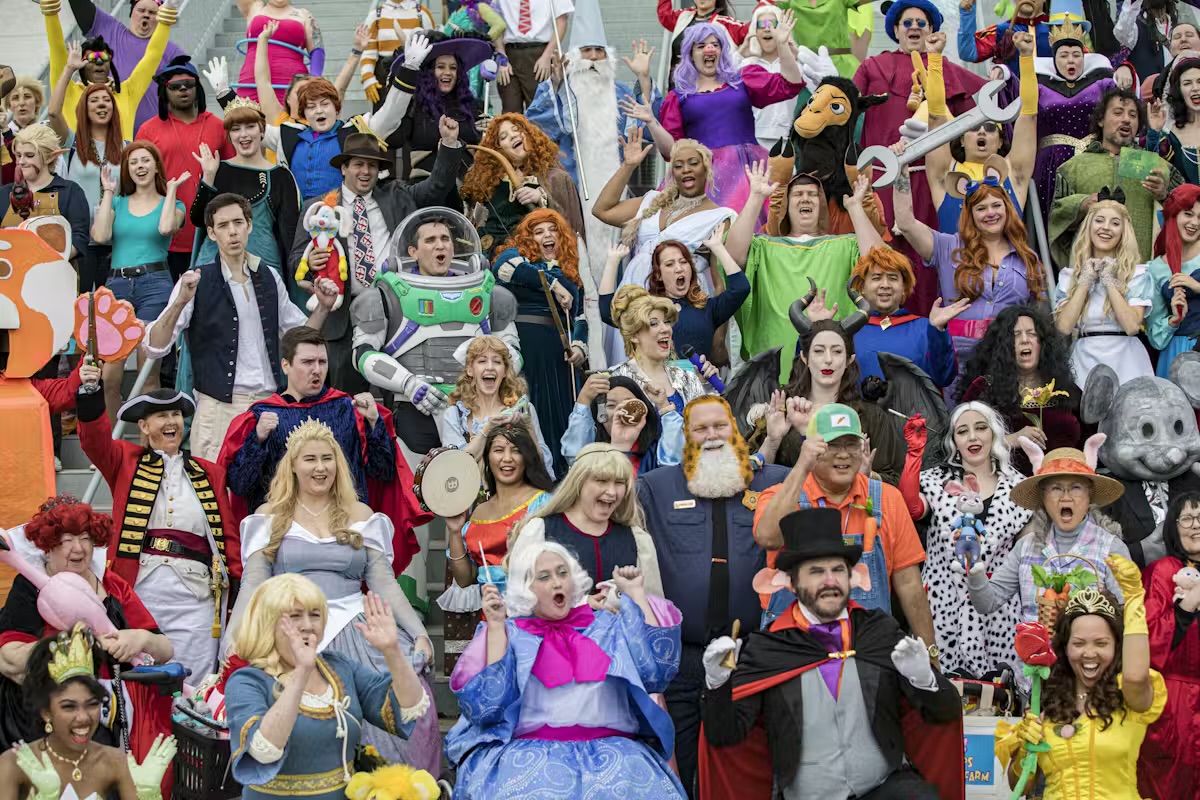
But I would strongly push back on the idea that a love of Disney World renders people fake or inauthentic in any meaningful way.
As journalist and blogger A.J. Wolfe argues in her 2025 book, “Disney Adults,” even the most passionate Disney devotees resist simple categorization. None of them, she explains, seem to be running from their true selves or even trying, in the slightest, to live in an imaginary world.
For example, Wolfe profiles Lady Chappelle, a British tattoo artist who relocated to San Diego, where she exclusively inks Disney-themed tattoos. Then there’s Brandon, a Hollywood drag queen who designed a Carousel of Progress-themed kitchen in honor of the attraction that now resides at Disney’s Magic Kingdom in Orlando, Florida.
These people are representative of pretty much all Disney Adults: They’re passionate about Disney, but they’re also passionate about tattooing and drag and myriad other pursuits.
For Disney Adults, Wolfe writes, an affection for Disney mostly adds “extra color and brightness – maybe definition, motivation, or inspiration if you’re lucky – to the complex and evolving masterpiece that is [their] life.”
And if that complexity applies to the most committed Disney fans, it’s that much harder to cast casual visitors in such a negative light.
But as I point out in “The Magic Kingdom and the Meaning of Life,” Disney World has a number of virtues that its critics often miss.
I think it’s as good a place as any for people of all ages, backgrounds and abilities to come together and create valuable memories. When I ride Tiana’s Bayou Adventure with my wife and our intellectually disabled daughter, there is a little something for everyone: just enough thrill and storytelling for the adults, while not being overwhelming for my daughter. It’s a combination that can be difficult to find in many other places.
Moreover, because we are transported out of our daily routines, the parks can also present surprising opportunities for reflection. For example, I’ve thought a lot about cultural expectations around happiness while at Disney. Should I try to maximize my pleasure during this short trip? Or simply take each day as it comes? I’ve learned to embrace the latter.
I’ve also come to appreciate the value of anticipatory pleasure, which is the positive feeling you get from looking forward to something before it happens. This happened while reflecting on all the time people spend standing in line at theme parks.
Yes, there are many people who simply want to use the worlds of Disney – theme park, films or otherwise – to escape the grind of everyday life. But is seeking such an escape a greater threat to authenticity than checking out by playing video games, watching sports, reading smutty novels or using drugs and alcohol?
Is it possible for people to lose themselves in fantasy? Of course – just as it’s possible for anyone to lose themselves in their careers, relationships or hobbies. But in an age of curated social media accounts, influencer marketing and political doublespeak, the manufactured worlds of Disney might offer more authenticity than you would think.
Why do some people treat the Magic Kingdom and Disney adults like cultural abominations?
If you’ve ever expressed even a passing desire to visit Walt Disney World, you may have had friends who raised their eyebrows, groaned or even sneered.The heart of their criticism isn’t just that they think Disney is for kids, or that it’s so expensive. It’s what I call the “authenticity objection” – the belief that there’s something fundamentally inferior about visits to theme parks like the Magic Kingdom because they occur in a wholly manufactured environment. The artificial mountains and rivers, the rides that provide nothing more than mindless distraction, the people dressed up as fictional characters …
It’s all so fake.
While people sometimes express this view in jest, others believe the fake environment borders on a cultural abomination. One online forum explicitly cites the manufactured nature of Disney World as a reason not to go, noting that the “smiling staff, the piped-in music, the perfect landscaping” can feel “creepy and overly controlled.”
Journalist EJ Dickson, herself a Disney fan, admits that visitors to Disney parks “willingly spend thousands of dollars on an authentic emotional experience that they know, at least on some level, isn’t really authentic at all.” And a representative Trip Advisor review dismisses Disney World as “a hot, commercialized, fake experience.”
If you’re anti-consumption and dislike warm weather, those criticisms of Disney World are fair enough: The weather in Florida is warm, and Disney is certainly trying to make money.
But as a philosopher who recently published a book, “The Magic Kingdom and the Meaning of Life,” I find criticisms of the parks as fake a bit more difficult to understand.
Disney isn’t shy about what it is
Marketing professors George Newman and Rosanna Smith note that philosophers have tended to think about authenticity through the lens of whether “entities are what they are purported to be.”Apply that standard to Disney World: Does it represent itself as something other than a Disney-themed amusement park?
There are legitimate reasons to complain about the authenticity of some experiences. If you buy a ticket to a Van Gogh exhibition, you could rightfully complain if you discovered that only reproductions had been on display. The fact that you hadn’t been able to tell the difference while viewing the paintings wouldn’t matter – you hadn’t received the authentic experience of seeing Van Gogh’s original works.
By contrast, Disney attractions don’t pretend to be anything other than what they are.
When people at Disney’s Hollywood Studios ride Mickey and Minnie’s Runaway Railway, they know they are not actually on a runaway train being incompetently driven by a talking dog named Goofy. If Disney had marketed the attraction as something else – say, an Amtrak trip for kids – perhaps there would be grounds for complaining about its fakeness.
That clearly isn’t the expectation of anyone who waits in line for the experience. Riding the Runaway Railway might not be how you prefer to spend time, but there’s nothing fake about what it purports to be.
Who are you to judge?
If the initial form of the authenticity objection is relatively easy to handle, another concern lurks in the vicinity: the idea that Disney fans are somehow fake, due to their willingness to turn themselves over to the trappings of an artificial world.The precise nature of this concern is a bit difficult to characterize. But it involves the belief that people who spend a lot of time in manufactured environments tend to delude themselves in ways that evade understanding and engaging with their true selves. Terms like “existential authenticity” or “self-authenticity” seem to capture what’s at stake.
Media scholar Idil Galip has pointed to the factthat the parks are highly “engineered and focus-grouped; there’s a whole lot of work that goes into selling this sort of experience.” This can, at a certain point, signal “a break from regular society or real life.”
This supposed connection between the fake world of Disney and the corruption of one’s authentic self is on full display in descriptions of so-called Disney Adults.
Dickson characterizes this view in her Rolling Stone article about Disney Adults: “Being a Disney fan in adulthood is to profess to being nothing less than an uncritical bubblehead ensconced in one’s own privilege, suspended in a state of permanent adolescence … refusing to acknowledge the grim reality that dreams really don’t come true.”
But I would strongly push back on the idea that a love of Disney World renders people fake or inauthentic in any meaningful way.
As journalist and blogger A.J. Wolfe argues in her 2025 book, “Disney Adults,” even the most passionate Disney devotees resist simple categorization. None of them, she explains, seem to be running from their true selves or even trying, in the slightest, to live in an imaginary world.
For example, Wolfe profiles Lady Chappelle, a British tattoo artist who relocated to San Diego, where she exclusively inks Disney-themed tattoos. Then there’s Brandon, a Hollywood drag queen who designed a Carousel of Progress-themed kitchen in honor of the attraction that now resides at Disney’s Magic Kingdom in Orlando, Florida.
These people are representative of pretty much all Disney Adults: They’re passionate about Disney, but they’re also passionate about tattooing and drag and myriad other pursuits.
For Disney Adults, Wolfe writes, an affection for Disney mostly adds “extra color and brightness – maybe definition, motivation, or inspiration if you’re lucky – to the complex and evolving masterpiece that is [their] life.”
And if that complexity applies to the most committed Disney fans, it’s that much harder to cast casual visitors in such a negative light.
The virtues of the Magic Kingdom
If theme parks aren’t your thing, that’s perfectly fine. You can have a wonderful life without setting foot in Epcot or the Animal Kingdom.But as I point out in “The Magic Kingdom and the Meaning of Life,” Disney World has a number of virtues that its critics often miss.
I think it’s as good a place as any for people of all ages, backgrounds and abilities to come together and create valuable memories. When I ride Tiana’s Bayou Adventure with my wife and our intellectually disabled daughter, there is a little something for everyone: just enough thrill and storytelling for the adults, while not being overwhelming for my daughter. It’s a combination that can be difficult to find in many other places.
Moreover, because we are transported out of our daily routines, the parks can also present surprising opportunities for reflection. For example, I’ve thought a lot about cultural expectations around happiness while at Disney. Should I try to maximize my pleasure during this short trip? Or simply take each day as it comes? I’ve learned to embrace the latter.
I’ve also come to appreciate the value of anticipatory pleasure, which is the positive feeling you get from looking forward to something before it happens. This happened while reflecting on all the time people spend standing in line at theme parks.
Yes, there are many people who simply want to use the worlds of Disney – theme park, films or otherwise – to escape the grind of everyday life. But is seeking such an escape a greater threat to authenticity than checking out by playing video games, watching sports, reading smutty novels or using drugs and alcohol?
Is it possible for people to lose themselves in fantasy? Of course – just as it’s possible for anyone to lose themselves in their careers, relationships or hobbies. But in an age of curated social media accounts, influencer marketing and political doublespeak, the manufactured worlds of Disney might offer more authenticity than you would think.


