Steve Scherer
Jan 21, 2026
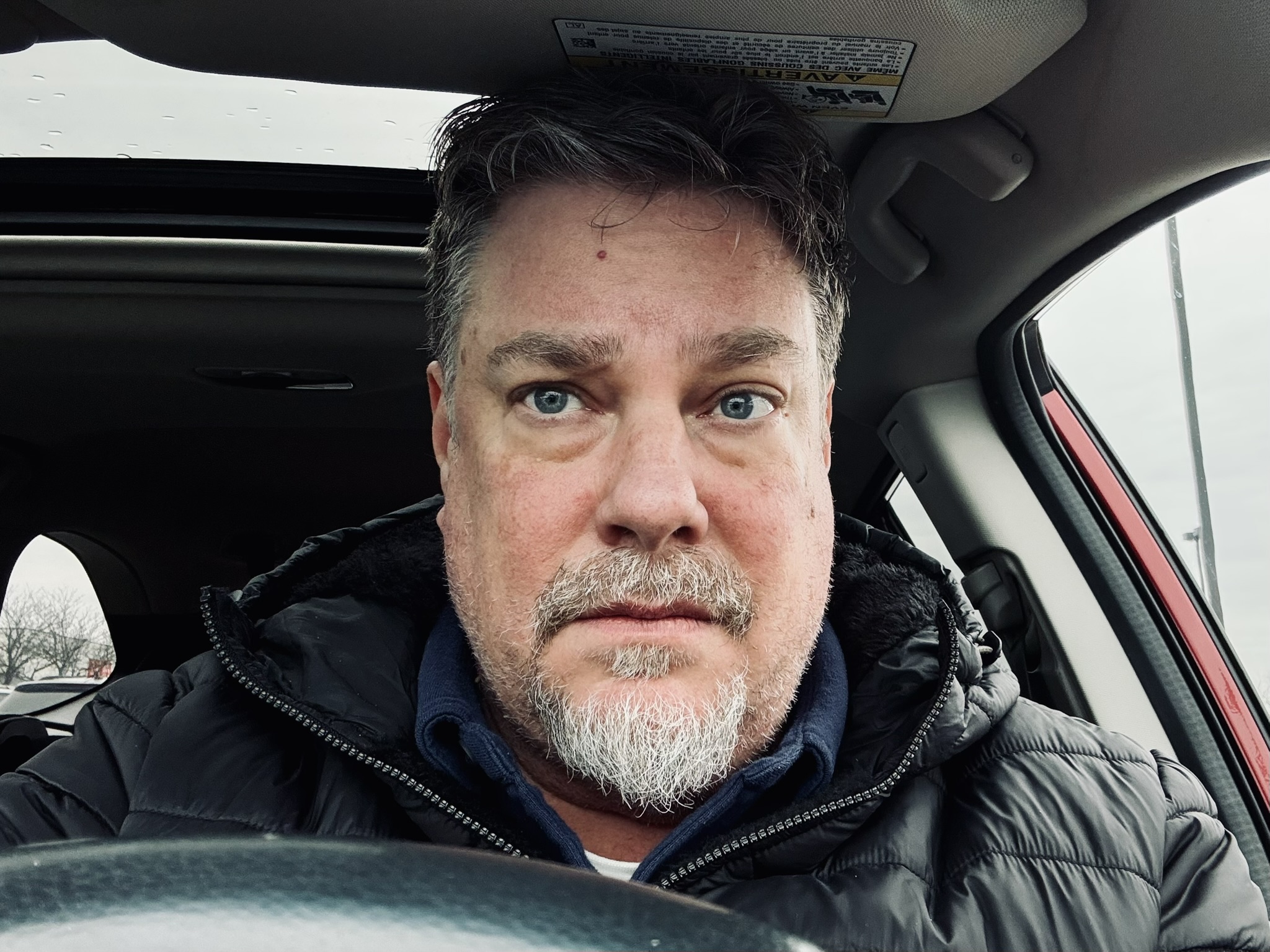
My phone beeped, alerting me to a ride. I clicked to accept and a few minutes later I drew up beside an older lady in a parking lot in Fairfax, Virginia, about half an hour outside of Washington DC. She exchanged a few words in Spanish with the man who waited with her in the early morning darkness and then slid into the back seat of my Subaru Outback. The fare was going to earn me less than $7.
“Buenos dias,” I said. She said the same to me and was chatty, unlike the people I had picked up earlier. She was born in Peru, she said, and her husband had died two years ago. He had retired after decades driving a city bus. He used to take her everywhere and now he was gone, so she called Uber to get to work. I dropped her at the front door of a hotel.
On my first morning driving for Uber, everyone I picked up was Latino or South Asian and they were all going to work. My first three customers were schoolteachers. Then I dropped one young woman at a hospital, and her mother at a grocery store that had yet to open. I brought a young man to a large auto mechanic’s garage, another to a Panera Bread chain restaurant, and a woman to the open back door of a strip-mall diner.
I made $100 in a little less than five hours. Since I’m 55 with the bladder of a three-year-old, I had to find a place to pee three times. Welcome to Donald Trump’s America, I whispered to myself when I whipped into a city park to take a leak behind a tree.
I didn’t know the immigration status of any of my clients. But I wondered, how is the misguided and aggressive targeting of the very people who serve us breakfast, teach our children, fix our cars, clean our hotel rooms, and comfort of our sick making America great?
I have had a lot of questions since I returned to the United States to live and work for the first time in 28 years on July 4. After working as Reuters’ Ottawa bureau chief for five years, my job was eliminated in a cost-cutting drive. Though I owned a home and my kids went to the local schools, I could not get permission to continue to work in Canada. When I crossed the border, it didn’t feel like a homecoming. America today is as foreign to me as Italy was in 1998, when I started working there as a foreign correspondent.
It is a darker place now. An American mother was shot on the street by a federal agent as the White House seeks to deport hard-working people who dream of making a better life for their children. The Department of Justice does not plan to investigate the murder.
As a correspondent who covered politics on two continents, I have seen other politicians use immigrants as scapegoats. It’s always a deadly policy, especially for the immigrants. Trump needs scapegoats to distract from the seeping wound that is the relentless shrinking of America’s once-great middle class. That social grouping included me for most of my life. But not anymore.
In Canada, I made about $130,000 per year. Driving, I’m unlikely to exceed the $36,580 per year that is the federal poverty guideline, and it takes twice that much to live comfortably in Northern Virginia.
Before, I interviewed prime ministers and CEOs and documented humanitarian disasters for media organizations with a global reach. Now I provide a basic service, and I wait for my phone to beep.
I see my own fragility reflected in the people climbing into my back seat before dawn: widows, migrants, parents, workers stitching together lives on the margins. We are all improvising, all one broken transmission or missed paycheck away from something worse. For the first time in my life, I am no longer observing this precarious world from the outside, notebook in hand. I am inside it, dependent on an algorithm, measuring my worth in five-dollar increments.
As a journalist, I depended on taxi drivers to do my job. When Canadian Prime Minister Justin Trudeau went to the White House, I took an Uber to Pennsylvania Avenue. When, as a sitting prime minister, Silvio Berlusconi spoke during his tax fraud trial, I took a cab to the Milan courthouse. When I interviewed Romano Prodi ahead of the 2006 national election, in which he narrowly defeated Berlusconi, I took a cab to party headquarters.
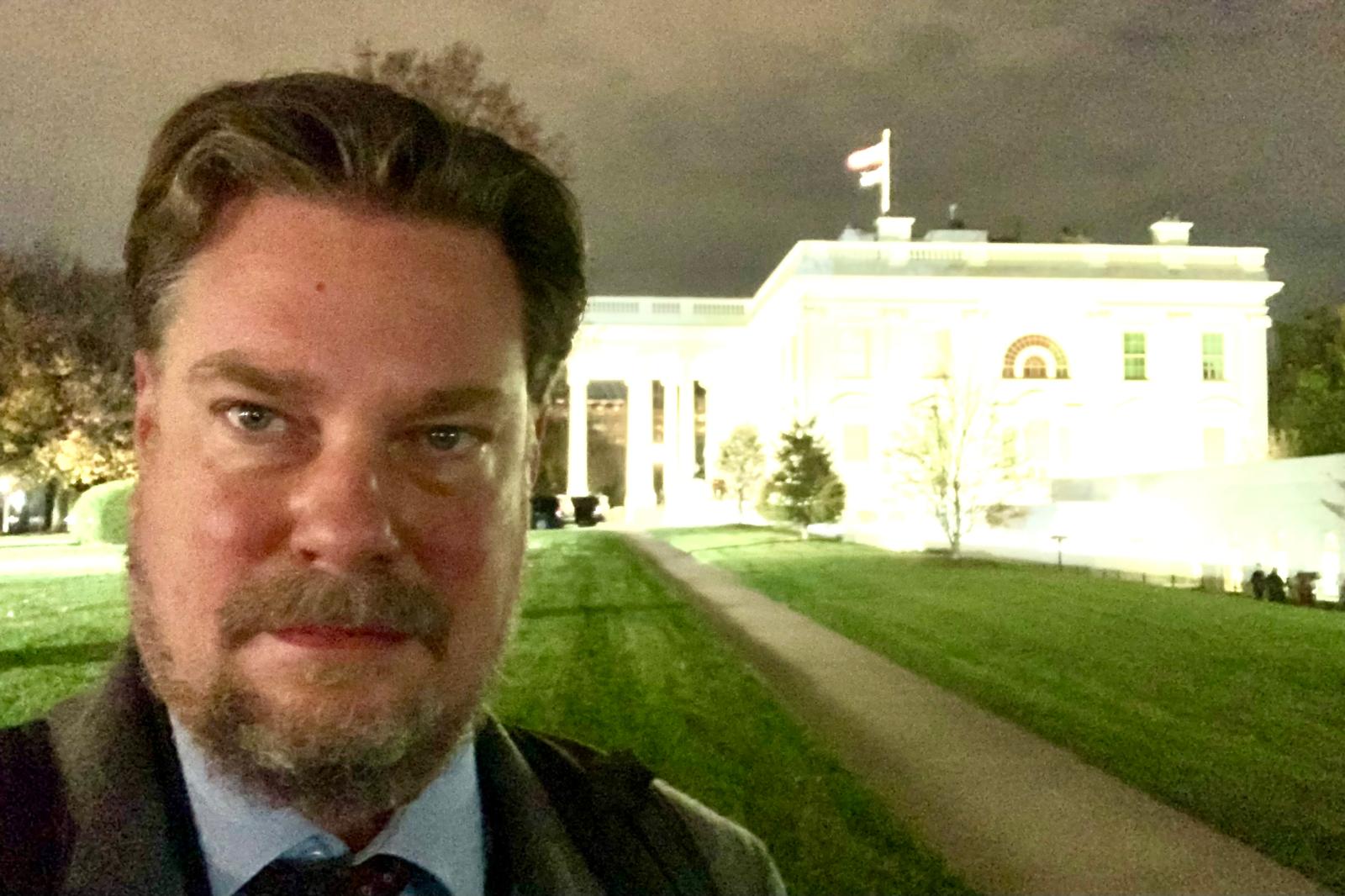
For several years I covered the deadliest migration route in the world, across the Mediterranean to Italy from Libya or Tunisia. Some 26,000 migrants are estimated to have died attempting this sea passage since 2014, a number roughly equivalent to half of America’s dead in the Vietnam War. It is also where there have been the most disappearances. Only Neptune, Roman god of the sea, knows how many.
At the time I was documenting the contours of human displacement I didn’t really understand what would drive a person to attempt such a dangerous passage, especially with children in tow. Now I am closer to understanding that kind of desperation.
In 2014 I sailed on the San Giorgio, a 133-metre Italian Navy vessel. The San Giorgio was part of an Italian mission, called Mare Nostrum or “Our Sea” in Latin, which began after a shipwreck near the Italian island of Lampedusa killed more than 360 men, women and children. The mission saved 150,000 people, but it was suspended after a year under pressure from countries like France, Germany, Britain and the Netherlands — where most of the migrants settled after being rescued. Right-leaning, anti-immigrant parties were gaining ground.
Non-governmental organizations took over sea rescues after that. In 2017, I boarded the Aquarius, which was run by two NGOs. It was a peak time for sea crossings. In one morning, within sight of the Libyan coast, the Aquarius picked up 560 people in six massive rubber boats reinforced with a plywood floor. They hailed from at least a dozen countries, including Nigeria, Sudan, Morocco, and Bangladesh.
(Footage of the Aquarius rescues)
After they were safely out of the dinghies, the migrants were told in various languages, “Libya is over.” They cheered because for most of them, Libya had been hell on earth. They often were detained for months in warehouses, given little food and water, and the men were forced to work without pay. Sometimes gangs of people smugglers would sell migrants to each other like slaves. The men were beaten and sometimes shot to death if they tried to escape. Women were raped and arrived on board the rescue ships pregnant. I know all this because I talked to them and they told me their stories, which I published.
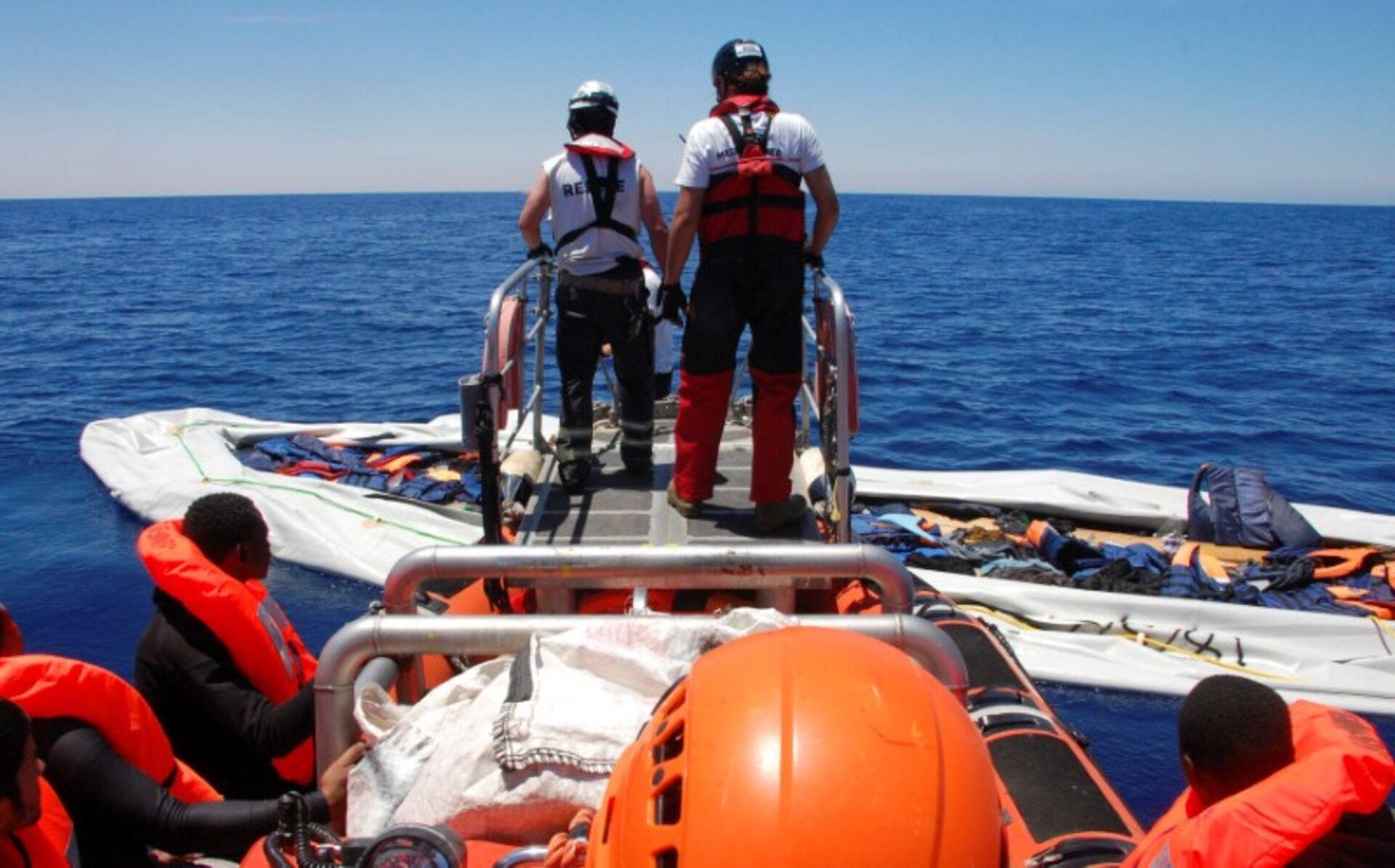
They literally only had the clothes on their backs. No shoes even. Among the children rescued was a five-year-old girl, the same age of my oldest daughter at the time. She was terrified and crying when she was lifted from the rubber boat, but she quickly relaxed on board the Aquarius, and her eyes lit up when the crew gave her fruit, snacks and a stuffed animal to cuddle.
After the migrants had got some rest, and after they had time to understand that the most dangerous part of their trip was over, the lights twinkling on the Sicilian coast came into view. Pointing and shouting, they erupted into cheers and then song. Beating on drums furnished by the ship’s crew, the migrants sang and danced well into the night. As I watched the celebration, I couldn’t wipe the smile off my face.
We docked in Calabria and I caught a flight back to Rome. As the taxi sped through the city, I couldn’t wait to see my three-year-old twins — a boy and a girl — and my five-year-old daughter. When I walked through the front door, they rushed to me. “Papa’!” they shouted. I hugged them tight. I never felt so lucky in my life.
I hired an immigration lawyer to put everything together. After a year of bureaucratic delay, I was asked to apply in 2023. Canada’s immigration process is governed by a point system and is by invitation only.
A few months later I was fired amid budget cuts in the struggling news industry. My jobless status weakened my application, and I would never be asked to apply again. The great and kind Canada, the country where I thought I would settle at least until my children were adults, had chewed me up and spit me out.
I couldn’t legally work, not even for Uber. When I lost my job, my entire family lost state healthcare coverage, and there is virtually no private healthcare. We had no family doctor and, God forbid, any hospital visit would have to be paid for out of pocket. Despite having good local contacts, I couldn’t find an employer willing to sponsor me. The clock was ticking on our legal right to reside in Canada. We were no longer welcome.
In June of 2025 I sold my house, the first I had ever owned. Not knowing how long it would take me to find a job in Washington, I put my family on a plane in Montreal. They flew to Italy where they could live rent free in a family member’s home, where they were covered by state healthcare, and where the kids could go to high school. After I said goodbye to them, I wept uncontrollably in the airport parking lot, not knowing when I would see them again.
After a life spent both crossing borders and freely reporting on those who struggled to overcome them, I didn’t expect one to rise up beneath my feet.
In Virginia I found an Airbnb apartment. It was the basement of a townhouse I shared with an elderly Latina woman who spoke little English and cost me $2,000 a month. My three decades in Romania, Italy and Canada have so far failed to impress recruiters.
Two years ago, I told myself, “If all else fails, I’ll drive for Uber.” Well, here I am, and it’s not as comforting as I thought it would be. I used to think I was different from the migrants I wrote about — protected by a passport, a salary, a press badge. But the past two years have stripped away that illusion.
That said, I am still relatively lucky. I’m a middle-aged white guy with an American passport so I’m not likely to be snatched off the street by ICE. I have some savings and people to lean on.
Impatient to get my family back late last year, I looked for a larger rental to fit my whole family. After two rejections because the landlords were understandably worried that I wouldn’t be able to pay the rent, my octogenarian father co-signed a lease with me for a place in Fairfax — $3,000 a month.
My middle-class habits die hard. I still want my children to have what they desire for Christmas, even if it is an expensive computer. I still want each of my three teenagers to have their own room. I still want them to get the kind of education that in America is found mainly in high- or middle-income communities, and I’m willing to pay extra rent for it.
My wife remains in Italy, where she has healthcare and feels more secure after our disorienting departure from Canada. She also fears being deported, something that has happened to other American spouses. Fortunately, I have reunited with my children, who are attending American high school for the first time in their teens. I feel like I’m building something in my newest city. I’m optimistic for the first time in a long time, but I also realize that optimism isn’t the same thing as security.
NAVIGATING THE DRIFT
In the 1980s and 90s, my teachers and mentors in high school and college in Indiana and Illinois encouraged me to be open to new cultures and languages. My favorite books then, including but certainly not limited to Jack Kerouac’s “On the Road” or Herman Hesse’s “Siddhartha”, hinted at the knowledge and understanding that can only be unlocked by the unknown.
At 15, I applied to be an exchange student and ended up spending my junior year in high school in Italy. Fully immersed in the home of a warm family, I learned the language and adapted to the culture. The self-confidence I gained from that experience was a springboard to my success as an adult. My Italian host family remains close to me. The mother has been a third grandmother to my children. Being open and not afraid of “the other” has enriched my life. But it seems to have done the opposite of make me rich.
Today in America my international experience seems to have little value. Worse, it feels anathema to the values marketed by the ruling class. They are empowering armed agents to prowl the streets of our cities in search of “the other” and encouraging voters to fear them.
I do not fear different cultures or languages. I’m fascinated by them. The truth is we all have a lot in common. Most people, no matter their nationality, fall into two categories: Parents who want to help their children succeed in life, and youth chasing their dreams.
What I do fear is the economic squeeze that is coming. The job market is already a war zone. Tariffs will inevitably force up prices and slow growth. Setting monetary policy from the White House will lead to disaster. The shrinking middle class is going to shrink faster. It won’t be a sudden collapse, but a drift toward it.
The people I am driving around are, like me, trying to navigate that drift. They are widows, teachers, hospital workers, mechanics. They are people who get up before dawn to feed their families. They trust me to get them to work on time. I trust an app to buy me another day. None of us has any real leverage. Like the migrants who survived the deadliest border crossing on the planet, we are all at the mercy of the sea.
Source (Archive)
Mar 13, 2026
On a recent morning in a sterile medical office in Virginia, I read my new Sikh doctor a full page of handwritten notes. It was a list of things that had gone wrong with my body.
After two years without health insurance or a job, I qualified for Medicaid and scheduled a long-overdue checkup. I weighed 243 pounds, far too much for my 5-foot-10 frame, and my blood pressure was high. My list included a pinched nerve in my neck, a constellation of strange moles on my chest, a generally harmless heart flutter known as premature atrial contraction, and a habit of waking several times each night to pee.
“We won’t be able to address all of that today,” the doctor said gently. “But we’ll make a start.”
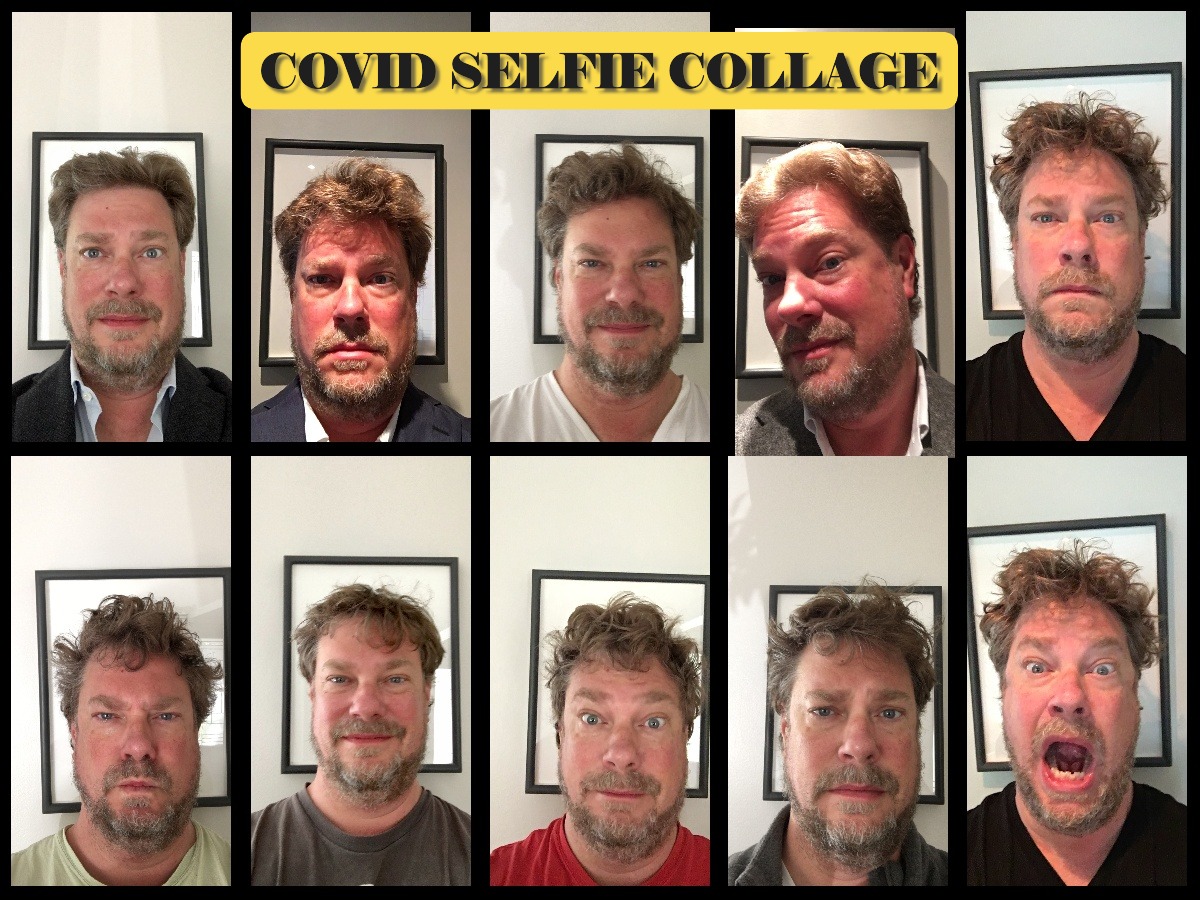
I’m 55 years old, and my body has kept score of every deadline, every late breaking story and every night spent blowing off steam after an intense workday. It took a global pandemic, a quarter century chasing the 24-hour news cycle, and a lot of peanut butter and booze to end up like this. I never had a prominent chin. Now I have two. When I look in the mirror, I still have the same old chicken legs, but like a chicken, they are out of proportion with my body. I use the steering wheel to pull myself out of the car.
After nearly three decades abroad as a foreign correspondent, I returned to the United States last year unemployed and alone (See story). I felt like a spent battery, and the world in which I had built my journalism career was disappearing.
I am part of a generation caught between radically different worlds. I was born analog, forced digital, and now I confront an Artificial Intelligence (AI) revolution that threatens to make human intelligence obsolete. Professionals like me in their 50s are watching their careers shatter like beer bottles, and our bodies and minds are proving to be less resilient than those of our parents and grandparents.
Generation X, born between 1965 and 1979, may be the most stressed-out generation in modern American history. Several studies show middle-aged Gen Xers experiencing rising depression, anxiety and declining health, with increasing deaths from cardiovascular disease and other illnesses once rare in the young.
To make matters worse, professionals in my generation established careers in industries that were quietly hollowed out by technology, consolidation and economic shocks. I was raised to believe that education, work and persistence would guarantee me a place in the middle class. Instead, my 25 years experience abroad have been a liability and AI-generated rejection emails clutter my inbox.
This wasn’t the temporary setback I’d weathered earlier in my career; this was a structural collapse. I feel as if I’m still using the stars to navigate in a GPS world. Even the politics I had known three decades ago, before I moved abroad, looked nothing like the MAGA dystopia I returned to.
Sometimes, I feel like I was born on another planet.
My family entered lockdown just months after moving to Canada from Italy. For my kids, that meant no more in-class learning before friendships had time to take root. As I worked, my wife was cooped up at home all day and, like the kids, had few opportunities to expand her social network.
Each of us endured in our own way. I remember thinking I wasn’t going to make it unless I cut myself some slack somewhere, so I ate and drank as I pleased.
My new doctor, who had studied in Canada and is probably 10 years younger than me, ordered a series of tests to get to the bottom of things, and he warned me: My four drinks per night were too much.
Three days later I got the results. I have moderate to severe sleep apnea. The test showed I went without breathing for at least 10 seconds as many as 45 times an hour. My cholesterol and blood pressure were both too high. I had a smidge of prediabetes and signs of a fatty liver from my decades of drinking, a common trait of Generation X and older Millennials, studies show.
My physical crisis mirrored my professional one. My two chins told the story of two unsustainable systems being pushed past their breaking points.
For nearly 40 years I was a habitual drinker. Nearly every evening, I drank wine with dinner or a few White Claws to grease the wheels of conversation. But I knew it was time for a change. I could feel it when I walked up a long flight of stairs, or when I rolled out of bed in the morning with a dull headache.
“I would recommend regular aerobic exercise and avoiding or limiting red meat, butter, fried foods, cheese, and other foods that have a lot of saturated fat,” the doctor wrote to me online, furnishing prescriptions for my blood pressure and cholesterol. “Avoid all alcohol.”
I quit that day.
So, I signed on as assistant coach my son’s recreational soccer team, and after four months of unemployment, in an act of stubborn middle-class hubris, I went on vacation. I felt like I needed to travel, but I wasn’t sure why.
My Italian wife and two daughters flew to Italy for the summer. They would visit family and friends and spend time at the beach. I loaded up the Subaru and hit the road with my 14-year-old son, first to Boston, where we stayed with an old friend of mine from graduate school. While there, I met a Harvard communications manager, but it didn’t even lead to a formal interview. Then we spent a week in New York City. An old friend and his wife lent me their Brooklyn apartment as they traveled to Europe. While there, I had to liquidate my Canadian 401k because I was already running out of money.
That didn’t stop me from taking my son to the top of 30 Rockefeller Plaza, to the 9/11 memorial and museum, to the Statue of Liberty and Ellis Island, to Yankee Stadium for a game against the Red Sox. We ate at restaurants and bought souvenirs. We made memories, bank balance be damned.
My wanderlust started when I was a teenager. Since I left my Indiana hometown to spend a year in Italy at 16, I have traveled whenever I could. I wanted to meet strangers, see landscapes, grand architecture, ancient ruins and cities. I wanted to explore the world around me from different perspectives like Wallace Stevens does in “Thirteen Ways of Looking at a Blackbird”.
After New York, we trekked down the coast toward my father’s house in Florida. Across the mire in the early morning light, speeding south on Interstate 95 through the Carolina swampland toward a state trooper, hiding catlike in the median under a huge Georgia pine. We barreled across marshes, islands of reeds and metallic blue canals meandering to the ocean at sunrise. We circled into the soul of my uncertain path, just above the speed limit.
In Florida, where I encountered the sand crane, cow osprey and snake bird perusing local ponds, I asked my dad for money. I had done the math. I knew I wasn’t going to sell my house before I ran out of cash. Soon I would need a monthly allowance.
After the humiliation of asking my aging parents for money at 55 years old, we wound our way north through the melancholy mist of the Smoky Mountains, destination Ottawa. I was gracious for the soothing rhythm of the road and for the time I was spending with my son, who slept most of the time in the passenger seat. The road comforted me as we sped through the forgotten realms between two points – the gorges and rivers and valleys and forests – mysteries to be unraveled, perhaps, during a future trip.
I had driven thousands of miles searching for something I couldn’t name. Perhaps I was leaning into my vagabond spirit because my identity felt shaken, or maybe I just wanted to feel the world in motion as my career came to a screeching halt.
After nine months of failed attempts to land a job anywhere but the United States, I planned my next steps. I couldn’t stay in Canada because I didn’t have the proper documents. (See story) My three teenage children, who seemed to be growing before my eyes, watched me struggle and worried about what was to come. All three were in high school. They had their whole lives ahead of them. I felt like I was running on fumes.
After 16 months without a job, my wife and kids flew to Italy, and on July 4 I left Canada. “Don’t drive Star-Spangled hammered,” read the billboards along the Ohio Interstate. They made me crave a drink. I wanted to dull the feeling of returning home with my tail between my legs after 28 years. I headed to Washington DC area because it has more journalism, writing and editing jobs than any other city in the country.
In a windowless basement apartment in Northern Virginia, I lived alone for the first time in more than two decades. Each day was the same. I spent mornings combing LinkedIn and the internet for openings, tweaking resumes and writing cover letters. In the afternoon I walked around a local lake for exercise and fresh air. I dreaded the evenings. I tried to kill time by reading, flipping on Netflix or Prime Video, or listening to music.
With music and my eyes closed, I could be anywhere – in Southern Italy or Indiana, in Romania or Canada – all at once. Sometimes the grooves lulled me gently up and down as if floating in the Ionian Sea on a still summer night, or they rolled like a train between bass lines and colorful melodies across a Midwestern sunset, until poof, I opened my eyes to see that spartan basement. Then I’d long for sleep.
Sleep obliterated my constant doubts and my desire for human contact. The emptiness of sleep was a form of existential kindness, a temporary respite from the absurdity of my situation. If I couldn’t sleep, I prayed. I prayed even though I don’t believe in God. It made me feel better to pray, so I let myself do it. When I woke up in the morning dreading another day like the one before, I gave myself pep talks. “It’s OK. You can do it, Steve. It’s OK. One day at a time.”
Long-term unemployment had compressed my life into small routines and separated me from my family. I grew angry and privately I’d lash out: Fuck you LinkedIn, with your bullshit ads and fake recruiters and pretentious corporate slop. Fuck you hiring manager for ghosting me after the interview. Take that workplace scenario you made up to make me squirm and shove it up your ass. Fuck the latest AI-automated rejection email. Fuck the shit questions from a panel of three interviewers, all at least 20 years younger than me. Fuck you for being young.
In the evening when the sleep I so craved wouldn’t come, I cried in that fucking basement. I feared letting my children down, and I was terrified I’d never live under the same roof with them again. I felt like I was drowning in the ashes of my previous life, and my lifeline was a bottle of bourbon and a half-case of White Claw.
Now I mostly drink cold cans of sparkling water. When I’m in a social setting, I get a non-alcoholic beer to satisfy the urge to have a drink in my hand. It tastes like the real thing, but it’s a boondoggle. Bars charge the same amount for fake beer as for the real thing.
(Editing by Heather Timmons. I am grateful to Heather, a veteran editor, for making my essay better. She never had a bad suggestion.)
Source (Archive)
Mar 16, 2026
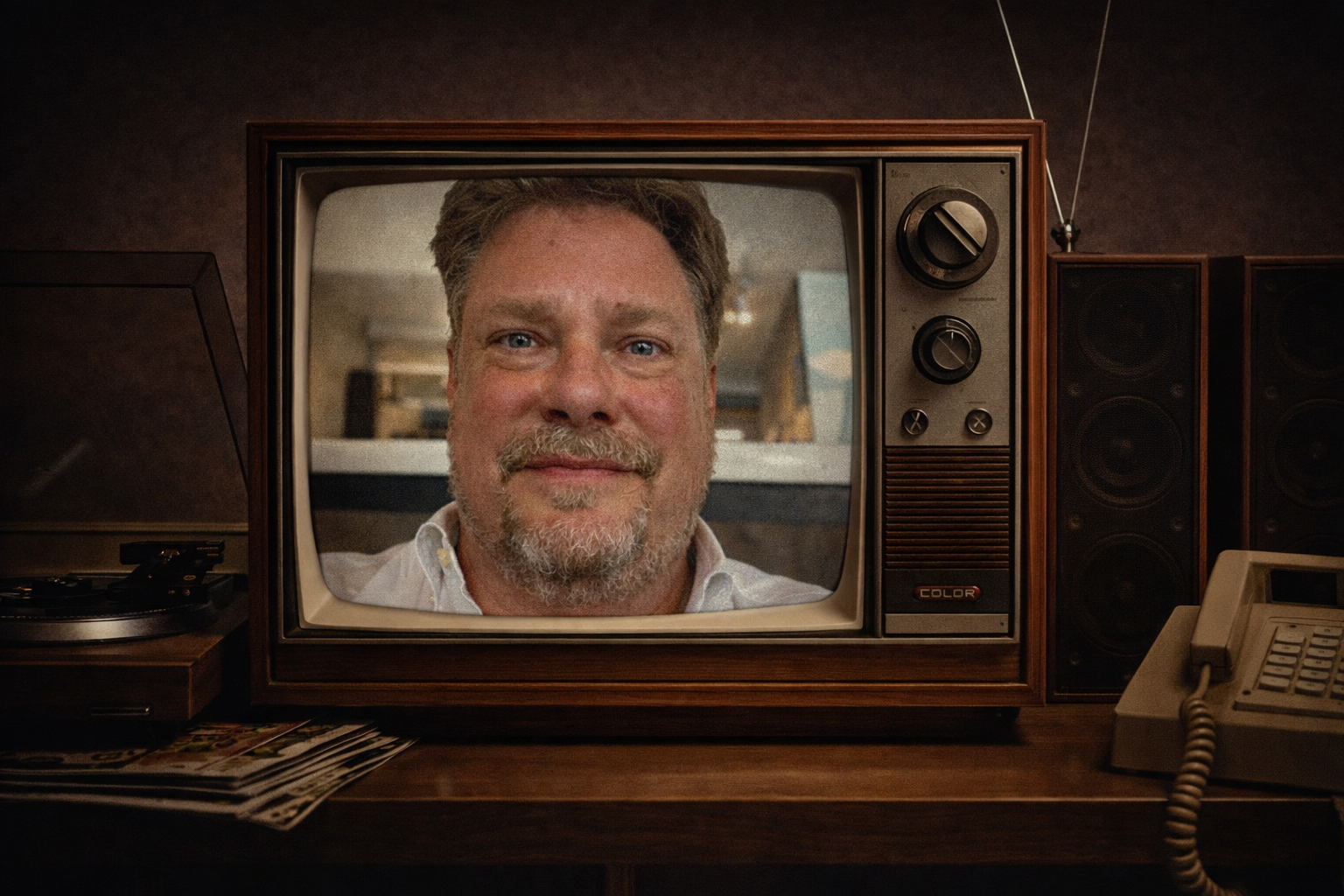
When I climbed in my car to drive for Uber for the first time, a Steve Miller song came on the radio.
“I’ve been lookin’ real hard / And I’m tryin’ to find a job / But it just keeps gettin’ tougher every day…”
The universe always speaks the truth, I thought.
Rock’n Me came out in 1976, when finding work meant circling classified ads in the newspaper and walking into an office with a printed resume. Half a century later, I was searching for work a world where algorithms screened applicants, artificial intelligence conducted job interviews, and veteran professionals like me could spend two years uselessly shooting job applications into cyberspace.
After a year without a paycheck, my daughter needed new glasses and my son needed braces. I couldn’t afford either.
For the first few months, unemployment felt like an unexpected vacation. (See story) I slept later, spent more time with my kids, convinced myself the next job was just around the corner. But by the one-year mark the illusion was gone. Every practical need in life requires income, and without it a family of five like mine drifts toward the brink.
I am part of a generation that’s living through a massive transition. Many of us built careers on skills that machines now perform in seconds, and we navigated by instinct in professions now ordered by algorithms. We ended up unemployed in our 50s competing with people who never knew life without the internet.
To stop hemorrhaging the money I got from the sale of my house in Canada, I checked out the Uber app as soon as I moved to Virginia, but I couldn’t do it. My car still had Canadian plates. I needed a home address to get new plates, and I needed a utility bill as proof, but I was sub-letting and the utilities weren’t in my name.
I searched for options. I thought about teaching high school, but I had little experience and the jurisdictional requirements varied.
I decided to try my hand as a tax advisor for Intuit, a part-time gig that would allow me to dip my toe in the water to see if I liked it. According to the marketing, all I had to do was take a couple online courses and pass two tests.
Poet Wallace Stevens had been a senior lawyer at an insurance company, I told myself, and another great American poet, William Carlos Williams, was a medical doctor. My wife laughed when I told her what I was up to because she knew the level of hate I had for bureaucracy in all forms. Italian red tape would send me into apoplectic fits. But I rationalized it.
My strength as a journalist had always been my reporting, not my writing. I’d dive down rabbit holes and come back with a cracking news story. Furthermore, I had long covered economics, so I was comfortable with numbers.
The online classes took me about two weeks to complete. I passed the tests that featured what appeared to be AI-generated videos.
It wasn’t easy. I had to complete tax returns for 12 different individuals or families. Without the aid of software, I used IRS work sheets to figure out deductions, like the earned income tax credit. Some of the scenarios were complicated and involved earnings from several different types of investments, the early liquidation of retirement funds, or possible deductions that phased out as gross income climbed.
Then I faced my first AI interview. A woman’s voice spoke, asked me a few questions, and put me in work scenarios where I had to respond to virtual clients asking tax questions. I had a fixed amount of time to respond, and there was no way to hit pause. I did my best. I figured it was a formality anyway.
Sitting alone in front of my computer, answering questions from a disembodied voice, I realized the strangeness of the moment. After decades interviewing prime ministers, central bankers and chief executives, I was now being interrogated by a machine. The experience captured something essential about the contemporary work environment: algorithms are replacing human judgment.
About a month later I got an AI-written rejection letter from Intuit, putting me back to square one. Intuit had forbidden the use of AI for the classes, tests and the interview, but it used AI to recruit. It was corporate contortionism.
In February I read, “THE 2028 GLOBAL INTELLIGENCE CRISIS: A Thought Exercise in Financial History, from the Future” by Citrini Research. (See story) It is a fictional projection of AI’s possible remake of the economy over the next two years, and it’s bleak. In one section, it describes a fictional “friend” who lost her job as a senior software manager making $180,000 per year because she had been displaced by AI.
The memo, said to be published in June 2028, reads: “After six months of searching, she started driving for Uber. Her earnings dropped to $45,000.” (From experience (See story), it would take A LOT of driving to make $45,000 per year). In the so-called memo, hundreds of thousands of workers in every major city were flooding the gig economy, pushing down wages for everyone. It described a death spiral for already low earners, and it sounded eerily familiar.
I grew up without cell phones, without email, without the internet. I remember my mom and I got our first remote-controlled TV in about 1980. It picked up six free-to-air channels. Then came cable, HBO, VHS, DVD and digital streaming. I was born in an analog world, and so far, I’ve adjusted to a digital one. With AI, it’s not just Gen Xers like me who are becoming obsolete. Mortal intelligence appears to be under threat for the sake of what economists call productivity.
The future of work has arrived, and like a Blockbuster cashier, I can’t seem to find my place in it.
I started writing in the first person, a major shift from three decades of third-person journalistic objectivity, and I published my story on Substack. (See story) Many people around the world, journalists or not, Americans or not, have been cast out into a lonely orbit, into grinding unemployment, into despair. Reading about my struggles, many people felt less alone with their own, and they told me so.
The messages from strangers around the world – Canada, Italy, Australia, Britain and elsewhere – told me that this isn’t individual failure but collective disruption. I’m not the only one searching for solid ground as the very nature of work shifts.
In two years of unemployment, I sent out hundreds of resumes, sat for dozens of interviews, and got zero results. Driving for Uber and writing my story turned things around in two months. I temporarily became a Substack bestseller (thank you, paid subscribers!), I gave up booze, I got my blood pressure and cholesterol down to normal levels, I lost 10 pounds, gained one belt notch, and my children moved back under the same roof as me. (See story)
I also finally got a job offer, and I’m staying in journalism. By the end of the month, I’ll start a new job as a senior intellectual property reporter for MLex, an agency specializing in legal risk and regulation. I’ll make less than I did in my last job, but it’s a union position, I’ll have a steady income, and I won’t manage anyone but myself. Best of all, since my focus will be analysis, I won’t be chasing the 24-hour news cycle. I’ll drop my children off at school and work in downtown Washington. They’ll take the school bus home, and I’ll join them for dinner.
The algorithm that guided me to my Uber passengers inadvertently led me back to myself, back to the writer beneath the journalist, back to the man beneath the professional, back to the father who can finally be present evenings and weekends no matter the news flow.
My story is personal but not unique. Experienced professionals in journalism, technology, finance, insurance and marketing are discovering that the rules have changed. Algorithms decide who gets an interview. AI performs tasks that once required years of training. When the system spits people out, many of them end up, like me, in the gig economy. The American dream may not have disappeared for everyone, but for many of us in our 50s, it runs in reverse. Knowledge workers are becoming service workers.
I didn’t go back to where I started, but I’m finding my footing where I washed up, wobbly after two years of rough seas, but standing.
(Editing by Heather Timmons. I am grateful to Heather, a veteran editor, for making my writing better. She never had a bad suggestion.)
Source (Archive)
Jan 21, 2026
My phone beeped, alerting me to a ride. I clicked to accept and a few minutes later I drew up beside an older lady in a parking lot in Fairfax, Virginia, about half an hour outside of Washington DC. She exchanged a few words in Spanish with the man who waited with her in the early morning darkness and then slid into the back seat of my Subaru Outback. The fare was going to earn me less than $7.
“Buenos dias,” I said. She said the same to me and was chatty, unlike the people I had picked up earlier. She was born in Peru, she said, and her husband had died two years ago. He had retired after decades driving a city bus. He used to take her everywhere and now he was gone, so she called Uber to get to work. I dropped her at the front door of a hotel.
On my first morning driving for Uber, everyone I picked up was Latino or South Asian and they were all going to work. My first three customers were schoolteachers. Then I dropped one young woman at a hospital, and her mother at a grocery store that had yet to open. I brought a young man to a large auto mechanic’s garage, another to a Panera Bread chain restaurant, and a woman to the open back door of a strip-mall diner.
I made $100 in a little less than five hours. Since I’m 55 with the bladder of a three-year-old, I had to find a place to pee three times. Welcome to Donald Trump’s America, I whispered to myself when I whipped into a city park to take a leak behind a tree.
I didn’t know the immigration status of any of my clients. But I wondered, how is the misguided and aggressive targeting of the very people who serve us breakfast, teach our children, fix our cars, clean our hotel rooms, and comfort of our sick making America great?
I have had a lot of questions since I returned to the United States to live and work for the first time in 28 years on July 4. After working as Reuters’ Ottawa bureau chief for five years, my job was eliminated in a cost-cutting drive. Though I owned a home and my kids went to the local schools, I could not get permission to continue to work in Canada. When I crossed the border, it didn’t feel like a homecoming. America today is as foreign to me as Italy was in 1998, when I started working there as a foreign correspondent.
It is a darker place now. An American mother was shot on the street by a federal agent as the White House seeks to deport hard-working people who dream of making a better life for their children. The Department of Justice does not plan to investigate the murder.
As a correspondent who covered politics on two continents, I have seen other politicians use immigrants as scapegoats. It’s always a deadly policy, especially for the immigrants. Trump needs scapegoats to distract from the seeping wound that is the relentless shrinking of America’s once-great middle class. That social grouping included me for most of my life. But not anymore.
In Canada, I made about $130,000 per year. Driving, I’m unlikely to exceed the $36,580 per year that is the federal poverty guideline, and it takes twice that much to live comfortably in Northern Virginia.
Before, I interviewed prime ministers and CEOs and documented humanitarian disasters for media organizations with a global reach. Now I provide a basic service, and I wait for my phone to beep.
MARE NOSTRUM, OUR SEA
For most of my life, my movement has given me both agency and freedom. Now other people’s movement is a means for my survival.I see my own fragility reflected in the people climbing into my back seat before dawn: widows, migrants, parents, workers stitching together lives on the margins. We are all improvising, all one broken transmission or missed paycheck away from something worse. For the first time in my life, I am no longer observing this precarious world from the outside, notebook in hand. I am inside it, dependent on an algorithm, measuring my worth in five-dollar increments.
As a journalist, I depended on taxi drivers to do my job. When Canadian Prime Minister Justin Trudeau went to the White House, I took an Uber to Pennsylvania Avenue. When, as a sitting prime minister, Silvio Berlusconi spoke during his tax fraud trial, I took a cab to the Milan courthouse. When I interviewed Romano Prodi ahead of the 2006 national election, in which he narrowly defeated Berlusconi, I took a cab to party headquarters.
For several years I covered the deadliest migration route in the world, across the Mediterranean to Italy from Libya or Tunisia. Some 26,000 migrants are estimated to have died attempting this sea passage since 2014, a number roughly equivalent to half of America’s dead in the Vietnam War. It is also where there have been the most disappearances. Only Neptune, Roman god of the sea, knows how many.
At the time I was documenting the contours of human displacement I didn’t really understand what would drive a person to attempt such a dangerous passage, especially with children in tow. Now I am closer to understanding that kind of desperation.
In 2014 I sailed on the San Giorgio, a 133-metre Italian Navy vessel. The San Giorgio was part of an Italian mission, called Mare Nostrum or “Our Sea” in Latin, which began after a shipwreck near the Italian island of Lampedusa killed more than 360 men, women and children. The mission saved 150,000 people, but it was suspended after a year under pressure from countries like France, Germany, Britain and the Netherlands — where most of the migrants settled after being rescued. Right-leaning, anti-immigrant parties were gaining ground.
Non-governmental organizations took over sea rescues after that. In 2017, I boarded the Aquarius, which was run by two NGOs. It was a peak time for sea crossings. In one morning, within sight of the Libyan coast, the Aquarius picked up 560 people in six massive rubber boats reinforced with a plywood floor. They hailed from at least a dozen countries, including Nigeria, Sudan, Morocco, and Bangladesh.
(Footage of the Aquarius rescues)
After they were safely out of the dinghies, the migrants were told in various languages, “Libya is over.” They cheered because for most of them, Libya had been hell on earth. They often were detained for months in warehouses, given little food and water, and the men were forced to work without pay. Sometimes gangs of people smugglers would sell migrants to each other like slaves. The men were beaten and sometimes shot to death if they tried to escape. Women were raped and arrived on board the rescue ships pregnant. I know all this because I talked to them and they told me their stories, which I published.
They literally only had the clothes on their backs. No shoes even. Among the children rescued was a five-year-old girl, the same age of my oldest daughter at the time. She was terrified and crying when she was lifted from the rubber boat, but she quickly relaxed on board the Aquarius, and her eyes lit up when the crew gave her fruit, snacks and a stuffed animal to cuddle.
After the migrants had got some rest, and after they had time to understand that the most dangerous part of their trip was over, the lights twinkling on the Sicilian coast came into view. Pointing and shouting, they erupted into cheers and then song. Beating on drums furnished by the ship’s crew, the migrants sang and danced well into the night. As I watched the celebration, I couldn’t wipe the smile off my face.
We docked in Calabria and I caught a flight back to Rome. As the taxi sped through the city, I couldn’t wait to see my three-year-old twins — a boy and a girl — and my five-year-old daughter. When I walked through the front door, they rushed to me. “Papa’!” they shouted. I hugged them tight. I never felt so lucky in my life.
MY CANADA DREAM UNRAVELS
When I was moved to Canada by Reuters in 2019, I realized a professional dream. I had become a bureau chief in a G7 country, which is the bloc of wealthy countries that seeks a common stance on the main economic and political challenges facing the world. Both Italy and the United States are also members. After a couple years I convinced my Italian wife that we should apply for permanent residency, which would give us both the right to work in Canada indefinitely. All I had was a work permit allowing me to work for my news agency.I hired an immigration lawyer to put everything together. After a year of bureaucratic delay, I was asked to apply in 2023. Canada’s immigration process is governed by a point system and is by invitation only.
A few months later I was fired amid budget cuts in the struggling news industry. My jobless status weakened my application, and I would never be asked to apply again. The great and kind Canada, the country where I thought I would settle at least until my children were adults, had chewed me up and spit me out.
I couldn’t legally work, not even for Uber. When I lost my job, my entire family lost state healthcare coverage, and there is virtually no private healthcare. We had no family doctor and, God forbid, any hospital visit would have to be paid for out of pocket. Despite having good local contacts, I couldn’t find an employer willing to sponsor me. The clock was ticking on our legal right to reside in Canada. We were no longer welcome.
In June of 2025 I sold my house, the first I had ever owned. Not knowing how long it would take me to find a job in Washington, I put my family on a plane in Montreal. They flew to Italy where they could live rent free in a family member’s home, where they were covered by state healthcare, and where the kids could go to high school. After I said goodbye to them, I wept uncontrollably in the airport parking lot, not knowing when I would see them again.
After a life spent both crossing borders and freely reporting on those who struggled to overcome them, I didn’t expect one to rise up beneath my feet.
BITTERSWEET HOMECOMING
I left the States to teach English and freelance stories in Romania in the summer of 1997, when Bill Clinton was president. “Seinfeld”, “Friends” and “ER” were the most-watched TV shows. “Men in Black” was a summer blockbuster. The Internet barely existed and was used mainly for email. Businessmen had car phones, but no one I knew had a cell phone. I shared an apartment in Colorado Springs, Colorado, with my best friend from college and we each paid about $300 rent.In Virginia I found an Airbnb apartment. It was the basement of a townhouse I shared with an elderly Latina woman who spoke little English and cost me $2,000 a month. My three decades in Romania, Italy and Canada have so far failed to impress recruiters.
Two years ago, I told myself, “If all else fails, I’ll drive for Uber.” Well, here I am, and it’s not as comforting as I thought it would be. I used to think I was different from the migrants I wrote about — protected by a passport, a salary, a press badge. But the past two years have stripped away that illusion.
That said, I am still relatively lucky. I’m a middle-aged white guy with an American passport so I’m not likely to be snatched off the street by ICE. I have some savings and people to lean on.
Impatient to get my family back late last year, I looked for a larger rental to fit my whole family. After two rejections because the landlords were understandably worried that I wouldn’t be able to pay the rent, my octogenarian father co-signed a lease with me for a place in Fairfax — $3,000 a month.
My middle-class habits die hard. I still want my children to have what they desire for Christmas, even if it is an expensive computer. I still want each of my three teenagers to have their own room. I still want them to get the kind of education that in America is found mainly in high- or middle-income communities, and I’m willing to pay extra rent for it.
My wife remains in Italy, where she has healthcare and feels more secure after our disorienting departure from Canada. She also fears being deported, something that has happened to other American spouses. Fortunately, I have reunited with my children, who are attending American high school for the first time in their teens. I feel like I’m building something in my newest city. I’m optimistic for the first time in a long time, but I also realize that optimism isn’t the same thing as security.
NAVIGATING THE DRIFT
In the 1980s and 90s, my teachers and mentors in high school and college in Indiana and Illinois encouraged me to be open to new cultures and languages. My favorite books then, including but certainly not limited to Jack Kerouac’s “On the Road” or Herman Hesse’s “Siddhartha”, hinted at the knowledge and understanding that can only be unlocked by the unknown.
At 15, I applied to be an exchange student and ended up spending my junior year in high school in Italy. Fully immersed in the home of a warm family, I learned the language and adapted to the culture. The self-confidence I gained from that experience was a springboard to my success as an adult. My Italian host family remains close to me. The mother has been a third grandmother to my children. Being open and not afraid of “the other” has enriched my life. But it seems to have done the opposite of make me rich.
Today in America my international experience seems to have little value. Worse, it feels anathema to the values marketed by the ruling class. They are empowering armed agents to prowl the streets of our cities in search of “the other” and encouraging voters to fear them.
I do not fear different cultures or languages. I’m fascinated by them. The truth is we all have a lot in common. Most people, no matter their nationality, fall into two categories: Parents who want to help their children succeed in life, and youth chasing their dreams.
What I do fear is the economic squeeze that is coming. The job market is already a war zone. Tariffs will inevitably force up prices and slow growth. Setting monetary policy from the White House will lead to disaster. The shrinking middle class is going to shrink faster. It won’t be a sudden collapse, but a drift toward it.
The people I am driving around are, like me, trying to navigate that drift. They are widows, teachers, hospital workers, mechanics. They are people who get up before dawn to feed their families. They trust me to get them to work on time. I trust an app to buy me another day. None of us has any real leverage. Like the migrants who survived the deadliest border crossing on the planet, we are all at the mercy of the sea.
Source (Archive)
A body and career in crisis – my Gen X parabola
The American dream in reverse – My journey from foreign correspondent to Uber driver in Trump’s America
Steve SchererMar 13, 2026
On a recent morning in a sterile medical office in Virginia, I read my new Sikh doctor a full page of handwritten notes. It was a list of things that had gone wrong with my body.
After two years without health insurance or a job, I qualified for Medicaid and scheduled a long-overdue checkup. I weighed 243 pounds, far too much for my 5-foot-10 frame, and my blood pressure was high. My list included a pinched nerve in my neck, a constellation of strange moles on my chest, a generally harmless heart flutter known as premature atrial contraction, and a habit of waking several times each night to pee.
“We won’t be able to address all of that today,” the doctor said gently. “But we’ll make a start.”
I’m 55 years old, and my body has kept score of every deadline, every late breaking story and every night spent blowing off steam after an intense workday. It took a global pandemic, a quarter century chasing the 24-hour news cycle, and a lot of peanut butter and booze to end up like this. I never had a prominent chin. Now I have two. When I look in the mirror, I still have the same old chicken legs, but like a chicken, they are out of proportion with my body. I use the steering wheel to pull myself out of the car.
After nearly three decades abroad as a foreign correspondent, I returned to the United States last year unemployed and alone (See story). I felt like a spent battery, and the world in which I had built my journalism career was disappearing.
I am part of a generation caught between radically different worlds. I was born analog, forced digital, and now I confront an Artificial Intelligence (AI) revolution that threatens to make human intelligence obsolete. Professionals like me in their 50s are watching their careers shatter like beer bottles, and our bodies and minds are proving to be less resilient than those of our parents and grandparents.
Generation X, born between 1965 and 1979, may be the most stressed-out generation in modern American history. Several studies show middle-aged Gen Xers experiencing rising depression, anxiety and declining health, with increasing deaths from cardiovascular disease and other illnesses once rare in the young.
To make matters worse, professionals in my generation established careers in industries that were quietly hollowed out by technology, consolidation and economic shocks. I was raised to believe that education, work and persistence would guarantee me a place in the middle class. Instead, my 25 years experience abroad have been a liability and AI-generated rejection emails clutter my inbox.
This wasn’t the temporary setback I’d weathered earlier in my career; this was a structural collapse. I feel as if I’m still using the stars to navigate in a GPS world. Even the politics I had known three decades ago, before I moved abroad, looked nothing like the MAGA dystopia I returned to.
Sometimes, I feel like I was born on another planet.
CHEERS!
Booze and food had been my mental health crutches since the pandemic. During COVID, the news came hard and fast. As bureau chief in Ottawa for Reuters, I chased stories at all hours. I was on call evenings and weekends, often requiring many hours of work from home, too.My family entered lockdown just months after moving to Canada from Italy. For my kids, that meant no more in-class learning before friendships had time to take root. As I worked, my wife was cooped up at home all day and, like the kids, had few opportunities to expand her social network.
Each of us endured in our own way. I remember thinking I wasn’t going to make it unless I cut myself some slack somewhere, so I ate and drank as I pleased.
My new doctor, who had studied in Canada and is probably 10 years younger than me, ordered a series of tests to get to the bottom of things, and he warned me: My four drinks per night were too much.
Three days later I got the results. I have moderate to severe sleep apnea. The test showed I went without breathing for at least 10 seconds as many as 45 times an hour. My cholesterol and blood pressure were both too high. I had a smidge of prediabetes and signs of a fatty liver from my decades of drinking, a common trait of Generation X and older Millennials, studies show.
My physical crisis mirrored my professional one. My two chins told the story of two unsustainable systems being pushed past their breaking points.
For nearly 40 years I was a habitual drinker. Nearly every evening, I drank wine with dinner or a few White Claws to grease the wheels of conversation. But I knew it was time for a change. I could feel it when I walked up a long flight of stairs, or when I rolled out of bed in the morning with a dull headache.
“I would recommend regular aerobic exercise and avoiding or limiting red meat, butter, fried foods, cheese, and other foods that have a lot of saturated fat,” the doctor wrote to me online, furnishing prescriptions for my blood pressure and cholesterol. “Avoid all alcohol.”
I quit that day.
UNEMPLOYMENT AS A MENTAL HEALTH BREAK
The day I was laid off, I was relieved. I had been on the hamster wheel of live, 24-hour news for 25 years, almost half of my life. Over the course of my career, I battled burnout many times. Usually, I found a way to recharge my batteries, but it was getting harder to do. Since I needed a break so badly, I did not immediately understand the gravity of my situation. I can be a better father now, I told myself, because I have more time.So, I signed on as assistant coach my son’s recreational soccer team, and after four months of unemployment, in an act of stubborn middle-class hubris, I went on vacation. I felt like I needed to travel, but I wasn’t sure why.
My Italian wife and two daughters flew to Italy for the summer. They would visit family and friends and spend time at the beach. I loaded up the Subaru and hit the road with my 14-year-old son, first to Boston, where we stayed with an old friend of mine from graduate school. While there, I met a Harvard communications manager, but it didn’t even lead to a formal interview. Then we spent a week in New York City. An old friend and his wife lent me their Brooklyn apartment as they traveled to Europe. While there, I had to liquidate my Canadian 401k because I was already running out of money.
That didn’t stop me from taking my son to the top of 30 Rockefeller Plaza, to the 9/11 memorial and museum, to the Statue of Liberty and Ellis Island, to Yankee Stadium for a game against the Red Sox. We ate at restaurants and bought souvenirs. We made memories, bank balance be damned.
My wanderlust started when I was a teenager. Since I left my Indiana hometown to spend a year in Italy at 16, I have traveled whenever I could. I wanted to meet strangers, see landscapes, grand architecture, ancient ruins and cities. I wanted to explore the world around me from different perspectives like Wallace Stevens does in “Thirteen Ways of Looking at a Blackbird”.
After New York, we trekked down the coast toward my father’s house in Florida. Across the mire in the early morning light, speeding south on Interstate 95 through the Carolina swampland toward a state trooper, hiding catlike in the median under a huge Georgia pine. We barreled across marshes, islands of reeds and metallic blue canals meandering to the ocean at sunrise. We circled into the soul of my uncertain path, just above the speed limit.
In Florida, where I encountered the sand crane, cow osprey and snake bird perusing local ponds, I asked my dad for money. I had done the math. I knew I wasn’t going to sell my house before I ran out of cash. Soon I would need a monthly allowance.
After the humiliation of asking my aging parents for money at 55 years old, we wound our way north through the melancholy mist of the Smoky Mountains, destination Ottawa. I was gracious for the soothing rhythm of the road and for the time I was spending with my son, who slept most of the time in the passenger seat. The road comforted me as we sped through the forgotten realms between two points – the gorges and rivers and valleys and forests – mysteries to be unraveled, perhaps, during a future trip.
I had driven thousands of miles searching for something I couldn’t name. Perhaps I was leaning into my vagabond spirit because my identity felt shaken, or maybe I just wanted to feel the world in motion as my career came to a screeching halt.
ISOLATION, ANGER AND ASHES
My neighbors got up and left for work. My kids went to school. I stayed home, cleaned the house, made pesto sauce for dinner, petted our two black cats. When the weather warmed up, I cut the grass, painted the deck, took long walks along the Ottawa River, synched with the rain, the wind, the cool mornings and the warm afternoons. My unemployment kept its own pace.After nine months of failed attempts to land a job anywhere but the United States, I planned my next steps. I couldn’t stay in Canada because I didn’t have the proper documents. (See story) My three teenage children, who seemed to be growing before my eyes, watched me struggle and worried about what was to come. All three were in high school. They had their whole lives ahead of them. I felt like I was running on fumes.
After 16 months without a job, my wife and kids flew to Italy, and on July 4 I left Canada. “Don’t drive Star-Spangled hammered,” read the billboards along the Ohio Interstate. They made me crave a drink. I wanted to dull the feeling of returning home with my tail between my legs after 28 years. I headed to Washington DC area because it has more journalism, writing and editing jobs than any other city in the country.
In a windowless basement apartment in Northern Virginia, I lived alone for the first time in more than two decades. Each day was the same. I spent mornings combing LinkedIn and the internet for openings, tweaking resumes and writing cover letters. In the afternoon I walked around a local lake for exercise and fresh air. I dreaded the evenings. I tried to kill time by reading, flipping on Netflix or Prime Video, or listening to music.
With music and my eyes closed, I could be anywhere – in Southern Italy or Indiana, in Romania or Canada – all at once. Sometimes the grooves lulled me gently up and down as if floating in the Ionian Sea on a still summer night, or they rolled like a train between bass lines and colorful melodies across a Midwestern sunset, until poof, I opened my eyes to see that spartan basement. Then I’d long for sleep.
Sleep obliterated my constant doubts and my desire for human contact. The emptiness of sleep was a form of existential kindness, a temporary respite from the absurdity of my situation. If I couldn’t sleep, I prayed. I prayed even though I don’t believe in God. It made me feel better to pray, so I let myself do it. When I woke up in the morning dreading another day like the one before, I gave myself pep talks. “It’s OK. You can do it, Steve. It’s OK. One day at a time.”
Long-term unemployment had compressed my life into small routines and separated me from my family. I grew angry and privately I’d lash out: Fuck you LinkedIn, with your bullshit ads and fake recruiters and pretentious corporate slop. Fuck you hiring manager for ghosting me after the interview. Take that workplace scenario you made up to make me squirm and shove it up your ass. Fuck the latest AI-automated rejection email. Fuck the shit questions from a panel of three interviewers, all at least 20 years younger than me. Fuck you for being young.
In the evening when the sleep I so craved wouldn’t come, I cried in that fucking basement. I feared letting my children down, and I was terrified I’d never live under the same roof with them again. I felt like I was drowning in the ashes of my previous life, and my lifeline was a bottle of bourbon and a half-case of White Claw.
Now I mostly drink cold cans of sparkling water. When I’m in a social setting, I get a non-alcoholic beer to satisfy the urge to have a drink in my hand. It tastes like the real thing, but it’s a boondoggle. Bars charge the same amount for fake beer as for the real thing.
(Editing by Heather Timmons. I am grateful to Heather, a veteran editor, for making my essay better. She never had a bad suggestion.)
Source (Archive)
My AI interview was a bust, but an algorithm saved me
The American dream in reverse – My journey from foreign correspondent to Uber driver in Trump’s America
Steve SchererMar 16, 2026
When I climbed in my car to drive for Uber for the first time, a Steve Miller song came on the radio.
“I’ve been lookin’ real hard / And I’m tryin’ to find a job / But it just keeps gettin’ tougher every day…”
The universe always speaks the truth, I thought.
Rock’n Me came out in 1976, when finding work meant circling classified ads in the newspaper and walking into an office with a printed resume. Half a century later, I was searching for work a world where algorithms screened applicants, artificial intelligence conducted job interviews, and veteran professionals like me could spend two years uselessly shooting job applications into cyberspace.
After a year without a paycheck, my daughter needed new glasses and my son needed braces. I couldn’t afford either.
For the first few months, unemployment felt like an unexpected vacation. (See story) I slept later, spent more time with my kids, convinced myself the next job was just around the corner. But by the one-year mark the illusion was gone. Every practical need in life requires income, and without it a family of five like mine drifts toward the brink.
I am part of a generation that’s living through a massive transition. Many of us built careers on skills that machines now perform in seconds, and we navigated by instinct in professions now ordered by algorithms. We ended up unemployed in our 50s competing with people who never knew life without the internet.
To stop hemorrhaging the money I got from the sale of my house in Canada, I checked out the Uber app as soon as I moved to Virginia, but I couldn’t do it. My car still had Canadian plates. I needed a home address to get new plates, and I needed a utility bill as proof, but I was sub-letting and the utilities weren’t in my name.
I searched for options. I thought about teaching high school, but I had little experience and the jurisdictional requirements varied.
I decided to try my hand as a tax advisor for Intuit, a part-time gig that would allow me to dip my toe in the water to see if I liked it. According to the marketing, all I had to do was take a couple online courses and pass two tests.
Poet Wallace Stevens had been a senior lawyer at an insurance company, I told myself, and another great American poet, William Carlos Williams, was a medical doctor. My wife laughed when I told her what I was up to because she knew the level of hate I had for bureaucracy in all forms. Italian red tape would send me into apoplectic fits. But I rationalized it.
My strength as a journalist had always been my reporting, not my writing. I’d dive down rabbit holes and come back with a cracking news story. Furthermore, I had long covered economics, so I was comfortable with numbers.
The online classes took me about two weeks to complete. I passed the tests that featured what appeared to be AI-generated videos.
It wasn’t easy. I had to complete tax returns for 12 different individuals or families. Without the aid of software, I used IRS work sheets to figure out deductions, like the earned income tax credit. Some of the scenarios were complicated and involved earnings from several different types of investments, the early liquidation of retirement funds, or possible deductions that phased out as gross income climbed.
Then I faced my first AI interview. A woman’s voice spoke, asked me a few questions, and put me in work scenarios where I had to respond to virtual clients asking tax questions. I had a fixed amount of time to respond, and there was no way to hit pause. I did my best. I figured it was a formality anyway.
Sitting alone in front of my computer, answering questions from a disembodied voice, I realized the strangeness of the moment. After decades interviewing prime ministers, central bankers and chief executives, I was now being interrogated by a machine. The experience captured something essential about the contemporary work environment: algorithms are replacing human judgment.
About a month later I got an AI-written rejection letter from Intuit, putting me back to square one. Intuit had forbidden the use of AI for the classes, tests and the interview, but it used AI to recruit. It was corporate contortionism.
In February I read, “THE 2028 GLOBAL INTELLIGENCE CRISIS: A Thought Exercise in Financial History, from the Future” by Citrini Research. (See story) It is a fictional projection of AI’s possible remake of the economy over the next two years, and it’s bleak. In one section, it describes a fictional “friend” who lost her job as a senior software manager making $180,000 per year because she had been displaced by AI.
The memo, said to be published in June 2028, reads: “After six months of searching, she started driving for Uber. Her earnings dropped to $45,000.” (From experience (See story), it would take A LOT of driving to make $45,000 per year). In the so-called memo, hundreds of thousands of workers in every major city were flooding the gig economy, pushing down wages for everyone. It described a death spiral for already low earners, and it sounded eerily familiar.
I grew up without cell phones, without email, without the internet. I remember my mom and I got our first remote-controlled TV in about 1980. It picked up six free-to-air channels. Then came cable, HBO, VHS, DVD and digital streaming. I was born in an analog world, and so far, I’ve adjusted to a digital one. With AI, it’s not just Gen Xers like me who are becoming obsolete. Mortal intelligence appears to be under threat for the sake of what economists call productivity.
The future of work has arrived, and like a Blockbuster cashier, I can’t seem to find my place in it.
WOBBLY, BUT STANDING
The first day I drove for Uber changed my fortunes. Starting at 5:30 a.m., the algorithm guided me to clients, many of them immigrants, who were service providers like me on their way to work in the early morning darkness. They were quiet, still settling into a new day, as I ferried them around Washington’s suburbs. There was something about their stoic demeanor that inspired me.I started writing in the first person, a major shift from three decades of third-person journalistic objectivity, and I published my story on Substack. (See story) Many people around the world, journalists or not, Americans or not, have been cast out into a lonely orbit, into grinding unemployment, into despair. Reading about my struggles, many people felt less alone with their own, and they told me so.
The messages from strangers around the world – Canada, Italy, Australia, Britain and elsewhere – told me that this isn’t individual failure but collective disruption. I’m not the only one searching for solid ground as the very nature of work shifts.
In two years of unemployment, I sent out hundreds of resumes, sat for dozens of interviews, and got zero results. Driving for Uber and writing my story turned things around in two months. I temporarily became a Substack bestseller (thank you, paid subscribers!), I gave up booze, I got my blood pressure and cholesterol down to normal levels, I lost 10 pounds, gained one belt notch, and my children moved back under the same roof as me. (See story)
I also finally got a job offer, and I’m staying in journalism. By the end of the month, I’ll start a new job as a senior intellectual property reporter for MLex, an agency specializing in legal risk and regulation. I’ll make less than I did in my last job, but it’s a union position, I’ll have a steady income, and I won’t manage anyone but myself. Best of all, since my focus will be analysis, I won’t be chasing the 24-hour news cycle. I’ll drop my children off at school and work in downtown Washington. They’ll take the school bus home, and I’ll join them for dinner.
The algorithm that guided me to my Uber passengers inadvertently led me back to myself, back to the writer beneath the journalist, back to the man beneath the professional, back to the father who can finally be present evenings and weekends no matter the news flow.
My story is personal but not unique. Experienced professionals in journalism, technology, finance, insurance and marketing are discovering that the rules have changed. Algorithms decide who gets an interview. AI performs tasks that once required years of training. When the system spits people out, many of them end up, like me, in the gig economy. The American dream may not have disappeared for everyone, but for many of us in our 50s, it runs in reverse. Knowledge workers are becoming service workers.
I didn’t go back to where I started, but I’m finding my footing where I washed up, wobbly after two years of rough seas, but standing.
(Editing by Heather Timmons. I am grateful to Heather, a veteran editor, for making my writing better. She never had a bad suggestion.)
Source (Archive)
Last edited:


