As Chicago’s craft beer industry stalls, Black-owned breweries get creative
Chicago Sun-Times (archive.ph)
By Erica Thompson
2026-03-15 11:00:08GMT
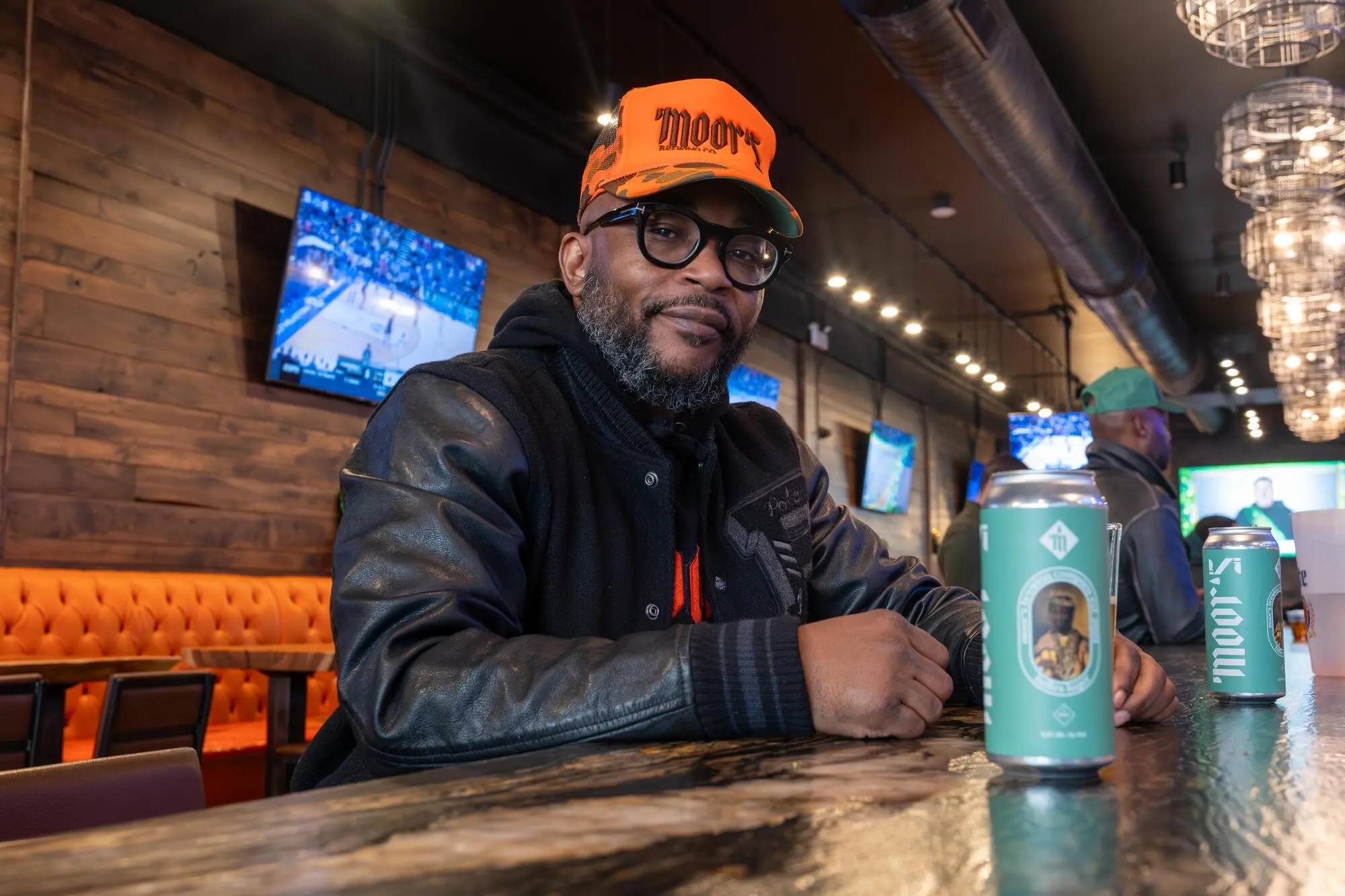
“We can do art, we can do sports. That’s the future. That’s where it’s going. And I just feel like the rest of the industry hasn’t caught up yet, but it’ll bounce back,” said Jamhal Johnson, co-owner of Moor’s Brewing Company, of how the Black-owned brewery is navigating the tumultuous beer industry that is seeing increased brewery closings nationwide.Kenn Cook Jr./For the Sun-Times
The weekend’s St. Patrick’s Day festivities drew diverse crowds into the city ahead of the holiday on Tuesday.
Among them was a bar crawl at Williams Inn Pizza & Sports Bar on the Near South Side on Saturday. Black revelers clad in green poured into the Black-owned watering hole, which played hip-hop classics and offered beer from the Black-owned Moor’s Brewing Company.
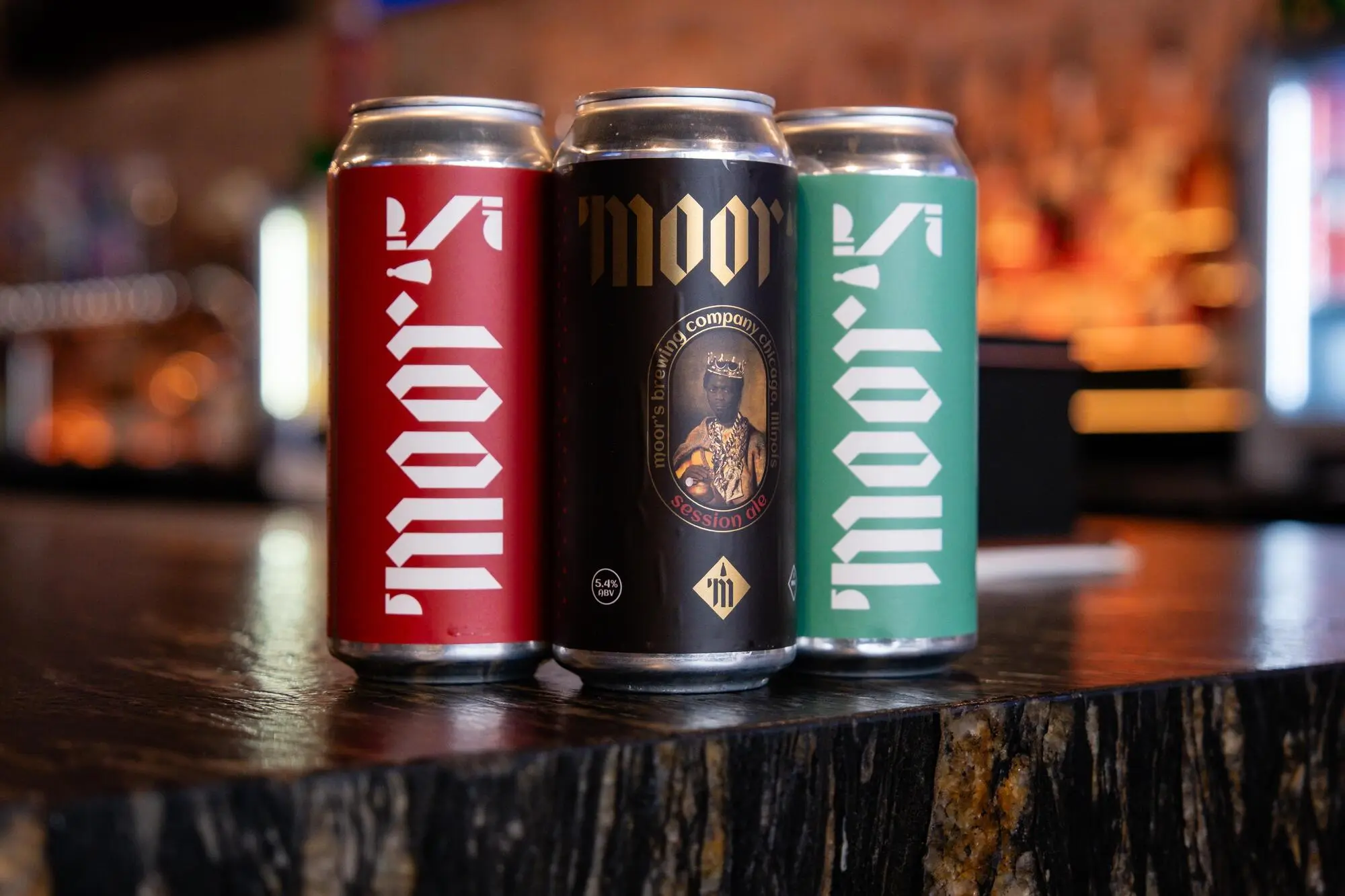
The lagers, porters, session ales and IPAs were served in colorful cans that feature a depiction of Hendrik Heerschop’s “The African King Caspar,” a 17th-century painting of one the three wise kings in the Bible who bring gifts to the baby Jesus.
“It’s a way to educate,” Moor’s Brewing Company co-owner Jamhal Johnson said of the artwork. “It’s a conversation piece. It’s unapologetic.”
Leaning into cultural celebration is one way Moor’s and Funkytown Brewery — the city’s two Black-owned breweries — set themselves apart in a volatile industry that is seeing increased brewery closings nationwide. In Chicago, at least five have shuttered or announced closures this year amid rising operational and production costs and a decline in the U.S. drinking rate.
By contrast, Moor’s Brewing and Funkytown Brewery have remained resilient due to contract brewing, or producing at other breweries in lieu of opening a brick-and-mortar location right away. They have also built a following by pairing their beer with cultural experiences and events, and targeting a diverse consumer base. The owners say they are hopeful this approach will sustain them when they eventually open a physical space.
“We’re encouraged,” Johnson said. “Our brew company is the anchor. But at the end of the day, we’re a brand. We can do art, we can do sports. That’s the future. That’s where it’s going. And I just feel like the rest of the industry hasn’t caught up yet, but it’ll bounce back.”
Founded in 2021 by Johnson, Damon Patton and Anthony Bell, Moor’s Brewing currently has a contract with Homewood Brewing. Contract brewing, or producing at other breweries in lieu of opening a brick-and-mortar location right away, is one of the reasons Moor’s has stayed in business amid a recent wave of brewery closures. Kenn Cook Jr./For the Sun-Times
Black-owned breweries still face systemic challenges
Nationwide, Black-owned breweries make up less than 1% of the market, according to a report by the National Black Brewers Association. But many are outpacing their counterparts; in 2023, Black-owned breweries that produced less than 1,000 barrels grew 9% faster than similar-sized breweries.
Chicago has seen the opening and closing of a couple in recent years. Vice District, which operated locations in South Loop and Homewood, shuttered its taprooms in 2019. Turner Haus Brewery in Bronzeville announced last year that it was pausing regular taproom hours and pivoting to an events-only format.
Founded in 2021 by Johnson, Damon Patton and Anthony Bell, Moor’s Brewing currently has a contract with Homewood Brewing. Last year, Moor’s Brewing briefly operated a taproom in the now-closed Diversey House in Logan Square.
Funkytown Brewery was founded five years ago by Rich Bloomfield, Greg Williams and Zack Day. It has spent the last five years operating at beverage incubator Pilot Project Brewing in Logan Square. In 2027, it will open its own facility on the Near West Side thanks in part to a $3.7 million Community Development Grant from the city.
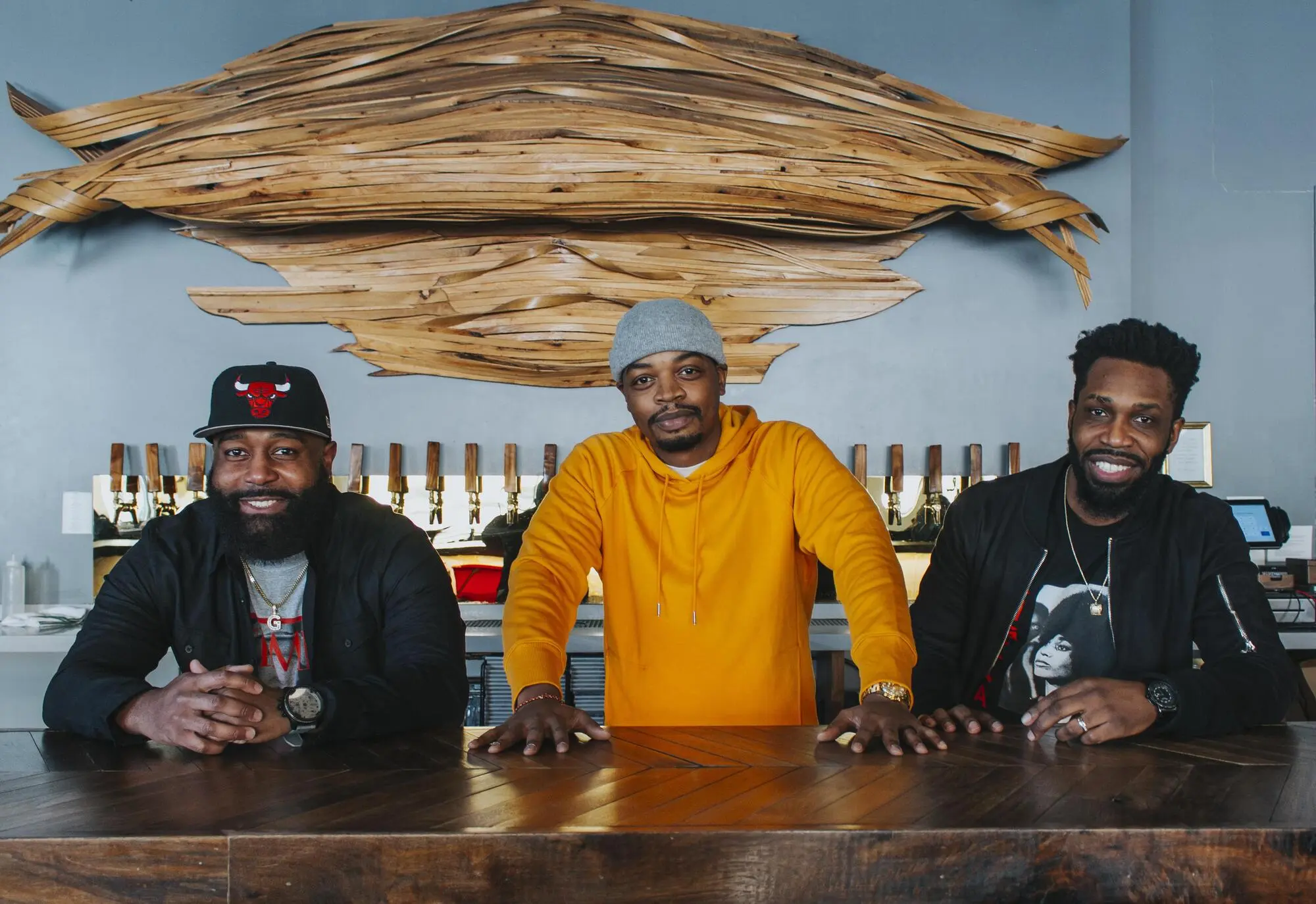
Greg Williams (from left), Zack Day and Rich Bloomfield are the founders of Funkytown Brewery.Provided
In most cases, contract brewing is not only a strategy but a necessity, as Black-owned businesses struggle to gain access to capital, industry connections, distribution and marketing opportunities, as reported by the national nonprofit Brewers Association.
“When it comes to getting loans or investment, it’s always been significantly harder for Black people,” Bloomfield said.
“We have a lot of Black and Brown people in our network, but craft breweries aren’t in our neighborhoods, and craft beer has never been marketed specifically for us to feel included in that space. And it’s a hard industry to navigate.”
Working with Pilot Project Brewing allowed Funkytown Brewery to test the market while cultivating a sense of belonging for Black and brown customers, including women, who are not always embraced in the market, Bloomfield said.
“It was never just purely about the beer itself,” he said. “It’s about the culture that we’re able to create. It’s about community and creating a sense of belonging. We believe that we have a new, contemporary voice in the beer space that is exciting, and that speaks to underserved demographics and Gen Z. It combines community, art, music, sport and culture together to create a better experience for folks.”
Catering to diverse audiences has yielded results for the Black and Brew Chicago nonprofit, which curates provides education about the beer industry and curates events, including a recent bus tour exploring the history of Black people’s contributions to craft beer.
“I wanted people of color to understand the opportunities within that industry,” said founder Mickey Bryant. “Not just taste the beer, but [learn about] the science, the agriculture and the community connection.”
Bryant said Black participants have felt more engaged when they learn about Black representation in the industry, and how Black-owned breweries work with Black-led community gardens, Black artists and others in the city.
“You have to help people understand how [breweries] benefit everybody,” she said.
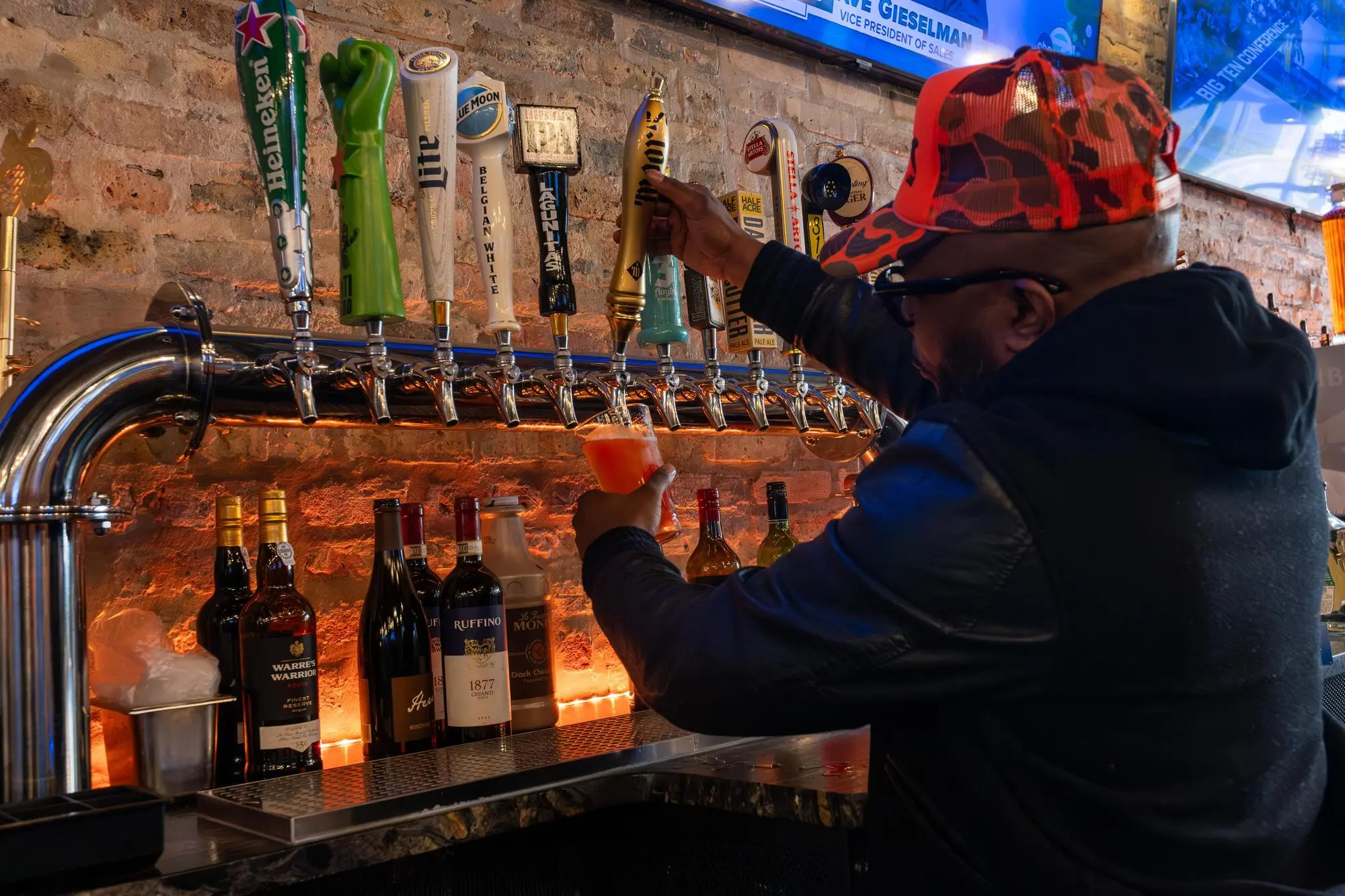
Jamhal Johnson, co-owner of Moor’s Brewing, pours a beer from the tap behind the bar at Williams Inn Pizza & Sports Bar on the South Side.Kenn Cook Jr./Kenn Cook Jr./For the Sun-Times
Collaboration is key for Black entrepreneurs interested in making a mark in the industry. Such is the case for Terrance Owens, who, in 2025, partnered with five others to launch Brutalist Brewing, which is advertised as Chicago’s first worker-cooperative brewery. The company currently operates out of Pilot Project Brewing.
“I think so many breweries that close, a lot of them overreached, because it was just a money grab,” he said. “At one point, every brewery was making money until the bubble burst. I just want steady, reliable growth. None of us are looking to become billionaires off this business. We’re looking to make a product that we all care about, and to be able to support our families.”
And all of the local Black brewers have found value in working and brewing together. That includes Black Horizon Brewing Company, a Black-owned, brick-and-mortar brewery in west suburban Willowbrook.
“We all help each other whenever we can by putting each other’s beers on tap,” said Charles St. Clair, who co-owns the business with Alex Stankus and Kevin Baldus.
St. Clair and Stankus said they have been able to navigate industry challenges by sourcing materials domestically and catering to their local community by curating events and activities, and producing beer according to their changing tastes.
“I would like to see it bloom,” St. Clair said of the market for brick-and-mortar Black-owned breweries. “The interest is there. It’s just not financially feasible right now.”
Chicago Sun-Times (archive.ph)
By Erica Thompson
2026-03-15 11:00:08GMT
“We can do art, we can do sports. That’s the future. That’s where it’s going. And I just feel like the rest of the industry hasn’t caught up yet, but it’ll bounce back,” said Jamhal Johnson, co-owner of Moor’s Brewing Company, of how the Black-owned brewery is navigating the tumultuous beer industry that is seeing increased brewery closings nationwide.Kenn Cook Jr./For the Sun-Times
The weekend’s St. Patrick’s Day festivities drew diverse crowds into the city ahead of the holiday on Tuesday.
Among them was a bar crawl at Williams Inn Pizza & Sports Bar on the Near South Side on Saturday. Black revelers clad in green poured into the Black-owned watering hole, which played hip-hop classics and offered beer from the Black-owned Moor’s Brewing Company.
The lagers, porters, session ales and IPAs were served in colorful cans that feature a depiction of Hendrik Heerschop’s “The African King Caspar,” a 17th-century painting of one the three wise kings in the Bible who bring gifts to the baby Jesus.
“It’s a way to educate,” Moor’s Brewing Company co-owner Jamhal Johnson said of the artwork. “It’s a conversation piece. It’s unapologetic.”
Leaning into cultural celebration is one way Moor’s and Funkytown Brewery — the city’s two Black-owned breweries — set themselves apart in a volatile industry that is seeing increased brewery closings nationwide. In Chicago, at least five have shuttered or announced closures this year amid rising operational and production costs and a decline in the U.S. drinking rate.
By contrast, Moor’s Brewing and Funkytown Brewery have remained resilient due to contract brewing, or producing at other breweries in lieu of opening a brick-and-mortar location right away. They have also built a following by pairing their beer with cultural experiences and events, and targeting a diverse consumer base. The owners say they are hopeful this approach will sustain them when they eventually open a physical space.
“We’re encouraged,” Johnson said. “Our brew company is the anchor. But at the end of the day, we’re a brand. We can do art, we can do sports. That’s the future. That’s where it’s going. And I just feel like the rest of the industry hasn’t caught up yet, but it’ll bounce back.”
Founded in 2021 by Johnson, Damon Patton and Anthony Bell, Moor’s Brewing currently has a contract with Homewood Brewing. Contract brewing, or producing at other breweries in lieu of opening a brick-and-mortar location right away, is one of the reasons Moor’s has stayed in business amid a recent wave of brewery closures. Kenn Cook Jr./For the Sun-Times
Black-owned breweries still face systemic challenges
Nationwide, Black-owned breweries make up less than 1% of the market, according to a report by the National Black Brewers Association. But many are outpacing their counterparts; in 2023, Black-owned breweries that produced less than 1,000 barrels grew 9% faster than similar-sized breweries.
Chicago has seen the opening and closing of a couple in recent years. Vice District, which operated locations in South Loop and Homewood, shuttered its taprooms in 2019. Turner Haus Brewery in Bronzeville announced last year that it was pausing regular taproom hours and pivoting to an events-only format.
Founded in 2021 by Johnson, Damon Patton and Anthony Bell, Moor’s Brewing currently has a contract with Homewood Brewing. Last year, Moor’s Brewing briefly operated a taproom in the now-closed Diversey House in Logan Square.
Funkytown Brewery was founded five years ago by Rich Bloomfield, Greg Williams and Zack Day. It has spent the last five years operating at beverage incubator Pilot Project Brewing in Logan Square. In 2027, it will open its own facility on the Near West Side thanks in part to a $3.7 million Community Development Grant from the city.
Greg Williams (from left), Zack Day and Rich Bloomfield are the founders of Funkytown Brewery.Provided
In most cases, contract brewing is not only a strategy but a necessity, as Black-owned businesses struggle to gain access to capital, industry connections, distribution and marketing opportunities, as reported by the national nonprofit Brewers Association.
“When it comes to getting loans or investment, it’s always been significantly harder for Black people,” Bloomfield said.
“We have a lot of Black and Brown people in our network, but craft breweries aren’t in our neighborhoods, and craft beer has never been marketed specifically for us to feel included in that space. And it’s a hard industry to navigate.”
Working with Pilot Project Brewing allowed Funkytown Brewery to test the market while cultivating a sense of belonging for Black and brown customers, including women, who are not always embraced in the market, Bloomfield said.
“It was never just purely about the beer itself,” he said. “It’s about the culture that we’re able to create. It’s about community and creating a sense of belonging. We believe that we have a new, contemporary voice in the beer space that is exciting, and that speaks to underserved demographics and Gen Z. It combines community, art, music, sport and culture together to create a better experience for folks.”
Catering to diverse audiences has yielded results for the Black and Brew Chicago nonprofit, which curates provides education about the beer industry and curates events, including a recent bus tour exploring the history of Black people’s contributions to craft beer.
“I wanted people of color to understand the opportunities within that industry,” said founder Mickey Bryant. “Not just taste the beer, but [learn about] the science, the agriculture and the community connection.”
Bryant said Black participants have felt more engaged when they learn about Black representation in the industry, and how Black-owned breweries work with Black-led community gardens, Black artists and others in the city.
“You have to help people understand how [breweries] benefit everybody,” she said.
Jamhal Johnson, co-owner of Moor’s Brewing, pours a beer from the tap behind the bar at Williams Inn Pizza & Sports Bar on the South Side.Kenn Cook Jr./Kenn Cook Jr./For the Sun-Times
Collaboration is key for Black entrepreneurs interested in making a mark in the industry. Such is the case for Terrance Owens, who, in 2025, partnered with five others to launch Brutalist Brewing, which is advertised as Chicago’s first worker-cooperative brewery. The company currently operates out of Pilot Project Brewing.
“I think so many breweries that close, a lot of them overreached, because it was just a money grab,” he said. “At one point, every brewery was making money until the bubble burst. I just want steady, reliable growth. None of us are looking to become billionaires off this business. We’re looking to make a product that we all care about, and to be able to support our families.”
And all of the local Black brewers have found value in working and brewing together. That includes Black Horizon Brewing Company, a Black-owned, brick-and-mortar brewery in west suburban Willowbrook.
“We all help each other whenever we can by putting each other’s beers on tap,” said Charles St. Clair, who co-owns the business with Alex Stankus and Kevin Baldus.
St. Clair and Stankus said they have been able to navigate industry challenges by sourcing materials domestically and catering to their local community by curating events and activities, and producing beer according to their changing tastes.
“I would like to see it bloom,” St. Clair said of the market for brick-and-mortar Black-owned breweries. “The interest is there. It’s just not financially feasible right now.”


