This is the deep lore, but Fascism emerged out of Socialism because Mussolini concluded the communist utopia of the Stateless society was impossible, and that what was actually necessary was too make the State all encompassing such that class distinction would be abolished because classes only exist when people are individuals rather that subsumed into the whole that is the State.
The reason there is the circular firing squad of "communists are the real fascists" is because Fascism is the bastard son of Liberalism. It springs from the same ideological framework that Communism and the Liberal Democracies sprang from.
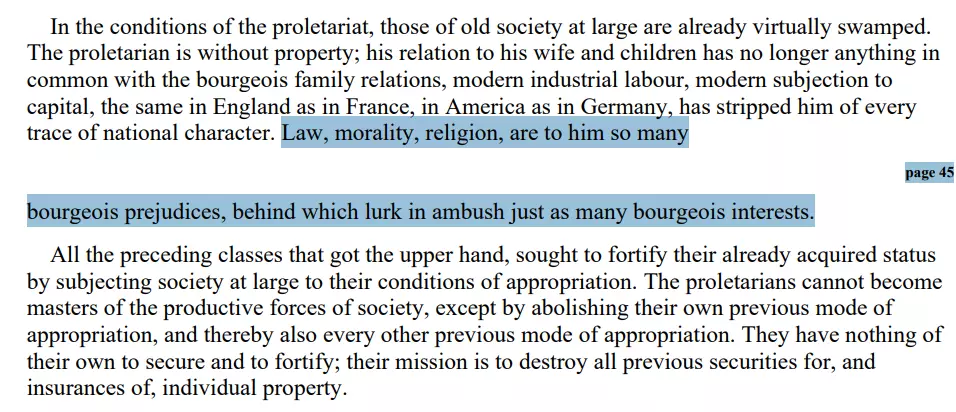
In the Communist Manifesto Marx posits that individuality doesn't really exist anymore outside the bourgeoisie because society has been reduced to simply act as labour for the parallel, bourgeois society to live out their lives.
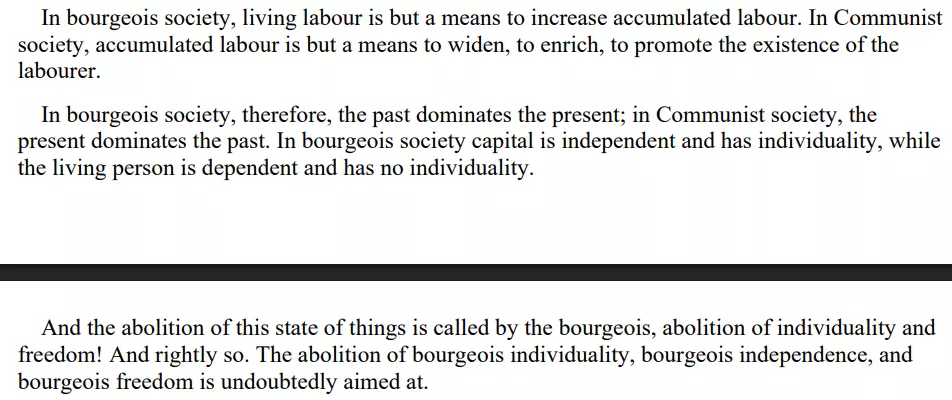
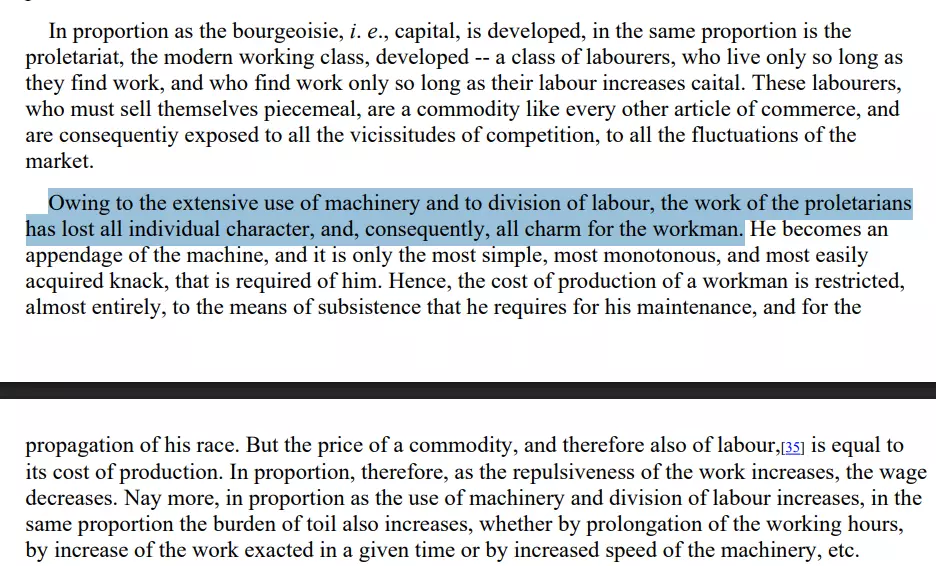 Communist Manifesto
It's contradictory to your comment so I apologise (and it's possible the translation was bad) but what I got from Mussolini was him dismissing the Communist idea of individuality being erased under the toil of the bourgeoisie and instead asking for people to be aware of their individuality and get rid of it, since care for individuality was effectively selfishness.
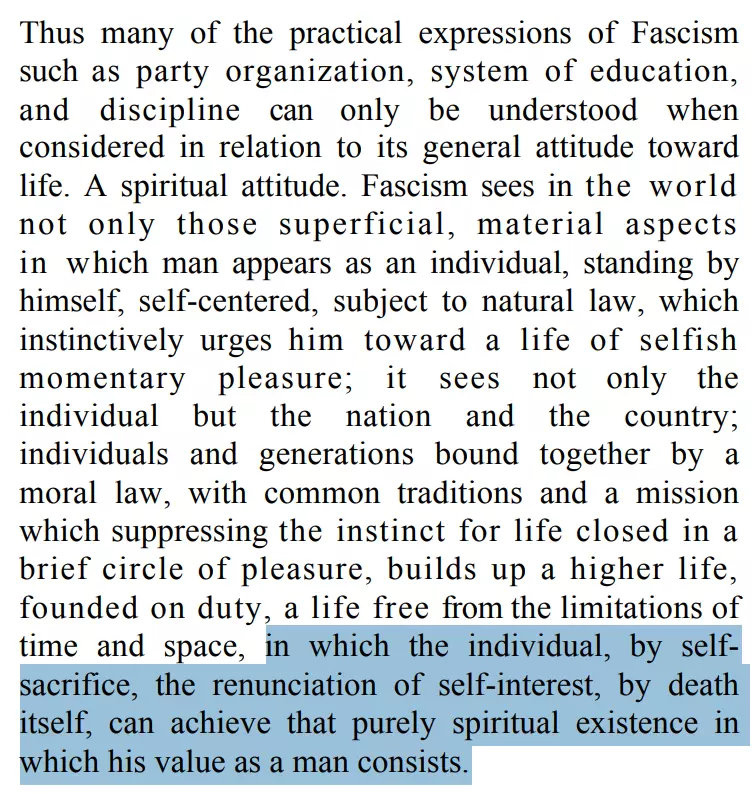
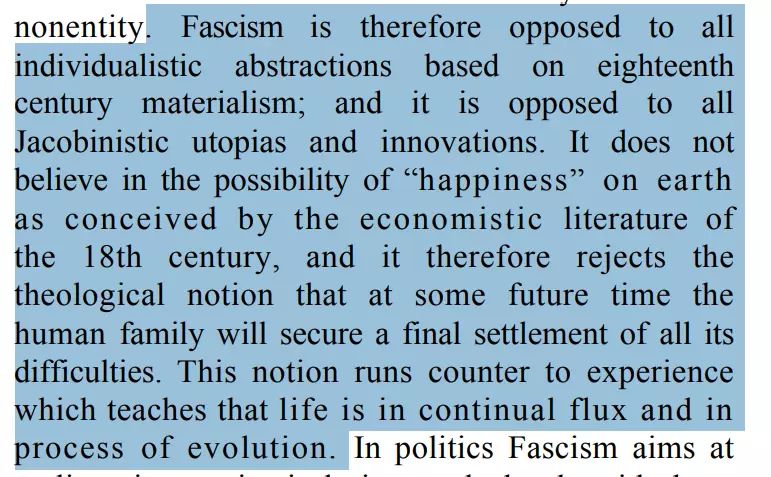
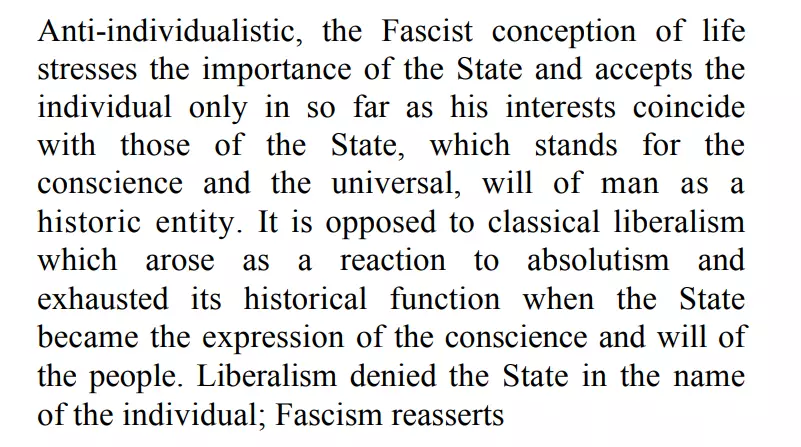
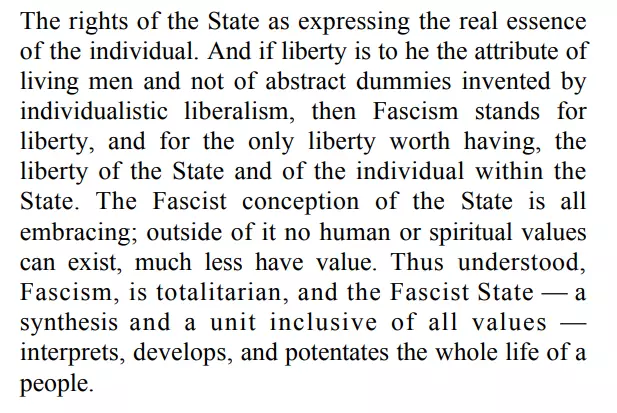
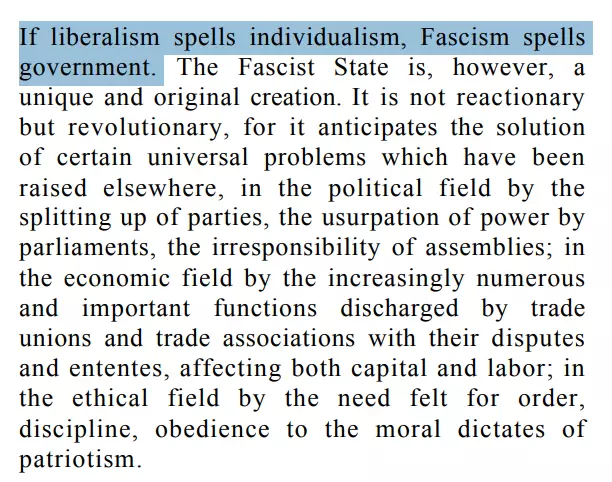
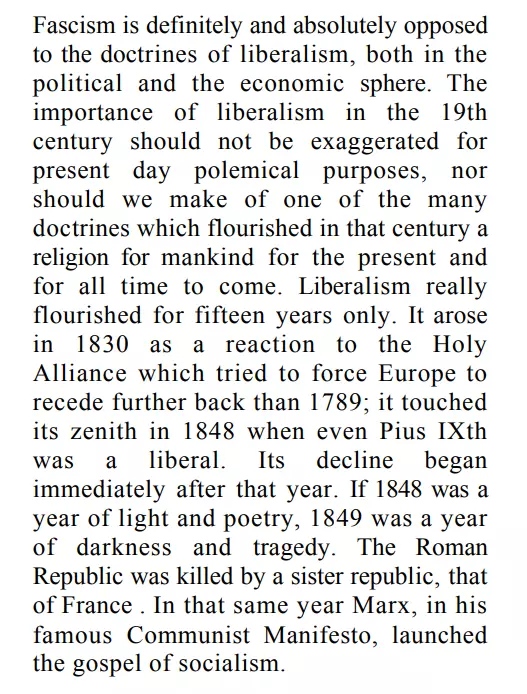 The Doctrine of Fascism (
I
find Mussolini's matter of fact remark on Liberalism being only useful for 15 years really funny)
There's a similar theme in "For my Legionnaires" by Codreanu in the shunning of individuality.
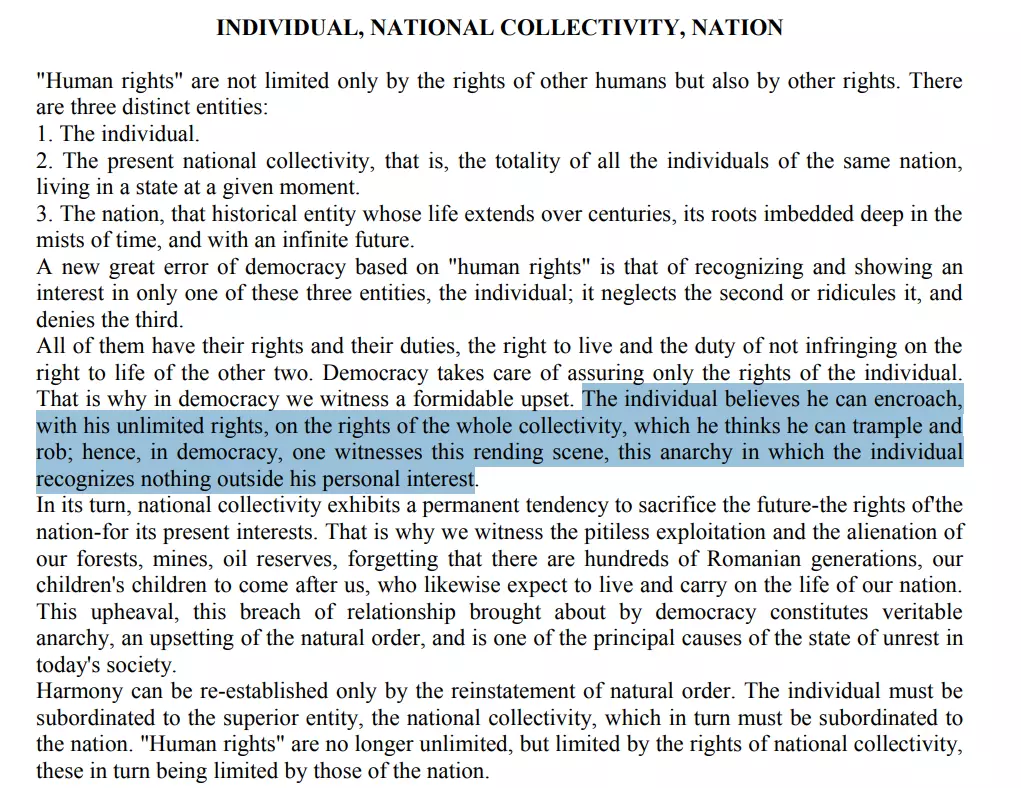
The intensity of individualism depends on the source however and I'm not familiar with every Fascist. I mention this because British fascism had by far the most dystopian-sounding terminology (lifts corporate titles and inserts them straight into government positions) but it was
probably the nicest of the lot. If there was some overlap with Marx he proposes the same premise about current society not really being "free," although he mostly places it on the government catering to minorities over the majority; the people won't truly be free until the government represents them whilst also giving the people economic freedom, which is very reminiscent of Marx as well but Mosley's idea of freedom is far more in line with what many contemporary
Conservatives/Libertarians argue.
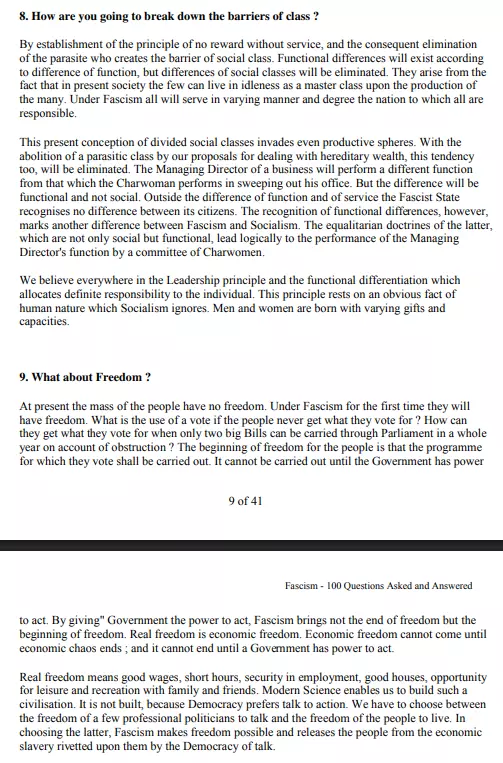 Fascism: 100 questions asked and answered by Oswald Mosley
Anyway, both were rejections of Liberalism in a sense, but Mussolini did to Marxism what Marx did to Hegel, "flipped on his head," basically. "Class emancipation" for "Spiritual unification" – a complete switch from grounded to spirituality to harness the
Geist spoken of by Hegel, with a state collectivised and organised under syndicalism in subservience to the state for the benefit of all. Which makes it a double flip because his end goal was arguably more grounded in realism than Marx's.
Marx's definition of what constituted "good" was essentially taken from the French, and despite criticising German philosophers for "emasculating" their work (socialism, abolishment of private property, abandonment of God, etcetera – pretty much all French (and one Swiss -
Rousseau) he then combined their ideas with typical German attempts to make sense of anything –
Geist Will Class Consciousness – so you have a contradictory fusion of atheism and spirituality that has to make sense for the entire thing to function.
This is all to say: Liberalism has its roots in Christianity. Communism would represent Atheism/Anti-theism, attempts to create a moral foundation based strictly on material reality (usually on the conceit Christianity/religion have been destroyed already). Fascism is highly dependent on where it's located, but it attempts to assert a moral code separate from religion without demoting it for the most part – Agnostic/Deist/Theist?
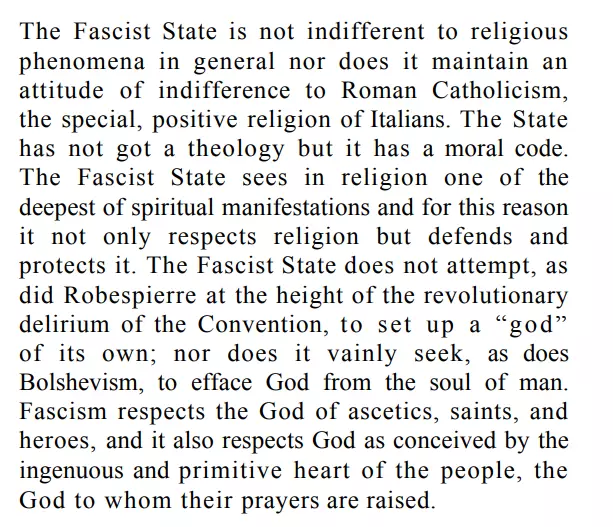
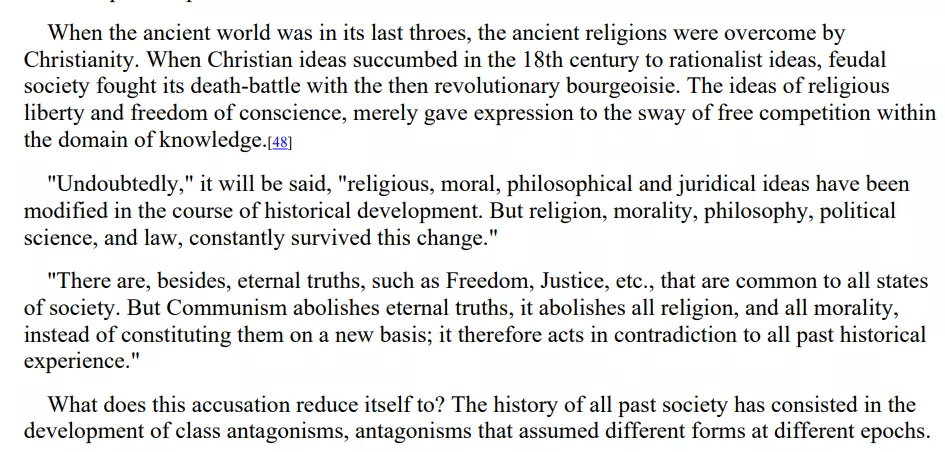
(Left Mussolini, Right 2 Marx & Engels)
That's not to say automatically that Liberal = Good just because Christianity = Good.
Socialism is actually kind of difficult, either sharing the same foundation as Communism or finding inspiration from pre-existing institutions (as French philosophy often did) at which point you could point to Christian monasteries and the idea of Christian/Church "Community" and source it from Catholicism/Christianity – but that's contrived so I'll just stick to Atheism.
The Liberalism created by Locke is not the same Liberalism many so-called Liberals today claim to be. Locke's Liberalism is
basically most preserved in contemporary, non-insane varients Libertarianism, which itself has a bizarre history of changing definitions and having some possibly suspect intrinsic aspects (
You may be surprised when you see what Joseph Dejacque, anarchist communist, coined as a term), but it's basically a synonym for classical Liberalism. For instance: when you hear the term, "God given rights," it's rooted in concepts that free will wasn't merely a by-product of God, but a privilege granted by God, and to violate free will is to commit a crime against God since it's overruling him in a sense. The moral duty of government is to preserve this free will, encroach on it as little as possible, and make sure to excise those who would threaten it.
TLDR:
Communists are just Fascists without God; Fascists are Communists without a deigned care for individualism.
Liberal democracy =/= "Liberal" democracy – the latter is a state where God/objective morals have been replaced by popularity-based morals. 


